Wild‑Sown Cannabis: Letting Nature Be Your Breeder


You grab a handful of regular cannabis seeds, hike out to a sunny patch of soil, scratch the earth, drop the seeds, pat the dirt … then walk away. Weeks pass. Rain falls, sun blazes, wind howls. Some seedlings keel over, some stand tall. By late summer pollen drifts like gold dust; by autumn fat, speckled seeds rattle inside drying buds. Next spring the whole dance starts again—no grow lights, no bottled nutes, just grit and sunlight. That, friend, is Wild‑Sown Cannabis in a nutshell: you step back, nature steps up, and the plants write their own survival story.
What Is Wild‑Sown Cannabis?

Wild‑sown cannabis is any crop you sow outdoors and then leave largely to fend for itself. The plants germinate, grow, flower, pollinate, and reseed with only minimal nudges from you. Over successive seasons the patch behaves like a natural population, gradually tailoring itself to local weather, pests, and soil quirks.
The Natural Life Cycle (Seed‑to‑Seed)
- Spring – Dormant seeds feel warmth and moisture, crack open, and tiny taproots anchor into the soil.
- Early Summer – Plants race skyward, building stems and a broad solar‑panel canopy of leaves.
- Mid‑Summer – Males initiate bloom first, forming dangling flower clusters. Females soon follow with fuzzy pistils.
- Late Summer – Wind‑borne pollen dusts receptive pistils; fertilised flowers switch energy from resin to seed production.
- Autumn – Seeds harden, stalks yellow, and brittle plants topple, scattering next year’s seed bank.
- Winter – Seeds lie snug beneath snow or leaf litter, enduring freeze, thaw, and microbes until conditions shout “Go!”
Repeat that cycle two, three, five seasons, and you’re effectively hosting a brand‑new landrace born in your own backyard.
Why Let Nature Be Your Breeder?
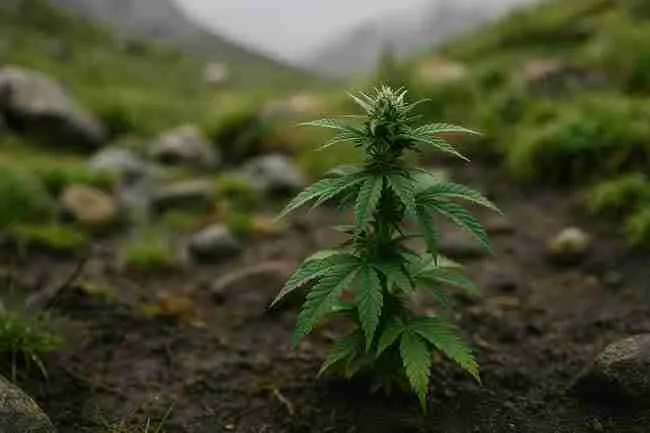
Big‑Time Benefits
- Ultra‑Hardy Genetics – Only the plants tough enough to beat drought, wind, mold, and bugs leave offspring. Weaklings bow out.
- Low‑Maintenance Growing – No pH pens, no timers, no electricity bills. Rain irrigates; sun provides the photons.
- Sky‑High Diversity – Open pollination mixes genes every which way, yielding surprise aromas, colors, and growth habits.
- Local Adaptation – Each generation hones traits that fit your micro‑climate: shorter flowering in cold zones, deeper roots in sand, mildew resistance in damp woods.
- Pocket‑Friendly – Throw seeds once; the patch often reseeds itself. Seed shopping becomes optional.
- Sustainability – No plastic pots, no synthetic fertilisers, minimal soil disturbance. Deep taproots even loosen compacted ground for other plants.
- Discovery Zone – You might stumble upon an autoflowering dwarf, a grape‑scented purple, or an ironclad pest‑buster—nature’s Easter eggs.
Real‑World Examples
- Ditch Weed of the Midwest – World‑War‑II hemp escaped farms and still carpets roadside gullies decades later, proof that cannabis can naturalise and persist with zero care.
- Ruderalis in Siberia – Plants there evolved a day‑neutral “autoflower” trigger so they could finish before early frosts, a trait now worth gold to modern breeders.
But Hold Your Horses—Drawbacks Exist

- Unpredictable Potency – If high THC isn’t a survival trait, it may fade. Expect some plants to hit like a feather pillow.
- Seed‑Stuffed Buds – With males around, virtually every flower packs seeds. Great for propagation, meh for smoke.
- Inconsistent Yields – One season you’re knee‑deep in foliage; the next a cold snap wipes half the stand.
- Little Human Control – Can’t cherry‑pick moms or cull unwanted pollen unless you step in and break the “hands‑off” pact.
- Pollen Drift – Your males can impregnate a neighbor’s sinsemilla a mile away. Know your surroundings.
- Potential Weed Status – If the patch thrives too well, volunteers might pop up where they’re not welcome.
- Bio‑Accumulator Warning – Cannabis slurps up heavy metals. Sow in clean soil—never beside a lead‑painted shed or tail‑pipe choked highway.
Wild‑Sown vs. Guerrilla vs. Traditional

| Aspect | Wild‑Sown | Guerrilla | Traditional |
|---|---|---|---|
| Primary Goal | Self‑seeding population | Hidden bud haul | High‑grade, seedless flower |
| Male Plants | Kept | Usually culled | Culled |
| Workload | Bare‑bones | Low‑medium | High |
| Genetic Diversity | Very high | Medium | Low |
| Potency Consistency | Low | Medium | High |
| Up‑Front Cost | Tiny | Low | High |
| Environmental Footprint | Minimal | Low | Variable |
Step‑by‑Step: Launching Your Own Wild Patch

1. Choose Rugged Seeds
Pick regular beans with outdoor pedigrees. Grab a mixed pack from Green Avenger Seeds—indicas for quick finishers, sativas for humid zones, a few autoflowers for insurance.
2. Scout the Perfect Spot
- Sun: Six to eight hours of direct rays.
- Soil: Loose, loamy, well‑drained. Avoid oil‑slick dirt.
- Water: Seasonal creek beds or low slope that soaks rain but doesn’t flood.
- Stealth: Behind brambles, on private ground, or deep in a wildflower meadow.
3. Time Your Toss
- Temperate Zones: Early spring after last frost or late autumn for natural stratification.
- Tropical Zones: Kick off at rainy‑season start.
- Short‑Season North: Lean on autoflowers or Afghan‑type indicas that wrap up by September.
4. Broadcast Generously
Scatter two or three seeds where you ultimately want one plant. Lightly rake soil or press with your boot. Leave leaf litter as camouflage.
5. Step Back—Seriously
No bottled food, no midnight flashlight checks. Interfere only if catastrophe looms (a record drought or a plague of cutworms). Remember, hardship is the filter that builds strength.
6. Observe Like a Field Biologist
Drop by every couple of weeks. Record which plants shrug off caterpillars, which wilt, which bloom earliest. Snap photos. Tag standout males and females with discreet twine.
7. Let Pollen Fly
Males drop dusty clouds mid‑summer. Resist culling unless a male is truly sickly. You want a wide genetic shuffle. If you need a bit of bud, clip one or two males early to reduce seed load—balance is key.
8. Harvest Seeds & Optional Bud
When seeds darken and rattle, gently strip handfuls into a paper bag. Dry, label, and stash cool and dry. Snip a few seeded colas for hash or edibles. Leave plenty of seeds to fall naturally.
9. Rinse and Repeat
Next spring sow saved seeds plus any new strains you fancy. After three to five cycles you’ll notice most plants share survival traits: similar height, bloom time, pest tolerance. Congrats—you’ve birthed a local landrace.
Climate & Geography Cheat‑Sheet
| Region | Key Challenge | Winning Traits |
|---|---|---|
| Cold Northern | Short frost‑free window | Fast finishers, autoflower genes, squat builds |
| Mediterranean | Summer drought | Deep roots, waxy leaves, midday wilting resistance |
| Humid Tropics | Constant moisture, molds | Loose buds, airy structure, high mold‑resistance terpenes |
| Desert/Arid | Blazing sun, low rain | Narrow leaves, silver leaf sheen, camel‑like water storage |
Tip: Mix seed sources the first year, then re‑sow only winners for a tailored gene pool.
Practical Tip List

- Establish three micro‑plots a few hundred yards apart. One disaster won’t doom the whole project.
- Mark boundaries with inconspicuous stones so you don’t trample sprouts.
- Lay thorny branches over fresh seedbeds to deter deer and rabbits.
- If soil is lifeless, scratch in a single shovelful of compost—just enough to mimic forest leaf litter.
- Keep a notebook: date, weather quirks, standout plants. Data fuels future success.
- Every second or third year, add fresh Green Avenger Seeds to fight inbreeding.
- Expect weird volunteers in odd spots—birds are your accidental seed couriers.
Frequently Asked Questions
Q: Will the patch return every year on its own?
A: Yes—so long as males fertilise females and some seeds drop, you’ll get fresh seedlings each spring.
Q: How strong will the smoke be?
A: First generation can match the parent strain. Over time potency may drift without selection. Treat any top‑shelf buds as bonus, not guarantee.
Q: Can I just chuck seeds anywhere?
A: You can, but germination skyrockets if you choose sunny, drain‑friendly soil and sow at the right season.
Q: Is this legal?
A: Laws differ widely. Always check local regulations before you sow.
Q: How long until I have a stable local strain?
A: Three seasons show adaptation; five or more give you a recognisable, home‑grown variety.
Q: Won’t pests wipe me out?
A: They might nibble. But each year survivors carry better defenses. Light intervention (thorny mulch, chili powder, predatory insects) can tilt odds without babying plants.
Q: Is there any health risk using wild buds?
A: Only if soil is contaminated or mold sneaks into curing. Pick clean soil, dry slowly, and store properly.
Final Thoughts

Letting cannabis run wild is a long game, not a quick score. You trade tidy control for the thrill of discovery, the glow of self‑reliance, and the chance to co‑create with the oldest breeder on earth—Mother Nature herself. Sow boldly, step back, and watch the green magic write its own script. Who knows? A decade from now folks might be begging for seeds of your rugged, backyard‑bred superstar, first sprouted from a scoop of Green Avenger Seeds and a head‑full of curiosity.