Why Does My Cannabis Plant Have No Potency or Smell?

You walk into the tent, rub a cola, and get nothing. Or you open a jar and it smells like lawn clippings. That is the same complaint with two different clocks. A cannabis plant with no potency or smell is almost never one mystery. It is genetics first, then heat, feed, harvest timing, drying, and how you stored it. If you started with weak genes, you cannot bottle your way to a loud jar. If the genes were good, you usually cooked the terpenes, fed nitrogen too late, chopped early, or dried the flower like hay.
This page is how to tell those problems apart and what to do about each one. Smell comes from terpenes and a few sulfur compounds. Potency comes from cannabinoids. They live in the same trichomes, so they fail together a lot of the time, but they are not the same thing. You will get a timeline for when a plant should smell, how to read trichomes, how organic marijuana fertilizer and pH change the nose, and how to dry and cure without locking in hay. No fluff. You diagnose first. Then you change one thing.
First, Tell These Problems Apart
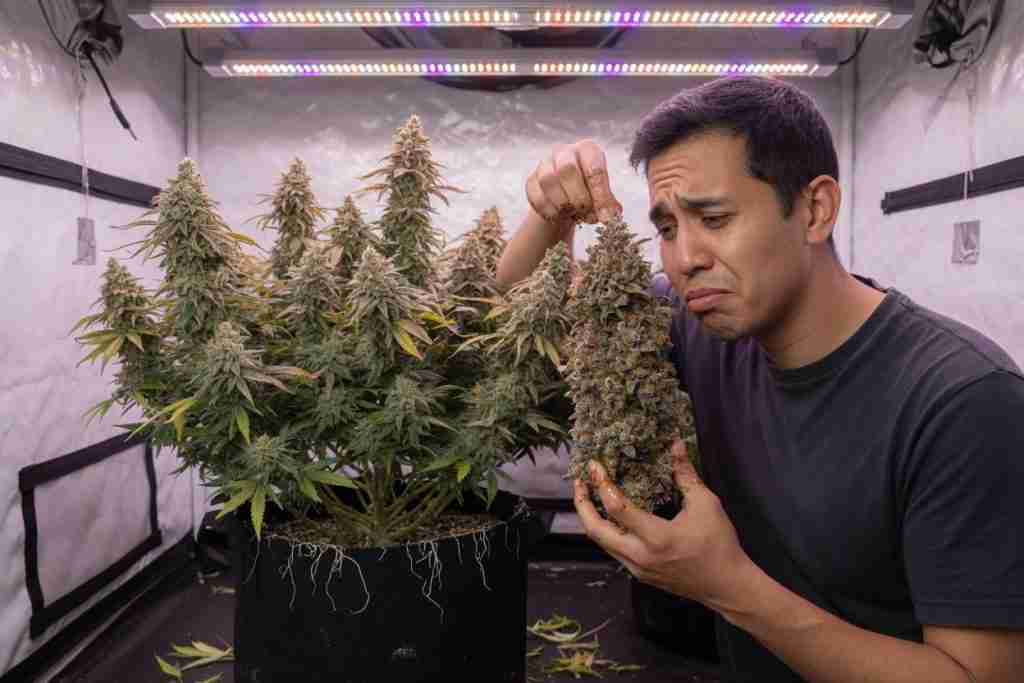
People type “cannabis plant have no potency smell” when they mean four different things. Mix them up and you “fix” the wrong week.
- Live plant, week 2 to 4 of flower, little smell unless you rub it. Often normal.
- Live plant, last two weeks, still no nose even when you crush a sugar leaf. Genetics, heat, nitrogen, or a carbon filter stealing the room.
- Dried flower that smells like hay or grass. Fast dry, chlorophyll still in the bud, or you never cured it.
- Jar that smells like nothing, paper, or old hay, and the high is flat or sleepy. Terpenes gone, THC sliding toward CBN. Storage or age.
Hay is not the same as no smell. Hay is chlorophyll that never broke down, or a dry that ran too hot and left you with plant matter instead of resin. No smell is terpenes that never built, or terpenes that already evaporated. A musty towel or ammonia is not either of those. That is wet flower going off. Do not smoke that. Open the jars, check for mold, and throw anything that stinks like cat urine.
A buddy of mine swore his week-three photos were “mute genetics.” He had a 6-inch carbon filter screaming over a 2×2. The plants smelled like weed when he stuck his head in the tent with the fan off. The room smelled like nothing. He was not growing hay. He was venting the nose out the window. Yikes. Turn the filter off for one minute and rub a bract before you panic.
Smell vs Potency: What Your Nose Can and Cannot Tell You
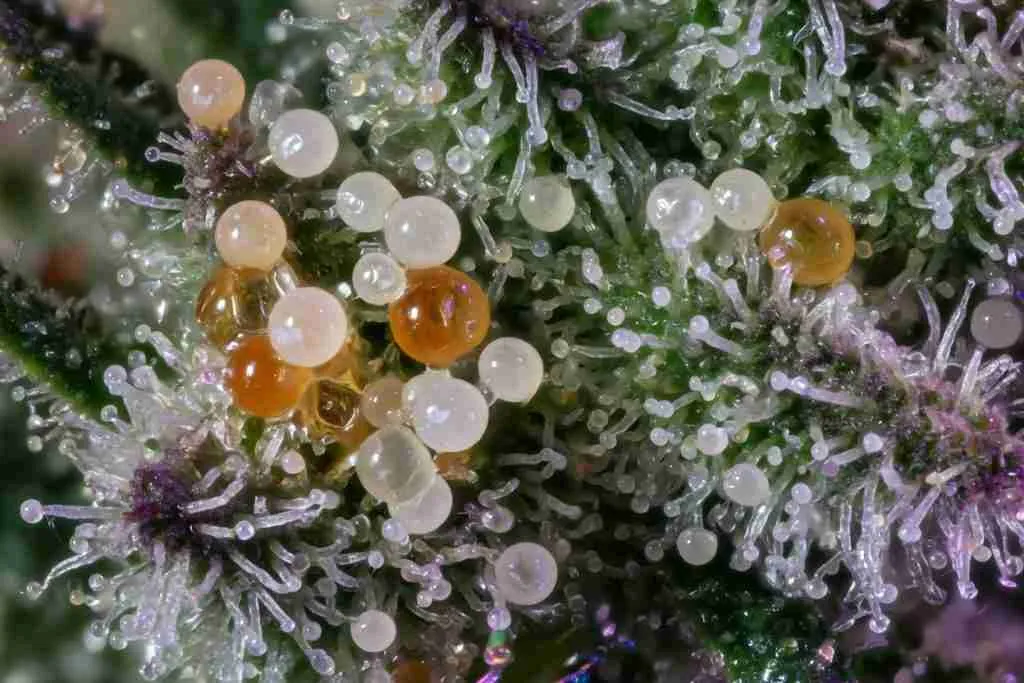
THC has almost no smell. CBD neither. The stink you want is terpenes, and on the loudest plants a set of volatile sulfur compounds that read as skunk or gas. Those oils sit in the same gland heads as the cannabinoids. That is why a dead nose often rides along with a weak high. It is also why a quiet pheno can still test decent on THC, and why a loud jar can still feel stronger than a 28% lab number that smells like dust.
If you only chase THC, you miss the part people actually taste. Terpenes shape the effect. That is the entourage idea, and it is why aroma matters in the jar, not just on a COA: terpenes and the entourage effect. A flower that lost its monoterpenes (the light, loud stuff: limonene, pinene, myrcene) can still have cannabinoids. It will smoke harsher, taste like hay or paper, and feel flatter than the same cut did on a slow dry.
Terpenes, sulfur, and why two jars of the same cut can smell different
Terpenes are not a cannabis trick. Pinene is pine needles. Limonene is citrus peel. Myrcene is mango and hops. Caryophyllene is black pepper. Linalool is lavender. Cannabis just stacks them in trichomes next to THC. The plant makes them as a sunscreen, a pest deterrent, and a stress response. You smell the leftover of that chemistry.
The skunk note a lot of people mean when they say “it smells like weed” is often sulfur compounds, not terpenes. If your cut was bred for candy and fruit, it may never smell like a 1998 bag of skunk. That is not a failed grow. That is the recipe. If you wanted gas, you needed a gas parent, not more bottles in week six.
Same pack, two plants, two noses. Phenotype is real. One sister throws terps in week five. The other stays quiet until day 60, then pops in the jar. You do not know which one you have until you finish it. Rub a stem in veg if you want an early hint. Stem rub is not a lab. It just tells you the plant can make oil. No stem rub and no flower smell by week seven on a known loud cut is a growing problem, not a personality.
When a Cannabis Plant Should Smell
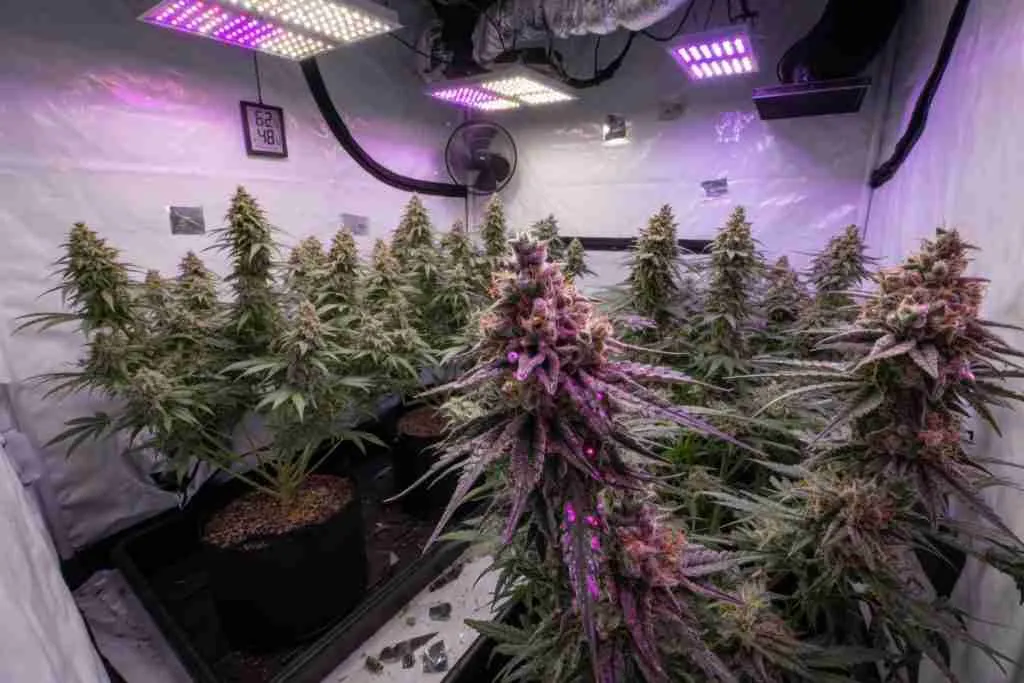
Seedlings do not smell like weed. Early veg smells like a tomato plant if it smells at all. Most photoperiods stay quiet until they stack calyxes. A lot of growers freak out in week three of flower because the internet told them the tent should reek. Week three is still mostly water and leaf. The loud window on many cuts is the last 10 to 21 days, plus the first two weeks in the jar. Autos run the same movie on a shorter clock. See the flowering stage of growth if you are not sure where you actually are.
Outdoors, a plant can hide until a hot afternoon, then slap you when the wind dies. Indoors, a sealed tent with a carbon filter is supposed to smell like nothing in the hallway. That is the point of the filter. Judge the plant, not the hallway.
Week 3 flower is usually quiet
White pistils, small stacking, almost no resin you can smear on your fingers: that plant is not mute. It is unfinished. Give it the rest of the stretch, drop nitrogen, keep nights a bit cooler than days, and wait until trichomes cloud before you decide the cut is a dud. If you chop because you are impatient, you will get hay and a heady, short high. That is harvest timing, not “the seedbank lied.”
Carbon filters, ONA gels, and nose-blindness
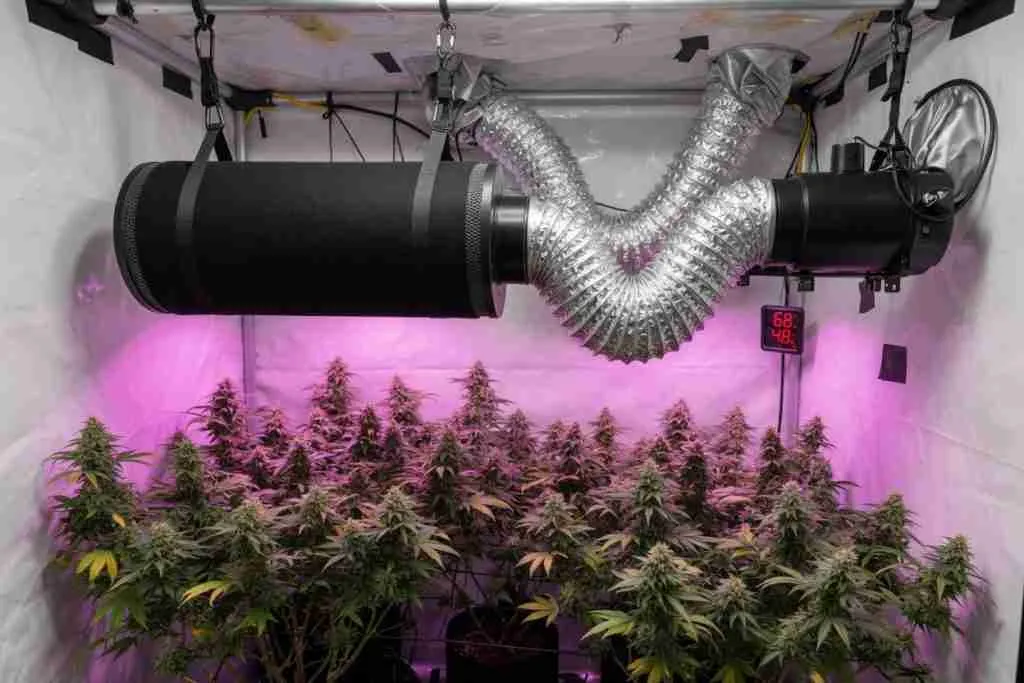
A carbon filter sized for the tent will strip smell from the air you breathe. So will an ozone generator or a tub of ONA sitting in the dry space. Do not hang odor killer over drying branches. You are paying to delete terpenes. Walk into the tent after the fan has been off for a minute. Crush one sugar leaf. If that leaf stinks and the room does not, your filter is working and your plant is fine.
You also go nose-blind. Live in the tent two hours a day and you will swear the plants have no smell while your partner gags at the door. Ask someone who does not live in there. Then stop sniffing every hour. You are not helping the trichomes.
Genetics and Strain Selection
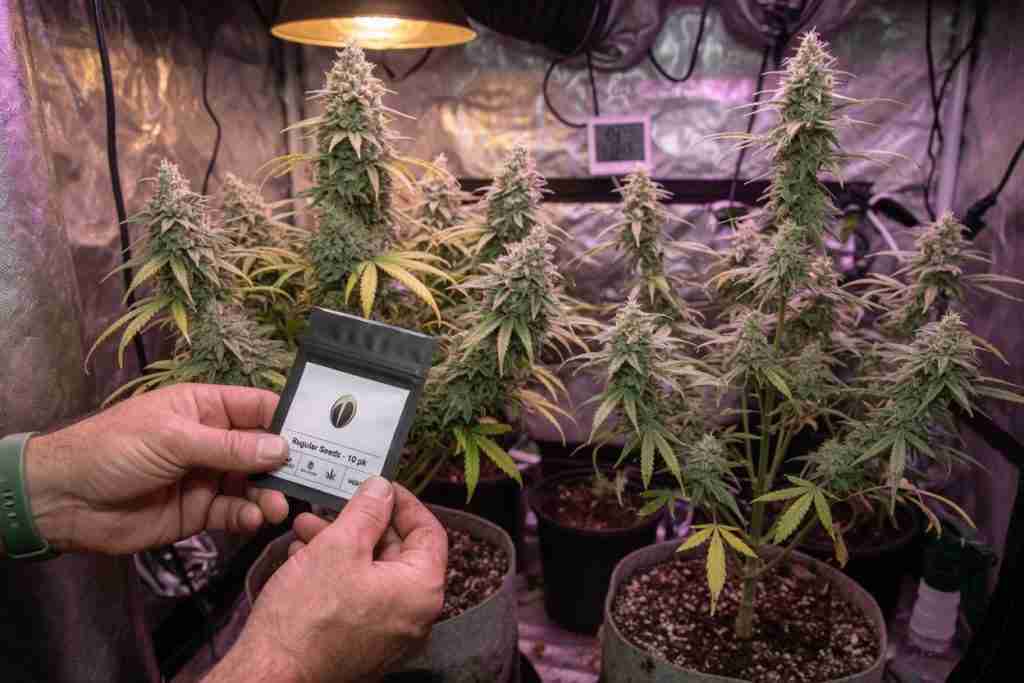
Much of cannabis plant potency comes down to the plant’s genetics. That line from the old version of this page is still the first filter. Poor genetics will not become a 4% terpene jar because you bought a bloom bottle. Bagseed, mystery hemp-adjacent crosses, and random “THC bombs” with no breeder notes are how you get dirt-and-crayon phenos. A good pack still throws a quiet sister now and then. That is why people hunt. See cannabis breeding if you want to keep the loud one.
If you want a loud jar, start with a line known for a nose, not a cartoon THC percentage. Buy from a real catalog: cannabis seeds store. Photoperiods give you time to read the plant. Autos can be loud, but they will not wait while you figure out the feed. Photoperiod cannabis seeds explained if you are mixing those clocks up. Environment can hide good genes. The reverse is not true. Two plants, same tent, same dry, only one smells: that is a pheno. Keep a clone of the loud one.
Environment: Heat, Humidity, Light, and Air
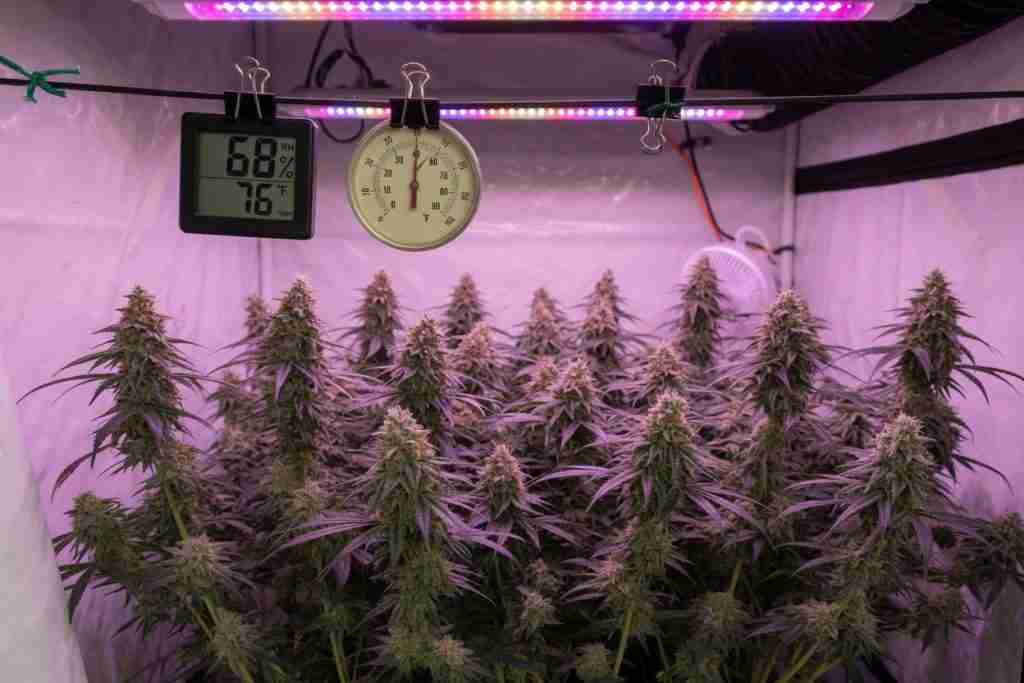
Terpenes are volatile. That word means they leave. Canopy over about 80°F (27°C) in late flower cooks the loudest notes while the plant is still standing. A tent that swings 15 degrees every lights-on is worse than a tent that sits a little warm all day. Aim for roughly 68 to 78°F (20 to 26°C) in flower, and drop nights a few degrees in the last two weeks. You are not trying to freeze the plant. You are trying to stop the oils from flashing off. Full environment notes live here: best growing environment for cannabis.
Humidity and temperature
Flower humidity around 40 to 50% keeps mold down without turning the bud to dust. Late flower can sit closer to 40 to 45%. A dry tent at 25% RH with a heater blasting is how you get crispy edges and no nose. A wet tent at 65% with no air is how you get hay later, or worse, bud rot now. Put the sensor at cola height, not on the floor. The floor lies.
Light intensity matters, but sunburned tops do not make more terps. They make bleached, hay-leaning colas. If the uppermost buds are foxtailing and pale, raise the bar or dim it.
Airflow without blowing the smell off the plant
Leaves should flutter, not thrash. A clip fan aimed at a cola 12 hours a day will dry the surface and throw terpenes into the filter. Oscillate. Pull air out through carbon. Bring fresh air in. A dead, hot pocket in the back corner is where both mute buds and mold start. Ventilation is a smell tool as much as a climate tool: ventilation for a cannabis grow.
Water is part of climate. A plant that sits wet, then bone dry, then wet, will stall oil production while it deals with roots. Even watering beats a heroic feed schedule: how to water cannabis plants. Runoff pH in soil should live near 6.2 to 6.8. Hydro is tighter, around 5.8 to 6.2. Lockout from bad pH looks like a deficiency and reads in the jar as thin, grassy flower. pH for growing cannabis is not optional homework.
Fertilizer, pH, and Organic Marijuana Fertilizer
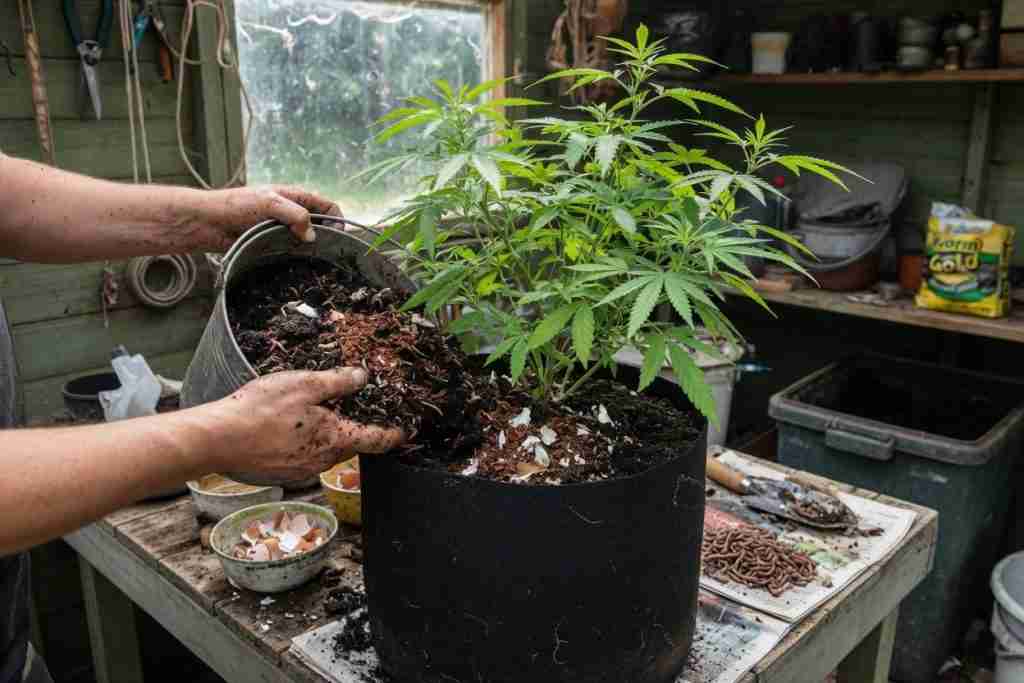
Poor feed and too much feed both wreck potency and smell. In flower the plant is building oil, not a hedge. Nitrogen that made sense in veg becomes a mute button after stretch. Dark, clawed fans around the buds in week six are not healthy green. That smoke tastes like lawn even if you dry it right.
Organic marijuana fertilizer is the long way around that problem if you use it as soil food, not as a salt dump. You are feeding microbes. The microbes feed the plant. Worm castings, compost, kelp, a little bone or fish when the plant is still stretching, then you stop chasing green. The plant takes what it can chew. It is harder to torch the root zone than with a bottled 3-part at 2.0 EC. It is not magic. You can still overdo blood meal and sit in nitrogen until harvest. The full how-to is here: organic marijuana fertilizer. Salt feeds have their place. They also burn: synthetic cannabis fertilizers.
Nitrogen in late flower is a terpene killer
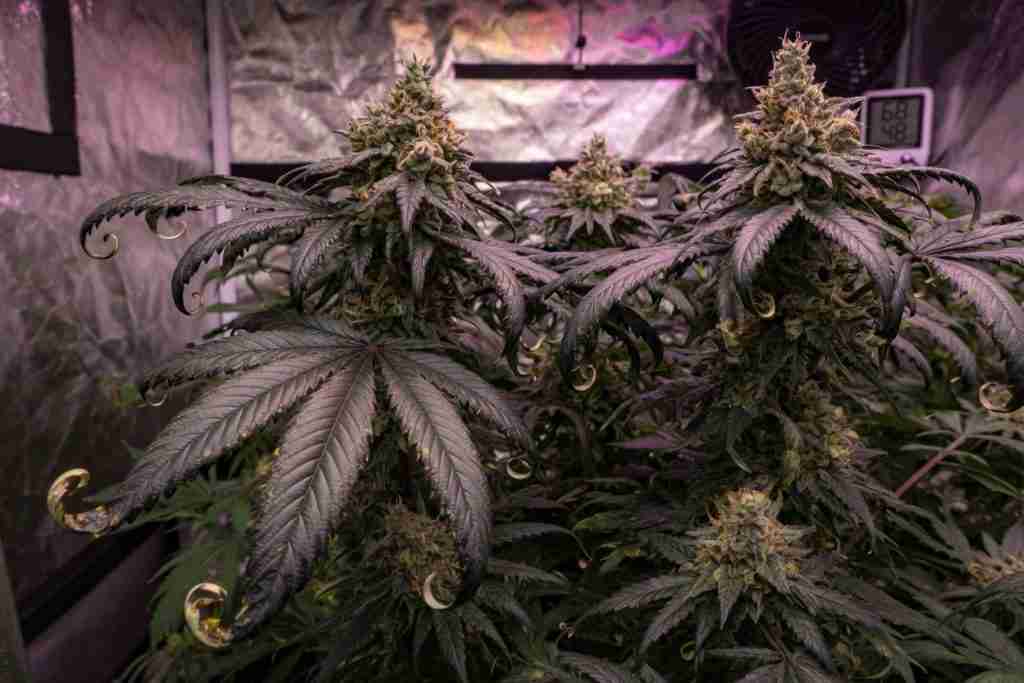
Drop N after stretch. Raise potassium. Keep calcium and magnesium honest under LEDs. Sulfur is the quiet one: terpene molecules need it, and a lot of cheap bloom bottles barely have any. Gypsum, a bit of Epsom if the leaves ask, or a soil mix that already has it. Do not invent a sulfur tea in week eight. You will taste it.
If the plant is hungry in mid flower — pale new growth, weak stacking, small oil heads — that is not a flavor flush. Feed it. A planned fade in the last 10 to 14 days is fine. Starving from week five makes airy, mute buds. Deficiencies get misread as fade: flowering-stage nutrient deficiencies.
If you run living soil, get biology in at transplant, not as a panic dump in week seven: microbial inoculants, organic growing amendments, or bottled math in advanced nutrient management.
pH lockout will fake a feed problem. You pour bloom, the plant yellows, you pour more, the salt climbs, the nose dies. Measure runoff. If you are 5.4 or 7.4 in soil, stop adding bottles. Correct the water. Then wait. The trichomes you already lost to a month of lockout do not grow back because you bought cal-mag.
Harvest Time and Scent Development
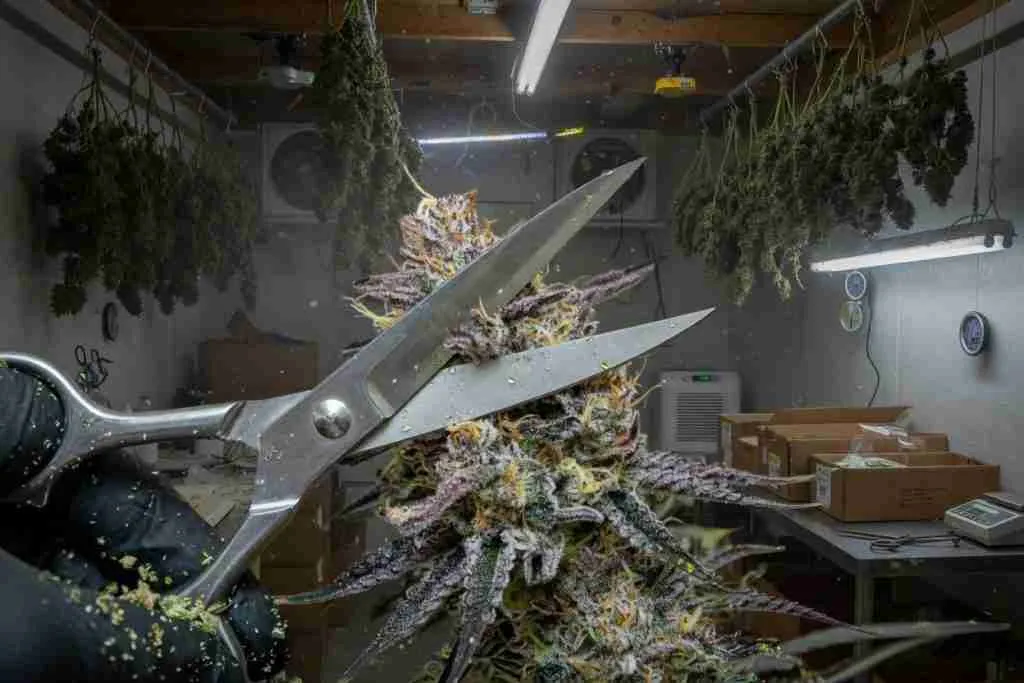
Chop too early and you leave THC and terpenes on the table. Trichomes go clear, then cloudy, then amber. Cloudy is peak punch for most people. A little amber is a heavier sit. All clear is a racy, thin high and a green smell. The seed pack’s “56 days” is a guess. Heat, light, and feed move that window a week either way. Look at the heads with a loupe, not at the calendar. Handle those glands like glass: gentle harvest tools and handling.
Signs the plant is actually ripe
- Most pistils on the top colas have browned and receded. Lower sites lag. Harvest the tops first if you have to.
- Calyxes swell. The bud looks fat, not just hairy.
- Trichome heads are mostly cloudy, a few amber, almost no clear on the calyxes. Ignore the fan-leaf trichomes. They amber first and lie.
- The stem rub and the cola smell like the finished cultivar, not like grass.
Harvest too late and you get more CBN, a sleepy high, and terpenes that already started leaving. The plant does not keep gaining potency forever. It peaks, then it oxidizes on the stem. Indoors, you have no excuse for chopping on day 42 because you were bored.
Whole-plant hang if the room is right. It slows the dry and protects the oils. If the room is 80°F, do not hang whole plants and hope. You will cook them. Cut branches. Get the room right. Then hang. More on the finish: harvest and cure for potency and flavor and maximizing THC production.
Drying Without the Hay Smell
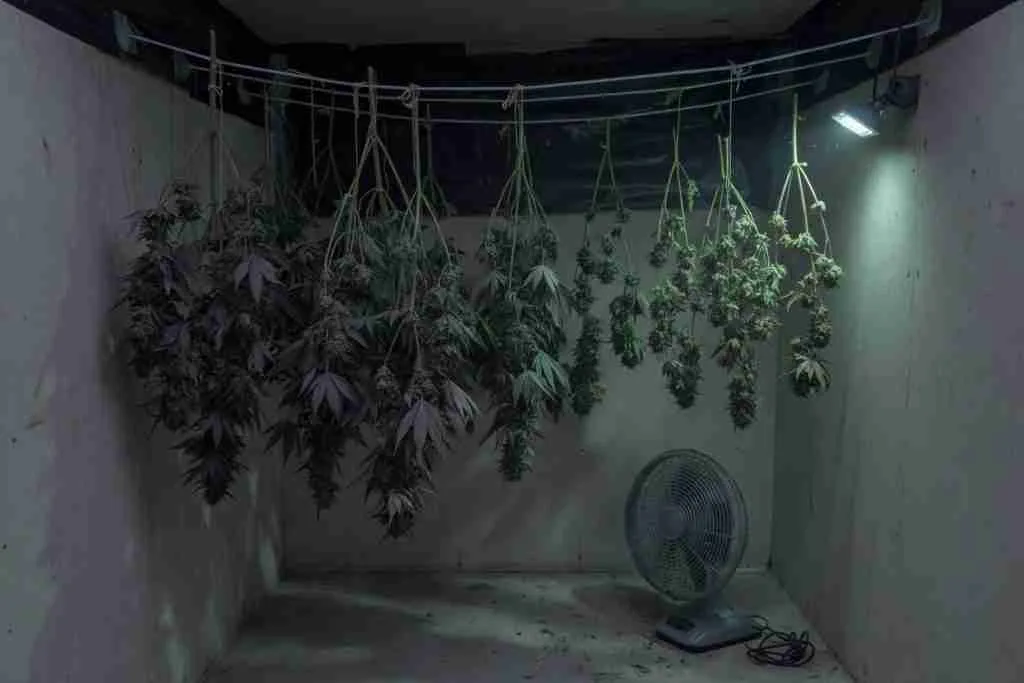
This is where most “my buds have no smell” stories actually start. The plant smelled fine on the stem. Then a heater, a dehumidifier at 30%, and a fan straight at the colas. Outside crispy in two days, inside still wet. Enzymes that break chlorophyll down need a slow, cool dry. Interrupt them and you get hay. The terpenes already left with the heat.
Target about 60°F (15 to 16°C) and about 55 to 60% RH for 10 to 14 days. Small popcorn dries faster. Fat colas take the full two weeks. Stems should bend and then almost snap. If the stem snaps on day four, you went too fast. Darkness. Gentle air in the room, not on the flowers. No heater. No clothes-dryer thinking. Studies on cannabis drying keep repeating the same ugly number: a hot dry can cut terpene weight by a third or more compared with a cool one. You can taste that from across the room.
If day five smells like a freshly cut lawn and not like the cultivar, the dry is already off. Lower the temperature. Raise humidity a little. Slow down. You will not get every terpene back, but you can stop the rest from leaving. Direct fan on hanging buds is how you case-harden them: dry shell, wet core, hay forever.
The Right Way to Cure Cannabis
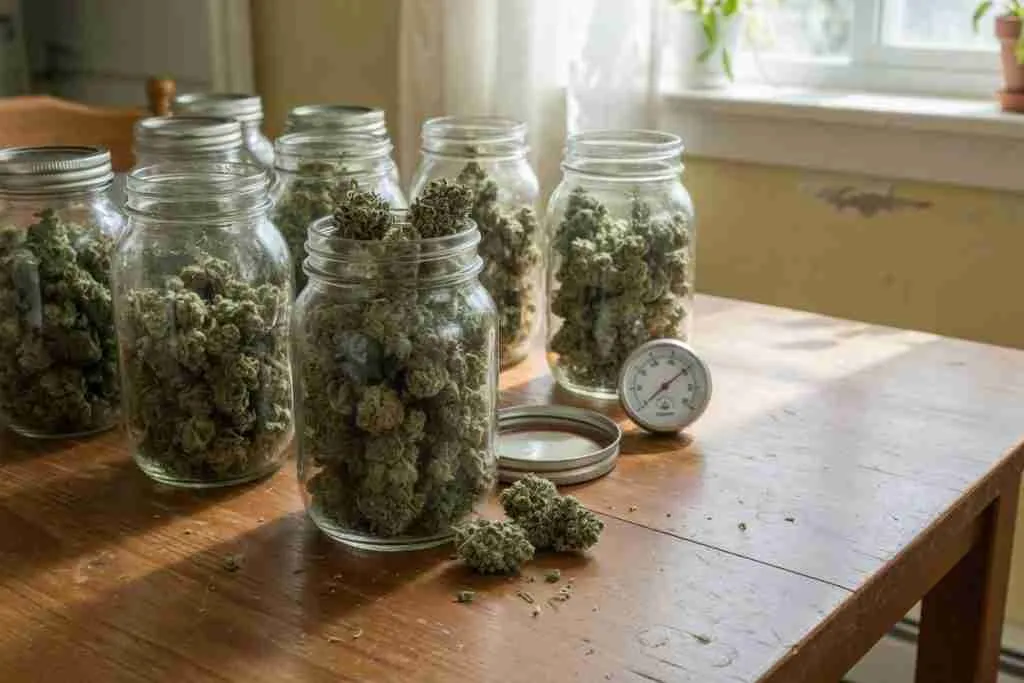
Curing is not a fancy word for sitting in a jar. After the dry, the outside is ready and the inside still holds moisture and chlorophyll. Jar it so moisture equalizes and the loud notes come forward. Glass, three-quarters full, a cheap hygrometer in one jar. You want roughly 58 to 62% RH. 65% and climbing is a mold bet. 50% and falling is a dusty, mute jar.
Burp daily for the first week: open 10 to 15 minutes, smell, close. If it smells like grass, keep going. If it smells like ammonia, you jarred too wet. Dump it back on a rack in the dry room for 12 to 24 hours, then jar again. After week one, burp every few days. Two weeks is the minimum anyone should call a cure. Four weeks is when a lot of fruit and gas cuts actually show up. Some people go 8. That is taste, not a law.
Hay, ammonia, or nothing in the jar
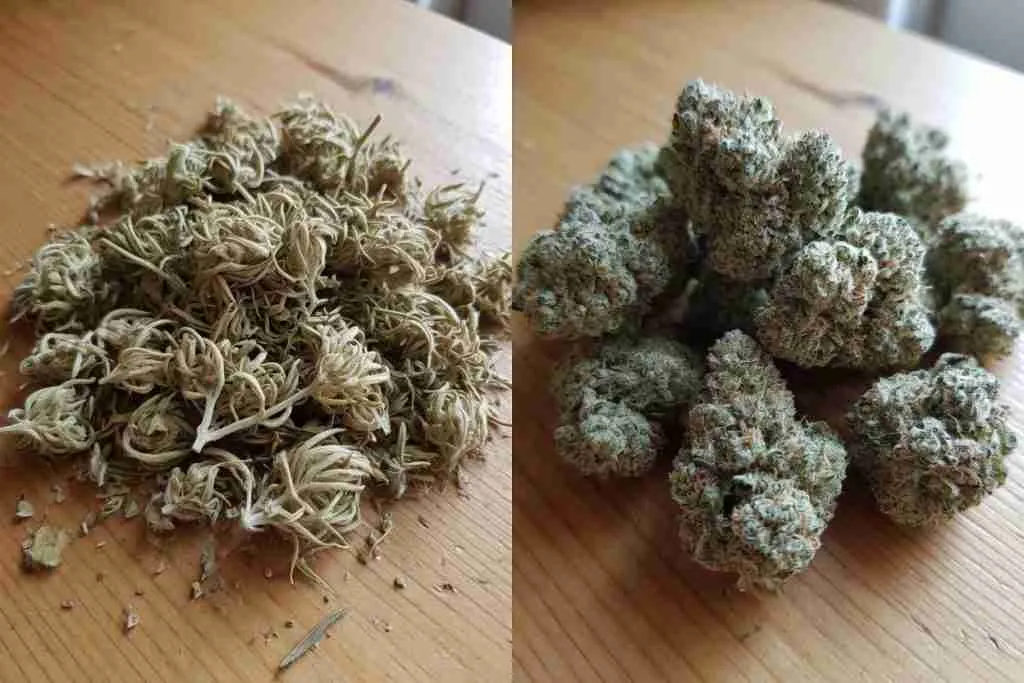
Hay in the first days of cure can still fade if the dry was only a little fast and the RH in the jar is in range. Give it two weeks before you call the run dead. Hay that is still hay on day 21, with brittle buds, is locked in. You dried too hot or too fast. You cannot orange-peel that back to life. A Boveda pack will soften the smoke. It will not invent terpenes.
Overdried flower can take a little moisture back. Do it slowly, with a humidity pack, not a wet lettuce leaf rotting in the jar: rehydrating over-dried buds. If the jar smells like a basement, inspect with a loupe. White fuzz in the creases is mold. Trash it. Lungs are not a flavor experiment.
Storage After the Cure
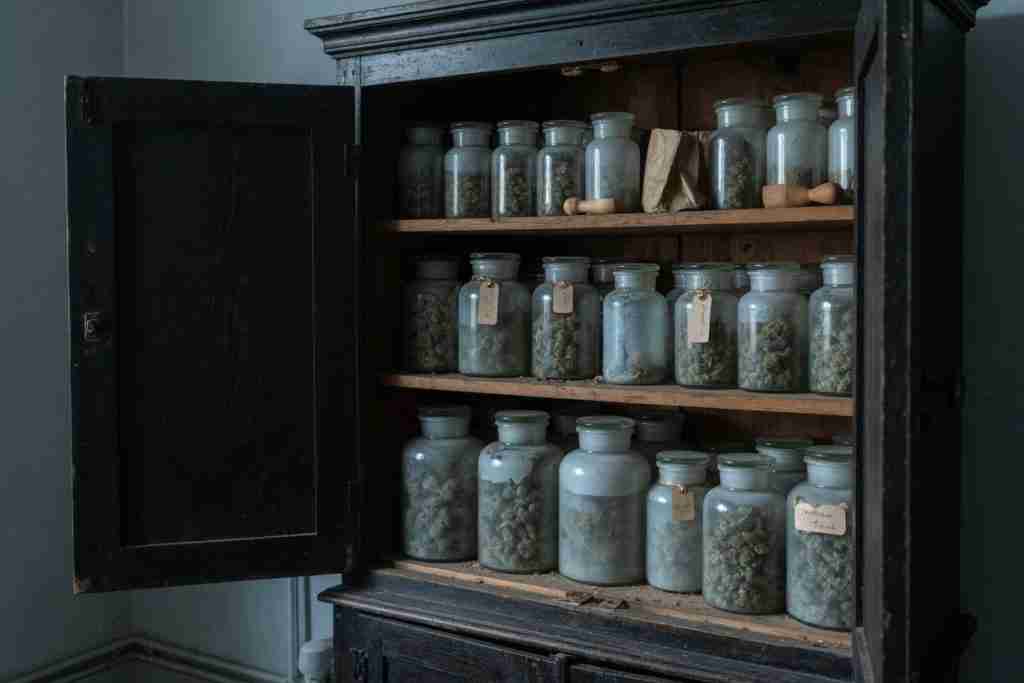
The old page said store in the dark at 2 to 6°C and that potency drops after about a month and a half. That fridge range works for long-term if humidity is controlled and you do not open a cold jar in a humid kitchen so it sweats. For a jar you actually smoke, a cool dark cupboard is simpler. Glass, not much headspace, 58 to 62% RH. Light, heat, oxygen, and a hot car flatten a good cure in weeks. A sealed jar in a closet lasts months. Do not freeze-thaw flower. Ice crystals rupture the heads.
Troubleshooting a Cannabis Plant With No Potency or Smell
Work this list in order. Do not change feed, light, and harvest day in the same afternoon or you will not know what worked.
- Is it week 3 of flower? Wait. Rub a leaf. Come back in two weeks.
- Is the carbon filter or ONA eating the room? Shut them off for one check.
- Did you go nose-blind? Ask someone else.
- Are two plants in the same tent different? Pheno. Keep the loud one.
- Canopy over 80°F late flower? Dim, raise the light, cool the nights.
- Leaves dark and clawed in week 6+? Cut nitrogen. You are muting the oil.
- Runoff pH out of range? Fix water before you buy another bottle.
- Trichomes still clear? Do not chop. You are harvesting hay on purpose.
- Dry finished in under a week, room hot? That is your hay. Slow the next one to 10–14 days at ~60/60.
- Jar smells like ammonia? Too wet. Dry it back out. Inspect for mold.
- Jar smells like nothing after a month on a shelf in the sun? Storage. Next batch goes in the dark.
If every plant from a cheap pack is mute after a clean dry and a four-week cure, stop blaming the tent. Change genetics. You cannot rescue a finished hay jar into a gas jar. Smoke it if it is clean, or make butter, and run the next plant cooler, with less nitrogen, and a later chop. The usual ways people get hay: most common cannabis growing mistakes.
Quick answers
Does no smell mean no potency? Not always. THC is odorless. A quiet pheno can still hit. In practice, the same heat, early chop, and bad dry that kill the nose also flatten the high. Treat a dead nose as a quality warning, then confirm with a loupe and, if you care, a test.
Why does my weed smell like hay? You dried it too fast or too warm, or you never cured it. Chlorophyll stayed. Terpenes left. Slow, cool, dark, 10 to 14 days, then jars.
Can I fix hay smell after the fact? A little, if the jar is only a week in and RH is right. A lot, no. Next run is the fix.
My plants look frosty and still do not smell. Frost is trichomes. Smell is what is in them. Could be early, a quiet pheno, heat, or a filter. Crush a bract. If it still reads as nothing in week seven on a known loud cut, look at temperature and nitrogen.
Will organic fertilizer make louder buds? It will not rewrite DNA. It will keep you from salt-burning the plant in week six, which is how a lot of loud cuts go quiet. Feed the soil, taper nitrogen, keep pH in range. That is the organic path that actually shows up in the jar.