Why are my Cannabis Plant dying from the Top Down?

You’ve been pouring your heart into those cannabis plants, checking on them every day like they’re family. Then one morning you step into the grow tent and your stomach drops. The tops look crispy, yellowing, or straight-up dying while the bottom leaves still look pretty decent. That sinking feeling hits hard when you realize your cannabis plant is dying from the top down.
Don’t panic just yet. This frustrating pattern actually gives you a huge clue about what’s gone wrong. Unlike bottom up cannabis dying (where old lower leaves yellow and drop first), top down problems almost always point to issues hitting the brand-new growth hardest. Whether it’s immobile nutrients the plant can’t move from old leaves to new ones, lights cooking the canopy, or something sneaky in the root zone, you can fix most of these if you catch them early.
In this guide we’ll walk through exactly why your cannabis plant dying from the top down happens, how to tell it apart from other issues, and step-by-step fixes that actually work. You’ll also pick up prevention tricks so this never ruins another grow. Let’s get those tops green and happy again.
Spotting the Signs Your Cannabis Plant Is Dying from the Top Down
The first step is confirming you’re truly dealing with top down trouble and not something else. Pull up a chair (or a stool in the tent) and really look.
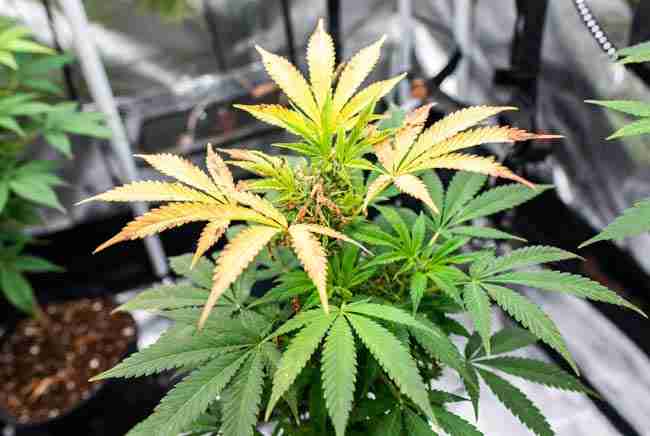
You’ll usually notice the newest leaves and growing tips at the very top of the plant or main colas turning yellow first, then browning at the edges or tips. New growth might look twisted, stunted, or full of brown spots while the big fan leaves lower down stay green and full. In bad cases the top shoots stop growing altogether or the tiny new leaves at the apex just wither away. Sometimes the tallest colas droop even though the rest of the plant stands tall.
On the flip side, if you’re seeing lots of dead bottom leaves while the tops stay green and pushy, that’s classic bottom up cannabis dying — usually a mobile nutrient issue like nitrogen deficiency. Good bottom leaf density early in veg is actually a sign of strong roots and healthy plants. When that density suddenly collapses only at the bottom while tops suffer, you know the problem sits up high or in the roots’ ability to feed new growth.
What’s more, these top symptoms often appear suddenly after you raised lights, added new nutes, or had a heat spike. Keep a little grow journal — it makes connecting the dots way easier later.
Top Down vs Bottom Up Cannabis Dying – Why Location Tells the Whole Story
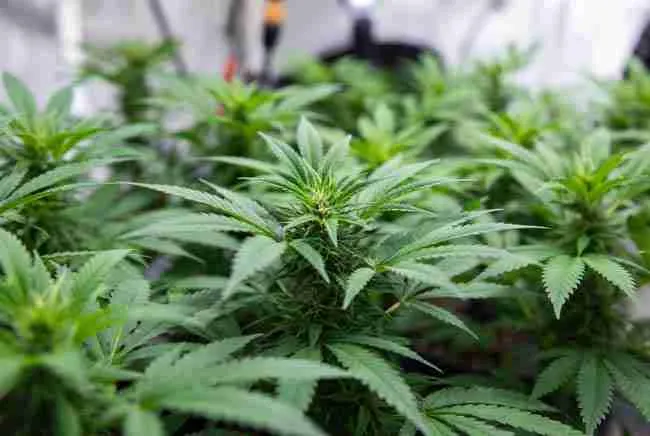
Here’s where the science gets simple and super useful. Cannabis plants move some nutrients around like money in a bank account. Others stay put once they’re deposited in a leaf.
Mobile nutrients (nitrogen, phosphorus, potassium, magnesium) can be pulled from old lower leaves and sent up to feed new growth when supplies run low. That’s why deficiencies show up first as yellowing or dead bottom leaves — the plant sacrifices the old stuff to save the tops.
Immobile nutrients (calcium, boron, iron, and most micros) get locked into the leaf they land in. The plant literally cannot move them to the new growth up top. So when there’s a shortage or lockout, the fresh tips and young leaves at the top suffer first while everything below looks fine. That’s your cannabis plant dying from the top down in a nutshell.
On top of that, environmental hits like light burn or heat stress physically damage the leaves closest to the lights — which are almost always the top canopy.
Here’s a quick comparison table to keep handy:
| Nutrient / Issue Type | Examples | Where Symptoms Show First | Typical Look on Leaves | Quick Fix Direction |
|---|---|---|---|---|
| Mobile nutrients | Nitrogen, Magnesium | Bottom / old leaves | Even yellowing, then brown crispy | Feed or correct pH, watch lower leaves green up |
| Immobile nutrients | Calcium, Boron, Iron | Top / new growth | Brown spots, twisting, interveinal yellow | Add CalMag or targeted micros, fix pH |
| Light / Heat stress | Too close LEDs or high temps | Top canopy directly under lights | Bleached white/yellow, crispy edges, praying leaves | Raise lights, improve airflow & exhaust |
| Root uptake failure | Overwatering, root rot, lockout | Often starts top or whole plant | Wilting new growth, yellow tops | Fix watering, add beneficials, repot if needed |
See how the location of the damage points straight to the cause? That’s your roadmap.
Immobile Nutrient Deficiencies – The Number One Reason for Top Down Dieback
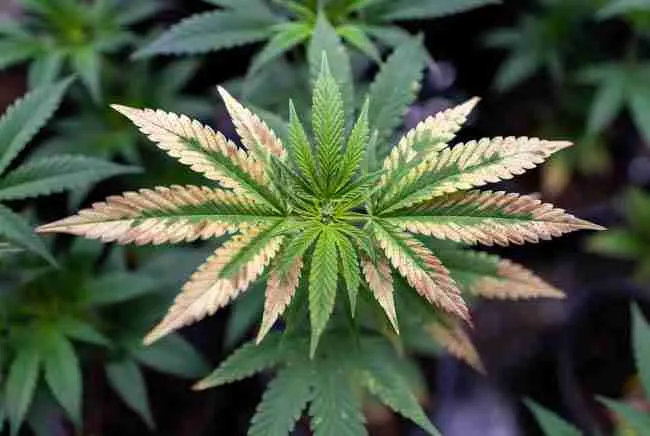
When your cannabis plant dying from the top down shows brown spots or twisted new leaves, calcium deficiency is the usual suspect. Calcium builds strong cell walls. Without enough, new leaves develop brown or bronze patches, edges curl or die back, and stems turn weak or even hollow. You’ll see it worst on the fastest growing parts right at the top.
Boron deficiency hits even harder at the growing points. New tips thicken, twist, or straight-up die. The plant looks like it got topped by nature. Side shoots may explode but stay weak. It’s rarer, but once you see dying terminal growth up top you should rule it out fast.
Iron deficiency shows as bright yellow new leaves with green veins (interveinal chlorosis) right at the canopy top. It often tags along with calcium or magnesium problems.
Most of these trace back to pH lockout more than actual shortage. In soil you want 6.0–7.0. In coco or hydro aim for 5.8–6.3. Drop below 6.2 and calcium uptake tanks even if it’s sitting right there in the medium.
Pros of using a good CalMag supplement: Fast results, works in soil/coco/hydro, easy to dial in. Cons: Can build up salts if you overdo it; some organic growers prefer slower natural sources.
Pros of dolomite lime or bone meal in soil: Long-term slow release, improves structure, organic friendly. Cons: Takes weeks to work, not great for quick rescues or hydro/coco.
Start with a targeted CalMag drench or light foliar (early morning only, and never on flowering buds you plan to smoke). New healthy growth should appear within a week. Old damaged leaves won’t recover — that’s normal. Just focus on the fresh stuff coming in.
Light Burn and Heat Stress – When Your Lights Are Literally Cooking the Tops
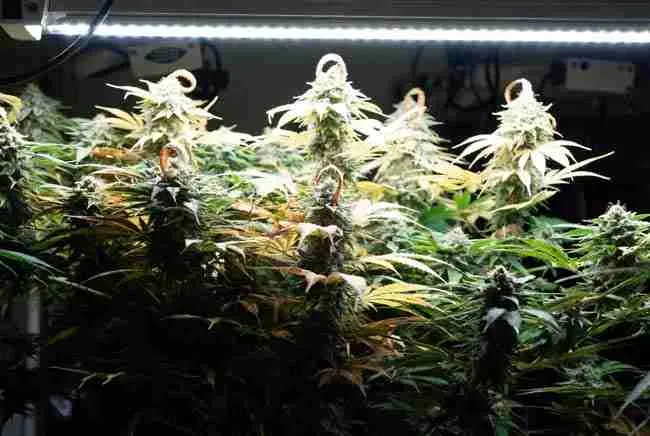
Another super common cause of cannabis plant dying from the top down is simply too much light or heat hitting the canopy. LEDS especially can bleach leaves pure white or pale yellow right under the fixture while everything lower stays dark green. Leaves cup upward like they’re praying for mercy, edges turn crispy, and the tallest colas may droop or bleach out completely.
You’ll often see this right after you hung lights closer, added a new stronger fixture, or during a summer heat wave when tent temps climb above 82–85°F (28–29°C) at canopy level.
How to tell it from nutrient problems: Light burn stays worst directly under the light and on the uppermost leaves. Nitrogen deficiency starts at the bottom and works its way up. Light burn leaves feel crispy and brittle; deficiency leaves often feel soft or papery.
Fixes are refreshingly simple. Raise your lights a few inches (or more for powerful LEDs — many need 18–24 inches in flower). Use an infrared thermometer or just feel the top leaves with your hand — they shouldn’t feel hot. Improve exhaust and oscillating fans so hot air doesn’t pool at the top. In really hot rooms, consider a small AC or chiller.
Pro tip: Healthy, well-fed plants tolerate higher light levels. Fix any nutrient or pH issues first and you can often push lights a little closer for bigger yields without the burn.
Pests That Love Tender Top Growth
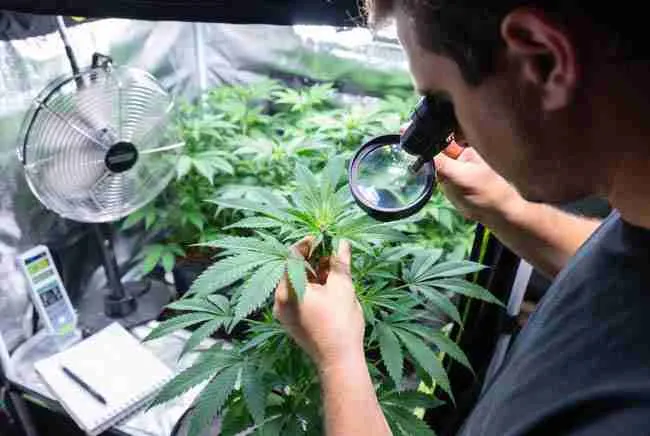
Spider mites, thrips, and aphids all zero in on the succulent new growth at the tops. You might see tiny stippling (dots), fine webbing, or distorted twisted new leaves that look a lot like a nutrient problem at first glance.
Because they reproduce fast in warm dry conditions, a small infestation can explode and hit the top hardest before you notice anything on lower leaves.
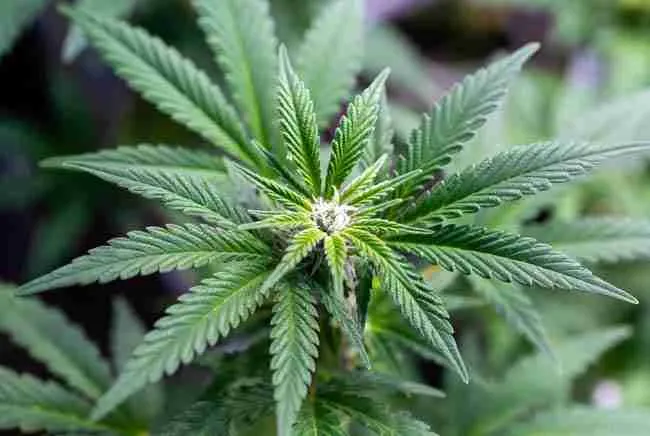
Grab a cheap loupe or phone macro lens and check the undersides of new leaves and the very top shoots. Yellow sticky traps help catch adults. Beneficial predatory mites work wonders as prevention and cure. Neem oil or insecticidal soaps give quick knockdown but repeat every few days and avoid during heavy flowering.
Quarantine any new clones or plants for at least two weeks. One sneaky infested plant can ruin a whole tent.
pH Imbalances and Nutrient Lockout – The Silent Top Killer
Even if you’re feeding plenty of calcium and micros, wrong pH locks them out and your cannabis plant starts dying from the top down. Roots simply can’t grab what they need.
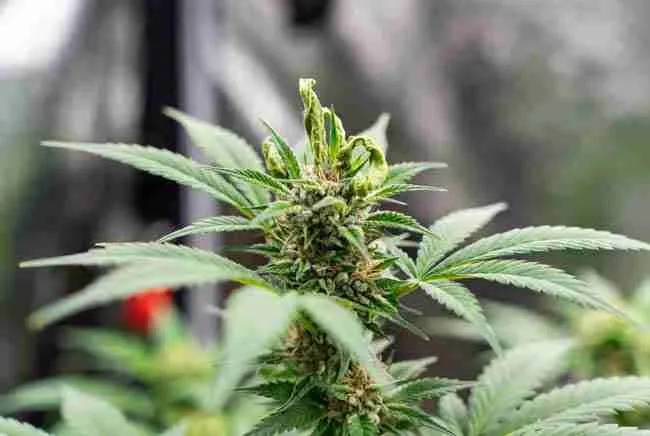
Test your runoff or reservoir pH every few days. If it’s drifting, flush with properly pH’d water (add a light dose of nutrients or CalMag) and then resume normal feeding at the correct range. In soil, dolomite lime or pH Up/Down products help stabilize. In hydro/coco, stay on top of daily pH swings.
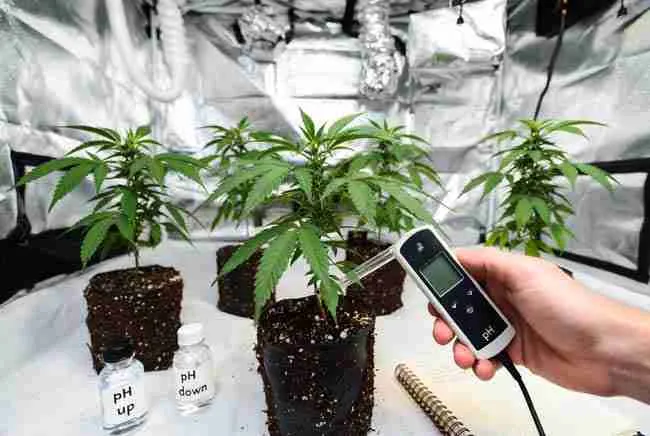
Hard water with high bicarbonates can also tie up calcium over time — another reason many growers add CalMag preventively.
Root Zone Problems That Show Up at the Top
Here’s a sneaky one. Severe root rot, root bound plants, or constant overwatering damages the roots’ ability to take up immobile nutrients. The tops suffer first because that’s where the plant is trying to grow fastest.
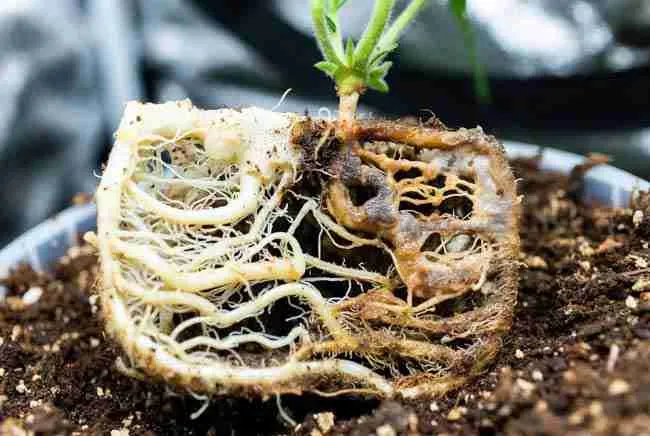
You’ll often see wilting new growth even though the soil feels wet, or yellowing tops that don’t respond to CalMag until you fix the roots. Lift your pots — light pots that should be heavy mean underwatering or root death. Heavy soggy pots point to overwatering and possible rot.
Fixes include letting soil dry properly between waterings (lift test is your friend), adding beneficial microbes or mycorrhizae, and repotting into fresh aerated mix if roots are circling or slimy. In hydro systems, keep temps 65–72°F (18–22°C) and change res regularly.
Environmental Stressors – Low Humidity, Bad Airflow, and Wind Burn
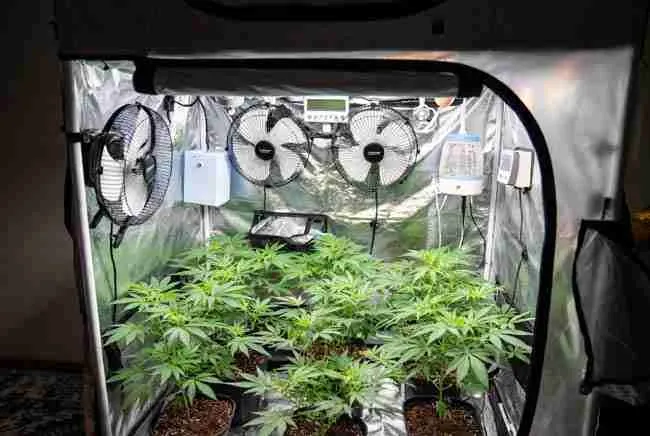
Low humidity (below 40% in veg or 50% in flower) makes plants transpire like crazy. The fastest growing parts — the tops — can’t keep up and tips die back. Direct fans blasting the top canopy cause wind burn: clawing leaves, dry crispy edges, and stunted new growth that looks like nutrient burn.
Aim for good VPD (vapor pressure deficit) — roughly 0.8–1.2 kPa in veg and 1.2–1.6 in flower. Use a cheap hygrometer/thermometer and oscillating fans that move air around the whole plant, not just straight at the tops. A small humidifier or dehumidifier makes a massive difference in small tents.
Your Step-by-Step Diagnostic Checklist for Cannabis Plant Dying from the Top Down
Work through this in order — most growers nail the problem in the first three steps.
- Confirm the pattern: Only new top growth affected? Or whole plant wilting?
- Check light distance and canopy temperature with an IR gun or your hand. Raise lights if tops feel hot or look bleached.
- Inspect new leaves and growing tips with a loupe for pests, webbing, or stippling.
- Test soil or runoff pH and EC. Adjust into proper range and add CalMag if needed.
- Lift pots and check root health if possible. Fix watering habits immediately.
- Review recent changes: new lights, nutes, heat wave, or clones introduced?
- Take photos and notes, then make one change at a time so you know what worked.
Proven Fixes to Revive Your Cannabis Plants Fast
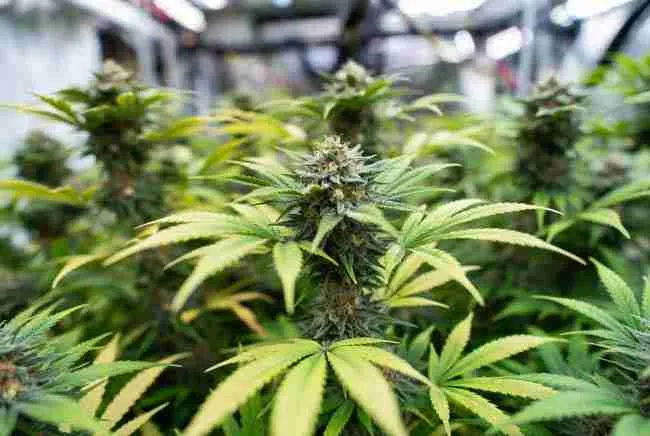
Once you know the cause, act fast but don’t overcorrect.
For immobile nutrient issues: pH-correct CalMag drench plus a very light foliar spray (1/4 strength, early lights-on only). Expect fresh green growth in 5–10 days.
For light/heat burn: Raise lights, boost exhaust and airflow, drop temps if possible. Damaged leaves won’t recover but new growth will be fine.
For pests: Hit with beneficials or approved sprays, repeat as needed, and keep the tent clean.
For root problems: Adjust watering, add microbes, and consider a light flush with beneficial tea if rot is suspected.
In every case, remove badly damaged leaves so the plant doesn’t waste energy on them and pests don’t move in. Then focus on the new growth coming in — that’s your success meter.
Prevention Strategies So You Never Deal with Top Down Dying Again
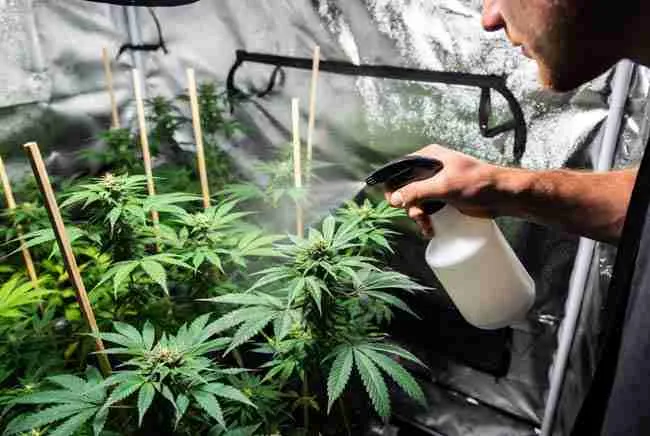
The best cure is never needing one. Keep these habits going and your plants will reward you with dense, healthy canopies from top to bottom.
- Always use a quality CalMag product (or natural sources in soil) especially in coco, RO water, or hard water areas.
- Maintain proper pH religiously — it prevents 80% of nutrient headaches.
- Train plants (LST, topping, SCROG) for an even canopy so no single top gets cooked under the lights.
- Monitor VPD and airflow daily. Good bottom leaf density plus strong tops equals happy roots and great yields.
- Start IPM on day one — yellow traps, beneficials, and clean practices beat chasing infestations later.
- Choose resilient genetics from trusted sources like Green Avenger Seeds. Strong plants handle small mistakes better.
FAQ: Your Most Common Questions About Cannabis Plant Dying from the Top Down
Can overwatering cause my cannabis plant dying from the top down?
Yes, indirectly. Overwatering suffocates roots, leads to rot, and stops uptake of immobile nutrients like calcium. The tops show the damage first because that’s where new growth demands the most resources. Fix your watering schedule and add beneficial microbes right away.
How is bottom up cannabis dying different from top down?
Bottom up usually means mobile nutrient deficiencies (nitrogen, magnesium) where the plant pulls resources from old lower leaves, leaving dead bottom leaves while tops stay green. Top down points to immobile nutrients, light burn, or root uptake failure hitting new growth first.
Will damaged top leaves recover once I fix the problem?
Old damaged leaves rarely turn green again. Focus on the new growth emerging after you correct the issue. Healthy new tops and buds are the real sign you’ve solved it.
How long until I see improvement after adding CalMag or fixing lights?
You should see fresh healthy green growth within 5–10 days. Full recovery of the plant’s vigor takes a couple of weeks depending on how severe the damage was.
Can I still get good yields if my plant had top down dying early on?
Absolutely. Once you fix the cause, plants are incredibly resilient. Many growers see excellent harvests after early intervention. Just be patient with the damaged parts and nurture the new growth.
Is it safe to foliar spray CalMag during flowering?
Light foliar feeds early in flower are usually fine if you use very dilute solution and spray early in the light cycle so leaves dry fast. Avoid heavy spraying once buds are fattening to prevent residue or mold risk.
What’s the single best prevention for cannabis plant dying from the top down?
Consistent pH management plus a good CalMag routine in your feed schedule. That one habit stops the majority of top down problems before they ever start.
You’ve got this. Most top down issues are straightforward once you know where to look. Take it one step at a time, trust what the plants are telling you with their leaf patterns, and you’ll turn this around. Your next canopy is going to look fantastic — strong from the bottom leaves all the way up to those happy green tops.