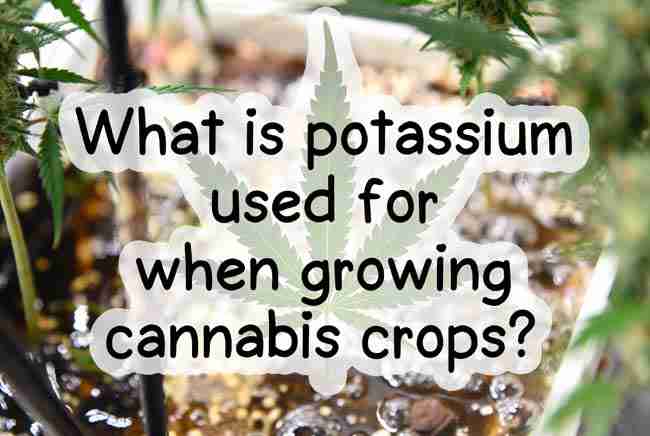
What is potassium used for when growing cannabis crops?

If you’re knee-deep in your cannabis garden and wondering why some plants are packing on fat, resinous buds while others look a little sad and spindly, chances are you’re missing the magic of potassium for cannabis. You know how you feel after a big glass of water on a hot day? That’s basically what potassium does for your plants — it keeps everything flowing, strong, and ready to bloom like crazy.
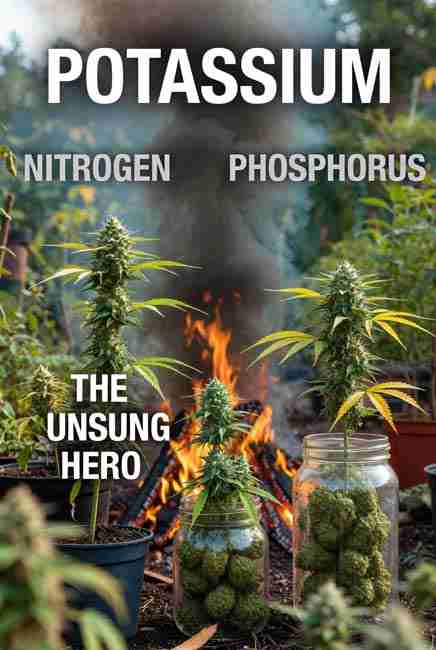
Think of potassium as the unsung hero in your nutrient lineup. Nitrogen gets all the glory for green leaves, phosphorus gets credit for roots and buds, but potassium? It’s the one quietly making sure your plants can actually use all that other stuff. Without enough cannabis potassium, you’ll see weak stems, tiny buds, and leaves that look like they’ve been through a bonfire. Let’s dive deep into how potassium works its magic, what your plants really need, and how you can give it to them the right way — so you end up with jars full of sticky, heavy, terpy goodness.
What is potassium for in cannabis?

Potassium (K) is one of the three big macronutrients your cannabis plants can’t live without. It’s not part of the plant’s structure like nitrogen or phosphorus, but it runs the show behind the scenes.
You’ll notice your plants using potassium for:
- Moving water and nutrients from roots all the way to the tips (osmosis and translocation)
- Opening and closing tiny pores (stomata) so the plant can breathe, cool itself, and take in CO₂
- Activating dozens of enzymes that turn sunlight into energy and sugars
- Building strong cell walls so stems don’t flop over and buds stay mold-resistant
- Fighting off stress from heat, drought, cold, pests, and even powdery mildew
- Helping the plant produce more trichomes, terpenes, and cannabinoids

In short, potassium for cannabis cultivation is like the plant’s personal trainer and delivery driver rolled into one — it keeps everything flexible, strong, and performing at peak levels all the way to harvest.
How much potassium does a cannabis plant need?
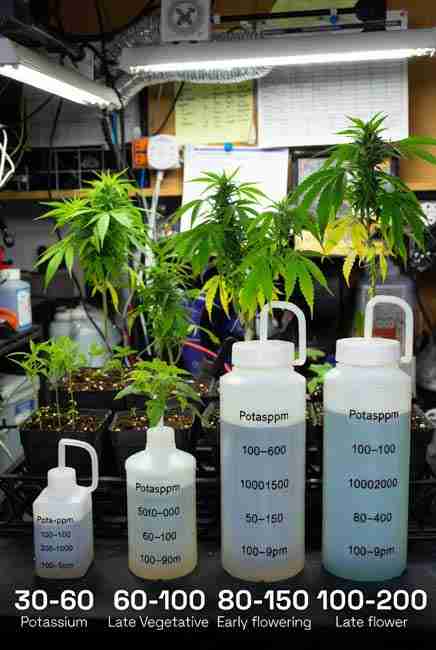
Cannabis plants are greedy for potassium, but they don’t need ridiculous amounts. Recent studies (North Carolina State, Israeli research, etc.) show that 40–80 ppm in your nutrient solution is often plenty during veg, and you can push it higher in flower without going overboard.
A practical rule of thumb most home growers use:
- Seedling/early veg: 30–60 ppm
- Late veg / clone rooting: 60–100 ppm
- Flowering weeks 1–4: 80–150 ppm
- Late flower (bulking weeks 5–7): 100–200 ppm (if your plant is really hungry)
- Last 2 weeks: taper down to 50 ppm or less for a clean flush

Some commercial hydro growers go 200–250 ppm in peak bloom and see bigger biomass, but newer research says anything over ~100–150 ppm often doesn’t increase yield or potency — it just risks locking out calcium and magnesium. Start low and watch your plants. They’ll tell you exactly what they need.
Does potassium help flowering?

Oh man, does it ever! Potassium is the ultimate flowering buddy. When your plants flip to bloom, they suddenly crave more K to:
- Pump up bud size, density, and weight
- Increase resin and terpene production (that sticky, smelly, flavorful goodness)
- Improve flavor, smoothness, and burn quality of the final smoke
- Help the plant move sugars and carbohydrates into the buds so they get heavy and frosty
- Strengthen cell walls so buds don’t mold even in humid conditions

If you skimp on potassium during flower, you’ll end up with airy, fluffy buds that look pretty but weigh almost nothing and have weaker terpene profiles. Give it what it wants and you’ll be weighing down branches and filling jars faster than you thought possible.
What does potassium do for buds? / What does potassium do for cannabis buds?

Picture this: your plant has been photosynthesizing like a champ all veg. Now in flower, potassium steps in and says, “Alright, let’s ship all that energy straight to the buds.” It helps:
- Thicken cell walls so buds don’t get moldy or foxtail
- Boost trichome production (more THC, CBD, and terpenes)
- Make buds denser, heavier, and more resinous
- Improve color, bag appeal, and shelf life
- Enhance the entourage effect so your buds smell and taste better
Growers who really dial in their potassium for cannabis often report buds that are rock-hard, super sticky, and smell like candy or fruit even after a proper cure. That’s not luck — that’s K doing its job.
What does potassium deficiency in cannabis look like?

This is the part that makes new growers panic. Potassium deficiency usually shows up on older, lower leaves first because the plant is mobile and pulls whatever K it has up to the new growth.
Classic symptoms (in order):
- Yellowing or browning at the leaf tips and edges (looks like nutrient burn, but veins stay green)
- Leaves curling upward or “clawing” like a taco
- Rusty brown spots or necrotic patches
- Leaves getting crispy, brittle, and falling off
- Weak, spindly stems that snap easily
- Small, airy, underdeveloped buds that never fill out
- Sometimes purple/red stems (especially in cool temps)

If you catch it early, your plant can bounce back fast. Wait too long and you’ll lose serious yield and potency.
How can I tell if my plant needs more potassium?
Simple checklist you can run through right now:

- Are the lower leaves yellowing at the edges while veins stay green?
- Do the leaf tips look burnt or necrotic?
- Are your buds looking small and light even though you’re in week 5–6 of flower?
- Did you recently flush or switch to plain water?
- Is your pH out of whack (K loves 6.0–7.0 in soil, 5.5–6.5 in coco/hydro)?
- Have you been running high calcium or magnesium lately?

If you answered yes to two or more — time to add some potassium!
What’s a good source of potassium for plants?
Here’s an expanded, battle-tested table of solid options:

| Source | Type | K Strength | Pros | Cons | Best For |
|---|---|---|---|---|---|
| Potassium sulfate (Sul-Po-Mag) | Synthetic/Organic | Very high | Fast, clean, adds sulfur & magnesium | Can burn if overdone | Hydro, coco, soil |
| Monopotassium phosphate (MK-P) | Synthetic | High | Adds P + K, perfect bloom booster | Expensive | Peak flowering |
| Kelp meal / seaweed extract | Organic | Medium | Trace minerals, hormones, slow release | Slower to become available | Soil & living soil |
| Wood ash | Organic | High | Free if you burn hardwood, adds calcium | Raises pH sharply, can have heavy metals | Acidic soils only |
| Banana peel tea | Homemade | High | Super cheap, easy, adds other micros | Can smell if not fermented properly | Flower stage, soil |
| Greensand (glauconite) | Organic | Low | Very slow release, adds iron & minerals | Extremely slow — use as long-term amendment | Soil building |
| Sulfate of potash (natural) | Organic | Very high | Clean, fast, OMRI listed | More expensive than synthetic | Certified organic grows |
| Comfrey tea / fermented plant juice | Homemade | Medium-High | Adds K + growth hormones | Needs fermenting time | All stages |
Do coffee grounds add potassium to plants?

Yes — but not a ton. Used coffee grounds are roughly 2-0.3-0.3 NPK, so they give a little potassium along with nitrogen and help acidify the soil. They’re great for veg or as a top-dress mulch, but don’t rely on them as your main K source in flower.
What is the best homemade potassium fertilizer?

Hands down, banana peel tea or comfrey tea. Banana peel recipe that works like crazy:
- Chop 4–5 ripe banana peels
- Put in a jar or bucket
- Cover with water (1 liter per 3–4 peels)
- Let sit 3–7 days (longer = stronger, stir daily)
- Strain, dilute 1:10 with plain water
- Water every 7–10 days in flower
You can also bury chopped peels directly around the base — they break down slowly and feed the roots plus microbes.
Other winners: comfrey tea, wood ash water (diluted + pH checked), fermented fruit juices, and even potato peel water.
What is the fastest way to add potassium to soil?

Foliar spray! Mix a soluble potassium product (potassium sulfate, MK-P, or a bloom booster) at half strength, pH to 6.0, and mist the undersides of leaves early morning or under lights-off. Plants can suck it up in hours instead of days. Great emergency fix when you see deficiency creeping in.

What happens if cannabis plant has too much potassium? / Can you give plants too much potassium?

Yep, too much is a real thing. Excess K locks out calcium, magnesium, iron, and sometimes zinc, so you’ll see:
- Interveinal yellowing (looks like Mg or Fe deficiency)
- Burnt leaf tips and margins
- Stunted growth
- Brittle stems
- Smaller buds than expected
- Dark green leaves that feel thick but plants look “off”
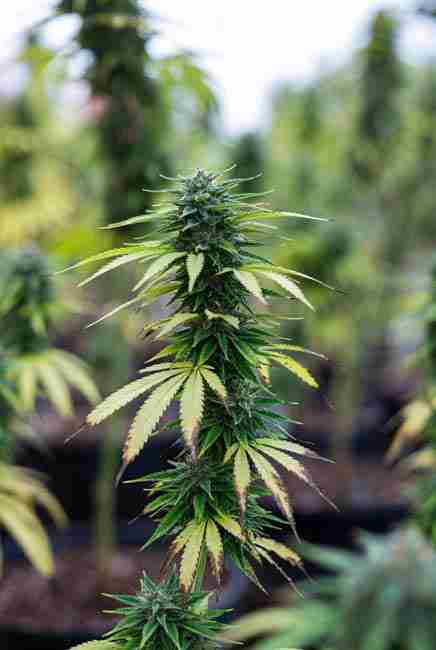
If you suspect overdose, flush with plain pH’d water for a few days and back off the boosters.
When to give potassium to plants?

- Light doses all through veg
- Ramp it up starting week 2–3 of flower (when buds start forming)
- Peak around weeks 4–6 when buds are really bulking
- Taper off in the last 2 weeks so you can flush clean
Potassium in different grow mediums
Soil / living soil — Potassium is usually plentiful, but microbes make it available slowly. Use organic sources and top-dress. Coco coir — Coco loves potassium but holds it loosely. You’ll often need 20–30% more than soil. Hydro / DWC — Fast uptake, so precise ppm control is key. Most hydro formulas are already high-K in bloom.
How potassium affects cannabinoids and terpenes
Higher (but not excessive) potassium levels have been linked to better trichome density and improved terpene expression in several studies. Too much K, however, can actually dilute cannabinoids and terpenes per gram of bud. The sweet spot seems to be around 60–150 ppm during flower for the best balance of yield + potency.
How Cold Temperatures Affect Potassium Uptake in Cannabis Plants
Man, cold weather can sneak up and sabotage your grow faster than you think — especially when it comes to potassium for cannabis. Your plants might have plenty of K sitting in the soil or nutrient solution, but if things get chilly, they just can’t grab it properly. It’s like trying to drink a thick milkshake through a tiny straw when it’s freezing outside — everything slows way down.
Here’s the deal: cannabis roots love warmth. When root zone temps drop below about 64°F (18°C), nutrient uptake — especially cannabis potassium — grinds to a halt. Roots get sluggish, metabolism slows, and the plant struggles to move water and nutrients around. Potassium is one of the first to suffer because it’s so mobile and needed in big amounts during veg and flower. Studies and real growers notice this a ton in hydro, DWC, and outdoor setups.
- Root zone below 64°F (18°C) → Potassium absorption drops sharply, even if your PPM is perfect.
- Below 57–60°F (14–15.5°C) → You start seeing classic K deficiency signs super fast: yellowing leaf edges, burnt tips, weak stems, and buds that stay small and fluffy.
- Cold water shock (watering with stuff under 53–55°F / 12°C) → Drops soil/substrate temp instantly, locks out K even worse.
- Nighttime dips below 64°F → Combined with day temps under 75°F, overall nutrient uptake tanks — phosphorus and potassium hit hardest.
Outdoors in places like Ontario or northern states, this is super common in early spring, late fall, or unheated greenhouses. Indoor growers see it when grow rooms get drafty, reservoirs aren’t heated, or lights are off too long in winter.
Real example from growers: One buddy in Barrie had beautiful veg plants, flipped to flower, then bam — lower leaves started browning at the edges like classic potassium deficiency. Turned out his basement was hovering at 60°F at night. He added a small seedling heat mat under the pots, bumped root zone to 68–70°F, and the problem cleared up in a week without extra nutes.
How to fight cold-induced potassium issues in your cannabis grow:

- Keep root zone 68–75°F (20–24°C) ideally — use heat mats, aquarium heaters in reservoirs, or insulating pots with bubble wrap/fleece.
- Never water with ice-cold tap water — let it sit out or warm it to room temp first.
- Outdoors: Mulch heavily around bases with straw, wood chips, or black plastic to trap soil heat.
- In cold snaps: Use row covers, cloches, or move pots inside temporarily.
- Boost slightly with foliar potassium sprays (like diluted kelp or MKP) — leaves can absorb it faster when roots are too cold.
- Watch pH extra close — cold makes lockouts worse if you’re outside the sweet spot (6.0–6.5 soil, 5.5–6.2 hydro/coco).

Bottom line: potassium for cannabis doesn’t just disappear in the cold — your plants just can’t use what’s there. Fix the temperature first, then tweak nutrients. Many “mysterious deficiencies” in fall or winter are really just chilly roots saying “I’m too cold to eat!”
Common mistakes growers make with potassium

- Thinking “more is better” and burning plants
- Ignoring pH (K locks out below 5.8 or above 7.0)
- Adding K when the real problem is calcium/magnesium lockout
- Using wood ash in alkaline soil
- Forgetting to flush at the end
Signs of potassium deficiency – quick list

- Older leaves yellowing from tips inward
- Brown crispy edges
- Leaves curling up like a taco
- Rusty brown spots
- Purple or red stems (sometimes)
- Buds that stay small and airy
- Plant looks “hungry” even though you’re feeding
FAQ – Potassium for Cannabis Questions Growers Ask All the Time
Q: Is potassium more important than phosphorus in flower?
A: They work together, but potassium is what actually fills out, densifies, and weighs down the buds.
Q: Can I use Epsom salt for potassium?
A: Nope — that’s magnesium sulfate. Wrong element!
Q: Do autos need less potassium?
A: They need steady, moderate levels — no huge spikes. They don’t have time to recover from mistakes.
Q: Will extra potassium make my buds taste better?
A: Yes — better terpene expression and smoother smoke when you dial it in right.
Q: Is wood ash safe for cannabis?
A: Only in small amounts and only if your soil pH is low. Test first!
Q: Does potassium help with mold resistance?
A: Absolutely — stronger cell walls and better stomatal control = less bud rot.
There you have it, friend — everything you need to know about potassium for cannabis to grow bigger, denser, frostier, more potent buds than ever before. Next time you see those lower leaves starting to brown at the edges, you’ll know exactly what to do.
Grab some banana peels, mix up a batch of tea, or dial in your bloom nutrients, and watch your plants thank you with massive, sticky harvests.