What is a Marijuana Perpetual Harvest: How to do it Correctly

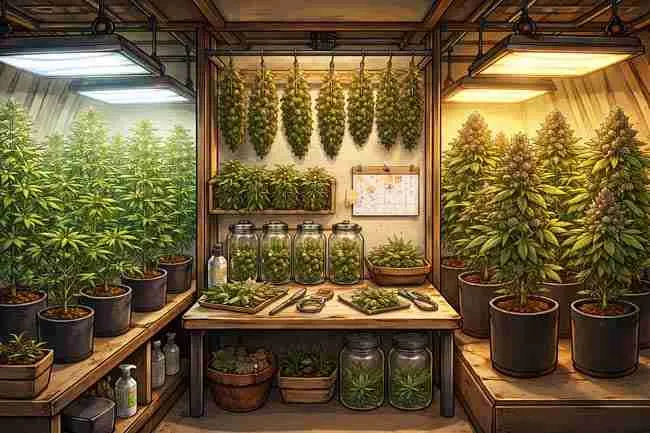
If you’ve ever chopped a plant, filled a jar, and then stared at an empty tent thinking, “Well… now what?”, you’re ready for a Perpetual Harvest.
A Perpetual Harvest means you stop doing “big harvests once in a while” and start doing small harvests on a schedule—so you always have plants growing, always have something drying, and always have something curing.
It’s like running a little bakery. You don’t bake 1,000 loaves one day and close for a month. You bake a steady amount, every week, so you never run out.
And yes—if you do it wrong, you’ll create a stressful mess: mixed plant sizes, bugs that never go away, weird feeding issues, and a harvest that comes “whenever it feels like it.”
So let’s do it correctly.
What is a perpetual harvest?
A Perpetual Harvest is a grow system where you start new plants regularly and finish plants regularly, so you harvest on a repeating cycle (like every 2 weeks, every 3 weeks, or every month).
Instead of this:
- Veg for weeks
- Flip to flower
- Harvest everything
- Clean everything
- Start over from scratch
You do this:
- Start a few plants today
- Start a few more next week
- Move a few into flower later
- Harvest a few on schedule
- Repeat forever
The real goal of a Perpetual Harvest
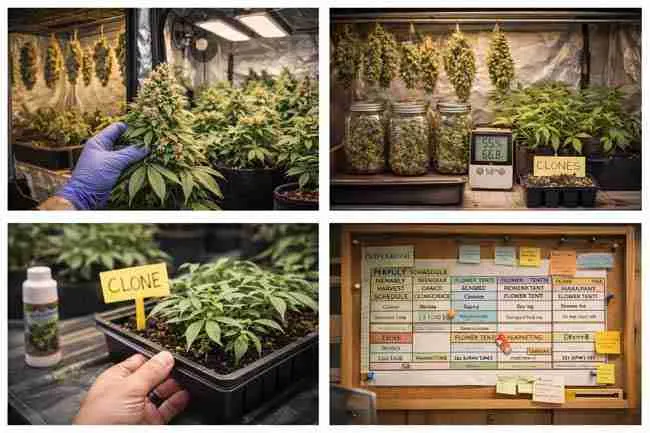
You want no dead weeks.
Dead weeks happen when:
- Your tent sits empty after harvest
- You wait for seeds to sprout after you already ran out
- You veg too long because you forgot to start new plants
A Perpetual Harvest fixes that by making your grow act like a calendar, not a gamble.
What a Perpetual Harvest is NOT
Let’s clear the junk out:
- It’s not “harvesting whenever a plant finishes.”
- It’s not “cramming plants into one tent at random.”
- It’s not “saving time by skipping cleaning.”
A real Perpetual Harvest runs on:
- stages
- timing
- space rules
- clean habits
Why growers love it
Because it hits the sweet spot:
- Steady supply
- Smaller trim days
- Less panic
- More learning (you get more “reps” faster)
And if you grow for personal use, it helps you avoid the classic mistake: harvesting everything, drying everything, curing everything… then running out before the next run finishes.
Why you should run a Perpetual Harvest
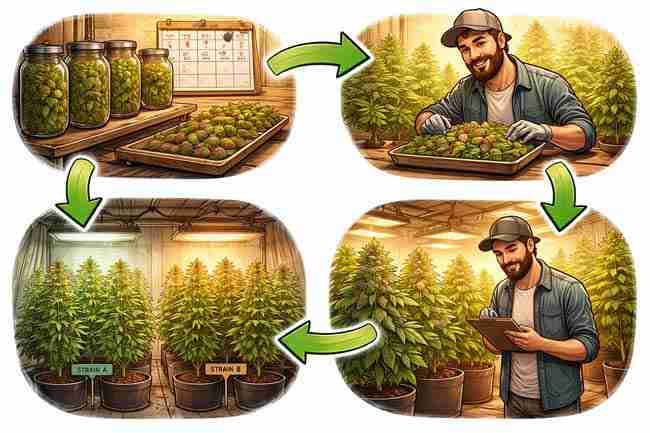
A Perpetual Harvest shines when you want consistency.
Big advantages
- Steady bud supply: You don’t hit “empty jar season.”
- Smaller harvest days: You trim a little, more often, instead of suffering for 12 hours straight.
- Better skill growth: You fix mistakes faster because you see new plants weekly.
- Flexible strain rotation: You can run two strains at once and still keep the rhythm.
The hidden advantage nobody talks about
You stop doing “grow-room amnesia.”
Grow-room amnesia means you forget what you did:
- Which feed caused tip burn?
- Which plant drank faster?
- Which week that deficiency showed up?
When you run a Perpetual Harvest, you keep notes because you’re always in the process. You build real skill, not just hope.
Perpetual Harvest pros and cons

You asked for it straight, so here it is.
Pros
- Fresh harvests on a schedule
- Less downtime
- More consistent quality
- Easier to fix mistakes quickly
- Better use of lights and space
- No “all eggs in one basket” harvest
Cons
- You can’t slack off: the schedule keeps coming
- Pest control must stay tight: problems can bounce between stages
- You need better organization: labels, dates, and routines matter
- Drying space becomes mandatory: you’ll harvest even when your last batch still cures
- Training timing gets trickier: you manage plants at different ages
If you hate routine, a Perpetual Harvest will annoy you. If you love steady progress, it’ll feel like cheating (in a good way).
The basic Perpetual Harvest layouts (choose your weapon)
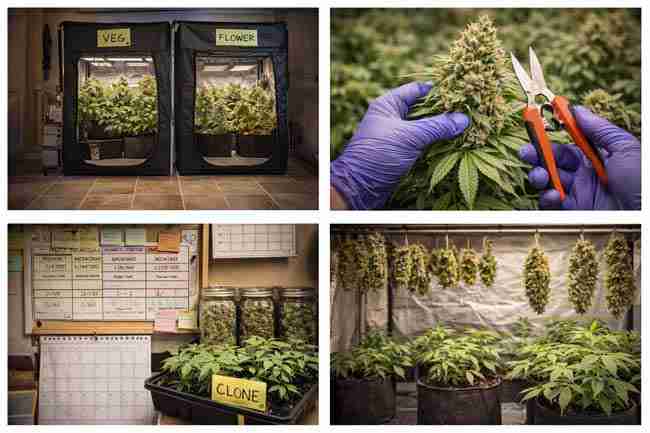
There are three classic ways to run a Perpetual Harvest. Pick the one that matches your space.
Layout 1: Two spaces (best for most growers)
- Veg space (18/6 or 20/4 light)
- Flower space (12/12 light)
You veg new plants while your flower tent finishes old plants. This setup runs smooth and simple.
Layout 2: Three spaces (best “pro-style” flow)
- Clones/seedlings
- Veg
- Flower
This setup gives you maximum control, but it demands more room and more gear.
Layout 3: One tent “micro-perpetual” (hard mode)
You try to do veg and flower in the same tent.
You can do it, but you fight these issues:
- Big plants shade small plants
- You can’t run perfect light schedules for both stages
- Humidity needs clash (veg likes higher RH, late flower likes lower RH)
- Pest outbreaks spread faster
If you only have one tent, you can still run a Perpetual Harvest, but you must plan tighter and accept compromise.
Perpetual Harvest specifications (simple targets that work)
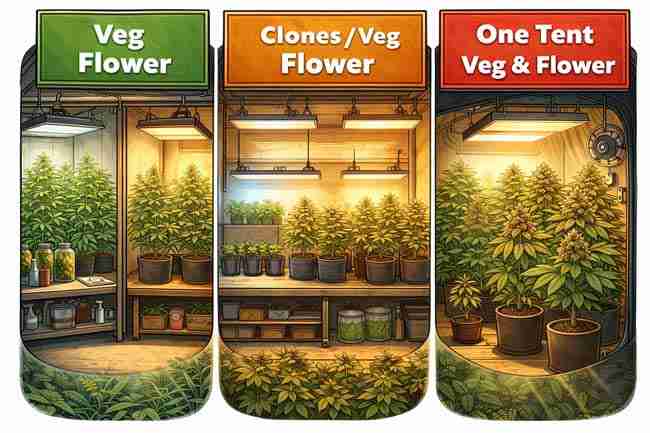
You wanted specifications, so here are practical, beginner-friendly targets you can actually hit.
Environment targets by stage
Seedlings / early veg
- Temp: 24–27°C (75–81°F)
- RH: 60–75%
- Gentle airflow, not wind
Veg
- Temp: 23–28°C (73–82°F)
- RH: 55–70%
- Stronger airflow
Flower
- Temp: 20–26°C (68–79°F)
- RH: 40–55% (lower near the end)
- Good air exchange and clean filters
Pot size guidelines (soil/coco)
- Seedling: small starter cup/pot
- Veg: 1–3 gallon (or final pot if you keep plants small)
- Flower: 3–7 gallon depending on plant size and space
Lighting basics (keep it simple)
- Veg: give steady light and stable distance
- Flower: keep 12/12 strict (no light leaks)
- Don’t chase crazy settings—chase consistency
How to set up perpetual harvest?
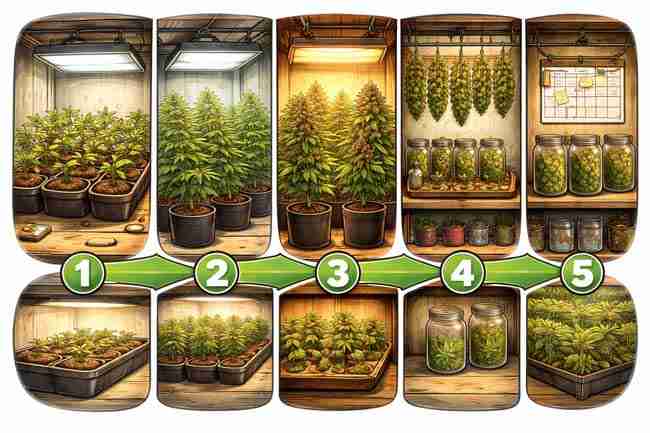
You set up a Perpetual Harvest by building a repeatable pipeline.
Think of it like a conveyor belt:
- Start plants
- Veg them
- Move them to flower
- Harvest them
- Dry and cure
- Start the next set before you “need” them
Step 1: Pick a harvest interval you can actually handle
Common Perpetual Harvest schedules:
- Every 2 weeks (fast, busy, very steady)
- Every 3 weeks (sweet spot for many home growers)
- Every 4 weeks (easier, but less frequent)
If you work a lot or you hate trimming, choose every 3–4 weeks.
Step 2: Match your plant count to your space (don’t guess)
You don’t want “as many as you can fit.” You want “as many as you can finish well.”
Here’s the simple rule:
- Flower tent space decides everything
- Veg supports flower
- Drying supports harvest
If your flower tent holds 4 plants comfortably, and you harvest every 3 weeks, you’ll want a system where a portion of those plants finishes every 3 weeks.
Step 3: Use this Perpetual Harvest timing model
Most photoperiod strains flower in about 8–10 weeks.
So if you harvest every 3 weeks, your flower tent needs “groups” that are 3 weeks apart:
- Group A: week 9 harvest
- Group B: week 6
- Group C: week 3
- Group D: week 0 (just moved in)
That means your flower tent runs multiple ages at once, but all under 12/12.
Step 4: Build a simple tracking system (this part saves your sanity)
You need a label system. No excuses.
Use:
- Plant name/strain
- Start date
- Flip date (for photoperiod)
- Notes (feed changes, issues)
Even a scrap of painter’s tape works. Without labels, your Perpetual Harvest turns into “mystery plants and mystery problems.”
Step 5: Plan veg time backward from the flower schedule
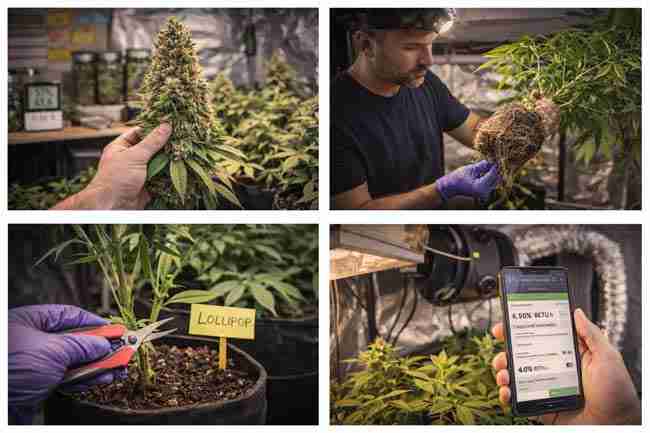
Here’s the big brain move:
Instead of asking, “How long should I veg?”
Ask:
“When do I need the next plant ready to enter flower?”
If you want to move plants into flower every 3 weeks, then every 3 weeks you must have:
- a healthy plant
- trained and shaped
- rooted well
- ready to stretch and bloom
So your veg tent must always contain:
- younger plants coming up
- mid veg plants shaping out
- “ready-to-flip” plants waiting their turn
Step 6: Train plants to fit the system (not your ego)
Perpetual Harvest grows reward small-to-medium plants with controlled shape.
Good training for a Perpetual Harvest:
- topping once or twice
- low stress training (tie branches out)
- keeping an even canopy
- light defoliation (don’t go wild)
Bad training for a Perpetual Harvest:
- letting one plant become a monster
- delaying flip “just one more week”
- doing extreme pruning on random days
In a Perpetual Harvest, timing matters more than your feelings.
Step 7: Lock in a cleaning routine (or pests will move in permanently)
Perpetual Harvest systems don’t “reset” as often, so pests and mold love them if you get lazy.
Do this like a ritual:
- wipe surfaces weekly
- vacuum floors
- remove dead leaves fast
- keep tools clean
- don’t bring outdoor plants inside
- quarantine anything new
You don’t need to be fancy. You need to be consistent.
A Perpetual Harvest checklist (do this, and you’ll stay on track)
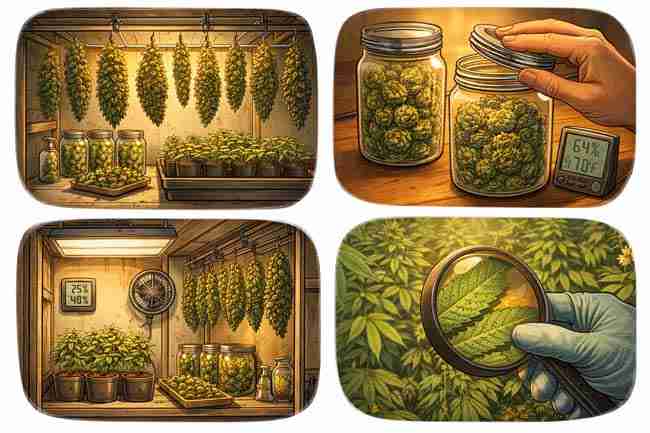
- Start new seeds/clones on a fixed day
- Transplant on schedule, not “whenever”
- Train plants early, not late
- Move plants to flower on your planned day
- Keep drying space ready before harvest day
- Keep notes every week
- Inspect leaves weekly (tops and undersides)
- Keep your harvest tools clean and sharp
That’s the boring stuff. That boring stuff makes you win.
Perpetual Harvest table: Example schedules you can copy
Here’s a simple table that shows how a Perpetual Harvest can run depending on how often you want to harvest.
| Harvest Interval | Flower Time Assumption | Flower “Groups” Running | Best For | Workload |
|---|---|---|---|---|
| Every 2 weeks | 8–10 weeks | 4–5 groups | steady supply, frequent small harvests | High |
| Every 3 weeks | 8–10 weeks | 3–4 groups | most home growers | Medium |
| Every 4 weeks | 8–10 weeks | 2–3 groups | busy schedules, fewer trim days | Lower |
If you feel overwhelmed easily, run every 4 weeks. You’ll still get the Perpetual Harvest benefits without living in your grow room.
Drying and curing in a Perpetual Harvest (the part people forget)
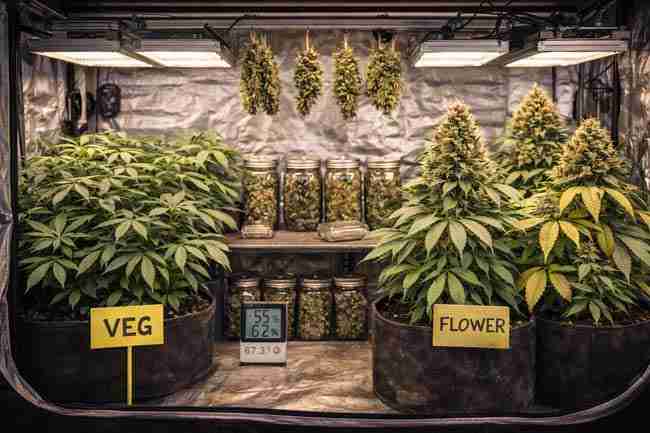
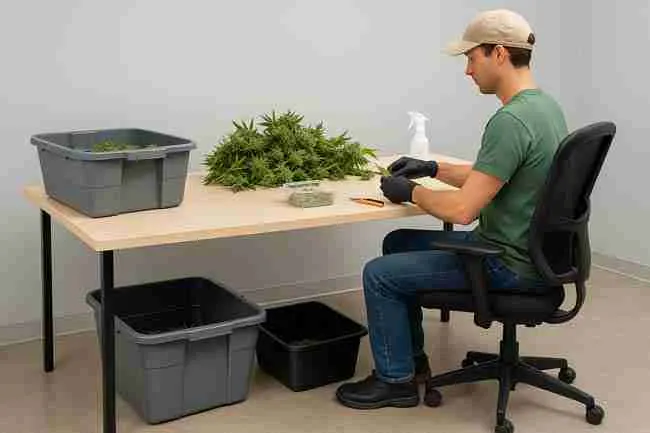
A Perpetual Harvest doesn’t end at chop day. Drying and curing become a constant background job.
Drying space rules
You need a spot that stays:
- cool-ish
- dark
- clean
- with gentle airflow
- with controlled humidity
If you don’t plan drying space, you’ll do something dumb like:
- drying in the flower tent (and raising humidity)
- drying in a dusty room
- drying too fast because you panic
Curing rules (simple and effective)
- Jar when small stems snap (not when they bend)
- Burp jars early on
- Keep jars out of heat and light
- Be patient—good cure takes time
A Perpetual Harvest rewards patience because you never feel desperate. You always have something coming.
What is the perpetual harvest system for Autoflower?
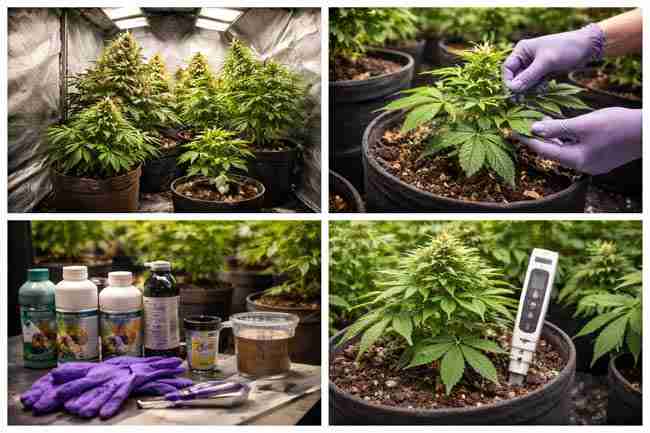
Autoflowers change the game.
They don’t care about 12/12. They run on age, not light schedule. That makes a Perpetual Harvest easier in one way—and trickier in another.
Why Perpetual Harvest works well with autoflowers
- You can run one light schedule the whole time (often 18/6 or 20/4).
- You can start a new plant every week or two.
- You can harvest in a steady rhythm.
The big autoflower Perpetual Harvest challenge
Autoflowers don’t like abuse early on.
If you stunt an auto in week 2–3:
- you don’t “veg longer” to fix it
- it just stays small and still finishes on time
So you must nail:
- gentle watering habits
- good root zone oxygen
- early nutrition (not too hot)
- stable environment
Best autoflower Perpetual Harvest method (simple version)
Use one tent under one schedule (18/6 or 20/4), and stagger starts.
Example:
- Start Plant 1 today
- Start Plant 2 in 2 weeks
- Start Plant 3 in 2 more weeks
- Keep going
Soon you’ll have:
- one plant flowering hard
- one stretching
- one in early veg
- one as a seedling
That’s a Perpetual Harvest, autoflower style.
Autoflower Perpetual Harvest training rules
You can train autos, but you must do it early and gently:
- tie branches down early
- avoid heavy defoliation
- avoid late topping unless you already know your timing
If you like topping, do it early and only when the plant looks strong. If it looks weak, don’t play hero.
Autoflower feeding rules that keep things smooth
A Perpetual Harvest means different plants want different food at the same time. That can get annoying.
So you have two smart options:
- Run the same base feed and adjust per plant (easy with bottled nutrients)
- Use a “water only” living soil style and top-dress lightly as needed
If you run coco or hydro, you’ll need more attention because fast growth punishes mistakes faster.
How many days before harvest should I stop watering?
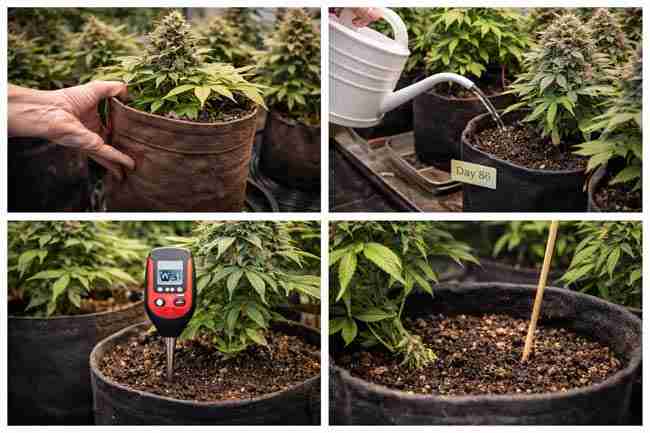
This question causes more arguments than it should.
Here’s the truth: you don’t need to “starve” the plant like a punishment. You do need to manage moisture so you harvest clean, dry well, and avoid mold.
The practical answer
Most growers stop heavy watering 1–3 days before harvest, but the real target isn’t a calendar day.
The real target is this:
Harvest when the medium feels on the dry side, not soaked.
Why?
- Wet pots raise humidity during chopping and drying
- Soaked plants can dry unevenly
- Excess moisture invites mold in dense buds
Soil growers: common timing
In soil, many plants drink slower near the end, so you might water last:
- 2–4 days before harvest, depending on pot size and environment
But don’t run the plant into dust-dry stress if it looks miserable. You want “slightly dry,” not “dying of thirst.”
Coco growers: common timing
Coco stays airy, and plants often drink daily. You can still reduce watering late, but don’t let coco go bone dry.
A good move:
- keep feeding normally
- reduce volume slightly near the end
- aim to harvest when the pot feels lighter than usual
What about “flushing”?
If you flush, do it calmly and with a reason, not because the internet yelled at you.
In a Perpetual Harvest, your real win comes from:
- stable feeding
- clean environment
- correct drying and curing
You can’t “fix” a messy grow with a last-minute water trick.
Easy “is it time to stop watering?” test
Pick up the pot.
- If it feels heavy like a bowling ball, don’t water.
- If it feels light like it’s empty, water lightly (unless you harvest tomorrow).
Yes, that simple.
Common Perpetual Harvest mistakes (and how you avoid them)
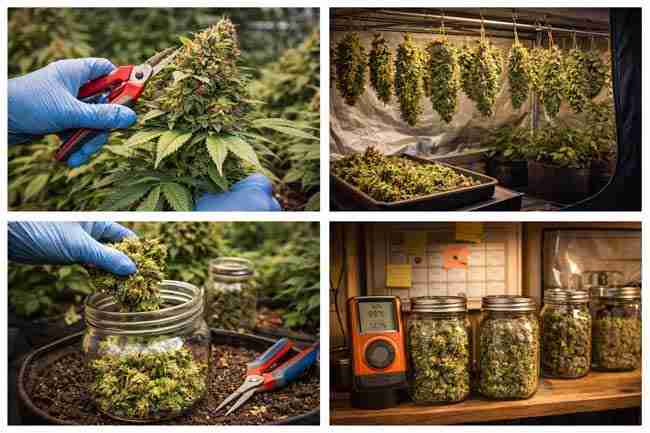
Mistake 1: Starting too many plants
You get excited. You pop 12 cannabis seeds. Then you realize your flower tent fits 4 plants, not 12.
Fix:
- start fewer
- stay consistent
- scale up slowly
Mistake 2: No drying plan
You chop, then you scramble.
Fix:
- set up drying space first
- harvest on schedule second
Mistake 3: Mixing strains with wildly different flower times
One strain finishes in 8 weeks, another in 12. Your schedule breaks.
Fix:
- group strains by similar finish times
- or run longer strains in their own “lane” of the system
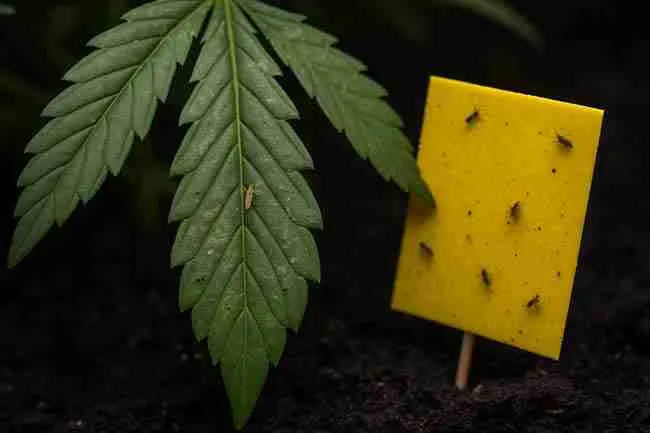
Mistake 4: Lazy IPM (pest prevention)
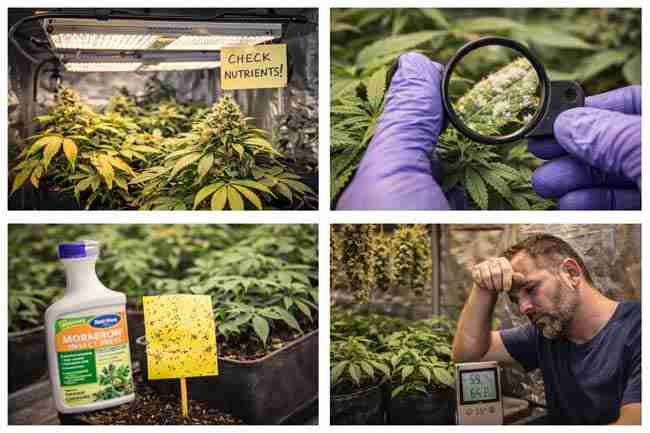
In a Perpetual Harvest, pests don’t “end” after harvest. They move to the next plant.
Fix:
- inspect weekly
- keep sticky traps
- keep the floor clean
- quarantine anything new
Mistake 5: No notes
You repeat mistakes because you forget what caused them.
Fix:
- write 2–3 lines per week per group
- keep it simple and honest
A simple Perpetual Harvest routine you can follow
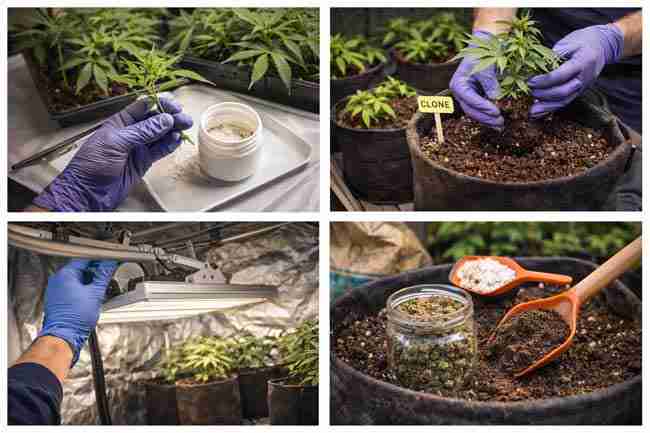
Here’s a rhythm that works for real people with real lives.
Weekly routine (pick one consistent day)
- Check leaves (top and underside)
- Remove dead growth
- Tie down branches if needed
- Check humidity and airflow
- Write quick notes
Every “start day”
- Start seeds or take clones
- Label them immediately
- Set them in a clean area
Every “move day”
- Move the next group into flower
- Clean the space you just cleared
- Reset trays and tools
This routine turns Perpetual Harvest from chaos into cruise control.
FAQ: Perpetual Harvest questions growers always ask
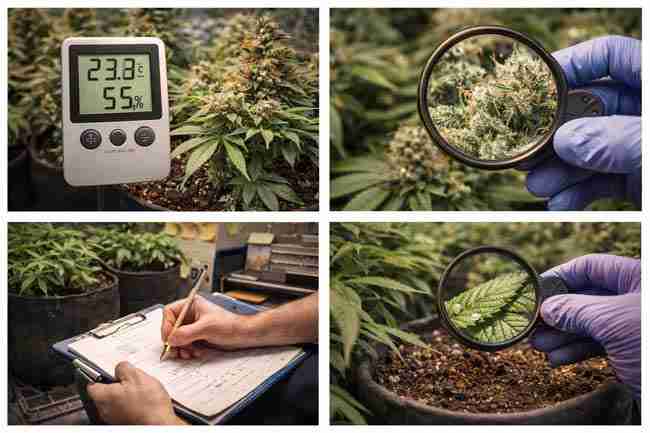
What’s the easiest Perpetual Harvest setup for a beginner?
A two-space setup: one veg area and one flower area. It keeps timing clean and prevents mixed-light headaches.
How often should you harvest in a Perpetual Harvest?
Most home growers do best harvesting every 3–4 weeks. It stays steady without burning you out.
Can you run a Perpetual Harvest from seeds only?
Yes, but expect more variation. Clones give you uniform timing and structure, which makes scheduling easier.
Do you need a mother plant for a Perpetual Harvest?
Not always. A mother helps if you want consistent clones. If you run seeds, you can still do it, but you’ll juggle more differences.
Can you run Perpetual Harvest outdoors?
Kind of, but seasons control you. Outdoors works better as “staggered planting” than true year-round Perpetual Harvest unless you use a greenhouse.
Why does a Perpetual Harvest sometimes increase pest problems?
Because you never fully shut down and reset the room. You must stay cleaner and more consistent with prevention.
Is a Perpetual Harvest worth it for small grows?
Yes. Even a tiny Perpetual Harvest stops the empty-jar problem and makes your learning curve faster.