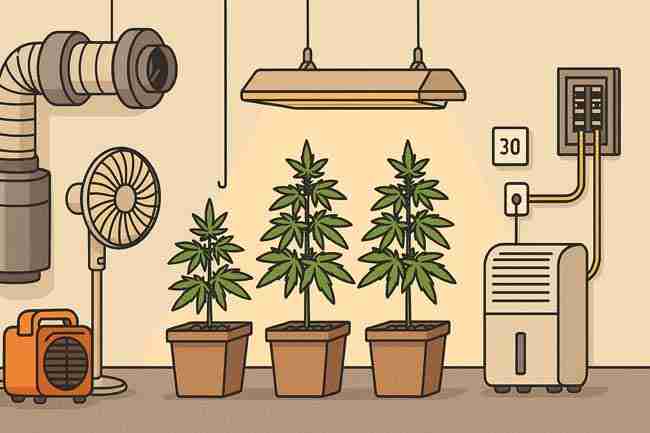
Setup Costs for a Cannabis Growing Tent


Setup costs for a cannabis growing tent are the light, the moving air, and the tent itself, in that order of money. A marijuana plant does not care what the kit was called on the shelf. A weed plant cares whether the light’s plug watts are real, whether the fan can be slowed, and whether the box you zipped shut will hold a smell. The picture on the ad is the tent. The expensive line is almost always the fixture.
People shop the floor first because a wide tent is easy to picture. Match that floor to the plants you are allowed to keep and to the light you can afford to power. A tent only half lit still costs what you paid for the whole floor.
A working first tent is a short list, plus the parts the kit photo crops out. The tent. A dimmable LED whose true wall watts you can read on the driver, not on a sticker that says the fixture replaces an older lamp. An inline fan with a speed control, and a carbon filter paired with that fan. A clip fan or a small oscillating fan. A thermometer and a hygrometer at canopy height. Pots and a medium. If you mix nutrients from bottles, a pH pen. That is the setup. A dehumidifier is often the second purchase, in flower, not on day one, and the hose has to leave the tent. The exhaust fan moves air. It does not put water in a tank.
Seeds are their own receipt, smaller than the light. Buy the pack you mean to grow after you know which tent you can power. A drawer of packs does not shrink the fixture bill.
Setup Costs for a Cannabis Growing Tent
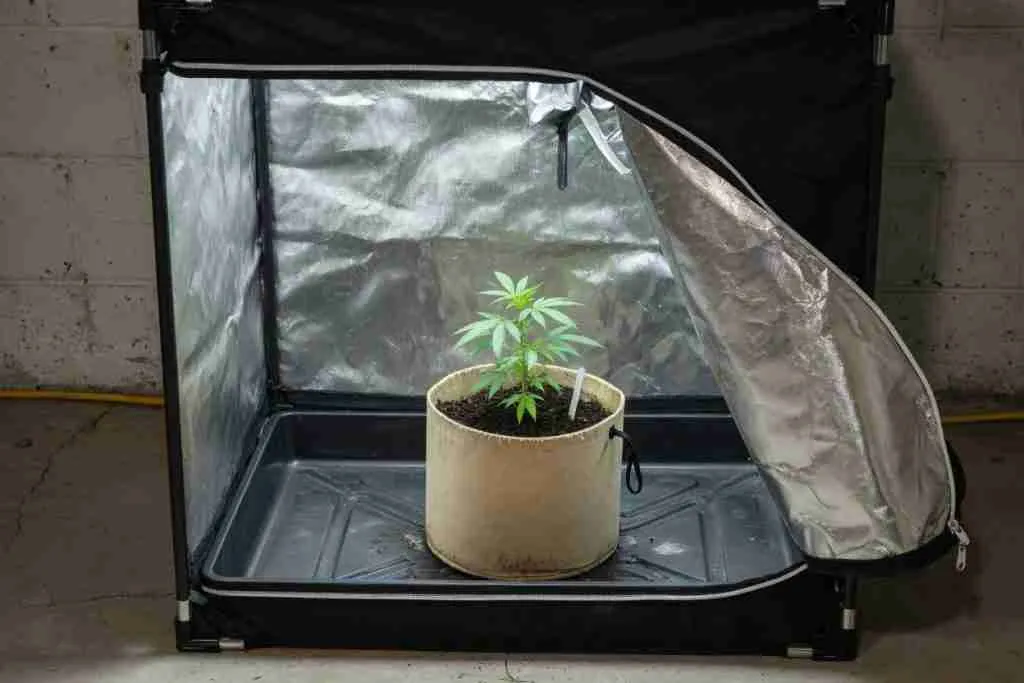
That open door is the shell. One pot, a tray under it, a zipper that closes, reflective walls, and a frame that stands in the room you have. On a Canadian shelf, a small complete kit, a tent around a three-by-three with a light, a fan, and a filter, has lately landed around $470 to $660 before tax. A four-by-four kit with a larger light, a fan, a filter, and a clip fan has lately landed around $780 to $970. Those bands move with sales, shipping, and provincial tax. A cross-border order can add duty.
Ads in US dollars are a different currency. A few hundred US dollars for a starter, or something near a thousand before a kit is called premium, usually leaves out the dehumidifier, the meter, and every month of electricity. That figure is not a Canadian cart.
Bought alone, the shell is often about a hundred to two hundred dollars. It is rarely the line that hurts. The light is usually two or three times the shell, which is why a cheap kit is often cheap in the lamp. A clearance kit built around screw-in bulbs teaches the wrong lesson. You buy a real fixture later and you have already paid for the bulbs. Read the driver label before you call any kit complete. If the page will not say what the fixture pulls from the wall, you cannot price the power and you cannot tell whether a power bar is rated for the load.
The kit price still skips the dull lines. Hangers or ratchet ropes. Duct and clamps. A floor tray, if the photo left it out. A timer or a controller that does not kill the fan when the lights go off. The meter. The pots. A bag of medium. The pen, and calibration solution if you mix from bottles. None of that photographs well. All of it shows up the week you try to turn the tent on. Poles, ports, and how the tray sits are on the tent page. The order of jobs for a first plant is the new grower checklist. The money is what this piece is for.
When the money is limited, spend it in this order. The light you can dim, with watts you can read. The fan you can slow, with the filter that matches it. A tent only as big as that light can cover, with a tray and a zipper that closes. Then the clip fan, the meter, the pots, and the medium. The pen if you are mixing. The dehumidifier when flower humidity says so, and only if the hose has somewhere to go.
What the first receipt buys


These two fixtures do the same job in two shapes. One is a flat board. One is a row of bars. Shape is taste, and how the light hangs. The number that matters is the watts at the plug. A sticker that says the fixture replaces an older lamp is advertising. The driver label, or a spec line marked actual draw, is the bill. People buy this line twice when the first fixture was a guess. The second order is the real light. The first one is a rental you cannot send back.
A dimmer you actually turn down is the savings built into the fixture. A seedling does not need the flower setting. Most photoperiod plants run about eighteen hours of light in vegetative growth and about twelve hours in flower. The cost is those watts times those hours, every day, for the whole run. On a small tent that is often tens of dollars a month, and it climbs once a dehumidifier joins the circuit in flower. Your bill already has a price per kilowatt-hour. It is not the same in Halifax as it is in Calgary. Leave the dimmer on full and the knob is decoration.
The fan is the next real line, and a carbon filter often costs as much as the fan. Buy them as a pair. A strong fan on a choked filter moves less air than the sticker claims, and it howls. A clip fan is separate and cheaper. It moves air across the leaves. It does not exhaust the tent or catch smell. If the kit forgot it, add it now. Shipping it alone later costs more than the fan.
Do not hang the fan on the same dumb timer as the light. When the lights go out, the tent still holds heat and smell. A stopped fan through the dark stretch is how the hallway finds out. Give the fan its own power, or a controller that leaves it running. Sizing the fan, the duct, and the filter belongs on the ventilation page. Fixture shapes and light maps belong on the lighting guide. What is on the shelf right now is the current gear page. Bring the driver watts. Leave the brand tour on those pages.
Used gear can sit on the same receipt if you are picky. A used tent is fair when the zipper closes and the floor is intact. A used carbon filter is often spent carbon, which is a metal can with a memory of someone else’s flower. A used light is worth a look only when it still dims and the seller can say the watts. If they cannot, you are guessing with money you already spent once.
Three sizes, three bills

A bigger footprint means a bigger light, a bigger fan, more medium, and more of your legal plant count in one room. In Canada the recreational home limit is four plants per household, not four per adult. Quebec prohibits recreational home growing. Manitoba allows indoor growing only, for adults 19 and older, and that rule has been in place since 1 May 2025. A plant in the tent still counts. Outside Canada, follow the rule where you live. If the law is tighter than the tent, the extra floor is storage.
The canopy in that photo is too much tent after you filled it. Every extra plant took a pot, a share of the light, and a slot on the household count. Crowding is not a coupon. How many plants a two-by-two, a three-by-three, or a four-by-four can physically hold is on the plant-count page. Read that for the floor. Read your local rule for the ceiling. A tent does not owe you a weight, and a bigger box does not raise the number of plants you are allowed to finish.
The money version of this mistake happens before a seed is wet. The four-by-four kit is only a little more than the small kit, so you buy it. Then the driver watts turn out to be a light built for a smaller floor. The corners stay dim. The usual fix is a second fixture. Now the deal is the big kit, another light, more medium, and a filter that has to keep up. The small tent, lit properly, would have been the cheaper finished grow. Empty floor is unsold light.
The room changes the second machine, not the tent price. A hot closet and a cold basement can hold the same light. One will want cooling later. The other may want the approach on the warm-space page, not a rush of gadgets. If the question grows past the tent, the indoor guide is the wider map.
A tent for one or two plants

A seedling in a cell tray is not a reason to buy a room. The plant is a few leaves tall. The fixture you will flower under, turned down, can carry this week and the weeks after. A toy lamp for the tray, then a real fixture in a panic six weeks later, is the same light bought twice. If money is tight, buy the fixture with a readable watt label and a dimmer. Let the tent be the smaller bill.

Young plants in ordinary soil pots are a normal small-tent start. You do not need a special plug or a second tent to make it legitimate. You do need a tray. A small tent still dumps water on the floor, and a wet floor beside a power bar is the expensive version of a cheap skip. Two fabric pots and one bag of medium are modest next to the light. They are not included just because the kit said complete. A four-by-four full of large pots can eat several bags. Still cheaper than the light. Still missing from the ad.
Most home tents stand about six and a half feet tall. That is enough for a plant you train. It is not a reason to jump a size just in case. Measure the ceiling first. A tent that will not stand up is a return, plus the week you lost. Buying a short tent and then a taller one is another way to pay for the shell twice.
The tent that is too much tent

One plant in vegetative growth, with room around the leaves, does not need a spare bedroom of fabric. If the light covers about this much floor, buy about this much tent. The plant will get wider. It will not turn into a hedge that justifies a dark corner you already paid to enclose. The unlit side of a big tent does not give the money back. You already paid for the larger fan, the larger filter, and the extra medium.
Empty corners collect the habit of one more plant. That plant still counts. At the household limit, extra floor is a place to catch a foot on a pot, not a vacancy. One healthy plant, lit well, in a tent that zips and holds a tray, is a finished setup. Stretching the floor so a photo looks fuller is how a second light sneaks onto the receipt. Measure the room with a tape before you measure it with a cart.
Bills that arrive after the kit
The kit photo is day one. Flower writes a second invoice. Plants push more water into the air as the flowers pack on, and the tent gets wetter at night. The exhaust fan exchanges air. If the room you vent into is already humid, you can trade tent air for wetter air. That is when a dehumidifier stops being optional. It is often a few hundred dollars by itself, which is why people are sour that it was never in the kit. Buy it when the canopy meter says the nights are staying wet. Skip the day-one purchase if the hose has nowhere to go. A hose that dumps into a forgotten tray is a puddle next to the outlet.

The window unit in that photo cools a room that is already too hot. It is loud. It is not a dehumidifier, and it can drop the temperature while leaving the air wet. That is the wrong direction for dense flowers. It is not the first tool for a small tent. Exhaust first. Add room cooling when the room itself is hot and the fan cannot hold the canopy. If the room is cold, read the warm-space page before you buy anything that makes heat. A fuel heater does not belong beside a tent. Nothing here is a guide to cutting a hole in a wall.
A few small bills prevent the ugly ones. Hang the thermometer and hygrometer at canopy height, not on the driver, where the air is warm and wrong. A pH pen, if you mix bottles, is tens of dollars, and the calibration solution expires. A pen that lies costs more than strips you replace on purpose. Ranges are on the pH page. How often the pot wants water is on the watering page. The temperature and humidity you are aiming at are on the environment page. The meter tells you whether you are in them.
While those bills show up, the plant is in the flowering stage. The light runs fewer hours. The air is wetter. The flowers are what the fixture money was for. Losing them because the nights stayed soggy is an expensive way to skip a dehumidifier. Signs and triage live on the bud rot page. The cost, here, is a meter you trust, a fan you can speed up or slow down, and a dehumidifier whose hose leaves the tent before the flowers are dense.
Power, smell, and a wet flower
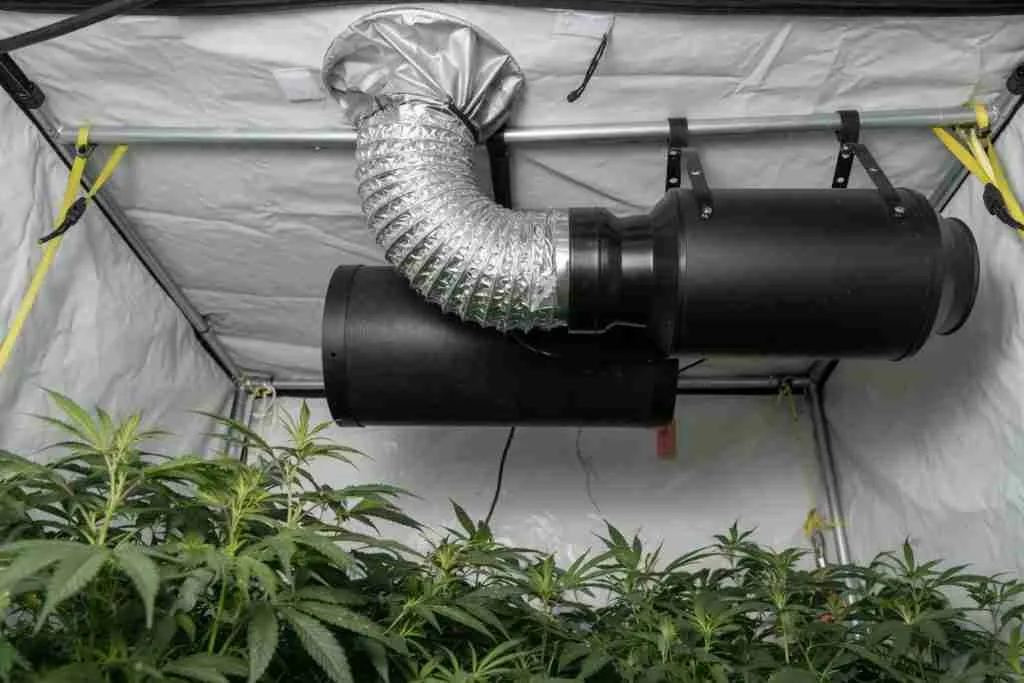
Smell is a filter bill, and it comes back. Carbon does not last the life of the fan. Replace the filter when you can smell the tent in the hallway, or when the fan has to run flat out to pull air it used to pull on a lower speed. That is a condition, not a date on a calendar. Buy the matching filter on day one so you are not paying shipping twice to finish the pair. In an apartment, that filter is the cost of flowering without telling the hallway. It scrubs air that is leaving. It does little for a door you leave open, and little if the zipper and seams leak while the duct cleans a small stream.
Light leaking in during the dark period reaches the plant. Close the door in flower, and do not blow unfiltered air back into the room you are standing in.

That flower is why the light was the expensive line. It is not a promise of weight. Wet air ruins it from the inside, and you notice late. A packed cola and a night that stays damp will make a cheap setup look costly after the fact. Exhaust helps. A wet basement around the tent can still win. The dehumidifier, hose actually leaving, is what protects the flower. Keeping it off the cart so the total looks small is how a priced setup becomes a crop you cannot use.

Same risk on another cola. This is a flower, not a fan photo, even if air was moving in the room when it was taken. Run the meter at the cola, not up at the ceiling port, or you will argue with the wrong number while the flowers sit in the damp. The last weeks are a bad time to start shopping for a machine that has to drain somewhere.
Electricity never appears on the kit page. Driver watts times those hours, plus a fan that may run day and night, plus the dehumidifier once it joins, are the monthly bill. On a small tent the light alone is often tens of dollars. The dehumidifier pushes it higher. Use the rate on your own utility bill. A made-up cents figure would be fiction.
The safety bill is short. Use a power bar rated for the light’s true draw. Do not run that draw through a thin extension cord, and do not hide the cord under a rug. If a cord, a plug, or the bar is warm, stop and unplug. A basement, a laundry room, or anywhere near water belongs on a ground-fault circuit. New wiring is an electrician. This is not a wiring diagram.
What can wait

Seeds stay on their own line. The jars are a collection, not a price list. Pack prices move, and a number made up here would be stale at checkout. A pack still costs less than the fixture, and more than people have left when the tent came first. Buy the pack you mean to grow. A sale that fills a drawer with seeds you are not allowed to sow is not a bargain. One or two plants under a light you can name in watts beat a dark corner and a stack of packs.
A tank of carbon dioxide, a regulator, and a sealed-room plan wait until the tent is actually running. That spend is last, and it is a poor trade for a dimmable light you still need. Adding carbon dioxide without a tank is its own subject. The sealed-room carbon dioxide page is the version with equipment, and it is where extra gas stops earning a place on a first receipt. A fuel burner is not a home method. No install steps belong here.
A rail camera can wait. So can a second controller that goes blank when the house internet does, and a spectrum gadget bought because the ad was purple. One controller that keeps the fan on and shows canopy temperature is enough. The current gear page sorts the market. Which gadget earns a plug is the argument, not a cart you have to clear before the seed is in the pot.
A year of bottled nutrients can wait. You will change your mind once you see how the plant eats. Charged soil can carry a young plant without a cupboard of jugs. When you do mix, mixing by EC is how you measure it. Buy the run in front of you. Bottles opened once and then stored are money that went sour.
A commercial marijuana licence does not belong on this receipt. Neither does a producer insurance policy, a software dashboard, or a course sold as something you must hold before a closet is legal. A legal home grow in most provinces has no licence fee. If your home insurer asks what the tent is, tell them. Hiding a grow is not a savings tip. A certificate does not change the driver watts. A weed app on your phone is not the receipt. When the WiFi drops, you still need a meter you can read with the lights on.
A second light waits until the first one dims and matches the floor. If it will not tell you the plug watts, replace it. Do not park a second mystery beside it. The honest total is the shell, the watts you read, the fan and filter as a pair, the small parts the kit forgot, tax, shipping, and a dehumidifier you can drain when flower asks. Seeds stay on their own line. A power bar has to carry the true draw. Anything else can wait in a browser tab.