Using Mycelium Networks to Boost Cannabis Health

Mycelium Networks are the body of a fungus living as threads in the soil. The cap you would cook is a fruit that some other fungi make later. Cannabis does not need that fruit. It needs a root partner that can trade, and only while the pot is actually alive.
A marijuana slogan on a pouch does not put threads in a dead mix. A weed headline about a secret web does not either. You can see whether the soil holds together, smells like a forest floor after rain, and still drains. You cannot see a promise.
The whole crowd around a root, bacteria included, lives on the soil microbes page. The longer account of what these fungi do for a plant lives on the mycorrhizae benefits page. Which bottle to buy lives on the inoculant page. This page owns a narrower job: what the threads are, which partnership cannabis actually makes, and which white growth is a problem instead.
In Canada the home rule is four plants per household, and a seedling counts as one of them. Quebec prohibits recreational home growing. Manitoba has been indoor-only since 1 May 2025. A pot in Ontario still starts with a mix you can name. A room in Illinois is a different map, and this page does not invent a plant count for either place. Extra seed in a cupboard is not an extra plant. Threads in the soil are not an extra plant either.
Mycelium Networks are threads in the soil
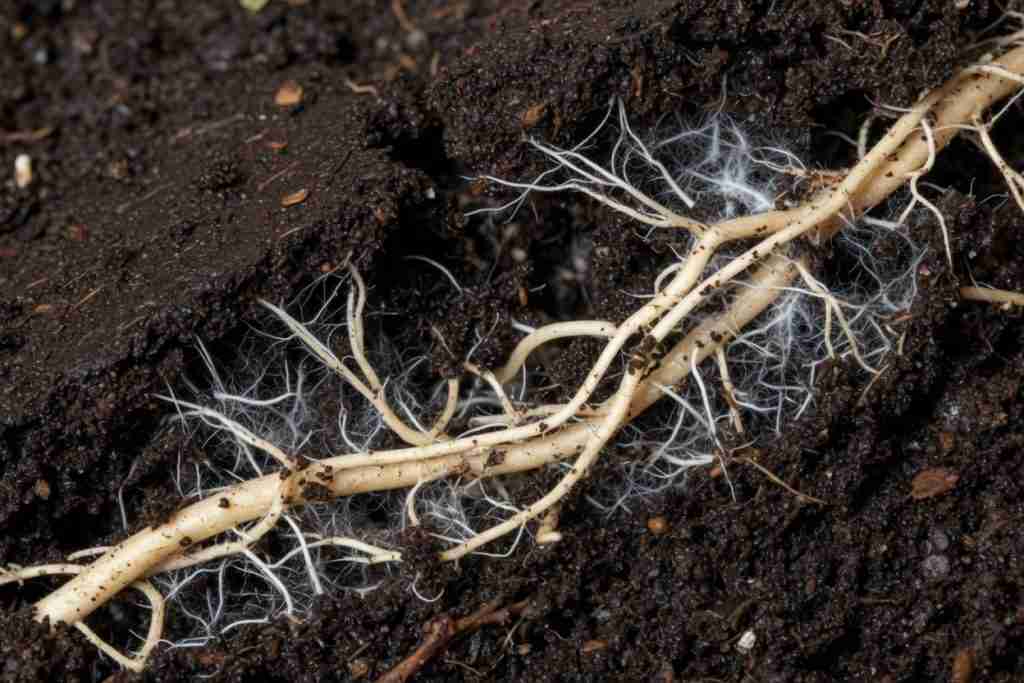
Break a living pot and you may see fine white strands among the roots. Those strands are the fungus. The thicker pale cords are the plant. People mix them up because both are pale and both branch. A root is the plant’s own organ. A thread is someone else living in the soil and, in the useful case, inside the root. If you only have one or the other, say which one you are looking at before you tell a story about a network.
Look, a household tent is not a forest. The pictures of a woodland web connecting old trees are a different scale, and often a different kind of fungus, the kind that sheaths tree roots and stays outside the cells. Cannabis uses the kind that enters the root. Your four pots will never become a mile of forest floor. They can become a small working partnership in the sleeve of soil that clings to each root ball. That is the whole prize. Anything grander is a costume on a houseplant.
You will not watch the threads eat. You judge the pot. The mix smells sweet and earthy rather than sour. Water goes in and the pot lightens over the next day. New growth stays the color the leaf page calls normal for that week. If the pot is sour, constantly wet, or crusted with salt, the threads are not the story you should be telling. Fix the pot. The network is a result of a living mix, not a sticker you add to a ruined one.
The partner enters the root
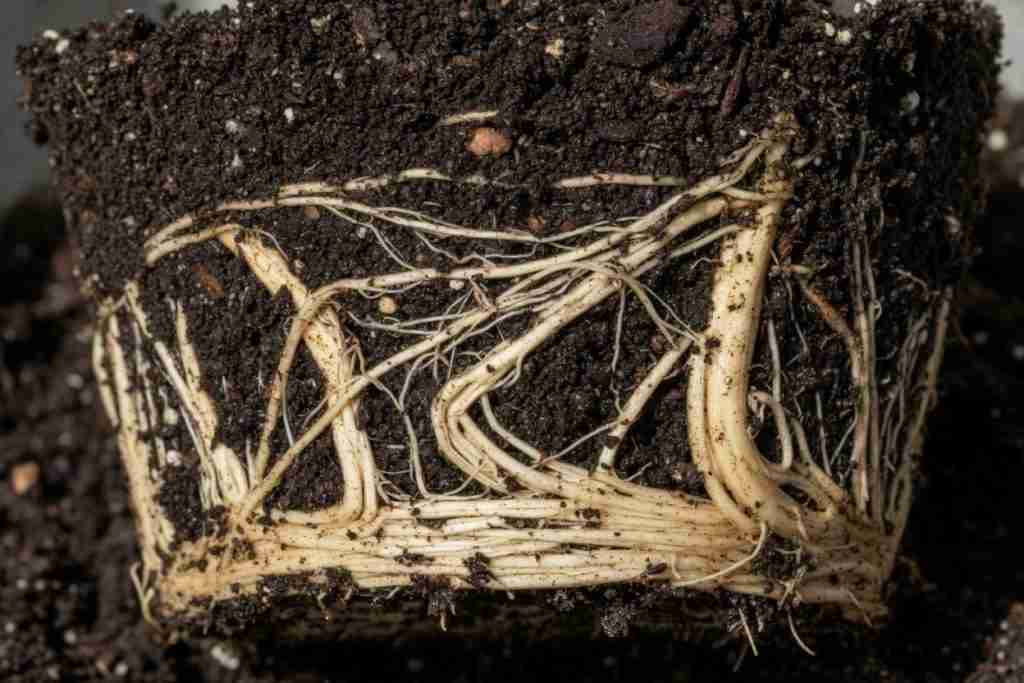
The useful group for cannabis is called endomycorrhizae, or arbuscular fungi. Plain version: the fungus crosses into the root and builds a tiny exchange inside the cells. The plant hands over sugar it made in the light. The fungus fetches minerals, especially phosphorus, from pores a root hair never enters. That is a bargain between two lives. It is not a coating you paint on, and it is not a mushroom you bury.
The tree version wraps the outside of a root and stops there. It belongs with timber and forest duff, not with a flowering annual in a bag. If a label brags about a forest web and never says the fungus enters the root, you are reading the wrong partnership. Cannabis can still grow in a pot with no partner at all. It grows on water and minerals you supply. The threads are an extra reach, not a requirement you failed if the plant is otherwise fine.
You do not culture this at home. No jars of gel, no spore slurries, no scoop of woods poured into the tent. A handful of forest floor can carry gnats, the wrong fungi, and a pest you did not invite. Leave the woods where they are. If you want the partnership, you start with a living mix or a garden inoculant meant for roots, and you let the inoculant page handle the bottle. This page will not give you a recipe.
A mushroom on a plate is another life
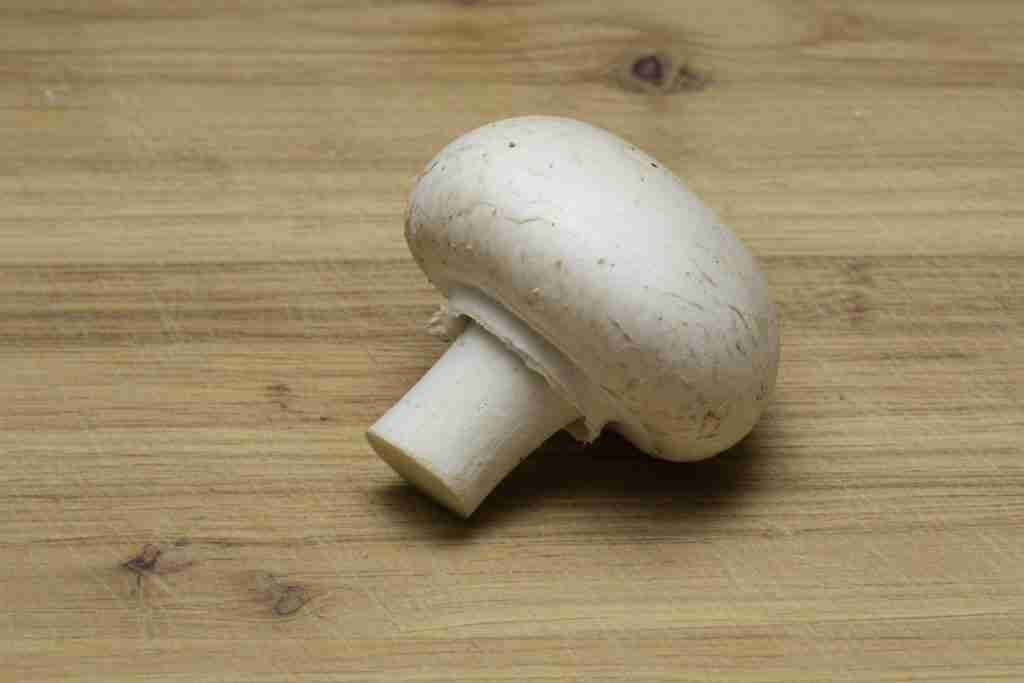
A button mushroom, an oyster block, or a kit that fruits in a bag is a different organism doing a different job. The cap is how that fungus spreads spores. The threads under it are its body, and that body is built to eat dead stuff in the kit, not to trade with a cannabis root. Burying a grocery mushroom in a pot does not create a helper. It creates a rotting lump.
The same split applies to the white you did not plant. Threads in damp soil beside healthy roots can be the partner. A cottony mat on the surface that smells sour, or a gray coat on a flower, is not that partner climbing up to be useful. Soil threads stay in the root zone. They do not move onto the bud and improve it. If the interesting white thing is on the flower, stop calling it a network and open the rot page later in this article.
Kits also teach the wrong hope. A block that fruits on a schedule is a crop you can see. A root partner is invisible if it is working. People trust the thing that makes a cap because the cap is proof of life. Your proof is a plant that still drinks, still colors up, and does not need a bigger story. If you wanted mushrooms, grow mushrooms somewhere that is not the cannabis pot. Do not mix the two hobbies in one container.
The bargain is reach

The plant pays with sugar. The fungus pays with reach. Phosphorus moves poorly in soil. A root hair empties the crumbs it touches and then sits in a little bare zone. Threads thinner than those hairs keep going into pores the root never enters, and they bring phosphorus back. Water can move the same way when the big pores have already dried and the small ones still hold a film. That is the health this page will claim. Not a new plant. A wider search around the plant you already have.
The benefits page keeps the longer list. Read it when you want the full case. Here you only need the limit on the case. The threads do not invent minerals that were never in the pot. They do not turn a hungry mix into a rich one. They do not replace the lamp. If the soil had nothing to fetch, a partner starves with the plant. Compost and a real living mix are how minerals get there in the first place, and the compost page owns the pile.
A fair test is boring. Two plants, same pack, same pot size, same water, same lamp. One in a living mix, one in a mix you know was sterile and then fed only from the bottle. Watch them for a month before you announce a miracle. If they match, your bottles were already doing the job and the threads had little to add. If the living pot holds color longer between waterings, you learned something about that mix. You did not prove a product slogan. One tent is an anecdote. Treat it that way.
The threads still need a drink
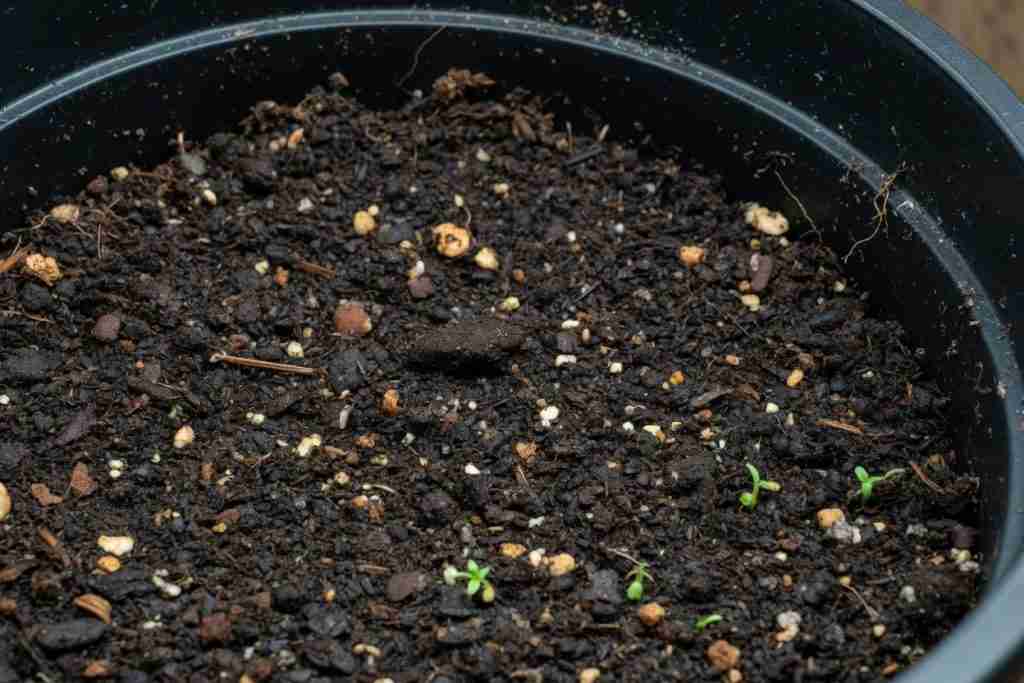
A network is not a reason to water less until the plant wilts. The threads need a moist, airy soil. Bone dry kills the deal. A pot that never dries kills it too, because roots and fungi both want air in some of the pores. The watering page owns the lift test. Use it. A fungus does not cancel gravity or a saucer left full overnight.
People hear that fungi help with drought and then stretch the interval until the leaves pray and slump. That is not the bargain. The bargain is a film of water in small pores after the easy water is gone, for a plant you already watered on time. It is a cushion, not a vacation. If you wanted fewer trips with the can, get the pot size and the mix right first. Threads will not carry a forgotten week.
The same honesty applies outdoors. A mulch and a soil that holds crumbs will keep a partnership happier than a baked crust. A week of rain that fills every pore will not be saved by a fungus. Drainage is still drainage. If the hole you planted into is a bucket, fix the hole. Do not buy a pouch and call the puddle biological.
A lamp still does its own job
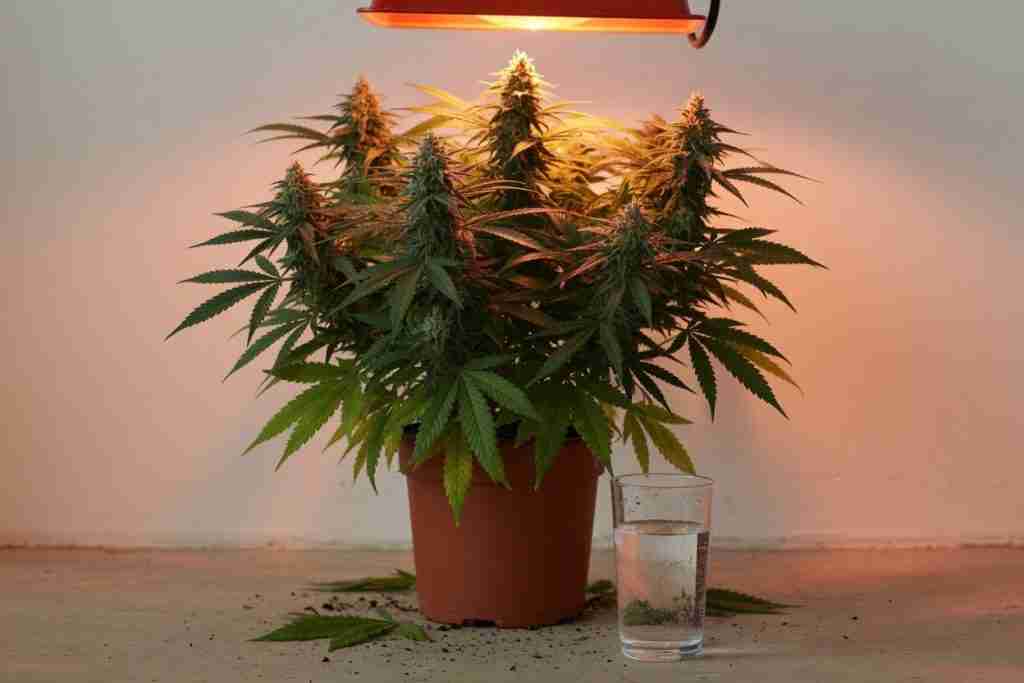
Sugar for the trade is made in the light. A plant under a weak lamp has less to pay with. A plant that is already burning from a heavy bottle has a different problem than a missing fungus. Hunger, burn, and lockout live on the deficiency page. Read the leaf before you decide the soil biology failed. A pale plant can be a feeding mistake with a perfectly lively pot sitting under it.
However, a constant strong salt feed can make the plant lazy about the trade. If the minerals are piled against the root, the plant has less reason to pay a fungus, and a crust on the soil is a sign you have been stacking bottles. The microbes page already owns how a salt crust, a full saucer, and a peroxide habit fire the partnership. Follow that page when the pot looks spent. Do not add another biological pouch on top of the crust and call it a restart.
Flower is the wrong week to begin the project. The flowering page owns the clock. By the time the colas are stacking, the roots have already chosen their habit. A late sprinkle will not rebuild a season. If the plant is hungry in flower, feed the plant in the way that page and the deficiency page allow. Do not tell yourself the threads will catch up before harvest. They will not invent a month you skipped.
A home pot can hold a small web
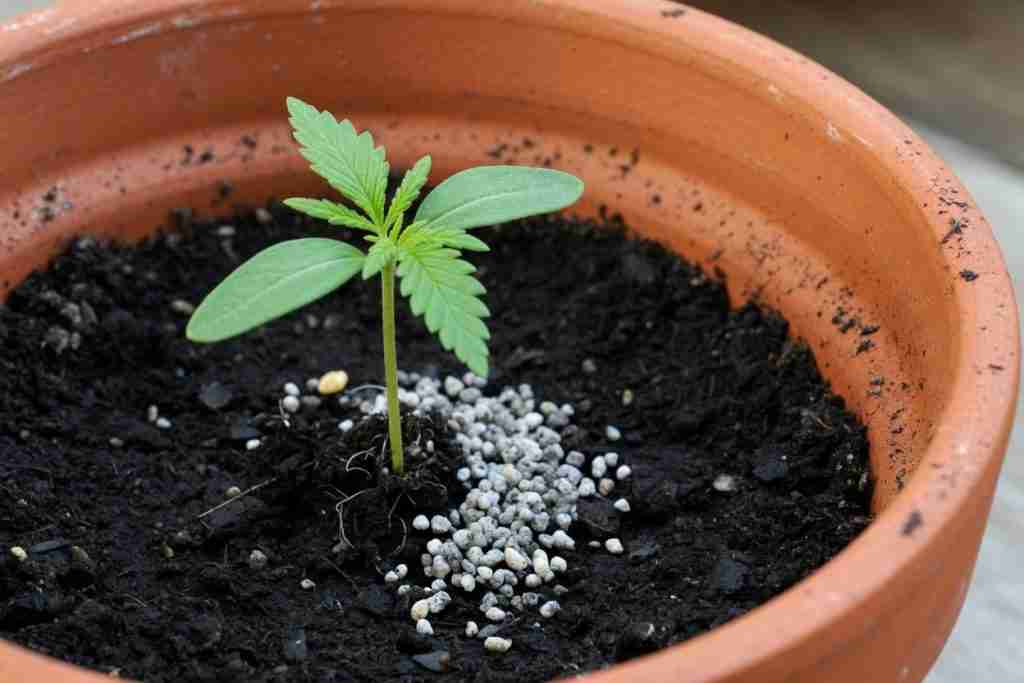
The partnership has a chance when a young root meets the fungus. That is transplant week, or the first real pot, not a rescue in week six of flower. The seedling page owns how small plants are handled. This page only adds the timing: if you are going to introduce a root fungus, the roots have to be able to touch it while they are still exploring. A dusting on the surface of a root-bound pot is a wish. The fungus is not a tea you pour over a finished canopy.
Veg is when you learn whether the pot was alive. The vegetative page owns that stretch of growth. Use those weeks to watch the mix, not to stack products. A plant that drinks on a steady rhythm and pushes even leaves is telling you the pot is enough. A plant that stalls while the soil smells rotten is telling you to stop adding biology and fix air and water. More pouches on a sour mix make a louder sour mix.
Autos and photos run on different clocks, and that choice lives on the photoperiod page. An auto has a shorter life, so a late start is even less useful. You do not get extra weeks to negotiate with a fungus. Put the living mix in the final pot at the beginning or accept that this run is a bottle run. Both are honest. Pretending a sprinkle in late flower will change an auto is not.
A pale mix has nothing to extend
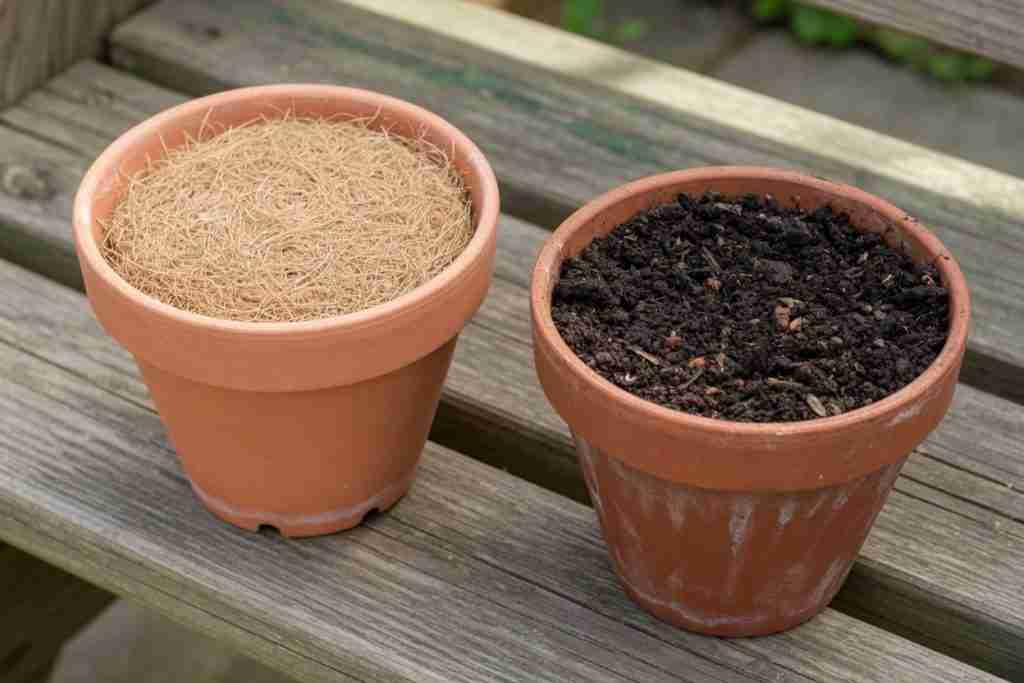
A pale, sterile fiber and a dark crumb are different homes. The fiber can grow an excellent plant if you supply the water and the minerals. It did not come with a fungal partner, and baking a mix on purpose removes whatever was there. You can still grow that way. Call it what it is: a clean medium you feed. Do not call it a living network because a label on a bottle said biology.
A dark mix can be alive or it can be tired dirt in a nicer color. The living soil page owns that split. The medium page owns how you choose the bag. Read both before you decide your pot is a habitat. Color is a clue. Smell, drainage, and whether the plant needs a bottle every time are the check. A black bag of peat that sheds water and smells like nothing is still a dead mix wearing a dark coat.
If you want life in the pot, build it from a mix meant to stay alive, or accept a clean medium and feed it. Do not split the difference with a scoop of unknown duff. The compost pile, kept on its own page, is how you make food for a living mix over time. It is not a weekend brew you pour through a flower. One path, named honestly, beats two stories in one pot.
The shopping choice is not a recipe
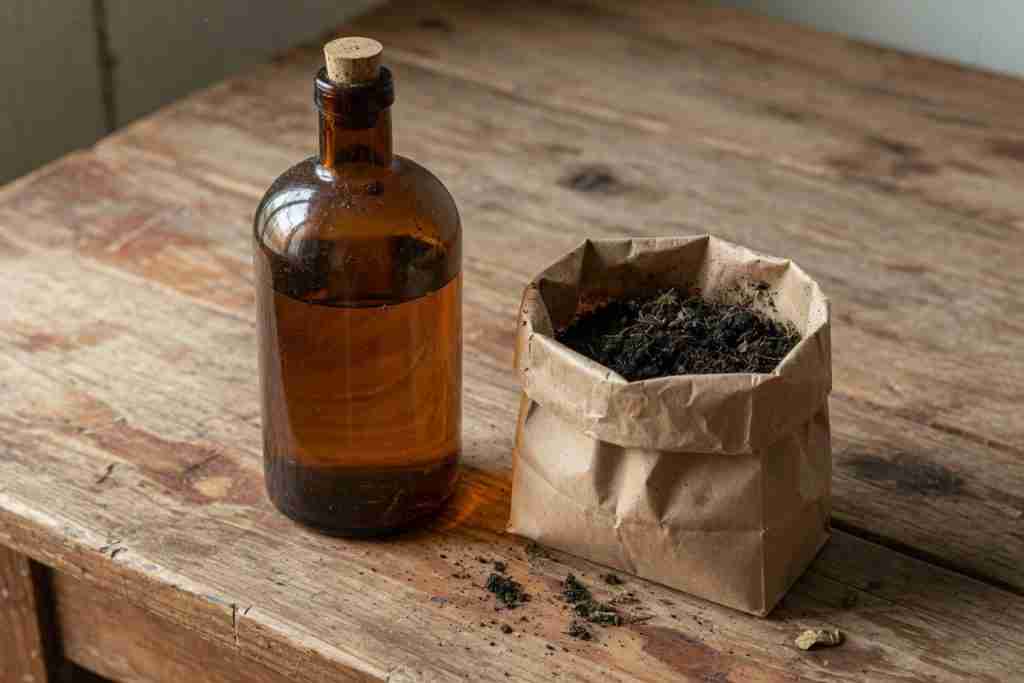
Read the front of the pouch for the partnership this page described: a fungus that enters roots, sold for the root zone. If the pouch is a culinary kit, a compost accelerator with no root claim, or a forest blend that will not say what it is, put it back. The inoculant page compares bottles. This page stops at the category. A higher price is not a higher chance. A longer ingredient poem is not a network.
There is no dose on this page because a dose without the product in your hand is a guess, and a guess is how people bury a pot in powder. Follow the label you actually bought, then stop. More powder than the label does not build a bigger web. It cakes the stem and feeds a surface mold. If the label is vague, that is a reason to choose a clearer pouch, not a reason to invent a scoop.
Skip the homemade project entirely. You are not isolating a fungus, counting spores, or sterilizing jars on the kitchen stove. Those steps belong in a lab that already knows which organism it has. At home the safe move is a named garden product or a mix that is already alive, used once, at the root, early. If you cannot say what you added, write “unknown duff” on the pot and do not hand that pot’s story to a friend as a method.
Gray fuzz on a flower is not a helper
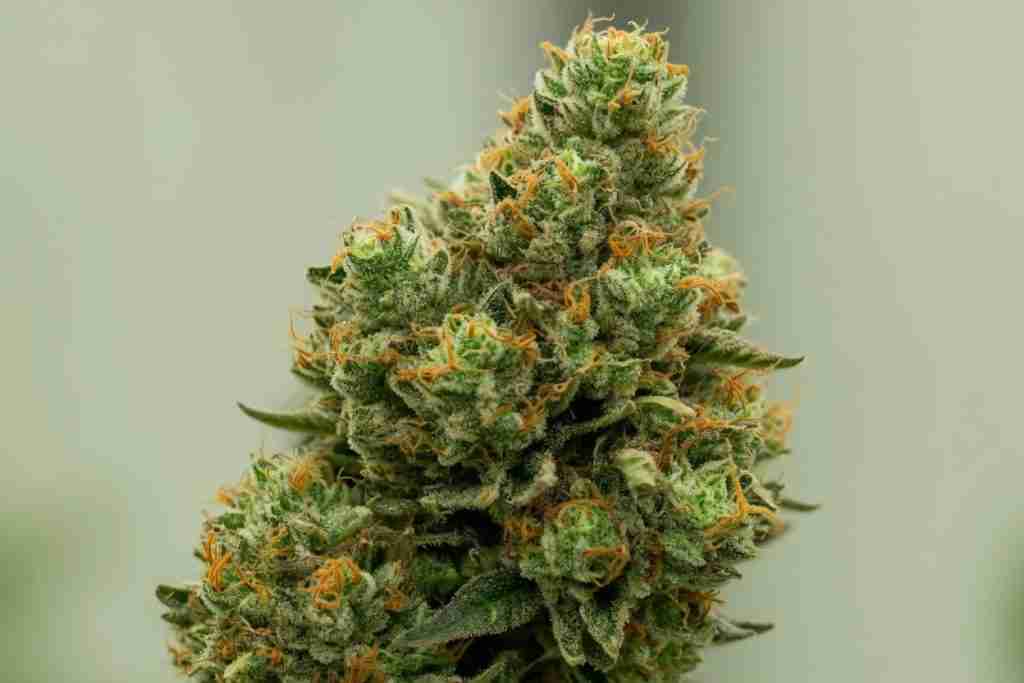
A healthy flower wears its own frost. That glitter is the plant. Gray, soft rot inside a cola is a disease, and the bud rot page owns it. The soil partner does not climb the stem and improve a bud by fuzzing it. If you find rot, you have a moisture problem in the flower, not a successful network. Treat it as rot. Do not post a photo of a ruined cola and call the mold your fungi at work.
The mix-up is easy because both can look pale and threadlike if you only glance. Location is the test. Threads in the root ball, plant still drinking, flower clean: that can be the partner. Fuzz on the flower, a brown core, a smell that is sweet in the wrong way: that is the other organism. Cutting the ruined cola out is the rot page’s job to explain. Adding inoculant to the pot will not unrot a flower. The flower is already gone.
Surface mold on the soil is a third picture. A thin white film on constantly wet mix is often a sign you are watering a surface that never dries, not a sign the partnership arrived. Let the top dry the way the watering page says. If the film keeps coming and the pot smells off, you are growing the wrong thing on purpose by keeping it wet. The helper you wanted does not form a mat you can peel off the surface like a skin.
White dust on a leaf is a different complaint

Powder on a leaf is not mycelium doing its job in the pot. It is a leaf disease, and the powdery mildew page owns that dust. The early leaf page owns how to tell a spot from a color change. A root inoculant will not wipe a leaf clean. Spraying the canopy because you read about beneficial fungi is how two problems get one wrong tool.
Keep the rooms of the plant separate in your head. Roots and the sleeve of soil are this article and the microbes page. Leaves are the damage page and, when the dust is real, the mildew page. Flowers are the rot page when they collapse. A product sold for the root zone does not get promoted into a leaf wash because the word fungus appears on both labels. Same kingdom. Different address.
If the leaf is only pale, hungry, or burned, you are not looking at a network failure either. You are looking at the deficiency page. Biology is the fashionable explanation when the bottle was the actual cause. Check the last thing you poured before you blame an invisible thread. Most stalled plants in a tent are water, light, or food. The fungus is the rare chapter, and only after those three are boringly correct.
The plant count does not change
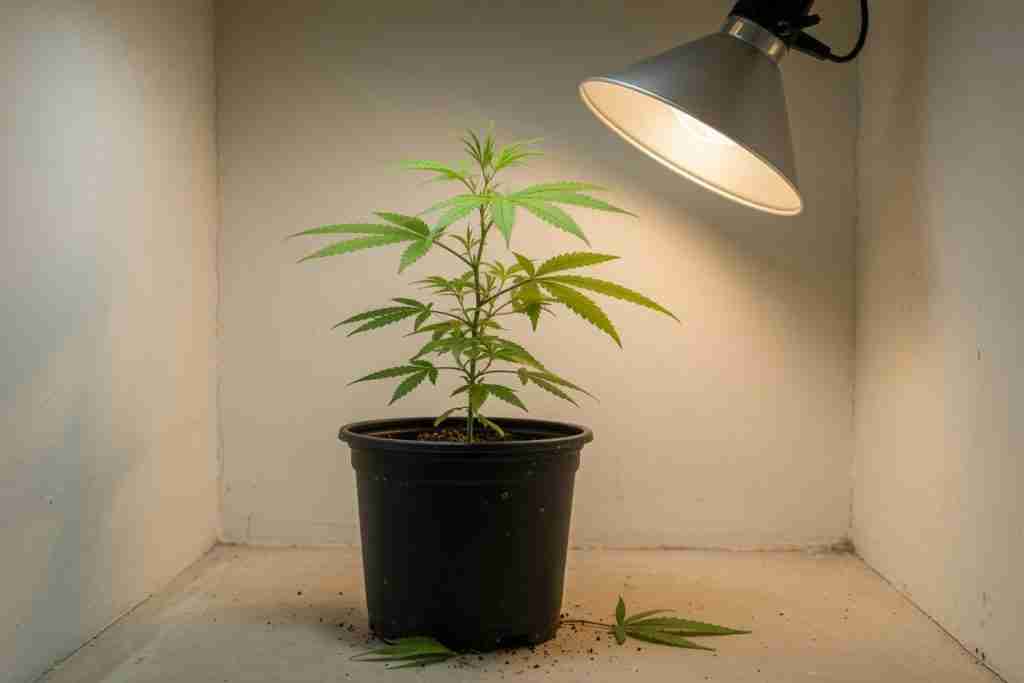
The threads do not change how many plants you may keep. The household rule already named above is the Canadian line, and a seedling still counts. A lively pot is still one plant. A pouch of inoculant is not a license, and a jar of extra seed is still storage. An honest mix does not make a fifth plant allowed. A dead mix does not make a legal plant into a crime. Count plants by the rule where you live.
Rules outside that Canadian line are not this page’s to invent, and they change. Read them before you sow or share anything. Nothing about fungi makes a parcel legal, and this page will not tell you how to ship a pot. The label habit still applies. If you pass a rooted plant to someone, say whether the mix was a living soil, a clean medium you fed, or a pouch you added at transplant. Unknown duff is a fact you owe them, the same way you would owe them the name of the pack.
The useful sentence is short. The threads are a fungus in the soil. Cannabis can partner with the kind that enters the root. The plant pays sugar and gets reach for phosphorus and water. The deal starts early, in a mix that is actually alive, and it never replaces water, light, or food. A mushroom kit, a rotten cola, and a dusty leaf are other lives. If you can say that without adding a miracle, you understood the pot.