Beneficial Insects in Your Cannabis Garden: Ladybugs, Mites, Lacewings


Beneficial insects in your cannabis garden are not a vibe. They are animals you either attract or buy, then put on a pest you have named. Ladybugs eat aphids. Predatory mites eat spider mites. Lacewing larvae eat soft-bodied junk. Nematodes kill fungus gnat larvae in wet mix. If you dump a bag of ladybugs on a mite web and walk away, you spent money on a flying souvenir. This page is the working version: match the predator to the pest, release it so it stays, and keep it alive long enough to matter.

Ranking pages for this search all circle the same jobs: which bug eats which pest, how to release it, how to keep it, and what kills it. That is the spine. Beneficials sit inside integrated pest management, not instead of it. You still scout. You still clean. You still fix airflow. Shop: cannabis seeds store. Seed pick: how to pick cannabis seeds.
What Beneficial Insects Actually Do
Three kinds of “good bugs” get sold to growers. Predators hunt and eat. Parasitoids lay eggs in or on a pest and the larva eats it from the inside. Pathogens and nematodes infect soil stages. People also lump in pollinators. Bees are good for a vegetable garden. Cannabis flower you want seedless is wind-pollinated. A bee on a cola is not improving your sinsemilla. Do not buy a hive for bud quality.
Decomposers in soil — springtails, some mites, worms — recycle litter. That is soil life, not a mite program. If the problem is stippling on a fan leaf, you need a foliar predator, not a compost crew. Soil: organic cannabis soil.
A predator only works if the pest is there, the climate matches, and nothing you sprayed last week is still on the leaf. Broad oils, soaps, and most bottles kill the animal you just paid for. That is why beneficials come after you stop spraying, or you pick a spray that the supplier says is compatible and you wait the listed days. Neem is a tool. It is not a roommate for a lacewing larva. Neem: cannabis pests with neem oil.
Match the Predator to the Pest

Name the pest first. A jeweler’s loupe beats a guess. Sticky residue and clustered green bodies are aphids. Stippling, webbing, and moving dots on the underside are spider mites. Silver scrape and black specks are often thrips. Clouds of tiny flies off wet mix are fungus gnats. Whiteflies lift off when you shake a leaf. Each one has a specialist. A generalist helps. The wrong specialist starves and leaves.
- Aphids: ladybugs, lacewing larvae, Aphidius wasps. Aphids: aphids on cannabis plants.
- Two-spotted spider mites: Phytoseiulus persimilis for an active outbreak, Neoseiulus californicus to prevent or hold. Mites: cannabis and spider mites.
- Thrips: Amblyseius cucumeris or swirskii on larvae, Orius on adults, soil mites for pupae. Thrips: thrips on cannabis.
- Fungus gnat larvae: Steinernema feltiae nematodes and Stratiolaelaps scimitus (still sold as Hypoaspis) in the top of the mix. Adult gnats on cards are already too late for a drench to kill that generation.
- Whitefly: Encarsia formosa in a warm greenhouse, lacewing larvae as backup. A marigold border is not Encarsia.
- Caterpillars outdoors: Bt for the larvae, birds and wasps if you have habitat. A praying mantis will also eat your lacewings.
If you cannot name the pest, do not order a mixed “good bug pack.” You will release animals that have nothing to eat, and they will leave or eat each other. Scout, then buy.
Best Beneficial Insects for a Cannabis Garden
The old list on this page was ladybugs, green lacewings, predatory mites, parasitic wasps, and rove beetles. That list is still the right start. The missing pieces that ranking growers actually use are soil mites, nematodes, and the mite species name — not “predatory mites” as if they were all one animal.
Ladybugs for aphids

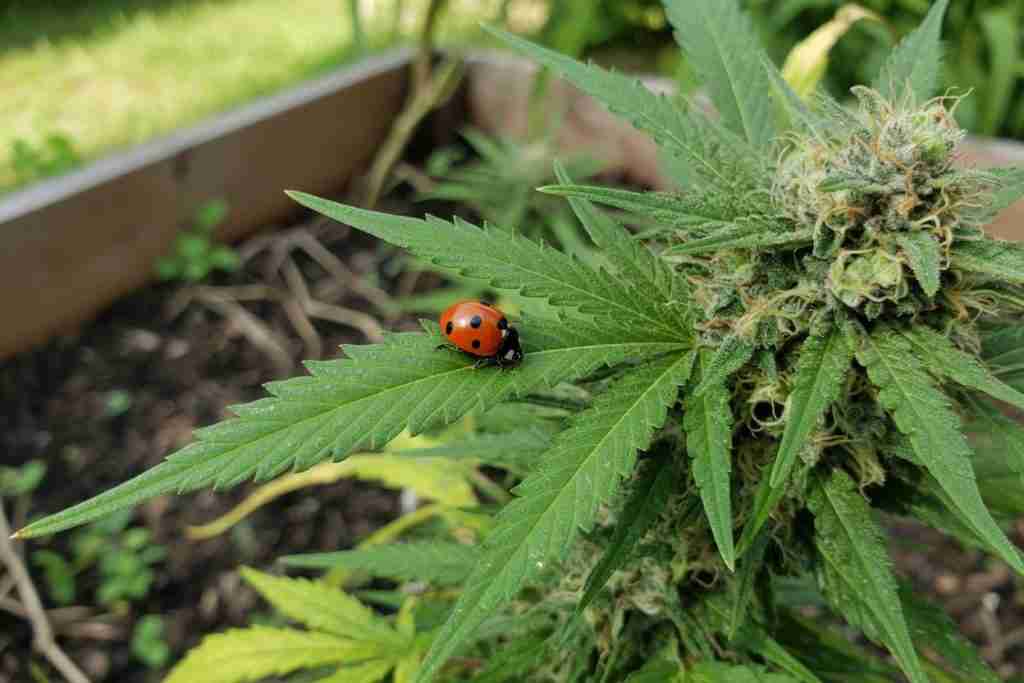
Adult lady beetles eat aphids. A common figure is about 50 a day when they are hungry and the colony is dense. Larvae eat more for their size and they cannot fly off the plant. That last sentence is the one most bags skip. A lot of what you buy is convergent lady beetle (Hippodamia convergens) collected from California hillsides, not reared in an insectary. They wake up, look for the overwintering site they remember, and leave. You see a red cloud for an afternoon. The aphids are still there in the morning.
Release at dusk or with the tent lights off. Mist the plants so they stop to drink. Open the bag in the canopy, not on the floor. Refrigerate the bag if you cannot release the day they arrive — cold slows them, it does not store them for a week. If there are no aphids, they leave. Do not release ladybugs “just in case.” They are a treatment for an aphid colony you can see, not a preventive sachet.
They will nibble mite eggs and thrips if aphids run out. That is leftover hunting, not a mite program. For mites you want mites.
Green lacewings — the larvae do the work
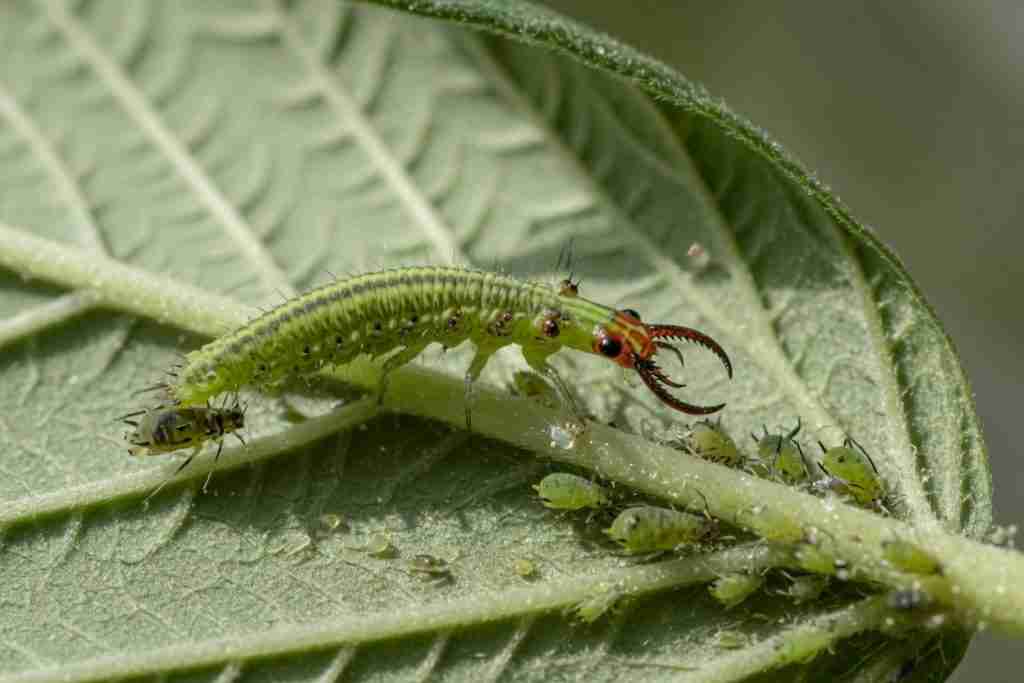
Adult green lacewings look like a green wasp with glass wings. They mostly drink nectar and honeydew. The ugly ones do the killing. Lacewing larvae are called aphid lions. They look like tiny alligators with ice-tong jaws. They eat aphids, thrips, whitefly, mites, and small caterpillars. A larva can put away a couple of hundred aphids before it pupates. That is why you buy eggs or larvae, not a pretty adult in a jar.
Eggs come mixed in bran or rice hulls. Sprinkle them into the canopy, not in a pile on the soil. Larvae cannibalize if you dump them in one clump. Spread. They do not like a blast of fan or a soaking spray the day you set them. Adults need flowers if you want them to stick around outdoors. Dill, yarrow, alyssum. That is companion planting as a cafeteria, not as magic: companion planting for cannabis.
Predatory mites — name the species
Phytoseiulus persimilis is the specialist for two-spotted spider mite. It is orange-red, fast, and it lives in the webbing. It can eat on the order of 20 mite eggs or motiles a day and it reproduces faster than the pest when temperature sits around 20–22 °C and humidity stays up near 60–70 percent. Dry tents starve it. Hot, arid rooms favor the pest. If your flower room is at 45 percent RH on purpose, persimilis is a poor fit unless you raise humidity in veg or you pick a drier-tolerant species.
Neoseiulus californicus is the generalist people use preventively. It eats spider mites, some russet and broad mites, and it can sit on pollen or stored food in a sachet when prey is thin. It handles lower humidity better than persimilis. Use californicus before you see webbing. Use persimilis when you already see webbing. They can be used together. Persimilis hunts the hot spots. Californicus patrols.
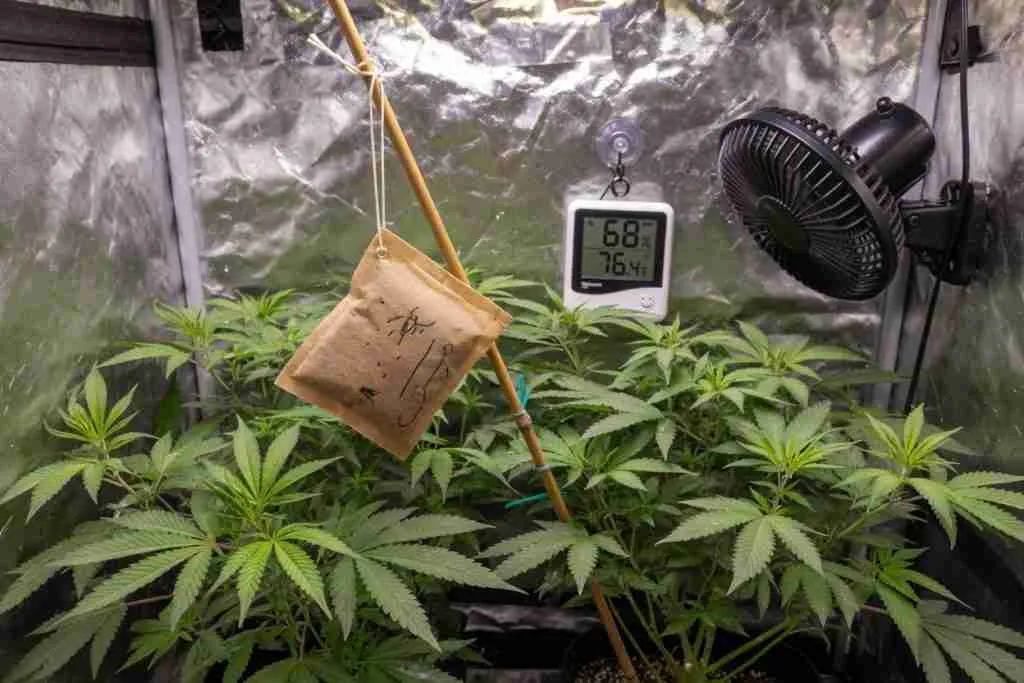
Amblyseius swirskii and cucumeris are the thrips-larva mites. They live in sachets you hang in the canopy and they walk out over weeks. They do not reliably kill adult thrips. Adult thrips need Orius (minute pirate bugs) or a spray. Sachets want to hang in the plant, not on a hot light rail. If the sachet dries to dust, the mites are dead.
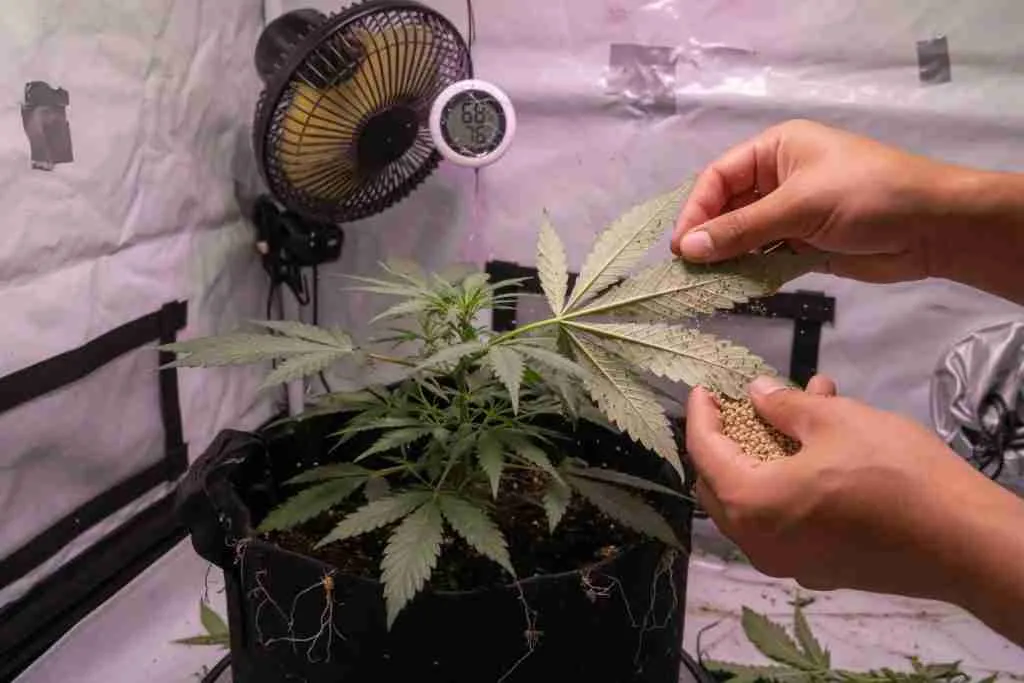
Sprinkle bottle mites onto the undersides of leaves, concentrating on stippled hot spots. Leave the open bottle in the tent 24 hours so stragglers climb out. Do not dump the carrier into a reservoir or onto a wet saucer. Foliar mites live on leaves.
Soil crew: nematodes, Hypoaspis, and rove beetles
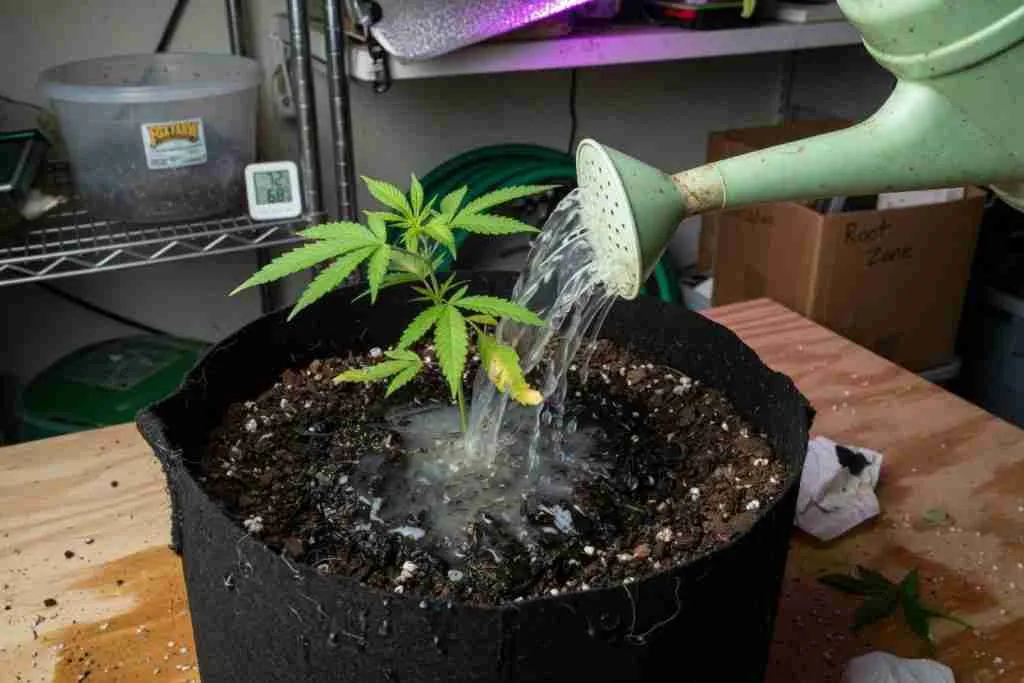
Fungus gnats breed in wet mix. The adult on a yellow card is the leftover. The larva in the top inch of soil is the problem. Steinernema feltiae is a nematode you mix in room-temperature water and drench. It enters the larva and kills it in a day or two with symbiotic bacteria. Adult flies already flying do not die. You still see gnats for a week. That is normal. Keep the surface moist enough for nematodes to move, not swampy. Do not run the mix through a pump with a fine filter. Do not use hot water. Do not leave the mixed solution sitting an hour. Apply and water in.
Stratiolaelaps scimitus, still labeled Hypoaspis miles in a lot of shops, is a tan soil mite. It lives in the top of the pot and eats gnat larvae, thrips pupae, and other small soil stages. Release at transplant as prevention. It is not a foliar mite. Do not sprinkle it on colas.
Rove beetles (Dalotia coriaria, often sold as Atheta) hunt gnat larvae at the soil line. They are small, fast, and they hide in the mix. They are a greenhouse and indoor soil tool. They are not a ladybug. Do not expect to see them walking the canopy.
Wet mix is still the real gnat control. Beneficials clean up larvae. If you water every day in a 3-gallon of peat, you are breeding the pest. Watering: how to water cannabis plants. Pots and media: environment, media, watering, and pot sizes.
Parasitoid wasps
These are not the wasps that sting you at a picnic. They are tiny. Aphidius colemani lays an egg in a small aphid. The aphid becomes a beige mummy. That mummy is the proof it is working. Encarsia formosa does the same job on greenhouse whitefly scales — you see black scales on the underside. You buy them as mummies or as adults on cards you hang.
Parasitoids need a low, steady pest population. If you wipe the aphids to zero with soap the day before the wasps arrive, they have nothing to parasitize and they leave. If the colony is a solid mat, they cannot keep up. Use them early, or use them with a predator that knocks the peak down. Yellow sticky cards catch these wasps. If you hang a forest of cards, you are trapping your control. Put cards at the edge, not in the middle of a release.
Minute pirate bugs, hoverflies, and the ones to be careful with
Orius (minute pirate bugs) eat adult thrips. They also eat mites and moth eggs. They need pollen or prey or they leave. In a flower room with no pollen source and no thrips, they starve. In veg they need a sachet or a banker plant. They bite people. That is not a reason to skip them. It is a reason not to dump them down your shirt.
Hoverfly larvae eat aphids outdoors. You do not usually buy them. You grow dill and let the adults find you. That is cheaper than a bag.
Praying mantises look like a mascot. They eat anything they can catch, including bees, ladybugs, and lacewings. Outdoors in a big mixed garden they are part of the food web. In a 4×4 tent they are a loose cannon. Skip them indoors.
How to Release Beneficial Insects So They Stay
Order so the pack arrives on a day you can open it. Most predators want to go out the day they show up. Nematodes can sit in the fridge for a short window. Ladybugs can sit cold overnight. Mites in a bottle do not want a weekend on a hot porch. If the pack is hot, wet, or smells like death, call the supplier. Dead animals do not hunt.
Let the container sit in the room 15–30 minutes so you are not dumping cold animals into a 26 °C tent. Open it in the garden, not in the kitchen. Lights off or dusk. Flying adults take off toward a window if you open the bag under a bright lamp. Close the tent. Kill the exhaust for an hour if you can so they settle. Mist leaves with clean water for ladybugs. Do not soak lacewing eggs off the leaf.
Put the animals on the pest, not on empty space. Persimilis goes on stippled leaves and webbing. Ladybugs go on aphid clusters. Nematodes go in the pot, not on the cola. Soil mites go on the media surface. Leave bottles and trays in the space overnight.
Stop foliar sprays before a release. Soap, oil, spinosad, and most miticides kill predators. Some residues last days. Some last weeks. Read the compatibility chart from the insectary, not a forum post from 2014. If you must knock a peak down first, do it, wait the listed interval, then release. Using beneficials and a weekly “just in case” spray is how you buy bugs twice.
Rates, Timing, and What “Preventive” Actually Means
Suppliers print rates per square metre or per plant. Home tents are small. A bottle of 2,000 persimilis can treat a modest outbreak in a 4×4 if you hit the hot spots. A sachet of swirskii is often one per plant, replaced every few weeks. Nematodes are mixed to drench every pot, not one decorative cup. Cannabis canopies are hairy and dense. Insectaries that sell to hemp often tell you to double a vegetable rate. Start with the label. If counts have not turned in 7–14 days, repeat before the pest’s next generation.
Preventive means you release a generalist before you see damage: soil mites at transplant, californicus or cucumeris sachets in veg. Curative means the pest is already reproducing: persimilis on webbing, ladybugs on a visible aphid colony, nematodes when cards show gnats. Preventive is cheaper. Curative is what you do when you skipped preventive and you still want a crop. Neither is a spray you forget about.
In flower, keep releasing if the pest is still moving. Predators do not care that you are in week six. You care that you are not spraying oil on colas. That is the whole argument for biology in late flower. Watch humidity if you add persimilis. Watch bud rot if you raise RH to keep mites alive. Rot: cannabis bud rot. Environment: best growing environment for cannabis.
Outdoor Habitat: Make Them Want to Stay
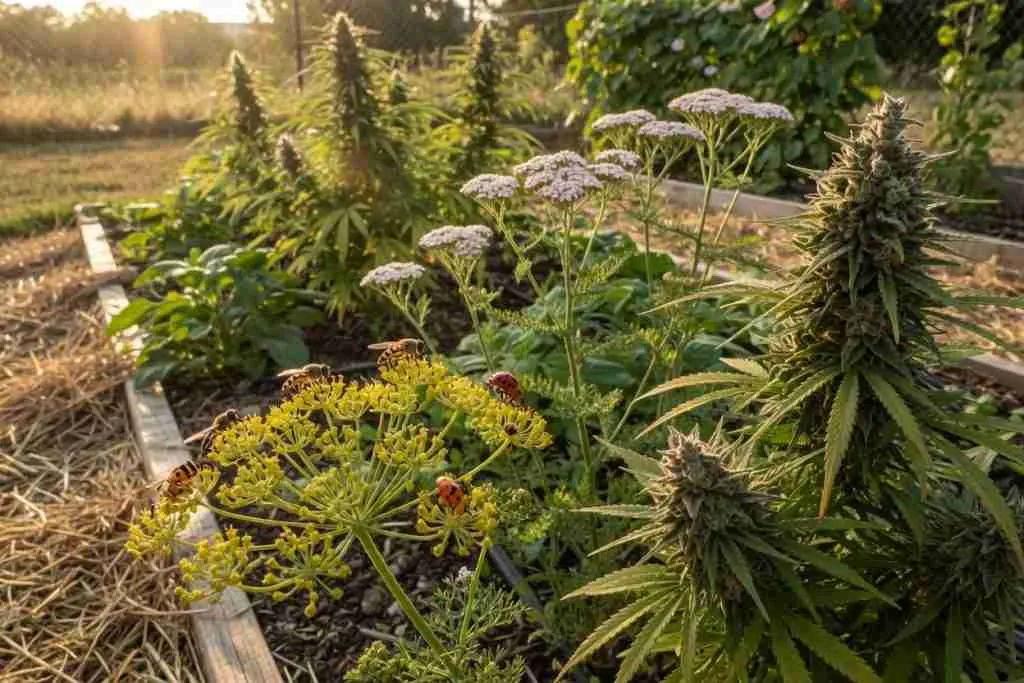
Outdoors you can build a cafeteria. Adult lacewings, hoverflies, and parasitoids need small open flowers. Dill, cilantro, yarrow, alyssum, and fennel-family umbels. Let some herbs flower. A bed of only cannabis is a pest buffet with no nectar. Companion plants are how you hold the adults after the first flush of aphids is gone. Layout and what to skip: companion planting for cannabis. Outdoor crop: growing cannabis outdoors.
Water and a little shelter matter. A stone pile, a strip of unmowed edge, a mulch that is not a slug hotel. Slugs will still chew a wet clover ring. Check stems at night: slugs and snails. Grasshoppers will not be solved by a ladybug: grasshoppers eating marijuana. Deer do not care about beneficials at all.
Do not spray the whole yard the week you release. Drift kills parasitoids. A neighbor’s mosquito truck can wipe a release. If you live in that kind of neighborhood, indoor biology is more reliable than outdoor fairy dust.
Outdoor seed still has to finish before frost. Beneficials do not change the calendar. Outdoor genetics: best cannabis seeds for outdoor growing. Pest weather: preventing fungi and pests outdoors.
Indoor Tents: Different Rules
A tent is a box. There is no wild population to recruit. Everything you want has to be bought and released. Everything you do not want hitchhikes on clones, groceries, and hardware-store basil. Quarantine new plants. A loupe on day one is cheaper than mites on day twenty. Indoor guide: indoor cannabis growers guide. Tent: grow tent.
Humidity is the indoor limiter. Persimilis wants moisture in the boundary layer of the leaf. A flower room held at 45 percent for rot control will not run persimilis well. Californicus and a dry-room mite plan fit better, or you knock mites with a compatible spray and you accept the trade. Ventilation: ventilation for cannabis grow. Room: building the grow room.
Intake fans suck flying adults out. If you release ladybugs and then crank exhaust, you paid to scent the backyard. Pause exhaust a bit. Close the zipper. Give them an hour. Sachets stay. Flying beetles do not.
Do not fill a tent with companion herbs just to “feed” beneficials. Extra transpiration is extra RH and extra pest habitat. One basil pot at the edge is already a maybe. Habitat planting is an outdoor tool. Indoors, buy the right bottle and hang the sachet in the canopy.
What Kills a Release
Residue. A spinosad or oil you used last Tuesday is still on the underside. Predators walk it and die. If you need a knockdown, do it, wait, then release. Do not mix “a little neem” with live mites because a blog said both are organic.
Dry air. Persimilis eggs desiccate. Sachets turn to dust. Soil nematodes need a film of water to swim. A desert tent with a dehumidifier on max is a mite farm and a predator graveyard.
No food. Ladybugs with no aphids fly. Persimilis with no spider mites starves. Parasitoids with no hosts leave. Preventive generalists (californicus, swirskii, soil mites) are the ones that can sit on pollen or alternative prey. Specialists are a strike force. Use them when the pest is present.
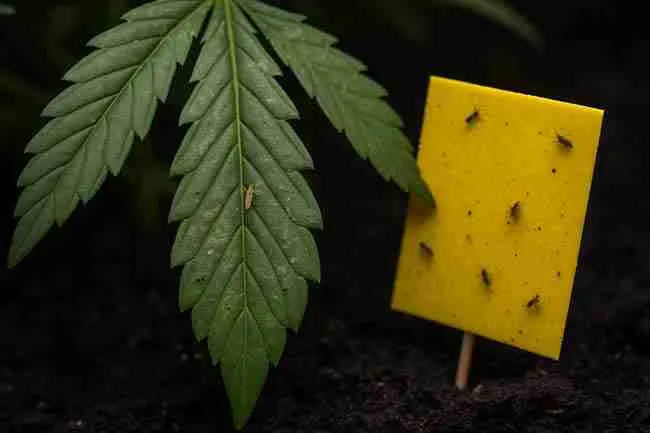
Sticky cards in the wrong place. Yellow cards are good intel for gnats and whitefly. They also catch Aphidius and Encarsia. Blue cards catch thrips and also some beneficials. Hang cards at the edge, check them, do not wallpaper the tent the day you release wasps.
Heat in shipping. A pack on a sunny step is cooked. Get a signature. Open the box. If they are not moving, they are not going to start later.
Crowding and rot. A jungle canopy hides pests and cooks predators in stale air. Open the plant. Stake it: strengthen cannabis branches and stems. Air through a cola is still worth more than a pretty herb ring.
Scout After You Release

Day one you should see the animals you paid for: red persimilis in the webbing, ladybugs on the aphid cluster, bran in the canopy from lacewing eggs. If you see nothing, you released into a fan or you got a dead pack.
Day three to seven, pest counts should stop climbing. Aphid mummies appear with Aphidius. Gnat cards should start dropping a week after nematodes, not overnight. Mite stippling should stop spreading even if old dots stay. Old damage does not green up. New growth is the scoreboard.
If counts are still doubling, repeat the release or change species. Do not wait a month. Spider mites at 27 °C can turn a week into a wipeout. Write one line in a notebook: date, what you released, what you saw. Beneficials without notes are how people swear “bugs don’t work.”
Look under leaves. Look at the soil line. Look at cards. Look at new growth. Same walk you should have been doing before you spent money. IPM is still sanitation, environment, biology, then a targeted spray. Yield still follows a plant that kept its leaves: increase cannabis yields. Hungry plants from lockout are not a mite problem: cannabis nutrient deficiency.
Banker Plants, Sachets, and Slow Release
A sachet is a cardboard packet with a breeding colony of mites plus a factitious food. Mites walk out of a hole over two to six weeks. Hang it in the shade of the canopy, not against a light or a heater. If the packet dries crispy, the colony died. If it sits in a puddle, it molds. Replace on the interval the insectary prints. One sachet per plant is a common indoor starting point. A 4×4 with four plants is four sachets, not one in the corner.
Banker plants are a greenhouse trick: a non-crop plant that holds a clean colony of prey or pollen so predators have a pantry. Grain with bird-cherry oat aphids for Aphidius, or ornamental peppers for Orius. In a home tent they take space and they import extra pests if you do them wrong. Most home growers should buy sachets and bottles, not start a second crop of banker barley. Outdoors, flowering dill is the banker plant you already understand.
Slow release is how you hold a low pest population. Fast release — a bottle of persimilis on a hot spot — is how you crash a spike. Use both. Sachets in veg. Bottles when cards or a loupe say the pest is climbing. Do not hang empty sachets for luck after they stop shedding mites.
A Simple Plan You Can Run
New indoor run. At transplant, drench nematodes if you have ever had gnats, and sprinkle Stratiolaelaps on the media. Hang cucumeris or swirskii sachets when you flip or earlier if thrips are a house problem. Scout twice a week. At first mite stipple, order persimilis the same day, raise RH if you can do it without rotting colas, and hit the hot spots. Do not wait for webbing to look like cotton.
Aphids in veg. Confirm they are aphids. Release lacewing larvae into the colony and/or ladybugs at lights out. If you can get Aphidius, hang them when the colony is still small. Stop foliar oil. Check in three days.
Outdoor bed. Plant dill and yarrow at the edge when you plant the cannabis. Do not spray the yard. Release only if a named pest blows up. Habitat does most of the outdoor work for free. Buy bottles for the pest that habitat missed.
Late flower mites. This is the ugly one. Sprays on colas are a residue problem. Predators are the cleaner option if the room can hold them. Persimilis on hot spots, repeat in a week, keep air moving so you do not trade mites for bud rot. If the room is a desert, predators will fail and you need a different tactic. Be honest about the room you have.
A weekly walk is the plan even when nothing is wrong. Monday: undersides of interior fans, three plants, loupe. Wednesday: sticky cards and soil surface. Saturday: new growth and any sachet still shedding. Write what you saw. If Monday is clean for three weeks, you can thin the walk, not skip it. The first stipple you catch on a Monday is a $20 bottle. The webbing you catch on a Sunday in week six is a war. That is the whole argument for beneficial insects in your cannabis garden as a habit, not as a panic buy.
Do Not Kill the Ugly Ones
Ladybug larvae look like tiny orange-and-black alligators. Lacewing larvae look worse. Hoverfly larvae look like slugs. Growers squish them because they do not look like the red beetle on the seed packet. If you released lacewings last week and you are now killing “worms” on the leaf, you are killing your control. Learn the ugly stages before you buy the pretty adult.
Spiders in an outdoor bed are free generalists. They eat moths, flies, and plenty of pests. They also eat beneficials if you pack the bed. Leave the orb weaver in the corner of the greenhouse unless it is webbing a cola you need to work. You do not buy spiders. You stop destroying them.
Ants farm aphids. If you have a trail up the stem and a tight aphid cluster, the ants are guarding the herd. Ladybugs will have a harder time. Control the ants at the base — a sticky barrier on the stem, bait away from the plant — then release. Do not soak the cola in ant spray.
Receiving, Storage, and Dead Packs
Insectaries ship overnight for a reason. You are buying live animals. Be home. If the box sits in a truck at 35 °C, the mites are soup. Open it immediately. Persimilis should be moving in the vermiculite. Ladybugs should clump and crawl when warmed. Lacewing eggs should be intact, not a smear. Nematode sponges should be cool, not fermented.
Short holds: nematodes in the fridge, not the freezer, for the window the label allows. Ladybugs in the fridge in their bag, upright, not for a week. Mite bottles at the temperature the sheet says — often cool, never a windowsill. If you cannot release today, you should not have ordered for today. The “I’ll do it Saturday” pack is how people decide beneficials are a scam.
Hardware-store basil and a cup of ladybugs from a garden center in July can work if they are alive and you have aphids. An insectary that names the species, the count, and the ship date is the grown-up version. You want Phytoseiulus persimilis on the invoice, not “mite eaters.” You want a count you can finish in one tent, not 50,000 for a greenhouse you do not have.
Root Aphids Are Not a Ladybug Job
Foliar aphids sit on stems and undersides. Ladybugs and lacewings can reach them. Root aphids sit in the pot. The plant looks hungry, wilted, or just slow. You dump ladybugs on the canopy and nothing changes. Soil drench nematodes, a thorough inspection of the root ball, and sometimes a full transplant into clean mix are the tools. Do not confuse a pale plant with “I need more clover.” Diagnose: cannabis nutrient deficiency. Soil: the best soil for growing cannabis.
If you reuse mix from a gnat-and-root-aphid run, you are inoculating the next crop. Beneficial soil mites help a clean pot stay clean. They do not pasteurize last year’s swamp. Throw infested mix or hot-compost it. Clean the fabric pot. Then release soil predators at transplant as insurance, not as a miracle on dirty media. Amendments: organic growing amendments. Feed: organic marijuana fertilizer.
Flower, Residue, and Harvest
The reason to learn this in flower is residue. Oil on a ripe cola is a taste problem and a lab problem if you test. Live mites on a cola walk off in the dry or get trimmed. They are not a spray. That is the pitch, and it is mostly true if you actually established them in veg. Starting persimilis in week seven on a desert-dry, heavily webbed plant is a prayer. Start earlier.
If you already sprayed, list what you used and when. Many insectaries publish compatibility. Spinosad is hard on a lot of beneficials. Soaps and oils are contact killers the day you spray. Some systemics are a long no. If the sheet says wait seven days, wait seven days. If you cannot wait, you chose the spray, not the bug.
At harvest, predators in the canopy are not a reason to panic. Shake plants going into the dry. You are not smoking a lacewing on purpose, and you will not have a colony in the jar if you dry correctly. Do not fog the dry room to “clean” it unless you like ruining the cure.
Mistakes That Waste a Box of Bugs
- Releasing ladybugs at noon under a 600-watt light. They fly to the lamp and cook.
- Ordering persimilis for a room you keep at 40 percent RH. The eggs dry. The pest wins.
- Spraying soap “to help” the same day as a mite release. You paid twice.
- Hanging yellow cards in a cloud of Aphidius. You trapped the wasps.
- Dumping lacewing larvae in one pile. They eat each other.
- Drenching nematodes into bone-dry mix, or into a swamp. They need a film of water, not a lake.
- Buying “predatory mites” with no Latin name on the bag.
- Releasing specialists into a clean tent with nothing to eat, then deciding biology does not work.
- Ignoring the soil because the flies are in the air. The larvae are in the pot.
- Leaving the pack on a porch in July.
Every one of those is a grower problem, not a bug problem. The animals do what the label says when the room matches. When the room does not, no quantity of ladybugs fixes it. Fix airflow, watering, and sanitation first. Then the release has a chance. Outdoor pests still need a walk: preventing fungi and pests outdoors.
What This Page Used to Get Wrong
The old copy said bees fertilize cannabis. For seedless flower they do not. It linked Wikipedia for ladybugs and mites. You do not need an encyclopedia page to release persimilis. It treated “predatory mites” as one insect. They are not. It recommended crop rotation as if you were farming wheat in the same tent. A home grower in fabric pots rotates by not reusing infested mix, not by planting cabbage. It wrapped with a generic closer. The useful ending is a plan: name the pest, buy the matching animal, release it alive, stop spraying it, scout in a week.
Beneficial insects in your cannabis garden are a tool. They are the right tool when you want biology instead of residue, and when you will do the unglamorous parts — ID, shipping day, dusk release, humidity, no random bottles. They are a waste when you buy a mixed bag and hope. Keep the originals on this page as a reminder of what aphids and a real ladybug look like. Then go look at your own plants with a loupe. Store: cannabis seeds store. Outdoor: growing cannabis outdoors. Indoor: indoor cannabis growers guide.