Using Activated Charcoal in Cannabis Soil Mixes: Your Guide to Healthier Plants

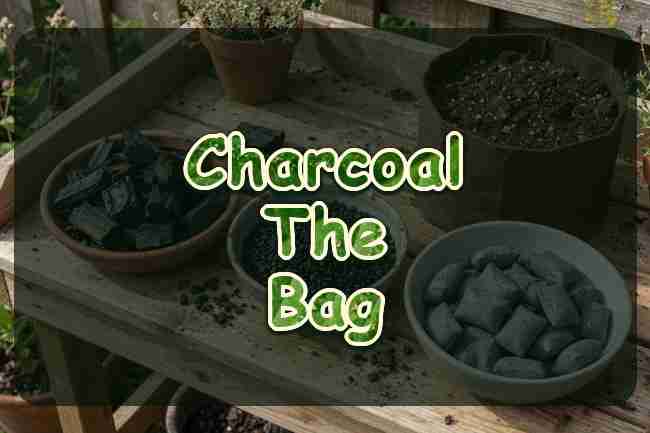
Activated Charcoal in Cannabis Soil is a bag you read before it touches a pot, not a cure you sprinkle on a sick plant. The useful writing on this job splits one black product into three. A filter carbon grabs molecules onto a huge surface. A chunky horticultural charcoal is a structure ingredient, closer to bark than to a bottle. Biochar is the soil amendment, and the share of a mix, the wetting with compost, and the long stay in a bed live on the biochar page. This page stops at the label on a home container. If the front of the bag says biochar, you are finished here.
A marijuana plant does not finish smoother because the mix went black. A weed plant you plan to smoke is still a plant that needs air at the root, a mix that holds some water, and food the root can reach. Carbon does not replace any of those. It can sit beside them in a small amount when the pieces are chunky and the bag was sold for a pot. It can also steal the first feed, shed water, and turn a simple mix into a dusty mess when the bag was sold for a filter.
What you do is short. Read the bag. If the pieces are chunks sold for horticulture, wet them until they sink, then mix a small handful through a pot you already trust. Keep powder, grill briquettes, and a spent tent filter out. Leave a seedling cup alone. Watch the new leaf and the way water moves. The growing medium page owns which bag of mix to buy. This page owns the black ingredient people keep adding on top of that decision.
Activated Charcoal in Cannabis Soil starts with the label
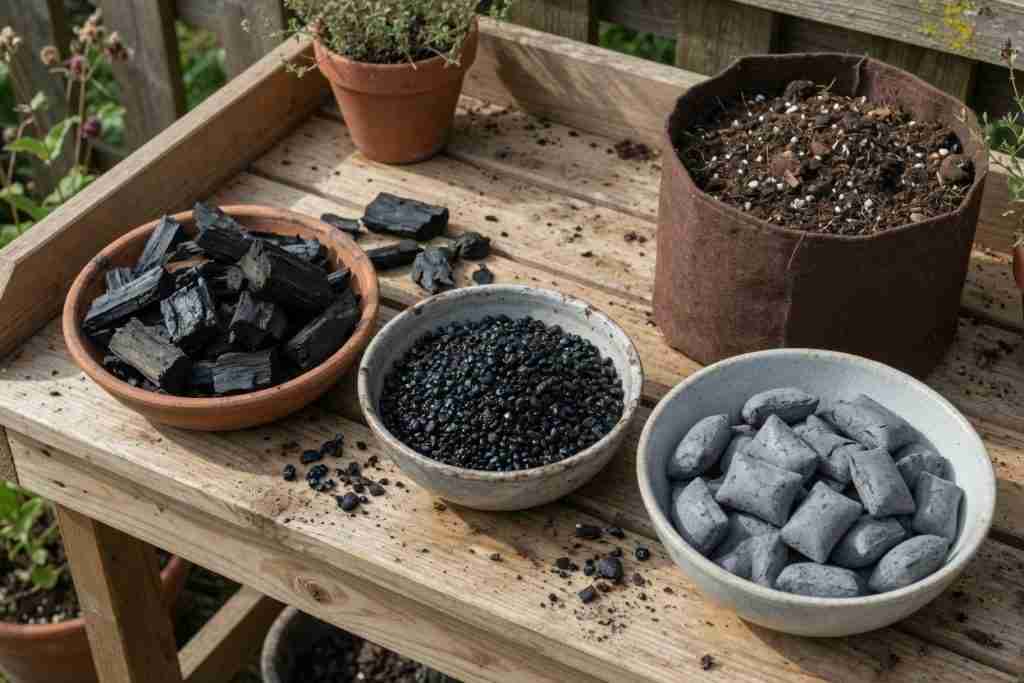
Set three products on the bench and they can all look like charcoal. The job is on the bag, not in the color. Activated charcoal, often sold as activated carbon, has been opened up so the surface area is enormous. That is why it sits in water filters, air filters, and aquarium cartridges. Molecules stick to the surface. In a pitcher that is the point. In a pot, the same trick grabs part of the feed you just mixed, and it does it before a root has a say. A fine grain or a shiny little pellet from a filter aisle is doing filter work even if somebody told you it is good for plants.
Horticultural charcoal, sometimes called potting charcoal, is the chunky one. Orchid and aroid mixes use it because the pieces keep a blend from collapsing and because a clean carbon surface can take up a little of the stale smell in a slow pot. A cannabis container can take a small share of those chunks the way it takes a little bark. The chunks are not a fertilizer, not a pest dust, and not a reason to drop the aeration you already use. If the pieces are big enough to pick up one by one, and the bag says horticulture or potting, you are in the only group this page will put in a mix.
Biochar is the third product, and it is the one made to live in soil. Feedstock, heat, and ash change how a given bag behaves, which is why a single scoop size does not travel from one brand to the next. Pre-wetting and pairing it with compost are part of that job. None of that recipe belongs on this URL. If the word biochar is the large type on the front, close this tab and use that guide. Treating biochar as activated charcoal, or activated charcoal as biochar, is how a small pot gets either a dusting of filter carbon or a rate that was written for a different material.
Grill briquettes are fuel. Many of them are pressed with a binder. Some are soaked so they light faster. That smell, sweet or chemical, is the test. Fuel does not go in a pot, and the ash from last night’s cook does not go in either. Ash is a different product with a different effect on a container, and it is already left out of the kitchen pail and the outdoor bin on the other soil pages. A lump of plain wood charcoal from a bag with no lighting agent is still fuel until a horticultural bag says otherwise. Do not crush briquettes to imitate a soil ingredient. You cannot see the binder once it is dust.
Read the back for the use and the particle size. A bag that mentions aquariums, drinking water, odor, or respirator cartridges is a filter. A bag that mentions orchids, aroids, or potting mix, and shows chunks rather than powder, is the horticultural one. A bag that mentions soil amendment and biochar leaves this page. If the back is only a detox story and a scoop size, put it back. You are buying a surface. The roots will meet whatever you poured.
A filter bag is not a soil bag
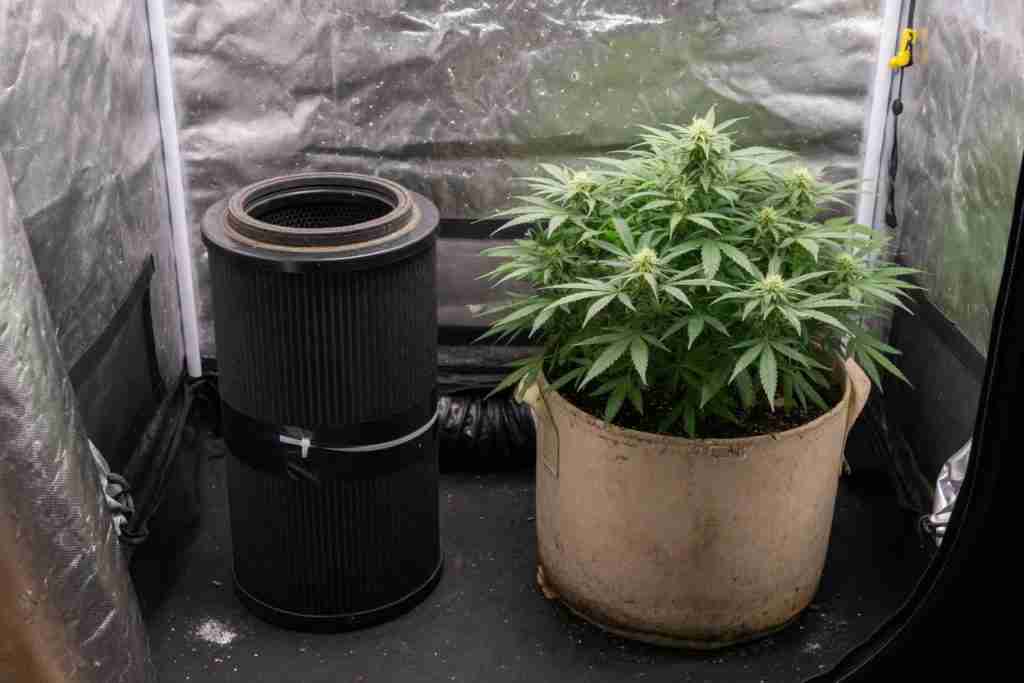
The cylinder in a tent, the mesh pillow in an aquarium, and the cartridge in a pitcher are the same family. They are activated carbon doing a filter job, and they belong in the housing they were built for. A closed filter standing next to a pot is a picture of two tools that do not trade places. Air goes through the cylinder so the room smells like a room. Water and roots stay in the pot. Opening the cylinder to harvest the carbon for a mix throws away the air tool and hands the root a load it did not ask for.
Spent carbon is worse than fresh filter carbon. It has already held odor and whatever else passed through it. Rinsing a puck under the tap does not reset that history. You cannot see the compounds stuck on the surface, and you should not put an unknown load into a container you will harvest. The puck goes in the trash. A fresh, unused aquarium bag is still the wrong texture for this mix. Save it for a filter, or leave it on the shelf. Do not talk yourself into a garden use because the bag was expensive and the run is over.
The same refusal covers a kitchen project. An oven or a backyard drum will not turn raw wood into a tested soil carbon. You get smoke, ash, and a pile you cannot check. Buy the bag that already names the job, or skip the ingredient. A pot needs air, a watering habit, and a plant that fits the season. Carbon is optional.
Wet the chunks before they join the mix
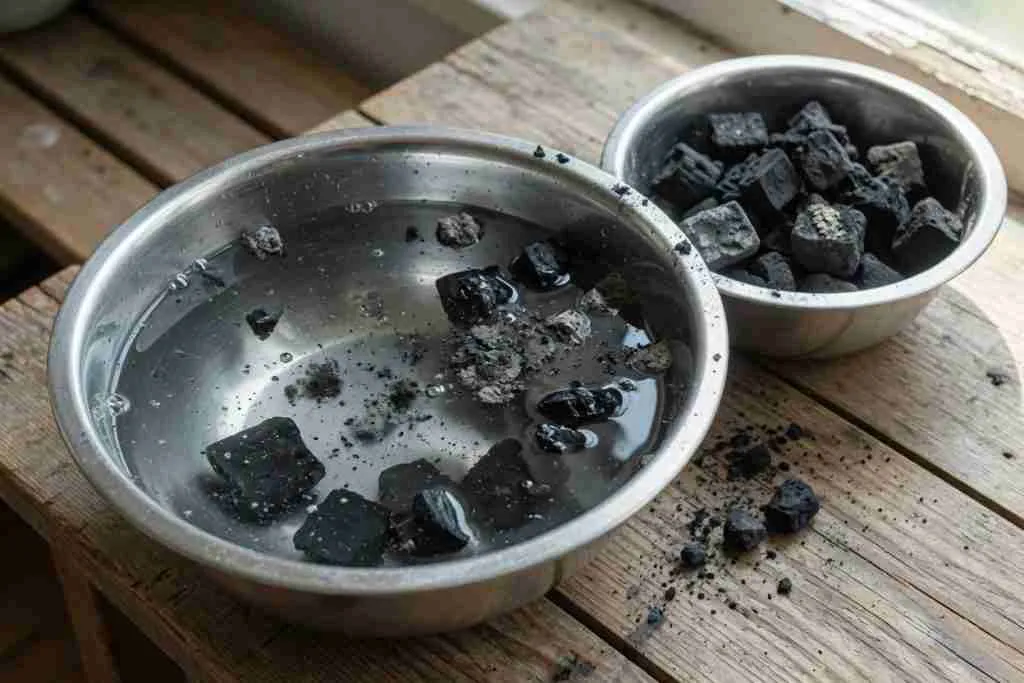
Dry chunks misbehave on the first watering. Many of them shed dust, float, and shrug water off until the surface finally wets. If you stir them in dry, the first pours bead on black pieces and run down the side of the pot, and the dust rides with that water into a dark film. Soak the chunks in plain water before they meet the mix. Stir once. Let them sit until most of them sink and the water is less cloudy. Drain. The pieces should feel wet through, not dusty. That is the whole prep. No sweetener, no bottle, no overnight brew in a warm tent.
Mix those wet chunks through the potting mix, top to bottom. A cannabis pot has drain holes and one blend. A black layer at the bottom is a terrarium habit, built for a closed glass box with no hole. In a fabric pot that layer becomes a wet shelf or a dry shelf, and the roots hit a different material halfway down. A cap of chunks on the surface is not a mix either. It looks tidy for a day and then it sheds water while the core stays on its own schedule. If you can still see a stripe of pure carbon when you look at the side of a clear mixing tub, you are not done stirring.
The amount is a small handful in a pot you can carry, not a second soil. You are adding pieces, the way you might add a little bark, inside a mix that already has compost or a real potting blend and an aeration ingredient. If the tub looks mostly black, you have left horticulture and started a carbon pot. Roots will chase the pockets of actual mix and ignore the rest, or they will sit in a blend that holds the first nutrients on a fresh surface. Next time, use less. There is no prize for using the whole bag in one transplant.
Leave the seedling cup out of this. A sprout wants a light starter and water. A black chunk in a tiny cup is a boulder, and a dusting of carbon in that cup is a surface the first root does not need. The seedling stage owns those first days. Add horticultural chunks, if you add them at all, when you move into the pot the plant will finish in. Do not stir carbon into a nutrient jug or a reservoir. A reservoir is water and a measured feed. Carbon in that bucket is a filter you did not mean to build, and it will change the jug before the plant sees it.
Biology is a different ingredient. Finished compost or castings are food and a home for the life already described on the worm castings page and the living soil page. Carbon chunks do not arrive with that life, and a sterile black dust does not hire it. If you want the pot to be a living mix, build that mix on those pages and let a few wet chunks ride along. Do not soak the chunks in a sweet tea and call the foam a microbial product. Plain water, a drain, and a stir through the mix you already chose.
Powder belongs in a filter not a pot
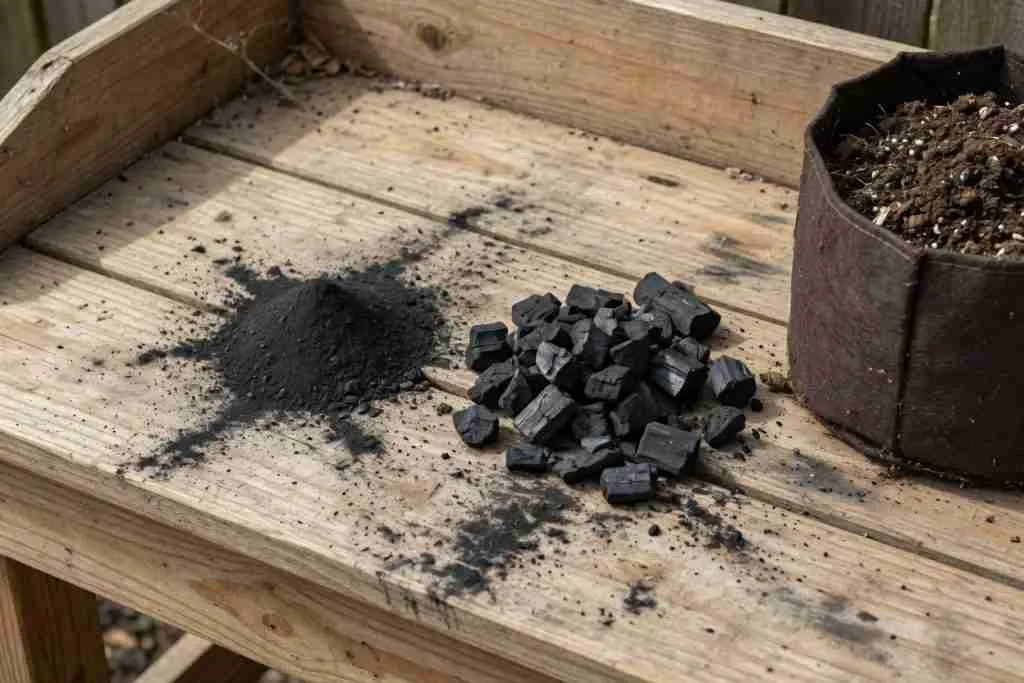
Fine activated charcoal is the filter grade. The particles are small, the surface is huge, and a scoop paints a bench black. In a pot that dust packs when it gets wet, fills the air spaces you wanted, and holds nutrients on a surface a root browses poorly. Chunks you can pick up are a structure talk. Powder is a filtration talk. If a scoop turns the mixing tub slick and uniformly black, stop. That batch is not a seedling mix and it is not a rescue for a pale plant. Put the powder back in the jar if it is clean and unused. A filter can still use it. A cannabis pot should not.
Smell the bag before you argue with this. A solvent smell, a lighter-fluid smell, or a sweet chemical smell means the trash, not the garden and not the compost. You will not rinse that out in a bowl. Plain wood dust with no chemical smell is still the wrong texture for the pot. Do not invent a second career for it as a top-dress. A black cap on a fabric pot sheds water, stains the saucer, and tells you nothing about the root. If you already dumped powder into a batch, do not plant into the blackest part. Set that tub aside, mix a fresh pot without it, and treat the powdered batch as a mistake rather than a recipe to repeat.
Powder also makes a cloud. Mix outdoors or over a tub, and wash the scoop. Do not blow the dust into the intake of the tent, and do not dust leaves. Carbon on a flower is dirt on a flower. Soil only, in the mix, at transplant, and only when the pieces are chunks. If the product will not stay in chunks when wet, it has told you what it is.
Charcoal does not do the perlite job
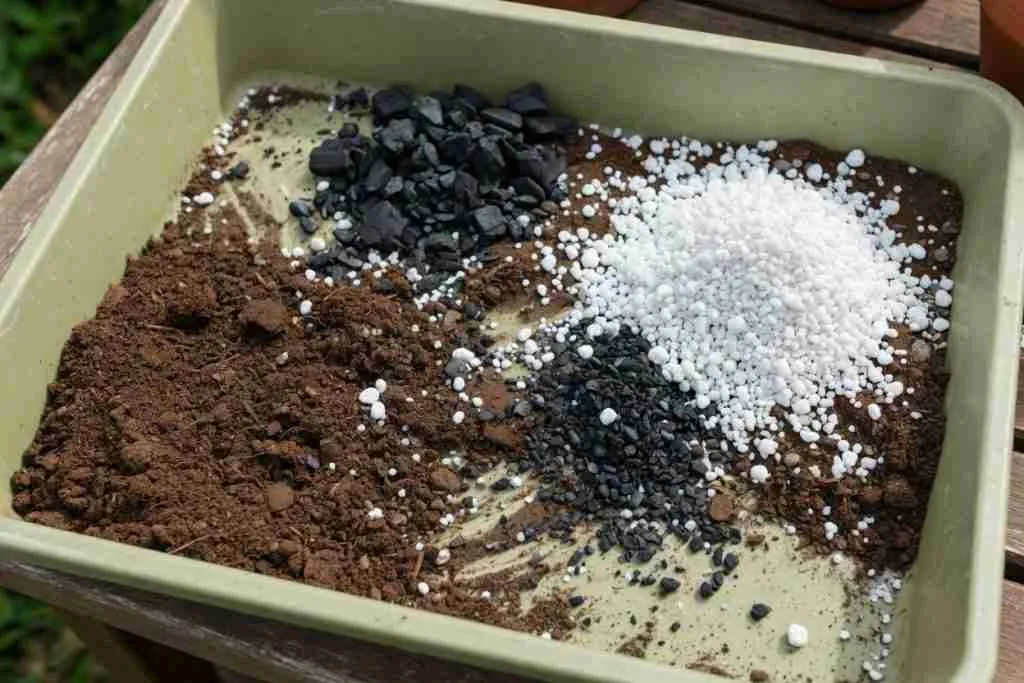
Perlite and pumice are air. They are light, they do not feed, and they do not grab the bottle. That is why they sit in almost every cannabis mix that drains. Horticultural charcoal can ride in the same tub in a small amount. It does not take their place. A blend of only soil and carbon packs on a different schedule, weighs more, and drinks the first nutrients onto a fresh surface. Keep the white rock. If the tray shows soil, perlite, and a smaller pile of black chunks, you are looking at a sensible order. If the black pile is the largest thing in the tray, you are building a carbon pot and calling it aeration.
The best soil guide owns the base mix, the drainage, and what does not belong in a container. Use that when you are choosing peat, coir, compost, and aeration. Use this page only when a black bag is already in your hand and you need to know whether it joins that mix. A cheap potting soil that stays wet for days needs air, and the air is perlite or pumice. Pouring carbon on a swamp does not punch holes through it. It stains the swamp.
Weight matters on a bench and on a balcony. Perlite keeps a tall pot liftable. Charcoal chunks are heavier, and a pot that is mostly carbon is a dry brick that still needs watering judgment. If the wet mix is awkward before the plant is in it, take carbon out on the bench. Pieces are easier to remove from a tub than from a rooted pot.
Microbes do not arrive in the bag of carbon. The root trade, the sleeve of mix that clings to a root, and the reasons that trade quits are on the soil microbes page. A chunk can be a place life later sits, after the mix around it is actually alive. A dusting of filter carbon is not that place. Do not buy charcoal to import biology, and do not skip compost because the chunks look porous. Porous is not the same word as fed. An organic soil still has to be a soil. Carbon is a guest in it.
A sour pot is still a watering problem
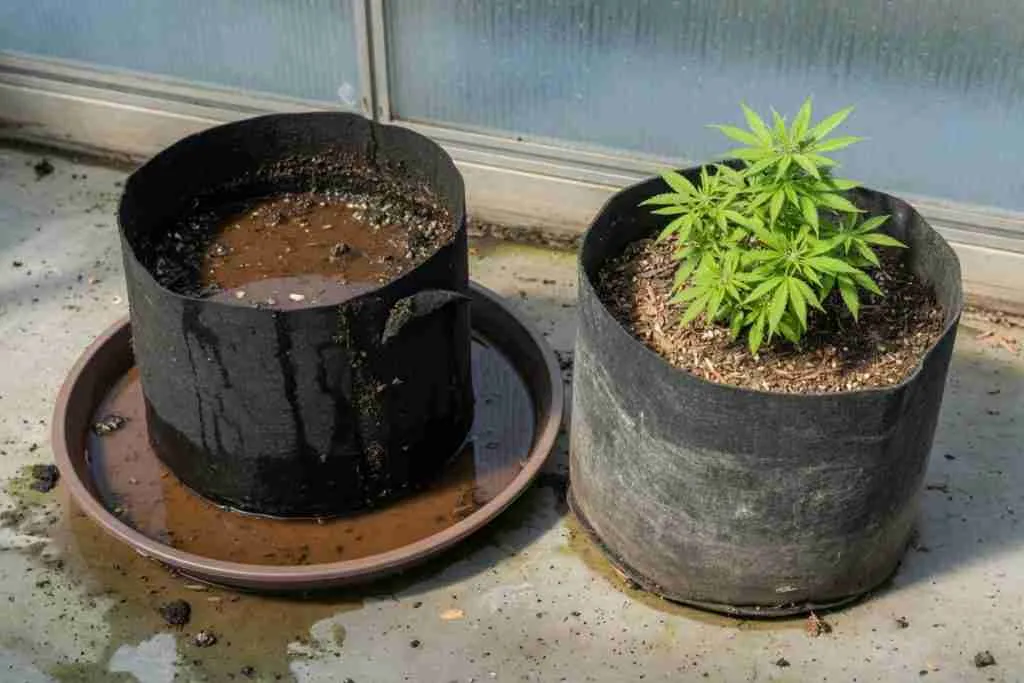
A saucer full of brown water and a pot that is still heavy days later is too much water. Roots in that pot are short of air. Charcoal does not eat the rot, does not evict fungus gnats, and does not pull the extra water out of a saucer. Empty the saucer. Let the pot lighten. The watering page owns the lift test and the habit. The fungus gnat page owns the insects once they are in the mix. Adding a black cap on a sour pot gives the adults a new surface and gives you a stain. It does not change the moisture.
The other failure shows up as color, not smell. A fresh high-surface carbon can hold the first nutrients you pour. New growth goes pale while older leaves stay darker, and the urge is to feed harder. Harder feed on a surface that is already holding food is how you stack a problem. Stop. The lockout guide owns the leaf pattern when food is present and unavailable. The soil pH page owns the number. This page owns the cause you can see in the mix: you built it mostly from a grabbing carbon, or you top-dressed powder after the plant was already in. Next pot, leave the powder out and keep the chunks small. Do not correct a pale tip the same afternoon with a stronger jug.
Water behavior is the daily check. After you water, the surface should accept the pour and the pot should gain weight, then dry back over the next day or two in a warm room. If water beads on a black crust and runs off, the top is hydrophobic. Scratch that crust off into the trash if it is powder, and water the mix underneath slowly. If the pot never lightens and the lower stem stays dark and soft, you are wet, not short of carbon. More black material will not open a hole through a compacted core. Perlite, a lighter hand on the can, and a pot that can actually drain will.
Four plants share one small bag
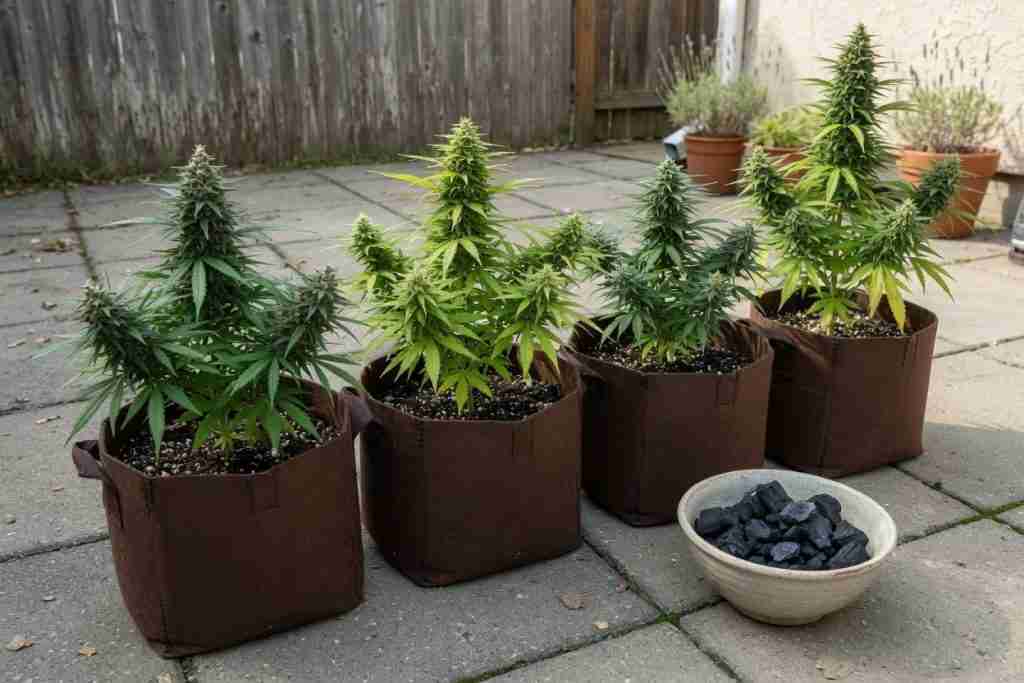
Canadian rules still cap recreation at four plants per household, and seedlings count toward that cap. Quebec bans recreational home growing. Manitoba has allowed indoor plants only since 1 May 2025. Four plants in fabric pots are a bench and a watering round, not a field trial. One small bag of chunky horticultural charcoal is more than that round if you use a handful when you build each final pot. You do not top-dress every week. You do not buy a second bag because the first plant looked pale on day three. Pale on day three is light, water, or a hot mix. It is rarely a missing scoop of carbon.
Build the mix once, at the transplant into the finishing pot. Wet the chunks, stir them through, plant, and then leave the recipe alone for the run. A weekly handful on top teaches you nothing and sheds water. If a pot grew well with a few chunks in it, those chunks can stay when you refresh the container with compost for the next plant. Rinse off loose dust. Do not try to recharge them with a sweet bucket. The biochar page owns preconditioning for biochar. Here, the refresh is the compost you were going to add anyway. Chunks that already lived through a healthy run do not need a ceremony.
An outdoor bed is a different scale, and this page does not own it. A container handful is not a wheelbarrow, and it is not a reason to blank a garden with filter carbon. If you are amending ground, use the biochar guide and the soil guide. Mulch on a bed is a cover, and the mulch page owns that cover.
Seed choice still moves the run more than a perfect handful of chunks. A carbon guest will not turn a plant that does not fit the light, the season, or the pot into a plant that does. If you are picking what to grow while a bag of charcoal sits unopened, the seed shelf is the decision that changes the tent. Open the charcoal only after the mix is chosen and only if the label is the horticultural one. A good pack in a plain airy mix beats a random pack in a black tub.
Spent filter carbon stays in the trash
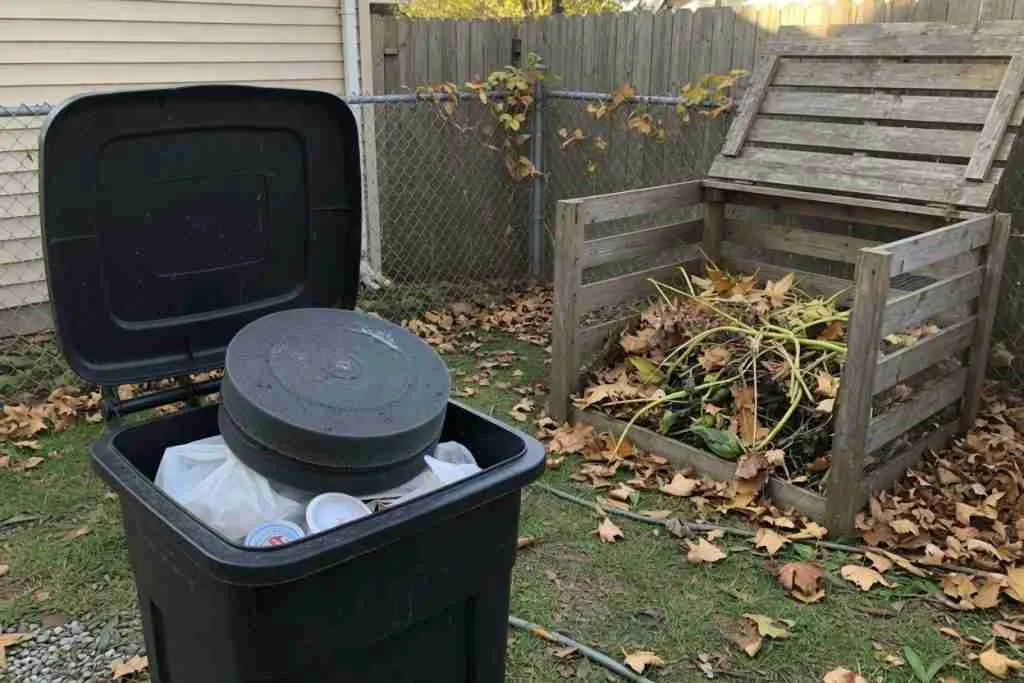
Keep the two bins visually separate in your head. The compost pile takes leaves, chopped healthy stalks, and kitchen scraps, and it becomes a soil ingredient later. The trash takes the spent tent filter, the aquarium pillow that has been in service, briquettes, and anything that smells like fuel or solvent. Those do not visit the compost on the way. A rinse does not promote them. A week in the sun does not promote them. The pile is for plant waste you can name. A filter puck is a used cartridge.
Fresh horticultural chunks you do not need can stay in the bag, dry, until the next mix. Powder you will not use in a filter can sit in its jar. The moment either product has been through a smoky air stream or a chemical smell, the trash is the honest end. Do not spread that material under a vegetable bed. A small handful of the right chunks in four pots is the thrifty move. A used odor filter is not.
The run of it is ordinary, which is what you want. Read the label until you know whether you are holding filter carbon, horticultural chunks, biochar, or fuel. Send biochar to its own guide. Wet the horticultural chunks in plain water, use a small handful in the finishing pot, and keep the perlite. Leave powder, briquettes, seedling cups, reservoirs, and spent filters out. If the new leaf goes pale or the water beads on a black crust, use less next time or use none. The plant is the record. The bag is only an optional guest.