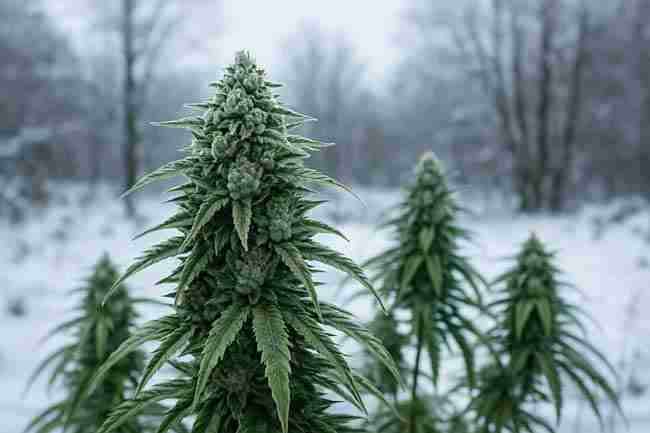
Unveiling the Mystery of Terpenes in Cannabis: Why You Should Care

Terpenes in cannabis are the volatile oils in the resin heads. They are why two jars with the same THC number can smell like lemon peel, black pepper, or a wet forest, and why one of those jars feels different in your head even when the lab prints the same potency. They do not replace THC or CBD. They are the part of the flower you can smell from across the room. Shop seed in the cannabis seeds store. The rest of the grow library is on the cannabis cultivation blog.
Most menus still sell “indica” and “sativa.” Large lab sets keep showing those labels line up poorly with the chemistry in the jar. The top two terpenes on a COA, plus your own nose, tell you more. Seed-to-harvest: growing weed. How the plant actually builds and loses those oils in the tent: role of terpenes in cannabis and cultivation.
What Terpenes Actually Are

The plant makes terpenes in the same glandular trichomes that hold cannabinoids. They are small, oily, and they evaporate at ordinary room temperature. That is why a flowering tent can smell like citrus from the hallway, and why a hot dry room or a roaring fan can empty a cola before you jar it. The plant is not making perfume for you. Some of these oils discourage chewing insects. Some of them are part of how the flower handles strong light. You get the smell as a side effect of a living crop doing a job.
Cannabis makes a long list of terpenes. A handful show up at levels you can actually smell: myrcene, beta-caryophyllene, limonene, pinene, linalool, terpinolene, humulene, ocimene. Labs that sample a lot of legal-market flower keep finding the first three at the highest average levels. Everything below a faint line on a COA is noise at the scale of a home jar. You shop the top of the list, not the footnote.

Monoterpenes are the light, bright ones: myrcene, limonene, pinene, terpinolene. They boil off first. Sesquiterpenes are heavier: caryophyllene and humulene hang around longer in a slow dry. If a jar smells like hay, the light fraction is already gone. Resin heads themselves: increase resin production. Light that hits those heads: grow light spectrum for trichome production.
Why You Should Care

THC percentage is a number on a sticker. Smell is the first test you can run without a lab. Open the jar. If it smells loud and specific, the oils are still there. If it smells like cardboard, you are paying for cannabinoids and a dead nose. Two marijuana plants can print similar potency and still be different crops. One is pepper and diesel. One is lemon and pine. Your head notices. So does anyone you share a room with. Canada’s rec cap is still four plants. The jar you keep is a large share of that year. Make it a jar you want to open.
Smell it the honest way. Whole buds hide oil inside the bract. Break one over the jar, not under a running fan. The first two seconds are the light notes: citrus, pine, fruit. Then the pepper and wood show up. If you only smell chlorophyll and hay, the light fraction is gone. A plastic bag adds its own smell. Glass does not. A grinder full of last month’s kief will lie to you about this month’s jar. Clean the tool if you are trying to learn a cultivar.
Breeders sell names. Batches vary. A “Blue Dream” from two rooms can land in different terpene groups. Phenotype and room beat the label. If you liked the last lemon jar, hunt lemon again, not the same strain name on a new farm. Phenotypes: cannabis phenotypes in breeding. Named cultivars: the most promising cannabis varieties. A blueberry-leaning example: the legend of blueberry cannabis strains.
Do Terpenes Get You High?
No, not the way THC does. You can smell a pine forest all afternoon and stay sober. Terpenes shape aroma hard. They may nudge how a THC-dominant flower feels. That idea is the entourage effect: cannabinoids and these oils together, not THC in a vacuum. It started as a real biochemistry argument. Marketing turned it into a promise that every terpene is a dose. Treat the chart as a way to tell jars apart. The dedicated walkthrough lives on terpenes and the entourage effect.
THC and CBD are cannabinoids. Terpenes are a different class of molecule. A high-THC weed with a dead terpene list can still hit. It often tastes flat. A modest-THC flower that still reeks of pepper and citrus is the jar people remember. Quality is not only grams: growing quality cannabis buds. Yield still matters on four plants: how much cannabis from one plant.
The Names You Will Actually Smell

| Terpene | Smells like | Also in | How people use the word |
|---|---|---|---|
| Myrcene | Earth, hops, mango skin | Hops, lemongrass, thyme | Heavy, body, “couch” talk |
| Limonene | Citrus peel | Lemon and orange rind | Bright, daytime talk |
| Caryophyllene | Black pepper, clove | Pepper, cloves, hops | Spice; it can bind CB2 |
| Pinene | Pine needles, rosemary | Conifers, rosemary | Clear, forest |
| Linalool | Lavender, floral | Lavender, basil | Soft, evening talk |
| Terpinolene | Fresh herb, pine, light fruit | Nutmeg, sage | Haze / Jack-type brightness |
| Humulene | Woody hops | Hops, basil | Sits under caryophyllene |
Myrcene
Myrcene is often the most abundant terpene in commercial flower. Earthy, musky, a little clove or mango. Hops smell like this for a reason. Guides pin “sedating” on it. Animal work exists. Human proof that a myrcene-heavy jar glues you to the couch is weaker than the meme. Use myrcene as an aroma flag: if the jar is hoppy and herbal, that is the note. Do not treat a 0.5 percent line on a blog as a medical switch.
Limonene
Limonene is citrus peel. Tangie, lemon haze types, and a lot of modern fruit hybrids lean this way when the batch is honest. People call it uplifting. One controlled human trial found a high dose of vaporized D-limonene reduced some THC-related anxiety in a lab. That is interesting. It is not a prescription, and flower-level doses are smaller than a study vaporizer. If you like lemon jars, buy lemon jars. If high-THC citrus makes you racy, pick a different top two.
Caryophyllene
Beta-caryophyllene is black pepper and wood. It is the odd one: it can bind the CB2 receptor. That is chemistry, not a license to call a peppery cola an anti-inflammatory drug. On a COA it often rides with limonene in one of the big commercial clusters. If the jar smells like cracked pepper, you found it.
Pinene, linalool, terpinolene, humulene

Pinene is pine and rosemary. People call it clear-headed. Linalool is the lavender note, usually a supporting actor, rarely the boss of a THC jar. Terpinolene is the bright, slightly green, herbal-fruity one that shows up in a smaller Haze / Jack-type cluster. Humulene is the woody hop under caryophyllene. You do not need all seven on the tongue. You need the top two to match what your nose already said.

Outdoor flower in late season can throw a mix you will not get from a terpene spray. Live plants smell greener. Cured jars concentrate the oil that survived the dry. If a live cola smells like crushed stems and the jar later smells like pepper, you did not “lose the strain.” You lost the light fraction and kept the heavy one. Flower stage: cannabis flowering stage.
Indica, Sativa, and the COA

Indica and sativa started as plant-shape words: short and broad versus tall and narrow. Dispensaries turned them into sleepy versus racy. Chem surveys of tens of thousands of flower samples keep finding that those stickers do not track the terpene groups well. THC-dominant flower often falls into a few clusters, commonly caryophyllene-limonene and myrcene-pinene, with a smaller terpinolene group. Shop the cluster, not the cartoon.
How to read a terpene panel: ignore the eight-line dump. Circle the two largest numbers. Match them to the smell. If the paper says limonene-dominant and the jar smells like hay, the paperwork is old, the batch is tired, or the sticker belongs to a different lot. Total terpene content is a useful second glance. A loud jar usually prints a healthier total than a mute one. Home growers in Canada often have no COA at all. Your nose is the panel. Seed-choice labels: indica vs sativa vs hybrid.

Two plants in the same bed can still diverge. That is phenotype plus weather, not a broken seed pack. If you hunt a smell, keep notes on the plant, not only the packet. Indoor vs outdoor changes the oil too: sun, wind, and night swings write a different chart than a sealed tent. Outdoor argument: indoor vs outdoor. Indoor box: indoor cannabis growers guide.
How Growers Lose the Smell

Heat, time, and air strip monoterpenes. A 30 °C dry with a shop fan on the colas is a terpene tax. Slow, cool, dark, and enough air that the flower does not mold is the job. Then a cure in a jar you burp, not a paper bag on a radiator. The full dry-and-store walkthrough is dry, cure, and store cannabis buds. Overripe heads oxidize and the nose goes dull: how to tell when your cannabis buds are overripe.
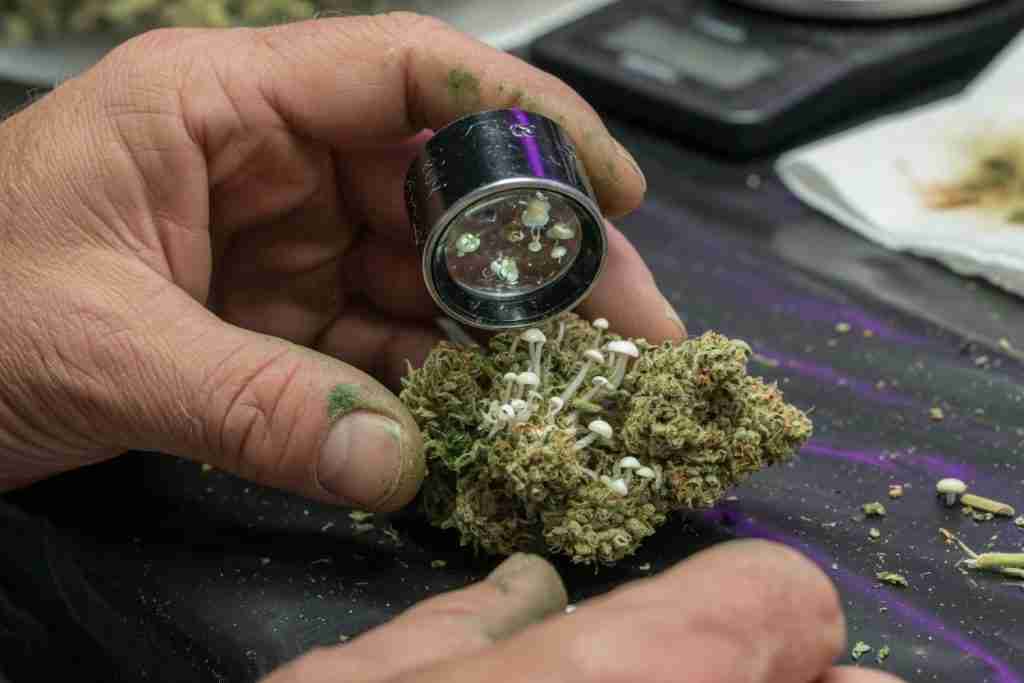
Read the heads, not the pistils. Cloudy resin on the calyx is the window. Amber and dull is late. You cannot rewind a terpene that already left. A loupe costs less than the jar you will otherwise cook. Harvest timing is a smell decision as much as a weight decision.
Lights-on heat in a small tent cooks the tops even when the PPFD map looks fine. Dim, hang right, move air across the room, not into the cola. Spectrum and hang: LED color spectrum. Side light if bottoms stay leafy: under-canopy and side lighting. A filthy room adds dust and odd smells to the oil: cannabis grow room clean.
Hard nutrient stress can change the nose. A lockout that yellows the crop is not a “terp trick.” Fix the pot. Nutrition: cannabis nutrition across all stages. Flower fade vs hunger: flowering stage nutrient deficiencies. Companion planting and extra bottles are their own pages. Do not swallow them here. Companion notes: enhanced terpenes in cannabis. Rock dust is a soil argument, not a terpene dose: volcanic vs glacial rock dust.
How to Pick Seed and Keep the Nose

Start with a smell you already like. If you want citrus, do not buy a packet because the THC number is higher. Read the breeder’s aroma notes as a hint, then hunt the phenotype in your own room. Autos still make terpenes; they just give you fewer weeks to mess up the dry. Autos: grow autoflowering cannabis plants. Organic vs bottled seed talk: organic vs non-organic cannabis seeds.
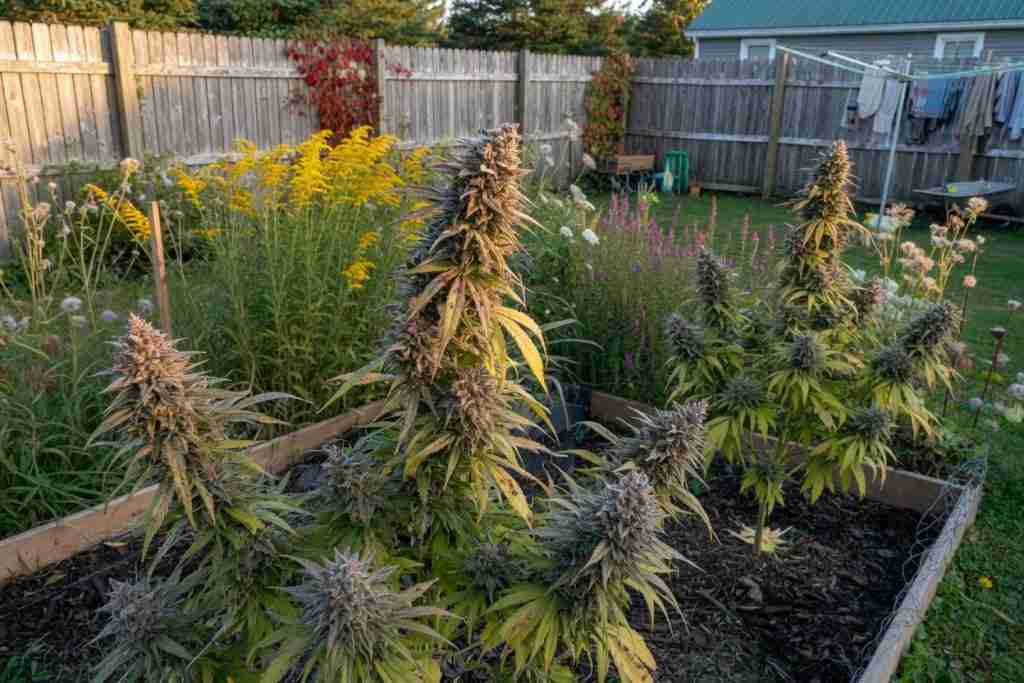
Write the nose on harvest day and again after two weeks in the jar. If day-one lemon is week-three hay, the dry was too hot or too fast. If the nose gets deeper and the smoke smoother, you cured it. Trim later rather than wet-shaving every sugar leaf in a 25 °C room. Sugar leaf still holds oil. What to do with the trim: cannabis trimmings.
Store dark and cool. A windowsill jar cooks the same oils you protected in the tent. Freeze only if you know why: long-term hash work, not a weekly smoke jar that you thaw and refreeze. Each temperature swing sweats moisture onto the flower and then dries it again. That is how a loud weed becomes dusty. Do not keep the jar in the grow tent. The tent is warm, bright, and full of air movement. That is the opposite of a cellar.
Combustion burns past the boiling point of the light terpenes in the first second. A vaporizer at a lower setting lets citrus and pine show before the heavier pepper. You do not need a lab chart of boiling points taped to the wall. If the first pull tastes like lemon and the last tastes like toast, you already ran through the light fraction. That is information, not a failure. Joints and bongs still work. They just spend the nose faster.
Training changes airflow and light on the cola, which changes how much oil the head can finish. A plant you never opened will hide larf that smells like stem. A plant you opened too late in flower can foxtail and bleach the tops. High-stress work belongs on its own page: high-stress training. The terpene job here is simpler: keep the finished heads intact, keep them cool, and do not strip the plant into a pile of dust on a trim tray under a shop light.
Autos finish on a clock. If you veg-train them like a photoperiod into week five, you are cutting into the days the oil has to stack. Keep autos simple, harvest on the heads, dry them like any other flower. Photoperiods give you more calendar to get the room right. Ruderalis is the wild clock behind many autos, not a terpene class: what is ruderalis cannabis. Either type can smell excellent if you do not cook the dry.

A young top in week three of flower already smells. That is the plant telling you the oil is on. You do not need a gadget. You need not to cook it for the next five weeks. First-run habits: new cannabis growers checklist. Budget path: grow cannabis on a budget. Veg still builds the factory: cannabis vegetative stage.
Terpenes in Cannabis FAQ
What are terpenes in cannabis?
Aromatic oils made in trichomes. They give the flower its smell and flavor. They sit next to THC and CBD in the resin, and they evaporate easily.
What is the most common terpene?
Myrcene shows up most often in commercial flower, with caryophyllene and limonene close behind. Your batch can still be pinene- or terpinolene-led. Read that batch.
Do indica and sativa tell you the terpenes?
No. Those words describe plant shape better than chemistry. Two “indicas” can be different terpene groups. Smell and the top two on a COA beat the sticker.
Can I add terpenes after harvest?
Bottled botanical terpenes exist. They are not the same as what that plant made, and they can taste like cleaner if you overdo them. Grow and keep the native oil. Do not spray perfume on a hay jar and call it a cultivar.
Does a mango change the high?
Mango has myrcene. Eating one before you smoke is a story, not a protocol. If myrcene in the flower mattered to you, it is already in the jar.
How do I keep terpenes in a home grow?
Do not overheat the room in late flower. Harvest on cloudy heads, not dead amber. Dry cool and slow. Cure in glass. Open the jar with your nose, not a blowtorch.
Are terpenes only in cannabis?
No. Hops, citrus peel, pine, lavender, basil, and black pepper are full of the same family. Cannabis stacks several of them in one resin head, which is why a cola can smell like a whole spice drawer.
Why did my live plant smell louder than the jar?
The live plant is still making and releasing oil into warm air. You smell it continuously. The jar only holds what survived chop, dry, trim, and time. A quieter jar is normal. A hay jar is a problem. If harvest day was lemon and week two is pepper and wood, you kept the heavy fraction. That can still be a good smoke. It is a different flower than the live cola.
Should I shop by total terpene percent?
Total is a sanity check, not a scoreboard. A 3 percent total that is mostly myrcene and caryophyllene will not smell like a 2 percent total that is limonene and terpinolene. Loud and specific beats a high total that smells like nothing you can name. Home grows rarely have a total printed. Trust the nose and the notes you wrote on the jar tape.
Do terpenes expire in the pack of seeds?
Seeds do not hold the finished oil. They hold the genetics that can make it. Old seed can still throw a loud plant. The room, the dry, and the phenotype decide the jar. Store seed cool and dry so it germinates. Then grow the smell. Do not expect a packet to perfume the drawer.
Is kief or hash stronger in terpenes than flower?
Sieved heads concentrate resin, so they can smell huge. They also dry and oxidize if you leave them in a grinder for months. Fresh, cold-collected heads keep more of the light fraction. Flower in a sealed jar is still the simplest way to learn a cultivar’s nose before you start pressing or washing.
Does late-flower humidity change terpenes?
Wet rooms mold. Bone-dry rooms make the flower dump water and oil into the air. Keep late flower in a range the plant can finish without rot and without turning to dust. A marijuana cola that fox-tails under a hot, dry lamp often smells sharper and thinner. A cola that finishes in a stable room smells rounder. Humidity is a keep-the-heads-alive job, not a terpene booster bottle.
If you remember one sequence, remember this: genetics set the possible nose, the room decides where you land, harvest timing decides how ripe the oil is, and the dry decides how much of it you still have in April. Everything else is a footnote. Smell the live top, smell the dry, smell the jar. Write the three down. That notebook beats a strain-name argument on a forum. Bring it to the next pack you buy so you hunt a nose, not a number.