Quadlining Cannabis: A Simple Guide for Growers


Have you ever wondered how to make your cannabis plants grow big and strong with lots of buds? Well, you’re in the right place! Today, we’re gonna dive into the world of quadlining cannabis. Don’t worry if you’ve never heard of it before—it’s easier than you might think. By the end of this guide, you’ll know exactly how to use quadlining to help your cannabis plants thrive. So, let’s get started and find out how quadlining can help your cannabis plants grow better than ever.
What Is Quadlining Cannabis?

Quadlining is a special way of training your cannabis plants to grow in a certain shape. Imagine if you could tell your plant how to grow so it gets lots of sunlight and makes more buds. That’s what quadlining does! By carefully bending and trimming your plant, you help it spread out like a big, happy bush.
The Basics of Plant Training

Before we jump into quadlining, let’s talk a bit about plant training. Plants naturally grow upwards towards the sun. But sometimes, we can guide them to grow in different ways. This helps the plant use sunlight better and can make it produce more flowers.
Plant training is like teaching your plant new tricks. Just like how you might teach a dog to sit or fetch, you can teach your cannabis plant to grow in a way that’s best for it. There are many methods of plant training, like topping, low-stress training (LST), and super cropping. Quadlining combines some of these methods to create a super effective way to grow cannabis.
Understanding Cannabis Growth
To really get why quadlining works, it’s important to understand how cannabis plants grow. Cannabis plants have a main stem, and from this stem, branches grow out. At each node (the place where a leaf or branch grows from the stem), the plant can produce new branches and leaves. By controlling where the plant focuses its energy, we can encourage it to grow more branches, which means more places for buds to grow.
Why Quadlining Is Special

Quadlining is called “quad” because it creates four main branches on your plant. These branches spread out, allowing light to reach all parts of the plant. This means your cannabis plant can make more buds, and who doesn’t want that?
But quadlining isn’t just about making four branches. It’s about creating a balanced, symmetrical plant that can support lots of buds and that is why we love using it here. By spreading the branches out evenly, the plant can get more light and air, which helps it grow healthier and produce more. Just what all cannabis growers are looking for!
How Is Quadlining Used in Cannabis Cultivation?
Now that you know what quadlining is, let’s see how you can use it in your own garden.
Step-by-Step Guide to Quadlining Cannabis

Here’s how you can quadline your cannabis plants:
- Start with a Healthy Plant Before you begin, make sure your plant is growing well and has at least six nodes. This usually happens a few weeks into the vegetative stage. A healthy plant will recover faster from pruning and training.
- Top the Plant Topping is when you cut off the top of the plant. Cut just above the third node. This tells the plant to stop growing upwards and start focusing on the branches below.
- Remove Lower Growth Take off the leaves and small branches below the third node. This helps the plant put energy into the main branches at the third node, which will become your four main branches.
- Train the Branches Gently bend the four branches from the third node outward and tie them down. You can use soft ties or string to hold them in place. This spreads them out so they get more light.
- Let It Grow As the plant grows, keep adjusting the branches so they stay spread out. The branches will try to grow upwards, so you may need to re-tie them or adjust the ties.
- Prune as Needed Remove any leaves or branches that block light or grow in the wrong direction. This helps keep the plant open and airy.
Visual Guide

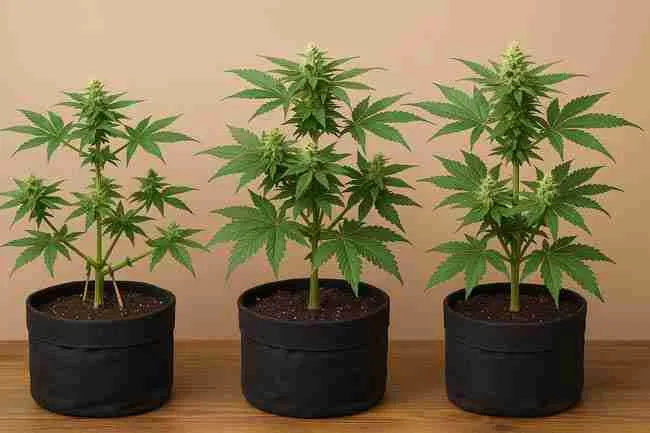
Imagine your plant as a little tree. By topping it and removing lower growth, you’re shaping it into a flat, spread-out shape instead of a tall, skinny one. This shape helps the plant catch more light, just like a solar panel.
Tips for Successful Quadlining
- Be Gentle: When bending branches, be careful not to snap them. If a branch does break, don’t panic. You can use tape to mend it, and the plant may heal itself.
- Use Soft Ties: Use string, twist ties, or plant ties to hold branches in place. Make sure they’re not too tight, so they don’t cut into the plant as it grows and maybe hurting the plants growth overall.
- Monitor Growth: Keep an eye on your plant and adjust as it grows. The branches will try to grow upwards, so you may need to re-tie them.
- Stay Clean: Always use clean tools when cutting your plant to prevent infections.
- Be Patient: Quadlining takes time and attention, but the results are worth it!
How Does Quadlining Help Cannabis Grow?

You might be wondering, “Why go through all this trouble?” Well, quadlining has some pretty cool benefits.
Increased Light Exposure
By spreading out the branches, more leaves get sunlight. This helps the plant make more energy and grow bigger buds. Light is like food for plants, and the more they get, the better they can grow.
Better Airflow

A spread-out plant allows air to move through the leaves. This helps prevent mold and keeps your plant healthy. Good airflow is especially important in humid environments where moisture can cause problems.
More Bud Sites

With four main branches, your plant has more places to grow buds. This can lead to a bigger harvest! Each branch can grow multiple buds, and by controlling the shape of the plant, you maximize the number of buds.
Efficient Use of Space

If you’re growing indoors or have limited space, quadlining helps you make the most of it. By keeping the plant low and wide, you can grow more plants in the same area without them shading each other.
Pros and Cons of Quadlining Cannabis
Like anything, quadlining has its ups and downs. Let’s take a look.

Pros
- Higher Yields: More buds mean a bigger harvest. Who doesn’t want more buds?
- Healthier Plants: Better airflow and light make for happier plants. Healthy plants are less likely to get sick.
- Efficient Use of Space: Great for small gardens or indoor setups. You can grow more plants in less space.
- Control Over Plant Shape: You decide how your plant grows. This can be helpful if you have height restrictions.
Cons

- Time-Consuming: It takes time to train and maintain the plant. You need to spend time each day or week adjusting ties and checking growth.
- Risk of Damage: If you’re not careful, you could hurt the plant. Breaking branches or over-pruning can slow growth.
- Requires Attention: You need to check the plant regularly. If you ignore it, the plant may grow in unwanted ways.
- Not Ideal for All Strains: Some cannabis strains may not respond well to quadlining. Plants that are very bushy or have weak branches might not be good candidates.
Specifications for Quadlining Cannabis
Here’s a handy table to help you remember the key points:

| Specification | Details |
|---|---|
| When to Start | At 6 nodes (early vegetative stage) |
| Number of Main Branches | 4 main branches |
| Tools Needed | Pruning shears, soft ties, stakes |
| Time Commitment | Regular adjustments during growth |
| Ideal For | Indoor and outdoor growers |
| Plant Health Required | Healthy, vigorous growth |
| Skill Level | Beginner to intermediate |
| Suitable Strains | Most cannabis strains |
Common Mistakes to Avoid
Oops! We all make mistakes, but here are some you can dodge.
Bending Too Hard

Don’t force the branches too much. If they snap, the plant has to heal, which slows growth. When bending, do it slowly and carefully. If a branch feels like it’s about to break, stop and try bending it a little less.
Ignoring the Plant

Quadlining isn’t a set-it-and-forget-it method. Keep an eye on your plant and adjust as needed. Plants grow quickly, and if you don’t keep up, they might grow in ways you don’t want.
Over-Pruning

While pruning is good, too much can stress the plant. Remove only what’s necessary. It’s better to take off a few leaves at a time rather than cutting off big sections.
Using Tight Ties

Don’t tie the branches too tightly. As the plant grows, the ties can cut into the branches, harming the plant. Check the ties regularly and loosen them if needed.
Starting Too Late

If you wait too long to start quadlining, the plant may be too stiff to bend. Start early when the branches are flexible.
Advanced Tips for Quadlining Cannabis
Ready to take your quadlining to the next level? Here are some advanced tips.

Combining with Low-Stress Training (LST)
You can combine quadlining with LST techniques to further shape your plant. This involves gently bending and tying down other branches to create an even canopy.
Defoliation
Carefully removing some leaves can help light reach deeper into the plant. Be cautious not to remove too many leaves, as they are the plant’s energy factories.
Monitoring Nutrient Levels
Quadlined plants may need more nutrients to support their extra growth. Keep an eye on your plant’s leaves for signs of nutrient deficiencies.
Adjusting for Different Strains
Some strains may grow differently. Sativa strains might be taller and more flexible, while indica strains may be shorter and bushier. Adjust your quadlining techniques based on how your plant grows.
Real-Life Example: A Story of Success

Let me tell you about my friend Ian. He had a small indoor garden and wanted to maximize his yield. He tried quadlining and couldn’t believe the results! His plants grew big and bushy, and he harvested more buds than ever before. Joe was over the moon and now swears by quadlining cannabis.
Joe started with some healthy cannabis seedlings. He carefully topped them and began training the branches. At first, he was nervous about cutting and bending his plants, but he soon saw how they responded. The plants grew strong and filled out his grow space perfectly. By the time harvest came around, Joe had more buds than he knew what to do with!
Frequently Asked Questions (FAQ)
Is Quadlining Cannabis Hard to Learn?
Not at all! With a bit of practice and patience, you’ll get the hang of it. Start with one plant and see how it goes.
Can I Quadline Any Cannabis Strain?
Yes, most strains respond well to quadlining. However, some plants might be more flexible than others. If you’re unsure, try it on a couple of plants first.
When Should I Start Quadlining My Plant?
Begin when your plant has at least six nodes, usually in the early vegetative stage. Starting early helps the plant recover faster.
Do I Need Special Tools?
Just some basic gardening tools like pruning shears and soft ties. You can find these at most garden centers.
Will Quadlining Increase My Yield?
Yes, quadlining can help you get more buds by increasing the number of bud sites. Many growers report significantly higher yields.
Can I Quadline Outdoor Plants?
Absolutely! Quadlining works great for outdoor plants. Just make sure to protect them from strong winds, as the spread-out branches can be more susceptible to damage.
How Often Should I Adjust the Ties?
Check your plant every few days. As it grows, you may need to adjust or move the ties to keep the branches in the right position.
What If I Make a Mistake?
Don’t worry! Cannabis plants are resilient. If you break a branch or over-prune, the plant will often recover. Just be patient and keep caring for it.
Conclusion
Quadlining cannabis is a fantastic way to help your plants grow bigger and better. By following these simple steps, you can train your plants to produce more buds and make the most of your garden space. It might seem a bit tricky at first, but once you get the hang of it, you’ll see amazing results. So why not give it a try? Your plants will thank you!
Remember, the key to successful quadlining is patience and attention. Keep an eye on your plants, adjust as needed, and don’t be afraid to experiment. Happy growing!