Leaf Curling or Clawing in Cannabis

Leaf Curling or Clawing in Cannabis is a direction problem before it is a bottle problem. A fan leaf that was flat and then changes shape is the plant recording a stress. The shape is not a disease with one cure. Tips that hook down, edges that rise, and a whole leaf that hangs limp are three different notes. People lose weeks because they treat all three with the same jug.
Read four things and write them down before you pour anything. Which way did the edge move. Is the leaf dark and shiny, pale, or ordinary green. Did it start on the oldest lowest fans or on the leaves nearest the lamp. When you lift the pot, is it heavy or light. One of those answers usually picks the cause. If you change the feed, the lamp, and the water on the same afternoon, you erase the answer.
This page is the sort. Leaves that rise along the edges belong on the canoe page. A dark, stiff hook from too much food belongs with the nitrogen guide once you are sure that is what you have. The watering page owns the daily habit of when to pour. You are here to decide which of those doors you are standing in front of.
What the curl is telling you
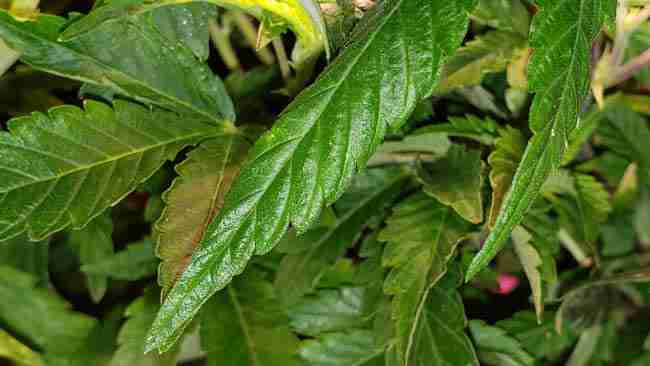
A happy fan leaf sits open. The leaflets are flat enough to catch light, with a gentle arch, not a hook and not a taco. Curl means that posture changed. Down at the tips, with the leaf still firm, is the claw growers argue about. Up at the margins, so the leaf makes a valley along the midrib, is the plant showing less surface to the lamp and the air. A leaf that flops from the stem, soft all the way through, is wilt. Wilt is a water story. It can sit next to a claw and still be a different problem.
Color is the second half of the shape. A claw that comes with a deeper green than last week, and a surface that looks waxed, is excess, usually nitrogen, sometimes just a feed that was stronger than the plant could use. A leaf that goes pale from the oldest fans upward, veins included, is the plant moving food out of old tissue. That pale fade is not a claw, and adding more vegetative food to “green it up” is how a fade becomes a claw. The color page is the longer read on which pigment means which job. Black-green is not extra health.
Where it started is the third note. Leaves nearest the lamp that fold, bleach, or crisp, while the lower plant looks ordinary, are a top problem. Heat, distance, and a fan aimed at one cola live there. The top-down page covers a crash that begins in the canopy. Dark hooks that show on older fans, or across the whole plant after you raised the feed, are a root-zone problem. Pale yellow that climbs from the bottom is hunger or a wet pot that cannot eat, and that climb belongs on the bottom-up page. Same tent, opposite directions.
The fourth note is the pot in your hand. A heavy, cold pot the day after you watered is still full. Leaves on that plant can curl, droop, and yellow while food sits unused in airless mix. A light pot, with mix pulled from the wall, is thirst. Those leaves often perk up within hours of a real drink. A nitrogen claw does not perk up because you finally watered. If you skip the lift, you will flush a dry plant or feed a drowned one. Both mistakes make the next week look like a new deficiency.
Some cultivars carry a natural wave. If every plant from the pack has always held its leaves a little cupped, the color is steady, and new nodes are still stacking, you are looking at the cultivar. A curl on one plant the week you doubled its feed is that feed. A curl on every plant the afternoon you dropped the lamp is that lamp.
Up is not the same as down

Edges that lift are the plant reducing the surface it offers the lamp and the dry air. Growers call the strong version a taco or a canoe. The center of the leaf stays, and the sides rise. Heat at the canopy, a diode board that is too close, air that pulls water out of the leaf faster than the roots replace it, and a fan blasting one side all push that shape. The canoe page walks the upward fold. The VPD page is where temperature and humidity meet as one job. You do not need a chart here to know the next move is the lamp and the air, not a heavier jug.
The usual wrong grab is a calcium and magnesium bottle, because the leaf looks twisted and a forum said twisted means a micro. A green leaf that only folded up is still a fed leaf. New growth that twists and yellows between the veins, while older fans stay a normal color, is a different picture. That one can be pH, and the pH page owns the band for soil, coco, and hydro. Adding a micro on top of a locked-out root zone burns the tips and leaves the twist in place. Check the number you are actually pouring before you buy the bottle the symptom chart recommended.
Down is the claw. The tip points at the floor and stays pointed. The leaf often feels thick. If the green went darker in the same week, you are looking at too much nitrogen or a feed that is simply too strong, not at a plant asking for more. Pale, thin, flat leaves are the other column. Do not correct a dark hook by mixing the vegetative bottle hotter. Do not correct an upward taco by doing that either. A shape change is usually the plant refusing what you already gave it, or hiding from the lamp. If your hand at the top of the plants wants to leave, raise or dim the lamp before you invent a second nutrient story.
Leaf Curling or Clawing in Cannabis
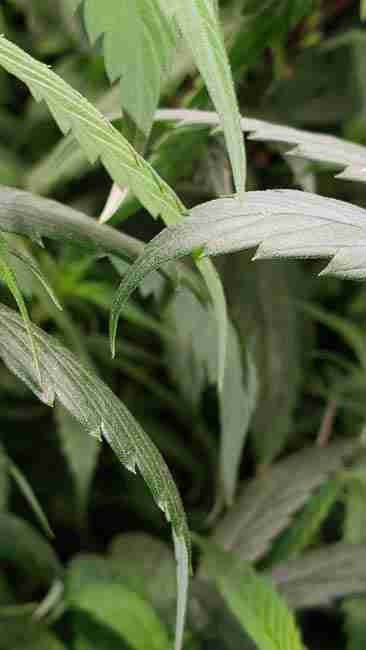
The dark claw is the picture people mean when they say the plant looks too green and still looks wrong. Fans go deep green. The surface can shine. Tips bend down and hold. Growth that was quick gets sluggish. Stems can feel less sturdy than all that foliage suggests. It shows up when a vegetative formula stays in the jug after the flip, when a “little extra” is added at every watering, or when a hot mix was already loaded and then got another bottle. The nitrogen guide is the long version of what that mineral does in the plant. Here, the job is to stop adding it.
Feel the leaf before you trust the silhouette. A nitrogen claw stays stiff. You can pinch the tip and it holds the hook. A leaf that is only wilting drapes over your finger. It may be a bit darker from being full of water, and it may yellow, but it does not feel waxed. If you are unsure, do nothing with a bottle tonight. Lift the pot. A heavy wet pot is water. A pot that is drying the way it did last week, under a plant that turned dark after you raised the mix, is the feed. That split saves you from the classic mistake: rinsing a swamp, or feeding a plant that is already stuffed.
Where the dark color sits is a clue, not a law. Too much nitrogen often marks older fans as well as new ones, because the whole plant is loaded. Leaves may later crisp at the tips and let go. Light burn and heat mark the leaves closest to the fixture, and those leaves usually stay attached. A dark hook that begins low fits excess food better than a lamp that is too close. Tops that bleach or fold up, with a normal green underneath, are the lamp. Do not rinse the pot because one top leaf cupped. Do not raise the lamp and call it fixed if the lower plant is the part that turned black-green.
In flower the plant wants less nitrogen. A vegetative bottle kept so the plant stays green pushes leaves into the flowers. Dark hooked fans are a reason to use the flower side of the label, at the low end for a small plant. They are not a reason to stack a second bottle on a complete base. One bottle. The label is the dose.
A dark leaf that hooks down
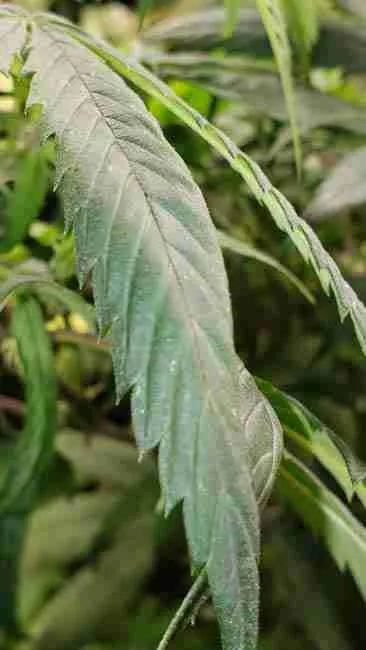
Once the pot is not a swamp and the leaves are dark, glossy, and hooked, make the feed smaller. If you are still in vegetative growth, mix the same bottle weaker, or skip a feed and give plain water the next time the pot actually needs a drink. If you have flipped, put the vegetative bottle away. Burnt tips that keep marching inward, on a plant that is also clawing, mean salt is sitting in the mix. When the water that leaves the pot is clearly stronger than the water you mixed, the flushing page owns the rinse. That rinse is for a salty root zone. It is not step one on a plant you soaked this morning.
Late flower fade sits next to this claw and is not the same thing. Lower fans going pale while flowers finish are the plant moving stored food. Those leaves are flat and light, not dark and hooked. Putting vegetative nitrogen back in to keep them pretty rebuilds the claw in the last weeks. If the plant is pale from the bottom and still drinking on schedule, read the color page and the bottom-up page before you mix anything strong. If the tips are dark talons, more nitrogen is the wrong direction in any week. Watch the new leaf that opens. Leave the extra supplement on the shelf.
A hot soil can claw a plant that never saw a bottle. Bagged mixes and amendments that are already rich will stuff a seedling or a fresh transplant. The fix is time and plain water when the pot is light, not a rescue feed. Mothers that live for months on a strong vegetative mix can claw the same way if you never ease off. Autos follow the same leaf reading on a shorter clock. Do not answer an auto’s dark hook with a late transplant and a double feed in the same week. One stress is enough to read. Two at once just make a new curl.
A pot that is too heavy
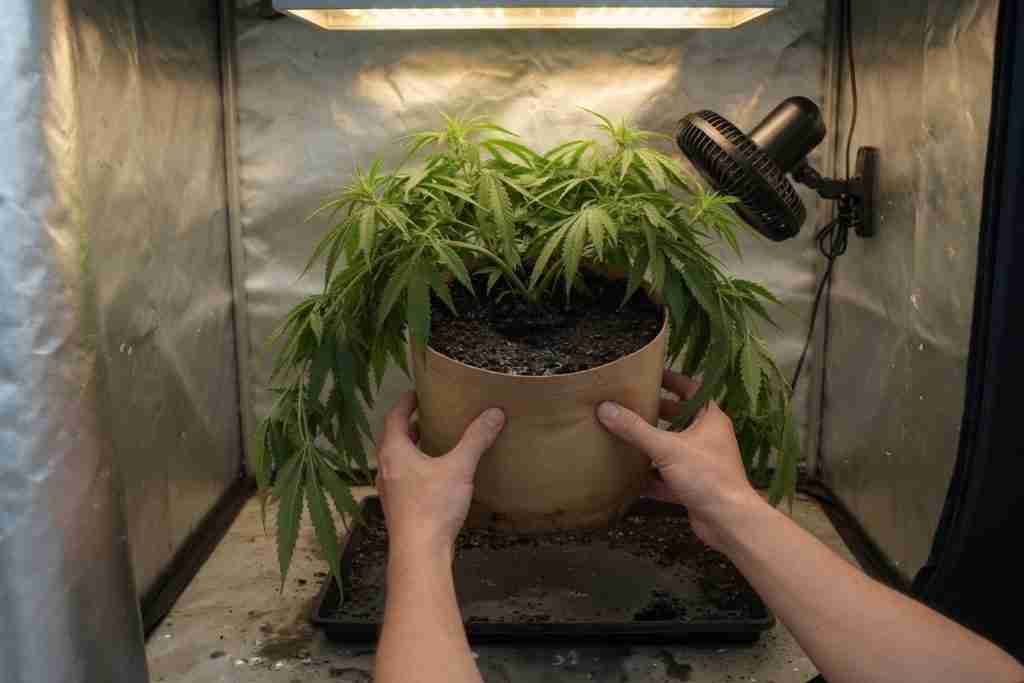
Overwatering copies the claw often enough to empty a lot of nutrient bottles. The pot is still heavy a full day later. The mix is cold. Leaves can curl down, look swollen, and hang from the stem. Growth stalls. Roots in a wet pot are short of air, so they stop taking up what is already there. The fork is simple. If the pot is heavy, you do not feed, and you do not rinse a container that is already full of water. You wait. You move air across the surface of the mix. You fix drainage before the next drink.
Underwatering is the other limp, and it fools people because a thirsty leaf also hangs. The pot is light. The mix may have shrunk from the side of the pot. After a thorough watering the plant often stands back up the same day. That recovery is the test. Use it once, on purpose, if you have been guessing. Remember the weight on the morning after a normal watering, and the weight on the day you usually water. The gap is obvious in your hand. A chart on the wall is weaker than that memory. A stiff, dark hook will still be a hook after the drink. A thirsty plant will not.
Roots that were soaked or cooked can keep the leaves odd after the water is right again. Give it days. A new product does not regrow a root by dinner. A mat of roots at the drain holes, in a pot that goes light the same day you pour, is root-bound. Move it to a larger pot while it is still vegetative, or let it finish where it is if you are already in flower. Do not tear the root ball up on the same day you change the feed.
A mix that never dries will grow the limp curl on a schedule. No bottle fixes that. A fabric pot, more aeration, or a smaller drink is the change. In coco the pot goes light sooner than in soil, and you still read direction, then color, then weight. A fast dry-back does not turn a dark claw into hunger. Transplant droop is its own day: water the move in once so the mix touches the root ball, then leave it. A second drink plus a recovery feed is how a moved plant is heavy and hooked by the weekend.
Tops that fold toward the lamp
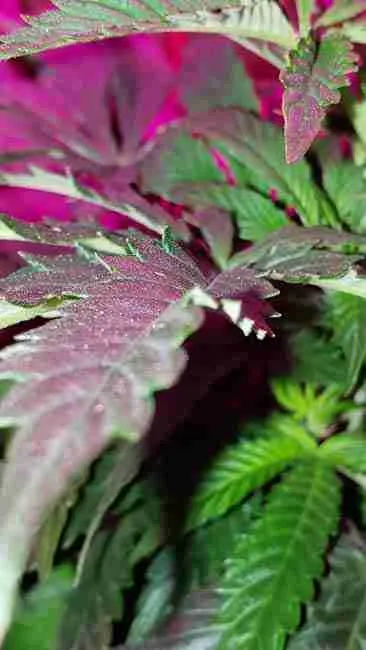
When the fold is on the leaves nearest the lamp and the lower plant looks ordinary, start with distance and heat. Hold your hand at the top of the canopy for a slow count. If you want to pull it back, the leaf already wanted to. Raise the fixture or dim it. Leaves that taco under a close board are hiding. They are not asking for nitrogen, and they are not asking for a cal-mag “because LED.” The canoe page is the upward fold in detail. Use it before you rewrite the nutrient chart. A pale, bleached top with the damage stuck under the diodes is light. A tent-wide sag on a hot afternoon is heat. Both are the environment.
A fan that hits one flank will curl that flank. Edges dry, leaves flag in the breeze, and the other side of the tent looks fine. Nutrient problems do not respect the aim of a clip fan. Turn the fan so the tent moves and no cola sits in a hard stream. Wind burn is local. If only the leaves in the blast are cupped, you have the cause in the room with you. Outdoor plants do the same thing on the side that takes the prevailing wind, while the sheltered side stays flat. You do not feed a plant to cancel a fan.
Edges that brown and curl up, with the veins still green, can be potassium rather than a taco from heat. The potassium page owns that edge burn. It is not the dark downward claw, and it is not fixed by a vegetative nitrogen boost. If the burn is only on the highest leaves and the room is hot, fix the heat before you assume the mix is short of anything. A deficiency chart and a heat wave wear similar clothes at the margins. The rest of the plant tells them apart. Heat hits what the lamp hits. A real shortage of a mobile nutrient shows on older leaves first.
Pests are the exception that is neither the jug nor the lamp. Fine pale specks, webbing, or something moving on the underside means you stop the nutrient experiment and look. Spider mites are the common one with the stippling. Broad mites and russet mites twist new growth so it looks wet, shiny, and crippled, and you need a loupe to see them. The IPM page is the plan after you know what is there. A spray on developing flower is the wrong week. Do not wash a cola because a fan leaf hooked. If the leaves are clean on the underside and nothing is moving, you do not have a pest curl. Go back to direction, color, and the pot.
New growth that twists, yellow between green veins, older fans still a normal color, is root-zone chemistry more often than “the claw.” A pH pen that has drifted will make a fed plant look hungry. Adding more food on top of that lockout burns tips while the new growth stays twisted. Calibrate, then read the pH page, then decide. Give the plant a couple of days after the water you pour is actually in range before you add another mineral. Yellow tissue does not turn green to thank you. You are watching whether the next leaf opens clean.
A leaf that will not uncurl
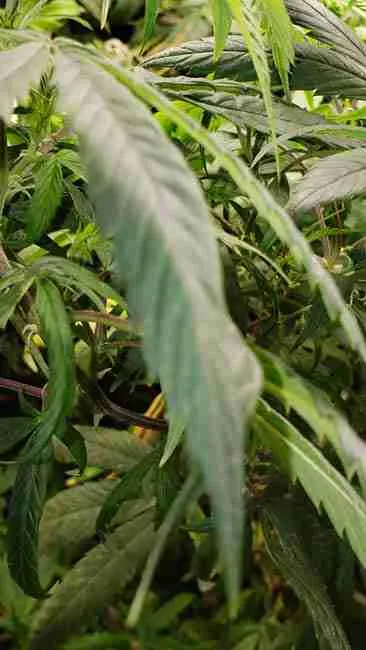
The leaf that already hooked will not flatten to reward you. Cells that collapsed stay collapsed. Yellow stays yellow. A tip that burned stays burned. Your scoreboard is the next leaf that opens. If you corrected the cause, new growth comes in flatter and a more ordinary green. The old fans can stay ugly until they are crisp or done. Cutting every marked leaf the day you notice the problem removes the record and the solar panel. Leave them unless they are rotting against a flower or lying dead on the mix. Sanitation is not the same as a cure.
One change, then wait. A feed change shows in the leaves that form after it, not by dinner. A lamp raise can stop new tacoing faster, because that stress is on the surface. A soaked pot has to dry on its own clock. Name the problem in one sentence before you act. The pot is heavy and the leaves are limp. Or the leaves are dark and stiff and the feed went up. Or only the top under the lamp is folding. If you cannot pick one sentence, you are not ready to pour. A photo today and another in a few days beats a new bottle. You want the curl to stop advancing. If the new leaf is worse, the sentence was wrong, and you still change only one next thing.
Two plants in one tent are a gift when only one of them curls. The air, the lamp, and the fan are shared. The pot, the mix, and the last feed may not be. Treat the plant that changed. If both plants fold the same afternoon you lowered the light, treat the light. If a seedling claws in a cup of hot mix while the bigger plant in a lighter mix is flat, the cup is the problem. Seedlings almost never need a bloom food to fix a hook. They need a gentler mix, a lamp that is not sitting on them, and water only when the cup is light.
The next leaves tell you
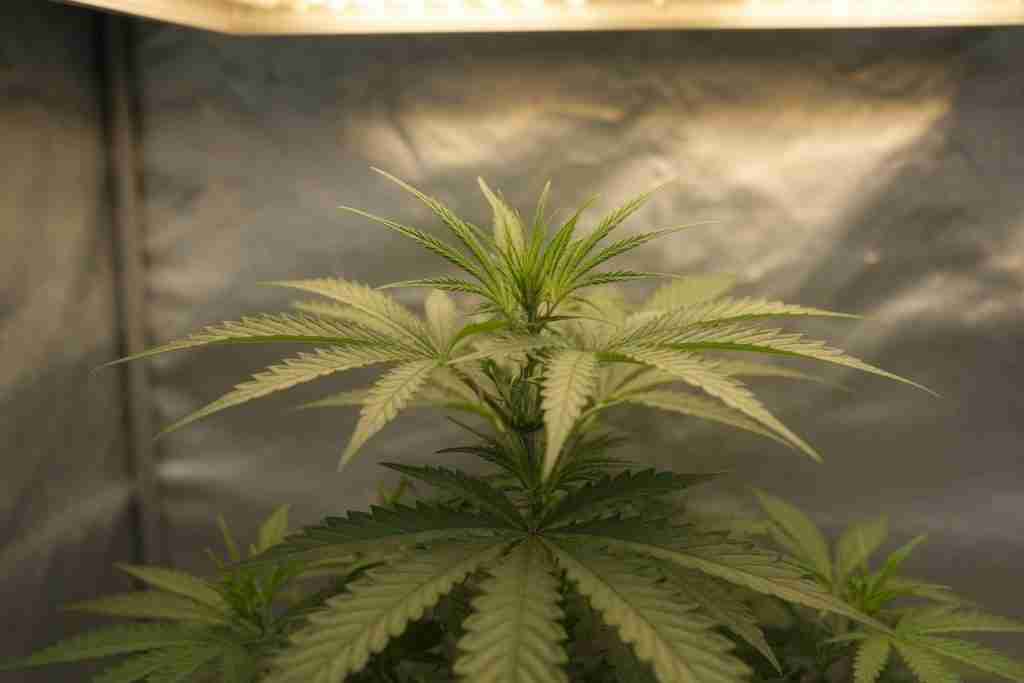
Walk the plant from the top on the day you check. The newest set should match the stage. In vegetative growth that means a working green, not darker every week, and not folding as it opens. In flower the fans can ease off their hunger without turning into talons. A seedling that claws is a hot mix, a close lamp, or water, almost every time. A plant that claws after you switched back to a vegetative formula “to keep it green” in flower needs that formula gone. The leaf you ruined last week can stay as a reminder. The leaf opening today is the grade.
Marijuana that claws because the vegetative bottle stayed in the reservoir is not asking for a second feed. Weed that tacos under the lamp is hiding from the light, and a supplement will not flatten the leaf that already folded. Keep the next jug weaker or plainer until the new growth agrees. Then hold. A plant that recovers is not a reason to climb the label again the same week.
In Canada the cap is four plants per household, not per adult. Quebec prohibits recreational home growing. Manitoba has allowed indoor growing only since 1 May 2025, and the age there is 19. A seedling counts. A second set of cups still counts. The ten-step page is the order from seed to jar if you are setting the room up around that cap. A curled leaf does not raise the number of plants you are allowed to keep. It only tells you which single thing to change on the plants you already have.