Types of Lighting Technologies in Cannabis Cultivation


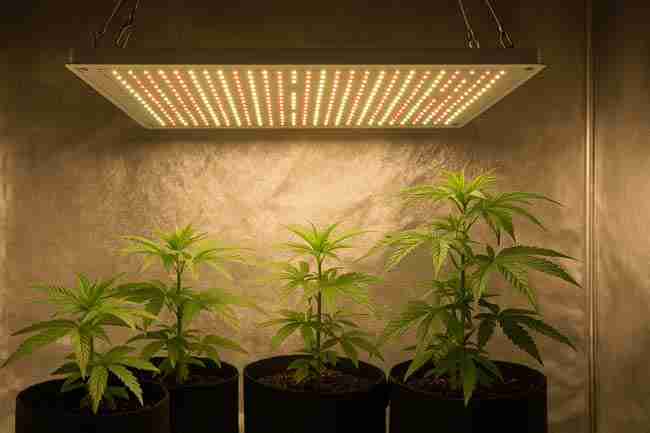
When it comes to types of lighting technologies when cultivating cannabis indoors requires growers to rely entirely on electric sources of Photosynthetically Active Radiation (PAR). Given the high PAR requirements of cannabis, electric lighting (both infrastructure and energy) is one of the most significant production inputs. Furthermore, the heat generated by these systems often requires additional cooling, contributing to the overall energy costs. At Green Avenger Seeds we have used many different types of lighting over the years. In this article we will explain what each type of lighting for cannabis is and how it can be used to create the best cannabis gardens.

Electric lighting systems convert electrical energy into visible radiation and other wavelengths like ultraviolet and far-red. None of these technologies are perfectly efficient in converting electricity into light; most of the wasted energy is converted into heat. For instance, legacy incandescent lighting can be highly inefficient, converting up to 95% of electrical energy into waste heat. At the future rolls on, lighting will get better at converting electrical energy into better lighting for cannabis as we have already seen in the last 10 years with LED lighting.
Selecting the appropriate lighting technology for cannabis production is a crucial decision. Here, you’ll find an overview of the three primary classes of electric lighting technologies commonly used in indoor cannabis cultivation, each with its unique benefits and drawbacks.
Overview of Lighting Technologies

The electric lighting technologies for cannabis production can be categorized into three main groups:
- Fluorescent Lighting
- High-Intensity Discharge (HID) Lighting
- Solid-State Lighting (LED)
Let’s delve into the details of each technology.
Fluorescent Lighting

Fluorescent lighting technologies have been used for many years for occupant lighting and low-intensity horticultural applications like seedlings, microgreens, and clonal propagation.
How Fluorescent Lighting Works
- Fundamentals: Fluorescent lamps are low-pressure gas discharge lamps that generate ultraviolet (UV) light by passing an electric current through mercury vapor.
- Phosphorescence: The UV light interacts with a fluorescent coating on the inside of the lamp, emitting visible wavelengths of radiation.
Characteristics of Fluorescent Lighting
- Efficacy and Intensity Loss: Fluorescent lamps have relatively low efficacy, losing intensity quickly.
- Difficult to Control: Fluorescent lighting is challenging to control, particularly when it comes to dimming.
- Mercury Hazard: Containing mercury makes fluorescent lamps hazardous waste when broken or at the end of their lifespan.
- UV Radiation Emission: Fluorescent technologies emit small amounts of UV radiation, primarily in the longer UVA waveband (315-400 nm).
Practical Advantages
- Due to the long and narrow shape of fluorescent tubes, heat distribution is relatively even concerning photon flux distribution.
- Fluorescent tubes can be placed closer to the plant canopy while providing even photon flux distribution.
Pros and Cons of Fluorescent Lighting
| Pros | Cons |
|---|---|
| Even heat distribution relative to photon flux | Hazardous waste due to mercury content |
| Low intensity, ideal for seedlings | Low efficacy and rapid intensity degradation |
| Affordable and easy to set up | Hard to control (dimming challenges) |
Ideal Applications
Fluorescent lighting is particularly well-suited for:
- Seedling propagation
- Microgreens
- Clonal propagation
- Multi-layer systems due to low heat output
High-Intensity Discharge (HID) Lighting

High-Intensity Discharge (HID) lighting technologies produce a broad range of wavelengths, from ultraviolet to infrared, primarily targeting visible wavelengths. There are various types of HID technologies used in cannabis cultivation, primarily developed for human vision applications but later adapted for horticultural purposes.
Types of HID Lighting
The most common types of HID used in cannabis cultivation include:
- High-Pressure Sodium (HPS):
- High efficacy
- Spectrum rich in yellow, red, and far-red wavelengths
- Metal Halide (MH):
- Produces a “whiter” light
- Higher blue photon flux than HPS
- Ceramic Metal Halide (CMH):
- Similar to MH but with ceramic arc tubes for longer lifespans
- Longer operating lifetime compared to HPS/MH
How HID Lighting Works
- High-Pressure Sodium (HPS): HPS lamps produce visible light heavily weighted in the yellow and red wavebands.
- Metal Halide (MH): MH lamps produce a whiter light with relatively higher blue photon flux than HPS.
- Ceramic Metal Halide (CMH): CMH lamps use ceramic materials for the arc tube, allowing for higher operating temperatures and longer lifetimes.
Characteristics of HID Lighting
- Waste Heat: HID technologies generate substantial waste heat due to high operating temperatures.
- Directionality of Heat and Light: Much of this heat is emitted downward, toward the crop canopy, increasing transpiration rates.
- Hang Height Requirement: The high heat output requires HID fixtures to be kept relatively high to minimize negative impacts on the canopy.
Pros and Cons of HID Lighting
| Pros | Cons |
|---|---|
| High PAR output | Significant heat generation |
| Relatively cheap fixtures and bulbs | Inefficient compared to LEDs |
| Wide range of spectrums | Shorter lifespan than LEDs, frequent replacements |
Ideal Applications
HID lighting is ideal for:
- Large, tall grow rooms
- Higher intensity applications
- Early vegetative and flowering stages
Solid-State Lighting (LED)

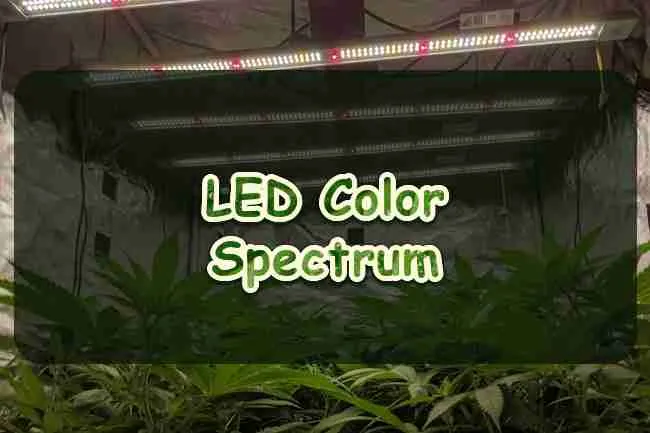
Solid-state lighting, primarily Light Emitting Diodes (LEDs), has rapidly gained popularity due to its energy efficiency, spectral flexibility, and long lifespan.
How LED Lighting Works
- Electroluminescence: Semiconducting materials emit relatively narrow wavebands when electricity passes through them.
- Spectrum Control: Peak wavelength and full width at half maximum (FWHM) define spectral output.
Characteristics of LED Lighting
- Narrow Band Spectral Emission: LEDs emit narrow wavebands of radiation with spectral distributions defined by peak wavelength and FWHM.
- Customization of Spectrum: LED technology allows for precise customization of spectral output to match specific plant growth stages.
- Efficiency and Efficacy: LEDs are the most energy-efficient lighting option, providing high efficacy (µmol/J) while generating relatively little heat.
Pros and Cons of LED Lighting
| Pros | Cons |
|---|---|
| High efficacy and longevity | Higher initial investment |
| Low heat generation | Requires careful spectrum selection |
| Flexible spectral control | Complex fixture designs |
Ideal Applications
LED lighting is best suited for:
- High-density indoor cultivation
- Multi-layer cultivation systems
- Tailored spectrum for specific plant growth stages
Recent Advancements in LED Lighting
The Design Lights Consortium (DLC) is working to standardize the evaluation and reporting of horticultural LED fixtures’ characteristics and performance. Manufacturers must submit fixtures for third-party testing to be listed on the DLC’s database, providing cultivators with reliable information.
Comparative Table of Different Lighting Technologies
| Feature | Fluorescent | HID | LED |
|---|---|---|---|
| Initial Cost | Low | Medium | High |
| Operating Cost | Medium | High | Low |
| Heat Output | Low | High | Low |
| Efficacy (µmol/J) | 0.6–1.0 | 0.8–1.9 | 1.8–3.5+ |
| Lifespan | 10,000 hours | 10,000–30,000 hours | 30,000–50,000 hours |
| Application | Seedlings, Clones | Flowering, Vegetative | All stages, custom spectrum |
Best Practices for Choosing Lighting Technology

Selecting the best lighting technology depends on various factors, such as spectrum requirements, energy efficiency, and specific growth stages.
Spectrum Selection
- Seedlings and Vegetative Stage: Require higher blue light for compact, bushy growth.
- Flowering Stage: Needs more red and far-red light for optimal flowering and resin production.
Efficacy and Efficiency
Choose lighting that provides optimal PAR with minimal energy consumption. Consider efficacy (µmol/J) to evaluate energy efficiency.
Heat Management
Select fixtures with heat sinks, cooling fins, or active cooling systems. LED lighting often requires less cooling due to its lower heat output.
Fixture Layout and Design
- Fixture Spacing and Angle: Properly spaced fixtures prevent hot spots and uneven light distribution.
- Reflective Surfaces: Use reflective walls and floors to maximize light usage.
Light Planning Software
Most reputable horticultural manufacturers use light planning software to model and optimize lighting intensity and uniformity in specific scenarios. Ensure the models derived from light planning are corroborated by actual measurements post-installation.
Optimizing Light Distribution
Maximizing light distribution is crucial for ensuring uniform PAR levels across your grow space. Here are a few strategies to consider:
Reflective Surfaces
Reflective walls and floors can help maximize the utilization of emitted light, reducing wastage and increasing efficiency.
Fixture Positioning
Proper positioning and spacing of fixtures minimize the formation of hot spots and shadows.
Hybrid Lighting Systems
Combining different fixture types (e.g., HID and LED) in hybrid systems can provide broader spectral ranges and intensity variations.
Light Distribution Table
| Lighting Technology | Typical Hang Height (cm) | Coverage Area (sq. m.) | PPFD (µmol/m²/s) |
|---|---|---|---|
| Fluorescent | 15–30 | 0.5–1.0 | 150–300 |
| HID (HPS) | 45–60 | 1.5–2.5 | 500–800 |
| LED | 30–45 | 1.0–2.0 | 400–700 |
Comparing PAR Efficacy of Different Technologies
Research shows that LED technology can achieve much higher PAR efficacy than legacy technologies like HID or fluorescent lighting.
Comparative Efficacy Table
| Fixture Type | Average PAR Efficacy (µmol/J) |
|---|---|
| Fluorescent | 0.6–1.0 |
| HID (HPS, MH, CMH) | 0.8–1.9 |
| LED (2014-2018) | 1.8–2.7 |
| LED (2021) | 2.8–3.5+ |
Future Trends in Lighting Technology
The efficacy of horticultural LED fixtures is expected to increase by up to 25% in the next 20 years due to advancements in LED technology.
Key Trends
- Enhanced Efficiency: Continuous improvements in LED efficiency will make them even more cost-effective.
- Spectrum Customization: Spectral flexibility will improve plant growth at different stages.
- Automation and Control: Smart lighting systems will integrate with automated grow environments.
Frequently Asked Questions
1. What type of lighting is best for cannabis cultivation?
LED lighting is generally considered the best due to its high efficacy, spectral flexibility, and low heat output. However, HID lighting remains a viable option for large-scale operations due to its affordability.
2. How do I choose the right spectrum for my cannabis plants?
Select a spectrum based on the plant’s growth stage:
- Seedlings and Vegetative Stage: Higher blue light (400-500 nm)
- Flowering Stage: Higher red and far-red light (600-750 nm)
3. What is the optimal PPFD level for cannabis?
- Seedlings: 100–300 µmol/m²/s
- Vegetative Stage: 300–600 µmol/m²/s
- Flowering Stage: 600–1000 µmol/m²/s
4. How can I reduce the energy costs of my grow operation?

- Use high-efficiency LED lighting.
- Implement reflective surfaces to reduce light wastage.
- Optimize fixture layout and spacing.
- Integrate lighting with climate control systems to minimize additional cooling needs.
Lighting Technologies Cannabis Cultivation Conclusion

Selecting the right lighting technology for cannabis cultivation can be a game-changer. From the even heat distribution of fluorescents to the high-intensity output of HIDs and the customizable spectrum of LEDs, each technology has its own advantages and challenges. Understanding their nuances and carefully considering your specific cultivation needs will help you choose the best lighting solution for your indoor cannabis garden.