Training Cannabis Plants to Grow Horizontally

Training plants to grow horizontally is how you stop one proud top from eating the whole lamp. You are not building a new kind of plant. You are laying the boss stem over so the side branches get a turn in the light. A plant that stays a spear gives you one cola in the sweet spot and a skirt of little ones in the shade. A plant you spread out gives you a table of tops. Those are different shapes, and a pep talk about the seed pack does not sort them.
Shoppers mash three jobs into one word. A soft tie is not a pinch. A screen is not a pair of scissors. A cut that removes the tip is not the same morning as a bend that keeps the tip on the plant. If you treat every flat photo as the same trick, you will snap a stem that only needed a cloth loop, or you will tie a plant that actually needed a different clock.
Weed charts will not lay that stem over for you. A grid of finish times is someone else’s room. Your tent, your empty floor, and whether the stem still bends in your fingers are the notes that matter.
If you are picking the next pack after a plant that only made one cola, the list for New Brunswick and the list for Mississippi are two doors into the same catalogue. Spare seed, and why a small pack beats a single bean, sits on why a 5-pack is the default order. Popping them sits on cannabis seed germination. The days after the hook stands sit on the seedling stage. Packs leave on the clock on shipping. Other rooms sit on the Canada hub and the United States hub. Read the rules where you live before you pop a seed. The label on the pack does not change those rules, and it does not bend the plant either.
Training Cannabis Plants to Grow Horizontally
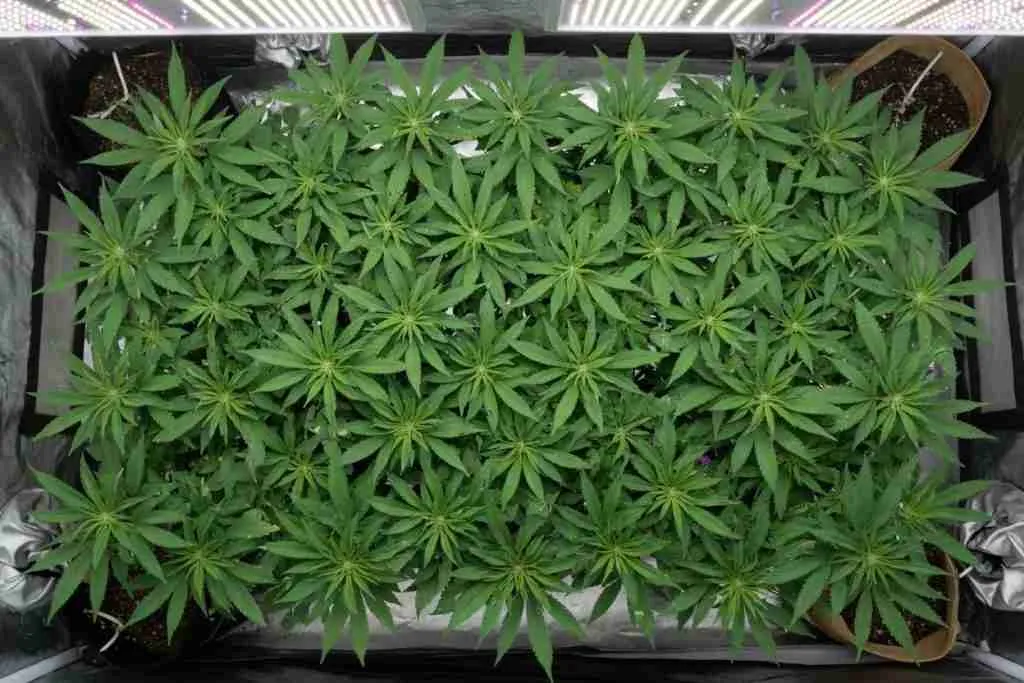
The shape people mean is simple. The plant spends its width. The tips sit in one rough plane under the light. You look across the tent and you see many tops instead of one spike. That picture is the goal. How even the plane should be, and what a hand of extra height does to the sites under it, lives on cannabis canopies. This page is the decision to grow sideways, and the judgment calls that go with that decision.
A plant left alone does what the highest tip wants. Side branches stay polite. You get a Christmas tree. Growers use that name because the silhouette is a tree, not because it is festive. The top sits in the bright band. The bottom sits in a cheaper version of the same day. In a short tent the tree hits the diodes and bleaches while the lower arms never pack. You did not fail at watering. You let the shape pick the harvest.
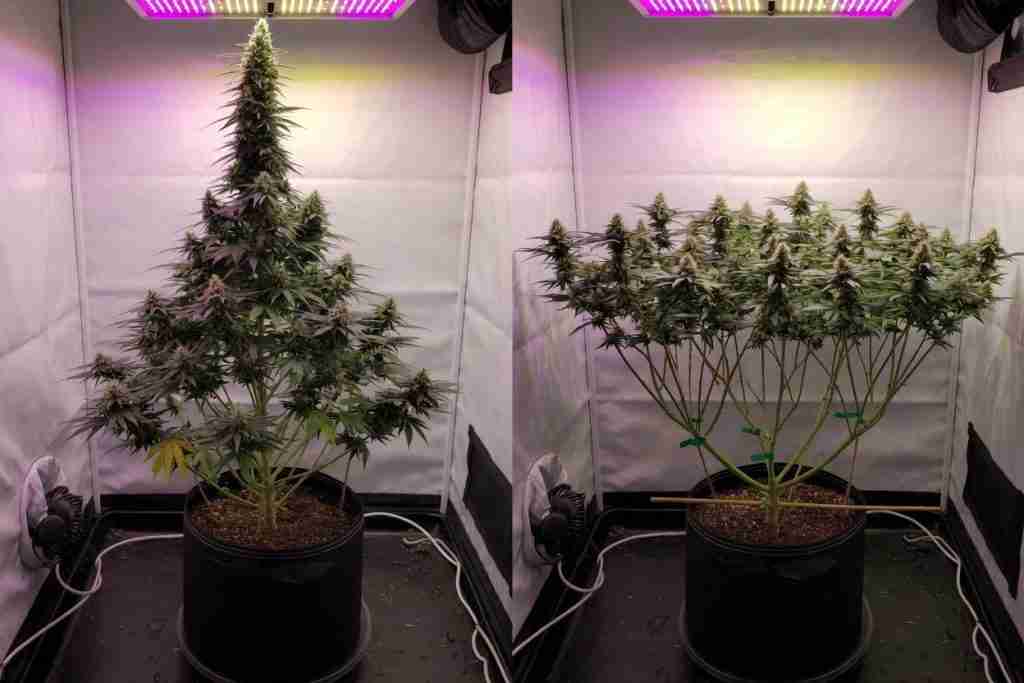
A Table Instead of a Christmas Tree
You make a table by persuading the main stem to live sideways for a while. The tip stops being the highest thing in the pot. Side shoots stand up and act like they have a job. You did not conjure bud sites out of a bottle. You moved sites you already had into the light. That is a smaller promise than a chart with a giant number on it, and it is the one you can actually see. If the side shoots stay short after the tip is truly lower than they are, the plant is telling you something else. Light, roots, or time. Not another knot.
The day-to-day tie routine lives on low stress training. The feel of the arc, and which stem will spring back, lives on bending. Yield still follows light on a plant that does not collapse, and that bigger picture lives on increasing yields. This page will not reprint those steps. It will keep you from calling a tie a cut, and from calling a cut a tie.
There is a second bend people skip. The first tie wakes the side arms. Then one of those arms races and becomes the new boss. You tie that racer outward too, so the plane stays a plane. You are not starting a new hobby. You are repeating the same idea on the shoot that stuck its hand up. Do it while that shoot still flexes. A woody arm that already won the race does not want a sudden career change.
The Top That Hogs the Lamp
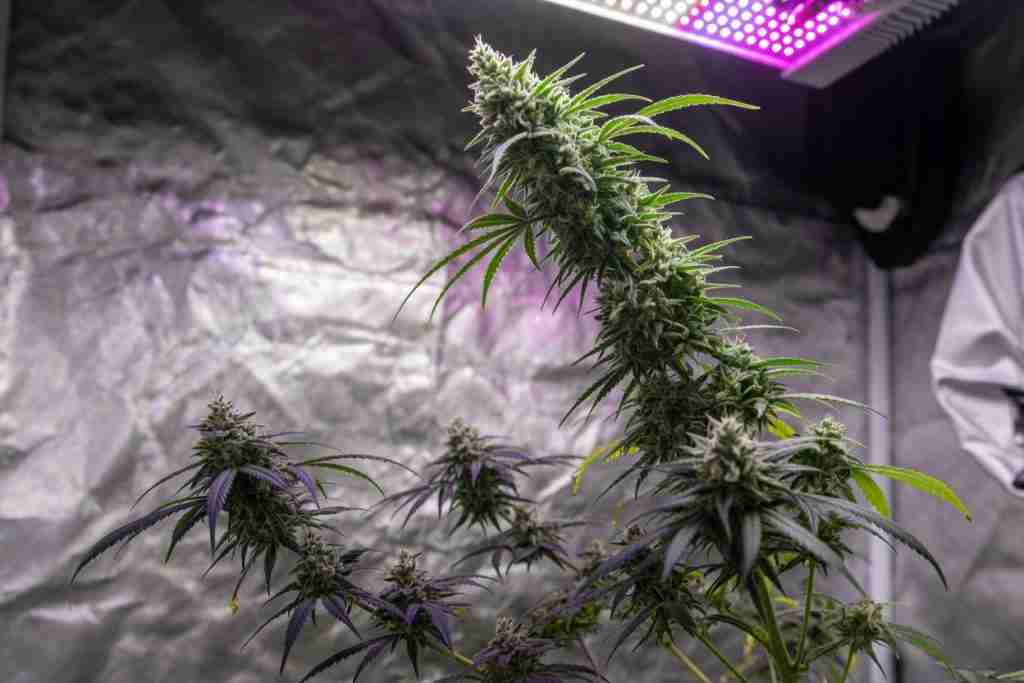
After tying the main stem toward the empty corner, the side branches finally got a real day of light. That is the point of the bend. The highest bud sends a message down the stem that tells the lower buds to wait their turn. Growers call the habit apical dominance. It is not a personality flaw in your plant. It is how a lot of green things race for the sun, which is the same idea in an extension note on how the highest bud holds the lower buds back. You do not need those shade-tree cuts. You need the picture. While one tip is the king, the court stays small. Lay the king over, and the court stands up.
Do not paint a product on the wound, or on a healthy stem, to fake that message. A bottle is not this job. The bend is the job. If you want more tops by removing the king entirely, that is a cut, and it belongs on the pages that own cuts. Mixing a smear, a slice, and a hard pull on the same afternoon is how a simple shape turns into a two-week sulk.
Shade is the other half of the hog. Even a well tied plant can grow a fan that roofs a top you meant to keep. Taking that fan is defoliation. Taking whole shaded shoots later, so the stem underneath looks like a stick, is lollipopping. Do those after the shape exists. Cutting the bottom off a Christmas tree still leaves you a Christmas tree.
Training Marijuana Plants to Grow Horizontally
Same work, the other name people type into a search box. You are still laying a stem over. You are not switching rooms and you are not switching species. The photo that got you here was a flat plant. The plant in your tent is a spear. The gap between those two pictures is a tie, a net, or a cut. Pick one.
A soft tie bends a stem that still flexes. A screen holds a lot of shoots in one plane once you already have shoots to weave. A cut, or a pinch, changes the plant by wounding it. The family name for the wounding work is high stress training. The pinch that creases a stiff stem on purpose is supercropping. One clean cut that leaves four arms is quadlining. A longer schedule of cuts, until you are managing a hub of mains, is the manifold and the mainline. If you came here for the sideways shape, start with the tie. If the stem will not arc, stop and read the pinch page. Do not invent that pinch with a piece of wire because the clock is loud.
A Soft Tie and a Sideways Stem
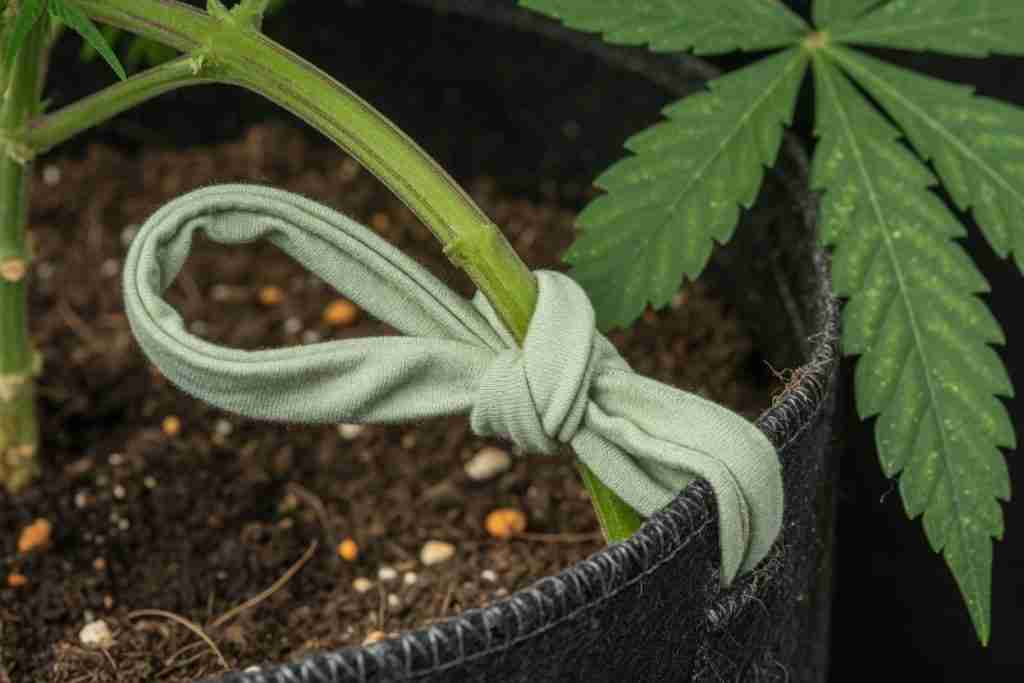
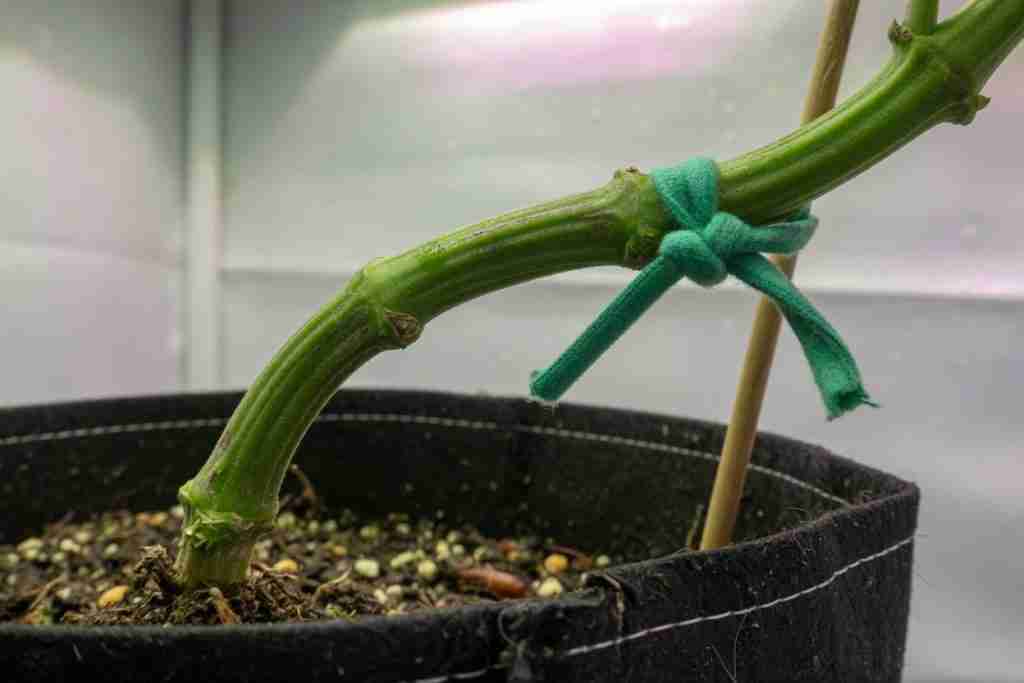
The tool is boring, and that is a compliment. Use soft cloth, a garden tie with a soft face, or a strip from an old shirt. Bare wire cuts as the stem thickens. Fishing line cuts. A zip tie you forget will girdle the bark, and a girdled arm is an arm you just spent a week aiming. Anchor the tie to the pot rim, or to a short stake pushed into the mix. Do not use a leaf as a handle. A leaf tears, and then you have a wound plus a stem that sprang back up.
Leave slack. You should be able to slide a fingertip under the loop today, because the stem will be thicker next week. Bend toward the empty side of the tent. A tie into the wall makes a pretzel. A tie into the neighbor makes a fight. The tip should finish lower than the side branches you want to wake. If the tip is still the tallest thing in the pot, you arranged the sides and left the boss in charge. The bending page is blunt about that difference, and it is right.
Look, a long pale stem that fell over by itself is a light problem, and a stem you laid down on purpose is a different problem. Do not train a seedling that is stretching because the lamp is a rumor. Bring the light into a sensible range first. The grow lighting page owns the fixture. The day you bend a stretched baby, you fold a weak stem and call it a technique. Fix the distance. Then decide if there is anything left to tie.
Go slow enough to feel the stem. A green shoot that flexes is a yes. A creak, a pale line, or a sudden soft spot is a stop. Several small moves over a few days beat one yank, and the plant does not award points for drama.
A Screen Is a Different Tool
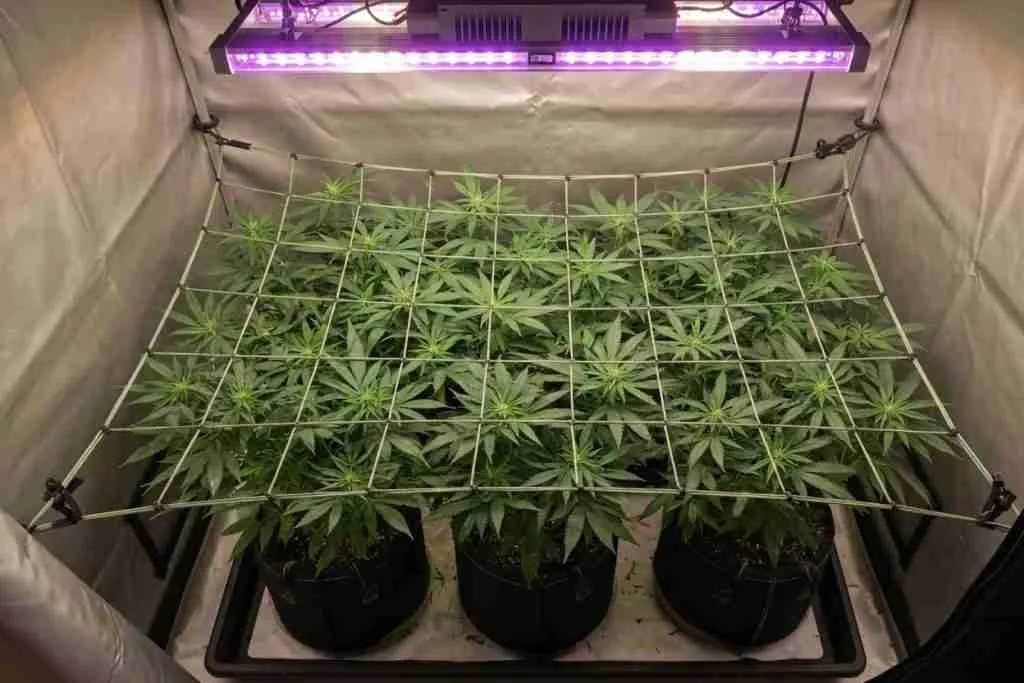
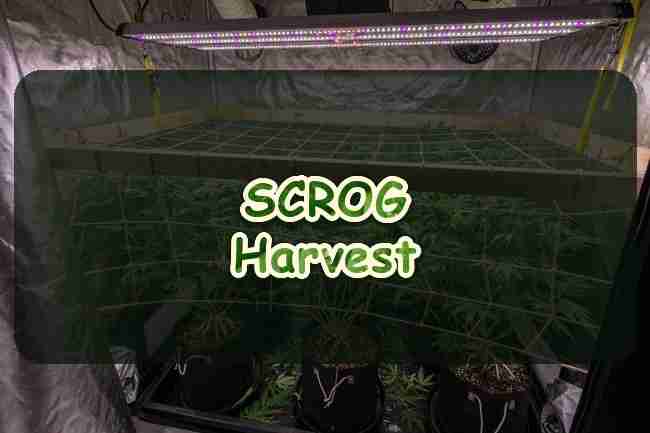
A screen of green is a net stretched flat above the pots. You tuck shoots sideways through the squares so the tops pop up in the holes instead of racing for the ceiling. It is still low stress if your hands stay kind. It is not a magic rectangle. An untrained tree with string on its head is still a tree. The weave, and when you stop tucking, lives on SCROG. The difference between that net and a pinch lives on SCROG versus supercropping. Read those when the tool is the question. Stay here while the question is still the shape.
Hang the net from the tent, not from the plant. A short reach above the pots is enough for a home tent. Too high and you are back to a tree that has to climb before the screen matters. Too low and you crush the plant on day one. Squares should be big enough for one shoot and small enough that two shoots do not share a hole and tangle. One shoot per square is the whole discipline. Cannabis does not climb like a vine. You place every shoot with your hand. If a branch fights you, leave it until tomorrow.
A net hides the pots. Watering gets clumsy. You kneel, you reach, and you miss the back corner. People then drown the corner they can touch and forget the corner they cannot. The watering page still owns the lift test. The net does not change thirst. If you hate reaching, skip the screen and keep the ties on the rim. You can still make a table. It will just be a table you can pick up.
Pros and Cons on the Same Plant
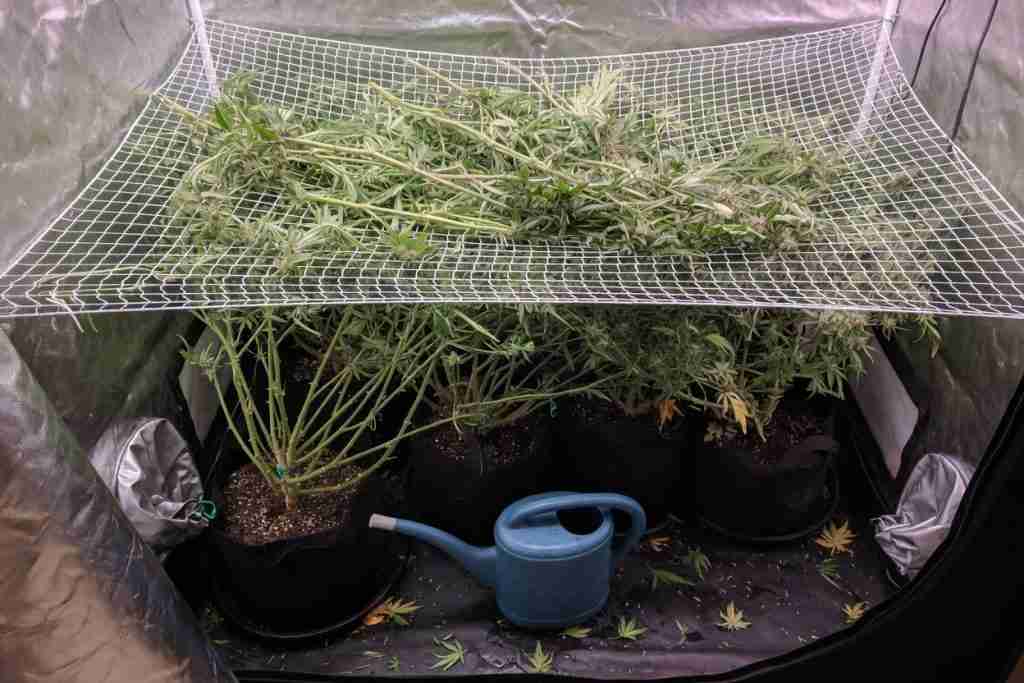
Horizontal training is a trade, not a sticker. You gain a shape. You pay with attention, floor space, and the chance of a crease. Write both sides down before you buy a net you do not want to live with. The plant will not care about your shopping. It will care about the next week of hands.
What a Flat Plant Gives You
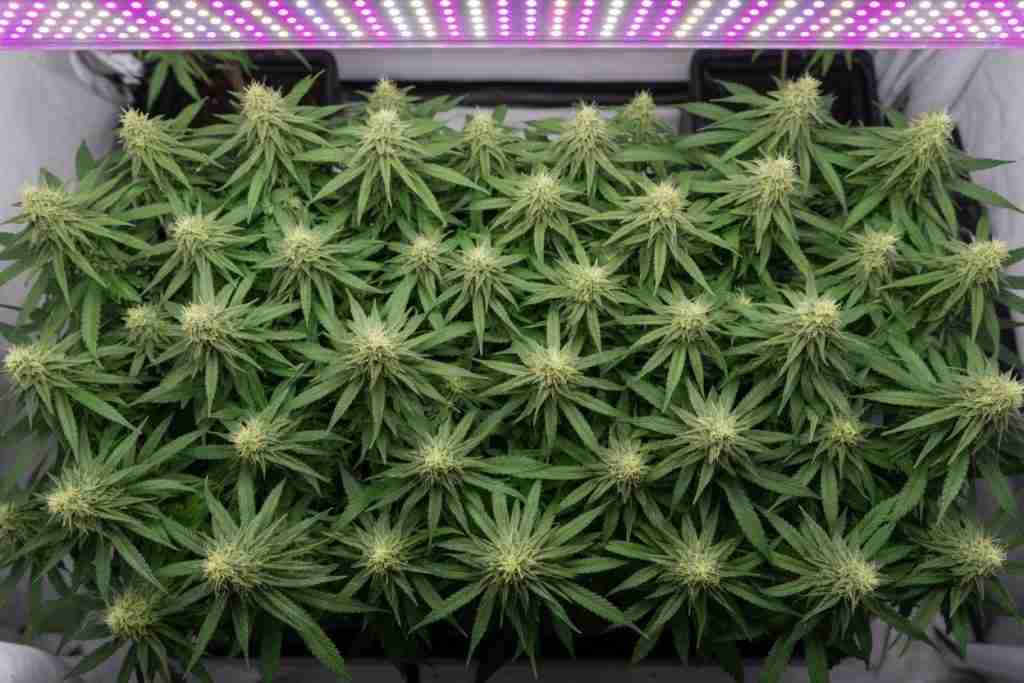
You get more tips in the bright band. One cola and a skirt of popcorn is what the spear was going to do. A table gives the lamp more places to land. You are not guaranteed a heavier jar. You are guaranteed a fairer chance for the sites you kept. If the lamp is weak, a flat plant still finishes weak, just more evenly. Fix the board before you blame the tie. Extra bars under a canopy that is already even are a different purchase, and they live on under-canopy and side lighting. Most tents that think they need those bars actually need this shape first.
The plant stays shorter. That matters when the tent is a closet and the light cannot rise forever. The box itself lives on the grow tent page and the indoor growers guide. A short plant is also easier to look at. You see a mite, a yellow fan, a dry crust, because the middle is not a jungle. Air moves through a table. A fan that only tickles the wall stops being a decoration.
You can time the flip off the shape instead of off boredom. Fill the footprint, then change the clock. The leafy weeks live on the vegetative stage. The bloom weeks live on the flowering stage. A photoperiod will wait while you spread it. An autoflower will not wait. You can still bend an auto, earlier and more gently, and you stop the big moves once the white hairs show. That shorter window lives on LST for autoflowers. Do not top an auto because a photoperiod tutorial told you the cut was free. The two clocks are compared on photoperiod versus autoflower.
Outdoors, wind is the extra enemy. A plant you lay sideways catches a gust like a sail, so the pot needs a stake or the stem levers itself out of the mix. A woody branch in storm season is a support job, not a training bend.
What a Flat Plant Costs You
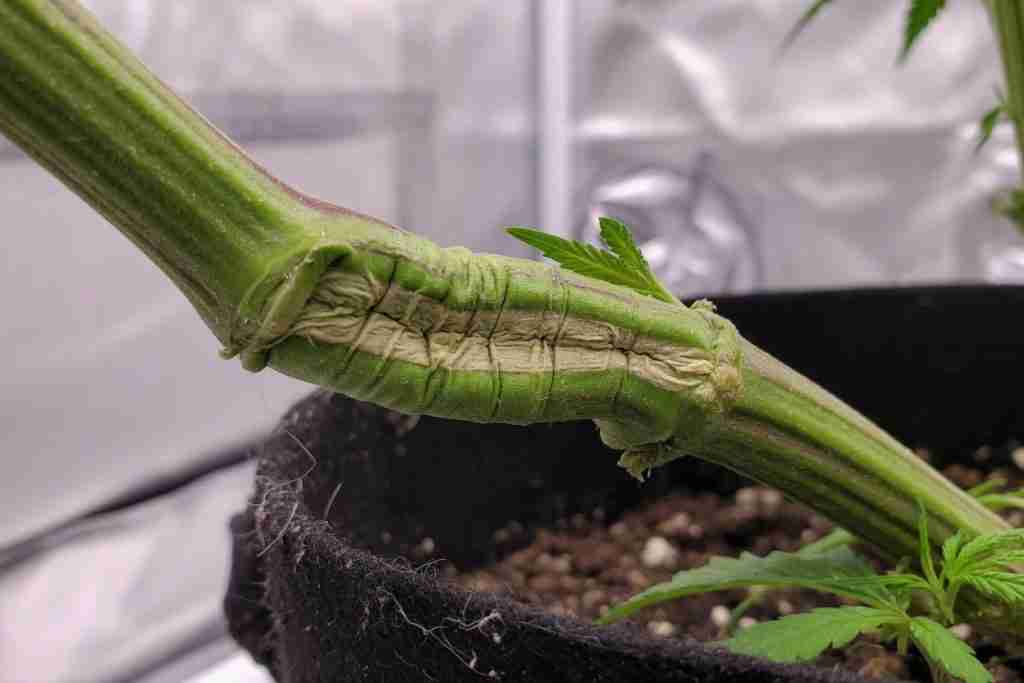
You have to look. A tie that was kind on Sunday can bite by Wednesday, because the stem thickens and the loop does not. Skip the check and you girdle the exact shoot you were trying to save. That is the dull cost, and it is the common one.
A hard bend can crease the stem. When you see pale fiber, you stop. You do not finish the angle out of pride. A small crease that is still connected sometimes knits if you quit pulling and give it a stick so it cannot fold again. Sometimes it does not. Do not believe the campfire line that every break comes back stronger. The tape, the stake, and the fan that makes a stem worth staking live on stem strength. Do not pinch the other arms to match the one you hurt. Matching can wait until the crease has calmed down.
The plant uses floor. A wide plant in a narrow tent hits the wall and folds back into itself, and then you have a table with nowhere to sit. Measure the empty space before you bend toward it. If there is no empty space, another tie will only stack leaves on leaves.
It will not fix a sulk. A plant that is wilted, freshly transplanted, cold, or already angry does not need a new shape today. It needs the thing that made it angry to stop. A taco leaf and a stalled tip are stress, not a training cue. Bending a wilted plant to perk it up is how you snap a soft stem and still have a dry pot.
Flower stretch can lift a lazy canopy back into a hill. You may tuck gently through the early stretch on a screen. You do not grab a stacking cola and fold it like a veg shoot. Once the flowers are the point of the plant, a hard bend is how you snap the part you were going to keep. And you can stall the whole project by doing the tie, a cut, and a leaf strip on the same afternoon. One job. Then wait. The first indoor garden page is where that pile of changes gets its own warning.
Specs for the First Bend
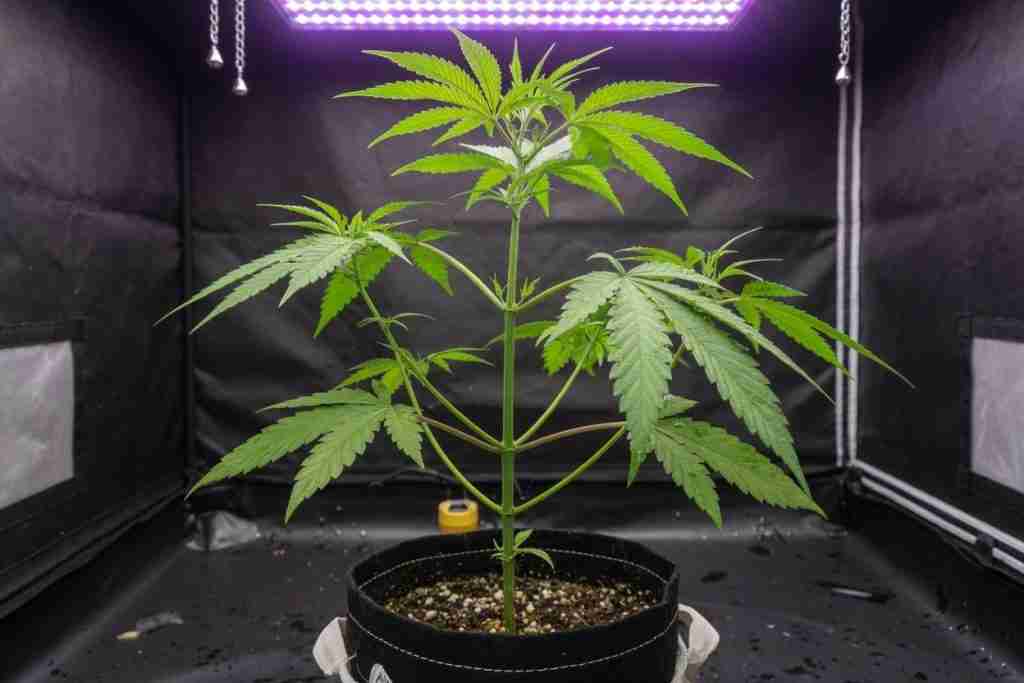
Training plants to grow horizontally still starts with a stem that bends in your fingers. Count several nodes. The plant should be standing and drinking, not flopped, not fresh from a transplant, not a seedling that got its first true leaves yesterday. A stem that creaks is too old for a hero pull. Wait was the right call more often than yank.
Here is the spec list in plain words. Soft tie, not wire. Anchor on the pot, not on a leaf. Slack for a fingertip. Direction toward empty floor. Tip finished lower than the shoots you want to wake. Next morning, that tip should be curling back up toward the lamp. That curl means the plant agreed. If the tip is still aimed at the floor and the bend is pale, you went too far and the rest of the plan is rest. Check the loop the next day, then every couple of days through veg. Loosen anything that has started to bite. Stop the heavy work when flowers are stacking. Early flower can take a gentle tuck. A fat cola cannot.
A rooted clone follows the same test once the plug holds the pot. If the new growth flexes and the plant stands on its own, you may tie it. If the clone still rocks in the hole, it needs roots, not a new angle.
A Tent That Finally Made Sense
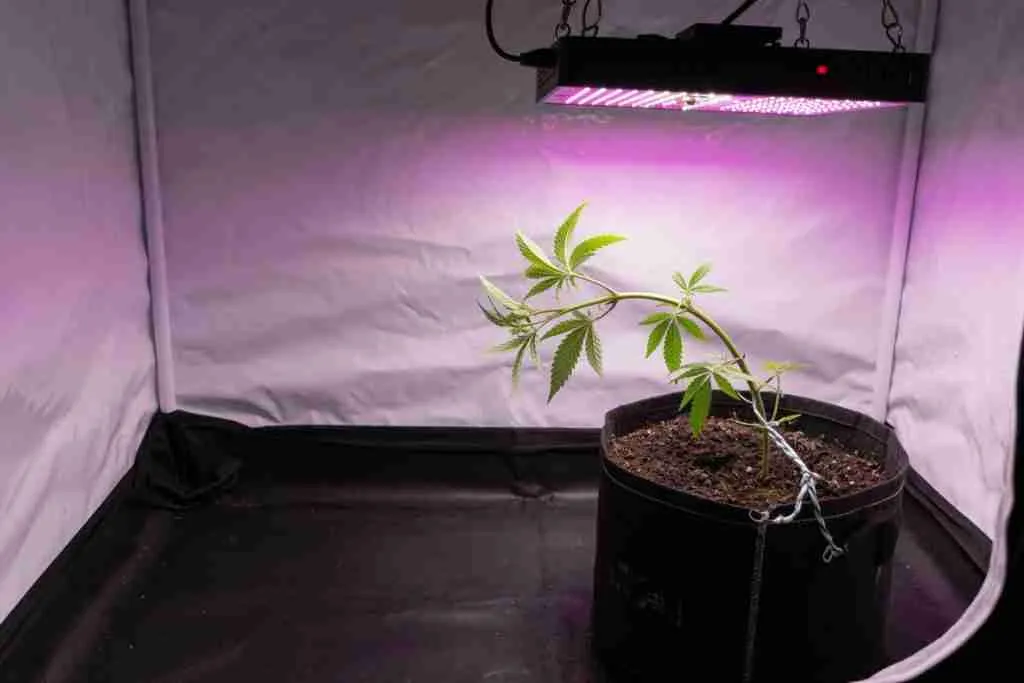
Picture the tent on a Tuesday. The plant is a spear. The top is a finger’s width from the diodes. The lower arms are pale and thin, and they have been pale for a week. You want to buy a second light before dinner. The light you have is already cooking one cola and ignoring the rest. Tie the main stem toward the open floor. Go slow. Feel it flex. Stop before it creaks. Hook the tie on the rim with room to spare. A thin string that cuts is the mistake in an otherwise right idea, so if that is what you grabbed, swap it for cloth before you leave the tent.
You come back the next morning and the tip has lifted. It looks like the plant changed its mind. It did not change its mind. The tip still wants to be highest, so it curled up from the new position, and the side arms got the message that the throne was empty. A few days later those arms are racing the old top. You tie the racer that pulls ahead. You leave the short ones alone until they earn a tie. That is the whole story. The empty floor was the point. If you had tied the stem into the wall, you would have made a knot with nowhere to grow.
However, a fresh pack does not survive a bend on a plant that is not a plant yet. The shell cracking is not a training day. The germination page is how the seed opens. The seedling page is the week after. Horizontal work starts when there is a stem worth bending. Rushing that line is how people fold a hook and then blame the breeder.
If the spear comes back on the next run, write down which mistake it was. Lamp too far, so it stretched, and you bent a noodle. Lamp fine, and you simply never tied the boss down. Those are different next weeks. The cannabis seed store can replace a pack that was the wrong clock for the tent. It cannot see the empty floor you refused to use.
The Tie You Check Tomorrow
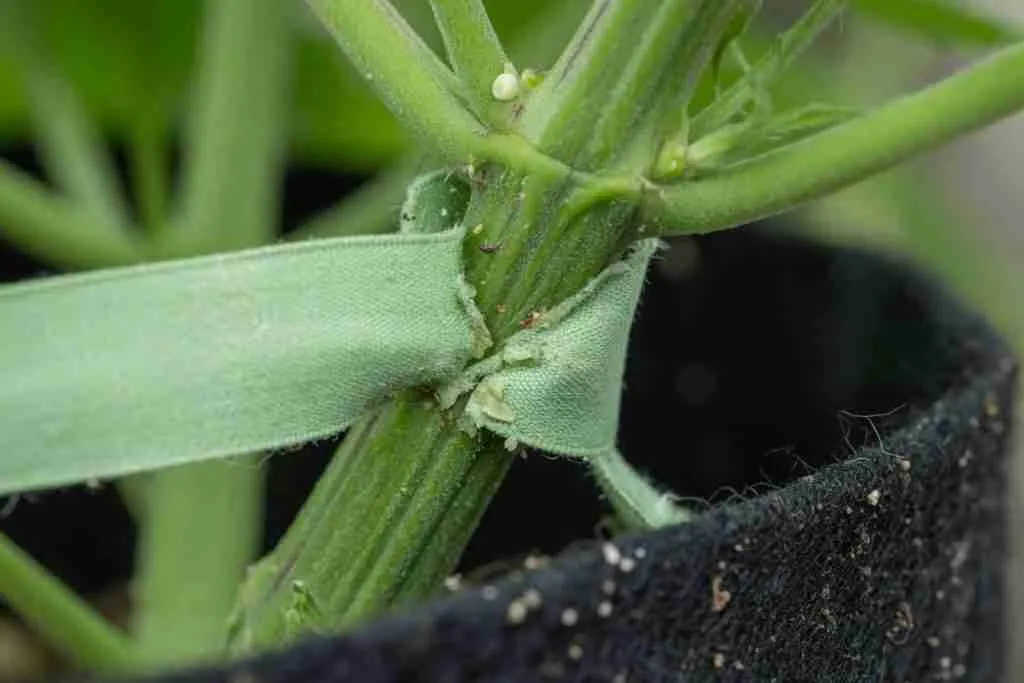
The mistake that ruins a good bend is forgetting the tie. The stem thickens on a schedule you do not control. The loop stays the size you tied. You come back to a groove in the bark, or to a leaf you used as an anchor that has torn halfway off. Loosen it the hour you see it. Move the anchor if the tip has already turned up and the stem wants a new angle. You are not married to the first knot. A tie is a note to the plant, and notes get rewritten.
Before you touch it again, write one line. Bent, tip turned up. Bent, crease, stopped. Not bent, still a spear. Net full, pots hard to reach. Racer tied, plane even. That line is the diagnosis. If the line says spear, you bend toward empty floor. If the line says crease, you wait and you read the stem page before you pull anything else. If the line says the plant is already a table and the lowers are in the dark, you are done with this page. The next cut, if you make one, is a lollipop decision on its own day, not a victory lap tonight.
Keep that line with the pack name. A single bend is a start. The table is what the tie still looks like a week later.