Top 10 Mold-Resistant Cannabis Strains for Humid Summers (So You Beat Bud Rot Before It Starts)


You’re staring down a sticky, swampy summer and thinking, “Is bud rot going to ruin my hard work?” Not if you stack the deck with Mold Resistant Cannabis Seeds and grow with a smart, humidity-proof plan. In this guide, you’ll get practical, hand-holding advice, the 10 best strains for muggy weather, how to set up your environment, and the exact steps you’ll use to finish clean, loud, and mold-free.
Quick Answer
If you grow in humid summers, choose airier, sativa-leaning plants that finish fast-to-medium, train them for airflow, strip interior leaves lightly, keep RH low at night, and dry at 60°F/60% with fans moving air around—not at—your buds. Your best bets: Durban Poison, Frisian Dew, Holland’s Hope, Early Skunk, Shaman, Jamaican Pearl, Cinderella 99, Super Silver Haze, Early Pearl, Sour Diesel. Pair these choices with silica, potassium-balanced feeds, and sanitation, and bud rot won’t stand a chance.
Why Mold Happens (and how you outplay it)

The simple story
Mold loves three things: moisture, still air, and dense flowers. You’ll win by removing all three.
Your anti-mold triangle
- Genetics: Pick Mold Resistant Cannabis Seeds with open flower structure, thinner leaves, and good airflow between calyxes.
- Environment: Keep air moving, avoid overnight humidity spikes, and water at lights-on, not near bedtime.
- Handling: Train plants to flatten the canopy, thin interior leaves (not a buzzcut), and harvest on time.
The Top 10 Mold-Resistant Cannabis Strains (deep-dive you can actually use)

You’ll see specs (type, flowering time, difficulty), why each works in humidity, and real grower-style pros/cons so you can choose fast and smart.
1) Durban Poison
Type: Mostly Sativa
Flowering: ~8–9 weeks (indoor)
Why it works: Tall, open “speary” colas that don’t trap moisture. Great airflow even in thick canopy.
Pros
- Airy buds = low bud rot pressure
- Energetic effects; classic landrace vibe
- Handles training like a champ
Cons
- Can stretch; you’ll need to control height
- Needs consistent feeding (not heavy, just steady)
Practical tip: Top early, run a flat screen (ScrOG), and keep side shoots from clumping together. Durban loves space.
2) Frisian Dew
Type: Hybrid, outdoor favorite
Flowering: ~7–8 weeks
Why it works: Bred for wet, cool climates. Airy structure + quick finish = you dodge peak late-season humidity.
Pros
- Fast finish cuts mold risk
- Rugged outdoors; forgiving in variable weather
- Purple phenos add bag appeal without density issues
Cons
- Not the densest nugs (that’s the point)
- Terp intensity is medium vs. hype strains
Practical tip: If your area gets August storms, Frisian Dew is that “sleep-at-night” pick.
3) Holland’s Hope
Type: Indica-leaning outdoor classic
Flowering: ~8 weeks
Why it works: Selected for Northern European conditions—aka damp. Buds are chunkier than a pure sativa, but still structured for airflow.
Pros
- Great beginner outdoor plant
- Handles cool, wet nights better than average
- Balanced, relaxing effects
Cons
- Moderate potency by modern hype standards
- Keep an eye on lower branches where air stalls
Practical tip: Lift lower branches with soft ties and leaf-pluck big fan leaves that block inner airflow.
4) Early Skunk
Type: Skunk-based hybrid
Flowering: ~8–9 weeks
Why it works: “Early” means it finishes before fall mists settle in. Skunk vigor + earlier harvest = fewer mold windows.
Pros
- Rock-solid vigor; forgiving to new growers
- Good yield without “rock-hard” density
- Classic skunky-sweet nose
Cons
- Skunk terps can be loud (neighbors notice)
- Needs staking in wind and storms
Practical tip: Use a double-ring trellis so colas don’t touch; keep 1–2 inches between big tops.
5) Shaman
Type: Sativa-leaning outdoor specialist
Flowering: ~8–9 weeks
Why it works: Bred from wet-tolerant parents, makes long, open flowers that dry out quickly after rain.
Pros
- Great mold resistance in outdoor tests
- Pretty purple hues in some phenos
- Calm, creative daytime effects
Cons
- Lighter yield vs. commercial heavyweights
- Tall; control with topping + LST
Practical tip: Run LST from week 3 of veg, guiding branches outward like spokes on a wheel.
6) Jamaican Pearl
Type: Sativa-dominant, tropical-friendly
Flowering: ~9–11 weeks (worth it outdoors in warm zones)
Why it works: Tropical sativa morphology—elongated flowers with natural air gaps.
Pros
- Terps pop (fruity/sweet) even with airy structure
- Great for warm, humid coastal climates
- Resilient against sudden humidity swings
Cons
- Longer flower window (plan your season)
- Needs extra staking as colas get long
Practical tip: Don’t cram plants. Wide spacing (4–5 ft) lets wind do your dehumidifying for free.
7) Cinderella 99 (C99)
Type: Sativa-leaning, quick finisher
Flowering: ~7–8 weeks
Why it works: Speed kills mold. C99’s fast finish means you harvest before late-summer humidity peaks.
Pros
- Very fast for a sativa-leaner
- Bright pineapple/citrus terps
- Loves light defoliation for air
Cons
- Not a couch-lock strain (if that’s what you want)
- Can fox-tail under high heat (not a mold risk, just looks)
Practical tip: Keep RH in late flower below 55% and move air through the canopy, not blasting buds.
8) Super Silver Haze (SSH)
Type: Sativa-dominant
Flowering: ~9–10 weeks
Why it works: Long, inter-noded flowers with less clumping. SSH tolerates high airflow and still packs terps.
Pros
- Legendary profile; uplifting head space
- Airy/stacked structure resists damp pockets
- Responds well to ScrOG
Cons
- Needs consistent nutrients; watch N in late flower
- Longer flowering than fast hybrids
Practical tip: Strip inner popcorn at week 3 of flower. You’ll trade a handful of grams for huge drops in mold risk.
9) Early Pearl
Type: Outdoor sativa-leaning
Flowering: ~8–9 weeks
Why it works: Built to finish before autumn wet. Tall plants, spaced internodes, good air channels in colas.
Pros
- Easy to grow in variable weather
- Clean, clear high; daytime friendly
- Minimal fuss with training
Cons
- Needs room; tiny tents aren’t ideal
- Watch for wind damage on tall stakes
Practical tip: Use fabric pots outdoors; they dry faster than plastic and keep roots from staying soggy.
10) Sour Diesel
Type: Sativa-dominant
Flowering: ~10–11 weeks (indoors; choose fast phenos)
Why it works: Speary, open tops and thinner leaves help evaporate dew. Workable in humidity with airflow dialed.
Pros
- Iconic fuel/lemon funk
- Airy tops = less trapped moisture
- Takes to defoliation well
Cons
- Some phenos run long (hunt or buy from a fast line)
- Smell is loud—carbon filter mandatory
Practical tip: If storms are common, harvest in two passes—tops first, lower buds a week later. You’ll dodge mold on the lower shelf.
At-a-Glance Comparison Table (bookmark this)
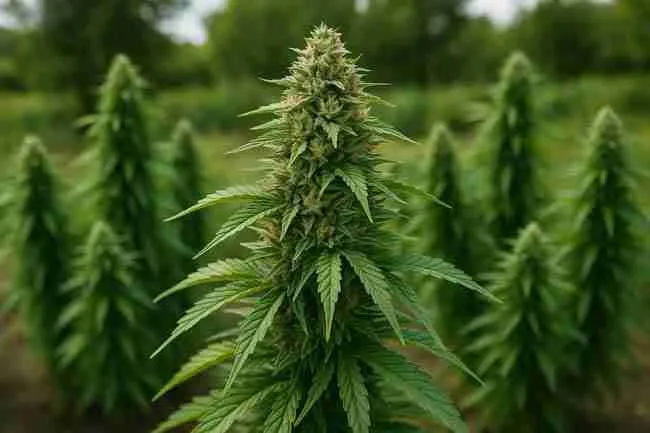
| Strain | Type | Flowering (wks) | Bud Structure | Mold-Resistant Advantage | Difficulty | Why It Shines in Humidity |
|---|---|---|---|---|---|---|
| Durban Poison | Sativa-leaning | 8–9 | Spear/airy | Air gaps = fast drying | Easy-Med | Stretch + airflow make rot rare |
| Frisian Dew | Hybrid | 7–8 | Medium-airy | Bred for wet/cool | Easy | Finishes before peak humidity |
| Holland’s Hope | Indica-leaning | ~8 | Medium-open | Northern outdoor lineage | Easy | Handles damp nights well |
| Early Skunk | Hybrid | 8–9 | Medium-open | Early finish | Easy | Big yield without rock-hard nugs |
| Shaman | Sativa-leaning | 8–9 | Long/airy | Outdoor selection | Easy-Med | Purples + airflow = |
| low mold | ||||||
| Jamaican Pearl | Sativa-dominant | 9–11 | Long spears | Tropical sativa spacing | Med | Thrives in coastal humidity |
| Cinderella 99 | Sativa-leaning | 7–8 | Airy/compact | Fast finish | Easy | Beats late-summer rot window |
| Super Silver Haze | Sativa-dominant | 9–10 | Layered/airy | Less clumping | Med | ScrOG + defol = clean colas |
| Early Pearl | Sativa-leaning | 8–9 | Medium-airy | Early finish | Easy | Outdoor humidity helper |
| Sour Diesel | Sativa-dominant | 10–11 | Spear/airy | Thinner leaves, dries fast | Med | Airflow-friendly structure |
Flowering times are typical breeder ranges; your environment and phenotype can shift outcomes. In humid summers, pick faster phenos whenever possible.
How to Grow Mold-Resistant Cannabis Seeds Like a Pro (step-by-step)
Your Humidity Game Plan
Before You Plant
- Pick the genetics: Start with Mold Resistant Cannabis Seeds from the list above. If you can, phenotype hunt and keep the ones with airier flowers.
- Sanitize: Clean tent/room, pots, shears, and fans. Mold spores hang around.
- Fabric pots + airy medium: Use fabric pots and a well-aerated mix (coco/perlite or soil/perlite). Wet roots = humid leaves.
- Silica and potassium: Add silica (veg weeks 2–5) to stiffen cell walls. Keep potassium strong in mid/late flower for resilience.
Veg (build the skeleton)
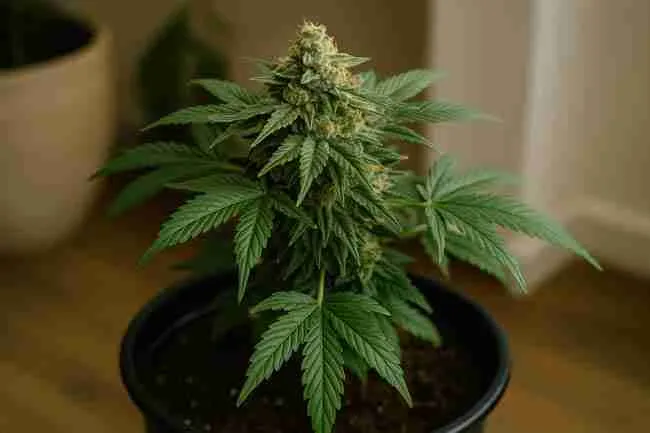
- Train early: Top once, then LST branches outward. The goal? Flat, wide plant = airflow.
- Defoliate lightly: Remove big interior fans casting shade over lower sites. You’re creating wind tunnels.
- Water timing: Lights-on watering only. Avoid soggy nights.
Flower (where mold attacks)
- Dehumidify smart: Keep RH ~ 50–55% mid flower; drop to 45–50% late flower. At night, try to stay within +5% of day RH.
- VPD: Aim ~ 1.2–1.5 kPa in mid flower; 1.0–1.3 kPa late.
- Fans: Move air around buds in circular paths; don’t blast colas directly.
- Leaf work: At week 3 and week 6, pluck inner leaves that block air. Don’t scalp—just open lanes.
- Scout daily: Check tight clusters and lower shaded buds. If you see any gray/brown fuzz, cut it out, bag it, sanitize shears, wash hands, resume.
Harvest, Dry, Cure
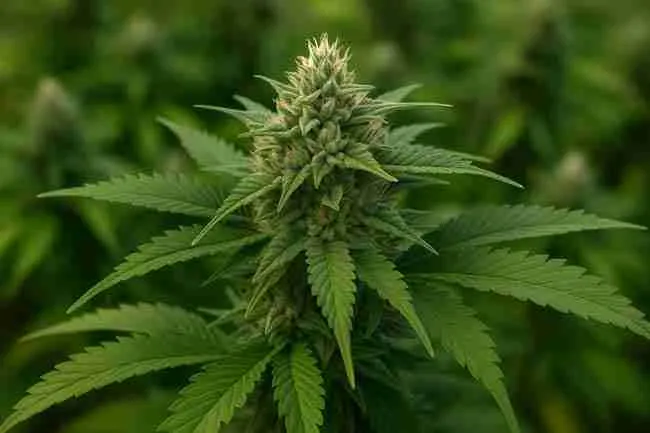
- Two-stage harvest: Take top colas first; let lowers mature another 5–7 days. Reduces density, reduces risk.
- Dry at 60/60: 60°F (15–16°C) and 60% RH with gentle air turnover. No air on buds.
- Cure steady: Burp jars lightly for the first week, then Boveda 58–62 if needed. Mold hates stable, moderate humidity.
“What If It’s Still Super Muggy?” (your Plan B)
- Extra spacing: Fewer plants, more aisle space = better air turnover.
- Night RH spikes: Run dehu during lights off; keep intake air dry.
- Emergency strip: If a storm hits, strip inner fans and raise lights slightly to reduce leaf temps (less condensation).
- Hydrogen peroxide wipe: Wipe tent walls/poles weekly (diluted H₂O₂) to nuke spores.
Specifications You’ll Care About (for each strain category)

Sativa-leaning mold-resisters (Durban, Shaman, SSH, Jamaican Pearl, Early Pearl, Sour Diesel)
- Growth: Tall, open, flexible
- Best training: Topping + LST + light defol
- Feeding: Moderate; watch N late flower
- Ideal RH: 45–55% in late flower
- Grower level: Easy to Medium
Early-finish hybrids (Frisian Dew, Early Skunk, C99, Holland’s Hope)
- Growth: Medium height, controlled stretch
- Best training: Gentle LST; trellis support
- Feeding: Medium; keep K high late flower
- Ideal RH: 45–55% late flower
- Grower level: Easy (great for first humid grow)
Pros and Cons of Choosing Mold Resistant Cannabis Seeds

Pros
- Airier flowers make bud rot rare
- Lower stress during late flower rain/humidity
- Often simpler plant care (less emergency defol)
- Great for coastal, lakeside, or forested climates
Cons
- Buds are less rock-hard (that’s the trade)
- Some strains finish longer, so plan your window
- Terp intensity can be medium on certain outdoor lines
- You’ll still need smart drying—genetics aren’t magic
The “No-Mold” Daily Checklist (copy this)

- Water right after lights on (or early morning outdoors).
- Keep canopy flat and spaced; no cola cuddling.
- Feel the inner canopy—if it’s clammy, you need more airflow.
- RH <55% late flower; <50% in the final days.
- Look for gray/tan spots, webby fuzz, or sweet-sour odor: remove ASAP.
- Wipe surfaces weekly; don’t let spores set up shop.
Helpful Buying/Planning Tips

- When shopping for Mold Resistant Cannabis Seeds, scan strain notes for: “outdoor,” “cool/wet tolerant,” “mold resistant,” “early finish,” “airy structure.”
- Autoflowers can help you time your harvest before humidity spikes, but choose autos with open buds and avoid “golf-ball” phenos.
- Keep a mother/clone of your best, mold-clean pheno so you don’t rely on luck next season.
FAQ: Mold Resistant Cannabis Seeds
Are Mold Resistant Cannabis Seeds really immune to bud rot?
No seed is immune. These genetics simply reduce the risk with airy structure, faster finish, and better tolerance. You still need airflow, defol, and smart drying.
Which is better for humidity—sativa or indica?
Usually sativa-leaning plants handle humidity better thanks to longer, looser buds. Many indicas are dense and trap moisture—but some outdoor-bred indicas (e.g., Holland’s Hope) do fine.
What RH should I target in late flower?
Aim for 45–50% RH in the last 2–3 weeks. If your nights climb higher, increase air movement and consider a dehumidifier.
Can I save a bud that started molding?
If you see true Botrytis (bud rot), cut well past the affected area. Don’t wash it into other buds. Bag and trash the infected material. Sanitize tools.
Do autoflowers help with humidity?
Yes—short life cycles let you finish before late-summer humidity spikes. Just choose airier autos and avoid ultra-dense phenos.
What drying conditions are safest in humid summers?
Use the 60/60 rule (60°F, 60% RH), create gentle airflow around hanging branches, and never blow fans directly on flowers.
What’s my first move if a storm’s coming?
Leaf-pluck the interior, stake colas apart, stop heavy watering 24 hours before, and harvest tops early if they’re ready.
Action Plan (do this next)
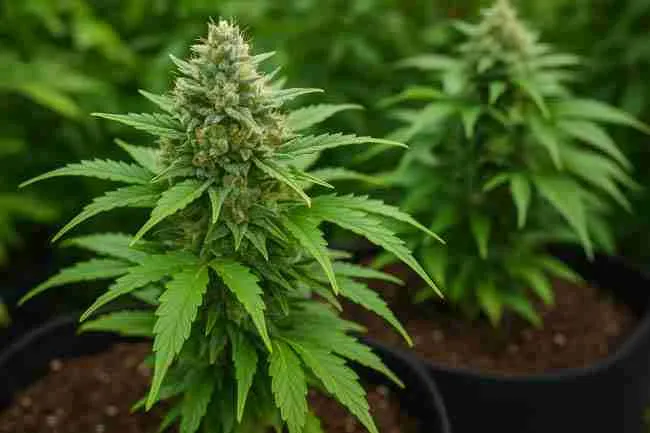
- Pick two sativa-leaners (e.g., Durban Poison + Cinderella 99) and one early outdoor strain (e.g., Frisian Dew).
- Train flat + wide, defoliate lightly at weeks 3 and 6 of flower.
- Keep late-flower RH ≤50%, especially at night.
- Dry at 60/60, fans circulating the room (not buds).
- Keep a clone of the cleanest, best-smelling, fastest-finishing pheno for next year.
Follow that, and humid summers become just… summers.
Extra Useful Lists (because you asked for practical)

Top 5 gear upgrades that crush mold risk
- Dehumidifier sized for your room
- Oscillating wall fans around, not at, the canopy
- Fabric pots + perlite for fast-drying media
- Silica supplement during mid veg
- Clip-on hygrometers at canopy level (multiple!)
Common mistakes to avoid (seriously)
- Watering late at night (hello, leaf condensation)
- Letting colas touch (make them social distance)
- Over-defoliating right before a heat wave (stress = wilt = moisture)
- Drying in a hot garage with no humidity control
- Ignoring lower buds (that’s where rot hides first)