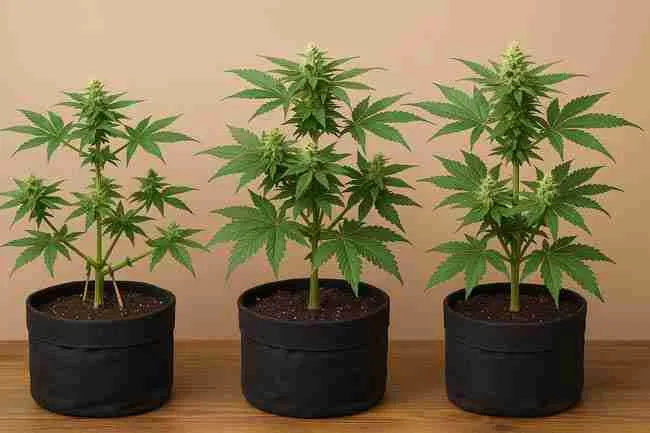
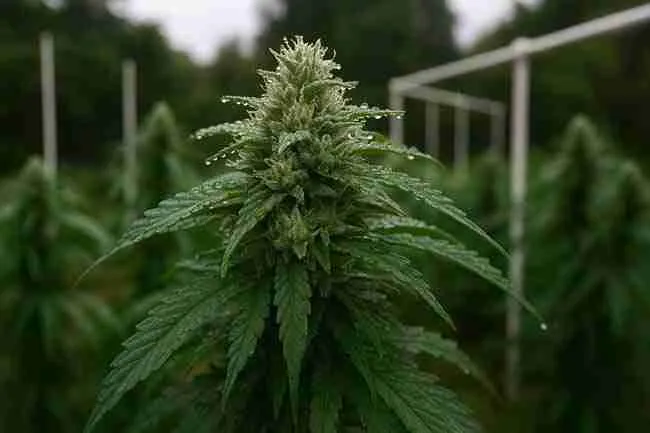
Tiny Trees With Big Potential: Your Guide to Growing a Cannabis Bonsai


Imagine you’re holding a tiny tree in your hands, one that smells sweet and spicy, and produces buds you can actually harvest. That’s the magic of a Cannabis Bonsai. It’s not just about getting smaller buds, oh no. It’s about creating a living piece of art that you can train, prune, and shape into something uniquely yours. And here’s the kicker: you still get to enjoy the fruits of your labor—literally. Ready to learn the secrets of these miniature weed trees? Let’s dive into this thrilling world of Cannabis Bonsai growing!
Understanding Cannabis Bonsai Plants
What Exactly Is a Cannabis Bonsai?

A Cannabis Bonsai is a small cannabis plant grown in a way that mimics traditional bonsai trees, those tiny and artistic trees you might see in fancy gardens or Japanese art. However, instead of just admiring the shape of the tree, you’re aiming for something more—flavorful buds you can actually smoke or use in cooking.
When you grow a Cannabis Bonsai, you’re focusing on:
- Aesthetic shape and form
- Controlled growth to fit small spaces
- Healthy bud development
- A special bond with a living plant
It’s a bit like sculpting. Think of your cannabis plant as a piece of clay. You gently shape it, twist it, and prune it, so it stays small but still produces viable flowers. You have to be extra gentle, though, since this clay is alive and needs regular care.
The Art Meets Science
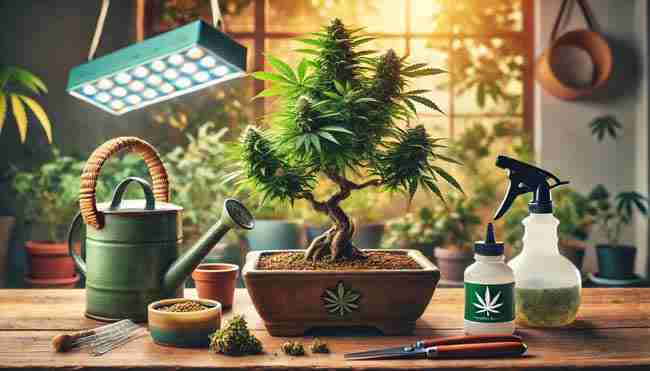
Growing a Cannabis Bonsai isn’t just about beauty; it’s also about science. You have to pay attention to:
- Light: The right amount of light helps keep your bonsai healthy and robust.
- Water: Too much water can cause root rot, and too little water can cause wilting.
- Nutrients: Proper feeding is crucial for strong stems and nice, green foliage.
By balancing these factors, you help your cannabis plant grow in a controlled way, offering you that perfect little tree shape.
How Does a Cannabis Bonsai Help Cannabis Grow?
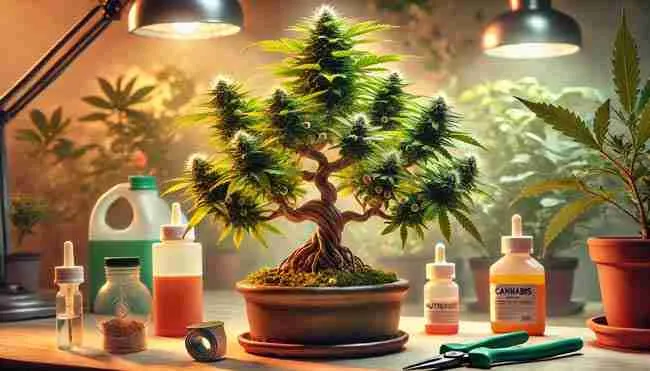
Surprisingly, making a bonsai out of a cannabis plant can actually help with overall plant health. By pruning and training the branches, you:
- Increase Light Exposure: Removing extra leaves and guiding branches to spread out ensures each bud site gets enough light.
- Encourage Airflow: A more open canopy means fresh air reaches all parts of the plant, reducing the chances of mold.
- Maximize Nutrient Use: When each branch is carefully pruned and shaped, the plant can send nutrients more evenly, resulting in healthier bud growth.
But the biggest advantage? You get a rewarding experience that feels artistic and calming. It’s like painting a masterpiece—except your masterpiece is alive!
Can You Bonsai a Cannabis Plant?
You bet! Bonsai is traditionally done with long-living trees such as junipers, maples, or pines. Yet, cannabis can be trained similarly because:
- Cannabis plants have flexible stems.
- They respond well to pruning and shaping.
- Their relatively fast growth cycle lets you see results more quickly.
Common Myths Debunked

- Myth: “Cannabis is too fragile to be turned into a bonsai.”
Truth: Cannabis is quite resilient. With gentle care, you can shape it without harming it. - Myth: “Bonsai is only for decorative purposes and has no real yield.”
Truth: You can still harvest buds from your Cannabis Bonsai, though the yield will be smaller than with a full-sized plant.
The Bonsai Mindset
When you decide to bonsai your cannabis, you’re adopting a new way of seeing your plant. You’re no longer thinking, “I just want as many buds as possible.” Instead, you’re thinking, “I want a healthy, beautiful, and artfully shaped plant that still produces buds.” The yield might be modest, but the entire process is deeply satisfying.
What Is the Best Strain for Cannabis Bonsai?

While you can bonsai almost any cannabis strain, some are easier to manage than others. If you’re itching to start your very first Cannabis Bonsai, here are some friendlier strains to consider.
Indica vs. Sativa: Which Works Better?
- Indica Strains: Generally grow short and bushy, making them easier to maintain in a bonsai form. Their internodal spacing (the distance between leaves/nodes on a stem) is typically tighter, so you can shape them more conveniently.
- Sativa Strains: Tend to grow taller and have more spaced-out nodes, which can make them a bit more challenging to bonsai. However, if you enjoy a longer, artistic challenge, sativas can still be trained with enough patience.
Our Popular Choices
- Apple Crisp (Indica)
- Grows short and compact.
- Known for its resilience and easy training.
- Offers a relaxing effect.
- Blueberry (Indica-Dominant Hybrid)
- Sturdy branches.
- Sweet aroma, visually appealing buds.
- Responds well to pruning.
- White Widow (Balanced Hybrid)
- Tolerates various conditions.
- Vigorous growth, making shaping simpler.
- Produces decent yields even in smaller forms.
- Jack Herer (Sativa-Dominant Hybrid)
- More challenging due to its taller nature, but can still be trained.
- Famous for its energetic and creative buzz.
Factors to Consider in Strain Selection
- Space Constraints: If you’re tight on space, a naturally short strain can be easier to manage.
- Growth Speed: Faster-growing strains allow you to see bonsai results more quickly.
- Desired Effects: Don’t forget that you’ll still be consuming these buds eventually, so pick a strain whose effects you enjoy.
Early Stage Care and Training
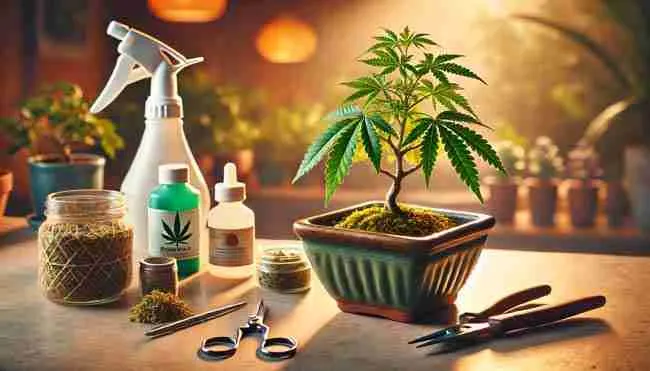
Here’s where you start shaping your tiny tree. Think of it as teaching a child good manners from a very young age. You want your cannabis seedling to grow strong, confident, and ready to take on life (in a pot!).
Step 1: Germination
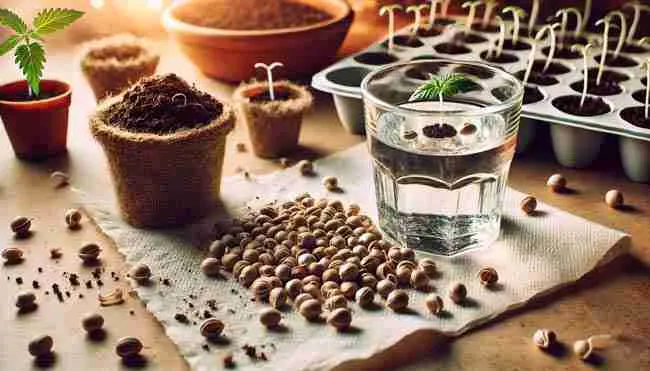
- Soak Seeds: Place seeds in water for 12-24 hours to soften their outer shell.
- Paper Towel Method: Move seeds to a damp paper towel and wait for them to sprout tiny roots (taproots).
- Transplant: Once the taproot is visible, gently plant them in a small pot with well-draining soil.
Pro Tip: Maintain a warm, humid environment to give your seedlings the best start. A temperature of around 70-80°F (21-27°C) is ideal.
Step 2: Seedling Care

- Lighting: Use gentle LED or fluorescent lights, keeping them close but not too close. Seedlings stretch if they’re too far from the light source.
- Watering: Water sparingly. You want the soil to be slightly damp but never soaking.
- Soil Mix: Opt for a light, airy soil. Too dense, and your little roots might struggle to breathe.
Step 3: Transplanting
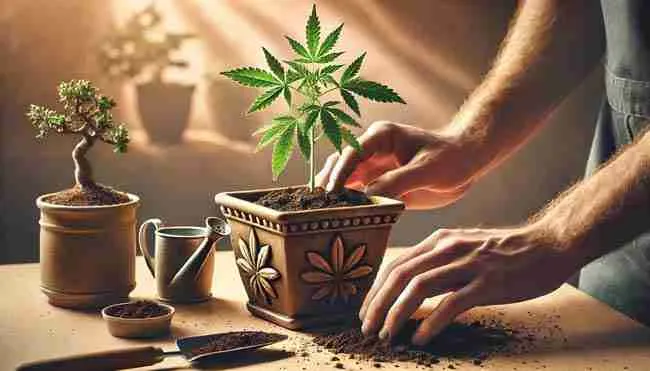
Once you see a few sets of true leaves, you can move your seedlings into a more suitable container. Since you’re aiming for a bonsai, the pot doesn’t have to be huge, but it should have enough room for roots to grow comfortably at first.
Training Techniques For Bonsai Cannabis

Here comes the fun part—training! You get to play artist with your cannabis plant. But be gentle, okay?
Low-Stress Training (LST)
- What It Is: Bending and tying down branches without breaking them.
- Why It Helps: It exposes more bud sites to light and encourages a more even canopy.
- How to Do It: Use soft plant ties or pipe cleaners. Gently bend a branch and secure it so it stays in place.
Topping and Fimming

- Topping: You cut off the main growing tip after the plant has a few nodes. This encourages two main colas instead of one.
- Fimming: It’s like topping but you only snip part of the growing tip, resulting in multiple new branches.
Hint: Timing is crucial. Don’t top or fim too early, or your plant might get stressed. Wait until you’ve got at least 4-6 nodes.
Pruning and Defoliation

- Why Prune?: You remove unnecessary or weak branches so the plant can focus its energy on stronger branches.
- Defoliation: Carefully pluck some large fan leaves that block light from lower bud sites. Just don’t go overboard!
Step-by-Step Training Approach

- Identify the Main Stem: Decide if you want a central trunk or multiple colas.
- Secure the Base: Tie the main stem to a stake or small wooden dowel in the pot.
- Bend Branches Outward: Create an even spread of branches around the pot.
- Monitor Stress: If you notice any tears or breaks, give the plant time to recover.
- Adjust Ties Regularly: As the plant grows, re-tie branches to maintain the bonsai shape.
Maintaining the Perfect Bonsai Environment

Because your Cannabis Bonsai is smaller, it’s more sensitive to changes around it. Think of it like a toddler who quickly notices if the room is too cold or too hot. You must keep the environment just right so your bonsai is always happy.
Light Requirements
- Type of Light: Full-spectrum LED or good quality grow lights are recommended.
- Duration: In the vegetative stage, you’ll usually stick to about 18 hours of light and 6 hours of darkness.
- Placement: Keep the lights at a moderate distance to prevent burning the leaves.
Temperature and Humidity
- Vegetative Stage:
- Temperature: 70-80°F (21-27°C)
- Humidity: 40-60%
- Flowering Stage:
- Temperature: 68-78°F (20-26°C)
- Humidity: 35-50%
Here’s a handy table to keep track of environmental specs:
| Growth Stage | Temperature Range | Recommended Humidity | Light Schedule |
|---|---|---|---|
| Seedling | 70-80°F (21-27°C) | 60-70% | 18-24 hrs of light |
| Vegetative | 70-80°F (21-27°C) | 40-60% | 18/6 hrs or 20/4 hrs |
| Flowering | 68-78°F (20-26°C) | 35-50% | 12/12 hrs |
Make sure you have a thermometer and a hygrometer nearby. Don’t just guess the temperature!
Soil and Nutrients

- Soil Mix: A light, well-draining mix is key. Add perlite or vermiculite to improve aeration.
- Nutrients: Choose a balanced N-P-K (nitrogen, phosphorus, potassium) for the vegetative stage. Switch to a bloom formula higher in phosphorus and potassium when flowering.
- PH Levels: Aim for a pH between 6.0 and 7.0 for soil. Check it regularly with a pH meter.
Watering Tips
- Stick your finger in the soil up to the first knuckle. If it’s dry, it’s time to water. If it’s moist, wait a bit.
- Over-watering is a common mistake. Remember, your bonsai is small and doesn’t need a deluge!
Flowering and Harvesting for Bonsai Weed Trees

So, you’ve trained your plant, given it the perfect environment, and now it’s showtime! The flowering stage is when your Cannabis Bonsai starts producing those lovely, aromatic buds.
Transitioning to Flower
- Light Switch: Move from an 18/6 schedule to a 12/12 schedule (12 hours of light, 12 hours of darkness).
- Nutrient Shift: Switch to a bloom nutrient formula that’s higher in phosphorus and potassium.
- Watch for Stretch: Cannabis plants often “stretch” during early flowering, so be prepared to adjust ties and stakes.
Monitoring Bud Development

- Trichomes: These are the tiny crystals on your buds that hold THC and other cannabinoids. They go from clear to milky to amber as the plant matures.
- Pistils: The little hair-like structures on your buds may change from white to brown/orange.
Harvest Time
- Timing: Most cannabis strains take anywhere from 6 to 10 weeks to fully flower.
- Indicators:
- Trichome Color: If you see mostly milky trichomes with a few amber ones, you’re in the sweet spot for a balanced high.
- Pistil Color: Around 70-80% of the pistils should be brown/orange.
- Harvesting: Use clean, sharp scissors or pruning shears. Carefully cut each branch, trying not to damage the buds.
After you harvest, remember to dry and cure your buds properly to maintain flavor and potency!
Additional Tips and Information
Pros and Cons of Growing a Cannabis Bonsai

Let’s break down the big pluses and the potential downsides so you can decide if this petite growing style is for you.
Pros
- Space-Efficient: Great for growers with limited room.
- Artistic Expression: Shape your plant however you like.
- Unique Décor: You get a pretty houseplant that smells amazing.
- Reduced Waste: Smaller plant, smaller resource consumption.
Cons
- Lower Yield: Don’t expect a huge harvest.
- Requires Patience: Regular pruning and training can be time-consuming.
- Fragile Structure: You have to be gentle, especially with smaller plants.
Choosing the Right Container

- Size: Keep it small enough to restrict root growth but large enough for healthy development. Around 1-3 gallons can be enough for a bonsai style.
- Material: Clay pots allow the soil to dry faster, reducing the risk of over-watering. Plastic pots are lighter and retain moisture a bit longer.
Common Mistakes to Avoid
- Over-Watering: With a small container, water control is vital.
- Too Much Pruning: While shaping is important, going overboard can stunt the plant’s growth.
- Ignoring pH and Nutrients: Even bonsai plants need properly balanced nutrients and pH levels.
Real-Life Example
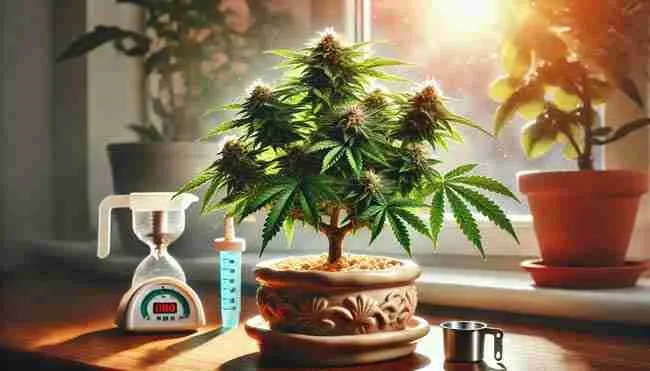
Picture this: You’re excited to grow your first Cannabis Bonsai, a small Blueberry strain. You decide to top it early, around the 4th node. Each day, you gently tie branches outward, forming a cute star shape. The plant lives on a sunny windowsill, getting some LED light in the evenings. You meticulously water it with a small measuring cup to avoid soggy soil. After a few weeks, your Blueberry bonsai is lush, green, and has several tiny bud sites. You notice the delicate aroma whenever you walk into the room. Eventually, come harvest time, you snip away the branches, dry and cure those sweet-smelling buds, and—ta-da! You’ve got your very own stash from a tiny tree that looks like a piece of art.
Frequently Asked Questions (FAQ) About Cannabis Bonsai
- Can I Grow a Cannabis Bonsai Outdoors?
Sure! You can bonsai cannabis outdoors if you have a spot with good sunlight. Just be mindful of weather conditions, pests, and temperature changes. - How Tall Will a Cannabis Bonsai Get?
It depends on your training technique. Some Cannabis Bonsai plants can stay as small as 12 inches tall, while others might reach 2-3 feet if you let them stretch a bit. - Do I Need Special Bonsai Soil?
Not necessarily. A well-draining potting mix with added perlite works well. Traditional bonsai soil is sometimes too coarse for cannabis. - How Often Should I Trim My Bonsai?
Trim whenever new growth becomes unruly or blocks light for other bud sites. Frequent, light trimming is better than a massive chop all at once. - Is the Yield Worth the Effort?
A Cannabis Bonsai yields less than a regular cannabis plant, but the purpose here is part aesthetics, part product. If you want bigger harvests, you might prefer traditional growing methods. - What If My Bonsai Gets Sick?
Treat it like you would any other cannabis plant. Check for pests, adjust watering, and make sure your nutrients are on point. Keep a close eye on any changes in leaf color or shape. - How Long Does It Take to Grow a Cannabis Bonsai?
Most cannabis plants have a total life cycle of 3-5 months, depending on the strain. Bonsai methods don’t necessarily shorten this timeframe; they just modify how the plant grows. - Can I Reuse My Bonsai Pot?
Absolutely. Just sterilize it with a mild bleach solution and rinse well before using it for a new plant. - Do Autoflowering Strains Work for Bonsai?
While you can try, autoflowers switch to flowering on their own and can be less responsive to heavy training. They also have a shorter veg cycle, giving you less time to shape your plant. - What’s the Best Way to Store My Harvested Bonsai Buds?
Keep them in airtight containers, in a cool, dark place. Proper curing is key to preserving flavor and potency.
Putting It All Together
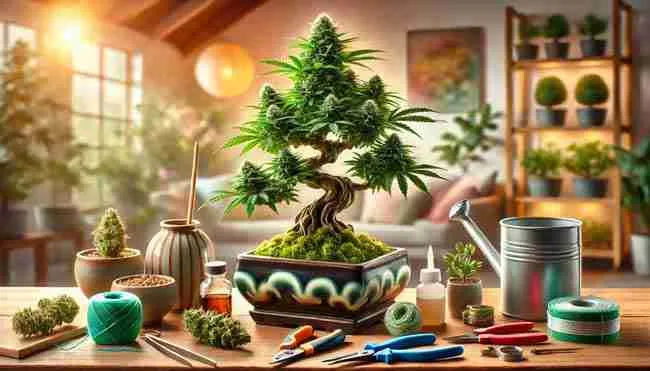
Growing a Cannabis Bonsai is a journey packed with creativity, patience, and a little bit of whimsy. You’re crafting a miniature piece of living art, one that offers you the reward of fresh cannabis buds at the end. Yes, the yields might be smaller than what you’d get from a regular full-sized plant, but the entire process is hugely rewarding—like designing a custom piece of furniture or cooking a gourmet meal from scratch.
You’ll need to keep an eye on everything: from the angle of your branches to the humidity levels in your grow space. Every aspect has a direct impact on how your bonsai will look and produce. With the right strain, consistent training, and a dash of TLC, your tiny tree will flourish into a showstopper that delights you every time you glance at it.
And hey, if your first attempt doesn’t turn out picture-perfect, that’s okay. Bonsai is an art form, and art takes practice. Over time, you’ll learn what works best for you, your space, and your chosen strains. So roll up your sleeves, gather your supplies, and start sculpting your own mini cannabis forest!