The Ins and Outs of Root Bound Cannabis

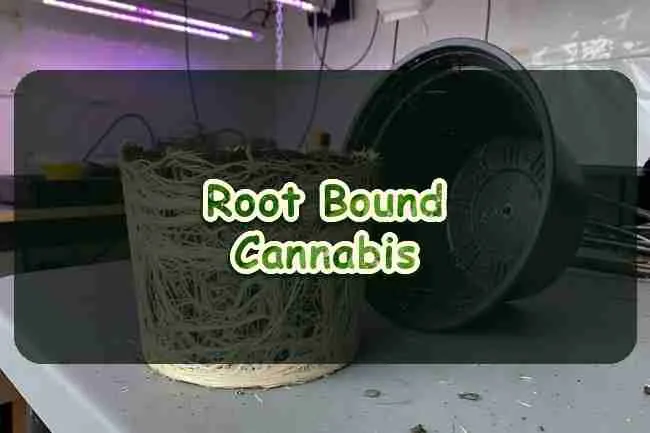
Root bound cannabis is a pot problem, not a bottle problem. The roots hit the wall, turned, and wrapped the mix until water has a tunnel and nowhere else to go. You pour, the saucer fills, the pot is light again by evening, and the new leaves have not moved in a week. The feed chart is not the fix. Shop seed in the cannabis seeds store. The rest of the grow library is on the cannabis cultivation blog.
This page is the bound plant you already have: how to prove it, how to tease or score it, when to pot up, and when to leave a flowering weed plant alone. Prevention and pot choice sit on the sibling guide: preventing rootbound cannabis. Healthy roots in general: healthy cannabis roots. Containers: growing cannabis in containers. Canada’s recreational cap is four plants per household. Quebec still bans rec home grow. Manitoba has been indoor-only since 1 May 2025. Four marijuana plants in a closet still get bound if you leave them in cups.
What Root Bound Cannabis Actually Is
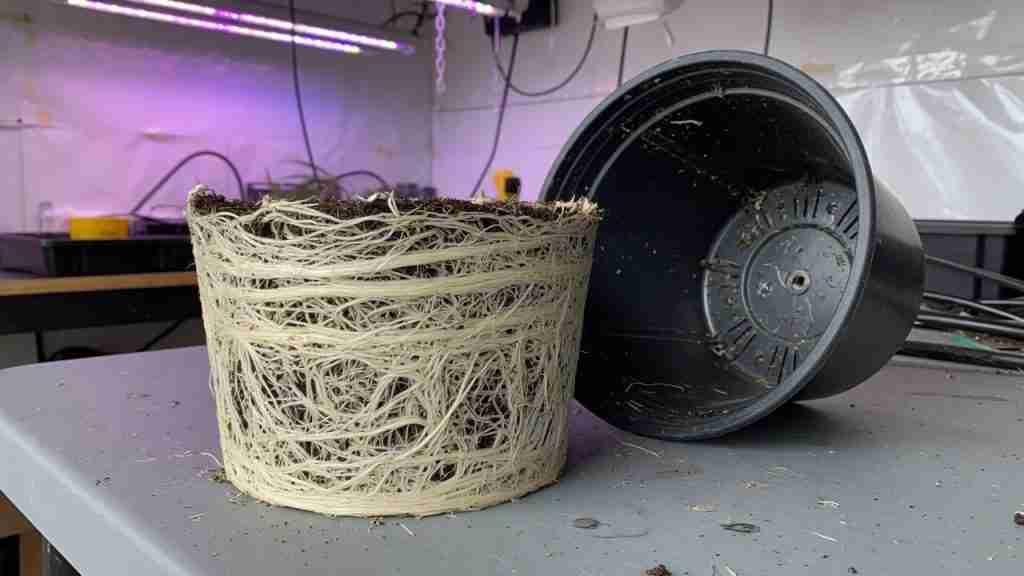
A root wants to grow out and down. In a smooth nursery pot it hits plastic, bends, and follows the curve. That turn becomes a mat, then a basket the shape of the container you just pulled off. People say root bound, pot bound, or rootbound. Same plant. The feeder tips are running in circles instead of into fresh mix. Water follows the gap between the mat and the wall, then drops out the holes. The core stays dry, or it stays wet and airless because nothing drinks there.

A real ball looks like that: white roots in layers, almost no loose mix on the outside, the empty pot beside a cylinder that matches it. A few pale tips at a drainage hole are not this. Those mean the next pot is coming. A solid wall means the next pot is late. You raise the bottle, chase a deficiency chart, and the new growth stays small. The mix cannot hold water or air because the roots ate the volume. Pale healthy roots are the goal. Brown dry threads on the outside of a brick are the late version of the same story. Smell it. Sweet earth is fine. Sour swamp is rot riding the bind. Put her back the same hour if you are not transplanting today. A naked ball on a bench dries the hairs you still need. Roots: healthy cannabis roots. Watering: water cannabis plants.
The slide-out is the proof

Water one or two days before you look, not the same hour. Moist mix holds and still lets go of the pot. Soaking wet mix tears. Bone-dry mix collapses. Squeeze a plastic pot, tip it, support the stem between your fingers, and let the ball drop into your other hand. Do not yank the trunk. At the right time to pot up you want a net: white roots, mix still visible between them, the ball holding without being a brick. A pot-shaped carving, brown tips, or a sour smell means you are late.

If you can slide it out and the shape of the pot stays in your hands, you have the answer. Put it back the same day if you are not ready to transplant. Do not leave a naked ball on the table while you drive to the store. Seedling cups and early veg: cannabis seedling stage. Day-by-day cups: cannabis seedlings day by day. The actual move for young plants: transplanting cannabis seedlings.
Roots in the holes are a warning
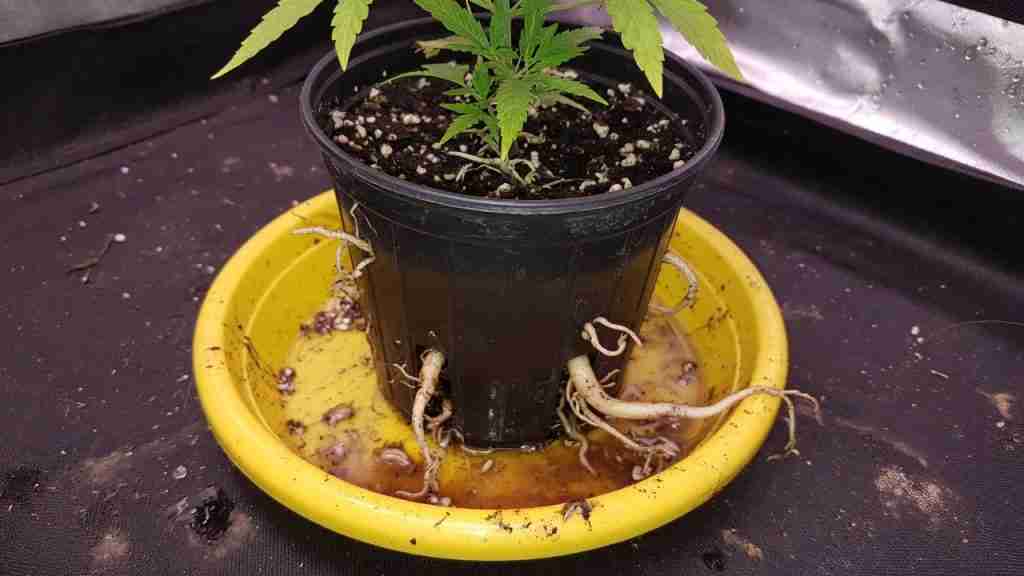
Tips poking from drainage holes mean the plant has reached the bottom. They do not always mean a brick. A healthy plant in a fabric bag will also show air-pruned tips on the wall. The saucer shot above is the bad version: fat roots sitting in stale water, the pot still small, the plant still in veg. Dump the saucer. Do not let those roots live in a puddle. That is how a bound pot turns into brown slime. Root rot is a different disease: root rot in cannabis. A bigger pot does not fix rot by itself. You still need air.
What It Looks Like Above the Soil
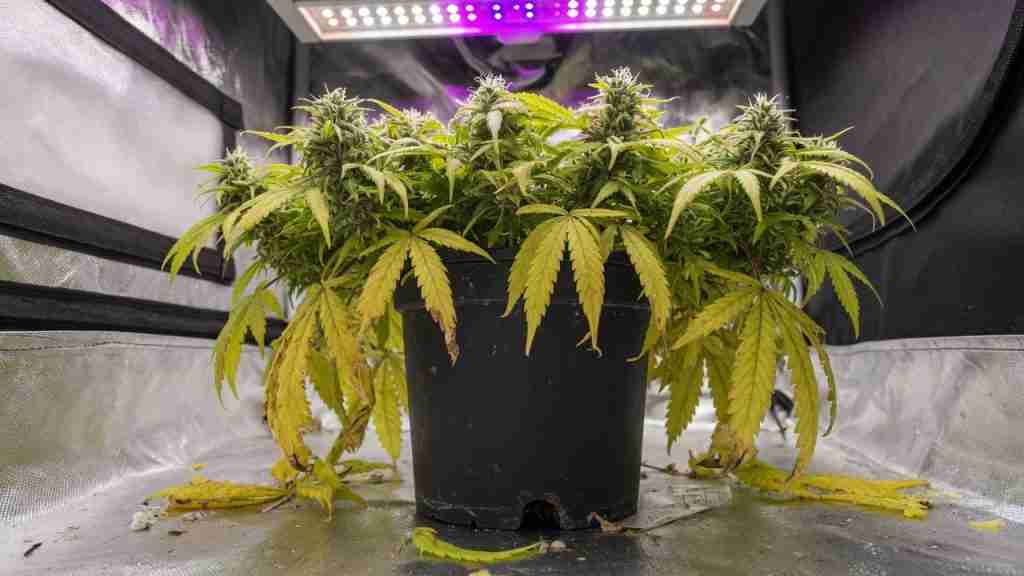
The top is a bad witness. Droop, pale lower leaves, rusty spots, stalled tips, a plant that tips because the pot is a thimble under a sail. Those get treated as deficiencies. Sometimes the leaf really is short, because the roots cannot take food up. A hotter mix into a basket burns the tips that still work. If she is already flowering in that small pot, you may be stuck managing water twice a day instead of doing surgery. Do not decide from one sad leaf. Deficiency chart: cannabis nutrient deficiency.
Lockout from a wrong pH looks a lot like a bound plant on the leaves and nothing like it in the pot. The ball is loose, mix is visible, water soaks, and the runoff pH is off. Fix the water. A bound plant can show lockout too, because the core never got the drink you thought you gave. That is why the slide-out comes before another cal-mag bottle. Check once a week in late veg when she is growing fast. Check before you flip. After flip, you are mostly managing what you already have.
Hungry, wet, or bound
Overwatered: the pot is heavy, the droop is dull, there is no root mat. It stands up as the mix dries. Oxygen was missing, not a bigger pot today. Underwatered: the pot is light and the leaves perk within an hour of a slow, real soak. Tomorrow it is not light again by noon unless she is huge for the container. Bound: you pour, the tray is full before you set the can down, the pot feels light the same day, and a slide-out shows a cylinder. She may perk a little after a soak, then do the same trick tomorrow. Environment and pot size: environment, media, watering, pot sizes.
Channeling is the clue you can see without a slide-out, and it is still not proof by itself. You pour, the top looks wet for a moment, and the tray is full. The tunnel drank. The core did not. A crusted surface plus a fast drain is the classic pair. So is a pot that used to stay moist for three days and now wants water daily before she is even in full flower. Lift it. A healthy mid-size pot in flower lightens over a day or two. A bound cup is light before lunch.
How to Pot Up a Bound Plant
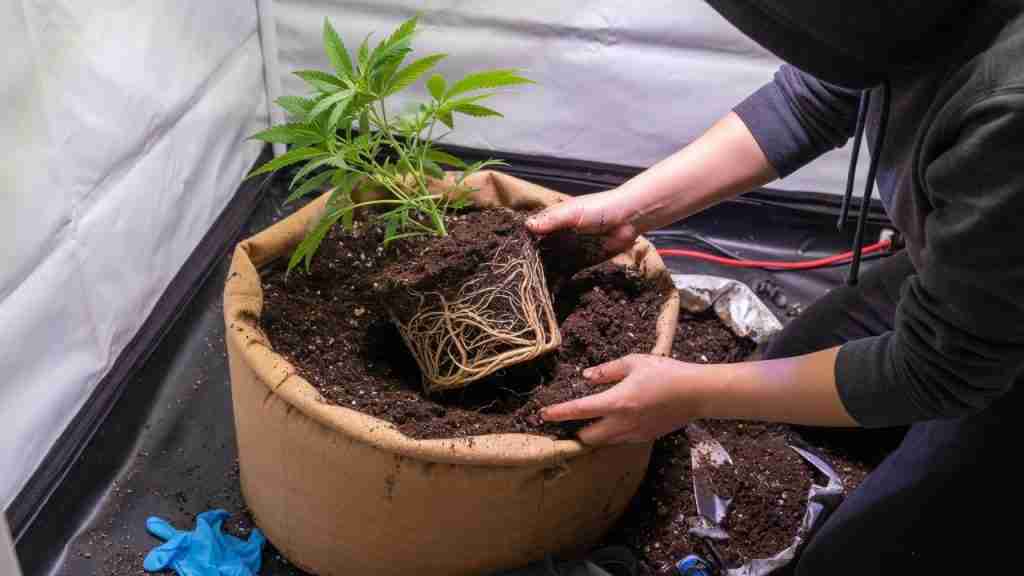
Do this in veg. Step up about twice the volume, not a trash can. A jump from a 1 litre cup to a 4 litre pot, or from a 4 litre to an 11 litre, gives roots fresh mix without a swamp of unused soil that stays wet for a week. Fill the new pot partway with the same style of mix she is in. Pre-moisten that mix. Dig a hole the size of the ball. Set the plant so the old soil line stays the old soil line. Do not bury the stem. Backfill, tap to close air gaps, water in once, and put her under slightly easier light for a day or two.
A rough indoor ladder that works for photoperiods: cup or 0.5 litre for the first true leaves, 4 litre when the net shows, 11 litre before flip for a modest plant, 19 litre if you veg long and you have the tent height. Autos skip the middle if you start in the finish pot. Outdoor in a 40 litre bag is a different plant than a 4 litre patio pot. The plant will use what you give it. The mistake is staying in the cup because “she still looks small on top.” The top lies. The slide-out does not.
Handle the ball, not the trunk. If the plastic will not let go, squeeze the sides, run a clean butter knife around the rim, then tip. Cutting the pot is fine. Cutting the stem is not. Seedling transplants: transplanting cannabis seedlings. Veg habits: cannabis vegetative stage. First crop planning: planning your first cannabis crop.
Tease a net, score a brick
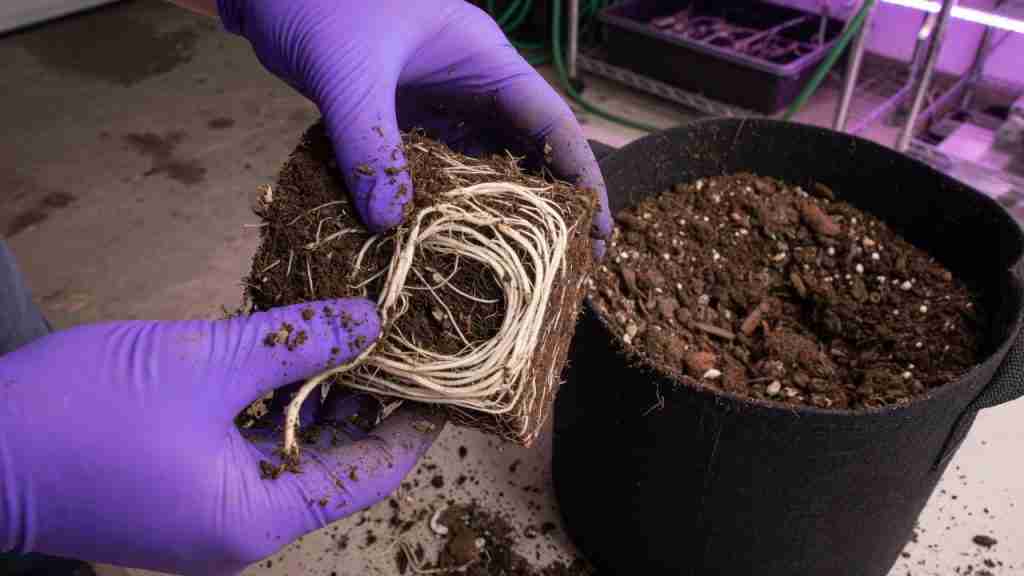
If you drop a tight coil straight into a bigger pot, many of those roots keep circling out of habit. For a mild net, work the outer layer with your fingers. Pull the bottom coil loose. You want the outside slack, not a ripped haircut. Leave the core. You are opening a door, not washing the plant like a carrot.
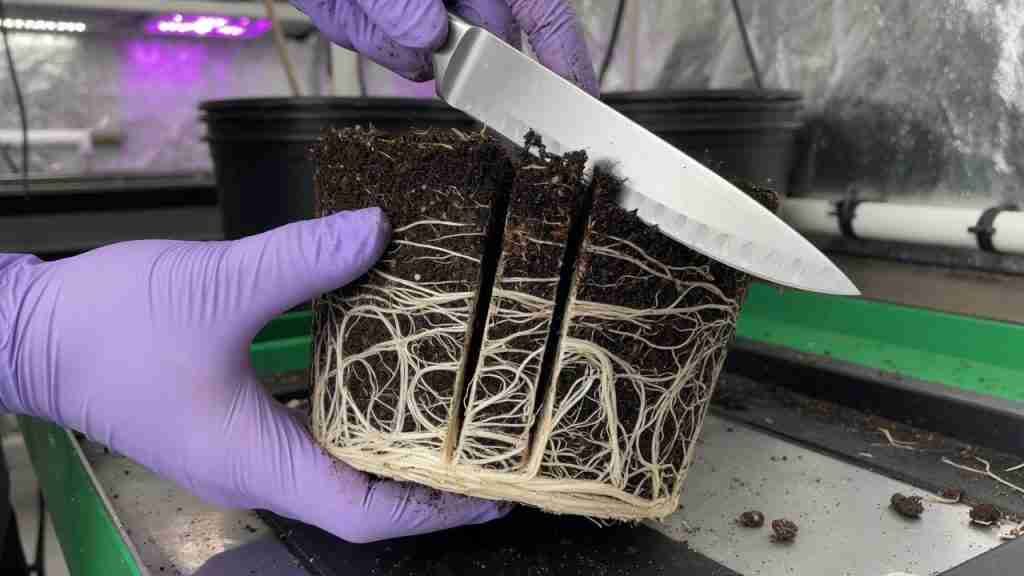
A solid brick needs more than a massage. Use a clean, sharp blade. Make two or three shallow vertical cuts down the sides, and if the bottom is a mat, slice a shallow X there. You are breaking the circling pattern so new tips push out. You are not cutting the ball into steaks. Deep slices through the middle stall a plant that would have recovered from a tease. Do not hunt for a taproot to chop. Rinse only if you need to see what you are doing. Dirty white roots can stay dirty. Brown, sour, mushy roots come off. That is rot, and the new pot still needs air and a dry-down, not a soak.
Root pruning as a lifestyle is for mothers you keep in the same pot for months. A photoperiod headed to harvest rarely needs a third of the mass shaved off. Tease, score shallow, pot up, wait for new growth. Hold heavy feed for several days. Fresh mix often has enough for the first drinks. Indoor rooms: indoor cannabis growers guide. Tents: grow tent for cannabis seeds.
Flowering Plants: Usually Leave Them
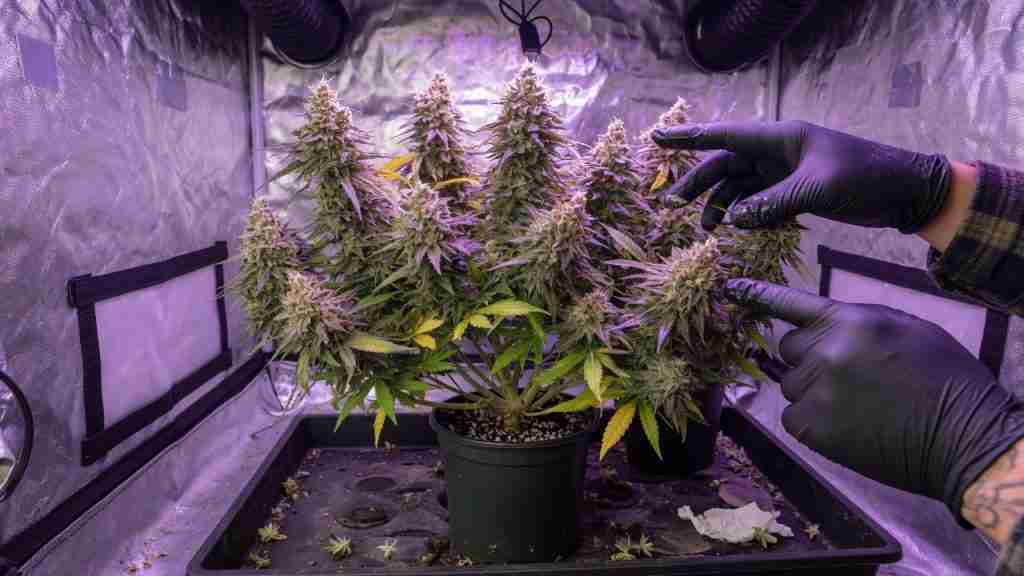
Once pistils are stacking, a transplant is a gamble. The plant is spending energy on flowers. You tear feeders, she stalls, and you can herm or rot a wet new mix under a dense canopy. Ranking grow pages in 2026 still say the same thing: pot up in veg, manage a bound flower if you missed the window. Water more often. Keep the saucer empty. Do not crank the bottle because the leaves look hungry. The roots cannot use the extra salt.
Managing a bound flower means smaller, more frequent drinks, not a flood. Pour until you see a little runoff, dump the tray, and come back when the pot is light. A slow bottom-up sit in a shallow pan can wet a dry core if the top channels. Twenty minutes, then dump. Never leave her standing in the pan. Mulch on the surface cuts evaporation. A fabric bag in flower that drinks twice a day is telling you the litres are gone; you still do not rip her out in week six unless she is collapsing.

The exception is a plant that will not drink, will not stand, and is clearly dying in a thimble. Then you move her, accept the stall, and keep the new mix only a little larger so you do not drown the remaining roots. Work at lights-on. Support the cola. Do not strip fan leaves the same day. Flower stage: cannabis flowering stage. Quality buds: growing quality cannabis buds.
Fabric Pots Air-Prune. They Still Run Out of Litres
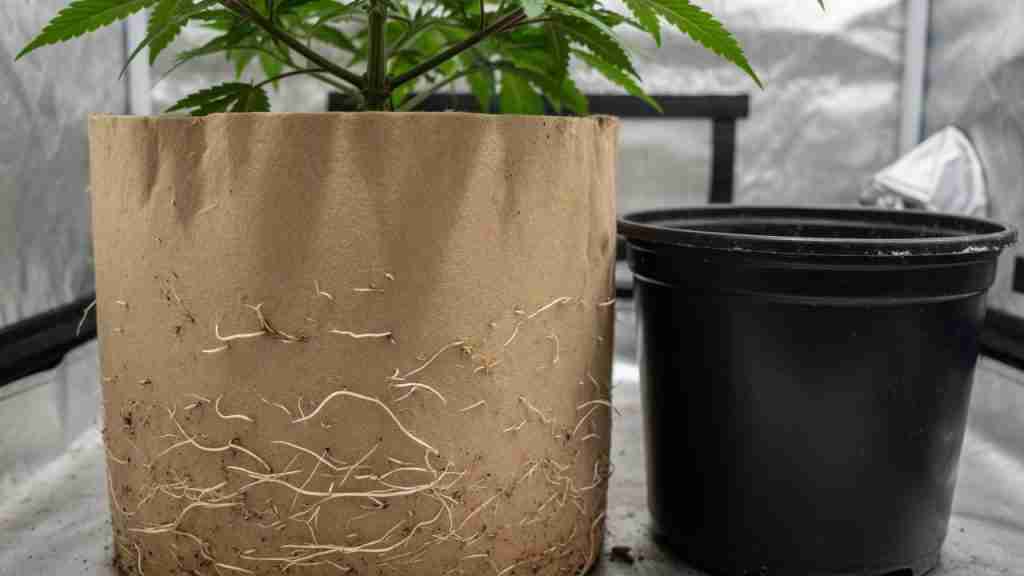
In fabric, a root tip hits air at the wall and stops. The plant branches behind it, so you get feeders through the mix instead of a basket on the plastic. Air pots do the same with holes. That is why people say fabric “stops rootbound.” It stops the circling wall. It does not add volume. A tiny fabric pot still runs out of water. You will water twice a day and call it bound. The slide-out will show a fibrous fill, not a coil, and the plant still needs a bigger bag.
Plastic is where the classic coil lives. It is cheap, it holds shape, and it teaches you to watch the holes. If you like plastic, pot up on time and do not leave a saucer full. If you like fabric, lift the bag off a wet tray so the bottom can prune too. A fabric pot sitting in a puddle grows a mat on the floor of the bag, which is the same problem with a different shape. Medium: best medium to grow cannabis. Soil style: organic cannabis soil. Coco: growing cannabis in coco coir.
Autos, Coco, and Hydro
Autos spend stall instead of growing. A photoperiod can sit a week after a rough move and then take off. An auto that you stuffed from a solo cup into a bucket in week three of flower already spent her veg. Start autos in the pot they will finish in, or do one early move while she is still a seedling. A 11 litre fabric bag is enough for most home autos. You do not need a trash can to prove a point. Hydro autos: growing autoflowering cannabis hydroponically.
Coco and hydro fill a pot with roots faster than a heavy soil. That is the point of the media. It is not automatically “rootbound” because you see white at the edge of a coco pot. Look at drink speed and new growth. If she still stretches and the runoff is sane, she is using the pot. If growth stopped and water blasts through, pot up in veg the same way. Hydro in a net pot is a different game: the roots are supposed to leave the cup. Bound there looks like a brown knot in a tiny basket and a plant that will not drink. Hydro: hydroponic cannabis growers guide.
Do not wash a coco root ball in the sink until it is a naked rope. You tear the hairs that actually drink. Tease the wall, drop it into pre-wet coco, and water to a light runoff. In DWC, if the basket is a knot, you can loosen the bottom at a water change and drop the level a little so new tips hunt. You cannot “pot up” a tub the way you pot up soil. You can give more volume, more air, and a clean res. A brown slime on those roots is rot, not a size problem.
Aftercare, and What Happens If You Wait
After a move, keep the mix even, not flooded. A new ring of unused soil stays wet if you water like the old cup. Water the old ball first, then let the new mix catch up over the next drinks. Shade or lower the light a notch for a day if she flags. Do not foliar a stressed plant “to help.” New growth in a week is the all-clear. Then you can return to the feed you used in veg. Grow room hygiene after you make a mess: cannabis grow room clean.
Transplant shock looks like a day of droop and then a slow stand-up. If she is still flat on day four, you have a wet ring, a torn core, or rot you missed. Tip the new pot if you can. A sour smell is not shock. Let it dry to the first knuckle, then a small drink. Do not add a root tonic and a bloom bottle the same afternoon. The roots need oxygen and a little moisture, not a cocktail.

Leave a bound plant long enough and you get that: crispy fans, stalled tops, a pot that cannot hold a drink. She may still finish a few small colas if she is already in flower. She may also collapse after one hot day because the roots have no buffer. Pests and mildew hit a weak plant first. IPM: integrated pest management for cannabis. A clean room does not save a thimble: pesticide-free cannabis cultivation.
Four-Plant Rooms and a Sane Pot Size
Four plants is the Canadian rec cap in most provinces. That is not four cups. A photoperiod you veg for a month wants something in the 11 to 19 litre range indoors unless you are keeping her small on purpose. An auto can finish in 7 to 11 litres. Outdoor in the ground is how roots avoid the whole argument, if your province allows it. Indoor-only Manitoba growers do the pot math. Buy seed in Canada: buy cannabis seeds in Canada. FAQ: Canada cannabis seed FAQ.
Mothers are the exception you keep small on purpose. A plant under low light in a 4 litre pot will bind. That is how you hold a cut. You still slide her out every couple of months, tease the wall, refresh the outer mix, and put her back. If the ball is a wood knot, score shallow and step up one size, then cut her back on top so the root and the canopy match. A mother that drinks twice a day and drops fans is not “stable.” She is bound.
Skip calendar “repot every two weeks” if the slide-out still shows mix. Skip burying a bound brick in a 50 litre tub of wet soil. Skip scoring the taproot. Skip a flower transplant because a forum said bigger pots equal bigger buds this late. Do the unglamorous check: tip the pot, look at the wall, tease or score, step up once, water in, wait for a new leaf. Then germinate the next pack in a cup you actually plan to leave.
Clean the knife. Dirty shears on a scored ball is how you paint rot into a fresh mix. Wipe with isopropyl, let it dry, then cut. Work on a tray so you are not spreading old soil across the tent floor. Bag the old mix if last run had gnats. The prevention page covers pot choice before you get here: preventing rootbound cannabis. This page is the bound plant in your hand. Slide it out. Name it. Move it in veg, or water it like the small pot it is until harvest.