The Future of Cannabis Lighting: Emerging Technologies and Trends

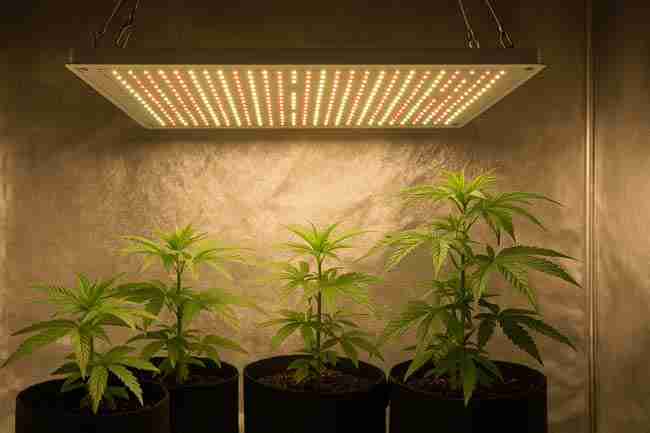
Future of Cannabis Lighting is a dimmer on a diode board you already own, not a new gas inside a tube. Commercial rooms spent a decade moving flower onto diodes. The argument that still shows up in grower surveys is the power bill, the knob, and whether a second bar belongs under a thick canopy. A home tent does not need their acreage to use the same idea. If the board covers the footprint and you can turn it down, you are already on the side of that trend that matters.
A marijuana plant does not read the brochure. A weed plant in a closet cares whether the tops share one bright plane and the corners are not sitting in dusk. People shop this topic as if a coating, a phone app, or a yard light were about to retire the fixture over the pots. The fixture types already have a page. This page is the decision after the diode won: what you adjust, what you add, and what you leave in the box.
Guides that rank for the search still lead with dynamic spectrum, solar tie-ins, and quantum-dot coatings. Those are research directions, and a poor shopping list for a first tent. The gear people are actually hanging is duller: a white board that dims, a timer that holds one schedule, and, only after the top light is even, a slim bar for sites the canopy shades.
Future of Cannabis Lighting is the control on the board
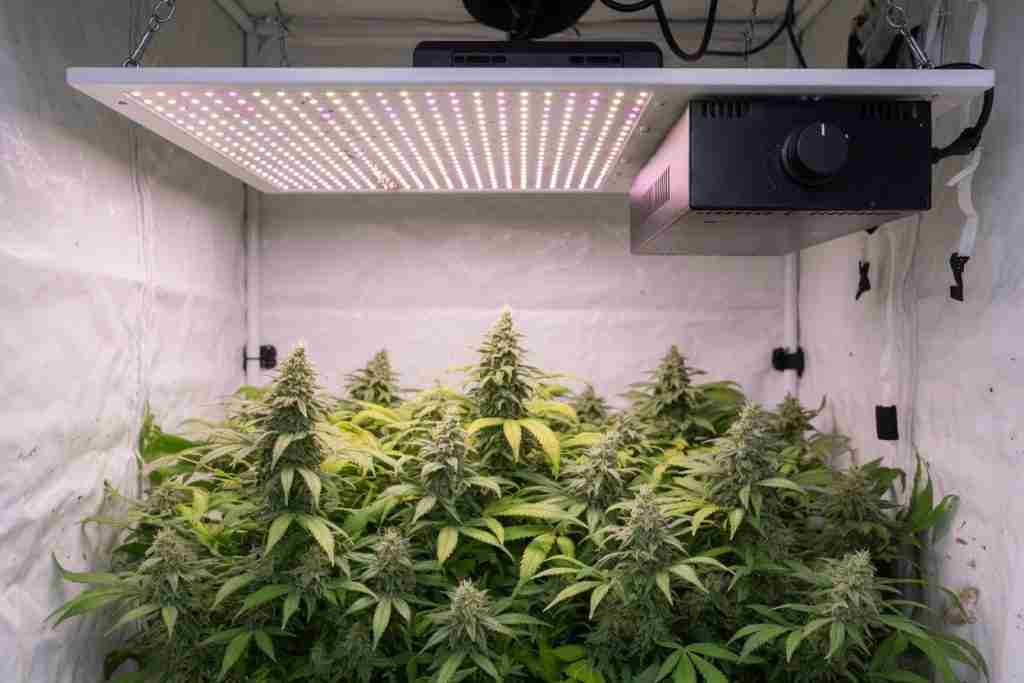
Stand in the tent and name the control before you name the brand. Control is how hard the board runs, when that hardness changes through the day, and whether a second set of diodes is doing a different job than the lamp overhead. A round knob on the driver is control. A fade at lights-on and lights-off is control. A bar you can unplug without touching the photoperiod is control. A press release about a new diode chemistry is not control until you can hang it, dim it, and see the leaves answer.
Sodium, ceramic halide, and fluorescent tubes are still machines, and some basements still run them because the hood is paid for or the room is cold. What each of those machines does, and why a diode board runs cooler, lives on the lighting technologies page. Do not rebuild that comparison here. The useful update is that most rooms flowering under lamps are already flowering under diodes, and the next purchase is rarely another tube. If your hood still works and the plants are happy, you do not owe the trend a replacement. You owe the tent an honest hang.
Energy sits beside crop quality on the commercial complaint list, and that pairing is the lesson. A cheaper kilowatt-hour does not help if the flower is loose, and a hotter lamp does not help if the tops canoe. Dim the board when the plant is small. Bring it up as the canopy fills. Stop when the newest leaves pray hard and then curl. The canoeing leaves page owns the rest of that symptom. Do not answer a curl by ordering a different color of diode.
Use an app only if it cannot rewrite the hours while you sleep. A drifting schedule will flower a plant you meant to keep in vegetative growth, or it will break the night on a plant you already flipped. The automation page owns the order of plugs: a timer that keeps its own clock, then a fan that answers heat. This page does not rewire a panel. If the only feature you can describe is a graph, you do not need it yet. A knob you can reach without crawling over wet pots is the control that has already earned a place in a tent.
A dimmer is the feature that aged well
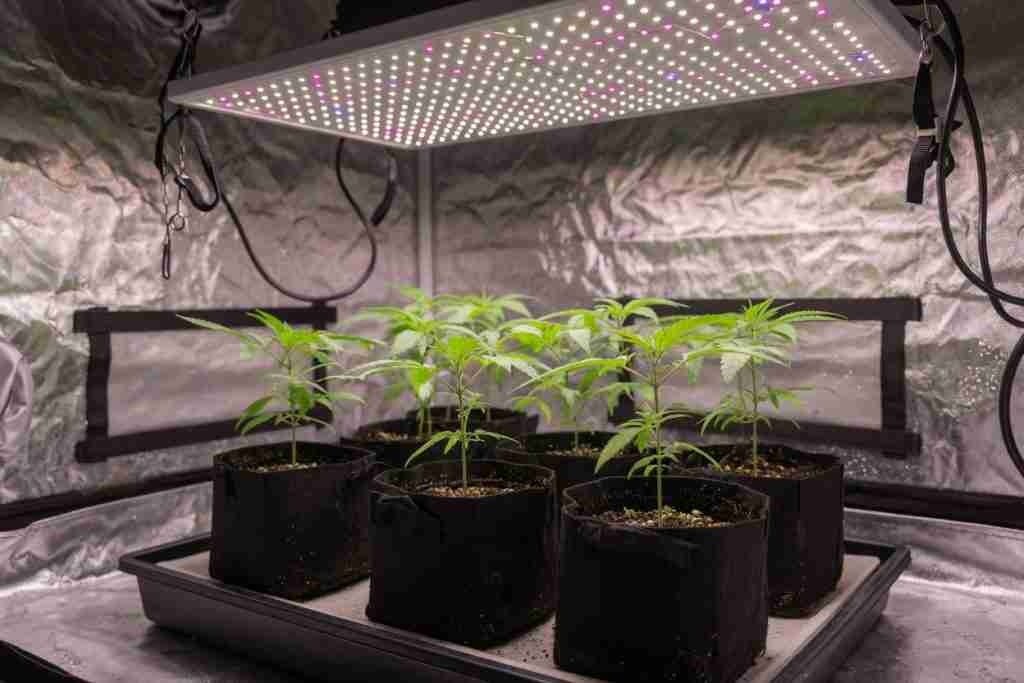
A board that only runs at full power is a flower lamp you have to lift toward the ceiling for seedlings, and you may still cook them. A dimmer lets the same fixture start gentle and come up as the leaves can take it. How much light a sprout wants, in plain distance and in the first days, lives on the seed light page and the seedling stage page. Come back here when the question is the knob, not the germ. Hang the board where the maker shows an even footprint, then use the dimmer instead of guessing with a tape measure every morning.
Raise or dim, then wait a couple of days. Pale, tight tops mean too much. Stretched internodes and a lean toward the lamp mean too little, or a board that is bright in the middle and dull at the rim. Change one thing. If you dim the board, move the hang, and swap the feed on the same afternoon, you will not know which one the plant answered. The light mistakes page collects the hangs that burn a run: the lamp in the flowers, a purple blur in the corner, a sticker that shouts a watt number the wall plug never draws. If the carton and the plug disagree, believe the plug.
The other half of the knob is a short fade at each end of the day. Slamming from black to full output makes the room jump in temperature, and then you chase the exhaust. A few minutes of ramp is enough. You are keeping the tent from lurching, not imitating a sunrise. The clock that decides flower versus vegetative growth is a different decision. Photoperiod versus autoflower owns which plant you bought. The dark cycle page owns why the night has to stay dark. Do not let a ramp eat into that night, and do not let a second fixture stay on after the top board has gone off. A fade is a few minutes on the way down. It is not a night light.
If the board cannot dim, height is your dimmer until you replace it. Seedlings sit farther from a fixed lamp than a flowering canopy does. Do not buy a second spectrum to fake a dimmer, and do not lay a cloth over the diodes. Either the lamp turns down, or you move it, or the sprouts live under something gentler until flower. When you replace a fixed board, buy the dimmer before you buy extra colors.
Tunable color is still a commercial experiment
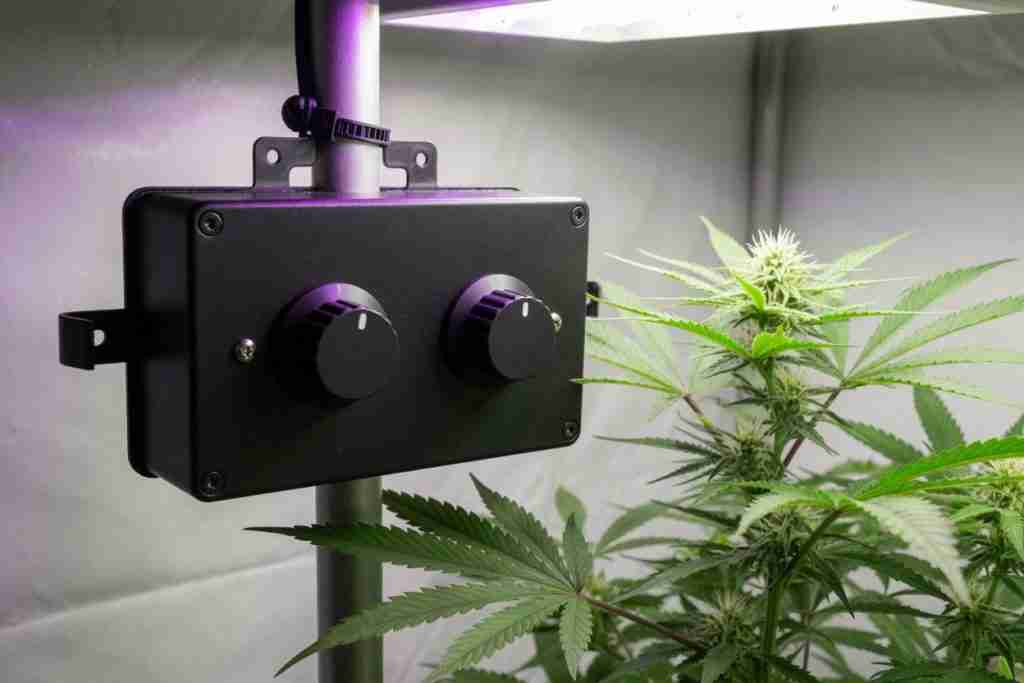
Commercial rooms are testing fixtures that shift the mix of colors through the day, or between vegetative growth and flower. That is the trend behind the words dynamic and tunable. It is a real experiment where someone can measure a whole room and throw out a bad recipe. It is not a reason to scrap a white board that already covers your tent. Two knobs are useful when you know which knob does intensity and which knob, if any, shifts the mix. If you cannot say what you will look for in the plant after you turn the second knob, leave it alone.
Which wavelengths do what to stretch, bulk, and the way a leaf looks is the LED spectrum page. Read that before you pay for channels. The decision that belongs here is smaller. One full-spectrum white board can run vegetative growth and flower. Changing the recipe every week is how you stop knowing what the plant is responding to. You already changed intensity, feed, and the stretch of the canopy. Adding a color swap on top of that is a second experiment you did not write down.
Quantum dots show up in the same sentences as tunable light. They are a lab way to retune a coating. They are not a tent upgrade you hang this season, and they do not replace a driver that dims. If a seller cannot show a wall draw, a footprint, and a dimmer, the coating story is decoration. A greenhouse can treat the sun as the main lamp and add diodes when the sky fails. A closet is not that greenhouse. A solar yard light built for a driveway is the wrong shape and the wrong clock. Leave it outside.
Efficacy stickers climbed by leaning on the red diodes that turn electricity into plant-usable light most easily. There is a ceiling. A plant is not only a red receptor, and a room runs out of cooling, water, and even coverage before the sticker runs out of decimals. A higher number on a new box does not retire a board that already fills the tent and dims. Dead patches, a driver that drops out, a dimmer that no longer moves, or a corner that stays dark: those are reasons to replace it.
One white board still runs a home tent
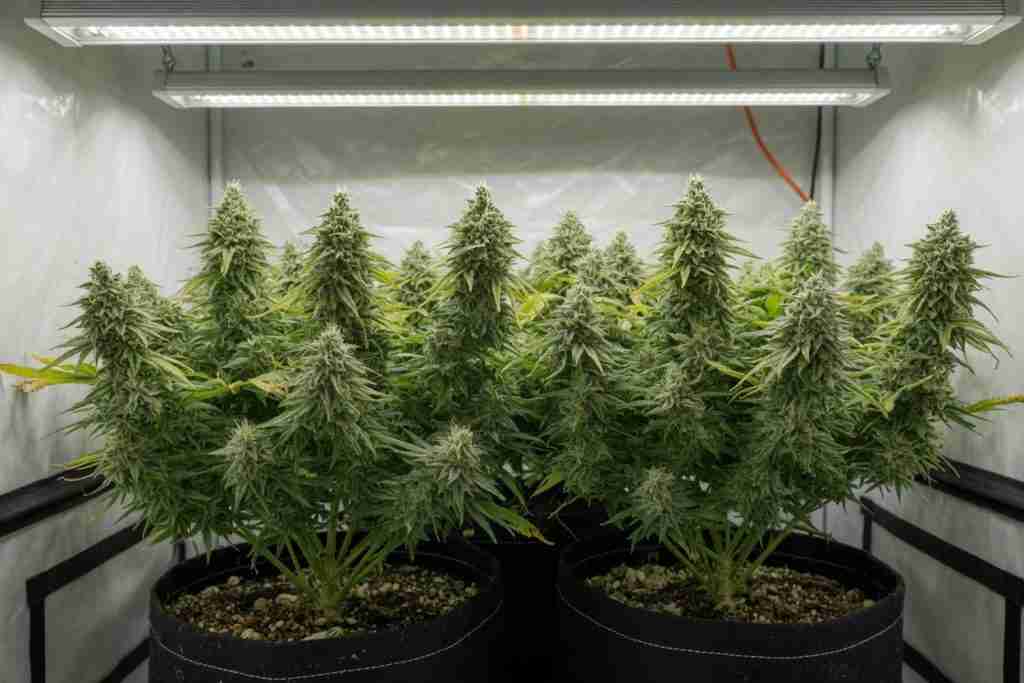
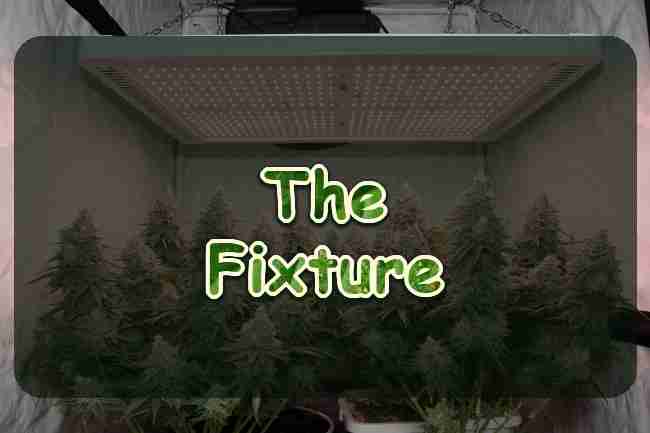
Match the board to the footprint before you match it to a trend. The grow lighting page owns wall draw for a given tent and the intensity bands by stage. The uniformity page owns how to compare the center of the canopy with the corners. If the middle is blasting and the edges are in dusk, another spectrum will not fix the map. Raise the board, dim it, or overlap a second top fixture. Two smaller boards often beat one hotspot. That is layout. It is not a new technology, and it does not require a phone.
A phone lux app measures what your eyes like. It is how seedlings get cooked in a room that looks bright. A quantum sensor reads the light plants use. You do not need one on day one. You need to treat a bleached top as too much and a stretched seedling as too little. When you do measure, write the center, a corner, and a lower site you plan to keep. If the top is already as strong as the plant will take and the bottom is near dark, you have a penetration problem. If the top is also weak, you have a board problem. Supplemental bars will not repair a weak overhead.
Autos stay on the same board for the whole run. Their clock does not wait while you swap in a flower lamp. Photoperiod plants can stay on that same white board too. The vegetative stage and the flowering stage own the hours. You change intensity more than you change color. Early flower stretches. If the board is slammed to full the day you flip, the tops race the lamp and you spend the next week tying. Dim through the stretch, then bring the output up once the stretch slows and the room can shed the heat. One step. Then look at the leaves before the next step.
Diodes run cooler than a sodium hood, and a closed tent can still cook the closest colas if the exhaust is lazy. Ventilation owns air out, air through the canopy, and a filter when the room needs one. If you kept a hot lamp because the basement runs cold, watch the nearest leaves. Stacking a diode on a sodium hood because a headline said hybrid will cook the tent unless you already had a heat plan. One overhead source you can dim is easier to read than two climates in one box.
Bars under the canopy are the add-on

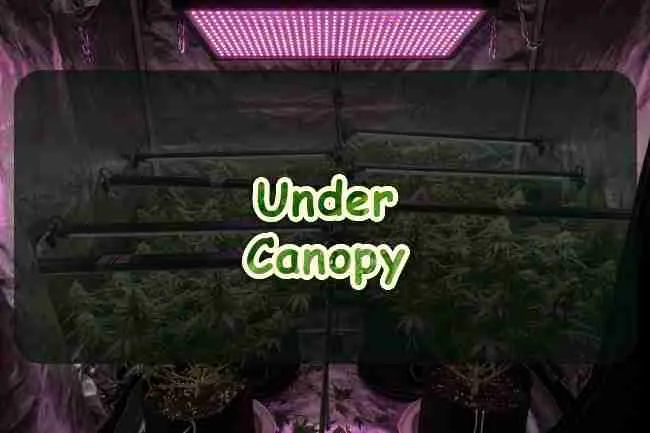
The add-on people are actually hanging, once the top light is settled, is a slim bar low in the canopy so shaded sites are not left in dusk. It looks like a strip, not a second sun. The under-canopy and side lighting page owns where to hang it, how to read the lower sites, and why the bar has to follow the same night as the board overhead. If the lower bars stay on while the tops are dark, you did not add light. You broke the night. Read that page before you add a second plug. This page only decides whether you are in the situation that bar is for.
You are in that situation when the top map is already even, the canopy is thick, and the sites you refused to cut are still dark at midday. You are not in that situation when the whole tent is dim, when the plants are seedlings, or when you can see the floor between the pots. A thin plant does not need a lamp at its ankles. Clearing the lower growth so the lamp you already own can reach the sites you are keeping is the lollipop page and the defoliation page. Those are cuts. They are cheaper than a second fixture, and they come first. Buy the bar after the cuts, not instead of them.
Hang any added bar on the same schedule as the top board. A fade on the overhead lamp and a hard on-off on the bar is acceptable. A bar that runs through the dark period is not. Dim the bar if the nearest flowers bleach. If it cannot dim, move it or take it out. Heat collects low in a tent when you add watts under the screen, so the exhaust still has to win. If the tops taco the week you plug the bar in, the top board was already near the limit and you just added more. Dim the overhead before you blame the cultivar.
A bar on the tent wall, aimed at a plant shaded by its neighbor, is the same idea sideways. It still follows the night, and it still fails if the main board is too small for the footprint. Try one strip after the top is honest. Take it out if the lower sites do not improve or the humidity climbs. If nothing about those flowers changes, the strip is watts, not a trend you need to keep.
Far red and ultraviolet stay optional
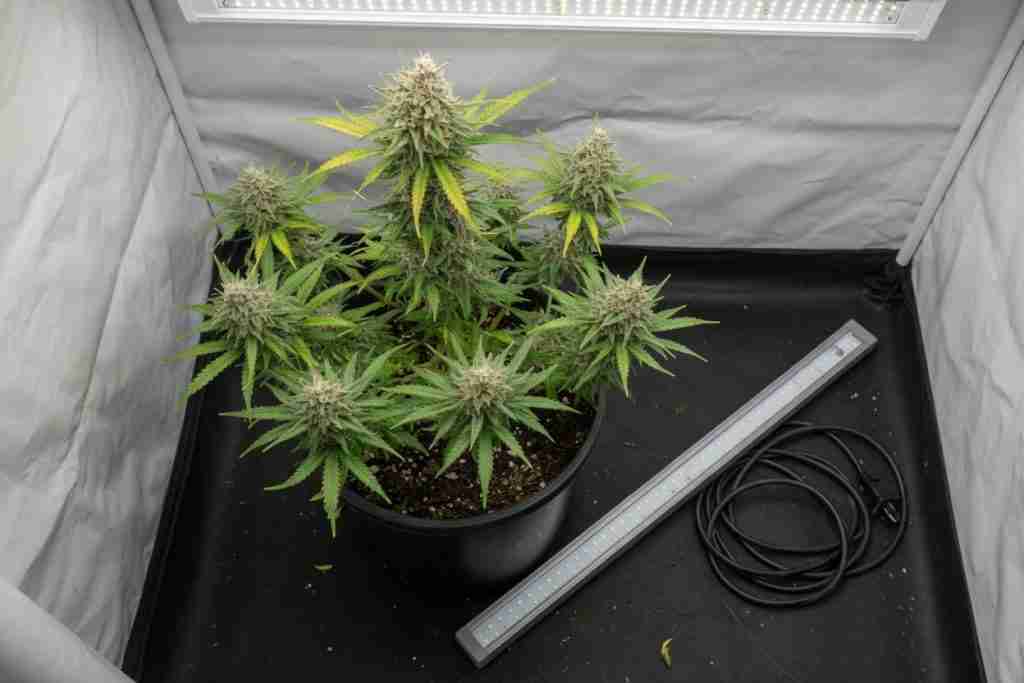
Far red at the end of the day, and ultraviolet add-on bars, are the other catalog trend. They are seasonings. A first tent does not need them. The end-of-day far red page owns the timing if you decide to try a pulse later. The spectrum page owns what those wavelengths do to stretch and to the stories people tell about resin. What belongs here is the skip. Leave the extra bar on the floor until the white board, the dimmer, the night, and the exhaust are boring and reliable.
Ultraviolet is not a potency knob. It is hard on eyes and skin, so you do not lean into a bar to see if it is on. If you add one in a later run, add it late in flower, keep the exposure short, keep skin and eyes covered, and stop if the tops bleach. This page will not give a minute chart or a dose. Far red in the middle of the day pushes stretch. If the tent is already short on height, skip it. A little far red as the lamp fades at the end of the day is the version rooms test. Midday far red, on a plant that is already reaching, is how you run out of headroom.
Added carbon dioxide sits in the same pile, and it has the same gate. It pays only when the canopy is already well lit, cool enough, and watered on time. Pouring it into a dim tent is a cost with nowhere to go. Do not buy a tank because a lighting note mentioned a ceiling. Fix the overhead map first. A plant that is canoeing under the lamp you have is not waiting on a cylinder.
An unplugged bar next to a flowering plant is a healthy picture of this decision. The overhead white light is doing the job. The extra strip can wait. Curiosity is fine on a second run, on one plant, with a note of what you changed. It is a bad first purchase. The seed shelf will not rescue a tent that spent its money on three add-on spectra and a board too small for the floor. Buy the plant you can finish under the lamp you can dim. Then, if a lower site is still dark after you have trained and cleaned the canopy, talk about a bar.
Replace the lamp when the tent outgrows it
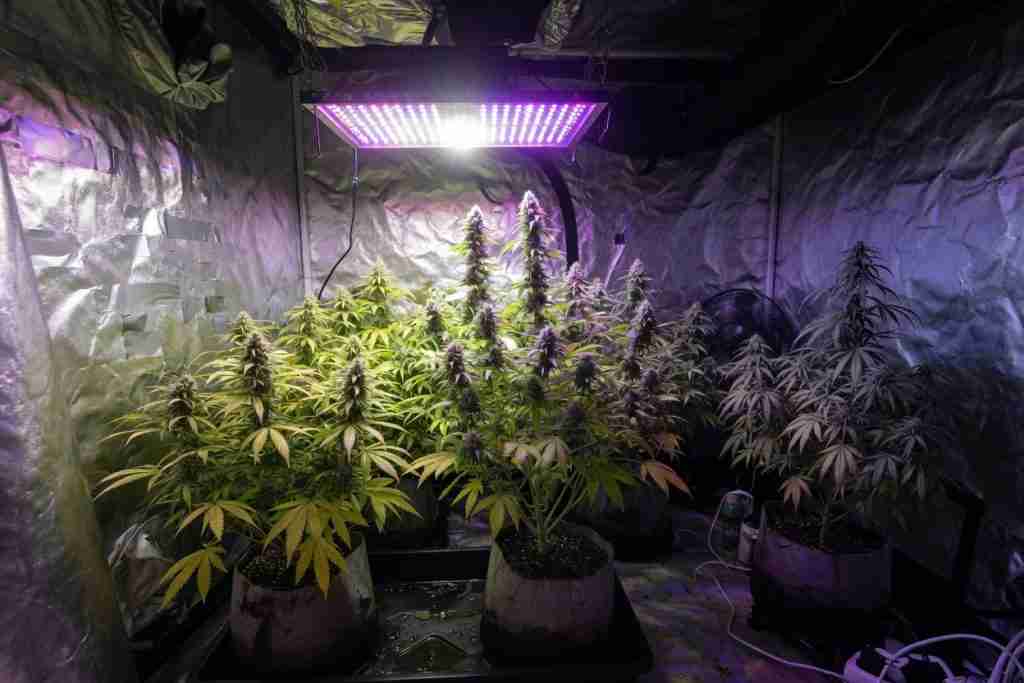
Replace the lamp when a patch of diodes stays dark, the driver cuts out, the dimmer is dead, or you moved into a larger footprint and the old board cannot fill the corners. A plant sitting in the shadow while its neighbor is lit is that last case. Move the board, overlap a second top light, or take a plant out. Do not buy a color channel and hope the corner brightens. Corners brighten when photons land there. If every hang you try still leaves that corner dull, the fixture is smaller than the tent. That is a size problem. Name it as a size problem.
Do not replace a working board because a thread announced a new coating, or because a driveway lamp showed up in a search. Those lamps are built for a pole and a dusk sensor. Do not swap a working board in the middle of flower unless it has failed. A new spectrum late in flower teaches you nothing and stresses plants that were already building. Wait for the next run. Write what failed in one line, so the next carton answers that line.
When you do buy, ask four questions in order. Does the wall draw match the tent, using the bands on the grow lighting page rather than the giant number on the carton? Can you dim it without an account? Does the lit area cover the floor you intend to use, corners included? Can you reach the control after the pots are in? If any answer is no, keep looking. A driver you can swap matters more than a coating story. A dark patch you can see is a fact.
One change, then a few days of looking. Swapping the board, the hang, the feed, and the exhaust on the same day makes a mystery. Lamp too close, a crowded tent, a night broken by a door or a second bar, and more plants than the footprint can light are still the common failures. None of those is fixed by a newer carton. If the leaves settle and the corners join the canopy, the lamp you have is doing the job.
Four plants share the light you can hang
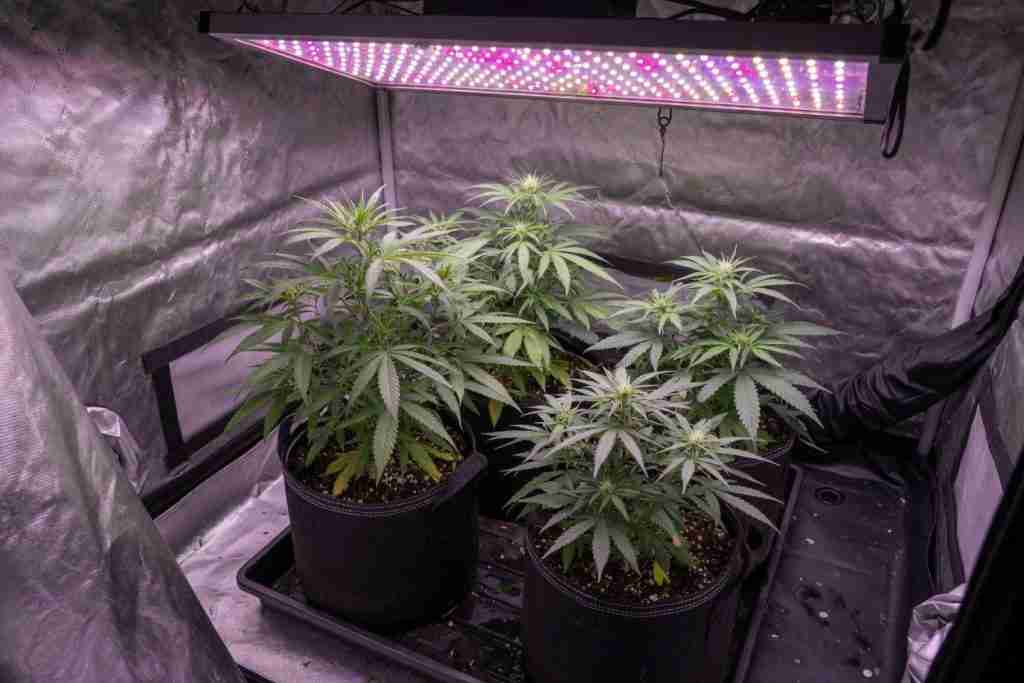
Canadian rules still cap recreation at four plants per household, and seedlings count toward that cap. Quebec bans recreational home growing. Manitoba has allowed indoor plants only since 1 May 2025. Four plants under a board sized for one cola are four plants in a bad map. The first run is one plant, in the footprint the board actually covers, so you can learn the dimmer without a crowd. Add plants when you can still reach the knob and still see a lower site without moving a pot into the aisle. If you cannot, the layout is wrong before the genetics are wrong.
A tray of sprouts under a high board is a lighting picture, not a permission slip. The cap counts them. So does the corner that falls off the footprint. Put only as many pots under the even part of the light as will finish there. The rest of the legal allowance can wait for a later run, or for a second board that you measured, not a second board you hoped would overlap. Autos and photoperiods can share a white board. They should not share a schedule if one of them needs a long night and the other does not. That split is the photoperiod page again. Do not solve it with a tunable channel.
Hang the board so the control stays reachable after the pots are heavy. Check the hang again once they are full. Frames sag, a level board leans, and the lean becomes the hotspot. Re-level, then leave it. For a home grower this season the emerging part is not a new bulb. It is the discipline to dim, to keep the night intact, to add a lower bar only when the top is already even, and to skip a new coating until a failure gives you a reason to open a carton.