The Future of Cannabis Breeding: New Innovations and Trends to Help Breeders Thrive

Future of Cannabis Breeding is a shorter list, not a new kind of plant. A marijuana pack that advertises a gene gadget is usually still a shuffle of two parents. A weed plant with a lab story is not a line until the offspring match the note you wrote down. The tools that actually moved in the last few years help a program waste fewer seedlings. They do not skip the grow-out, and they do not belong in a kitchen as a recipe.
What changed is bookkeeping with better filters. A marker is a flag in the DNA that lined up with a trait in one studied group of plants. A genomic model ranks seedlings from that same kind of data. A doubled haploid is a lab route toward a parent that is the same through and through, faster than years of selfing. Tissue culture stores a clean copy of a plant you already have. None of those jobs invents a smell, a finish week, or a mold-free fall. You still have to flower the finalists and throw most of them out.
How to read the family printed on a packet is the strain lineage page. How to move pollen is the cannabis breeding guide. What a finished line is, after the kids repeat, is how to create a new cannabis strain. A treated seed is a different project on the mutation breeding page. A chosen edit of one gene is a different category again on the genetically modified cannabis page. This page is the filter: which of the new words is a tool you can use, and which is an ad.
Future of Cannabis Breeding still starts on paper

You cannot select a plant you cannot describe. Before any cross, write what the mother line already does in your room. Height at the flip. Week the pistils crowded. Whether the lowers molded in a wet week. The smell in three words you would still recognize next year. If that note is empty, every seedling looks like a discovery. Most of them are the shuffle the parents already carried.
Pick one trait for this generation. Finish week, or a smell you can name, or a plant that stays clean when its sisters spot. Not all three, and not yield plus potency plus color plus a short internodes story. A plant that wins on four wishes at once is usually the plant you liked that day. Next season the wishes split apart. One written target is how a small program makes progress a university would still recognize. The rest of the plant can be good enough.
Finish week is a breeding trait because your weather is not a catalogue weather. A parent selected to beat a wet September is a different plant from a parent selected for a long coastal fall. Prairie frost does not care what a California description promised. The frost map itself lives on the outdoor zone guide. Your notebook should say which week the keeper finished in your town.
Write the losers too. The tall one that fell over. The pretty one that molded. A program that only records keepers forgets why the other plants left. Two years later you cross back into the same fault and call it bad luck. The page can be plain. Date, pot, the one trait, keep or cull. That is the whole innovation a tent can run this season.
A marker only throws seedlings out
A marker is not a gene you order from a menu. It is a spot in the DNA that, in one group of plants, showed up more often in the plants that also had the trait. A Quebec university team, working on a few hundred Canadian plants, reported dozens of markers tied to cannabinoid traits. The point of that work is practical. If the flag is reliable in your plants, you can discard a seedling before you pay for a flower room. You still flower the ones you keep. The marker never smelled the jar.
The flag can fail when you change the family. A marker found in one set of drug-type plants may say nothing useful about your pack. Genomic selection is the wider version of the same idea. A model looks at thousands of flags plus the flower tests already on file, then ranks young plants. Published work has shown that adding genes upstream of the main cannabinoid enzyme improved the guess over the enzyme alone. That is a lab result on the plants in the study. It is not a score for the four pots in your tent. If you ever send leaf tissue to a service built on someone else’s population, grow at least one plant the model ranked poorly. Otherwise you will never catch a wrong sort.
Home breeders do not own that assay, and you do not need it to breed well. The version you can run is a written score of the plants you actually flowered. How to lay out that score, without turning it into a novel, is the phenotypes in breeding page. A log or a simple app can keep the dates from smearing together. Which apps are worth opening is the phenotype hunting tools page. A model that claims it can predict a cross before you sow it is only as honest as the parents it has already seen. It does not replace the flower test.
Disease work follows the same rule. Licensed programs hunt resistance, including powdery mildew, so a marker might someday let them keep a clean plant and drop the rest as seedlings. In your room the test is still the leaf. Cull the plant that spots when the sisters stay clean. A catalogue sentence that says resistant, with no room and no season attached, is a wish. Keep the plant that stayed clean for you, and write the week the pressure showed up.
Uniform hybrid seed is the pack that changed

The change you can actually buy, when a seller is telling the truth, is uniform hybrid seed. A true hybrid here means two parent lines that were first made very uniform, then crossed once. The kids of that one cross look more like each other than the kids of a jumble. University hemp work, including a Connecticut study and a later Australian trial that built inbred parents and then a handful of hybrids, found those hybrid offspring more uniform than the source populations and often more vigorous than the inbred parents. Cannabinoid uniformity still depended on which parents were paired. Vigor in a hemp seed crop is not a promise about the jar in a drug-type tent. It is evidence that the breeding shape works. The parents have to be real parents, not two famous clones crossed once and renamed.
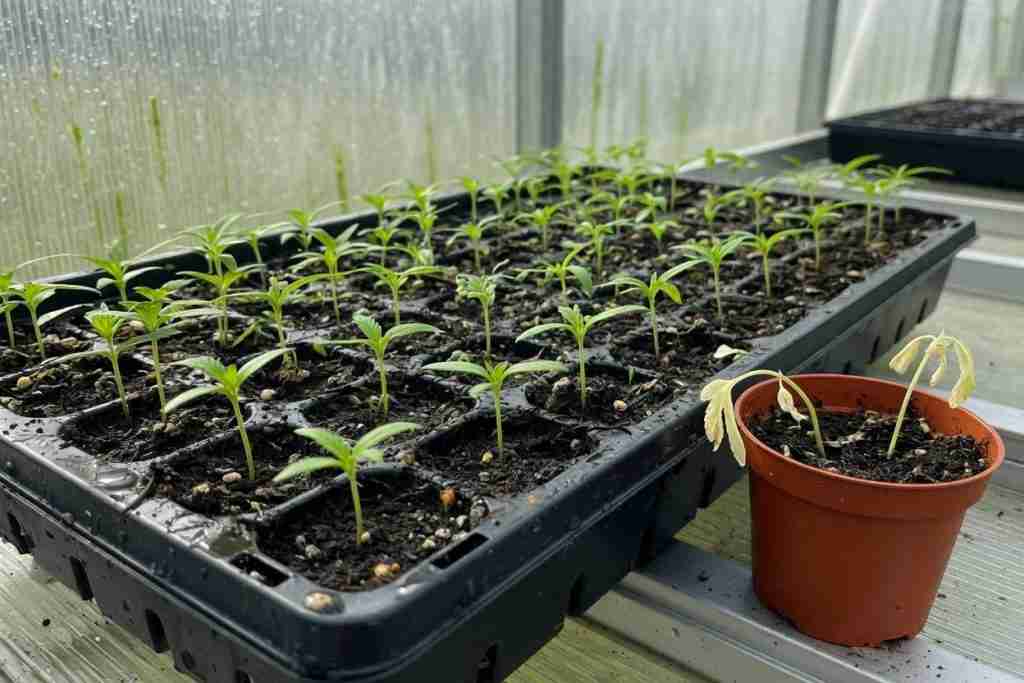
The plant in the photo is the part ads skip. Someone still has to flower a pollen parent. That male, or a reversed female, is not a new technology. It is the second half of the cross. How to keep that pollen off the plants you do not want seeded is the breeding guide, not this page. What the letters on the packet mean, including F1 beside a name that was never inbred, is the seed label page. How to grow a pack that really is an F1 is the F1 grow guide. Read the label page before you pay extra for the two letters.
A doubled haploid is the lab shortcut toward one of those uniform parents. In other crops it collapses a long series of selfings into a faster route to a plant that breeds true at the spots that matter. Cannabis groups talk about it because selfing a drug-type line for many generations is slow, and the plants can get weak on the way. You will not do that technique in a tent. There is no soak, no lamp setting, and no kitchen version. If a seller says the parents were doubled haploids, the proof you can check is still the kids. Sow the pack. If they split into tall and short, loud and quiet, the shortcut did not land in the bag you hold.
Uniform is not the same word as finished. A hybrid generation can be even and still throw a new split the moment you save seed from it. What people mean when they say a line holds still is the genetically stable seed page. Buy the hybrid to grow it. Do not expect the seed you pull off those buds to copy the pack, unless the seller built the parents and is selling that next cross on purpose.
A mixed pack is not a true hybrid
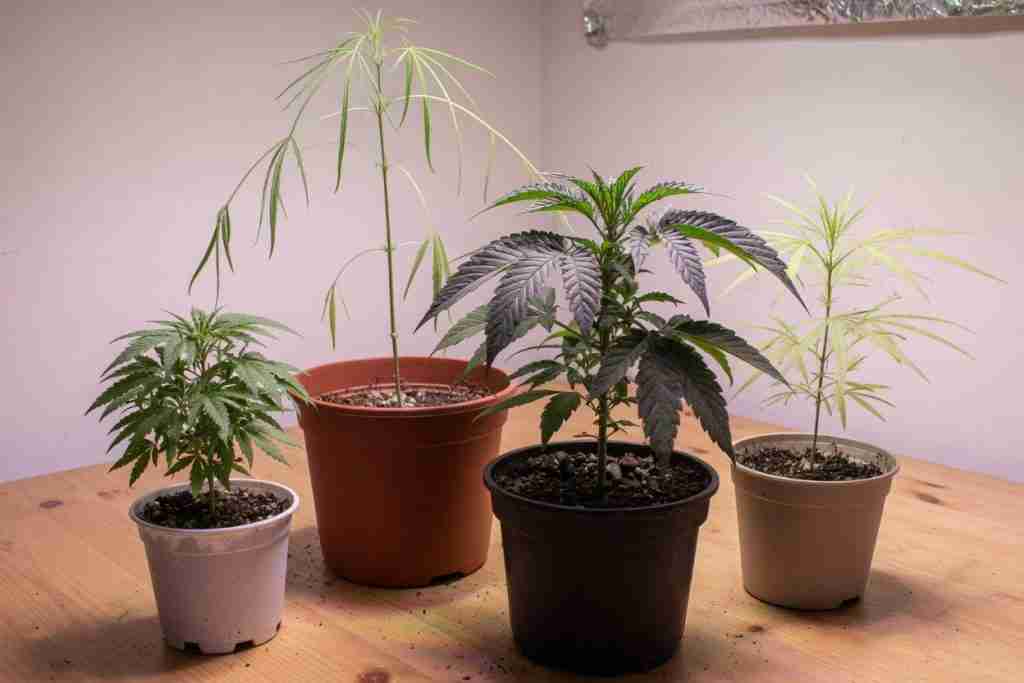
Most named packs are polyhybrids. Two plants that were already mixed got crossed, or a clone was crossed to a plant that was itself a cross. The bag can be excellent. It will also split. The four youngsters in a single sowing can look like four breeds, because they are. That split is not a failed future. It is what the pedigree already was. Calling it F1 on the label does not make the parents inbred.
Indica, sativa, and hybrid are even weaker as breeding targets. They mostly describe a shape and a story. Choosing among those words is the indica, sativa, and hybrid page. If your note says broad leaf or a fast finish, write that. Do not write a continent and hope the kids inherit a mood. Day-neutral plants that flower by age rather than by a short day are already a normal product. The clock came from ruderalis. Later gains in flower quality on that clock are ordinary selection. They are not a new machine generation with a decimal in the name.
Ask three questions before you pay for a trend. What was this selected for, in one sentence. What week did it finish, and in what kind of room or season. Were the parents inbred lines, or two named clones. A seller who can answer those is ahead of a seller who leads with a gadget. Minor cannabinoids and a specific aroma are real selection targets in commercial rooms right now. A figure with no method and no date is still an advertisement. Keep more than one aroma in a program if that variety is the point. Why variety itself matters is the phenotype diversity page. Do not chase every minor compound in the same generation.
One trait and a mother you can describe
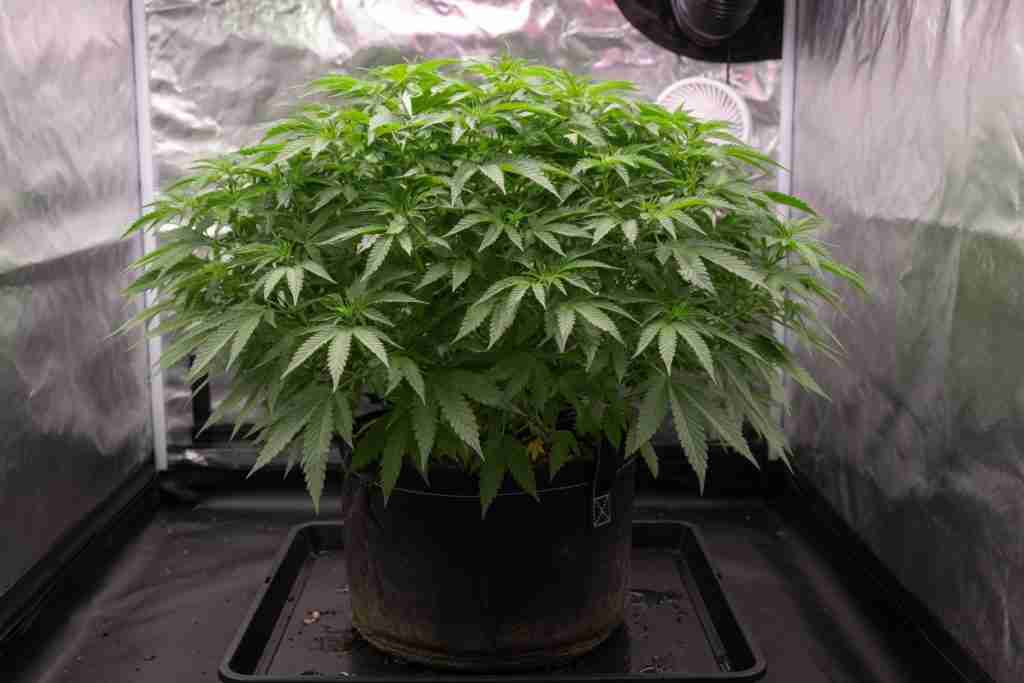
The plant you keep is a mother only if you can say what she is for. One bush, pruned and healthy, is enough to restart the line if the law where you live lets you hold her. Take the description from flower, not from week three of veg. Veg shows vigor. It hides the smell, the mold week, and the way the buds pack. A gorgeous vegetative plant that flowers into air is a cull with good leaves.
Make seed only after that note exists. Pollen from a male you also described, onto flowers you meant to seed, in a space that is not your whole harvest. The breeding guide owns the steps. This page owns the decision. If you cannot flower the kids later and look for the same trait, you are making souvenirs. Souvenirs are fine in a jar in the cupboard. They are not a release.
Stress is a poor way to invent the next parent. A hard summer can change how a plant reads its genes. That is not the same as changing the letter, and it often fades. Counting on drought, a cold night, or a starved pot to breed a tougher line is how people confuse a beaten plant with a variety. The argument, and the limit of it, is the epigenetics page. Select the plant that stayed on the note. Do not select the plant you stressed until it looked tough.
Gene editing sits in the same “not this job” box. A lab can cut or replace a chosen sequence. That work is still mostly research in cannabis, it is regulated as a different kind of plant in many places, and the steps are not a tent project. Read the genetically modified page before you believe a packet that says edited. If the seller cannot say which sequence, in which lab, under which rule, you bought a cross with a modern word on it. Extra chromosome sets are a different trick again, used by some commercial programs that want flower which sets little seed when stray pollen lands. The mutation breeding page is where a letter change and an extra set are pulled apart. A thick leaf is a clue, not a count. Nothing in a jar at home proves either one.
A stored copy is not a new parent
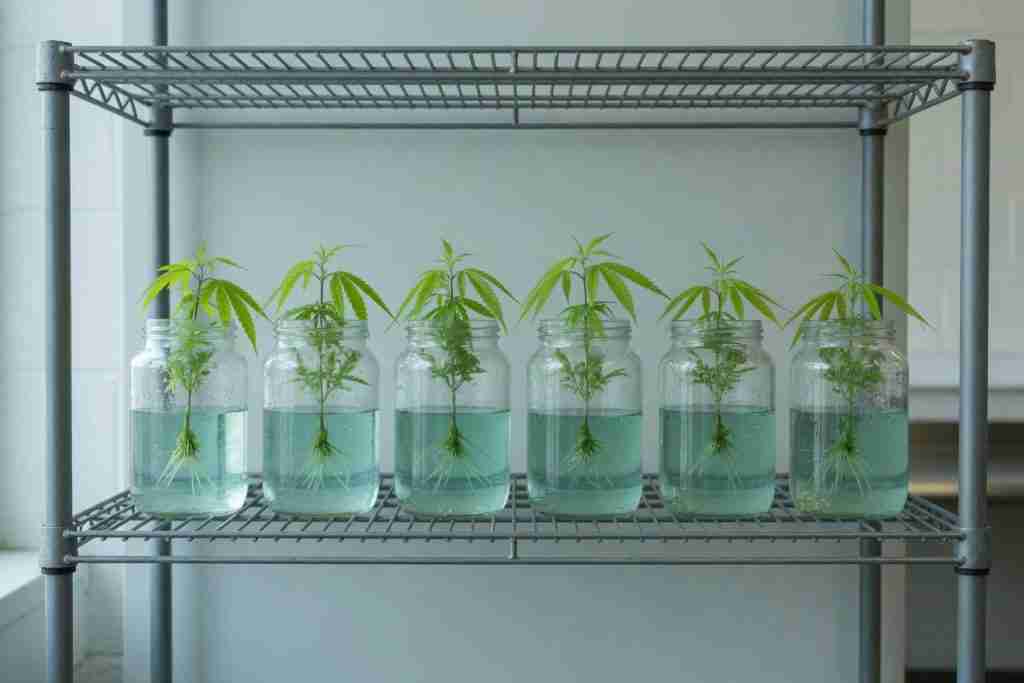
A cutting in a jar of water is a copy of the plant you took it from. The roots are new. The variety is not. Tissue culture is the laboratory version of that copy. A tiny clean piece is grown in sterile gel so a pest or a virus has a harder time riding along, and so a nursery can restart many plants from one tested mother. The jars on a kitchen shelf are not that. They are a way to hold a clone for a few weeks. Both methods store a plant you already chose. Neither one designs the next trait.
Culture is worth paying for when the plant is the only copy and you are tired of running a tent just to keep her alive, or when you are shipping starts and cannot afford to ship a mite. It fails in a way seed does not. A contaminated vessel is a loss, and a home box is easy to contaminate. You do not need culture to breed. You need a note, a pollen parent, and a second season. If a company offers cultured starts of a line, ask what was tested and what was merely multiplied. Multiplication of a dirty mother is a dirty mother in volume.
The same honesty applies to a freezer of cuts and to a shelf of mothers. Storage protects the selection you already made. It does not improve it. While she sits there, the breeding work is the siblings you are willing to flower and compare. A mother with no tested kids is a houseplant with a reputation.
Name the line only after the kids repeat it

A ripe cola is a candidate, not a variety. You liked the flower. That is the start of a note. The name comes later, when offspring from that plant show the same trait without you standing over them. One backcross or one selfing can move the trait. It does not finish the line. How many passes a careful program actually uses is the create-a-strain page. Borrow the standard. Do not invent a shorter one because the cola photographed well.
Test in two places before you trust the window. Two tents, or one indoor run and one outdoor season, will show you whether the finish week was the genotype or the lamp. A plant that finished early under a cool room and late under a hot one does not have a single number yet. Write both. If you only have one room, run the kids in a later cycle and do not publish the first cycle as the variety. Commercial breeders who are serious flower a pack more than once before they print a week range. You can copy that habit without copying their budget.
Release the sentence, not the myth. “Selected to finish before a wet September, floral smell, medium height in a tent.” That sentence is more useful than an invented potency ceiling. Buyers who have been burned by trend names are already asking what the line was selected for. Answer them with the note. If the kids do not match the sentence, you do not have the line yet. You have a mother worth another cross. The shell in the bag is still just a seed. What is inside a seed, and what a pack can fairly claim, sits on the what cannabis seeds are page.
Four plants cannot fund a lab trend
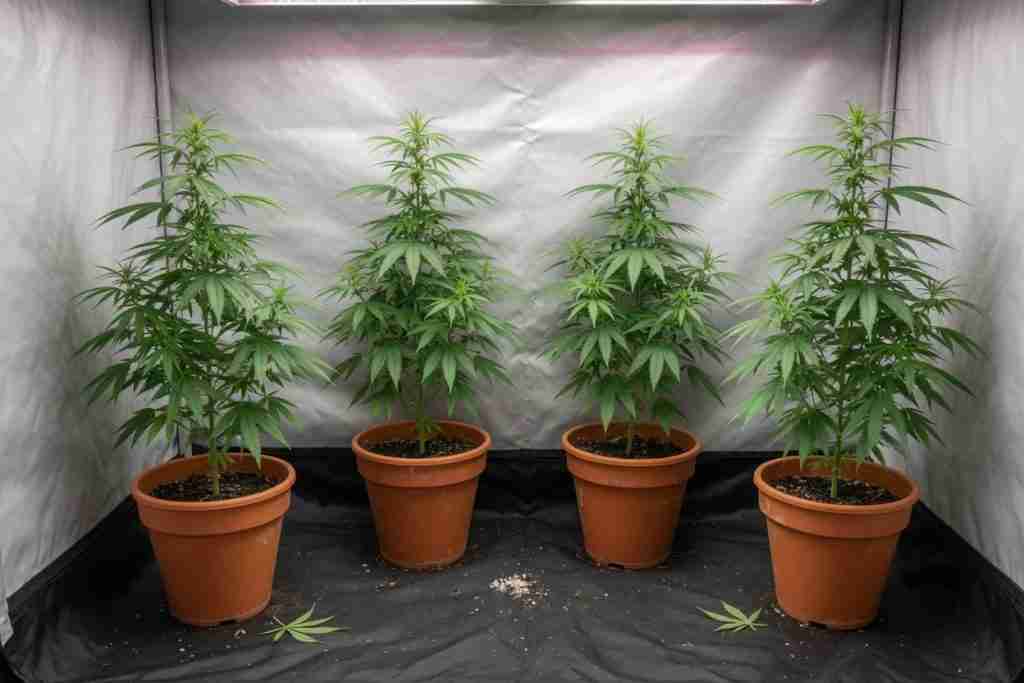
A marker screen, a doubled-haploid nursery, and a greenhouse full of hybrid parents are licensed-room work. In Canada the home limit is four plants per household, and a seedling counts. Quebec prohibits recreational home growing. Manitoba has been indoor-only since 1 May 2025. Four pots can hold a mother, a pollen plant, and two kids. They cannot host the cull a real hybrid program runs. Pretending otherwise is how people overplant and then call the survivors a trend.
Use the four pots for the decision a lab still has to make at the end. Flower them. Write the one trait. Keep the plant that matches. If she is truly the one, hold her as a clone where that is legal and let a legal breeding room grow the crowd of kids. Do not soak the spare seed in anything. Do not point a lamp at a pack and call it mutagenesis. Do not buy a gadget that claims it will name the cross before the pots are wet. The mutation page already covers why a treated seed is a pile of rejects with a rare keeper, and why that keeper is still not a strain.
The useful habit this year is small enough to finish. Describe the parents. Cross once, on purpose. Sow what you can legally flower. Cull against one sentence. Run the keepers again before you print a name. Uniform hybrid seed, when the parents were actually uniform, is the pack worth paying attention to. Everything else advertised as the next era is either that same work with a faster filter, or a story standing in for the filter. Your notebook will tell you which, long before a headline does.