The Best Soil for Growing Cannabis Seeds


Fill a solo cup from a bag that promises to feed a plant for months, bury a seed, and the sprout often yellows while the mix is still wet. That bag was blended for a plant with roots and a real set of leaves. A seed needs air, even moisture, and a loose mix the taproot can push through.
The best soil for growing cannabis seeds is a light, airy mix that holds some water and lets the rest leave through the holes. The two smooth oval leaves that open first already carry the seedling’s food. For that first week or two your work is to stay out of the way. Plain water. A small cup. No bottle.
Loam, silt, and clay are field words. In a pot they mostly describe how fast the mix turns into a brick. Garden soil, topsoil, and yard clay compact, and they bring pests plus seeds you did not plant. A rich bag fails from the other direction. The food is already in it, and you cannot turn it off because the seedling looks unhappy.
Start in a solo cup or a small nursery pot, not a five-gallon pot of wet heavy mix. When white roots hold the plug, move the weed plant into a fuller mix. Castings, a darker bag, and a normal feed belong in that second pot. Where home cultivation is legal in Canada, the usual household cap is four plants. Quebec does not allow a recreational grow, and Manitoba limits cultivation to indoors, so one dead seedling is a large share of a legal garden.
A Seed Does Not Want a Hot Bag
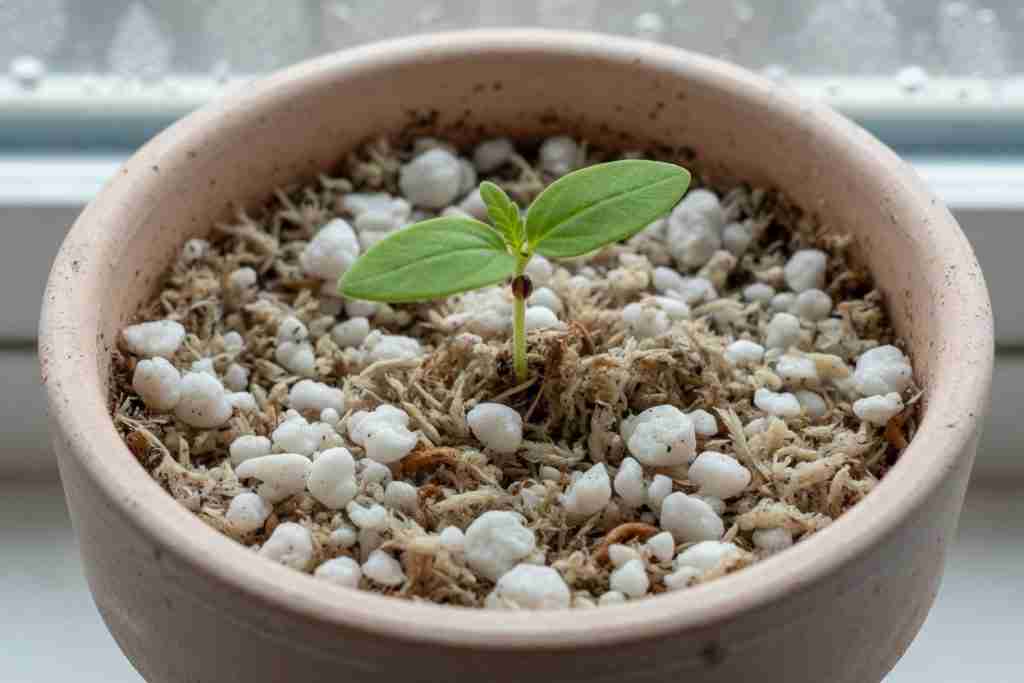
Hot, on a grow-shop shelf, does not mean the bag sat in a warm room. It means the mix is already loaded with meals, guano, manure, or a coated fertilizer that releases on its own clock. A dark bag in the Ocean Forest class is the one people name when a seedling burns. A pale seed-starting mix, or a bag sold as a light-mix, is the other shelf. The dark one is a transplant soil. The pale one is the cup.
Sow straight into the hot bag and the taproot meets a salt level it never asked for. The seed leaves yellow. The first true leaves stay small. Adding more food makes the cup hotter. If that rich bag is all you have today, cut it about half and half by volume with a light mix, or wait and pot up once a few sets of true leaves are growing. A marijuana seedling has almost no leaf area to process extra nitrogen. The salts just sit in a tiny volume of wet mix.
What Hot Means in the Bag
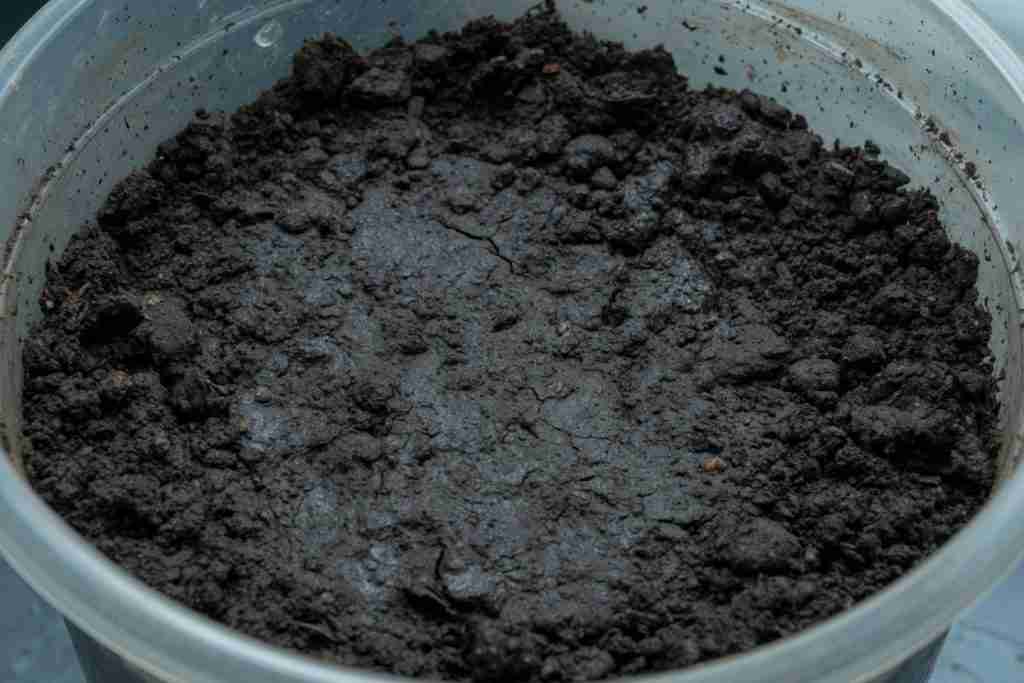
Squeeze a handful. A seed mix falls apart when you open your hand. A fine, rich mix often smears into a mud ball and stays a ball. That ball is a problem before you count the fertilizer. Roots need gaps. A surface that packs and then cracks after one heavy watering has closed those gaps. Perlite, or another coarse particle, is what keeps them open after the water moves through.
Canadian shops are full of peat-based bags in a lighter class. Pro-Mix HP, Pro-Mix BX, and Sunshine Mix are names you will actually see. Many are lightly amended, or close to empty, so you feed them later on purpose. A bag that says it feeds for months, and time-release garden soil sold for tomatoes, has already decided for you. Coated pellets release when the mix is wet and warm. A seedling cup is both, and the pellets are still releasing in bloom, when you may want less nitrogen. You cannot pick them out.
Bone meal, blood meal, bat guano, and fresh manure do not belong in the seed cup. They are strong and uneven. A pocket of blood meal next to a day-old root is not a gentle start. If they belong anywhere, it is in a mix that sits and gets watered before a larger plant depends on it.
The Food Already in the Seed
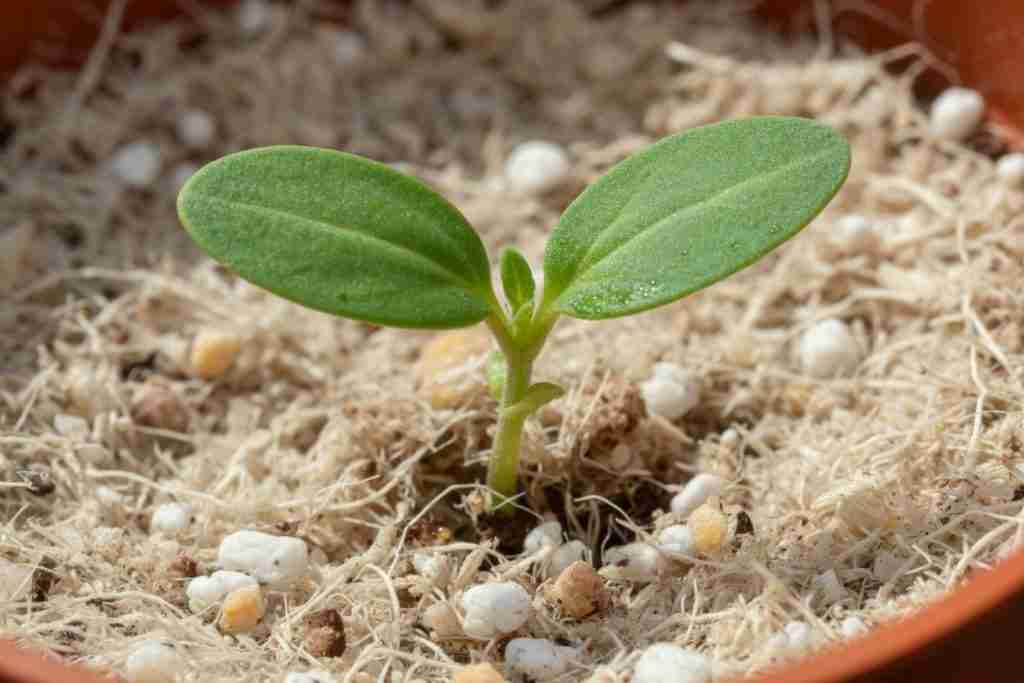
A cannabis seed is a packed lunch. Those two oval leaves are cotyledons, not true leaves. They feed the seedling until the first serrated leaves can work, often for a week and sometimes closer to two. During that stretch it does not need a bottle. The plant is building a root.
Cotyledons yellowing while a new serrated leaf keeps expanding means the lunch is running out. Crisp tips in a rich wet mix, on a plant that has barely grown, means burn. Getting the seed to crack is a separate job. The germination guide covers the paper towel and the first crack. This page starts when that seed is going into a pot.
What the Mix Has to Do

A useful first mix stays loose enough for a white root, holds some water, and lets the extra leave. Dark fines with plenty of white perlite can still be a seed mix. Without the perlite, those fines collapse after the second watering. A loam bed outdoors can grow a plant if water leaves the bed. A cup of that same loam usually seals.
Air, and Water That Leaves
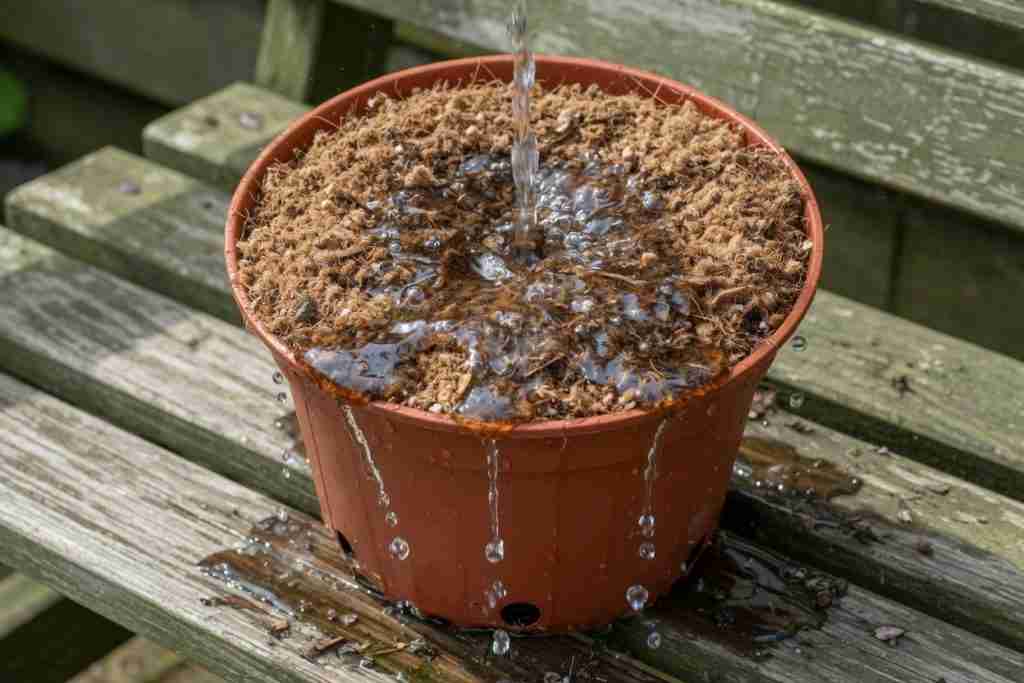
Water the cup and watch. In a mix that is working, water sinks in within a second or two and drips from the holes, then stops. A pool on top, or water running over the lip because the surface has sealed, means the holes are not doing the job. The mix has collapsed, the holes are blocked, or the pot never had enough of them. More pouring does not fix a lid made of mud.
Tip a small cup if you can, and do not water again until it feels lighter. Roots drown in a cup faster than they dry out. The bottom stays wet long after the top looks dull. Lift the pot. A heavy pot is still wet, whatever the surface says. The watering guide is that same habit once the plant is bigger.
Pure perlite drains and holds almost nothing a root can sip. Pure peat, once packed and wet, holds water and shuts out air. A workable start is two parts peat, or buffered coco, to one part coarse perlite by volume. One part in three is the usual neighborhood, a shape you can see in a tub rather than a lab result.
Damp, Not Soup
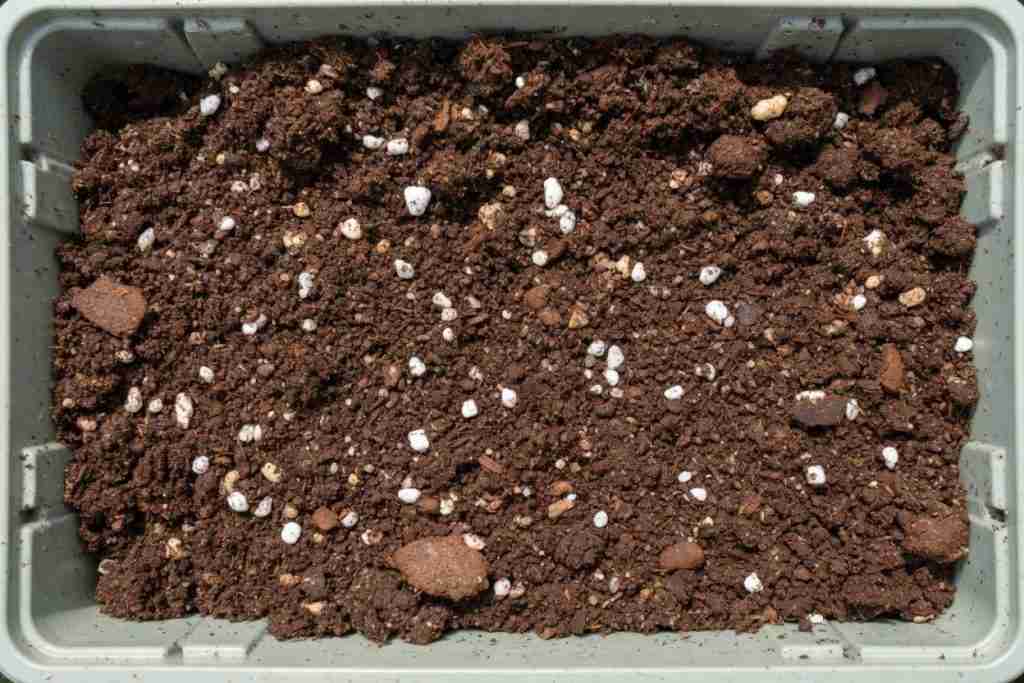
Pre-wet the mix before the seed goes in. Dry peat shrugs water off. It beads, runs down the gap against the cup wall, and leaves a dry brick in the middle. Splash water into a tub and stir until a handful feels like a wrung sponge. Squeeze it. A few drops is right. A stream means you overshot. Crumbs should hold for a second, then fall apart. Mud that shines is soup.
After the seed is covered, water once to close the mix around it, then wait until the cup is lighter. A humidity dome is for a few days, not two weeks over a wet cup. Once true leaves are up, light matters as much as the mix. The seedling stage guide covers stretch. Change the soil or the light, not both on the same day.
pH Near 6.5

In soil, aim for a pH around 6.2 to 6.8, near 6.5. A bagged container mix is usually already limed. Do not add dolomite because a forum said peat is acidic. Lime is slow, and you cannot scoop it back out. If the plant is growing, skip the daily pH hobby. Measure when growth stalls. Pour water at a pH you have checked, catch what leaves the holes, and compare. Runoff far from what you poured means the mix is drifting. The pH guide covers meters. For the seed cup, stay near 6.5 and leave a pre-limed bag alone.
Which Bag to Buy
Ask one question in the aisle. Is this bag for a seed, or for a plant that already has roots? Ignore the harvest photo. Read whether it says seed-starting, seedling, or light-mix, versus feeds for months, heavily amended, or living soil. A light mix lets you decide when food starts. A hot mix decides for you, including on the days you wish it would stop.
A Light Mix for the Cup
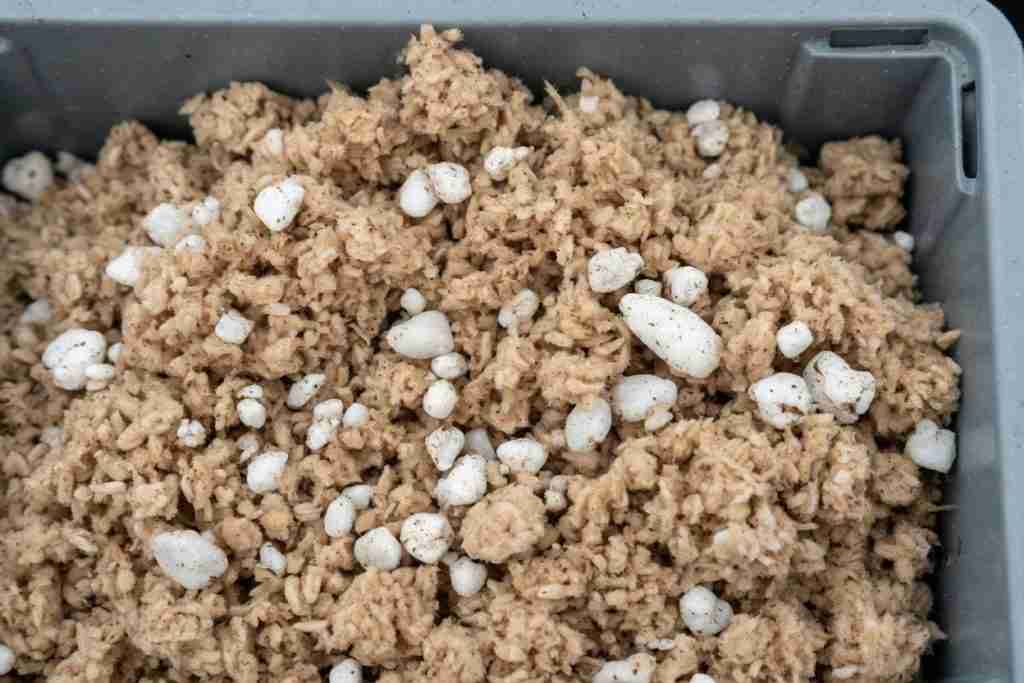
Look for a pale, fluffy mix with coarse perlite already in it. Peat-based seed starters and the light end of the Pro-Mix and Sunshine shelves sit here, along with anything sold as a light-mix rather than a super soil. Tan to medium brown is a better sign than black-coffee dark. In the hand it should feel springy. A wet brick in the bag is a reason to keep walking, even if the word organic is printed large.
Fill the cup loosely. A tap on the bench settles it. One seed per cup, with room under the rim for water to land. If the only bag you have is the rich one, blend it about half and half with a light mix, water less often, and do not feed on top of that blend. Keep the rich bag for the pots you transplant into.
A Richer Mix After the Roots Hold
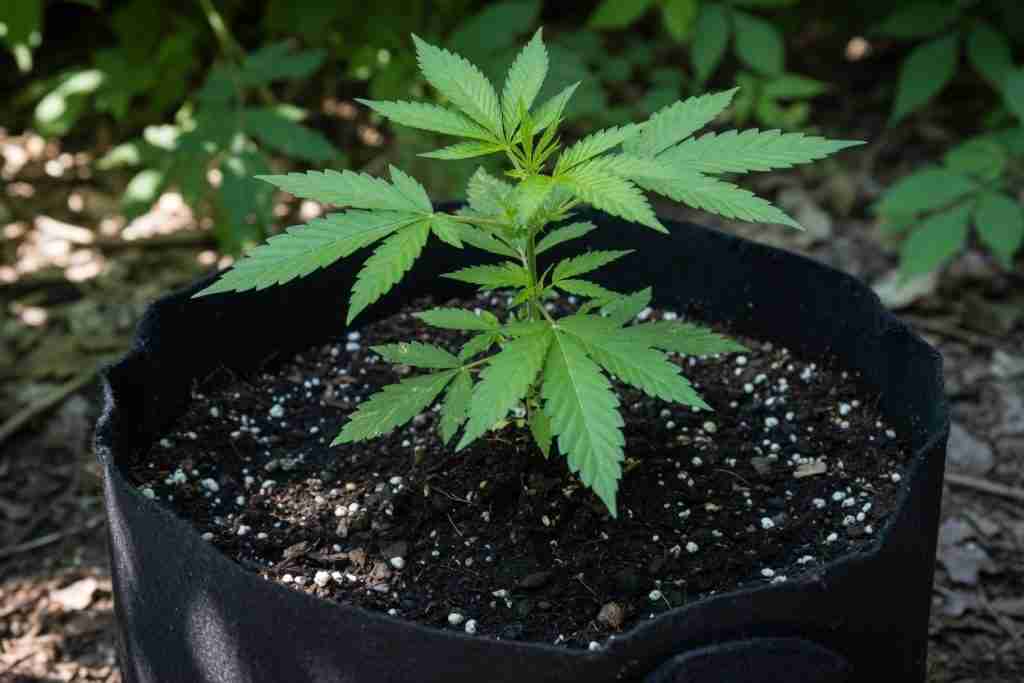
The dark bag earns its keep in the second container. A plant with several sets of serrated leaves can use a richer mix, and it has enough leaf to show you if the food was too much. Pot up when the plug holds. One or two gallons is plenty until vegetative growth is underway. A big pot of damp rich soil around a plant the size of your hand stays wet in the middle.
Set the plug level with the new surface. Do not bury the stem. A buried node in a wet mix rots more often than it roots. Water once so the new mix closes against the old, and empty the saucer. Fabric pots dry faster than a decorative pot with one hole, which helps. The vegetative stage guide covers training and feed from there. The soils overview is the wider map for the rest of the run.
Yard Soil and Slow-Release Bags
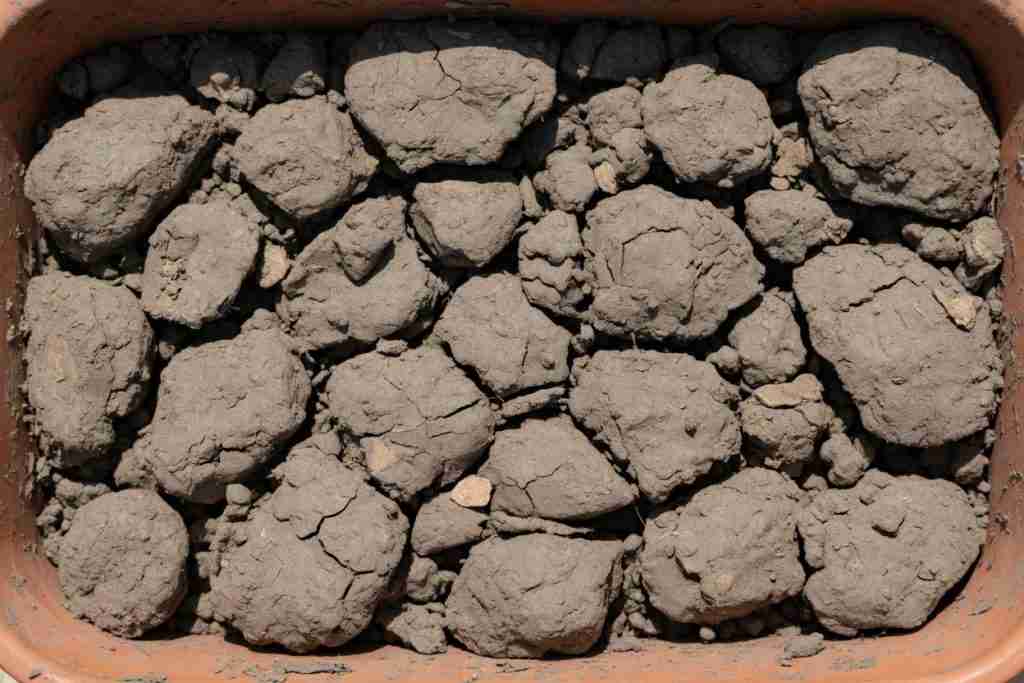
Clay from the yard is soil, and in a pot it is a set of clods that melt into a seal. Water sits. Roots circle the wall. Pest eggs come with it. If you want to grow in the ground, grow in the ground, where drainage is a bed and a slope. The outdoor guide is that page. Do not scoop the bed into a solo cup and pretend it is the same decision.
A slow-release bag keeps feeding in week one, when you want none, and again in flower. If a seed is already in it, leach with plain water until a decent volume runs out, then let the cup dry down. That dilutes what has dissolved. It does not remove the coating. A new cup of light mix, and whatever white root is left, is the real fix. A soft stem is finished. Start another seed.

Yellow leaves and some purple on a canopy are not a soil test. Cold nights purple plenty of strains, and hunger and burn can both yellow a leaf. Lift the pot, see whether water leaves the holes, and check runoff pH only if growth has stalled. Change one thing, then wait for new growth.
A Mix You Can Stir Yourself
You can buy the cup mix or stir the same idea in a tub. You need a base that holds some water and a coarse fraction that keeps air in it. You do not need six meals and a spoon-per-cubic-foot recipe. Those piles are meant to sit, mellow, and then feed a large plant. If the recipe starts with blood meal, it is not a seed recipe.
Two Parts Base, One Part Perlite
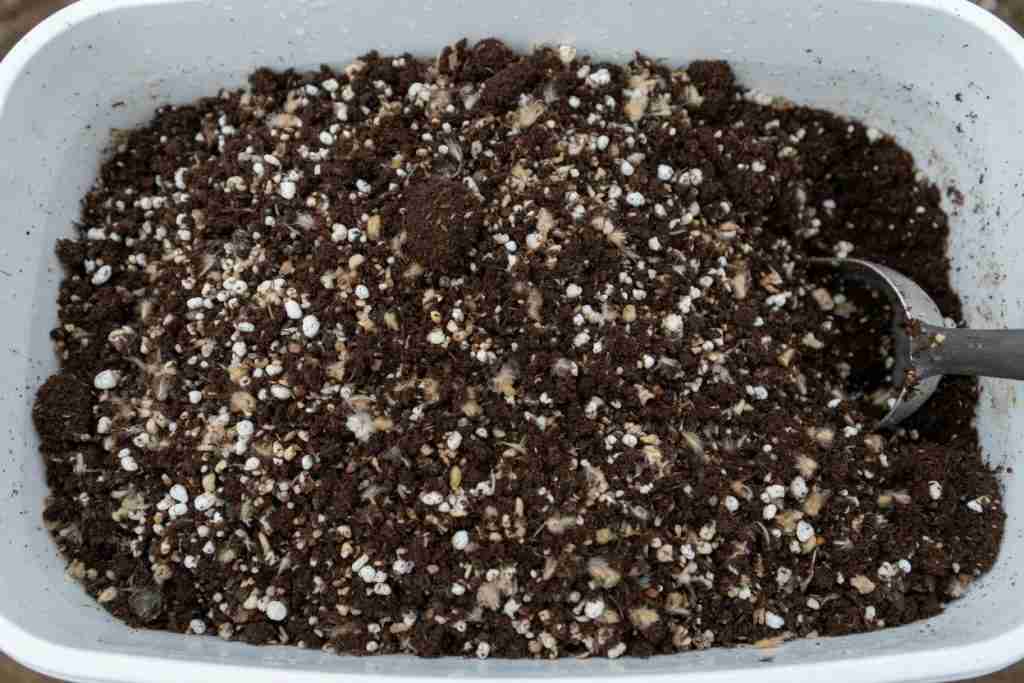
Two parts peat, or two parts coco that has been rinsed and buffered, to one part coarse perlite. Use the same pot as the scoop so a part means the same thing each time. Stir it damp, not dusty and not dripping. Wet a dry peat brick and break it before you judge the ratio. Dry peat lies about volume. Dust on the outside of a lump is not a blend.
Do not improve that tub with bloom fertilizer. Plain is the goal. Perlite crushed to powder will not open the mix. Wet it before you pour so you are not breathing the dust. Finished compost can wait for the transplant mix, and not as half the solo cup. Compost that is still hot, or manure that still smells like the animal, stays out.
Castings Belong in the Next Pot
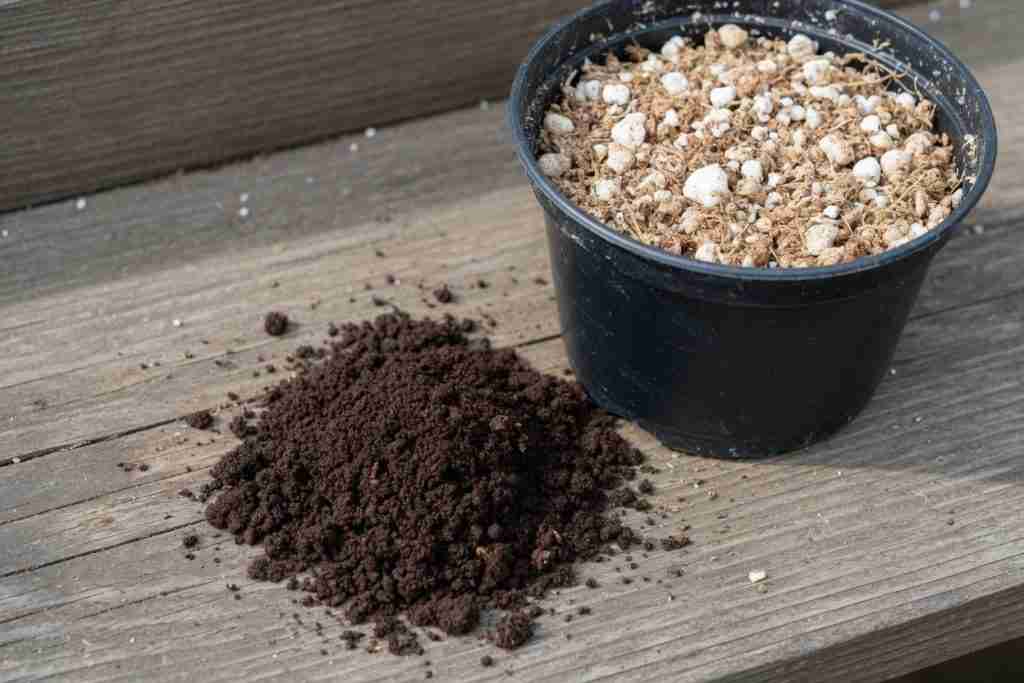
Worm castings are the gentle end of organic food, and they are still food. About a tenth of a transplant mix, by volume, is enough. Half a solo cup is too much. They hold water, and a sprout does not need them. Finished castings smell like a forest floor, not a forgotten bin. Keep them beside the light mix, not in place of it.
The castings guide is for a plant that is already feeding. Blood meal, bone meal, guano, and fresh manure stay away from a seed. If you build a bigger organic mix later, let it sit and water it first. The amendments guide is where that measuring belongs. An unmellowed super soil is a hot bag you mixed yourself.
Leave the Solo Cup Alone
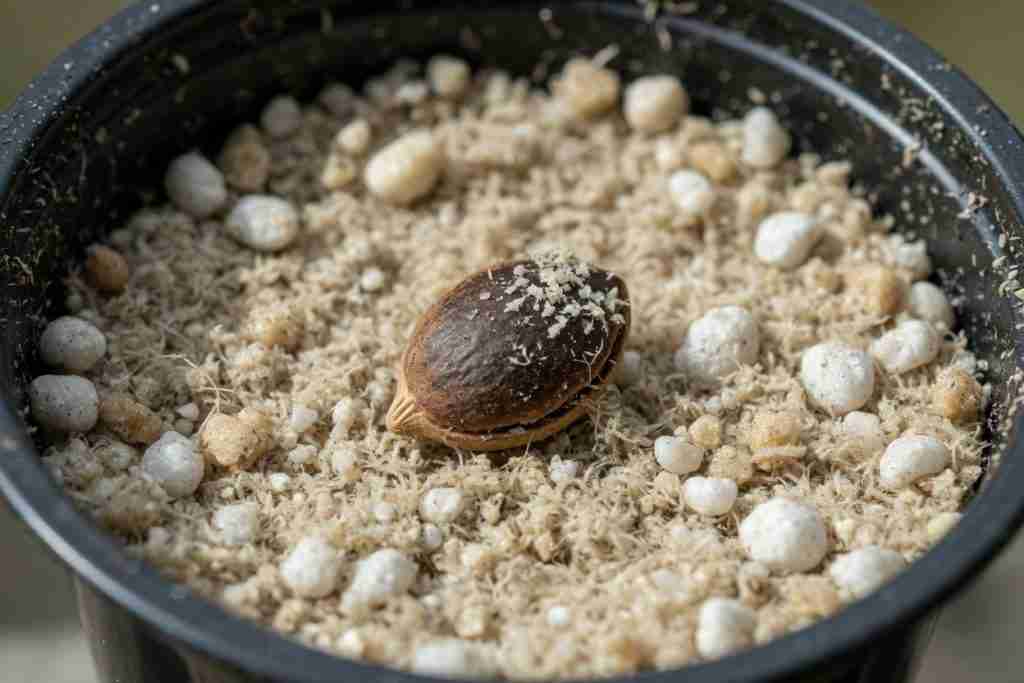
A seed sitting proud of the mix dries out every time the surface does. Cover it with a pinch of the same light mix, about as deep as the seed is thick. No deeper. A seed shoved toward the bottom of a wet cup spends its stored energy on a long stem in the dark and often stalls before it sees light. One seed, one cup. Firm the pinch with a drip, not a flood. Use a dome for a few days if the room is dry, then stop. More stirring, more food, and a bigger pot will not speed the taproot.
Out of the Cup

A canopy on a trellis is past the seed cup. Getting there means not killing the seedling, then moving it before the roots are a knot. The light mix that was right on day three is low in food once several sets of leaves are up. Pot up then. Do not answer that moment by pouring bottles into the solo cup. The photo is a grown canopy, not a reading of yesterday’s cup.
A Plug That Holds
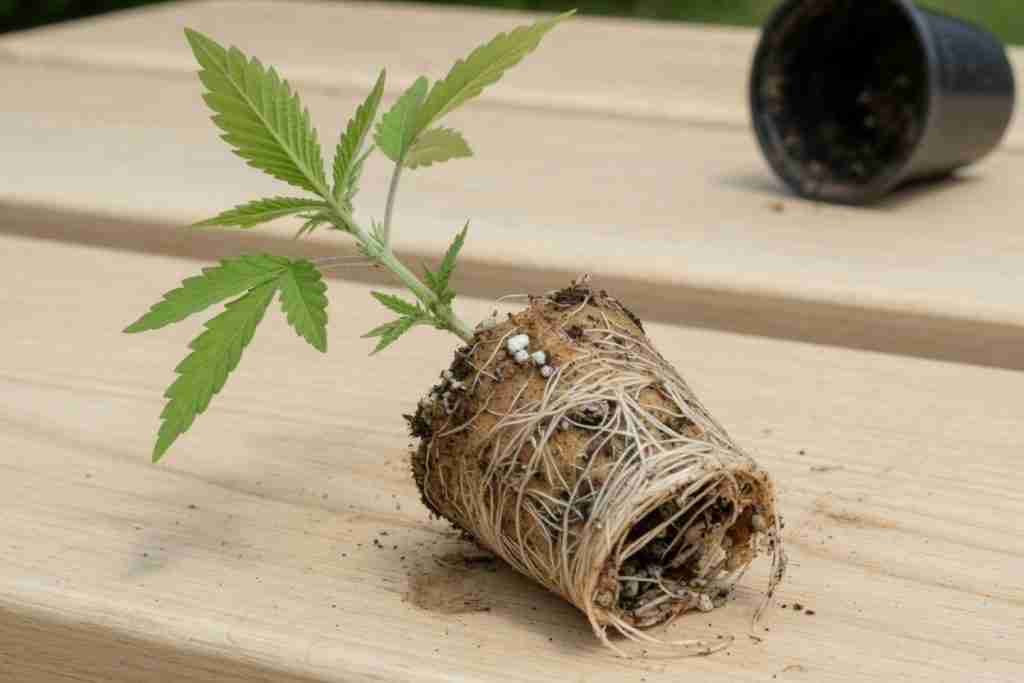
Squeeze the cup, tip it, and catch the plug. White roots that hold the mix in one piece are what you want. A few roots at the holes are enough. A mat circling the bottom means you waited a little long, and you should still move it. Tease a circling root so it points outward. Do not wash a healthy plug bare because a video did. The mix already against those roots is the environment they know.
Set it at the same depth, water once to close the seam, and empty the saucer. A soaked plug in a full saucer can look fine at noon and limp at night. Lift the pot the next day and skip the watering if it is still heavy. If the plug falls apart as dust, water it, wait about an hour, and try again. If it falls apart as mud, wait a day rather than packing mud into the new hole.
Coco Is Not This Soil
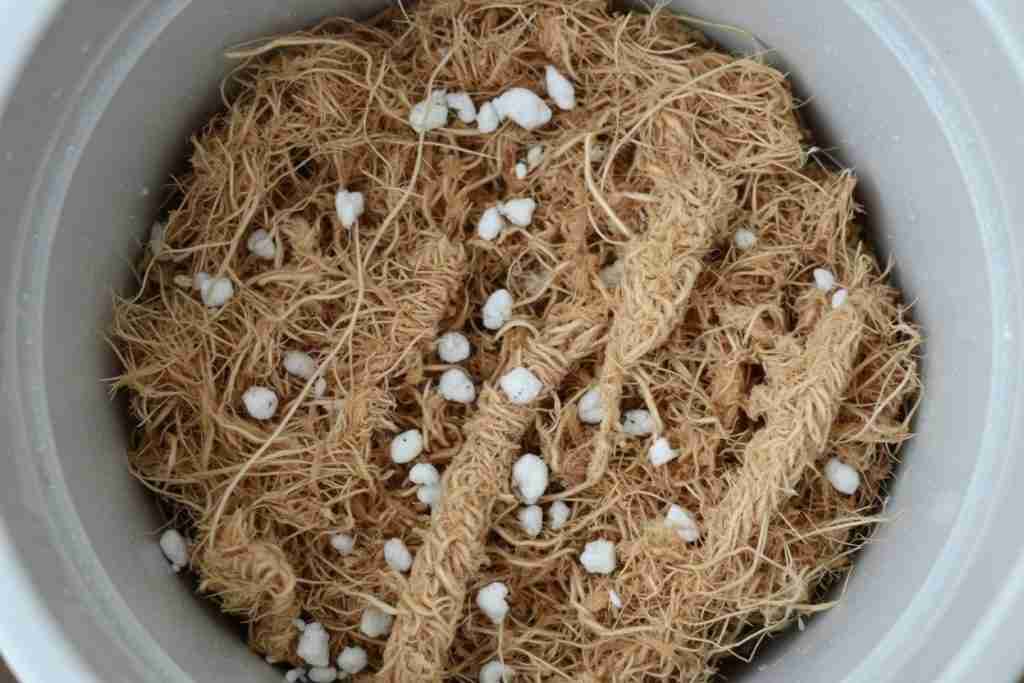
Coco coir is a fiber, not a soil. It holds water, brings almost no nutrition, and does not buffer pH the way a limed peat mix does. Growers run it lower than soil, often around 5.8 to 6.2, and they add calcium and magnesium because the fiber ties some of that up. You feed earlier than you would in a lightly amended peat, and you water more often. Treat it as its own method, not as a brown substitute you can ignore.
Long ropey husk is not how a finished coco mix should sit in the pot. Break it up, rinse it, and use a product that has been buffered, or buffer it before a seed depends on it. Perlite still helps, for the same reason it helps in peat. The coco guide covers the rest of that system. If there is no mix at all, the hydroponic guide is a reservoir and a different set of rules. Do not start a soil seed from a hydro chart just because both pages mention seedlings.
When the Mix Is Already Wrong
Most stalled sprouts are wet, hot, or both. The fix is rarely a new bottle. It is a drier cup, a lighter mix, and fewer things added until the plant is growing again. If you change the feed, the lime, and the pot on the same day, you will not know which one mattered. Feel the wetness first.
A Sprout That Stalls
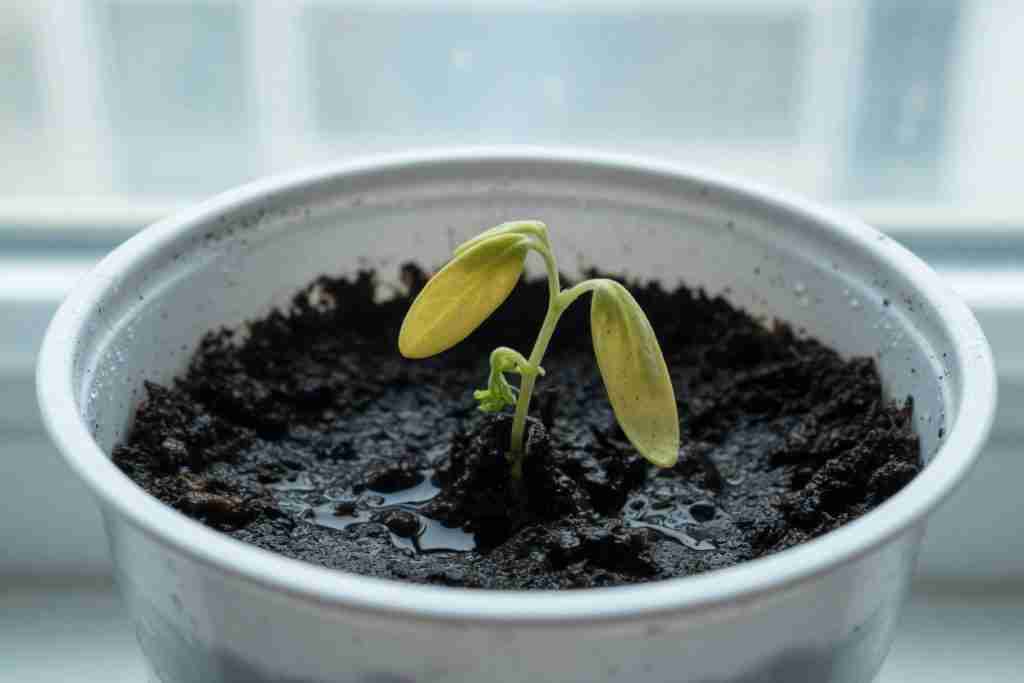
Yellow seed leaves, a wet dark surface, and a seedling that has not moved in days. That is a rich soggy cup more often than a hungry plant. The best soil for growing cannabis seeds is still the light one you should have started with. If the stem is firm and you can see any white root, lift it into a small cup of damp light mix and do not feed it. If the stem is mush, it is finished. Replanting mush only moves the rot.
Give the move one job. Stop the drowning. A small true leaf greener than the old seed leaves means it worked. Another quiet week means the root did not make the trip, or the new mix is also too wet. Real hunger looks different. The mix was pale, you have only given water, true leaves have formed, and they stall without crisp tips. A very light feed is reasonable then. A heavy dark cup points to burn or rot. Act on the cup you have.
Gnats, a Crust, and a Dome Left On
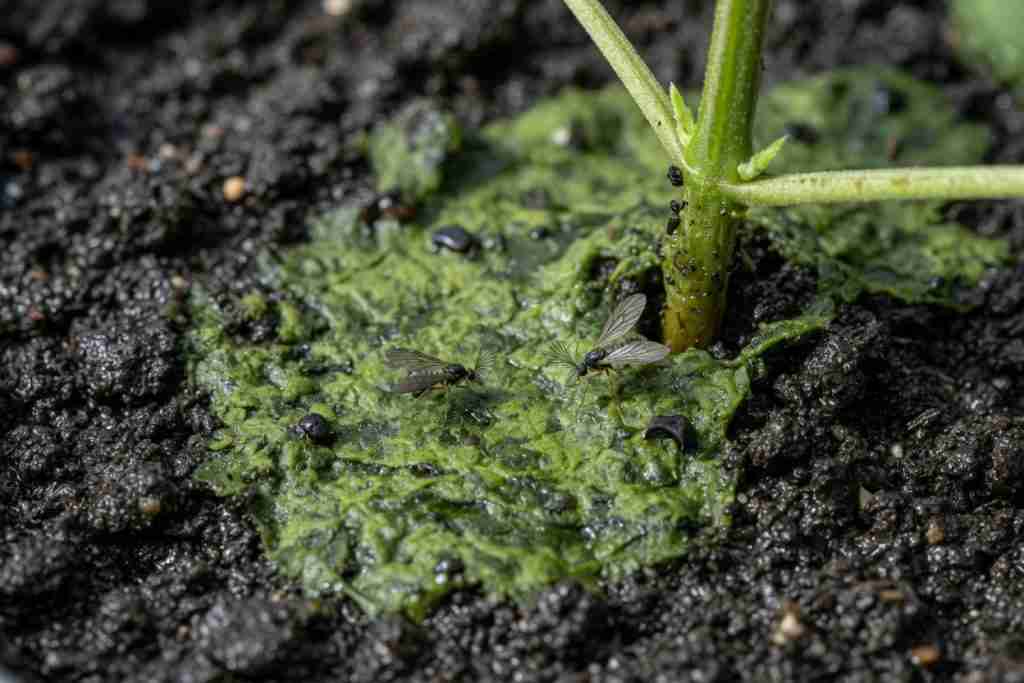
Fungus gnats and a green crust are the same complaint. The surface never dried. Adults lay in that film. The algae is the film you can see. The larvae are in the top of the mix, chewing roots that were already struggling. A dome left on for two weeks over a wet cup builds this on a windowsill without anyone meaning to.
Take the dome off once the stem is standing. Let the top go dull, and water by the weight of the cup. A yellow card shows adults. It does not dry the mix. If the crust is sealing the surface, scrape it and add a thin layer of dry perlite, kept off the stem. A rotten smell means the cup goes in the trash. Drying it in the sun does not sterilize it.
Mix From Last Year

Mix from a healthy plant can be sifted, cut with fresh perlite, and used as part of a transplant blend. It is not a seed mix. It carries leftover salts, broken-down fines, and pieces of old root. Debris on the surface is what you screen out, not proof a seed can use what is left. Seeds get a fresh light batch every time. The old blend can wait under a plant that already has white roots holding a plug.
If last year’s pot had gnats, a rotten stem, or a plant that wilted from the bottom, do not save it. A solo cup is a perfect incubator for what you cannot see. Bag it and throw it out. A healthy leftover, refreshed with perlite and a small share of castings, is fine in the second pot. The first cup stays simple. Light mix, a thin cover, one watering to close it, then patience until the plug holds.
Light mix while the seed feeds itself. A richer pot once the roots hold and the plant has leaves enough to use the food. Water that leaves the holes. Meals, manure, yard clay, and a bag that feeds for months can wait until the plant is actually growing.