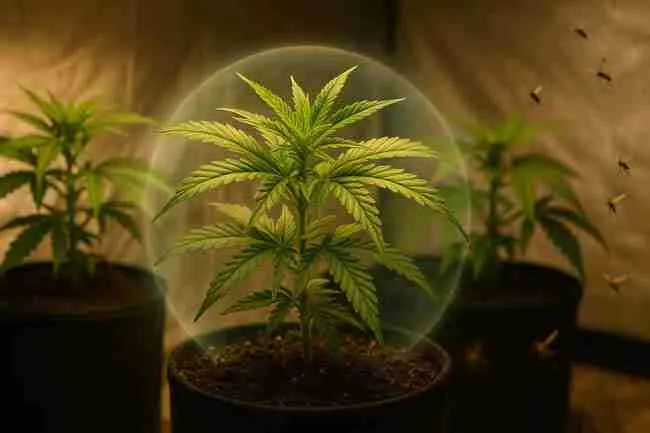
The Benefits of Using Mycorrhizal Fungi in Cannabis Cultivation

Mycorrhizal fungi in cannabis cultivation are a trade at the root. The fungus lives inside a root cell. It brings phosphorus, zinc, copper, and a film of water. The plant pays in sugar. The pouch on the bench only earns that trade when the powder touches a moist living root, the species on the label is arbuscular, and soluble phosphorus stays modest for a few weeks so the plant keeps paying.
This page is for a four-plant grower who wants that trade on a marijuana root, not a pine root, and not a sales story. Recreational cultivation in Canada is four live plants per household, Cannabis Act s.12. A seedling counts. Quebec still prohibits recreational cultivation. Manitoba has been indoor-only since 1 May 2025. Age is 19 in most provinces, 18 in Alberta, 21 in Quebec. A lease and a city bylaw still sit on top. The household year lives on cannabis cultivation in Canada.
Bacteria versus fungi as a map lives on the cannabis microbiome. Keeping a hyphal network after it exists lives on mycelium networks for cannabis health. Whether fungi speed a pop lives on mycorrhizae at germination. Disease fungi live on fungi as friend or foe. Mix choice lives on dirt vs living soil. You are here for how to put arbuscular mycorrhizal fungi on a cannabis root, what they actually trade, and when the pouch fails.
Mycorrhizal fungi in cannabis cultivation are a root trade
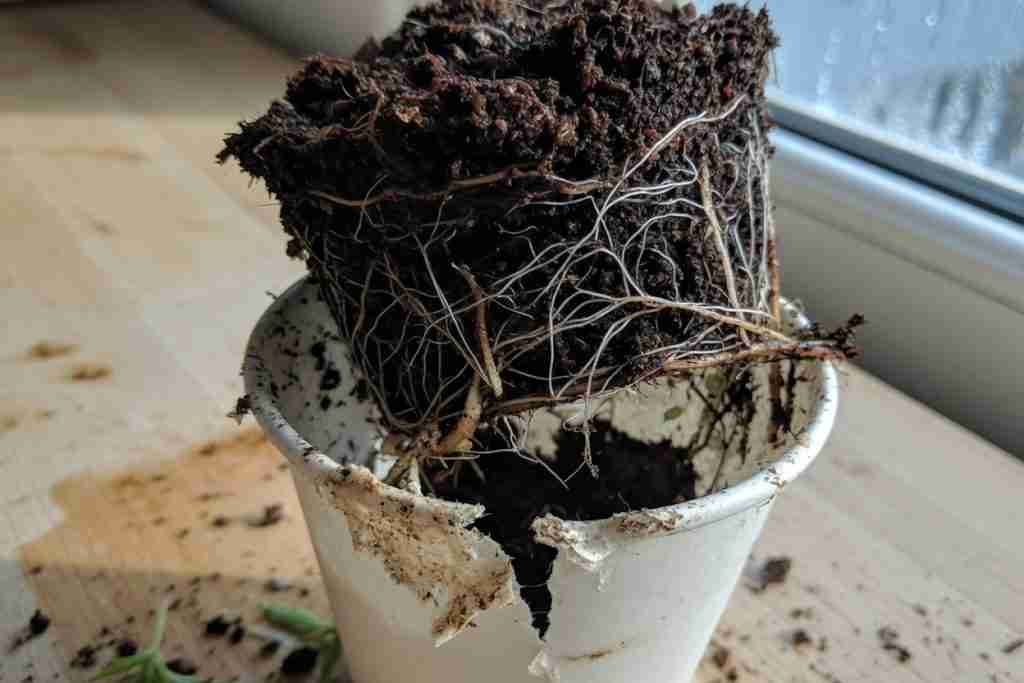
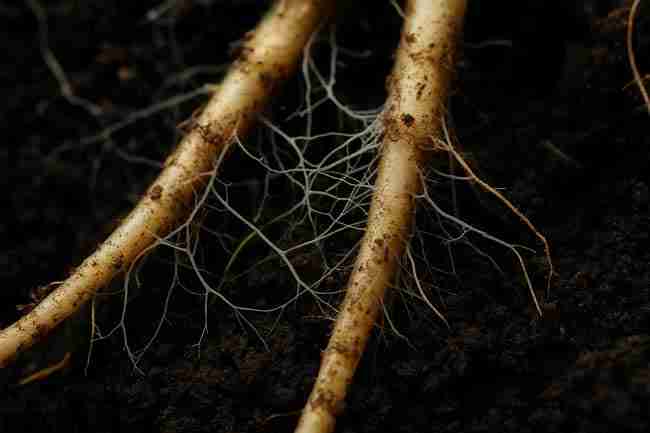
Knock a seedling out of a cup and you sometimes see white threads in the mix. Those threads are hyphae. The part that pays the plant is smaller. Arbuscular mycorrhizal fungi push into a root cell and branch there. Growers call that an arbuscule. Cannabis ships sugar into that cell. The fungus reaches into pores a root hair never enters and brings phosphate back. Zinc and copper travel the same thread. A little water travels with them.
That is the job. It is a hired set of pipes. It is not a bigger taproot. How microbes sit around a cannabis root lives on how soil microbes interact with cannabis roots. Root health as a daily job lives on healthy cannabis roots. Media, watering, and pot size as a system live on environment, media, watering, pot sizes.
The plant pays in sugar and fires a bad deal
A colonized root spends sugar on the fungus. The plant keeps that spend when the fungus is cheaper than mining the same phosphorus itself. Flood the pot with a soluble bloom bottle and the plant already has phosphate at the cell wall. The sugar stops. The hyphae thin out. That is the phosphate switch, and it is the main reason a four-plant grower dusts a root and then watches the bottle. Phosphorus as a meal lives on phosphorus nutrition in cannabis cultivation. How pH parks that meal lives on soil pH for cannabis.
Colonization takes weeks on a growing root
Dust today. Live spores can germinate in days if the root is moist and the mix is not sterile-hot with copper. Arbuscules take a couple of weeks on new root tips. Peak colonization often lands in late veg on a photoperiod plant. An autoflower has a shorter calendar, so the same dust still happens at first pot-up, and you skip the late show. Photoperiod versus auto as a room decision lives on photoperiod vs autoflower. The seedling window lives on the cannabis seedling stage. Veg lives on the cannabis vegetative stage.
Cannabis wants arbuscular fungi, not tree fungi
Cannabis forms arbuscular mycorrhizae. Growers also say endomycorrhizae. The fungus goes into the cell. The genera that keep showing up in cannabis work are Rhizophagus, including Rhizophagus irregularis (the old Glomus intraradices name), and Funneliformis mosseae (the old Glomus mosseae name). A pouch that lists those names is speaking the right language. A pouch that lists a forest of tree fungi is speaking pine.
Ectomycorrhizal fungi wrap a sheath around tree roots. Oak, pine, birch, fir. They stay outside the cell. They do not run the cannabis trade. All-purpose garden jars pad the label with those names because the same SKU sells to a landscaper. You paid for a forest inoculant. Keep that jar for a pine seedling. Weed in a fabric pot wants the arbuscular list. Read every Latin name. If the first three are tree fungi and Rhizophagus is a footnote, the scoop is mostly padding.
Trichoderma is a surface bodyguard
Many “myco” pouches mix Trichoderma with arbuscular spores. Trichoderma lives on the root surface. It can crowd some pathogens. That is a different job from the intracellular phosphorus trade. Read the panel. If the only Latin name is a Trichoderma, you bought a bodyguard. If the panel lists Rhizophagus plus Trichoderma, you bought two products in one scoop. Disease fungi live on the friend-or-foe page. Room pest work lives on integrated pest management for cannabis. The plant’s own immune jobs live on boosting the cannabis plant immune system. Inoculants as a class live on microbial inoculants for cannabis. Lactic acid bacteria as a separate crew live on lactic acid bacteria in cannabis cultivation.
Phosphorus, zinc, copper, and water are the actual benefits
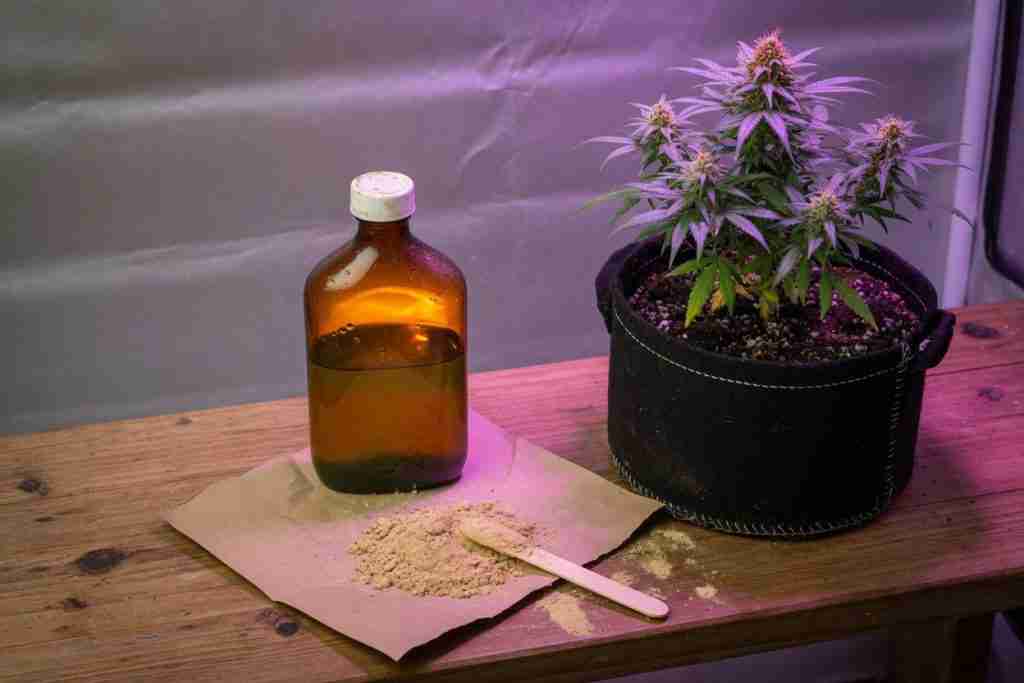
The honest list is short. Phosphate the root hair misses. Zinc. Copper. A bit more water through hyphae in mix that dries between waterings. Stress tolerance that follows from that meal. Soil crumbs that follow if the mix already has organic matter the hyphae can bind. That is the benefit of mycorrhizal fungi in cannabis cultivation when the pouch is alive and the feed is modest.
Skip a competitor’s yield percent. Skip a THC percent from a greenhouse paper that used a different species and a different room. A 2022 cannabis inoculant comparison in Frontiers (Seemakram and coworkers) showed species matter: some Rhizophagus lines beat a fertilized control on height and biomass, and some lines did nothing useful. The better species grew taller than the fertilized control. That is the useful sentence. The number on a sales card is a different product.
Phosphorus is the main paycheck
Hyphae mine organic and mineral phosphorus a root hair never reaches. In a four-plant pot with modest available P, the fungus is a scavenger. In a pot you already flood with bloom salt, the plant has no reason to hire anyone. Keep early feed in the veg range. Let the partnership set. Then run bloom the way you already run bloom. Feed as a system lives on advanced nutrient management for cannabis. Bottled salt lives on synthetic cannabis fertilizers. Meals and teas live on organic marijuana fertilizer. Flower timing lives on the cannabis flowering stage.
Zinc and copper ride the same hyphae
Zinc and copper are micronutrients. Cannabis still needs them. A peat mix that binds them, a coco that started empty, or a pH that locks them is where the fungus earns its sugar. You still pH the jug. You still avoid a kitchen-sink micronutrient dump. How the mix holds cations lives on cation exchange capacity. Amendments as a class live on organic growing amendments for cannabis.
Water follows the thread
Hyphae hold a film of water and move a little of it toward the root. That helps a fabric pot that dries between waterings. It does not replace the can in a heat wave. Keep the same wet-dry you already run. Watering lives on how to water cannabis plants. Outdoor beds live on growing cannabis outdoors.
A dry week is still a watering job
Do not skip water because a pouch promised drought armor. A four-plant tent still needs a schedule. A plant that wilted in veg still needs recovery work on post-vegetative stress recovery. Yield as a whole-room job lives on increasing cannabis yields.
Put the powder on the root, not on the leaf
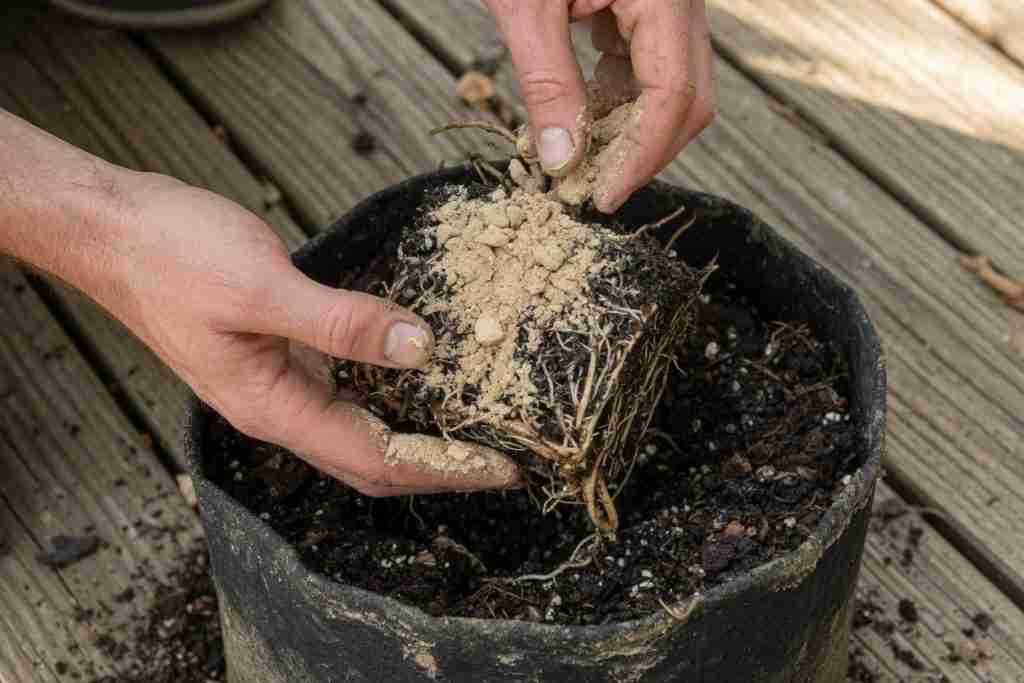
Direct contact at transplant is the highest-value window. Water the cup an hour before you knock it out so the ball holds. Moist root. Thin coat of powder on the sides and the bottom, enough that you see tan on the mix, not a crust. Set into moist mix. Water in with plain water. Skip fungicide, skip peroxide, skip a copper drench on that same day. Extra powder does nothing useful. Spores need a root cell. A pile on the kraft paper is waste. Dry powder on a dry ball falls off in the hole. The transplant job itself lives on transplanting cannabis seedlings.
Dust and dip beat a drench and a top-dress
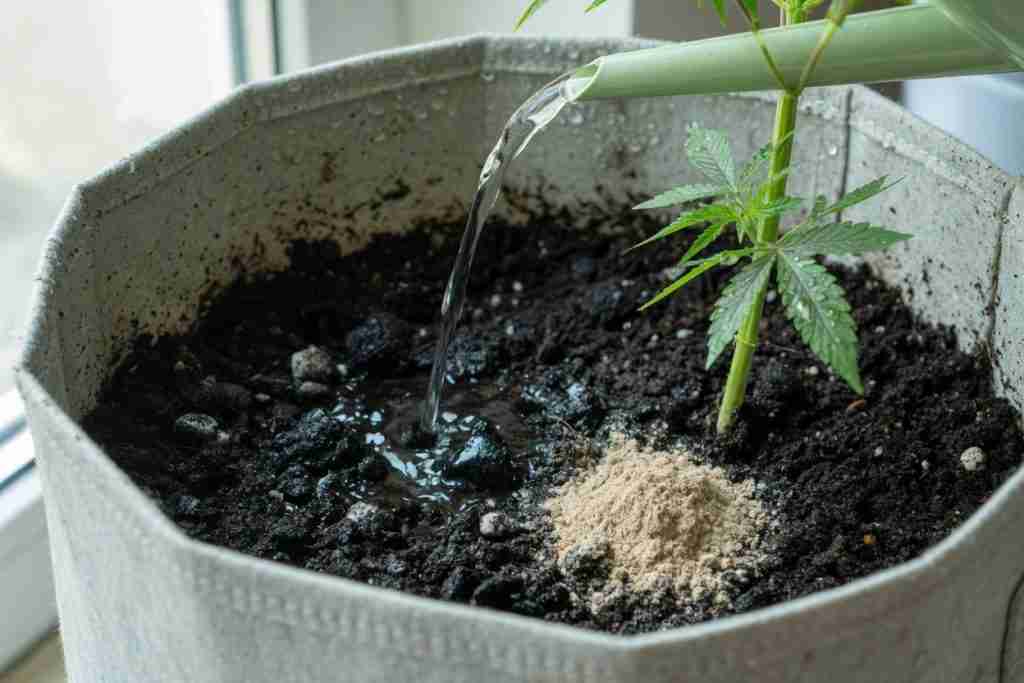
A slurry drench can work if it actually hits new roots. Most of it sits in the top inch and never meets a tip. Top-dress is the same story: you watered a hill of tan powder that stays on the crust. If the plant is already in the pot and you missed transplant, scratch a little mix away from the stem, dust the exposed roots, cover, and water. That is still a weaker window than doing it when the ball was in your hand. First-grow walk: growing weed.
Clones get the same dust at first pot-up
A rooted cut is a new root system. Dust at the first pot-up the same way you dust a seedling. A clone that already sat in a cup for two weeks still takes the coat when it moves. How to take the cut lives on how to clone cannabis.
The paper towel is the wrong station
Mycorrhizae do not pop a seed faster. The fungus has no leaf to feed it until the seedling is photosynthesizing and the root is growing. Dust when you move the plant out of the cup. Keep the paper towel for the seed. That argument in full lives on the germination sibling. Named packs from the shop still follow the same 70 percent paper-towel bar the rest of this site uses. A 5-pack is spare seed, about four dollars CAD a named seed, about a dollar a mix seed: why a 5-pack is the default order.
High soluble phosphorus tells the plant to fire the fungus
This is the phosphate switch. Abundant soluble P, the plant stops shipping sugar. High phosphorus does not always poison the spore on contact. The plant fires the partnership. Delay the P-heavy bloom bottle two to three weeks after you inoculate. Keep a modest veg feed. Then bloom as you already planned. A living mix with slow meals is gentler on the switch than a weekly salt dump. If you already run a hot bottled recipe, cut the phosphorus line first and leave nitrogen and potassium where they were. Organic versus bottled as a seed story lives on organic vs non-organic cannabis seeds.
Sterilants kill the pouch you just bought
Hydrogen peroxide in the rez. Copper fungicides in the mix. Systemic soil fungicides. Bleach rinses. First-draw high-chlorine tap dumped straight on a fresh dusting. Those jobs belong to a sick-root protocol, not to the week you inoculate. If you must clean a rez, you are already in water culture, and arbuscular fungi have a hard time there anyway. Metals in bottles and fittings are a separate audit on how to avoid heavy metals in cannabis cultivation.
What to feed while the fungus is moving in
Water. A light veg feed. Compost or worm castings if that is already your mix. Skip the bloom booster. Skip the “PK spike” in week one of flower if you dusted at the flip. Give the root two to three weeks of modest P. Then feed flower the way the cultivar asks. Compost you built lives on composting for cannabis growers. Castings live on worm castings. Biochar as a structure tool lives on biochar and cannabis.
Coco, hydro, and a sterile bag
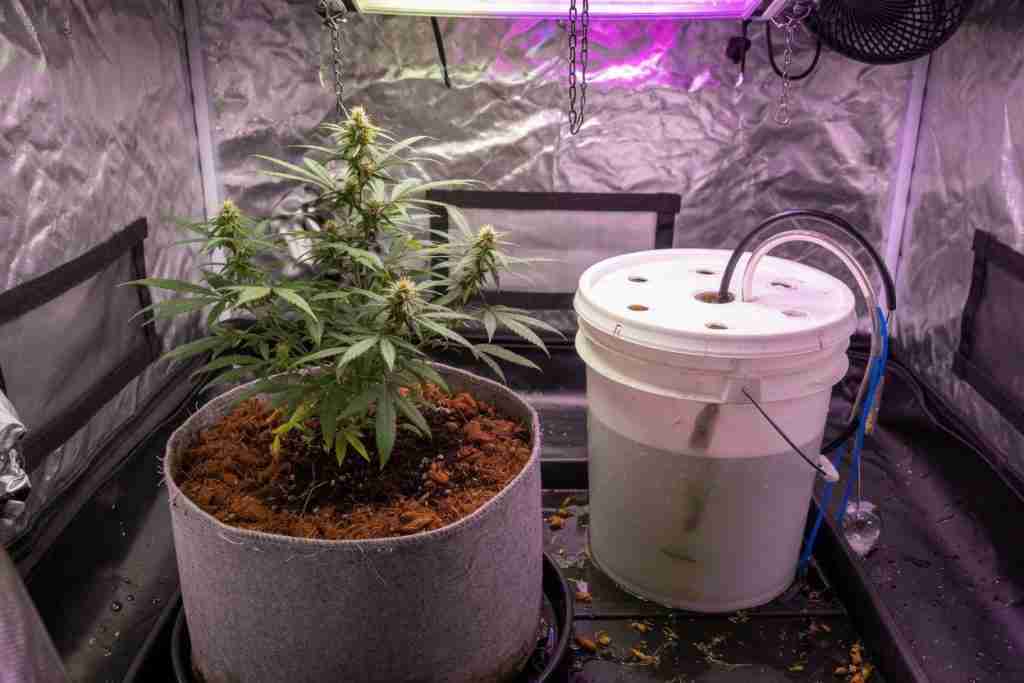
Bagged coco, peat, and bark start empty of arbuscular fungi. Heat-treated bags and compressed bricks are sterile on purpose. That is why the pouch exists. Coco can colonize when soluble phosphorus stays modest and you dust the root. Expect a thinner partnership than a living soil bed that already holds a community. Perlite and clay pebbles add air. They add no fungus. How to run coco lives on growing cannabis in coco coir. Soilless as a method lives on soilless cannabis cultivation. A first bag lives on the best soil for growing cannabis. Organic mix as a recipe lives on organic cannabis soil.
A no-till bed you have fed for a year already has fungi. The pouch is a top-up, not a rescue. How to start that bed lives on no-till living soil cannabis. Soil versus hydro as a room choice lives on soil vs hydroponic cannabis.
Pure water culture is a poor home
Deep water culture, a sterile rez, and a net pot with almost no solids give the fungus nowhere to live. Coco in a fabric pot is a solid. Rockwool is a solid with little food. Hydro growers who want AMF add a solid medium, or they skip the pouch and run a clean salt recipe. The hydro walk lives on the hydroponic cannabis growers guide. Tent climate lives on the best growing environment for cannabis.
What the pouch must list
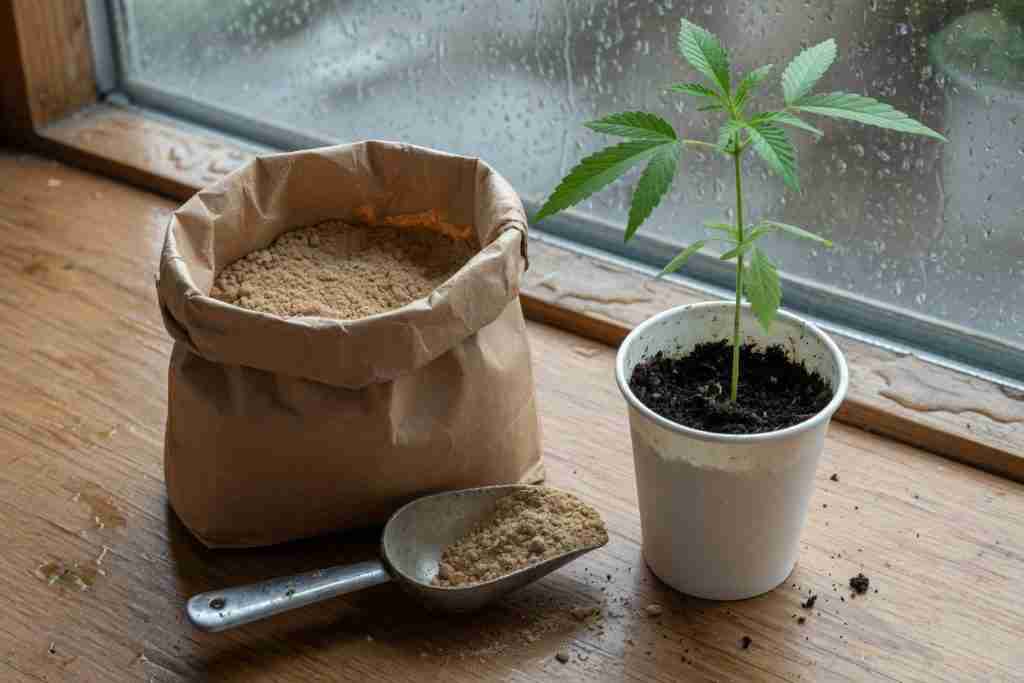
Latin species. Propagule count per gram or per pound. A packed-on date or a best-by. Storage: cool, dry, closed. A pouch that only says “beneficial fungi” is a wish. Cheap packets go stale on a garden-center hook. Spores die in heat. A greenhouse audit of commercial inoculants (Salomon and coworkers, 2022) found most packets never colonized even in sterile soil. Buy the label you can read. Keep the receipt. If nothing colonizes, the failure is often the pouch, the phosphorus bottle, or the peroxide. The plant genetics are rarely the reason a four-plant root stays empty.
How much powder for four plants
A pinch that coats the root ball of each plant. Four plants, four pinches. Recreational Canada is four live plants per household. Do not dump the rest of the pouch into one hole. Spare seed sits in the 5-pack. Packs from Canada live on cannabis seeds from Canada. The country hub lives on buy cannabis seeds in Canada.
One pouch, one season
Opened powder takes humidity. Close it. Fridge if the label says cold storage. Leave it open on a hot tent floor and you bought dust. Date the bag with a marker the day you crack it. Next season, buy a fresh pouch if the date is gone.
Mycorrhizal fungi in cannabis cultivation questions that keep coming up

Does mycorrhizal fungi in cannabis cultivation raise THC?
Do not trust a percent on a sales page. Flower chemistry follows genetics, light, harvest, and how you dry. A healthier root can hold a plant through a dry week. That is a meal story. Things that actually move a crop live on the most important things growing cannabis.
Can I see colonization with a loupe?
A loupe might show extra hyphae on a washed root. True arbuscules take a stain and a microscope. A four-plant grower judges by how the plant drinks and how the leaves hold color on modest feed. If the plant still wants a heavy salt dump to stay green, the partnership never set, or you fired it with phosphorus.
Will the powder save a sick root?
A dying root from pythium wants oxygen, a drier cycle, and a clean pot. Dusting a rotting ball is theatre. Sort the disease first on the friend-or-foe page, then inoculate a healthy transplant. The powder is for a living root that can still pay sugar. A brown, sour ball cannot hire anyone.
Do autos and photoperiods take the same dust?
Yes. Dust at first pot-up. The auto has fewer weeks for the fungus to pay rent. Keep soluble phosphorus modest through early stretch. Flip a photoperiod when the plant is ready, not when a calendar says the pouch has finished.
Can I mix the powder with worm castings?
Yes. Living amendments and arbuscular fungi can share a pot if you skip the sterilant. Castings are food and microbes. The pouch is the arbuscular spore load. Keep both off a bleach rinse.
What about Quebec and Manitoba?
Quebec still prohibits recreational cultivation. Manitoba has been indoor-only since 1 May 2025. Four live plants elsewhere in Canada, seedling included. Age 19 in most provinces, 18 in Alberta, 21 in Quebec. The pouch does not change the plant count.
Where do marijuana and weed growers start this week?
Read the pouch for Rhizophagus or Funneliformis, a propagule count, and a date. Dust the root at transplant. Keep soluble phosphorus modest for two to three weeks. Skip peroxide and copper on that same water. Keep four plants. More grow notes live on the cannabis cultivation blog.
This week, in order: buy a dated arbuscular pouch. Dust four moist root balls. Water with plain water. Leave the bloom bottle on the shelf until the partnership has a chance. Keep four plants. Hang the cola you grew on purpose.