Terpenes and the Entourage Effect: Why Aroma Matters


Imagine you’re walking through your cannabis garden. A breeze hits your nose—bam! You smell lemon, pine, maybe even skunk. But here’s the kicker… those smells aren’t just pretty perfumes. They’re power. They’re terpenes. And they’re key to unlocking what’s called the Entourage Effect—a game-changer for growers, breeders, and even casual puffers.
If you’ve ever wondered why one strain chills you out while another turns you into a giggly astronaut, keep reading. You’re about to discover how terpenes supercharge THC and CBD like teammates in a tag team wrestling match.
Let’s dig into the dirt and uncover why aroma isn’t just fluff—it’s function.
What Is the Entourage Effect?

The Team-Up of a Lifetime
The Entourage Effect is what happens when all the compounds in cannabis—terpenes, cannabinoids, flavonoids—work together in harmony. You see, THC and CBD may be the headline acts, but without their entourage (pun fully intended), they’re not performing at full power.
Think of THC as the star quarterback. Sure, he can throw a ball—but without the team blocking, running, and catching, he’s just a guy in tight pants.
The Science Bit (Simplified!)
- THC: Main psychoactive compound. Gets you high.
- CBD: Non-psychoactive. Helps with anxiety, pain, etc.
- Terpenes: Aromatic compounds. Guide the experience.
When you combine them, something magical happens: the effects become amplified, balanced, or even modulated based on the terpene profile.
What Are Terpenes, Really?
Nature’s Aromatic Ninjas
Terpenes are aromatic molecules found in all kinds of plants—lavender, pine, citrus fruits, and of course, cannabis. They’re responsible for how your bud smells and even taste.
But they do a lot more than scent.
Top Cannabis Terpenes You Need to Know:
| Terpene Name | Aroma Profile | Common Effects | Found In |
|---|---|---|---|
| Myrcene | Earthy, Musky | Sedating, relaxing | Mango, Hops, Lemongrass |
| Limonene | Citrus, Lemon | Uplifting, anti-anxiety | Citrus peels, Rosemary |
| Pinene | Pine, Forest-like | Alertness, memory support | Pine needles, Basil |
| Linalool | Floral, Lavender | Calming, anti-anxiety | Lavender, Coriander |
| Caryophyllene | Peppery, Spicy | Anti-inflammatory, pain relief | Black Pepper, Cloves |
| Terpinolene | Fruity, Herbal | Energizing, mood-lifting | Nutmeg, Tea Tree |
And yes, you can absolutely grow for these terpenes on purpose.
Why Aroma = Effects: The Connection Between Scent and Sensation

You’ve probably smelled a strain and thought, “Ooooh that smells potent.”
That’s because your nose is a better cannabis tester than any THC label. Terpenes act on your olfactory system, which is directly tied to the brain’s limbic system—your emotion and memory center.
Here’s where it gets wild: when you inhale a terpene like limonene, your brain might go, “Hey! This smells like lemons and summer!” and boom—you feel uplifted. Your body reacts on a chemical and emotional level.
So yeah, smell matters. It tells you what kind of ride you’re getting on.
Growing for the Entourage Effect

How to Boost Terpenes in Your Garden
You can’t just dump nutrients and pray. Terpenes are sensitive. They thrive with love, light, and stress (but the good kind).
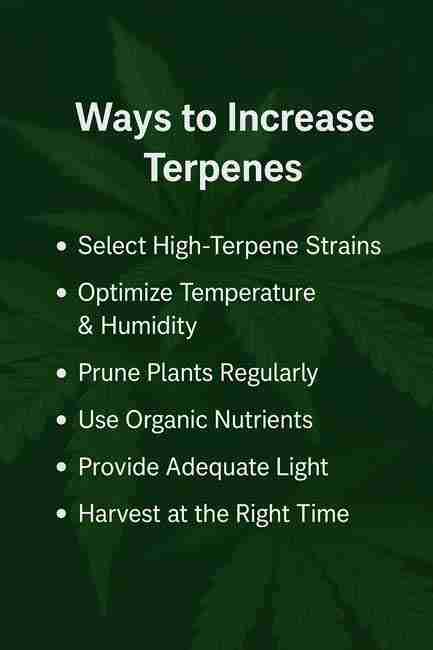
Tips for Maximizing Terpenes:
- Dial In Your Lighting: UVB light stimulates terpene production.
- Flush Properly: Don’t skip this. Residual salts dull flavors.
- Low-Stress Training (LST): Bending branches boosts resin.
- Cooler Temps at the End: Preserve volatile aromatics.
- Use Organic Amendments: Compost teas, molasses, kelp—these feed microbes that boost terpene expression.
- Cure Slowly: Never rush the dry/cure process. Terps vanish above 70°F.
Soil vs. Hydro: Which Grows More Terpenes?
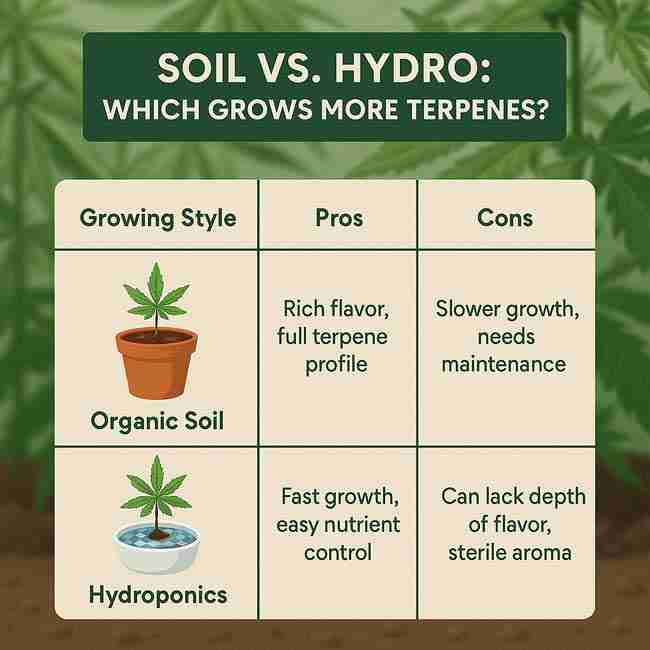
| Growing Style | Pros | Cons |
|---|---|---|
| Organic Soil | Rich flavor, full terpene profile | Slower growth, needs maintenance |
| Hydroponics | Fast growth, easy nutrient control | Can lack depth of flavor, sterile aroma |
Verdict: If you want nose-punching, terp-heavy buds that make your jar smell like a candy store, soil’s your jam.
The Role of Terpenes in Medicinal Cannabis
Here’s where the Entourage Effect gets serious.
For patients with chronic pain, PTSD, anxiety, or epilepsy, terpene profiles can make or break their experience. Some terpenes enhance the bioavailability of cannabinoids, while others direct where they go in the body.
Examples of Medicinal Entourage Combos
- Linalool + CBD: Helps with anxiety and sleep
- Pinene + THC: Keeps you sharp while elevated
- Caryophyllene + CBD: Reduces inflammation and pain
- Myrcene + THC: Powerful body high, great for insomnia
Knowing the terpene profile is just as important as the THC content when you’re treating specific symptoms.
Terpene Testing: Don’t Guess—Test
You can’t always rely on your nose. Lab tests can reveal hidden terpene profiles that explain why your “sativa” acts like an “indica.”
Look for these metrics on a lab report:
- Total Terpene %
- Dominant Terpenes
- Minor Terpenes
Fun Fact: Some premium strains have 3–5% total terpenes, which is high. Anything over 2% is solid.
The Pros and Cons of Chasing the Entourage Effect
Pros
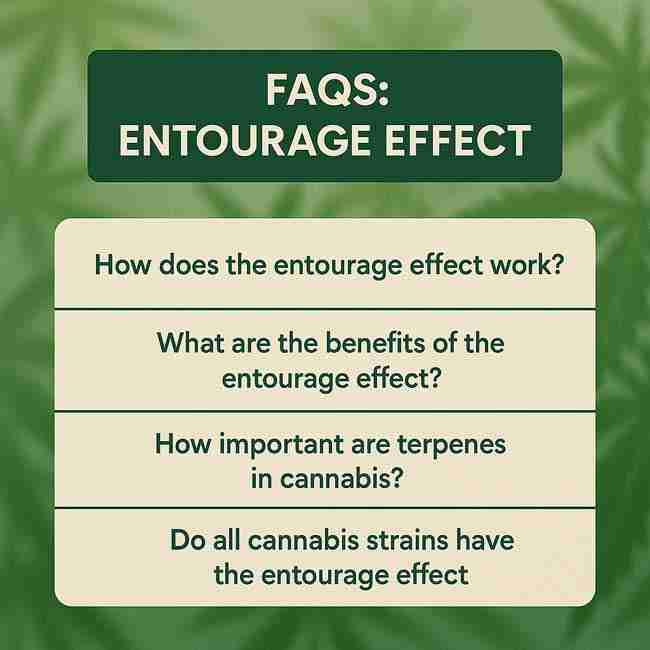
- More personalized effects
- Enhanced flavor and aroma
- Better medicinal outcomes
- Synergy means less THC can do more
- Better consumer satisfaction (especially if you’re breeding)
Cons
- Requires terpene testing (added cost)
- Not all strains are well-documented
- Environmental stress can destroy terpene levels
- Curing mistakes can ruin your hard work
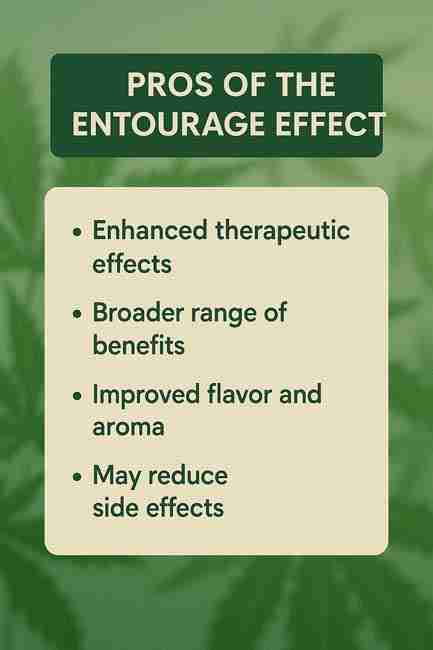
FAQ: Entourage Effect & Terpenes
Q: Does the Entourage Effect happen with CBD only strains?
A: Yes! Even without THC, CBD works better when paired with other cannabinoids and terpenes.
Q: Can I increase the Entourage Effect by mixing strains?
A: You bet. Blending different terpene profiles can create hybrid effects that suit your needs better.
Q: Are synthetic terpenes the same?
A: Nope. Natural terpenes from cannabis or botanicals are more complex and effective than lab-made ones.
Q: Do edibles and concentrates still have the Entourage Effect?
A: Some do, if the extraction process preserves the terpene profile. Always check the product’s COA (Certificate of Analysis).
Q: How do I pick a strain for the Entourage Effect?
A: Look beyond THC. Focus on full spectrum options with detailed terpene breakdowns and lab reports.
Real Life Growing Example
Let’s say you grow two plants—same strain, different methods.
- Plant A: Hydro, heavy nutes, quick-dried, no cure.
- Plant B: Organic soil, slow-dried, cured for 3 weeks in glass jars.
Even if both test at 22% THC, Plant B will feel stronger, tastier, and smoother. That’s the Entourage Effect at work, friend.
Final Thoughts: Grow for the Nose, Stay for the High
So next time you’re sniffing a nug and thinking, “Whoa, that smells like pineapples and diesel,” remember—you’re smelling potential. The Entourage Effect is real, and it’s something you can grow into every single harvest.
As a cannabis cultivator, breeder, or enthusiast, learning to read terpenes is like learning a new language. One that speaks to healing, high, and harmony.
Grow smart. Cure slow. Smell everything.
And let the entourage work its magic.