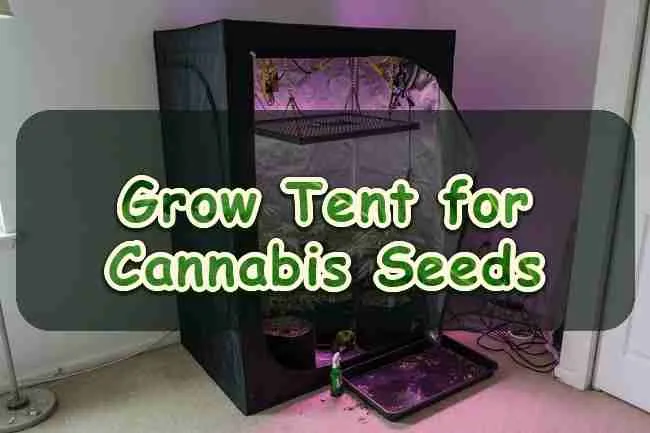
Taming Heat Waves: Emergency Cooling Tricks for Small Cannabis Tents

When you unzip your grow tent and a hot, thick wall of air hits your face, your heart drops. You know your plants feel it even more than you do. In a small tent, summer heat cannabis problems show up fast: droopy leaves, taco edges, burnt tops, weak smells.
You can’t control the weather outside. However, you can control your grow tent. This guide walks you through simple, fast emergency moves and long-term tricks to keep a cool grow tent, even during nasty heat waves. I’ll talk to you like you’re right there in the room, fans humming, plants sweating, and you trying to save the day.
Why Heat Waves Are So Dangerous for Small Grow Tents
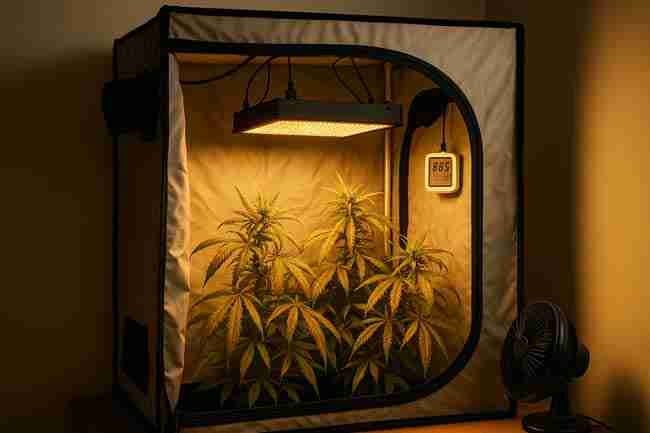
Small tents heat up like a parked car in the sun. There’s not much air, not much volume, so temperatures spike very fast.
What Happens to Cannabis in Summer Heat
When summer heat hits your cannabis plants inside a small tent, you see things change almost hour by hour:
- Leaves droop like wet towels
- Leaf edges curl up (tacoing)
- Tops bleach or turn yellow under the light
- Buds grow loose and airy instead of dense
- Smell and terpenes fade or smell “cooked”
- Pests and mold show up easier in the chaos
Your cannabis doesn’t just “feel uncomfortable” in heat. It stops building quality buds. Heat pushes your plants into stress mode. Instead of focusing on flowers, they fight to stay alive.
The Hidden Heat Sources in a Small Tent
The problem isn’t just summer heat outside. You also create heat inside the tent:
- Grow lights (LEDs still make heat, just less than HID)
- Ballasts and drivers
- Dehumidifiers
- CO₂ gear
- Your own body heat when you work in the tent
All that sits in a tiny fabric box. If you don’t move hot air out, it just keeps stacking.
Know Your Numbers: Ideal Temps and Humidity for a Cool Grow Tent

You can’t tame heat waves if you guess. You need numbers. Think of your grow like a car dashboard: you watch the temperature and humidity and react before trouble hits.
Simple Target Ranges
Here’s a simple cheat table you can use as a guide for a cool grow tent:
| Growth Stage | Day Temp (°C) | Day Temp (°F) | Night Temp (°C) | Night Temp (°F) | RH % (Humidity) |
|---|---|---|---|---|---|
| Seedlings/Clones | 22–26 | 72–79 | 20–23 | 68–73 | 65–75 |
| Veg | 22–28 | 72–82 | 18–22 | 64–72 | 50–65 |
| Early Flower | 22–27 | 72–81 | 18–22 | 64–72 | 45–55 |
| Late Flower | 20–26 | 68–79 | 17–21 | 63–70 | 40–50 |
Once your temps creep over 30°C (86°F) for long periods, summer heat cannabis symptoms show up fast. Above 32–34°C (89–93°F), you move into real danger in a small tent.
Tools You Need to Watch Heat
You don’t need fancy gear, but you do need something to track conditions:
- A cheap digital thermometer/hygrometer combo
- One extra sensor at canopy height
- Optional: an infrared temp gun (to check leaf surface temperature)
Hang one sensor at plant top level, not just at the tent wall. Your leaves live where the light hits, so you read temps there.
Reading Your Tent Like a Dashboard
Watch for these patterns every day:
- Lights on temp spike? Your lights give most of the heat.
- Humidity spike right before lights out? Plants sweat more then.
- Big day/night swings? More than 8–10°C difference can shock plants.
You treat your readings like warning signs. When temps climb, you don’t wait. You act.
Fast Emergency Moves When Your Grow Tent Is Too Hot
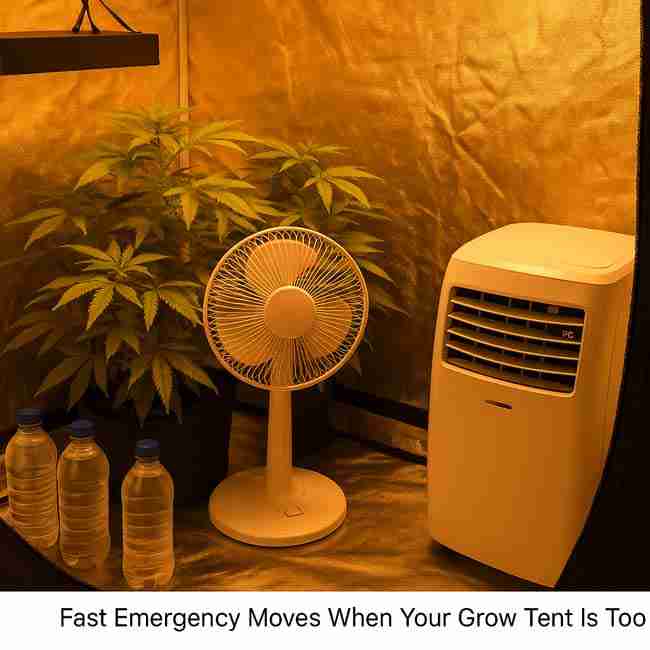
Let’s say you open the tent and your thermometer screams 34°C (93°F) or more. You don’t have time to plan. You need quick “oh crap” moves.
Immediate 5–10 Minute Emergency Tricks
Here’s a simple emergency list you can follow when your cool grow tent turns into an oven:
- Dim or Raise the Light
- Turn the dimmer down if you have one.
- Raise the light as high as possible.
- If things look really bad, turn the light off for 1–2 hours.
- Open the Tent
- Unzip the main door fully.
- Open any side vents.
- Point a fan so it blows cooler room air into the tent.
- Boost Exhaust
- Turn your exhaust fan to max speed.
- If you have a speed controller, crank it.
- Check ducting for bends or blockages.
- Use Frozen Water Bottles
- Grab any frozen bottles from your freezer.
- Place them in the tent or in front of the intake.
- Replace them as they melt.
- Turn Off Extra Heat Makers
- Turn off dehumidifier for a short time.
- Turn off any extra gear that warms the tent.
These emergency moves won’t fix your whole setup, but they buy you time. You stop the worst of the heat while you plan a better, long-term cooling setup.
Airflow Fixes: Fans and DIY Intake Cooling Tricks

Most small growers underestimate airflow. You don’t just want a fan “somewhere.” You want a smart system that pulls hot air out and brings fresh, cooler air in.
Building a Simple Airflow System
Think of air like water in a pipe. You want it to flow in one direction:
- Fresh air in low
- Hot air out high
Basic setup for a small cool grow tent:
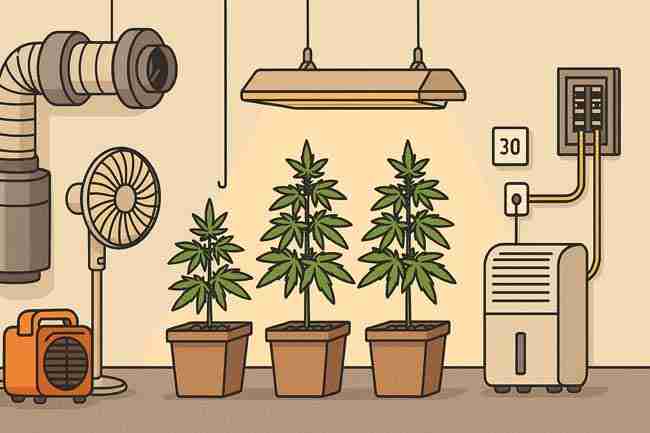
- Exhaust fan at the top of the tent, pulling air out
- Carbon filter hooked to that fan if smell matters
- Passive intakes (mesh flaps) open near the bottom
- Circulation fans inside the tent, moving air over the canopy
You don’t point fans directly at plants like a hurricane. Instead, you stir the whole tent so leaves gently flutter. That keeps leaf surfaces cooler and dries sweat (transpiration).
DIY Intake Cooling (Cheap but Effective)
When heat waves hit, DIY intake cooling can give you a surprising boost, even if you don’t own an AC. Let’s run through a few tricks.
Frozen Bottle Intake Cooler
- Put a small fan on the floor in front of your open intake vent.
- Place 2–4 frozen water bottles right in front of that fan.
- The fan pulls air over the ice and sends cooler air into the tent.
- Rotate melted bottles back into the freezer.
You won’t drop the whole room 10 degrees, but you might shave off 2–4°C inside the tent. In a small space, that matters.
Wet Towel Intake Hack
- Hang a wet (not dripping) towel in front of your intake.
- Point a fan at the towel.
- As water evaporates, it cools the air a little before it enters the tent.
This works better in dry climates. In already-humid rooms, it can push humidity too high.
DIY Box Cooler for Your Cool Grow Tent
You can build a quick “poor man’s” cooler:
- Get a small foam or plastic box.
- Cut a hole on one side for a small fan.
- Cut another hole on the opposite side for air to exit.
- Fill the box with ice packs or frozen bottles.
- Put the fan so it blows air across the ice and out the exit hole.
- Aim that exit hole toward your tent intake.
This gives you a simple DIY intake cooling unit. It’s not a real AC, but it’s cheap and fast when summer heat cannabis problems hit hard.
Beating Summer Heat Cannabis Problems With Room Cooling

Here’s the big truth: your tent can never be cooler than the room it sits in. If the room cooks, the tent cooks. So you treat the room as your “lung” and cool that first.
Using a Portable AC Grow Setup
A lot of growers turn to portable AC grow units when heat waves hit. They can save a crop if you set them up right.
Key points when you use a portable AC for your cool grow tent:
- Cool the room, not the inside of the tent directly
- Put the AC in the same room as the tent.
- Let the tent pull in that cooler room air.
- Vent the AC properly
- Run the hot exhaust air out a window or into another room.
- Make sure hot air doesn’t leak back into the grow room.
- Size the AC unit
- A rough rule:
- Very small rooms (closet sized): 5,000–8,000 BTU
- Small bedroom grow: 8,000–12,000 BTU
- LED lights use less BTU than HIDs, so you can size slightly smaller.
- A rough rule:
- Keep filters clean
- Dirty filters make the AC run hotter and weaker.
- Clean them regularly during summer heat.
You don’t need to blast the room ice cold. Even dropping room temp from 30°C to 26°C lets your cool grow tent stay in a safe zone.
Dehumidifier + AC Combo
Heat waves often pair with sticky, humid air. Your plants sweat more, and your tent starts to feel like a jungle.
- AC units usually dry the air a bit, which helps.
- In very humid areas, you might still need a separate dehumidifier.
Careful though: dehumidifiers also create heat. You can:
- Put the dehumidifier outside the tent and let the tent pull the drier air in.
- Only run it when lights are off if temps feel too high during the day.
Light Management: Cooling Your Tent Without Killing Yield
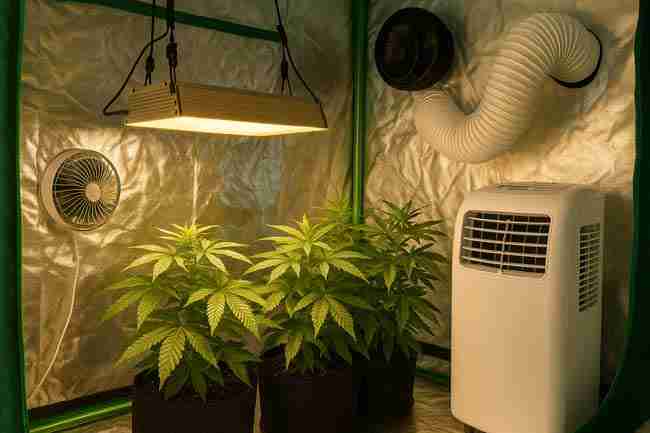
Your light is one of the hottest things in the tent. You can’t just ignore it during a heat wave.
Dimmer and Distance Tricks
If your LED has a dimmer:
- Turn it down 20–30% during the hottest part of the day.
- Raise the light as high as it can go inside the tent.
You might worry about yield. Sure, extreme dimming for weeks can lower yield a bit. However, heat stress hurts yield more than a temporary dimmer. Cool, happy plants grow better than cooked ones under “full power.”
Change the Light Schedule
You can move your light cycle to nighttime to help keep a cool grow tent:
- Run lights from, say, 8 PM to 8 AM instead of daytime.
- Nights usually bring cooler air, so you start with a lower base temperature.
You switch slowly so you don’t confuse the plants:
- Push lights on/off times by 1–2 hours each day until you reach the new schedule.
This trick works especially well for summer heat cannabis grows in attics, garages, and hot upstairs rooms.
Tent and Room Hacks That Drop Temps for Free
You don’t always need to buy new gear. You can tweak your space and gear placement to pull a few degrees off your tent.
Block and Reflect Heat
Simple steps:
- Blackout curtains over sunny windows keep sun from blasting into the room.
- Reflective panels or white boards around the tent reflect heat away.
- Don’t push the tent right against hot outside walls or windows.
Keep at least a small airflow gap around the tent so heat doesn’t get trapped.
Move Heat Makers Out of the Tent
Anything that gets warm should live outside the tent when possible:
- LED drivers
- Ballasts
- Air pumps
- Power strips
Mount drivers outside on the tent frame if the design allows it. Every watt of heat you move out gives you a slightly cooler grow tent.
Water, Nutrients, and Plant Care in Heat Waves
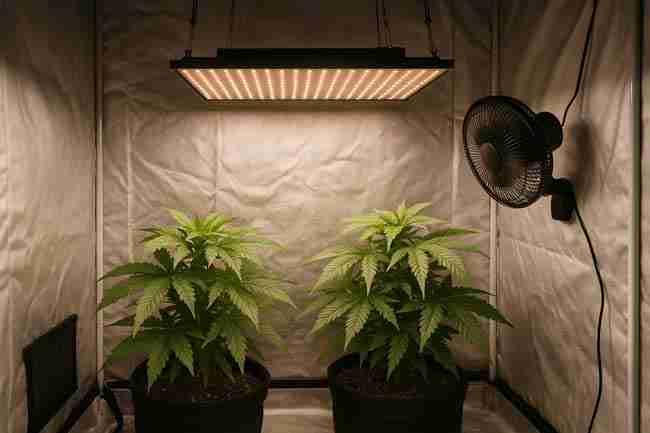
Heat doesn’t just attack from above. It cooks roots, dries pots, and messes with how your plants drink and eat.
Watering Smart in Hot Weather
In big heat, your plants drink faster. You need to:
- Water at lights-on or early in the light cycle
- Check pots by lifting them; if they feel very light, time to water
- Avoid letting plants swing from soaking to bone-dry every day
However, you still avoid keeping roots swampy. Overwatering in heat can suffocate roots and invite root rot. You aim for “evenly moist,” not “mud puddle.”
Keep the Root Zone Cooler
Root temperature matters a lot for a cool grow tent. Here are some tricks:
- Get fabric pots instead of hard plastic. They breathe more.
- Put pots on stands or grates, not right on a hot floor.
- In extreme heat, slide frozen bottles or ice packs near (not touching) the pots to cool nearby air slightly.
If your room floor gets hot (like a sun-baked attic), lay foam boards or thick cardboard under the trays to insulate them.
Nutrients and Heat Stress
In high heat, plants sometimes drink more water than nutrients, which can slowly raise EC in the medium. That can burn tips and stress them even more.
You can:
- Slightly lower nutrient strength during extreme hot spells.
- Watch for burnt tips and dark, clawing leaves (signs of excess).
- Use a simple kelp or aloe product if you like natural stress support.
You don’t need fancy bottles for everything, but small tweaks help your plants ride out the stress.
Planning Ahead: Build a Heat-Proof Cool Grow Tent for Next Summer
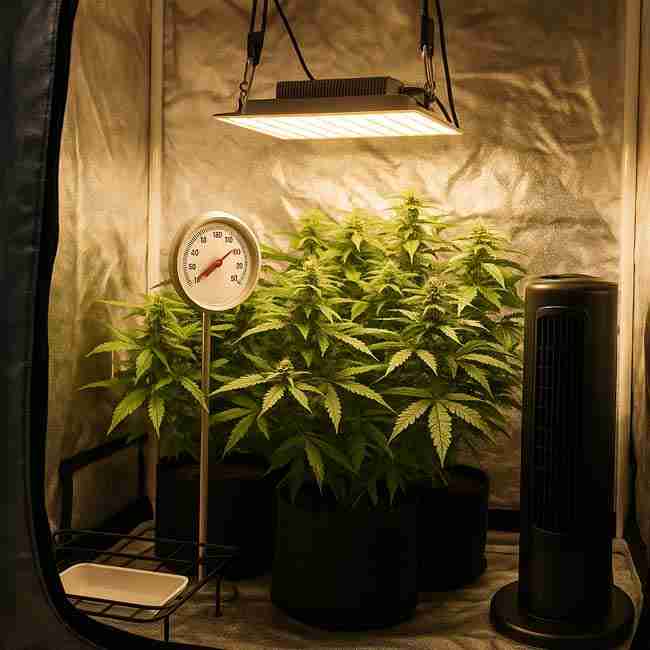
Heat waves will come again. You might save this crop with emergency tricks, but you gain a lot if you plan a better setup.
Choose the Right Tent and Fan Size
Growers often stuff too many watts into too small a tent. You don’t want to run a mini sun inside a shoebox.
For small tents (like 2×2, 2×4, 3×3, 4×4):
- Aim for one good-quality LED matched to the tent size.
- Use an inline exhaust fan rated around:
- 4″ fan for 2×2 or 2×4
- 6″ fan for 3×3 or 4×4
- If you live in a very hot climate, go one size up on the fan.
Run that fan 24/7 during summer heat cannabis season, or at least during lights on.
Specs Checklist for a Heat-Ready Setup
You can use this simple checklist when you plan or upgrade your cool grow tent:
- Light: modern LED with dimmer
- Exhaust: inline fan sized for tent volume (and maybe one size bigger)
- Intake: passive vents or small booster fan
- Circulation: at least 1–2 clip fans in the canopy area
- Monitoring: digital thermometer/hygrometer at canopy level
- Room cooling: window or portable AC in hot climates
- Insulation: blackout curtains and small gap between tent and hot walls
- Power: drivers and hot gear outside the tent when possible
You treat heat like a normal part of design, not a surprise.
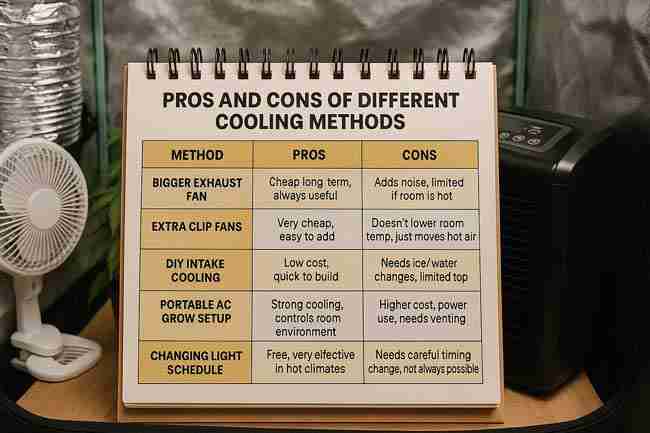
Pros and Cons of Different Cooling Methods

You have many ways to keep a cool grow tent. None is perfect. Each comes with tradeoffs in cost, effort, and effect.
Here’s a comparison to help you choose:
| Method | Pros | Cons |
|---|---|---|
| Bigger Exhaust Fan | Cheap long-term, always useful | Adds noise, limited if room is hot |
| Extra Clip Fans | Very cheap, easy to add | Doesn’t lower room temp, just moves hot air |
| DIY Intake Cooling | Low cost, quick to build | Needs ice/water changes, limited temperature drop |
| Portable AC Grow Setup | Strong cooling, controls room environment | Higher cost, power use, needs venting |
| Changing Light Schedule | Free, very effective in hot climates | Needs careful timing change, not always possible |
| Frozen Bottles in Tent | Super cheap, fast emergency fix | Short-lived, needs constant swapping |
| Dehumidifier | Controls humidity, helps avoid mold | Adds heat, uses power |
You don’t have to pick just one. The best cool grow tent often uses a mix: strong exhaust, decent AC (or cool room), smart lights, and a few DIY tricks when the sun goes wild.
FAQ: Keeping a Cool Grow Tent in Brutal Summer Heat
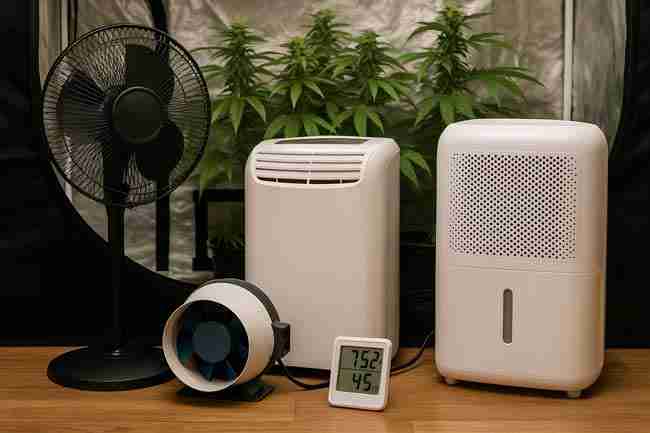
How cool should my grow tent be in summer?
For most cannabis strains, you aim for:
- Day: around 24–28°C (75–82°F)
- Night: around 18–22°C (64–72°F)
You can go a little warmer with strong airflow and CO₂, but for normal home grows, stay under 30°C (86°F) as much as you can. That gives you a safe, cool grow tent most plants love.
Why does my tent stay hotter than the room?
Your lights, drivers, pumps, and dehumidifier all sit in a tiny box. They keep making heat, and if the exhaust doesn’t pull it out fast enough, it stacks up. Also, hot air rises, so the top of the tent (where your sensor often sits) naturally reads warmer than the room.
When you boost exhaust, open intakes, and move some gear outside, your tent temperature gets closer to room temperature.
Can I save a heat-stressed cannabis plant?
Most of the time, yes. If you catch the issue early and cool the tent, your plants bounce back.
Signs you can still save them:
- Leaves droop but perk up when temps fall
- Light burn on top leaves but new growth still looks healthy
- No deep, crispy brown spots all over the plant
Once buds get badly foxtailed and leaves fry, you won’t fully reverse it, but you can still finish the plant and get usable flowers.
Is a portable AC grow setup worth it for a small tent?
If you live somewhere with brutal summers or no house AC, yes, often it is. A small portable AC doesn’t just save one harvest; it saves every summer harvest after that.
If you grow only once a year in winter, it might not be worth the cost. But if you keep growing in hot months, that AC becomes part of your standard gear, just like your light and fan.
Does running lights at night really help that much?
Usually yes. In many places, nighttime temperatures are several degrees cooler than daytime. When you move lights to nighttime, your cool grow tent uses that natural advantage.
This trick works especially well in lofts, garages, attics, or top-floor rooms that bake during the day.
What’s the cheapest way to cool a grow tent fast?
The cheapest emergency move is:
- Open the tent
- Crank the exhaust
- Add clip fans
- Stick frozen water bottles inside or near the intake
That combo costs almost nothing and can pull temps down a few degrees while you plan bigger changes.
Final Thoughts: You’re the Thermostat Now
Heat waves feel scary, especially in a small tent. Your plants can’t move, can’t open a window, can’t jump into the shade. They rely on you.
The good news? You now know how to:
- Watch your numbers and spot trouble early
- Use quick emergency tricks when your tent overheats
- Build airflow and DIY intake cooling so hot air never sits still
- Use portable AC grow setups and smart light schedules to fight summer heat cannabis problems
- Plan a future-proof cool grow tent that shrugs at the next heat wave
You don’t need to be perfect. You just need to react faster than the heat builds. When you do that, your plants reward you with tight buds, loud terpenes, and a tent that feels like a little green oasis, not a toaster.