Synthetic Cannabis Fertilizers


Synthetic cannabis fertilizers are bottled mineral salts you mix into water so a marijuana plant can drink them the same day. Ranking pages in 2026 still sell this as a fight with organic. It is a delivery method. The weed plant takes nitrate, ammonium, phosphate, potassium, calcium, magnesium, and a short list of micros. Compost and a three-part bottle both end at those ions. The difference is who does the work, how fast you can change the recipe, and how hard a sloppy mix punishes the roots.
This page is how to run synthetic cannabis fertilizers without cooking the plant. Organic programs, teas, and homemade mixes live on their own guides: organic marijuana fertilizer, creating your own cannabis fertilizers from scratch, and organic growing amendments. Stage hunger belongs on cannabis nutrient deficiency. The shelf of packs is the cannabis seeds store.

That young plant does not care what the bottle said on the label. It cares that the water around the roots is in range, that the mix is not a salt brick, and that you did not dump bloom formula on a seedling. The live version of this URL treated organic and synthetic as two teams. You still pick a team for the medium you filled. Then you mix like an adult.
What Synthetic Cannabis Fertilizers Actually Are

Synthetic cannabis fertilizers are water-soluble mineral salts. Calcium nitrate. Monopotassium phosphate. Magnesium sulfate. Potassium nitrate. Urea. Ammonium nitrate. Potassium chloride. Chelated iron. The shop names them veg, bloom, cal-mag, and PK. The chemistry is older than the cannabis aisle. Greenhouse tomatoes ran the same salts for decades before anyone printed a marijuana feed chart.
They come as liquids, dry powders, and two- or three-part kits. Liquid is pre-dissolved and easy to measure. Dry is cheaper per gram of nutrient and takes a little stirring. Both are salts. A “liquid vs salt” argument is usually a format argument. The plant drinks ions either way.

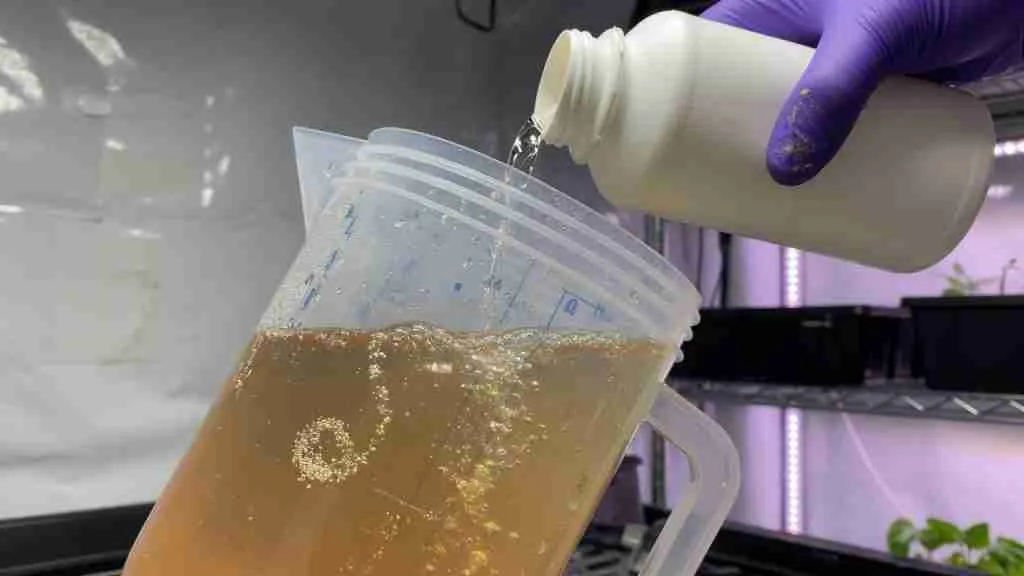
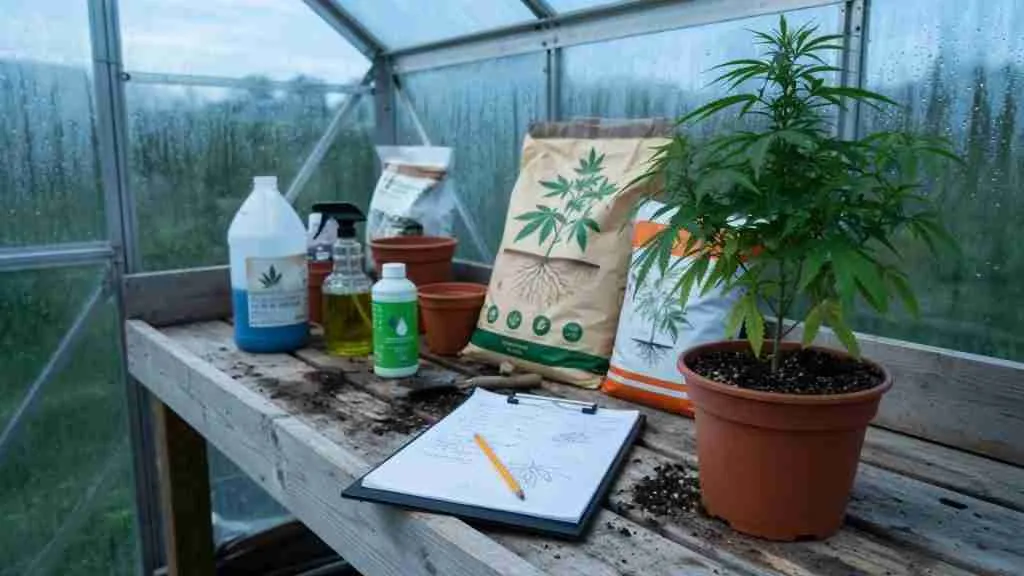
A bloom bottle in the hand is the honest picture. That is a mineral mix with a guaranteed analysis, not a spell. Read N-P-K, then the micros, then the mixing order on the back. One complete line covers a grow if you follow it at a sane strength. You do not need a twelfth additive because a forum named it. Extra bottles are how people precipitate calcium phosphate in the jug and then blame the plant.
CFIA language in Canada calls these products fertilizers when they are sold as plant nutrients. Supplements are the other bucket: microbes, humics, wetting agents. Plant growth regulators sit in a third bucket and some of them are pesticides. That split matters later when a dusty bloom booster promises baseball bats. For now, synthetic cannabis fertilizer means the salt that feeds the plant directly.
The Plant Takes Ions, Not Brand Names
At the root surface the plant does not taste “organic” or “synthetic.” Nitrogen arrives as nitrate (NO3-) or ammonium (NH4+). Phosphorus arrives as phosphate. Potassium is K+. Iron is Fe2+ or Fe3+. Fish emulsion, urea, and calcium nitrate all have to become those ions before the plant can use them. Organic inputs wait on microbes. Synthetic salts dissolve and the ions are already there.
That is why a deficiency in coco can turn around in a day or two on a salt feed, and why the same yellow leaf in living soil can sit for a week while biology catches up. Speed is the feature. Speed is also the injury. Overdo the jug and the osmotic pull at the root is instant. The leaf tip burns before you finish washing the measuring cup.
Seventeen elements show up in every serious fertilizer explainer. Carbon, hydrogen, and oxygen come from air and water. You supply the rest. Nitrogen builds leaf and chlorophyll. Phosphorus moves energy and helps flower set. Potassium runs water and enzymes. Calcium builds cell walls. Magnesium sits in chlorophyll. Sulfur is in amino acids. Micros (iron, manganese, zinc, boron, copper, molybdenum, chlorine, nickel) are tiny doses with loud symptoms when they are missing or locked. The longer element walk lives with deficiencies: cannabis nutrient deficiency. Magnesium has its own page: magnesium for growing cannabis.
Synthetic vs Organic: Who Does the Work
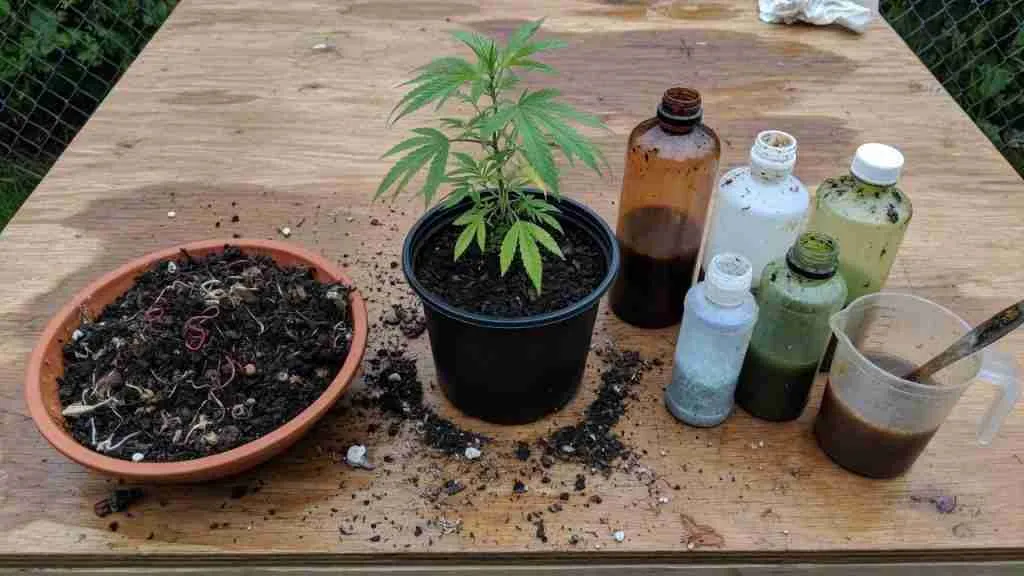
Organic fertilizer feeds the soil. Compost, worm castings, meals, guano, kelp, and bone meal sit in the mix. Microbes mineralize them. You water. You top-dress at transitions. You wait. That is the slower, more buffered path, and it is the one we run on the seed farm. Castings: worm castings. Compost: composting for cannabis growers. A dry organic line many beginners actually finish: growing cannabis with Gaia Green.
Synthetic fertilizer feeds the plant. You mix. You measure. You deliver. The medium can be coco, peat, rockwool, or a reservoir. Biology is optional. Repeatability is the reason commercial rooms stay on salts. A chart, an EC meter, and a pH pen replace a compost pile. The trade is discipline. Miss the pH and the same bottle that grew last month’s plant will lock this month’s plant in 48 hours.
Flavor arguments travel farther than the data. Plenty of growers swear organic weed smokes smoother. Controlled cannabis trials that hold genetics, dry, and cure constant are still scarce. Treat “organic tastes better” as a hunch you can test in your own jars, not a law. Yield arguments go the other way. Salt programs, run clean, often pack more dry weight in the same light. Light still writes more of the grams than the bottle: grow lighting for cannabis.
Cost is per unit of nutrient, not per pretty bottle. Raw mineral salts are cheap. Boutique cannabis branding is not. Organic bags look expensive until you reuse living soil for three cycles. Synthetic looks cheap until you buy a meter, calibration fluid, pH up, pH down, and a second bottle because you mixed A into B in the cup. Pick the system you will actually run on a Tuesday night after work.
Hybrid feeding
A hybrid is a mineral base plus organic matter in the pot. Coco or peat with a salt feed, plus a little compost or inoculant in the root zone. Or a living mix with a light mineral top-up when a leaf tells you something is late. Ranking pages call this synganic. It works when you know which half is doing the feeding. It fails when you pH a living soil to 5.8 every day and then dump bottled microbes on a salt crust.
If you are new, pick one. Coco plus a two-part salt line, or a real soil plus dry organics. Mixing both on week one is how people get a swamp, a salt burn, and a forum post. Advanced steering belongs on advanced nutrient management for cannabis plants. Homemade juices stay on fermenting your own plant juice fertilizer. Kelp and molasses are tools, not base feeds: seaweed cannabis fertilizer, molasses for cannabis.
When Bottled Salts Are the Right Tool
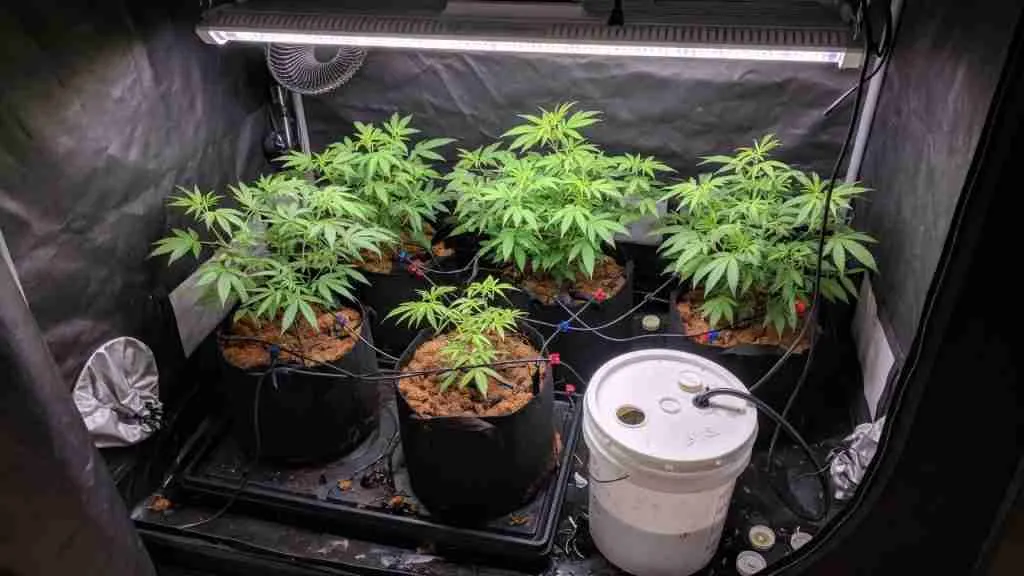
Use synthetic cannabis fertilizers when the medium does not feed the plant by itself. Coco, rockwool, and hydro are inert or close to it. There is no pantry. Every watering is the meal. Soil with a weak bag mix is the same story after three weeks of veg. If you filled fabric pots with coco and a drip line, salts are the default, not a personality test.
Use them when you need a fast correction. A nitrogen fade in week two of veg can green up on a salt feed before the weekend. A calcium issue on new growth can stop spreading if you mix the right part and the pH is in range. Organic top-dress is a slower ship. Both are valid. The calendar of a tent is short.
Skip salts as the whole program if you built living soil on purpose. You paid for biology. Daily EC chasing in that pot is you stepping on the thing you bought. You can still rescue a lockout with a gentle leach. You do not run a three-part salt chart on a no-till bed and call it organic. Medium choice: cannabis soils, best soil for growing cannabis seeds, soil vs hydroponic cannabis. Hydro walkthrough: hydroponic cannabis growers guide. DWC: using DWC hydroponics.
How to Mix a Feed Without Precipitate
Buy one line and stay on it for a full run. Two-part and three-part kits exist because calcium and phosphate hate each other in concentrate. Part A is usually the calcium and nitrate. Part B is the phosphate, potassium, and a lot of the rest. Mix them in the same measuring cup and you get white sludge the plant cannot drink. That sludge is calcium phosphate. You just threw the feed in the trash while the numbers on the bottle still look legal.
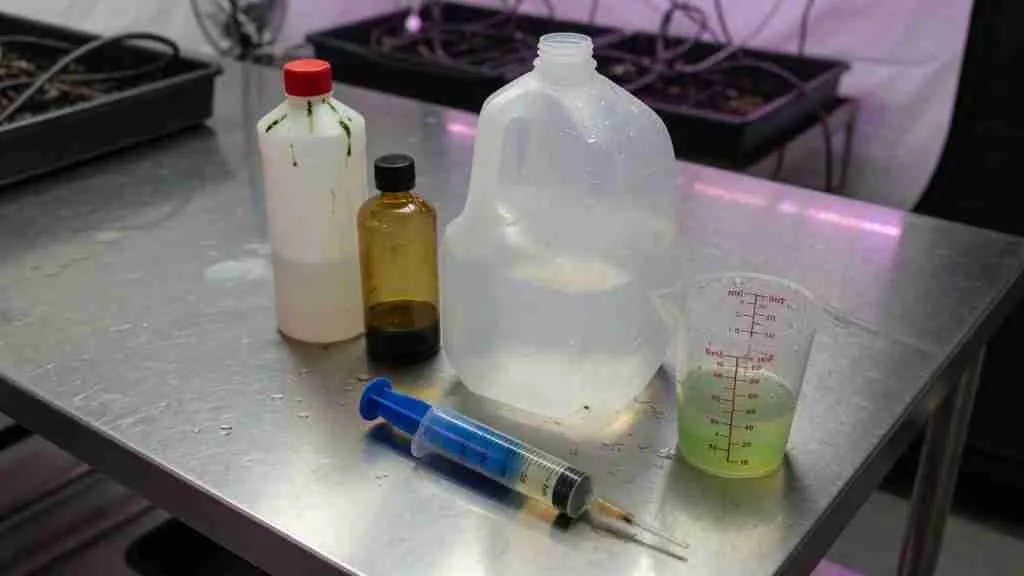
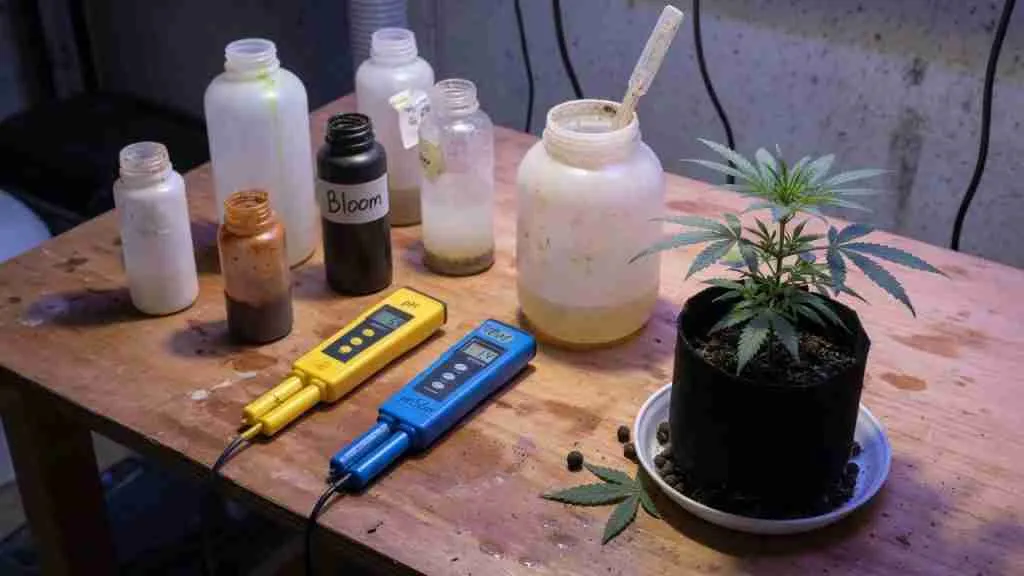
Fill the jug or reservoir with water first. Add Part A or your cal-mag. Stir until it disappears. Add Part B. Stir. Add bloom extras last if you even use them. Then pH. Then write the EC. That order is the whole trick. Tap water already has calcium and bicarbonate. Measure the water EC before you add anything. If the tap is 0.4, your “1.4 feed” is hotter than the chart because the chart assumed a zero. Hard water plus a full cal-mag plus a full base is how people claw a plant that “only got what the bottle said.”
Use a syringe or a measuring cup you can read. Guessing a capful is how week three looks different from week two. Mix enough for the watering you are doing, not a week of soup that grows algae on the shelf. In a reservoir, keep it moving, keep it dark, and dump it on a schedule. Stale salt water is a science fair.
Start at half the label

Manufacturer charts run hot. That is the honest consensus across ranking grow guides in 2026. First run, start around half the listed dose. Seedlings get even less, or none until a few true-leaf sets. The live article on this URL already warned that synthetic fertilizers burn new cannabis seedlings fast. Keep that. The bean is still food. A quarter-strength sip after the plant has real leaves is plenty. Overwatering plus a bottle is how a cup dies in five days. Seedling clock: cannabis seedling stage of growth. Day-by-day: cannabis seedlings day by day. Pale babies: cannabis seedling yellowing.
Autos use the same salts on a shorter fuse. They do not wait for you to “fix the feed in veg.” A hot mix in week three of an auto is a scar on the harvest. Stay light. Photoperiods in veg can take more nitrogen once they are moving. Flip the bottle toward bloom when you flip the timer, or a few days before. Flower hunger and yellowing in stretch: cannabis flowering stage of growth and flowering stage nutrient deficiencies.
pH and EC After You Mix
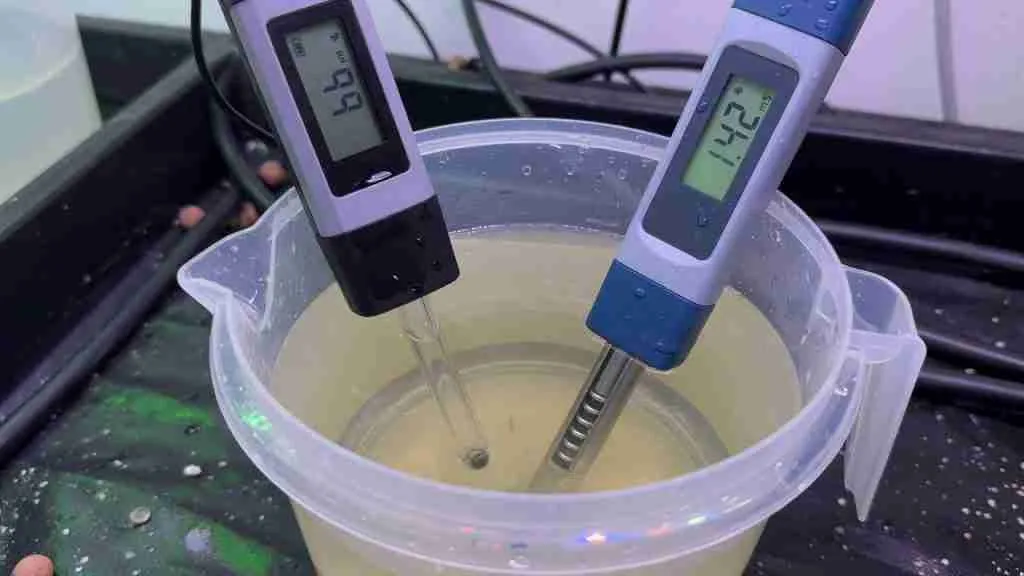
pH after the mix, not before. Salts move the number. Coco and hydro want about 5.8 to 6.2. Soil and peat sit higher, about 6.0 to 6.5, and living soil can live a little above that without you chasing it every day. Outside the window the ions are in the pot and the roots cannot take them. That is lockout. It looks like a deficiency chart. Pouring more feed makes it worse. The longer pH habit is pH for growing cannabis.
EC is how much dissolved salt is in the water. It is the strength knob. Typical salt-program ranges that ranking pages keep repeating: seedlings 0.4 to 0.8, veg about 1.2 to 1.6, flower about 1.6 to 2.2 mS/cm. Those are starting bands, not a religion. Heavy feeders and high light sit toward the top. A weak LED and a sensitive cut sit toward the bottom. Soil programs often run lower than coco because the mix already holds ions. Organic teas do not read the same on an EC meter because a lot of the food is not ionic yet.
Calibrate the pens. A pH pen that has sat in a drawer since last harvest is a storyteller. Buffer solution is cheaper than a ruined tent. Measure the jug. Once a week in coco, measure runoff too. If runoff EC is climbing while the plant looks hungry, you have salt in the root zone, not a shortage. If runoff is lower than the feed and the plant is pale, you may actually be underfeeding. Write the numbers. Memory lies after three cultivars.
Coco, Soil, and Hydro Habits

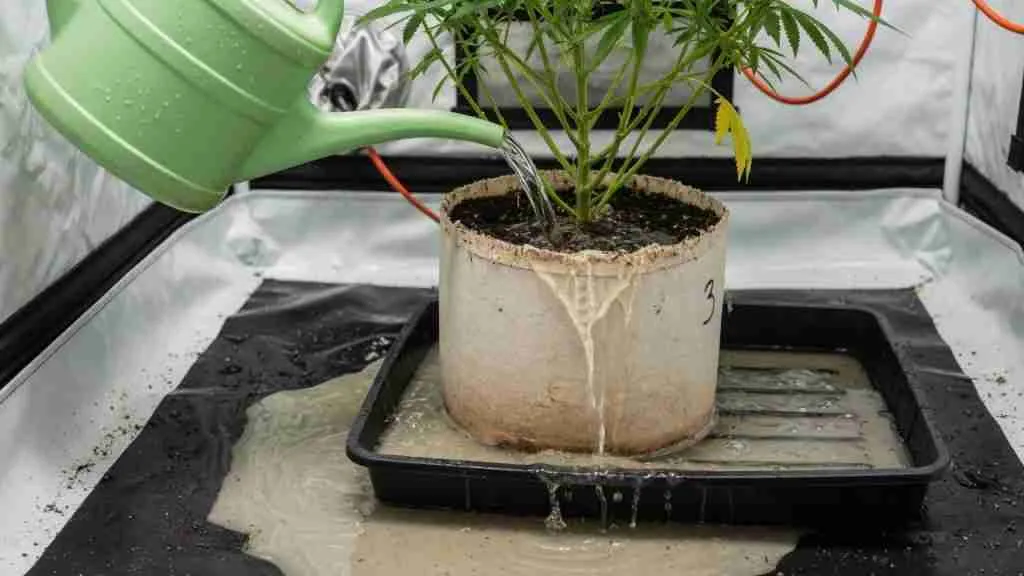
Coco: feed every watering. Aim for 10 to 20 percent runoff so salts leave instead of stacking. Let the pot get light, then water the whole root zone, not a splash on one side. Coco holds calcium and magnesium on its exchange sites, which is why cal-mag talk follows coco around. A decent two-part already has calcium. Extra cal-mag on top of a complete base is a common antagonism. Pots: growing cannabis in containers.
Soil: the mix is a pantry. Many salt growers in peat or bag soil alternate a feed with plain pH’d water, or they run a lighter EC than the coco chart. Daily full-strength in a slow-draining peat brick is how you get a sour pot and fungus gnats. Water when the pot is light. Lift it. The watering habit kills more plants than the bottle: water cannabis plants. Veg still wants nitrogen-forward feed: cannabis vegetative stage.
Hydro and DWC: the reservoir is the root zone. You mix, you pH, you watch temperature, you keep air on the roots. Organic particles clog lines and go anaerobic in a bucket. Salts are the native language of a reservoir. Dump and remix on a schedule instead of topping off forever, or the ratios drift. A sick reservoir looks like a deficiency and smells like a problem. That walkthrough stays on the hydro guides, not here.
Outdoor soil is a different animal. Native dirt, rain, and a season clock do more than a bottle. A light synthetic side-dress can rescue a hungry patio pot. A full indoor chart on a garden bed in a wet September is how you push late nitrogen into buds that should be finishing. Outdoor packs and weather belong on the outdoor seed pages. This URL is the bottle.
Tip Burn, Lockout, and a Corrective Flush
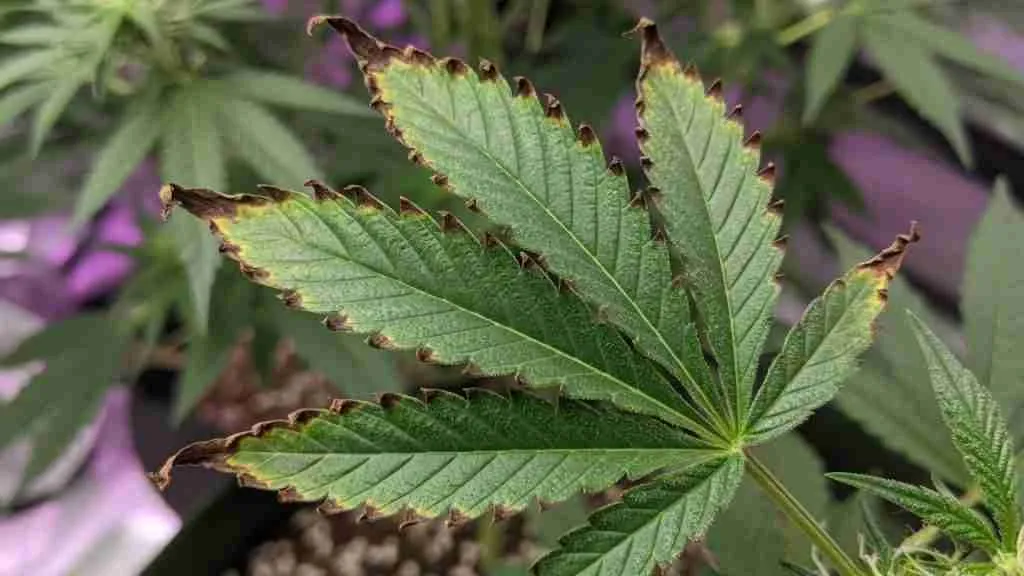
Tip burn is overfeed. The leaf edge goes yellow, then brown and crisp, while the rest of the leaf is still green. New growth keeps the scar as it expands. Back the EC down. Do not “fix” burn with more cal-mag. Burned tips do not un-burn. You are protecting the next leaves.
Lockout is food the roots cannot grab. pH off the window, or runoff EC much hotter than the feed you think you are giving. The plant looks hungry. The pot is full. Adding a stronger mix is the classic mistake. Measure runoff. If pH is 5.2 or 7.4 in a soil pot, stop bottles. Fix the water. If runoff EC is a brick, leach. Lockout guide: cannabis nutrient lockout.
A corrective flush is not a harvest ritual. It is first aid. Pour pH-corrected water at two to three times the pot volume, slow enough that it actually moves through the root ball, until runoff EC drops toward a sane number. Then let the pot get light. Then feed a milder mix. Do not flush a plant that is pale because you underfed it. A rinse “just in case” makes that plant paler. Full method: flushing cannabis.
Clawed leaves that taco down are often too much nitrogen, or water sitting in the pot. Yellow between the veins on older leaves is often magnesium. Twisted new growth is often calcium or pH. Read the leaf, then the meter, then the bottle. Guessing from a color chart while the runoff is 5.1 is how people buy a fourth additive. Water first: how to water cannabis plants.
Pre-Harvest Flush Is a Separate Question
A lot of salt growers run plain or low-EC water for the last 7 to 14 days. The story is that leftover fertilizer makes harsh smoke. The evidence in cannabis is weak and argued. Plants fade on their own late in flower. Some rooms skip the flush and still jar clean weed when the dry and cure are honest. Some rooms flush and still jar chlorophyll if they chopped early and dried in a closet.
If you do fade the feed, do not starve calcium out of a dense cola in a humid room. Cell walls still matter. Ranking hemp guides have started saying keep a little calcium in the last stretch so you do not invite rot. That is a reasonable caution. A total strip of every ion is not a magic smoothness button. Harvest and cure still do more for the jar than the last two waterings. Do not invent a flush religion on this page. The rinse how-to stays on flushing cannabis.
Bottles That Should Stay on the Shelf
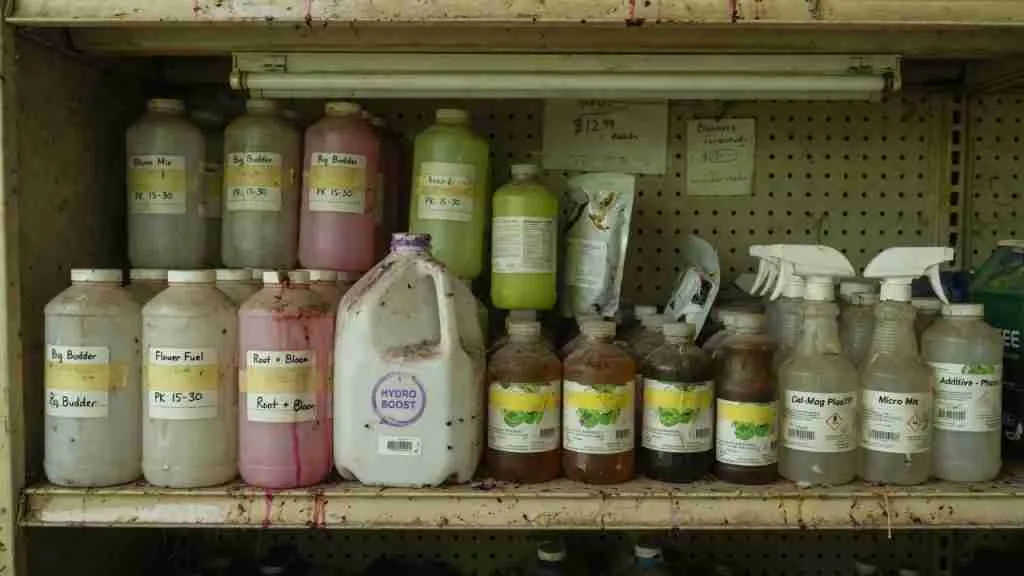
Some products sold at cannabis growers are not fertilizers in the honest sense. Plant growth regulators such as paclobutrazol and daminozide have shown up unlisted in bloom bottles aimed at this crop. Those chemicals were pulled from a lot of food use for a reason. They can stack internodes and fake a “hard” bud. They do not belong in a home tent. If the label is a cartoon name, the guaranteed analysis is a shrug, and the before-and-after photos look like a different species, leave it.
Read the guaranteed analysis. N-P-K should be printed. Micros should be listed if they are in there. A complete two-part from a greenhouse line beats a mystery “flower fuel” with no numbers. You do not need a PGR to finish a pack from the cannabis seeds store. You need light, water, a sane EC, and time. Seed choice still matters more than a booster: how to pick cannabis seeds.
Heavy metals are the quiet risk. Cannabis is a hyperaccumulator. It will pull metals from a dirty fertilizer into the flower. Buy products that meet ordinary fertilizer safety rules. Cheap unlabelled jugs from a swap meet are how people get a lab result they did not want. This shop sells seeds. It does not sell a nutrient line, and it does not need you to run a mystery additive to prove the genetics.
Canada Label Rules in Plain English
In Canada, fertilizers and supplements sold as plant food fall under the Fertilizers Act and Fertilizers Regulations. CFIA watches composition, contaminants, and labels. CFIA does not keep a special list of “approved for cannabis” bottles. A product can be legal fertilizer without the word marijuana on the jug. Follow the label. Do not invent a rate because a forum runs hotter.
Some products need registration. Many common NPK salts are exempt from registration and still have to meet safety and labelling rules. Registered products carry a Fertilizers Act number. Supplements (microbes, humics, some PGRs) are a different paperwork pile. Growth inhibitors can sit with the pest-control side of Health Canada. That is the boring reason a “keep it short and fat” bottle may be a pesticide in disguise.
Home growers still have to follow the Cannabis Act plant cap. Four plants per household on the recreational side. Quebec still blocks recreational cultivation. Manitoba is indoor-only. The bottle does not change the law. The seed pack does not change the law. Feed what you are allowed to grow, and grow what the pack can finish.
Questions Growers Actually Ask
What is the best synthetic cannabis fertilizer? The one complete line you will mix in the right order at half strength. Three-part, two-part, or a decent dry greenhouse salt. Brand loyalty is marketing. Mix order and pH are the skill.
Can you mix organic and synthetic in the same pot? Yes, as a hybrid, if you know which half is the meal. A mineral feed in coco with a little biology is common. A full salt chart on living soil is you paying for microbes and then salting them. Start with one system.
Do you feed seedlings? Barely. Wait for a few true-leaf sets. Quarter dose if you feed at all. The live article on this URL already said synthetics kill seedlings when you get greedy. Keep that. Germ: cannabis seed germination.
How often do you mix a new jug? Each watering for coco. Soil, when the pot is light, and not every drink has to be full feed. Hydro, on the reservoir schedule you actually keep. Do not store mixed feed for a week in a sunlit bottle.
Is organic always better? No. Organic is more forgiving in soil once the mix is built. Synthetic is faster and more precise in coco and hydro. We still like organic for the way we grow breeding stock. That is a farm habit, not a commandment for your tent. Seed philosophy: organic vs non-organic cannabis seeds. More grow notes: cannabis cultivation blog.
Run the bottle you chose. Write the EC. pH after you mix. Start at half. Watch the new growth, not the old scarred leaf. Organic stays on the organic URL. This URL is the salt path, taught straight, so a marijuana plant gets fed and a weed plant does not get burned.