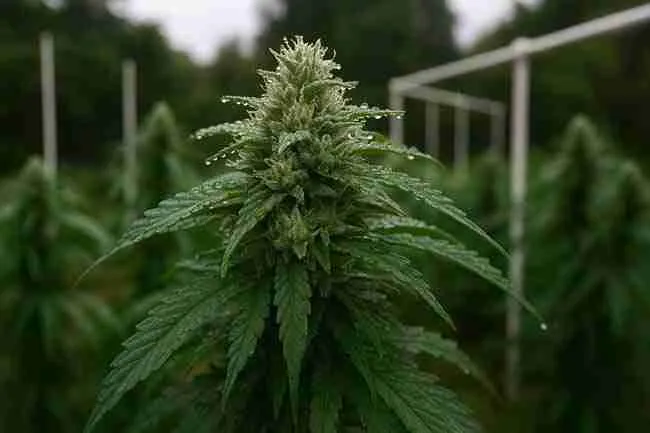
Supercropping Cannabis


You notice it when one cola is in the diodes and the rest of the plant sits a step below. Supercropping Cannabis is the bend growers use on that tall stem. You soften a green section between two nodes with your fingers, fold the branch toward horizontal, and tie it so it cannot stand back up. The growing tip stays on the plant. Only the direction changes.
That pinch is high-stress training. The soft pith inside the stem gives way. The outer skin is meant to stay in one piece. People do it so a marijuana canopy sits in one band of light, and so a weed plant that is outgrowing the tent does not have to lose its top. It does not raise THC. It does not hand you a heavier harvest by itself. If the plant was healthy, what you can see is a branch that stays down and lower sites that finally share the light.
Grow write-ups describe the same pinch. They split on what you are owed afterward. Some promise a yield jump you cannot check from your chair. Trust the part you can do with your hands. A percent on a shop page is a story until you weigh two plants yourself.
Supercropping Cannabis Is a Planned Bend
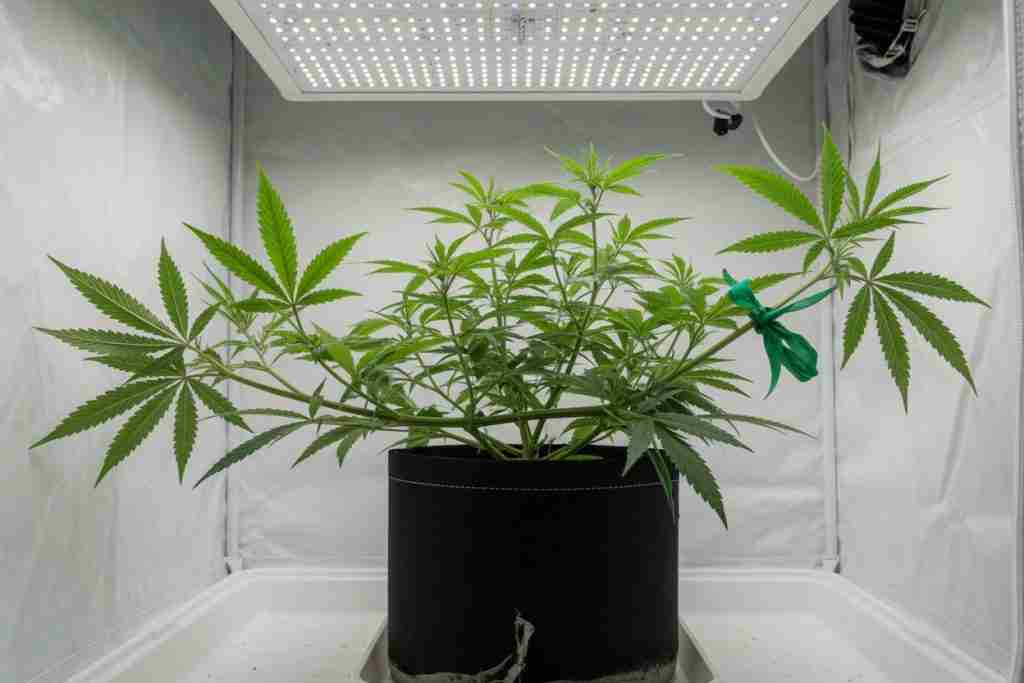
You are not snapping a branch to punish a tall plant. You pick a spot between nodes, soften it until it folds, and aim the tip at an open gap. The growing tip stays attached. Height on that one stem drops. The rest of the plant can stay as it is.
A photoperiod in a tent is the usual case. She reaches the fixture, or one cola stands a hand above her sisters. You bring that cola down to their line. Short branches that already sit in the light do not need a pinch just because you are already in the tent.
The Inner Stem Gives, the Skin Stays
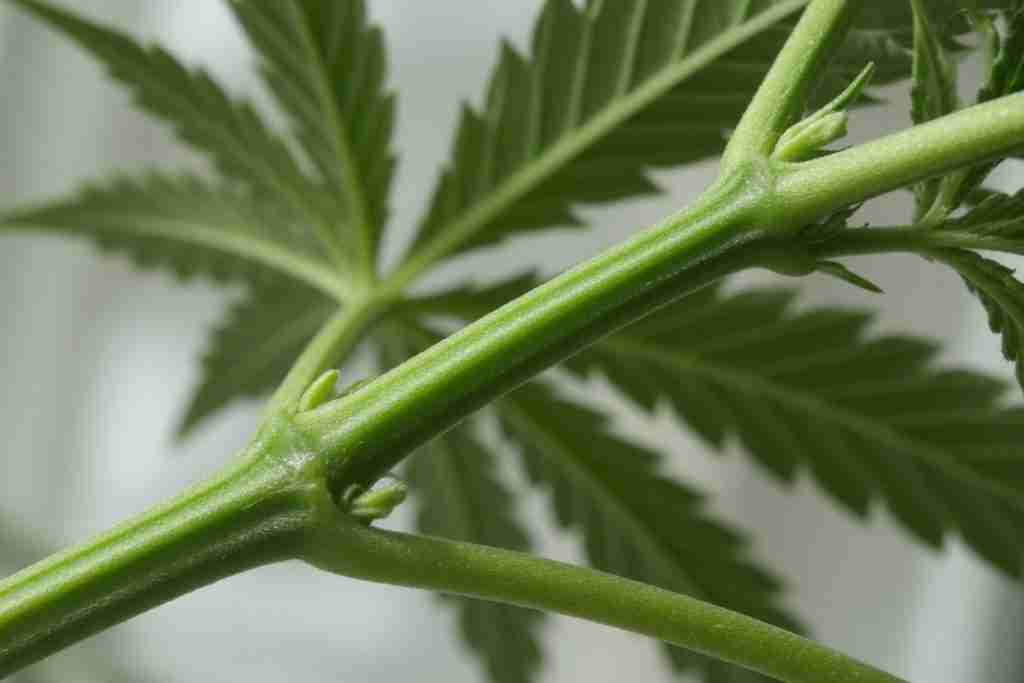
A young cannabis stem is a tube. The inside is soft pith. The outside is a tougher skin that carries water and holds the branch up. Supercropping crushes the pith so the tube can fold. The skin should wrinkle and stay closed. If the skin opens, you have a tear to deal with, not a better bend.
Use the pads of your thumb and finger, not your nails. Roll and squeeze a spot between nodes until it feels like a green straw that has gone soft. Then it will bend. A dry crack, with the branch hanging by a thread, means you went through the skin. If the stem is already woody and pale, move to a greener section higher up. Do not force old wood. Fingers tell you when the pith gives. A tool does not, which is why pliers are a poor default on a stem that still has green in it.
A Knuckle Is Healing, Not a Trophy
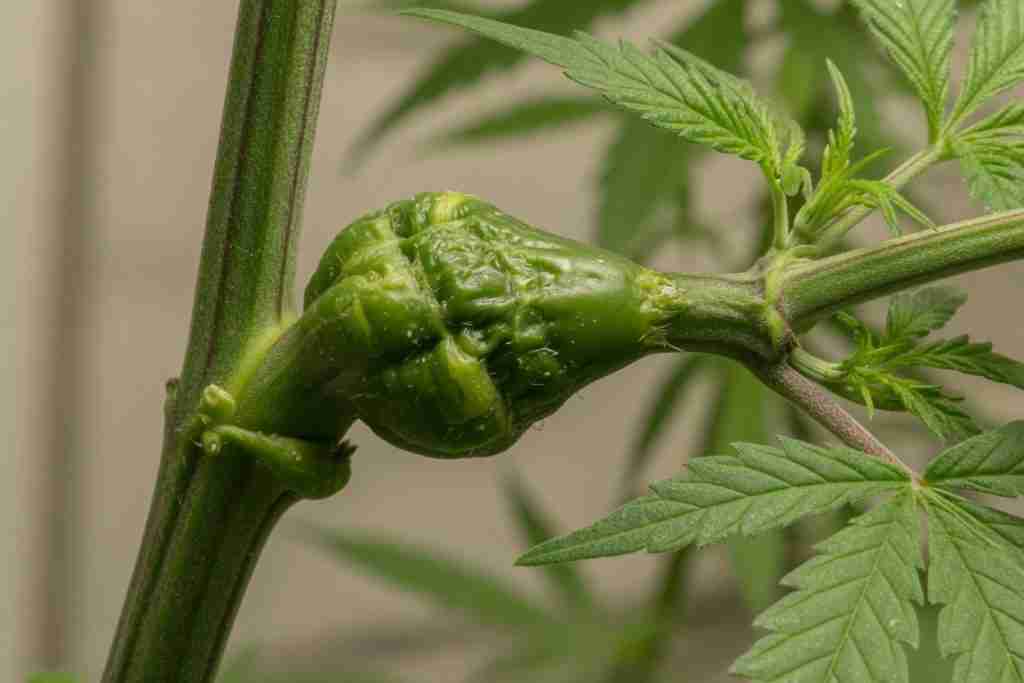
After a clean bend, the damaged spot often swells. Growers call that lump a knuckle. It is scar tissue. The plant laid down extra cells where you crushed the pith. The joint can get stiffer, which helps the branch hold the new angle. It does not prove the flowers will be heavier, and it does not prove the resin will be thicker.
Leave the knuckle alone. Do not pinch the same spot again to improve it, and do not peel it to see what is inside. If the branch is drinking and the tip is reaching for the light, the knuckle has done its job. A big lump is not a score. It is the plant closing a wound you made on purpose.
When the Stem Is Ready
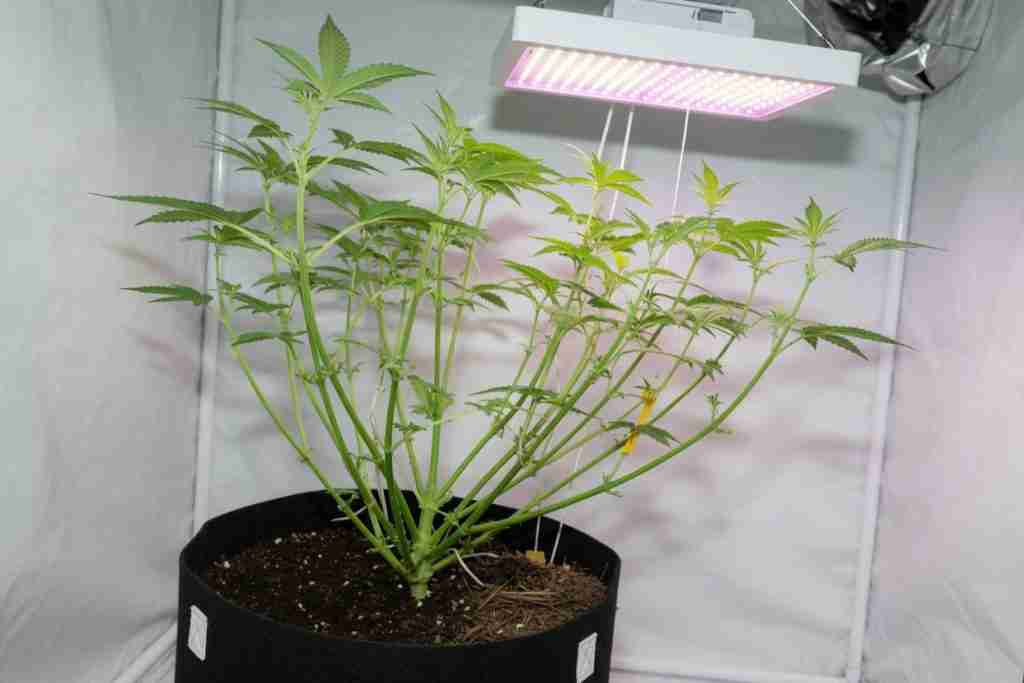
Timing decides whether the bend heals or the branch dies. A stem that still folds under your fingers is ready. A stem that feels like a stick is late. The plant should be pushing new growth, with leaves perky and the pot wet but not soupy. You are adding stress on purpose. She needs spare energy to close the wound.
Look at the color of the tissue you mean to pinch. Bright green and flexible is the target. Tan, ridged, or hollow-sounding wood belongs to an older stem. You can still tie that older wood into a gentle arc if it will move. You should not try to crush it into a right angle.
Mid Veg, While It Is Still Green
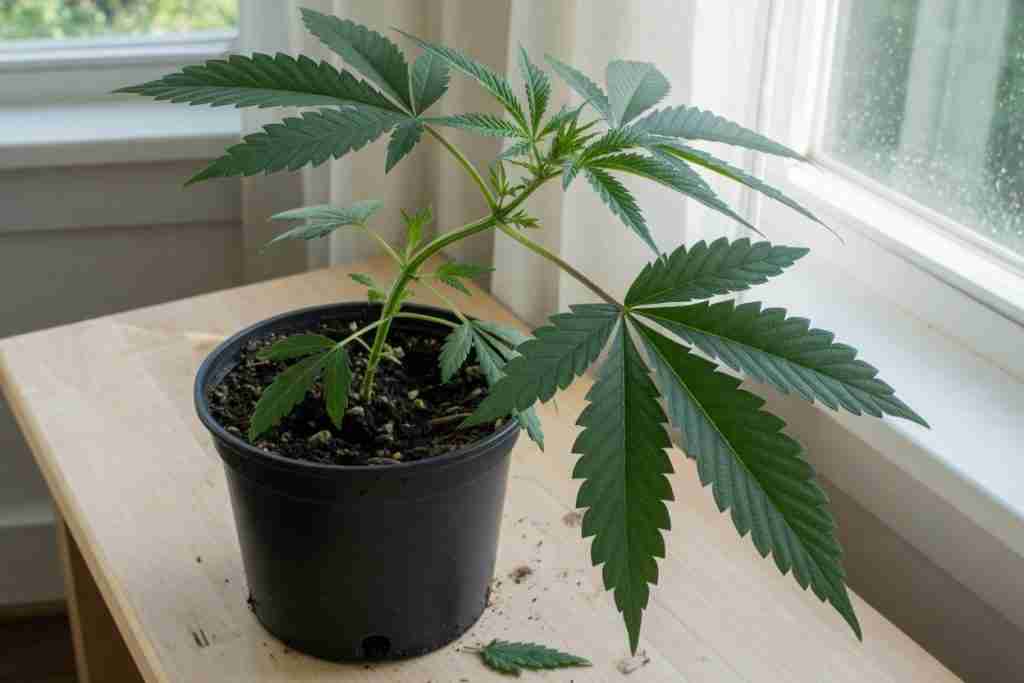
Mid vegetative growth is the window. The plant has several nodes, the stem between them is still green, and you have weeks before flower. That gives the bend time to set and the tip time to turn back up before the plant is busy stacking flowers.
Wait until the plant has been in the pot long enough to hold a real root system. A seedling with a thin stem has nothing to spare. The branches you care about should be thick enough to pinch without the whole top collapsing. If she is still short and early, bend and tie without crushing anything. Save the pinch for the stem that is actually running away later in veg.
Stop Before the Flowers Stack
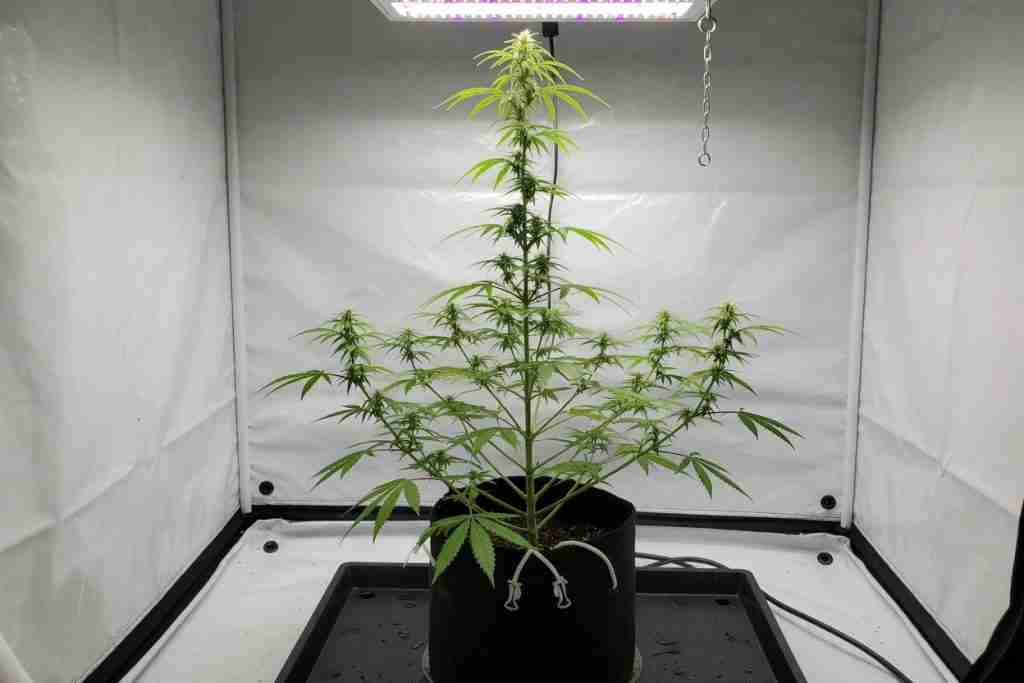
Once flowers are stacking, that branch is busy building weight. A hard pinch then can stall the site you were trying to save. Stop supercropping as a routine when you can see real flower. The flowering stage is for holding shape, not for crushing new stems.
Early flower has one narrow exception. If a single cola is into the light and the stem at that spot is still green enough to soften, you can ease that one stem down. Do it once. Do not walk the plant pinching every branch because your hands are already there. Woody flower stems snap. If a stem will not soften, use a gentle tie, raise the fixture, or live with the tall cola.
A Sick Plant Does Not Get a Pinch
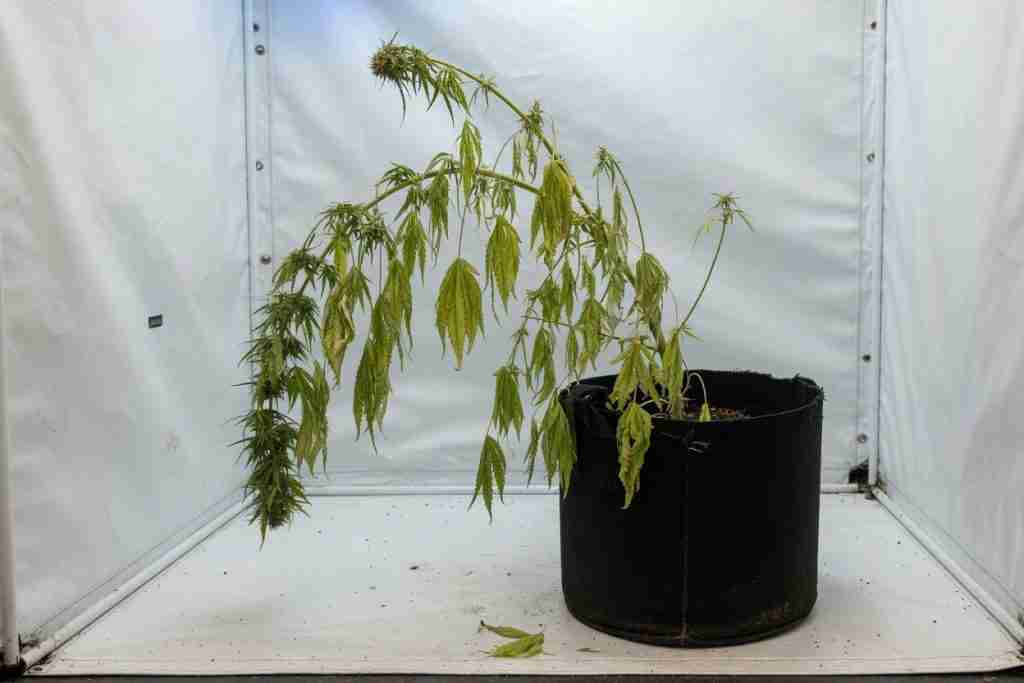
Droop from thirst, heat, a hungry mix, or bugs is not a training day. The plant is already spending energy on a problem you can see. A crushed stem on top of that is how you lose a branch you meant to keep. Water her, cool the room, or deal with the pests first. Come back when new leaves are reaching and the stems feel firm.
The same pause applies if you topped her today or stripped a pile of fan leaves today. One stress, then a quiet stretch, then the next job. A plant that looks dramatic in the photo and limp in the tent does not need a harder technique. She needs the original problem fixed.
How to Make the Bend
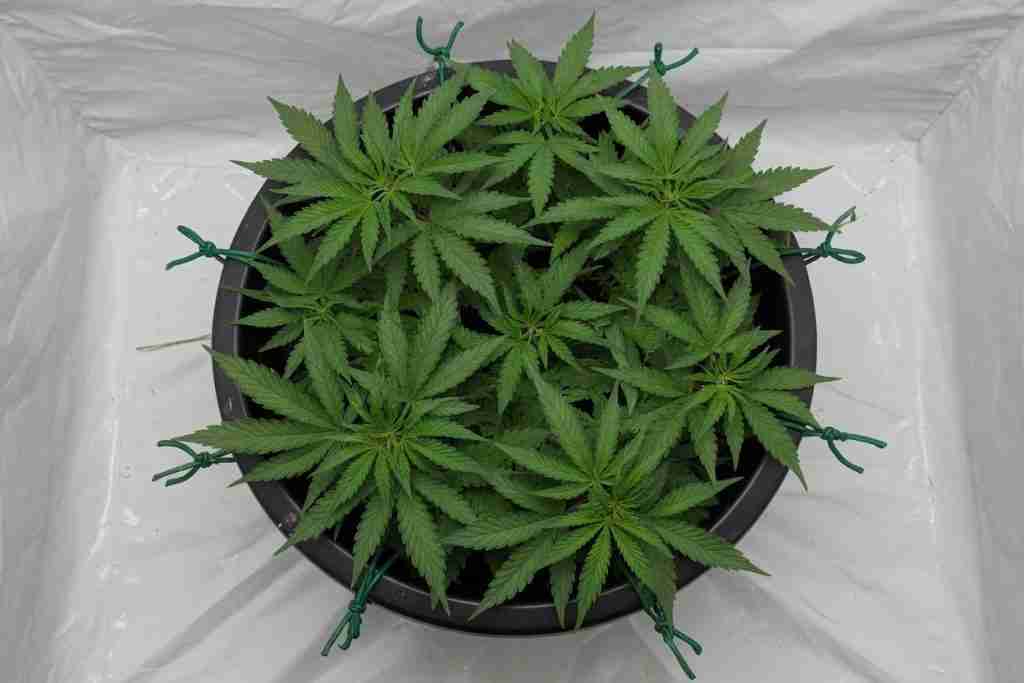
Work on one branch at a time. Have soft ties in your hand before you pinch, because a softened stem wants to spring upright the moment you let go. A wide plant tie, or garden wire with a soft coat, is enough. Thin string cuts as the stem thickens. Skip it.
Clean, dry hands. You are not rubbing oil, honey, or any paste into the pinch. The wound closes on its own if the skin is intact and the branch is still fed. Anything sticky on a fresh bend just collects dust.
Pick the Runaway, Not Every Branch
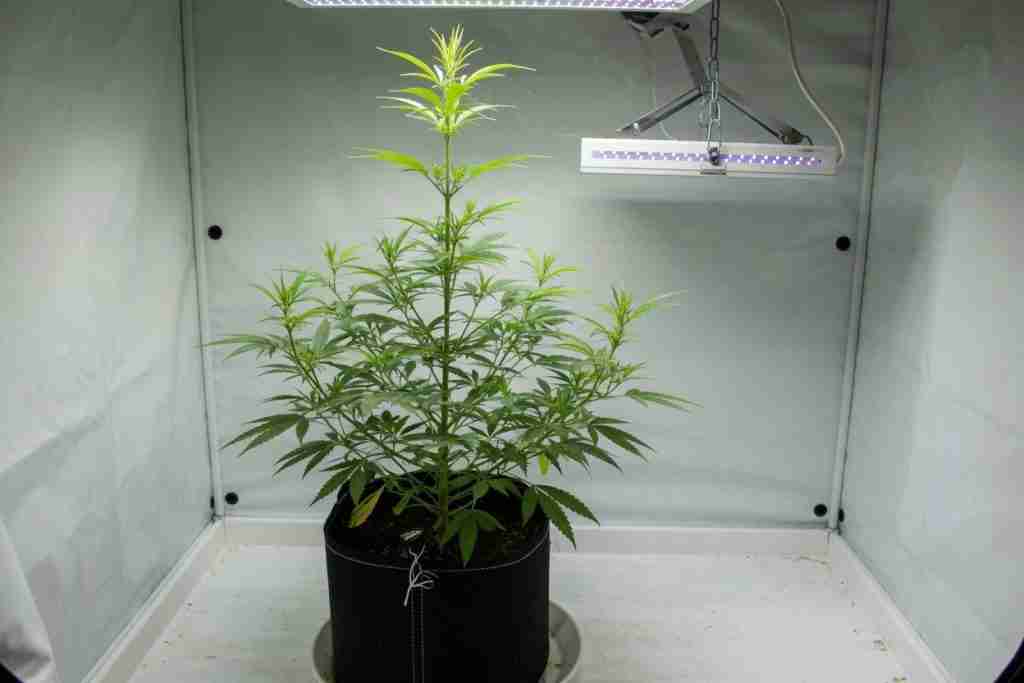
Stand back and look at the canopy as a flat plane under the light. The branch you want is the one sticking through that plane. Often it is the main top. Sometimes it is one side shoot that found a hotter spot than the rest. Bend only as far as you need to bring that tip level with the others.
A fold all the way to the pot rim looks busy and shades the middle of the plant. Horizontal, or a little above horizontal, is usually enough. Leave the branches that are already in the light. Pinching them adds healing time and does not flatten the top any further. Two or three runaways on a big plant is a session. Every branch on the plant is a stall.
Soften It With Your Fingers

Find a stretch of stem between two nodes, not on the node itself. Nodes are where leaves and side shoots join, and they are stiffer and easier to split. A short run of internode is the working spot. Support the outer part of the branch with your other hand so the weight of the tip is not what breaks it.
Pinch with the pads. Roll the stem between thumb and finger. You are crushing the pith, not twisting the branch like a rope. Keep going until the spot feels limp and the stem wants to fold instead of fighting you. On a soft veg stem that takes a brief roll. A woody one will not get there, so move up to greener tissue rather than squeezing harder. Nails, pliers, and a rush are how the skin opens.
Fold It Toward the Open Space

Aim the tip at a gap, not at another cola. Fold the softened spot toward horizontal. The skin on the outside of the bend should wrinkle and stay whole. If you see a pale split starting, stop. You have gone far enough, or a little past it. Forcing the last bit of angle is how a saveable branch becomes a cutting on the floor.
The tip will look wrong for a moment. Leaves may point sideways. That is the point of the move. Over the next days the tip turns back toward the light on its own. You do not twist it upright by hand, and you do not supercrop the new curve to hurry it. The tie holds the base of the bend. The tip is allowed to reach.
Tie It So It Cannot Spring Back

A softened stem has memory. Let go and it climbs again. The pinch was wasted, or the skin tears on the rebound. Tie the branch to the pot rim, to a stake, or to a sturdier lower stem. Use a soft tie with a little slack. The tie holds the angle. It should not strangle the stem.
Check the loop the next day, and again a few days later. Stems thicken while they heal, and a loop that felt loose becomes a cut. If you plan to hold branches under a screen later, the same rule applies. The branch stays where you set it until new growth locks the shape. The screen is a holder. It is not a reason to pinch wood that will not bend.
If the Skin Splits
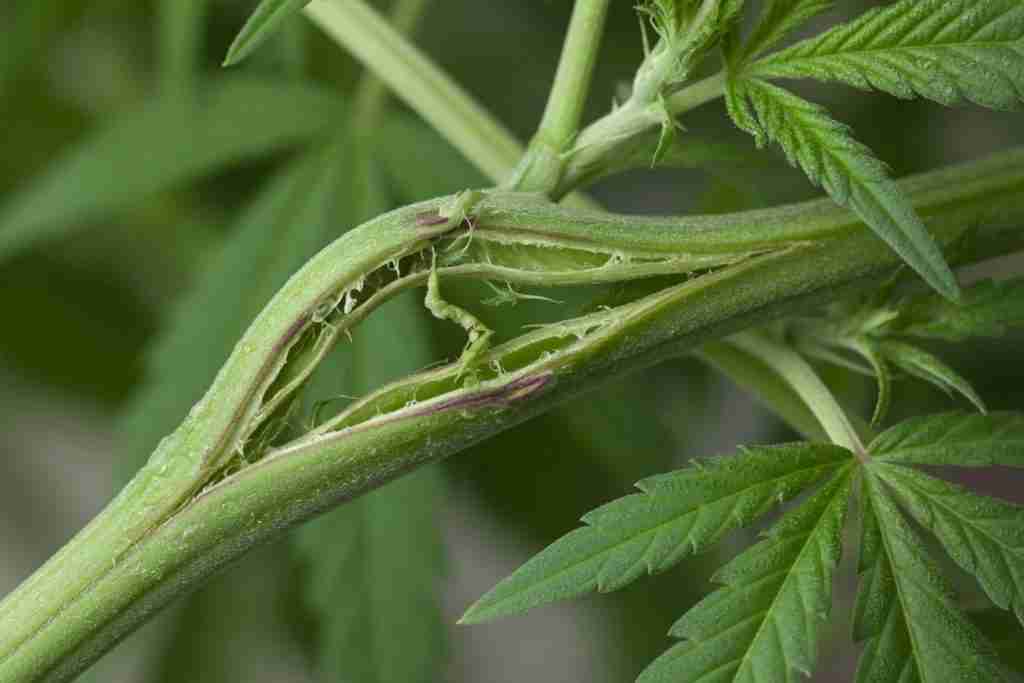
It happens. You rolled a little hard, or the stem was drier than it looked, and the skin opens along the bend. Look at whether the branch is still attached through the middle. If tissue still connects the two sides and the tip has not broken off, you can often save it the same day. A clean snap, with the tip in your hand, is a lost branch.
Do not tape a fully detached tip back on and wait. Cut a ragged stump clean if it is hanging, and let the plant spend energy on what is still attached. The sites below a lost top usually take over. That is annoying. It is also ordinary. Pretending the snap did not happen costs you more days than a clean cut.
Support It the Same Day
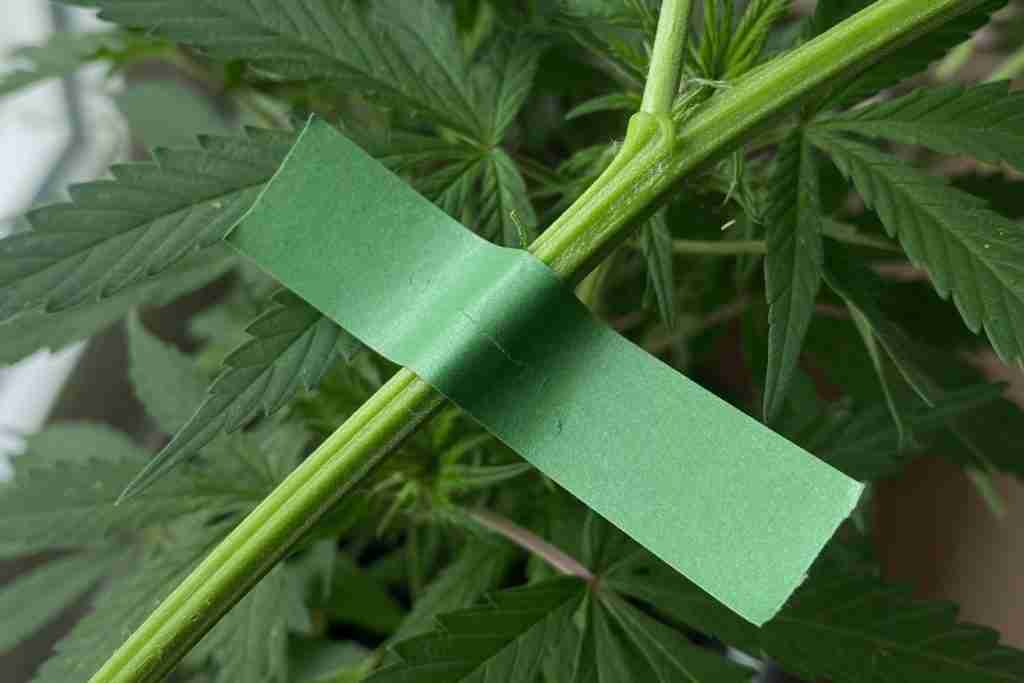
Bring the torn branch back to a gentle angle, not a deeper fold. Wrap the split with soft tape or a soft tie so the two sides stay touching. The wrap is a splint. Snug enough to hold, loose enough that the stem can thicken. Plain soft tape is fine. So is a wide plant tie. Thin string is not.
Leave the wrap on while the knuckle forms. Peek after a few days. If the stem is swelling under the tape, loosen it. Do not peel the wound open to inspect it, and do not supercrop that same stem again this round. Keep the plant on her normal water and light. A saved branch that stays firm and pushes a new tip is recovering. A tip that stays limp for days is not. Then you remove it and move on, instead of watering harder to apologize.
Supercropping Next to Other Training
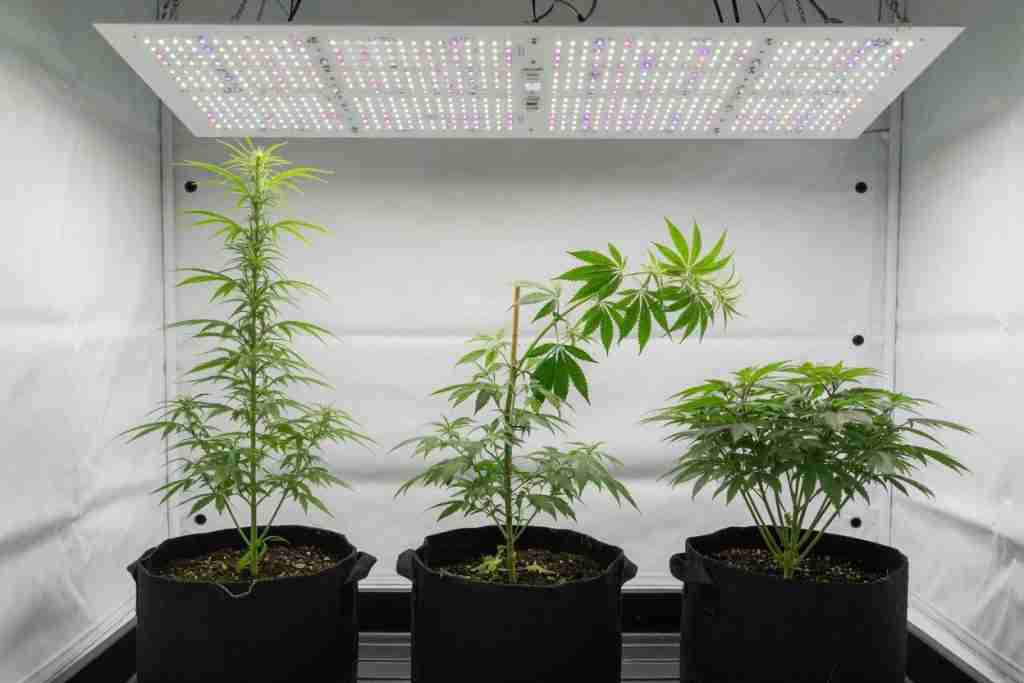
Supercropping sits next to other height tricks. They are not the same job, and stacking them on the same afternoon is how a healthy plant stalls. Pick the one that matches the stem in your hand. Leave the others for another week.
A tall untrained top, a single bent branch, and a plant that was kept low from early veg can share a tent. They should not share one frantic session. The plant that is already the right height does not need a pinch to match the one you just folded.
LST When the Stem Still Bends
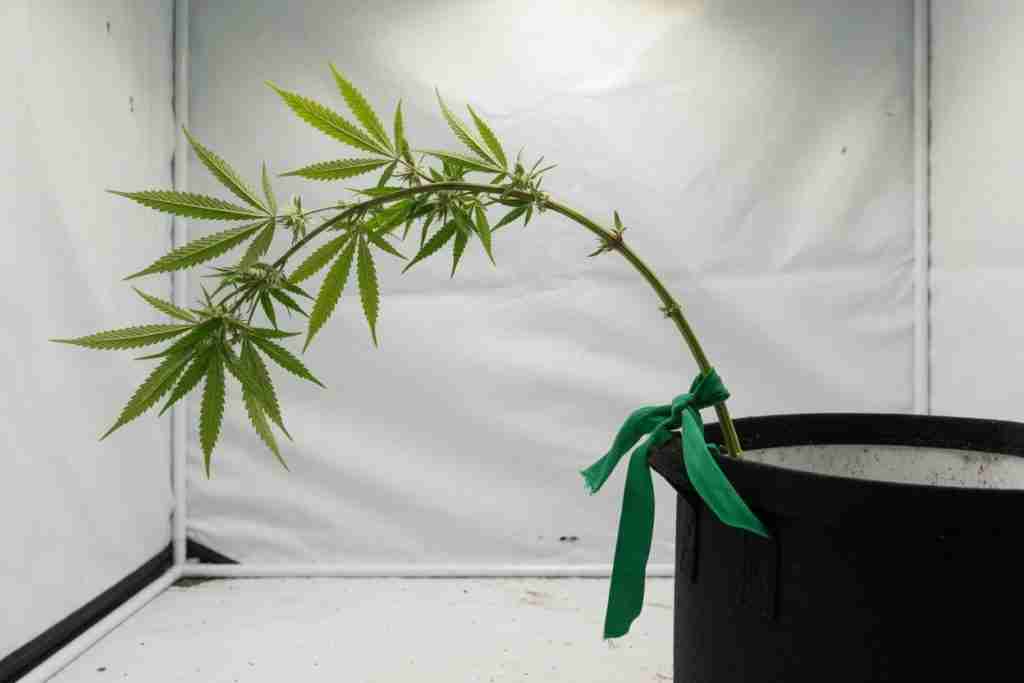
Low-stress training bends a stem and ties it without crushing the pith. If the branch already moves where you want it, do that and skip the pinch. LST is the safer default, and it is the default while stems are young. Supercropping is for the stem that will not stay down, or the one that is too stiff to arc without a soft spot first.
You can tie most of the plant and supercrop one stubborn top. Do the gentle ties first. Pinch last, and only the holdout. There is no prize for crushing a stem that a soft tie would have held. The tie is the technique. The pinch is the exception.
Topping Removes the Tip
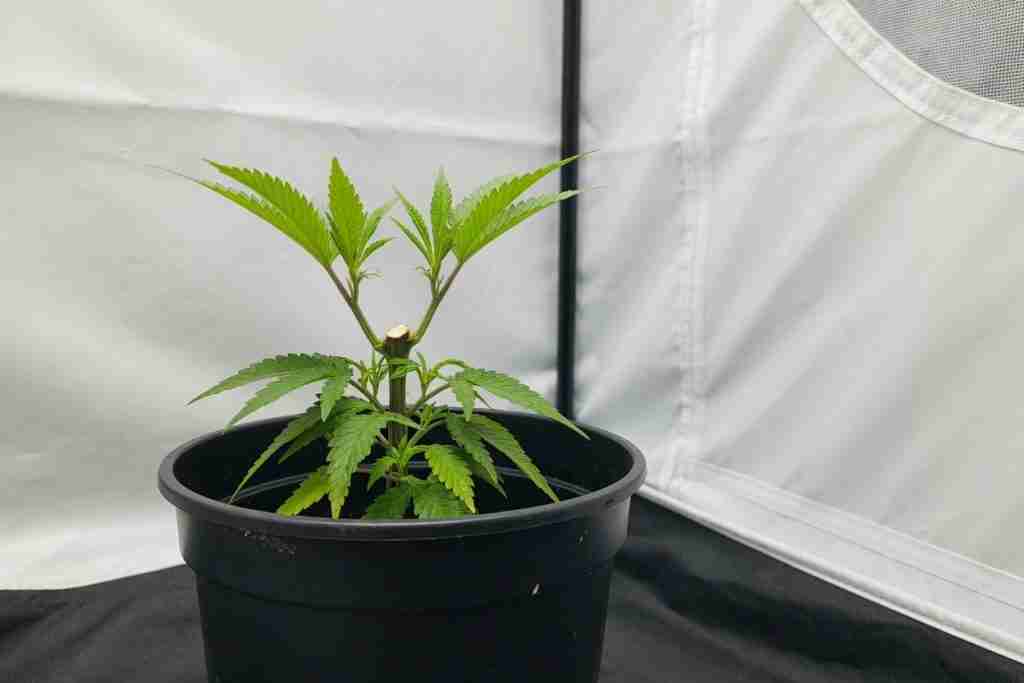
Topping cuts the growing tip off. The shoots under the cut take over, and you get two leaders where you had one. Supercropping keeps the tip and only changes where it points. Top when you want more mains and you still have veg time. Supercrop when the main is fine and you only need it lower.
Do not top and supercrop the same stem on the same day. Let a topped plant show new growth before you pinch anything else. A screen can hold those new shoots flat later. You do not need a crushed stem to make topping work, and you do not need to strip leaves the same afternoon to “open her up.”
Autos Have a Shorter Clock
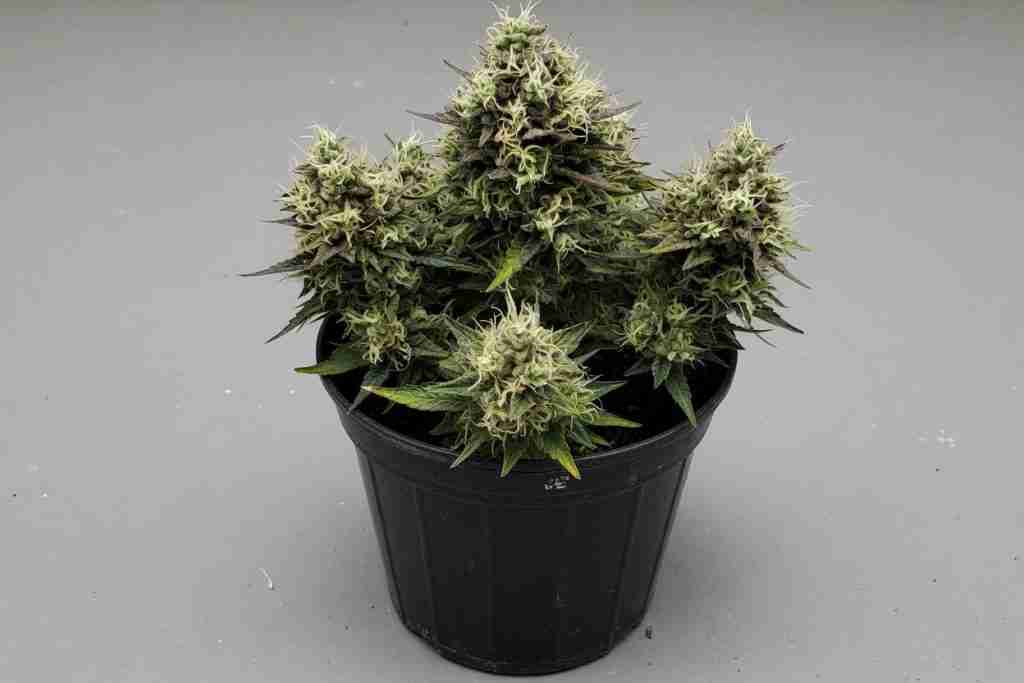
An autoflower starts flowering on her own clock. She does not get the long veg you use to heal a hard pinch and then rebuild a flat top. LST, started while she is small, fits that clock. A supercrop on an auto is a risk you take only if one stem is into the light and still green enough to soften. Many autos are better left to a tie.
If you want weeks of hard training before flower, grow a photoperiod and flip when the canopy is the shape you want. Choosing the seed for the clock you actually have saves more plants than any pinch you learn later. An auto that was supercropped the week she showed pistils often just stalls.
After the Bend
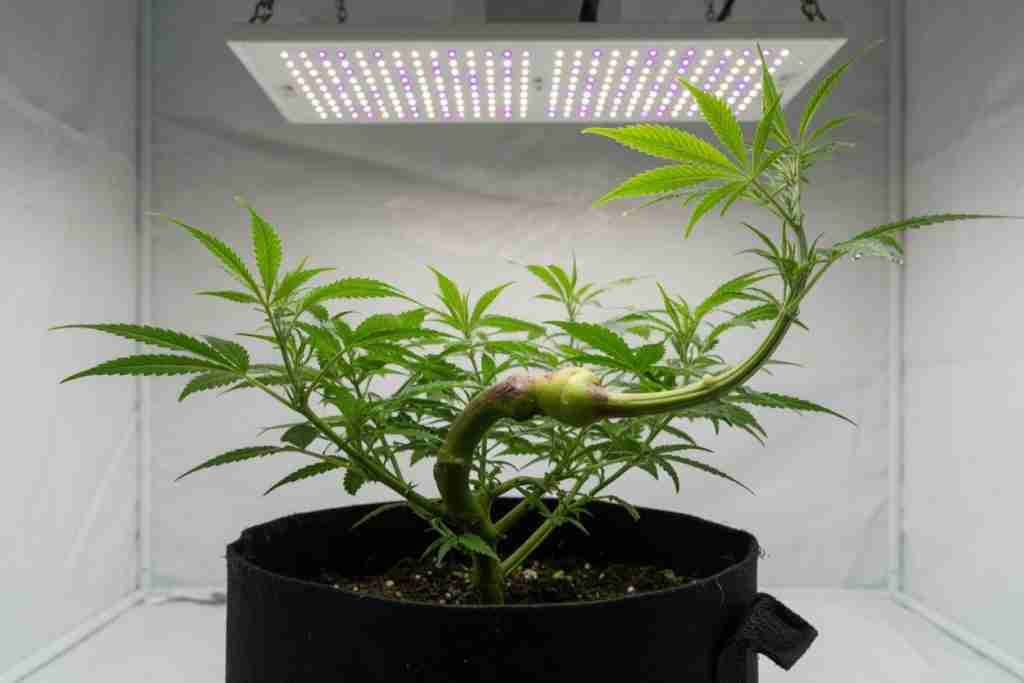
The hour after the pinch is the easy part. The next stretch is where people either leave the plant alone or fuss her into a stall. The branch should stay tied. The knuckle should be left alone. New growth at the tip is the sign you are waiting for, not a bigger lump.
Keep the environment boring. Same light schedule, same feed, same dry-back you were already using. A bend is not a reason to raise EC, drop the temperature, or add a foliar spray. She is healing a stem. Extra products do not speed the pith.
Give It a Quiet Week
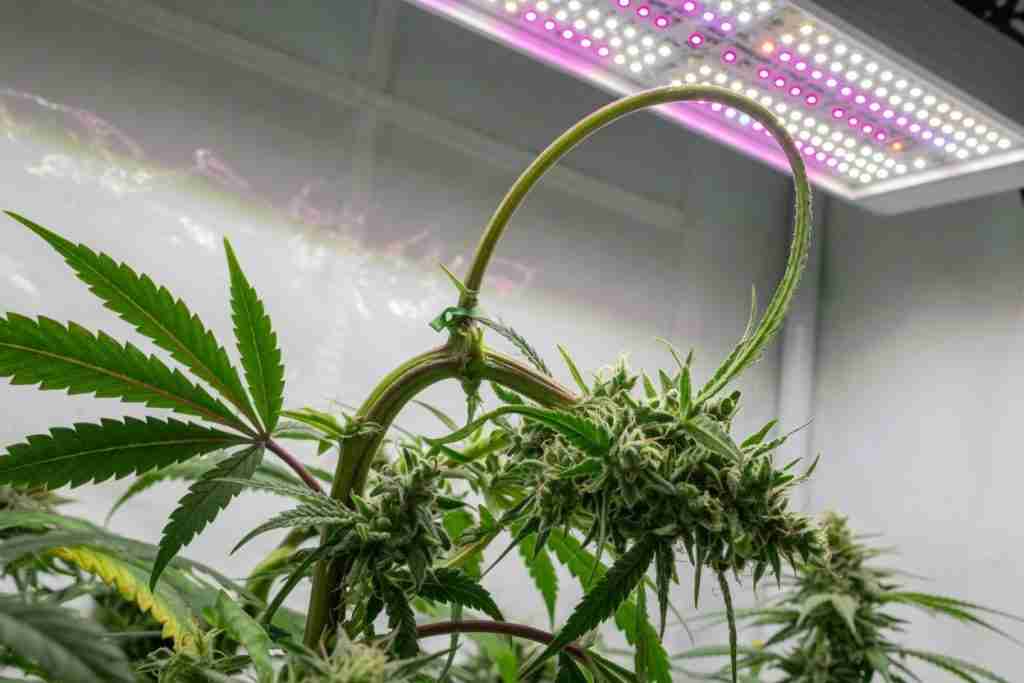
Plan on several quiet days, often close to a week, before that stem is ready for another stress. There is no clock that fits every room. Watch the tip. When it is curving back up and new leaves are opening at a normal pace, the bend has settled. If the tip is still limp, you are not there yet, and another pinch will not wake it up.
Do not defoliate that plant the same day, and do not strip her during the quiet stretch just to open the canopy. Water on your normal schedule. Do not drown her because she looks dramatic. If a tied branch now sits too close to the diodes, raise the fixture. Do not re-bend the knuckle to move the tip. Tips that were sideways will curve up. Let them.
If you meant to flip to flower, wait until growth looks ordinary again, then flip. A plant that is still repairing a split is a poor candidate for a light-schedule change the same night. The tie can stay on into flower as long as it is not cutting in. Loosen it when the stem swells.
Even Light Is the Harvest You Get
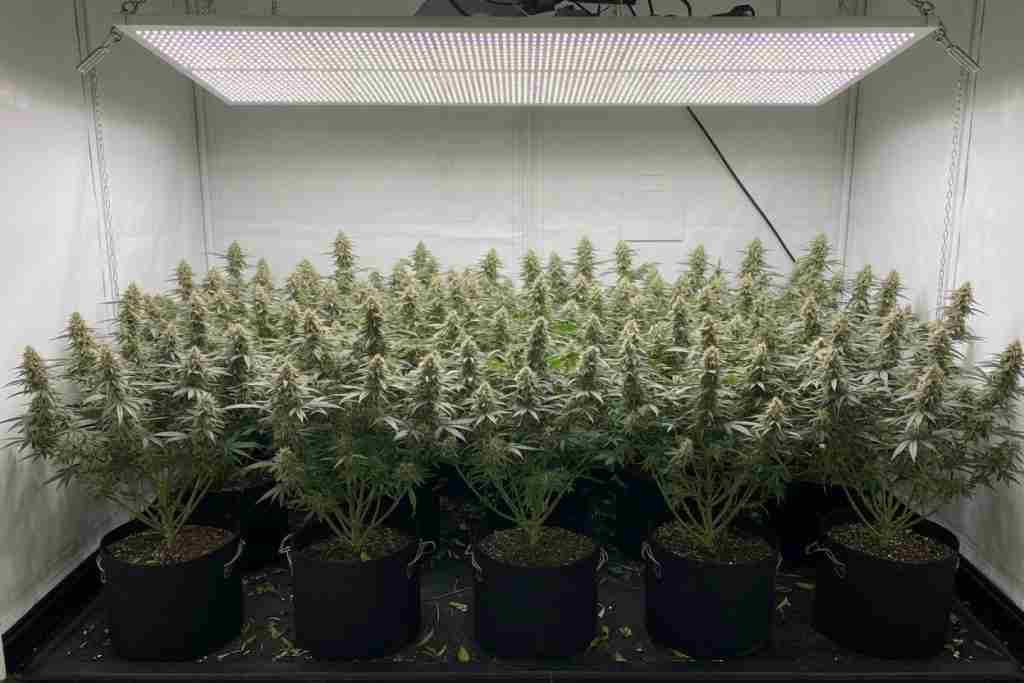
What changes at harvest is distribution. Sites that were in the shade sit closer to the same light as the old top, and those sites can stack more than they would have under a leaf. The old top, now sideways, still flowers. You did not create energy. You spread the light you already run. An indoor grow lives or dies on that evenness more than on any single pinch.
People still want a percent. A percent needs two plants of the same cut, in the same room, one trained and one not, weighed after a real dry. Most tents never run that test. Treat a yield number on a shop page as a story, not a measurement of your plant. The knuckle is not a yield meter either. If the canopy is one height and the lower flowers are in the light, the technique did what it can do.
If you are growing at home in Canada, the federal baseline is four plants per household. Quebec still prohibits recreational home growing. Manitoba allows adults 19 and older up to four plants indoors under the rules that took effect in May 2025. A supercropped plant still counts as one plant. Training does not change the cap. When you are ready for the next run, start with seeds that suit the clock you actually have, then bend only the stem that outgrows the rest.
You know the move when you can say it without a gadget list. Soften the pith between nodes. Fold toward the open space. Tie it so it stays. Leave her quiet until the tip reaches up. That is the harvest you can count on from this technique: an even top, on a plant that was healthy enough to heal.