Strongest Cannabis Strains


Strongest cannabis strains, on a search page, are a pile of famous names with a percent glued to each one. That pile is three questions pretending to be one. Which names do people keep repeating? Which menu printed the biggest figure this month? Which plant will actually hit hard after you grow it, dry it, and put a sane amount in the jar? A roundup answers the first question, borrows a number for the second, and skips the third. If you buy from the list as if it were a lab, you paid for a reputation and received a lottery ticket.
A first marijuana tent does not need the heaviest name on that list. It needs one family you can finish. The seed in the pack has essentially no THC. The percent on a catalog is a ceiling from someone else’s dried flower, and the math of that ceiling lives on the high THC seeds page. Shopping by the biggest printed number lives on the 2026 highest THC seeds page. The bad rules people repeat about potency live on the myths page. This page is the names: what the ones you keep seeing are famous for, and how to use them without treating a blog rank as your jar.
Strongest Cannabis Strains

Read a strongest-strain list the way you would read a menu written by ten different kitchens. Keep the name. Drop the rank. Godfather OG, Gorilla Glue #4, Bruce Banner, Girl Scout Cookies, Wedding Cake, Runtz, Permanent Marker, and Ghost Train Haze are the names that keep surviving from one roundup to the next. White Fire OG, Chemdawg, and Motorbreath show up when the writer wants fuel and weight. Blue Dream shows up because people already buy it, and then someone drags it onto a potency list because the name is familiar. None of those words is a test result you can order in an envelope.
Two kinds of list got mashed together in 2026. Sales-and-search lists lead with names people finish and repurchase: Blue Dream, Runtz, Wedding Cake, and newer candy cuts such as Permanent Marker. Potency lists lead with a figure. The figure is often in the thirties, sometimes higher, and it belongs to one batch, one lab, or one catalog line. A sales list tells you what moved. A potency list tells you what a seller hopes you will believe. Put them in one article and a reader walks away thinking the best-known weed is the strongest weed. It is not. Known and heavy are different jobs.
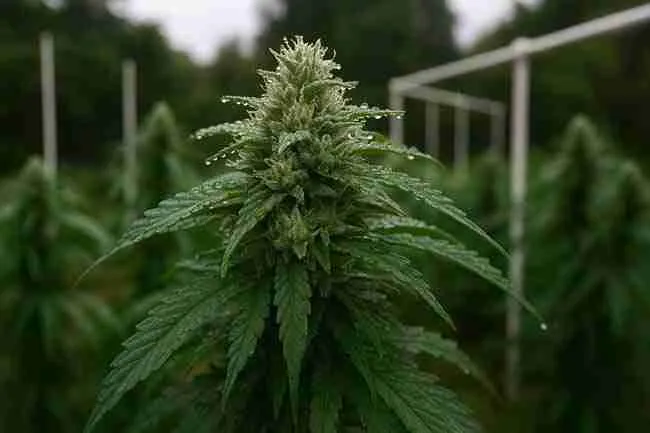
The frost on a cola, like the one in that photo, is the part you can actually see. Resin on the flower is the plant doing the work. A name on a graphic is somebody else’s story about a different plant, grown in a different room, tested once, and then copied onto a seed ad. Use the name to choose a family. Use your own flower, after a real dry, to decide whether that family was strong for you.
Names that keep showing up

Sort the repeated names by the job they are famous for. Do not sort them by a percent. We are not printing a score beside any of them. A site that does is talking about one flower test. That test does not ride along with a seed.
Heavy body names. Gorilla Glue #4, also called Original Glue, is the sticky one people mean when they say the couch won. The history of that cut is its own page. Godfather OG is the OG-family name indica roundups reach for when they want weight rather than speed. Chemdawg and Motorbreath are the fuel names: sharp, gassy, and usually described as heavy rather than chatty. Bruce Banner is the hybrid name people use when they want the hit to arrive fast and loud. The common account of its parents is OG Kush and Strawberry Diesel. That is a family story, not a medal.
Cookie and candy names. Girl Scout Cookies is the parent story under a lot of modern sweet weed. The GSC history is the family tree. Gelato, Wedding Cake, and Runtz are the names shoppers can actually find now. Wedding Cake, usually told as Triangle Kush crossed with Animal Mints, is the one sales lists still treat as a commercial staple. Runtz, usually told as Zkittlez crossed with Gelato, is the candy name that stayed famous after the first wave. Permanent Marker is the newer one, a Seed Junky cookies-family cross that keeps landing on trend lists for smell as much as for strength. People describe a chemical, inky odor, not a fruit bowl. The cultivar nicknamed GMO sits in this same conversation and confuses people. It is a Chem cookies cross. It is not a lab edit. That line is drawn on the genetically modified page.
Racy names. Ghost Train Haze is the sativa-leaning haze that old “most potent” lists still cite. The cross people repeat is Ghost OG and Neville’s Wreck. Smokers describe a fast head, a long ride, and an edge that a new smoker does not enjoy. It is famous for feeling strong in the mind. An OG that sits you down is a different job. Do not read a haze and a glue as two rungs on one ladder. The plants in a real garden already refuse that ladder. One goes purple in the sun. One stays green. Color is not potency, and a lean is not a score. Indica, sativa, and hybrid are groups you choose on purpose. The indica, sativa, and hybrid page is that choice. It is not a strength chart.
Watch for one parent wearing three costumes. Chemdawg sits inside a lot of gassy pedigrees, Glue shows up again inside later crosses, and Cookies sits inside Gelato, Cake, and Runtz. A top-ten list can be four names and one family. If you already ran a heavy OG and you did not like the weight, the next gassy OG under a new word will not surprise you. Change the job. Do not collect adjectives.
Popular weed is not the heaviest weed

Blue Dream is the clean example. It stays on best-of lists because people finish the jar and buy it again: blueberry sweetness from a Blueberry parent, a Haze side that keeps it from sitting like a brick, and a middle-weight effect a lot of gardens could actually finish. Popular is a sales fact. Strongest is a different question. A strain can be loved and still be the wrong pick if you wanted the heaviest plant in the room. The blueberry legend is the parent story, not a potency medal.
You can see the same split in any honest 2026 roundup. The first names are the ones with a public track record. The later names, or the ones that only appear on a potency blog, are there because someone printed a big figure. Buy the first kind when you want a plant other growers have already argued about for years. Buy the second kind only after you have read the ceiling page and you still want that family. A leafy, sunlit plant like the one in that photo can be excellent weed and still lose a “strongest” contest that was rigged toward the frostiest photo and the largest sticker.
There is a practical test. If you removed every percent from the article and the names still told you what the flower smells like and how people say it feels, you learned something. If the article collapses without the numbers, it was a catalog sort. Catalog sorts are what the 2026 buyer page takes apart. Do not rebuild one here in your head by memorizing ten winners.
A lab sticker is not a strain
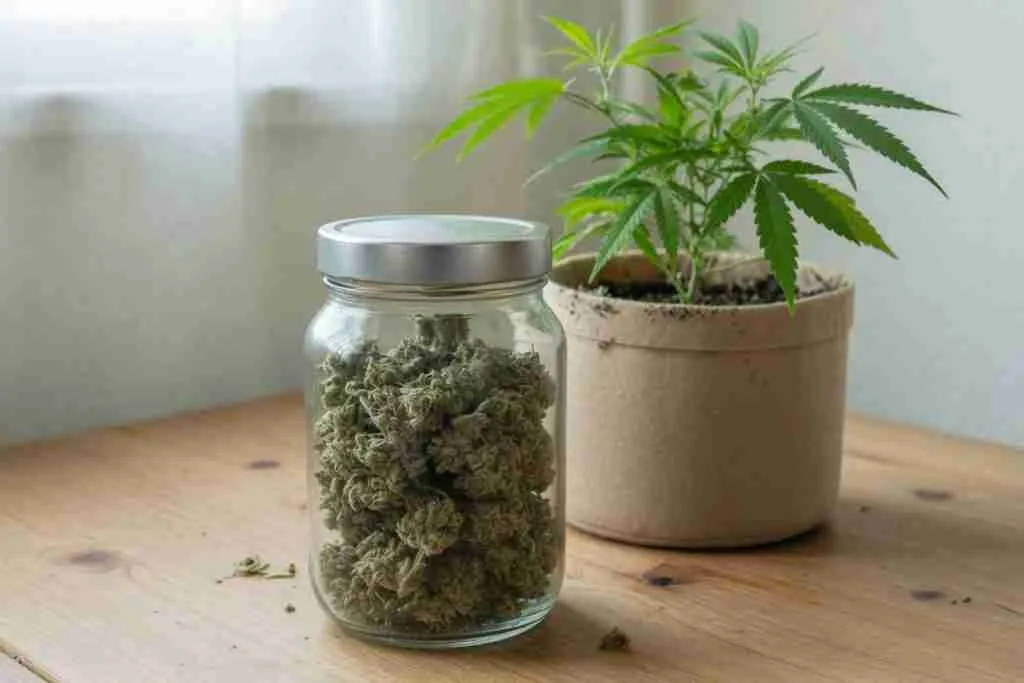
Flower on a menu is mostly THCA until you heat it. The figure on the sticker is not the figure you feel, and two labs can disagree about one sample. How that arithmetic works, and why a banner in the thirties or the forties is usually one selected plant, a stacked THCA number, or marketing, is already written on the high THC page. Do not collect a new percent from this article and tape it to Godfather OG, Bruce Banner, Gorilla Glue, Girl Scout Cookies, or Ghost Train Haze. Those restored scores are how the old roundups keep circulating. Leave them where you found them.
What you can use, without turning this into a second math page, is the band growers already trust. Dried flower that holds up under more than one look often sits in the mid-twenties. Selected plants sometimes get near 30. Around 20 and up is the neighborhood people mean when they say high. A seed pack does not contain that neighborhood. It contains a chance that a plant from that family can reach it if you grow it and finish it. Verified means somebody tested flower. It does not mean every sister in the pack, and it does not mean the jar you trim in a garage in February.
Read a sticker, when you are holding real flower, for three boring facts. Which lab. Which date. Whether the sample was plain flower or flower with something added. If any of the three is missing, the rank is an ad. A blank jar next to the plant that made it is the honest version of the same object. The jar does not know the strain’s search ranking. It knows how that plant finished.
When two jars share a name, judge the flower in your hand. Break one bud. Intact glands on the bract, a smell that matches the family, and a dry that is even all the way through beat a louder packet. If one jar looks dipped in sugar and the other is ordinary frosty flower, they are not the same product, even when the strain word matches. Buy the flower you can see.
Banners that are not flower
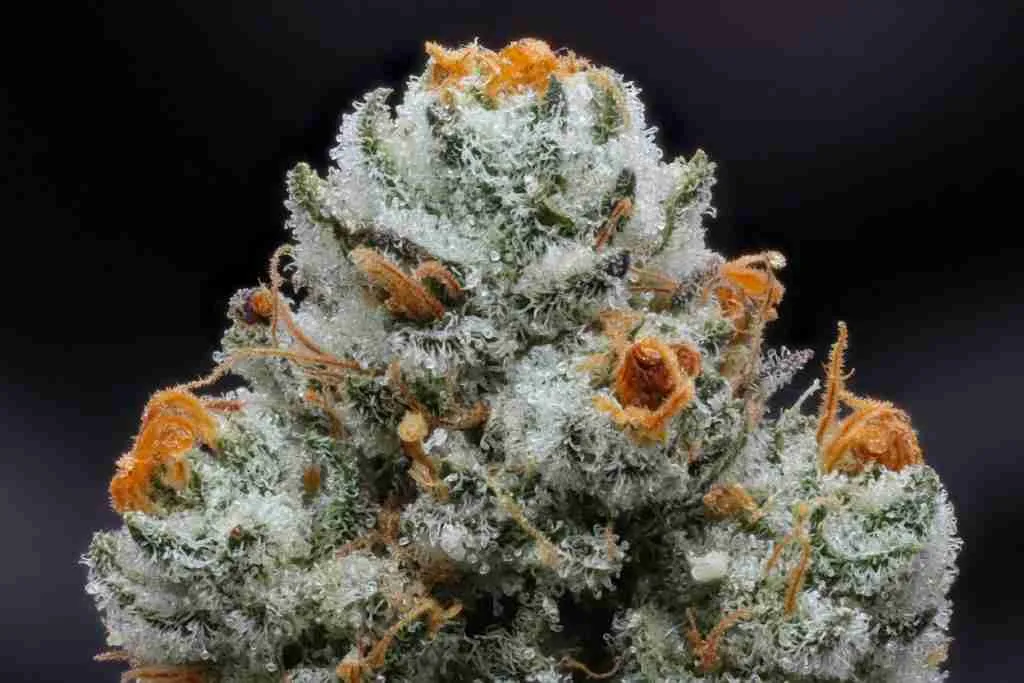
Some of the loudest “strongest flower” ads are not a cultivar. A bud rolled in isolated crystals, or hemp flower sold on a THCA figure that no seed plant is going to repeat, is a product format. The coating was added. The number describes that batch plus that dust. You cannot order a seed of the dust. If the photo looks like the bud was dipped in sugar, you are looking at a manufacturing step, not a breeding result.
Ordinary strong flower is frosty because the plant grew the glands. Those heads sit on the bract. They are not a powder you can shake out of a bag and call a strain. The resin page is about density on a living plant. Maximizing THC is the grow-side work: light, finish, and not wrecking the plant in the last weeks. Neither page is permission to believe a banner. Glands you can see on intact flower are the picture that matches a home harvest. A white crust poured over a brown bud is a different product, and it does not belong in a strain ranking.
Choose a strong plant you can finish

Pick the job before you pick the famous word. A heavy evening plant points you at the glue and OG names, with the expectation of weight. A long, busy head points you at the haze names, with the expectation of an edge. A sweet smell and a middle-to-heavy effect that other people already recognize points you at the cookie family. Then buy one pack. Eight “strongest” names in one cart is eight unfinished lessons.
Feminized photoperiod seed is the usual way to give a plant enough time to show whether it resins up. You choose the flip. An autoflower flowers by age. It can still be strong. It cannot sit in veg while you change your mind. That choice is photoperiod versus autoflower. A short clock is also not a strength score. Fast-flowering plants can be excellent and still be the wrong tool if you wanted the longest resin push. Early flowers, the white pistils in that photo, are not the test. Strength shows up later, when the bracts have swollen and the glands have clouded. Chopping at the first pretty hairs because the name was famous is how a “strong” pack becomes a green, weak jar.
Inside one pack the sisters are not equal. One stacks dull flowers. One piles on resin and smell. That gap is a phenotype. The phenotypes page is how you score sisters without inventing a kitchen lab. If you want to keep the good one, you clone it before you flip, or you accept that this run is the run. You do not receive the cup plant by buying a seed that wears the clone’s nickname. The clone was one selected individual. The seed is offspring, or a breeder’s later version of the family. F1, BX, and S1 tell you which kind of offspring you paid for. Read the label before you pay extra for a famous word.
One job in a four-plant room
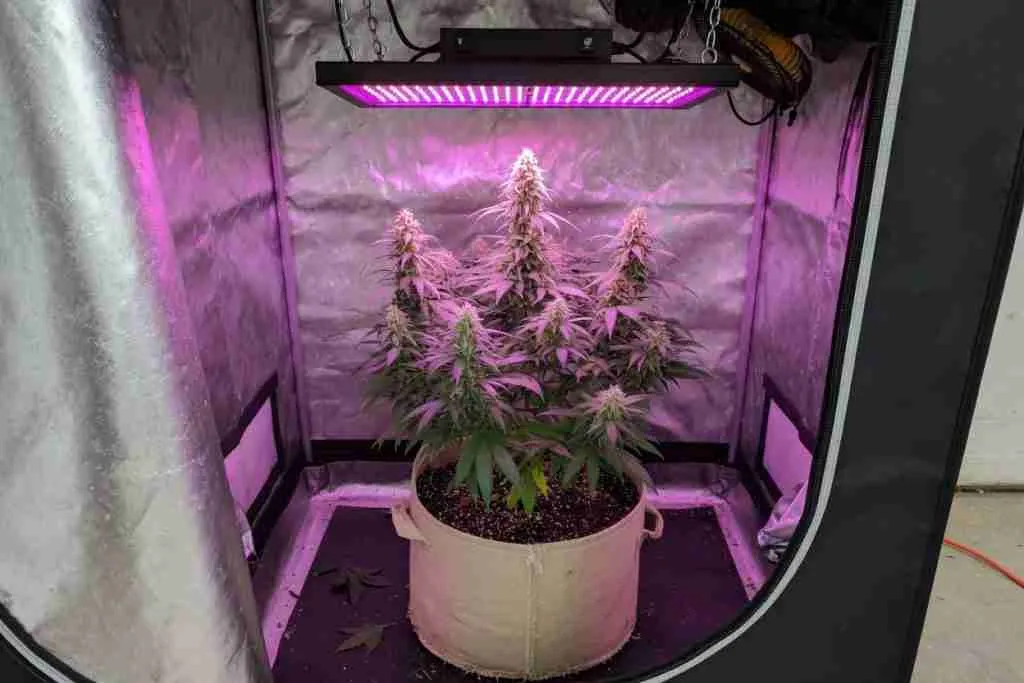
In Canada the federal baseline is four cannabis plants per household, not four per adult. Quebec still prohibits recreational home growing. Manitoba, since 1 May 2025, allows adults 19 and older up to four plants, and those plants have to stay indoors. That cap is the real limit on a strongest-strain shopping spree. Four famous names in one room is four lessons at once, and you will not know which name did the work. Run one family. Two, if you already keep notes and you can tell the plants apart. The first-grow checklist is the order when the tent itself is new. Outside Canada, the plant count is the rule where you live. Do not add pots because a list had ten winners.
A renamed bag is the other way to waste the cap. If the seller will not say the parents, the seed type, and who bred it, the famous word on the packet is decoration. Seed from a jar you liked is an accident, not Gorilla Glue and not Wedding Cake. An honest cross has two parents you chose and a label you can read later. That work is the breeding page. You do not need to breed in order to buy a pack that tells the truth. You do need to refuse a pack that only shouts a superlative.
One plant, finished, teaches more than a sampler of legends. Give it the light and the root room it needs, keep the night from crashing, and write down which sister smelled like the name and which sister did not. Next run you either pop the same pack with your eyes open, or you move to a different job on purpose. That is how a strongest-strain search becomes a garden instead of a tab you keep open.
The notes that matter fit on one card. Which sister carried the smell. How many days from the flip to the chop, or from sprout to chop if the plant was an auto. Whether a small test sat you down or only made noise in your head. You are not writing a lab report. You are refusing to buy the same disappointment twice because a search page used a superlative.
The jar is the test
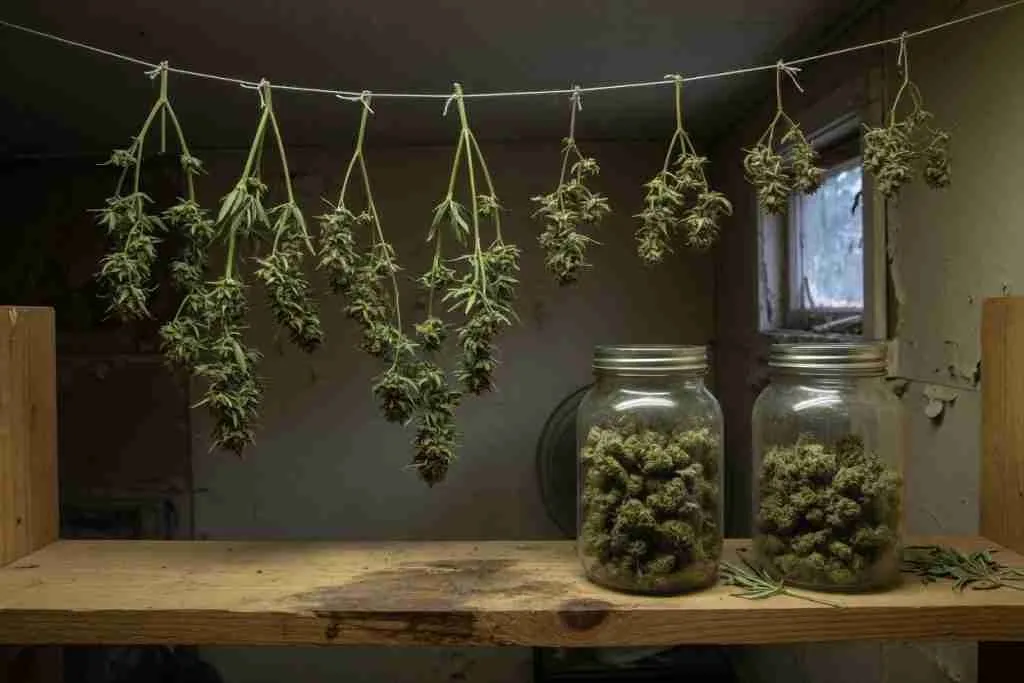
You can buy the right name and still jar average flower. Heat at the end, a rushed chop, and a wet dry all flatten a plant that had the genetics to be strong. Harvest when the glands are mostly cloudy, not when a blog calendar matches the name you bought. The harvest page owns that call. Do not pull a Glue or a haze early because you are excited to see if the list was right. Early flower smells promising and smokes green.
The dry is the other half of the name. People think “the strain” when they are smelling a cure. A slow dry in the dark, then a jar that you burp until the flower is even, is what lets the fuel or the candy show up. A hot, fast dry crisps the outside and traps wet stems. The dry, cure, and store page is that room. It is a cooler room on purpose. Do not aim a grow heater at hanging branches because you are in a hurry to grade the strain. You will grade a ruined sample and blame the genetics.
Hash, rosin, and a baked edible are not a strain ranking. They concentrate what the flower had, or they hide a dose you cannot see on the bud. This page stops at dried flower and at the seed that might grow the next plant. If a list jumps from a cultivar name to a concentrate percent, it changed the subject. Stay with the flower until you know what that family does in a jar.
Strength in the finished jar is also the amount you use. A careful dose of ordinary mid-twenties flower will outrun a famous name you treat like a challenge. New smokers get into trouble by using the top of a list as a target. Start with less than the reputation suggests. Wait long enough to feel it before you take more. The weed did not get stronger because the packet used a louder adjective. Your tolerance is part of the result, and no seed pack edits that. If a small amount of this jar already sits you down, you do not need a higher sticker next time. You need notes on this family.
Keep the short version where you will see it before you add another famous name to the cart.
- A roundup name is a reputation. It is not a lab score, and this page will not restore one.
- Popular weed, Blue Dream and the candy staples, is not the same job as a heavy glue or OG.
- A haze can feel strong in the head and still be the wrong plant if you wanted the couch.
- The ceiling math and the 2026 buyer page own the sticker. A dusted bud is a product, not a strain.
- One pack, one job. Score the sisters. Clone the keeper if you want it again.
- Cloudy glands, then a real dry. The jar is the test, not the search rank.