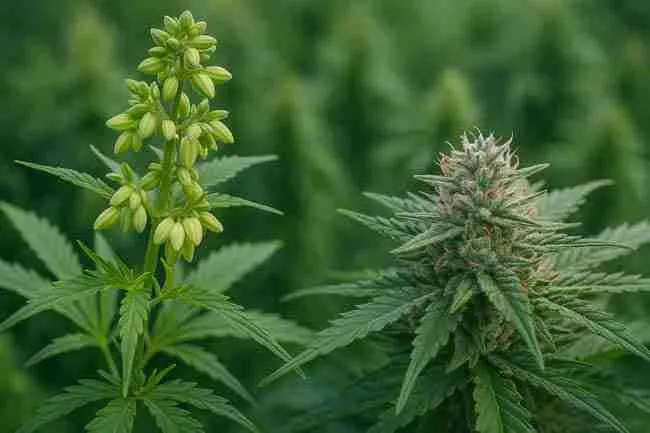
Stress-Testing Cannabis Genetics: Heat, Drought, and Light Leaks

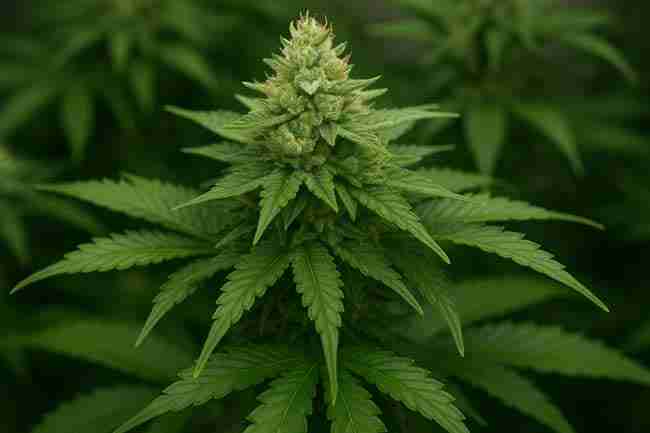
You’re not just growing plants. You’re testing bloodlines.
Cannabis stress testing lets you push your plants on purpose so you can see which genetics stay calm under pressure… and which ones freak out, throw nanners, or just fall apart. If you want strong, reliable seeds and stable clones, you can’t skip this.
You’ll use stress like heat, drought, and light leaks as tools. Not to be cruel, but to answer one big question:
“When things go wrong, does this plant stay solid or snap?”
That’s the heart of cannabis stress testing, hermie risk testing, and trait stability cannabis work.
What Cannabis Stress Testing Actually Means
Simple definition
In plain language, cannabis stress testing means:
You push the plant a bit harder than normal on purpose and watch how it behaves.
You don’t kill it. You don’t cook it. You just:
- Turn up the heat.
- Let it go a little thirsty.
- Give it small light leaks during lights-off.
Then you watch:
- Does it grow steady?
- Does it throw hermaphrodite flowers?
- Do leaves twist, burn, or bleach?
- Do buds stay tight or turn messy and foxtailed?
You’re basically running your genetics through a boot camp. Weak ones complain. Strong ones shrug and keep stacking frost.
Why you should care (even as a small grower)
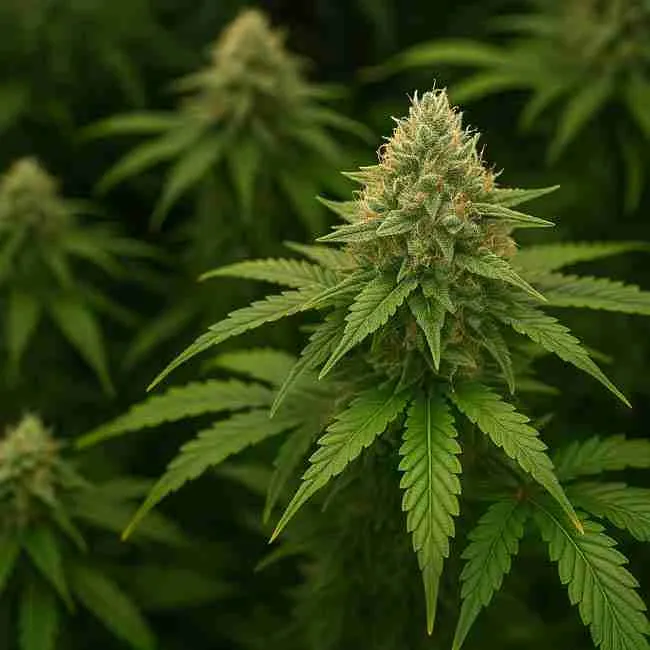
You might think, “I’m just growing for myself. Why stress-test?” Well:
- You want reliable harvests, not random disasters.
- You want to know if a strain has high hermie risk before you fill a whole tent.
- You want trait stability — same smell, shape, and effect every run.
- You want genetics that handle small mistakes, hot days, or a tiny light leak.
When you do cannabis stress testing, you don’t guess. You know what that plant does under pressure.
Core Goals of Cannabis Stress Testing
You’re not just torturing plants. You’re hunting for clear answers.
Main goals
- Hermie risk testing
- Will this plant throw bananas or seed pods when stressed?
- Trait stability cannabis check
- Do smell, taste, structure, and yield stay similar across runs?
- Environmental tolerance
- Can it handle heat waves, dry-back, or small light errors?
- Keeper selection
- Which phenos deserve to become your mother plants or breeding stock?
What you’re trying to learn
When you’ve done good stress testing, you can say things like:
- “This cut doesn’t herm even with some light leaks.”
- “This line stays frosty at 30°C.”
- “This pheno gets ugly if you underwater too hard.”
That’s real-world, usable data.
Mindset First: You’re Testing Genes, Not Abusing Plants
Before you start, get your head straight.
You’re not trying to:
- Kill your plants.
- Burn them into crisps.
- Push them beyond repair.
You’re trying to nudge them just past comfort and see if they bend or break.
Good practice rules
- Always keep a control plant under ideal conditions.
- Only stress healthy plants, never sick or already struggling ones.
- Use clones when you can, so you compare apples to apples.
- Record everything: temps, dates, what you did, how plants reacted.
You’re a plant coach here, not a plant bully.
Types of Stress You Can Use for Cannabis Stress Testing
You’ll focus on three big ones:
- Heat stress
- Drought (thirst) stress
- Light leak / photoperiod stress
Each one shines a light on different weak spots in your genetics.
Heat Stress: Turning Up the Thermostat
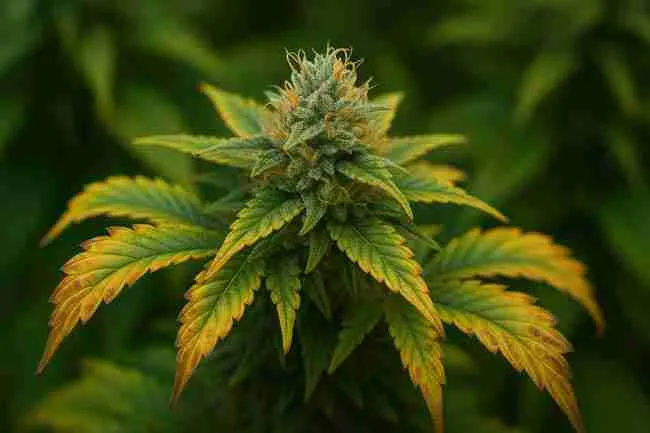
What counts as heat stress?
Normal happy indoor temps:
- Day: 24–27°C (75–80°F)
- Night: 19–22°C (66–72°F)
For heat stress testing, you gently bump temps higher than you’d normally run, without cooking roots or killing plants.
Typical test zone:
- Mild stress: 28–30°C (82–86°F)
- Strong stress: 30–32°C (86–90°F) for short periods
You’re watching how your genetics behave when the room runs warm — like during a summer heat wave or when your fan fails for a bit.
Step-by-step heat stress test
Setup
- Pick two clones of the same pheno.
- Make sure both are healthy and well-rooted in veg or early flower.
Heat stress protocol
- Start at your normal temp (say 26°C).
- Raise temp by 1–2°C per day until you hit your target (30–32°C).
- Hold that temp for 3–7 days.
- Keep feeding and watering normally. Don’t underfeed during this test.
- Watch closely, daily.
What to look for under heat
Signs of weak genetics:
- Leaves taco hard and stay curled even after temps drop.
- Buds foxtail like crazy with no real density.
- Trichome coverage drops a lot compared to the control.
- Plant throws hermie bananas in mid–late flower.
Signs of strong genetics:
- Slight leaf taco but fast recovery when temps drop.
- Buds stay dense and structured.
- Smell stays loud.
- No nanners, no random seed pods even under heat.
Now you’re not guessing. You’ve seen how that plant deals with heat.
Drought Stress: Letting Plants Go Thirsty (On Purpose)
In real life, you’ll sometimes miss a watering. Drought stress testing shows you how forgiving your genetics are.
Controlled drought vs. plant abuse
You’re not trying to let the plant die. You’re just letting the medium dry more than usual before watering again.
Bad:
- Leaves fully wilt, crispy, never recover.
Good test:
- Leaves droop, then perk back up after watering.
Step-by-step drought stress testing
Basic idea
You’ll run:
- One control plant: watered on your normal schedule.
- One stress plant: you delay watering a bit longer each cycle.
Protocol example
- Water both plants fully and note the day.
- Let the control dry to your usual point (top dry, pot still somewhat heavy).
- Let the stress plant go 12–24 hours longer than you normally would.
- When the stress plant shows firm droop (leaves hang but not crispy), water it.
- Repeat this pattern through veg and early flower.
What drought reveals
Weak genetics show:
- Long recovery time after watering (24+ hours still droopy).
- Fast yellowing and leaf drop from the bottom up.
- Weak branches that flop and can’t hold bud weight.
- Hermie response in mid–late flower after repeated stress.
Strong genetics show:
- Quick bounce-back after watering (within a few hours).
- Thick stems, strong branch angles.
- Leaves may droop, but they recover green and healthy.
- No hermies, even after several mild drought cycles.
You’re teaching yourself which plants forgive mistakes — a huge deal for real-world growing.
Light Leaks: The Ultimate Hermie Risk Testing Tool
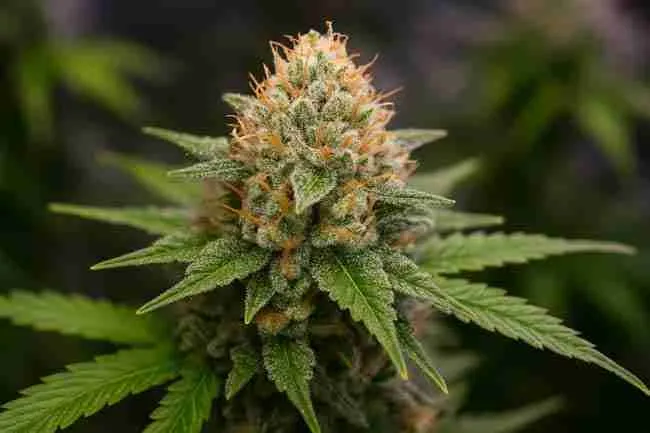
Out of all stresses, light leaks are the big one for hermie risk testing. Many genetics handle a bit of heat and drought, but flip out when their night cycle gets messed with.
Where light leaks come from
You’ll find these sneaky troublemakers:
- LED power lights on fans, timers, humidifiers
- Door cracks and zipper gaps on tents
- Glow from another room through vents or windows
- Green “work lights” that aren’t truly safe if too bright or too close
Even a tiny spot of light that hits buds every night can trigger herms in touchy genetics.
How to stress test with light leaks
Setup
- Run at least two clones of the same pheno in flower.
- One = Control, full dark 12 hours.
- One = Light leak plant, gets controlled light interruption.
Light leak protocol
- Start 12/12 flower as normal.
- For the stress plant only, add:
- A very dim LED pointed toward the plant during lights-off; or
- Turn on a low light in the room for 5–10 minutes at the same time each dark cycle.
- Do this from week 2–6 of flower, when plants set buds and hormones stay touchy.
- Keep all other conditions (feed, temp, water) identical to the control.
What to look for
This is where hermie risk testing really shines.
Watch for:
- Single yellow “banana” flowers sticking out of buds.
- Seed pods forming deep inside buds.
- Strange delayed flowering or random re-veg behavior.
- Buds that get leafy and messy.
Then compare to the control:
- Control plant no herms?
- Stress plant full of nanners?
That’s a huge red flag. It tells you this pheno or line has high hermaphrodite sensitivity to light stress. For trait stability cannabis, that’s usually a “no thanks” for breeding or big runs.
Other Useful Stresses (Optional but Helpful)
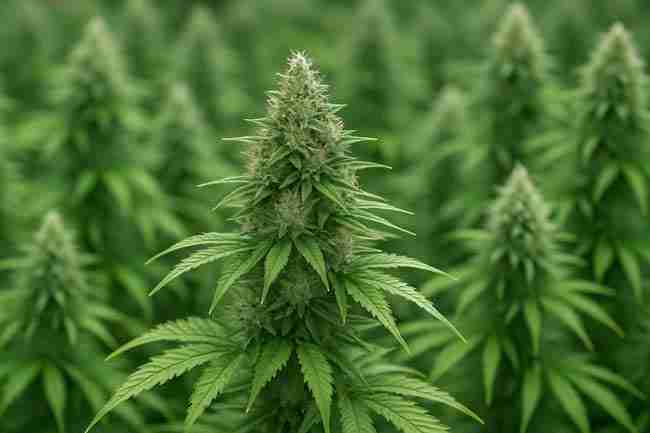
You don’t have to stop at heat, drought, and light leaks. You can test a few more gentle stresses.
Wind / mechanical stress
- Add a stronger oscillating fan.
- Gently bend or shake branches.
You’re checking:
- Do branches snap easily?
- Does the plant respond by thickening stems and staying upright?
Mild nutrient stress
Careful here.
- Slightly higher EC for a week.
- Slightly lower EC for a week.
You’re watching for:
- Tips burning immediately at small changes (very touchy genetics).
- Fast fade or deficiency under small feed drops.
You don’t go crazy with this. You just want to know if the plant needs babying or if it rides small changes like a champ.
Designing a Simple Cannabis Stress Testing Plan
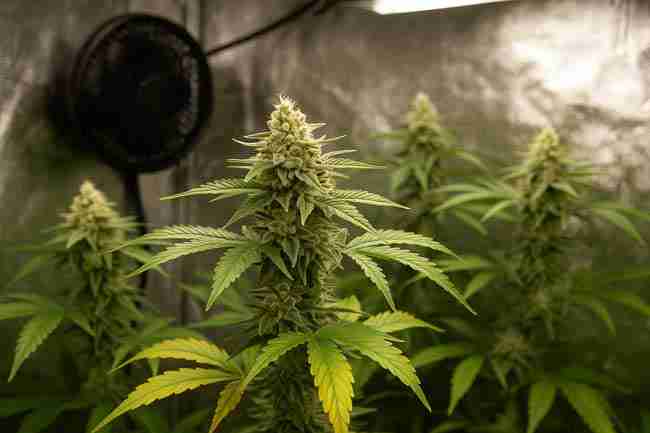
You don’t need a lab. You just need a small, clean plan and some discipline.
Step 1: Choose what to test
Good candidates:
- New packs of seeds you’ve never run.
- New clones you got from someone else.
- Your own crosses that you want to stabilize.
Bad candidates:
- Plants already sick with pests or disease.
- Plants in tiny, rootbound pots.
Step 2: Use clones whenever you can
For real trait stability cannabis testing, clones are your best friend.
- Take multiple clones from the same mother.
- Give each clone a label.
- Run some as control, some as stressed.
Now you know differences come from the environment, not from random seed variation.
Step 3: Always run a control
Never skip this. Without a control plant, stress testing turns into guesswork.
Your control plant tells you:
- What this pheno looks like under ideal conditions.
- How big buds get when nothing goes wrong.
- What’s “normal” for leaf shape, color, and speed.
Then you compare every stressed plant to that baseline.
Example Cannabis Stress Testing Timeline (Table)
Here’s a simple example schedule you can adapt.
| Week | Control Plant Action | Stress Plant Action | Notes |
|---|---|---|---|
| 1 | Veg, normal temps & water | Veg, normal temps & water | Healthy start only |
| 2 | Veg, 26°C, normal watering | Veg, begin mild drought between waterings | Watch droop–recovery time |
| 3 | Veg, stable environment | Veg, add stronger fan (wind stress) | Check branch strength |
| 4 | Flip to 12/12, 26°C | Flip to 12/12, raise temps to 29–30°C | Begin heat stress |
| 5 | Flower, full dark 12 hours | Flower, light leak 5–10 min during dark | Start hermie risk testing |
| 6 | Flower, normal watering | Flower, mild drought + ongoing heat & leaks | Highest combined stress period |
| 7 | Flower, stable to harvest | Flower, stop extra stress, watch for herms | Herms often show up late |
| 8 | Harvest, evaluate traits | Harvest, compare bud, seeds, herms, yield | Decide keeper vs cull |
You don’t have to copy this exactly, but a simple timeline like this keeps you honest and consistent.
Reading the Results: What Strong Genetics Look Like
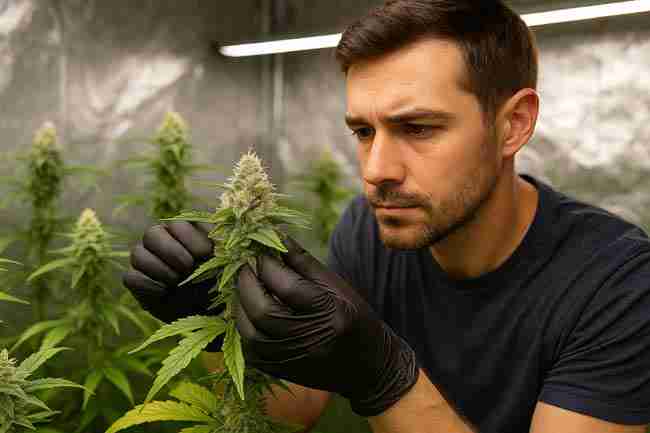
This is where things get interesting. You’ve done the work. Now you judge.
Visual markers of trait stability
For trait stability cannabis, you’re looking for plants that keep their “personality” even when things go sideways.
Strong signs:
- Leaf shape stays consistent (no weird mutant leaves after stress).
- Bud structure stays tight, not fluffy or foxtailed.
- Color changes are logical (slight fade, not random weird blotches).
- Smell profile stays similar to the control.
Weak signs:
- Plant suddenly changes shape, stretch, or bud structure under stress.
- Terpenes drop off hard — stressed plant has almost no smell.
- Heavy random variegation or mutation under light stress.
Hermie Risk Testing Checklist
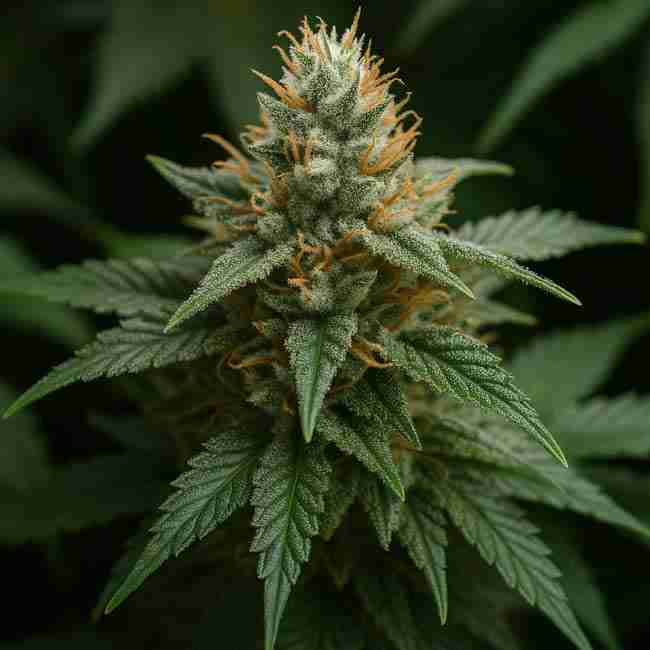
Use a simple checklist as you move through flower:
During weeks 2–4:
- Any pre-flowers that look like balls near nodes?
- Any mixed nodes (pistils + balls)?
- Any strange delay in pistil development compared to control?
During weeks 5–7:
- Any yellow bananas poking out of buds?
- Any swollen calyxes with hard seeds inside?
- Any plants that suddenly throw male sacs after a watering or heat spike?
During final weeks:
- Are herms only on stressed plants, but not on control?
- Do the same stress patterns cause herms across multiple runs?
If you see repeated herms under light leaks or mild drought, you’re looking at high hermie risk genetics, even if they look pretty. That’s usually a “no” for long-term breeding stock.
Pros and Cons of Cannabis Stress Testing
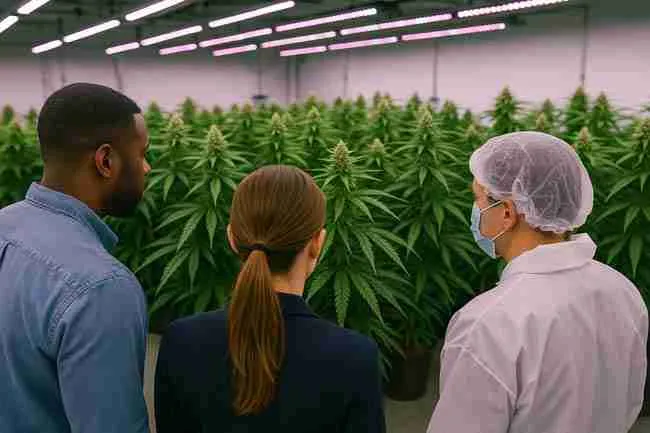
You’re playing the long game here. Like everything, this has upsides and downsides.
Pros
- Helps you pick strong mother plants and clones.
- Exposes hidden hermie risk before you scale up.
- Shows which strains handle heat, drought, and light leaks like champs.
- Builds real-world confidence in your genetics.
- Gives you better consumer trust if you ever sell seeds or clones.
Cons
- You need time and space for extra plants.
- Some plants will become ugly or seeded and lose their smokable value.
- You must pay attention and keep good notes, or data becomes noise.
- You might fall in love with a strain that fails stress tests and you should cull it.
Bottom line: you trade short-term comfort for long-term reliability.
Practical Specs for Cannabis Stress Testing
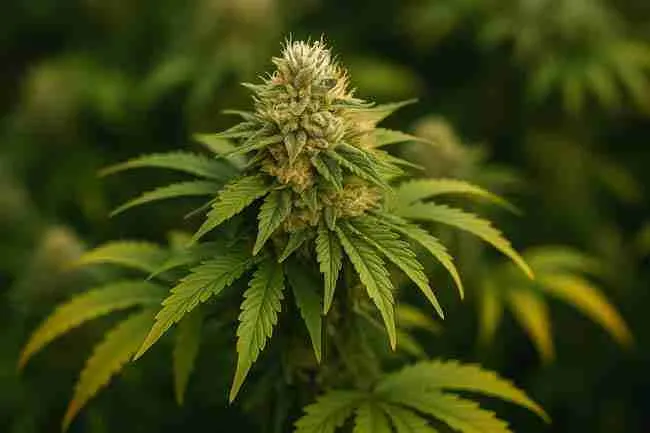
Let’s nail down some rough numbers so you’re not flying blind.
Temperature specs
For indoor cannabis stress testing:
- Normal range: 24–27°C (75–80°F)
- Mild heat test: 28–30°C (82–86°F)
- Strong short test: 30–32°C (86–90°F)
Don’t run 32°C all flower. Use it as a short stress window, not a permanent setting.
Drought specs
- Let pots dry past your normal watering point, but not bone dust dry.
- Watch for first firm droop of leaves.
- Water before stems go rubbery and leaves feel crispy.
- Repeat the cycle to see how fast plants recover each time.
Light leak specs
- Keep control plants in true darkness — no lights, no indicators.
- Stress plants get:
- Very dim light (think weak LED, not bright lamp), or
- 5–10 minutes of low light during dark period, same time every night.
If a plant herms from that kind of mild, realistic stress, it shows very low tolerance for light mistakes.
Real-Life Style: Two Mini Stress Test Stories

Case 1: The Keeper
You pop a pack of seeds and find one plant that smells like tropical candy. You love it. To be sure, you run cannabis stress testing on clones.
- Heat: up to 30°C for a week.
- Drought: several late waterings.
- Light leak: a small LED flicked on for 7 minutes every night.
Results?
- No herms.
- Buds stay dense and frosty.
- Smell stays loud.
- Yield on stress plant only a little lower than control.
That’s trait stability cannabis in action. That plant becomes your keeper mother.
Case 2: The Heartbreak
Another plant looks even prettier in veg. Thick leaves, strong branching. You’re excited.
You run the same tests:
- Mild heat.
- Mild drought.
- Small light leak.
By week 5 of flower:
- You find bananas deep in the buds.
- Control plant stays clean.
- Stressed plant starts making seeds.
You could still smoke it, sure, but as far as hermie risk testing goes, that line fails. Hard.
Painful? Yeah. But better to learn now with two plants than after you fill a whole room and end up with seeded harvests.
Simple Step-By-Step Cannabis Stress Testing Checklist
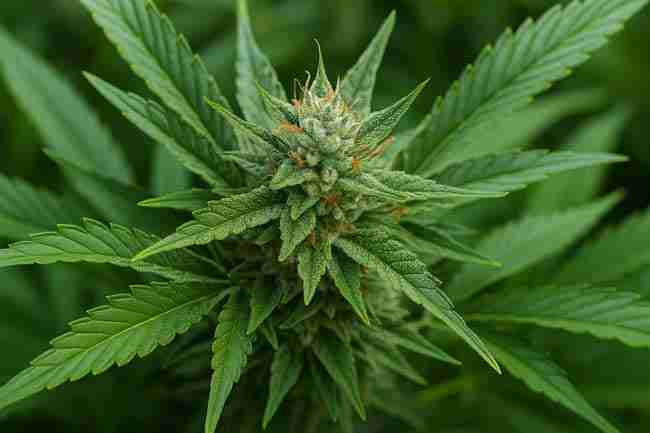
Here’s a quick action list you can use as you set up your own tests:
- Pick your strain or pheno to test.
- Take multiple clones from the same mother.
- Label plants clearly: “Control”, “Heat”, “Drought”, “Light Leak”, etc.
- Grow them all healthy first — no stress until they look strong.
- Start one stress at a time (heat, drought, or light leak).
- Keep at least one plant under perfect conditions as your baseline.
- Take notes daily: temps, watering, light events, visual changes.
- Watch closely for herm signs from week 3–8 of flower.
- Harvest and compare: smell, bud structure, seeds, yield.
- Decide: keeper, test again, or cull from your breeding/clone program.
This kind of simple system turns your grow into a real testing lab.
FAQ: Cannabis Stress Testing, Hermie Risk, and Trait Stability
How early can you start cannabis stress testing?
You can begin light stress in veg, especially drought and wind, but keep it mild. The serious hermie risk testing usually happens in flower, because that’s when hormones flip and plants show their true colors.
Is cannabis stress testing going to ruin your whole crop?
Not if you plan it right. You should:
- Only stress some plants.
- Always keep a control plant for smoke and comparison.
- Treat stress runs as test projects, not your main stash source.
Does every strain need stress testing?
If you only grow a strain once and never keep it, maybe not. But if you:
- Want to keep a mother plant.
- Want to breed.
- Want to sell seeds or clones someday.
Then yes, cannabis stress testing becomes almost non-negotiable.
Are hermies always caused by stress?
No. Some genetics throw herms even under perfect conditions. That’s a genetic problem, not just an environmental one. Stress just reveals weak lines faster.
How many runs does it take to trust a plant?
One good stress test tells you a lot. Two or three runs under slightly different stresses give you real confidence. When a pheno stays stable across multiple grows, you can trust its trait stability much more.
Can you fix a hermie-prone line with better growing?
You can reduce herms with perfect environment, sure. But if a plant herms with mild, realistic stress during cannabis stress testing, the genetics themselves carry that risk. You can’t completely “grow out” a bad gene. You just avoid breeding and scaling that line.