Starting Old Cannabis Seeds


Starting old cannabis seeds is a revival job. The coat got harder. The embryo got slower. A dripping paper towel that a fresh pack would forgive will rot a five-year bean before it splits. Ranking pages in 2026 still start the same way: sort the pack, a short soak, dilute peroxide if the shell is dirty, a damp towel in the dark at about 22 to 26°C, and patience measured in days. This URL already had a vial walk: a 1:20 peroxide rinse, fridge-cooled sugar water, and damp coco. That walk stays. It sits next to the soak-and-towel stack, not instead of it.
How long a pack still has life is a storage question. That lives on do cannabis seeds last. Pale shells and musty jars live on signs your cannabis seeds have gone stale. Faster germ for seed that is already in good shape lives on 7 hacks to get your cannabis seeds germinating faster. Fresh named packs sit in the cannabis seeds store.
Why Old Cannabis Seeds Stall
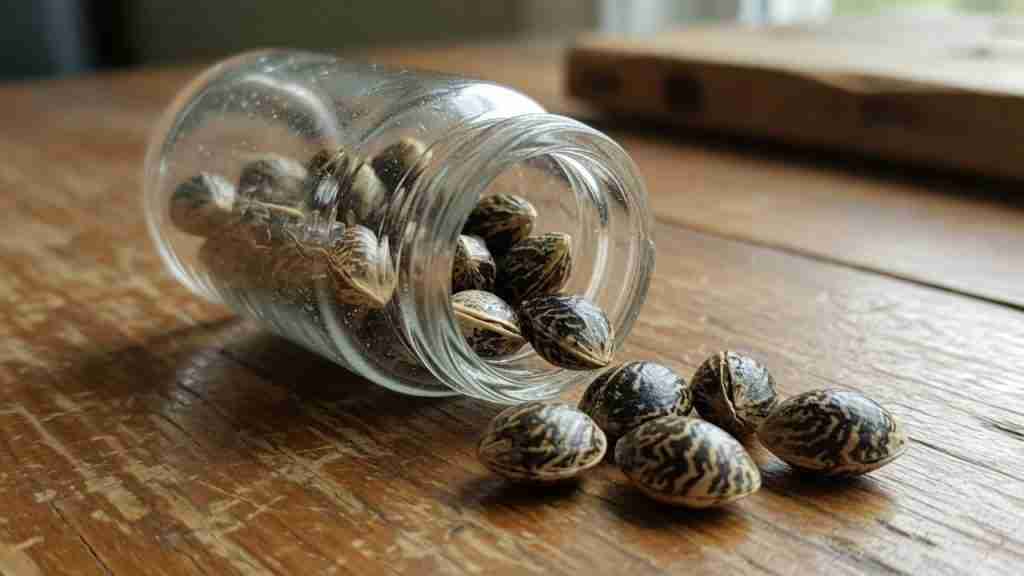
An old marijuana seed is not a different plant. It is the same embryo with less fuel and a tougher door. The coat lignifies as it sits. Water takes longer to get in. The enzymes that should wake the seed fade with heat, humidity, and air. A kitchen drawer for two summers can cook a pack quietly. You cannot see that from the outside. A dark tiger-stripe weed seed can still look perfect and be tired.
Rot is the other clock. Older seed drinks slowly. Slow drink means more hours wet. More hours wet is more time for fungus and bacteria to chew the shell from the outside in. That is why this page is picky about dilution, air, and not leaving a seed in a swamp for three days. Ranking pages that tell you to soak 72 hours until a tail shows in the glass are drowning the last oxygen the embryo had. A swollen shell with no taproot is a drowned seed, not a stubborn one.
Vigor drops before the germ count. You get a tail, then a skinny seedling that never catches the stocky plant from a fresh pack. That is still a win if the genetics are keepers. It is a loss if you needed four even plants for a four-plant room. Plan the run around that. How many beans to pop lives on how many cannabis seeds. The seedling week after the shoot is up is growing cannabis seedling stage of growth.
Sort the Pack Before You Soak
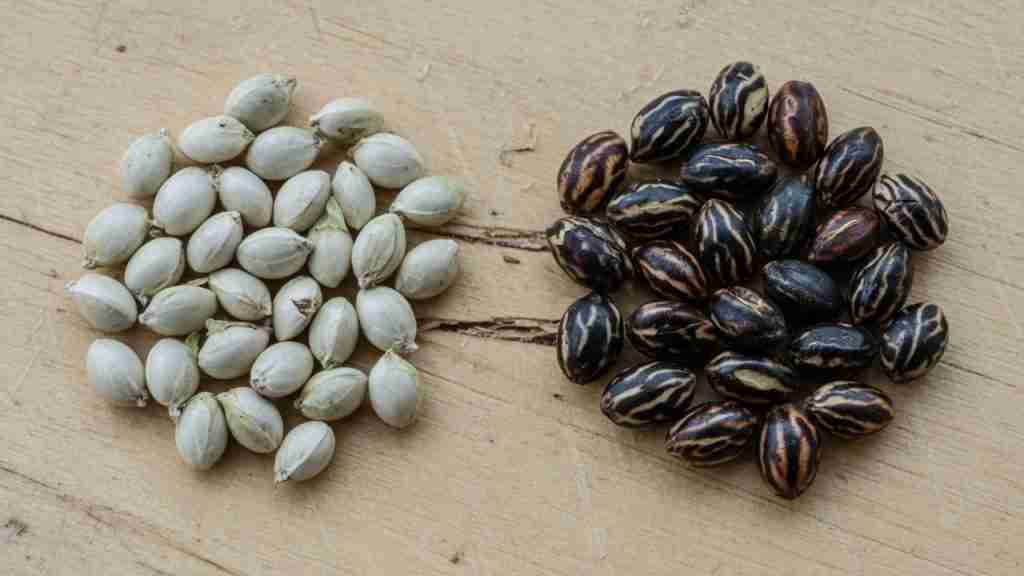
Those two piles are not old versus new. They are unfinished versus mature. Pale, green, white, or chalky seeds were pulled too early. Soft shells crush between finger and thumb. No fridge, no peroxide, and no sandpaper will put an embryo in a seed that never finished on the plant. Dark, hard, mottled, slightly waxy seeds are the ones you try. A light pinch does not crush them. That split is the first filter. The five-sign walk is already written: signs your cannabis seeds have gone stale.
Dump the vial on a clean plate. Pull out cracked shells, hollow husks, and anything that smells musty. Musty is mold, not “character.” Do not soak the whole jar hoping the pale ones surprise you. You waste water, you mix rot into the good beans, and you lie to yourself about the pack. A two-seed test is enough for a five-pack. Pop two from the working vial, not from the reserve you swore you would not open. Non-destructive checks before you wet anything sit on how to test cannabis seed viability without germinating them.
The float test is a sign, not a law. Fresh seed often floats for the first hour and sinks as it drinks. Some live old seeds stay up. Some dead seeds sink after they fill with water. Do not throw a floater at hour two. Do not crown a sinker as proven. The only test that counts is a taproot, and even that can still give you a weak plant. Pick the dark hard ones, soak a short window, then look for a split.
Default Revival: Soak, Then Towel
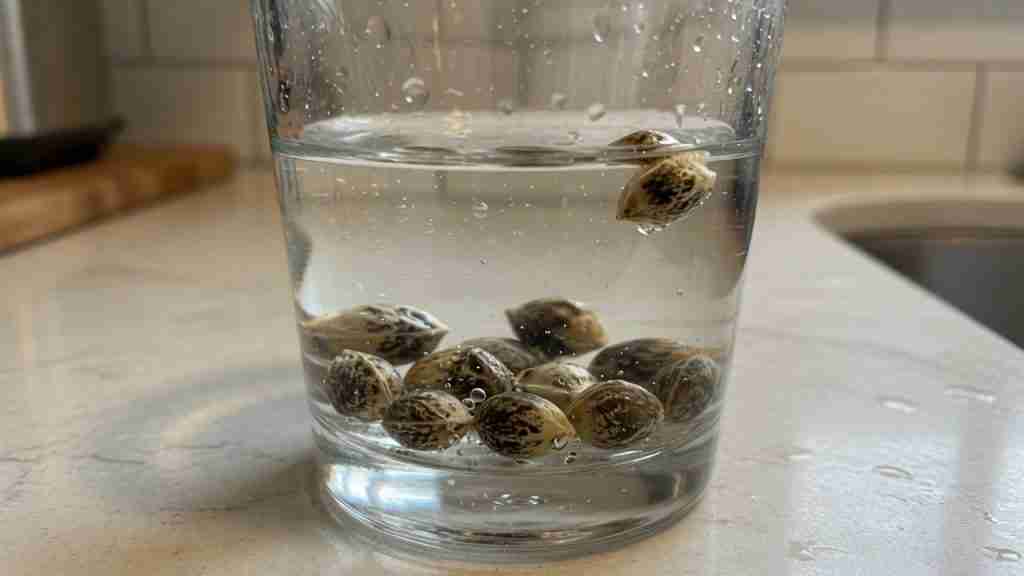
Room-temperature water. Glass. Dark. Cover the seeds, do not drown them in a mixing bowl. Twelve to 24 hours is the working window. Fresh seed can skip the soak. Old, dry, fridge-stored seed usually wants it. Past 24 hours the embryo wants oxygen more than it wants another drink. Forty-eight hours is the hard ceiling for a stubborn coat, and only if the water stays clean and the room is not hot. A two-day swim is how you get a swollen shell and no taproot. Ranking pages that leave old seed in peroxide for four days are not doing you a favour.
Use distilled, bottled, or tap that has sat so chlorine can leave. Chloramine in some city water does not gas off overnight. If your soaks always fail and your towels always fuzz, change the water source before you invent a new chemical. A shot glass is enough for a five-pack. Change the water if it clouds before the clock is done. Do not shake the glass like a cocktail. When you see a crack, move to the towel even if the timer says 10 hours. The soak is done when the seed has drunk, not when a timer dings. The full germ walkthrough for fresh seed is cannabis seed germination. Direct-to-soil if you hate handling roots is plant cannabis seeds directly in soil.
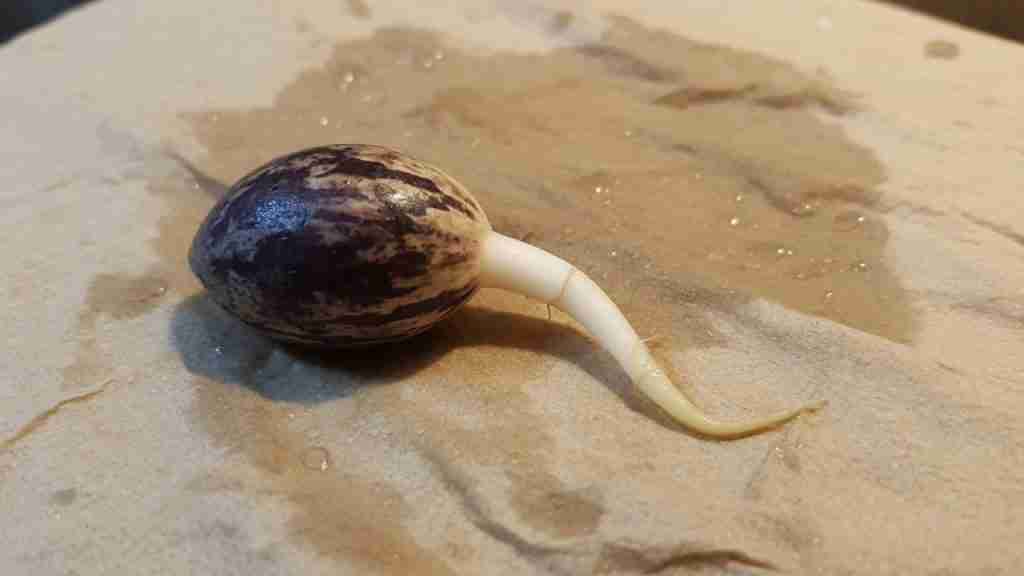
Two unbleached towels. Wet them, wring them, they should feel like a used sponge, not a puddle. Seeds an inch apart. Second towel on top. Plate plus plate, or a bag with a corner cracked so they do not suffocate. Cupboard, not a sunny window. Check once a day. If the towel dries, a few drops. If water pools on the plate, you have too much. Kitchen paper that turns to mash is a bad towel. Use a brand that stays a sheet when wet.
Fresh seed often tails in 24 to 72 hours. Old seed can sit five to ten days and still be honest. Fourteen days is a fair stop. After that in a warm, barely damp towel, that sample is done. Do not peel the rest like pistachios. The shell was not the problem. The embryo was. Plant when the taproot is a few millimetres to about a centimetre, not a worm. Longer roots snap when you move them. Tweezers, not fingernails. The surface clock after the tail shows belongs on how long germinated cannabis seeds take to break the surface. Older seed and soil break is do older cannabis seeds take longer to break the soil surface.
Dilute hydrogen peroxide

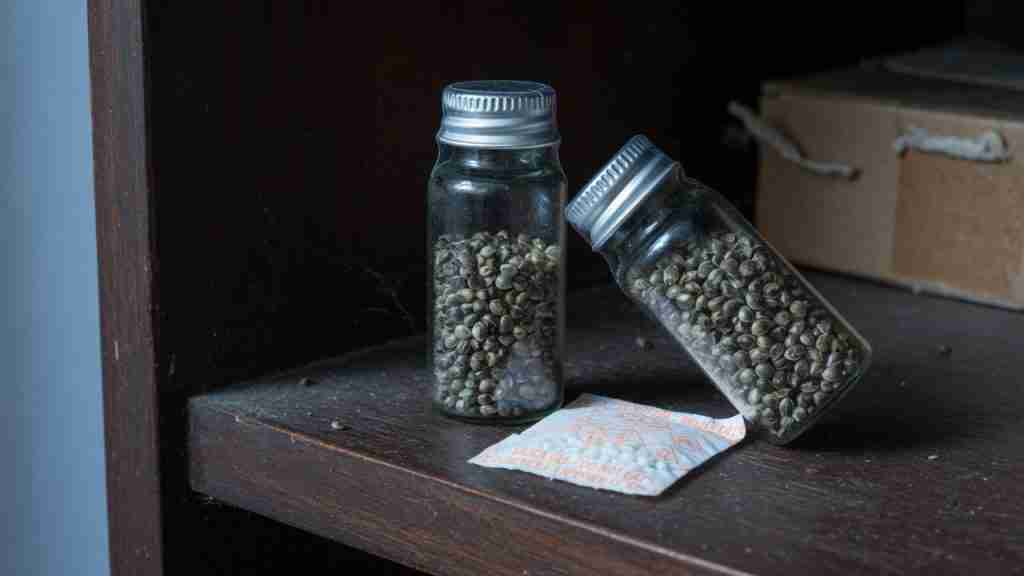
That vial is the original photo from this post. Drugstore 3% hydrogen peroxide is too strong straight. Full-strength 3% oxidizes the embryo membrane and kills the seed. You dilute. This page has always used a weak 1:20 rinse for about an hour: one part 3% peroxide to 20 parts water, swirl, dark, warm. That mix is about 0.15%. It is a surface clean. It knocks mold and bacteria on the coat before the long wet hours start. It is not a 12-hour soak.
Ranking pages in 2026 use a stronger home mix for the soak itself: about 0.5 to 1% peroxide, which is 1 part 3% to 2–6 parts water, for 8 to 12 hours, cap at 24. Royal Queen Seeds prints 30 ml of 3% in 240 ml of water overnight. Germ hacks on this site uses 1:2 to 1:5 for 8 to 12 hours. Pick one protocol. Do not stack a 1:20 hour rinse and then an 8-hour 1% bath. That is two chemical hits on a tired embryo. Fresh seed from a fridge often skips peroxide entirely. Plain water is enough when the coat is clean.
| Mix | What it is | How long |
|---|---|---|
| 1 part 3% to 20 parts water | This page’s original surface rinse | About 1 hour, then move on |
| 1 part 3% to 2–6 parts water | Ranking soak, about 0.5–1% | 8–12 hours, hard stop at 24 |
| Straight 3% from the bottle | Too strong | Do not use |
If the shell splits in the glass, move to the towel. Do not wait for a full root in the cup. Cloudy water means you change it or you get out. Peroxide is for old or gunky shells. It is not a ritual for every fresh fem you just opened. The faster-germ list that already covers this mix is 7 hacks to get your cannabis seeds germinating faster.
Scarification when the shell is a rock
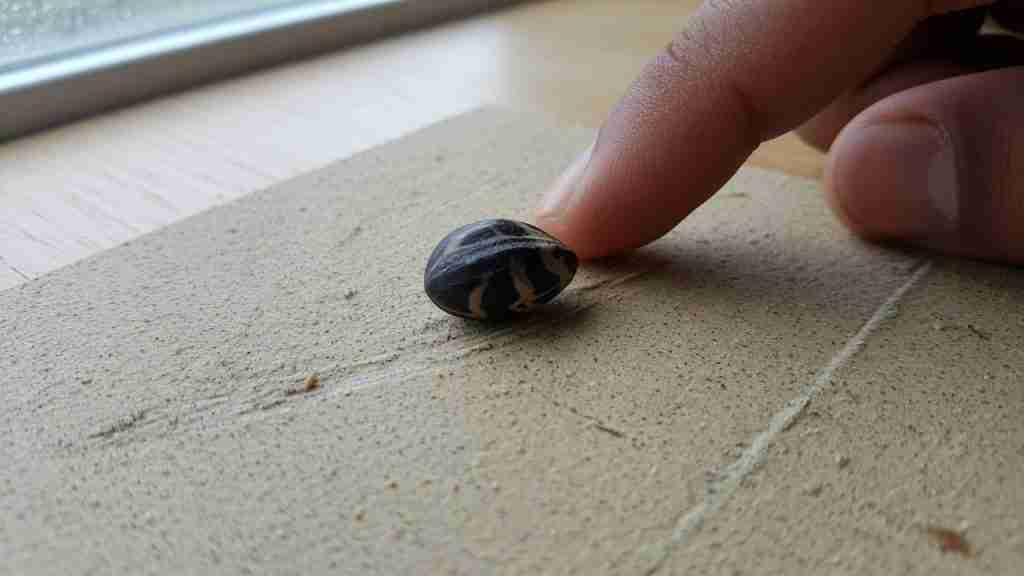
Fine sandpaper, about 150 grit. A nail file works. You want a dull matte patch, not a gouge. Five to ten seconds. Press lightly, drag once or twice. A matchbox striker is the old house version of the same idea. You are scratching the coat so water can get in. You are not opening a pistachio. A nick that hits the embryo is a dead seed you did yourself. Do not go coarser than about 100 grit.
Scarify after a failed soak, not “for luck” on a fresh fem. Ranking pages that start every old bean on sandpaper are skipping the cheaper test. Most cannabis coats are not the limiting factor. Age of the embryo is. Light scuff belongs at the end of a troubleshooting list. Fresh tiger-stripes from a sealed fridge pack do not need it. If you already sanded and the seed still sits blank after a proper towel, stop. More sanding will not invent an embryo.
Plant the taproot
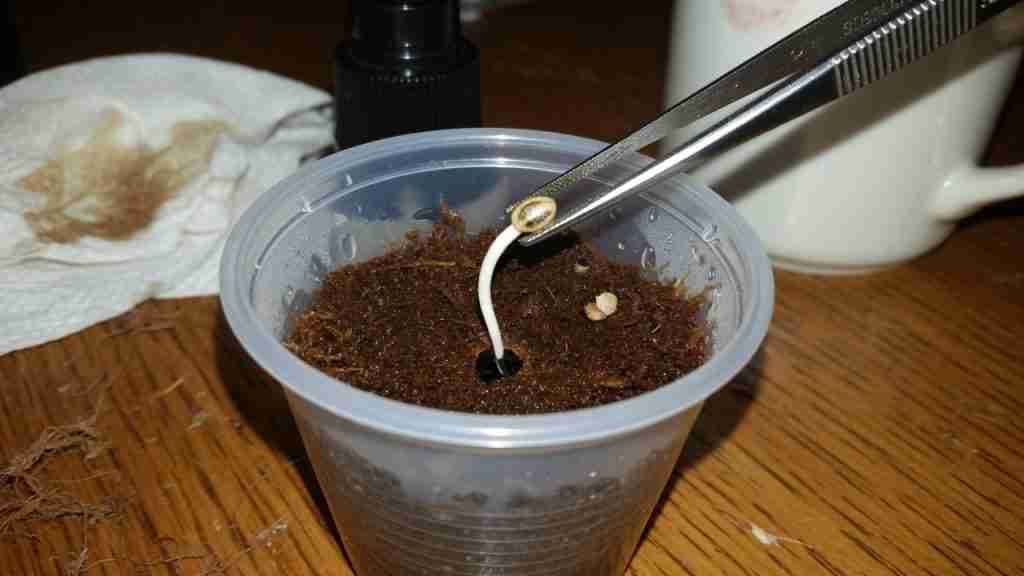
Root tip down. Hole already made with a pencil or a finger. About 5 to 10 mm of mix over the shell. Tweezers on the coat, not on the white tip. Damp coco, a peat plug, or a light seed mix all work if they are moist, not wet. Rockwool wants a pH around 5.5 to 6.0 if you use cubes. Do not drop a long hook into a dry cup and then flood it. The mix should already be at the moisture you mean to keep. Peat versus coco versus plug is its own comparison: cannabis seed starting mix recipes. Coco as a medium is growing cannabis in coco coir. Soil as a home default is the best soil for growing cannabis seeds.
Do not peel the shell off the cotyledons like a pistachio. The seed will shrug it if the mix is damp and the air is not bone dry. Fingernails on a stuck cap tear the first leaves. A drop of water on the cap and an hour of patience beat surgery. Once the shoot is up, light starts. Darkness was for the root. A dome cracked after they are up keeps humidity without cooking the stem. Day-by-day after that is cannabis seedlings day by day.
Original Vial Method

This is the 2022 walk this URL was built on. Two small vials with lids. One larger vial for every old seed you are starting. Drugstore 3% peroxide. Coco coir. Distilled water. Two teaspoons of sugar. Tweezers. A small container. Clean clothes, washed hands, a still room. ISO alcohol on the bench. You are trying to keep dust and kitchen mold off a slow seed. You do not need a still-air box for a five-pack. You do need a clean plate and tools that are not sitting in last week’s soil.
Step one is the 1:20 peroxide rinse in the small vial, about three-quarters full, lid on, gentle swirl, dark and warm for about an hour. That is the head start this page always meant: clean the coat before fungus gets a foothold in the long wet hours. Then you move the seed with tweezers. You do not pour the peroxide into the next vial and call it a soak. The rinse is done. The seed goes on.
Sugar water

Two teaspoons of sugar into the second vial of distilled water. Shake until it dissolves. Lid loose. Microwave the water, not the seeds, until it boils for about two minutes. That is a home sterilize of the sugar water. Let it cool until you can touch the vial. Fridge is fine for that cool-down. The fridge is cooling sterile water. It is not a cold germ. Do not leave the seeds in the fridge to “wake slowly.” Old seed wants warmth once it is wet.

Tweezers from the peroxide vial into the cooled sugar water. Ranking pages in 2026 use plain water or a drop of kelp. Sugar is this site’s energy trick, not a lab protocol. The idea is a short carb bump for tired enzymes. Keep it short. Do not leave the seed soaking in sugar past 24 hours. Sugar water is also food for whatever mold you failed to rinse off. If the seed sinks, good. If it does not, still move on at 24 hours. Sink is a sign, not a law. Do not wait for a tail in the sugar vial.
This is not how archaeologists start ancient seed. That story got attached to this URL years ago and it does not belong on a kitchen counter. Home stash life is years if you stored well and months if you did not. The honest windows are on do cannabis seeds last. Use sugar as an optional bump on a clean seed. Use plain water if you would rather match what ranking growers actually print.
Coco in a vial

Larger vial. Damp coco, not wet. Soak the coco in distilled water, squeeze until nothing drips. Fill the vial about a quarter full. Lid loose. Microwave two to three minutes to sterilize the vial and the coco. Cool to the touch. Tweezers: seed from the sugar water into the coco, pressed under so it is covered. Lid back on, still loose. Dark, warm. The seed can sit in that vial until the shoot shows and the first seedling leaves open. Then the lid comes off and the vial moves under a light.
You can skip the vial and plant the soaked seed into a nursery cup of the same damp coco. The vial is a sterile, small, watchable cell. It is not magic. A plug or a small pot of light mix does the same job if you keep the moisture even and the air moving. Once roots show through, move the seedling to a real pot. Healthy roots after the transplant are cannabis roots healthy. Medium choice is best medium to grow cannabis.
Loose lid and air
A tight lid on a wet vial is a swamp. The embryo needs oxygen the whole time it is wet. Leave the cap sitting on the threads, not cranked down. You are keeping dust out and letting the vial breathe. If you see condensation pouring down the glass, crack it more. If the coco goes pale and dry, a few drops of sterile water, not a flood. Check once a day. Do not open it ten times an evening to see if it popped. Every open is a spore event.
Warmth, Dark, Oxygen
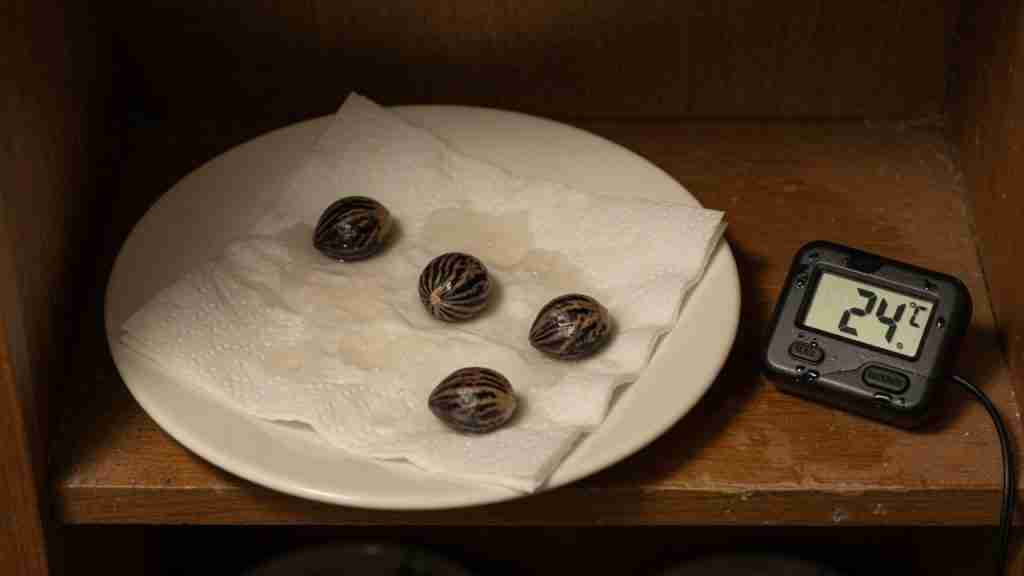
Target the seed, not the room. About 22 to 26°C is the home band. Some lists stretch 24 to 28°C or 70 to 85°F. A heat mat under a plate holds that when the basement is 16°C. A thermostat is better than a cheap mat on max. Thirty degrees plus a wet towel is cooked seed. Put a cheap probe at the towel, not on the counter next to it. Old seed is less forgiving of a cold night than a fresh pack. A cupboard over a fridge is often warm enough. A windowsill in January is not.
Dark until the root. Light does not speed a dry seed. Light starts after the shoot is up. A towel on a sunny plate cooks one side and dries the other. Oxygen is the piece people skip when they seal a dripping bag. Crack the bag. Two plates with a little gap. A vial with a loose lid. Mold on a towel is too much water, too little air, or a dirty sheet. White fuzz on the shell is often mold. Unbleached towel, wring it, crack the bag. If a seed is slimy, it is done. Do not “save” it with more peroxide in a swamp.
| Seed | Typical taproot window | What you do |
|---|---|---|
| Fresh, fridge stored | 24–72 hours | Plain water or skip the soak, damp towel |
| Older, stored well | 5–10 days | 12–24 hour soak, then towel, optional dilute peroxide |
| Tired drawer seed | Up to 14 days | Same stack, then stop. Do not peel. |
When Nothing Pops
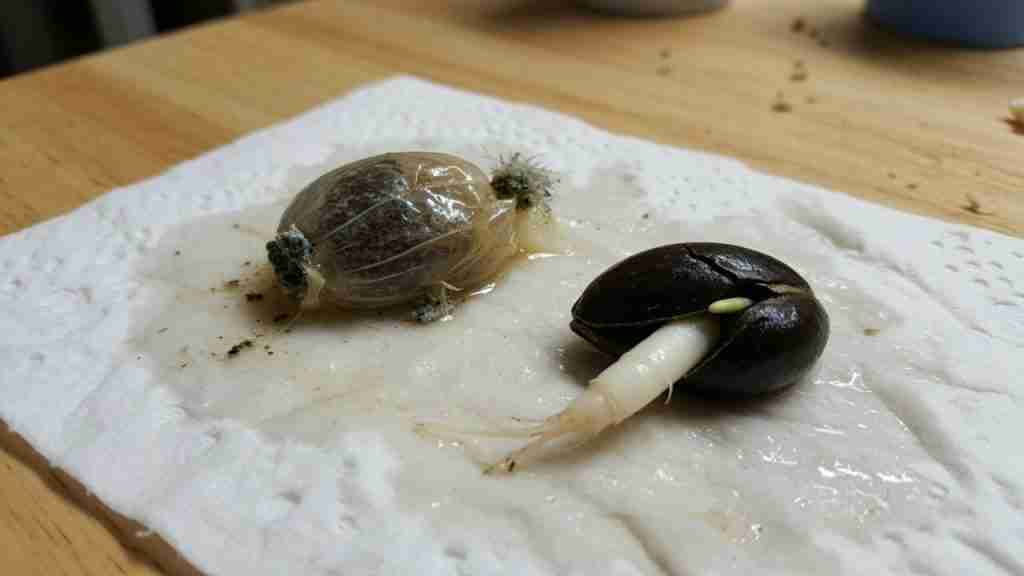
A slimy, gray, collapsed seed is finished. Toss it. Do not put it back in peroxide. Do not bury it “just in case.” The healthy split next to it is the one you plant. If half the pack pops in 48 hours and two are slow, leave the slow ones in the towel. Do not stab them. Do not add feed. Patience is cheaper than a second scarify that kills the last two. If both test seeds fail in a warm, barely damp towel after ten to fourteen days, that sample is done. Buy a fresh pack for the run that has to work. How to pick the next pack is how to pick cannabis seeds.
Gibberellic acid, sold as GA3, is a last resort some ranking pages still print. A weak home mix can push a reluctant seed. It also throws stretchy, weak sprouts that flop. Treat it as a genetics-rescue tool, not a default. If the pack is a random drawer mix, skip GA3 and spend the money on new seed. If the pack is a keeper you cannot replace, you can try a published hemp-range mix and expect a skinny seedling you will have to nurse. Do not combine GA3, sugar, and a strong peroxide soak. One extra is enough.
Blank towels after two weeks mean the embryo was gone, the seed was never ripe, or you drowned it. Storage mistakes that get you there are already listed: seed storage mistakes that kill viability. The ten-year hold, if you still have a reserve, is how to store cannabis seeds for 10 years. Do not freeze a wet leftover from a failed soak. Dry seed only goes back in the jar.
Weak Seedlings After an Old Seed Pops
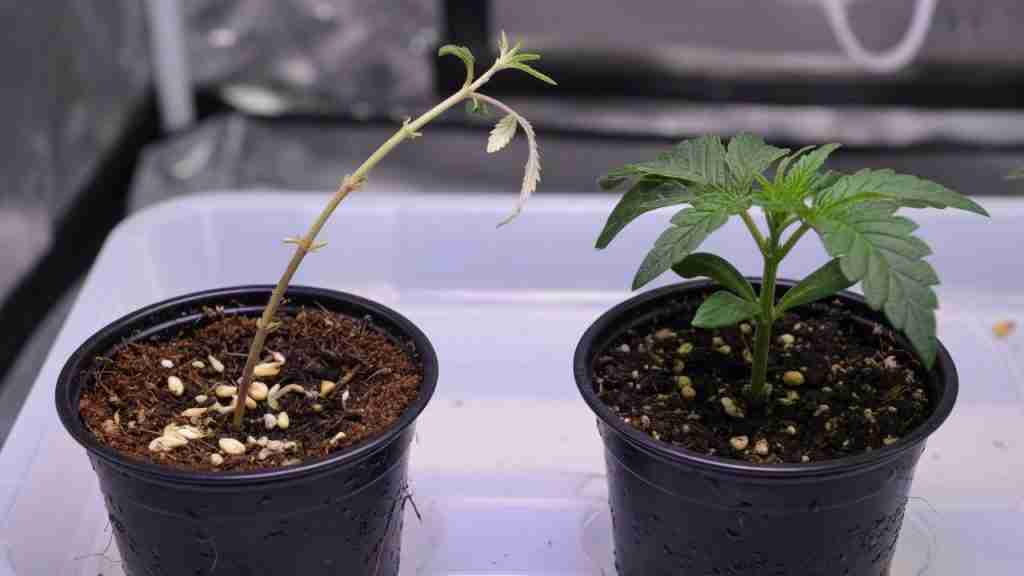
A tail is not a plant yet. Old seed often throws a pale, stretched seedling next to a stocky one from a fresher pack. Keep the weak one if the genetics are the point. Give it closer light, a still room, and no feed for the first week. The mix it landed in already has enough. A heat mat on low under the cup helps more than a shot of nutrient. If it cannot hold itself up after the second set of true leaves, it is a bad bet for a four-plant room. Cull it and run the stocky one.
Damping-off loves a wet, still cup and a tired seedling. Air at the stem. Moisture in the mix, not a saucer of standing water. A dome is useful for the first days if your room is dry. Crack it once they are up. The first-week checklist is 15 steps to give cannabis plants the best start possible. Day-by-day leaves and stretch live on cannabis seedlings day by day. The seedling-stage page takes over once the plant is standing: growing cannabis seedling stage of growth.
Autos do not reset their clock. A slow old auto that sits ten days in a towel has already spent part of its life. Photoperiods can veg until they catch up. That is a grow-plan reason to use fresher autos, not a reason old autos are a different species. Regular versus feminized for the garden is feminized and regular cannabis seeds. First crop timing is planning your first cannabis crop.
Four-Plant Run and Leftover Stash
Canada’s recreational cap is four plants per household, not per adult. Quebec still prohibits recreational cultivation. Manitoba is indoor-only since 1 May 2025. If you pop eight old beans “to be safe,” you still only keep four. Thin extras. Do not run a closet of extras because the germ was uncertain. The buyer-side of that cap is on buy cannabis seeds in Canada. A five-pack is the usual working size. Named fems so you are not hunting males in a four-plant room: why choose feminized cannabis seeds.
Leftover seed goes back dry. Not damp from a soak. Not in the paper towel. Jar, desiccant, dark, cold. Split the pack the day it lands: a working vial for the next run, a reserve pouch you do not open for snacks. That split is the whole of seed stash rotation in one move. A basic dark-jar walk is store cannabis seeds. The decade protocol is the 10-year page linked above. Starting old cannabis seeds is the revival page. Storage is how you visit this page less often.
If the pack you just fought is a random envelope from 2018, you already learned what you needed. The next run can be a named pack that was packed dry and shipped as seed, not as a science project. Shop the current list when the old jar has had its chance.