Solo Cup Challenge: Grow Cannabis Seed to Harvest in 16 Ounces


The Solo Cup Challenge is seed to harvest in a 16-ounce party cup. No transplant. No five-gallon pot. One small root zone, one plant, and a contest or a dare. Ranking pages still treat it as a skill test, not a yield trick: Grow Weed Easy, contest threads, and cup journals all say the same thing. The cup dries out fast, roots hit plastic, and the plant tips over. If you can keep it alive and finish a cola, you learned more about watering than a 20-gallon run ever taught you.
This page keeps the original teaching: opaque red cup, hot-nail drainage, organic soil, worm castings first, calcium, nitrogen, mycorrhizae, a 2×2 LED, one main cola, kelp water, teas, bat guano and fish meal top dress, then flower. Ranking growers also hammer autos versus 12/12 from seed, watering two or three times a day, and honest dry weight. That is the grower stuff. You will know how to set the cup, mix the soil without cooking the seedling, and what a “win” actually weighs.
What Is the Solo Cup Challenge?
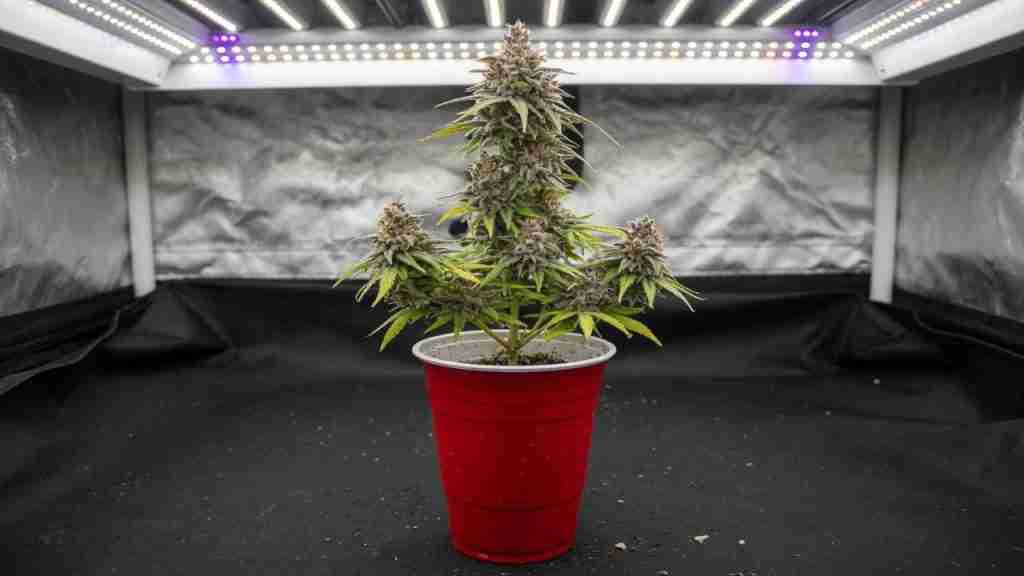
Simplest explanation from the original page still holds: people grow cannabis in Solo cups. In a contest you start from seed, stay in that cup, and submit the plant or the dried buds. Judges pick the best. Informal runs are the same rules without a trophy. 16 ounces is 473 milliliters. If the cup is 32 ounces, you are not in the same class. McDonald’s cups and nursery pots do not count.
It is hard on purpose. A full plant in that volume overwaters, underwaters, burns, and falls over. Roots have nowhere to go. You cannot hide a bad feed chart in extra soil. That is why experienced growers do it for fun and why beginners should treat it as school, not a jar-filling method. Extra plants from a pack that you refuse to toss are a fair use too. Stick them in cups under leftover light and you still get a harvest.
Why a Cup Is Harder Than a Pot
- Roots hit the wall in weeks. Rootbound plants stall, yellow, and herm if you pile on stress.
- The mix dries in hours once the plant is big. Late flower can mean two or three waters a day, or a dripper.
- Cups are top-heavy. One fat cola plus a fan equals a spill.
- There is no buffer. A tablespoon of hot meal that a 5-gallon pot shrugs off will burn a cup overnight.
There is no production reason to grow this way. You do it for the challenge, for bragging rights, or because you germinated too many seeds. If you need ounces, use a real pot. If you want to learn water, pH, and restraint, the cup is a teacher.
Getting Started With Your Solo Cup

Get the cup first. Not clear. Red works. Roots want darkness. A clear party cup grows algae on the wall and stresses the root zone. 16 ounces is the contest size. Write the strain and start date on the rim with a marker before it gets wet and you forget which plant is which. Run more than one cup if the pack has room. Phenotypes in a tiny volume are not equal: how many cannabis seeds.
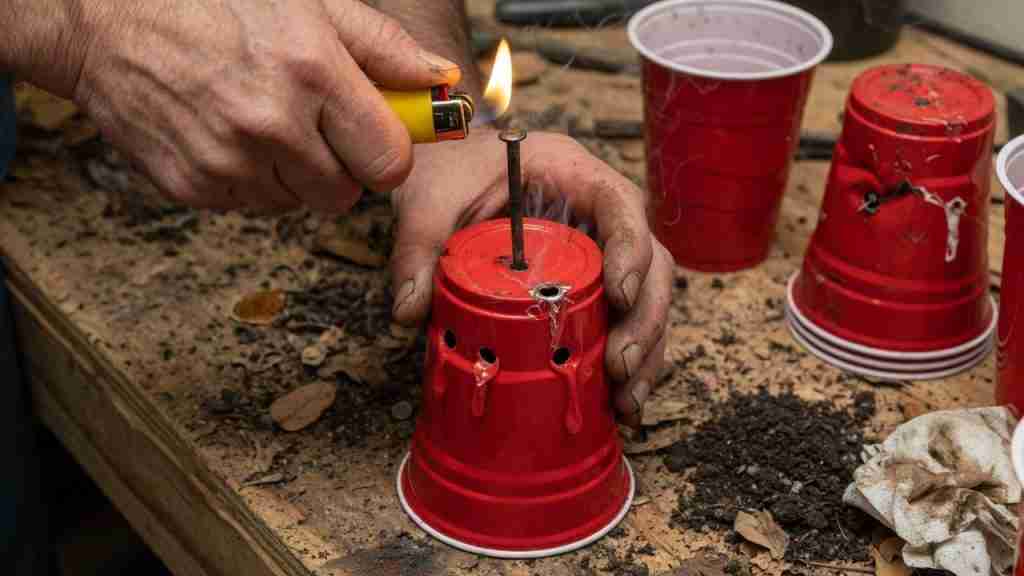
Drainage is not optional. Heat a nail with a lighter and melt five or six holes in the lowest part of the cup. Add a few on the lower sides. That is the original method and it still works. A cold nail tears plastic. A drill works if you go slow. Sit the cup in a tray. You will want runoff you can see, not a puddle with nowhere to go. In late flower some growers bottom-water in that tray as well as top-water, then dump the leftover so the roots do not sit in soup.
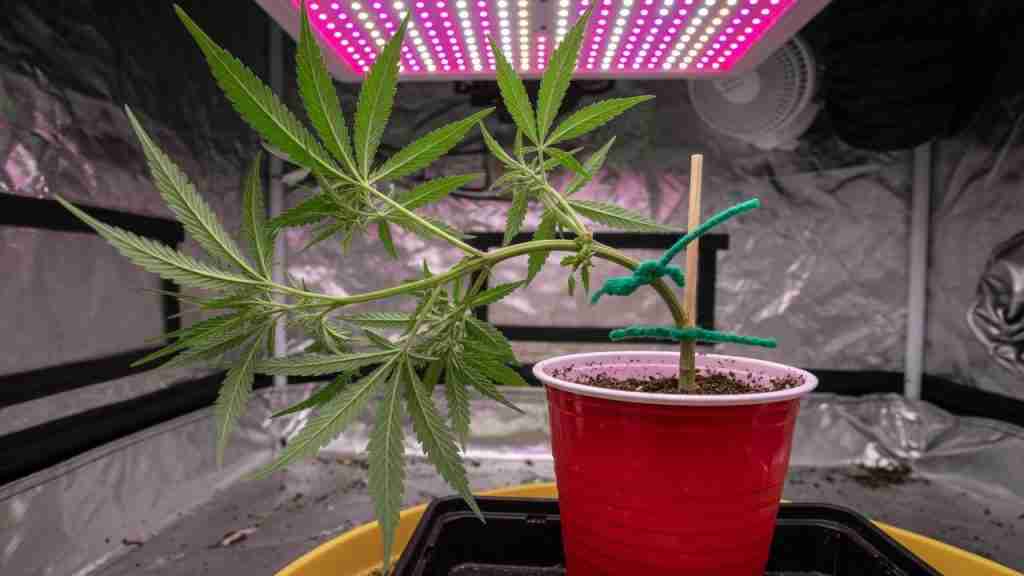
Leave an inch of headspace at the top. You need room to water without washing soil onto the tent floor, and room to top-dress later. A bamboo skewer or a small stake now beats a snapped stem in week six. Cups tip. Plan for it. A tray of wet pebbles, a second cup as a sleeve, or a small fabric pot as a collar all keep a tall cola from doing a header. If you run a clip fan, aim it across the plant, not at the cup wall.
Autos vs Photoperiods in a Cup
Autos make this easier. They stay smaller, they do not wait for 12/12, and you can park a cup in a clone tent or a window and still finish. Grow Weed Easy’s cup gallery is mostly autos for a reason. Photoperiods work if you start 12/12 from seed or veg only two to four weeks, then flip. 12/12 from seed means the plant sees a 12-hour night as soon as it sprouts, so it flowers small. You lose stretch and veg bulk on purpose. A long veg in 16 ounces is how you get a woody stick and a teaspoon of bud.
Contest rules vary. Some give four weeks of veg then flip. Some are 12/12 from seed. Some allow clones. Read the thread before you pick a 14-week sativa. Indica-leaning photoperiods and compact autos fit the cup. Stretchy tropical lines do not. Photoperiod vs auto clock: photoperiod cannabis seeds explained. Filter names: Find My Seeds and cannabis seeds.
Choosing Soil for the Cup
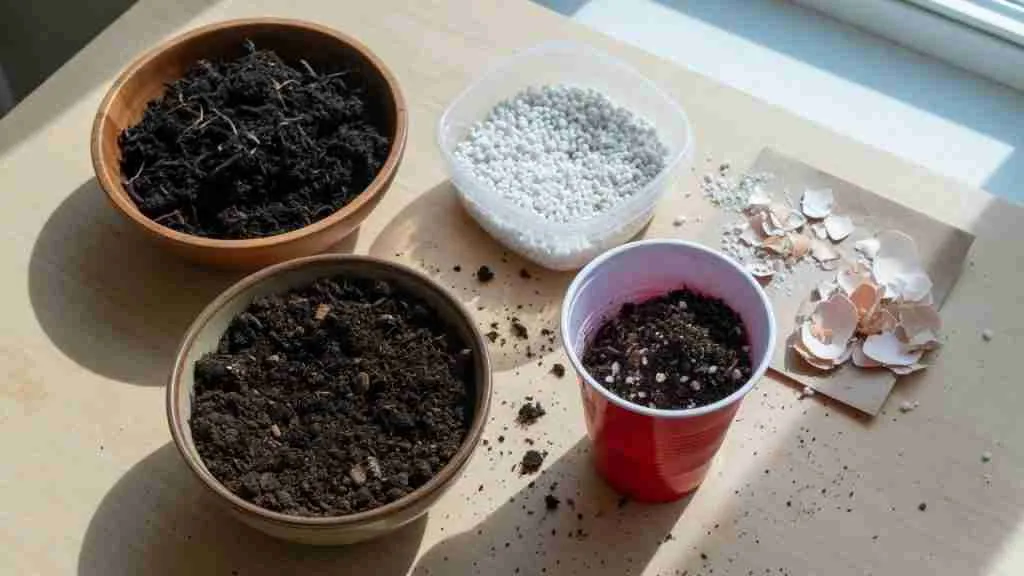
The original page wants organic soil. That still holds. A cup has no extra dirt to hide a salt burn. Look for a mix that drains, starts near neutral pH, and is not a hot “hot mix” bag meant for tomatoes in a whiskey barrel. Coco/perlite is what a lot of contest growers use because you can water daily without drowning. Soil is more forgiving if you are not home three times a day. Either way, perlite or similar in the mix. A waterlogged 16 ounces kills faster than a dry one you catch in time.
Do not fill the cup with straight garden clay. Do not use a moisture-control bag that stays wet for a week. You want air. Roots in a cup already live in a plastic tube. Give them pore space. Organic feed that matches a small volume: organic marijuana fertilizer.
Worm castings (#1 on the original page)
Worm castings, or vermicompost, is still the amendment this site would pick to win. Half soil, half castings was the original mix. That ratio is rich and biologically active. It feeds slowly, adds bacteria that break down the rest of the organics, and does not spike like bottled 3-part. In a cup, “half castings” can stay a bit wet. Cut with perlite if the mix clumps. Fresh, finished castings. Not raw worm bin muck.
Organic calcium
Small containers run out of calcium fast. The plant only takes a little at a time, with water, but there is nowhere to mine it from once the cup is empty. Ground eggshells, oyster shell, or similar slow calcium is what the original page used. You can add a fair amount of shell. It does not burn like blood meal. Crush it fine. Chunks the size of a fingernail do nothing this cycle.
Organic nitrogen, without cooking the seedling
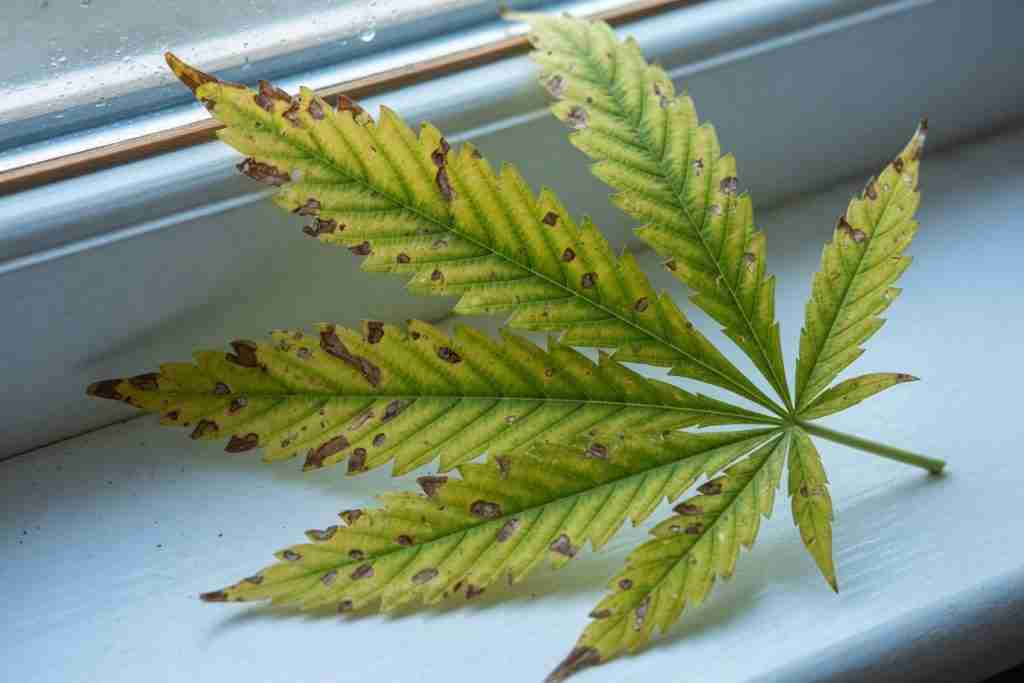
Nitrogen gets the plant green in the first month. Blood meal, fish meal, and bone meal were the original sources. They work. They also burn a 16-ounce root zone if you dump contest-batch cups of meal into one cup. A seedling in hot blood meal will claw, yellow at the tips, and stall. You need a month of N, not a fertilizer bomb.
The Original Winning Mix, Used Safely
The original “secret tip” was mycorrhizae plus this batch:
- ½ gallon organic soil with mycorrhizal fungi
- Two cups ground eggshells
- Three cups blood meal
- One cup fish meal
- ½ gallon fresh worm castings
That is a bulk recipe, not a single-cup recipe. Three cups of blood meal in a gallon-scale mix is extremely hot. If you fill 16-ounce cups with that neat, expect burn. Keep the idea: soil plus castings plus mycorrhizae plus slow calcium plus a little meal. Cut the blood meal hard for cups. A tablespoon or two in that whole batch is closer to what a seedling will live through. Let a hot mix sit and biologically mellow if you already blended it. Dust mycorrhizae on the seed or in the planting hole. The fungi help the tiny root system grab water and nutrients. That part of the original tip is still the one to keep.
Lighting for a Cup Plant
You do not need a warehouse light. A quality LED meant for a 2×2 will over-serve one cup if you hang it too close. Keep the plant centered under the board. One cola means one growing tip. That tip burns, the contest is over. Watch leaf taco and bleaching. Raise the light before you “push PPFD because it is a challenge.”
A small blurple or a bar over a 2×2 clone tent is how a lot of extra autos finish. Photoperiods on 12/12 from seed want enough intensity to stack a cola, not a 600-watt lamp at four inches. Distance first, then dim. Air across the cup so the tiny volume does not cook.
Get a Fast Start
The first month decides the cup. A weak seedling does not magically become a trophy cola. Germinate properly, plant shallow, keep the mix moist not swampy. Seedling timing: seedling stage and seedlings day by day. Pop extras. Cups are cheap. The slow one is not your contest plant.
Do not feed bottled nutrients on day three. The mix plus castings is enough until you see true leaves and steady growth. Overwatering now is the usual kill. Lift the cup. Light means water. Heavy means wait. A humidity dome is optional for a day or two, then get air on it so you do not grow fungus on the soil crust.
First Month: One Cola or a Tiny Canopy
Original method: one strong main stem, one large bud. When side branches show at the nodes, pinch or cut them. Leave the fan leaves. Every side shoot spends energy the cola could use. In a cup that math is brutal. Start as soon as you see the laterals, not after they lignify.
The other school is low-stress training: bend the main stem, tie it, make a few tops at one height. That is how you fill a 2×2 with a cup plant instead of a Christmas tree. It is also more watering and more chance of a snap. Contest threads do both. If the rules reward a single spear, prune. If they reward total dry weight and you can water twice a day, LST: low-stress training cannabis. Veg structure still matters: vegetative stage.
Do not top an auto unless you know that line. A stall in a cup costs you a week you cannot get back. Photoperiods with a two-week veg can take a top at node three, then you still have to keep the plant short. Reefertilizer’s contest write-up topped at node three at week two. That only works if the clock and the genetics agree.
How to Water Solo Cups
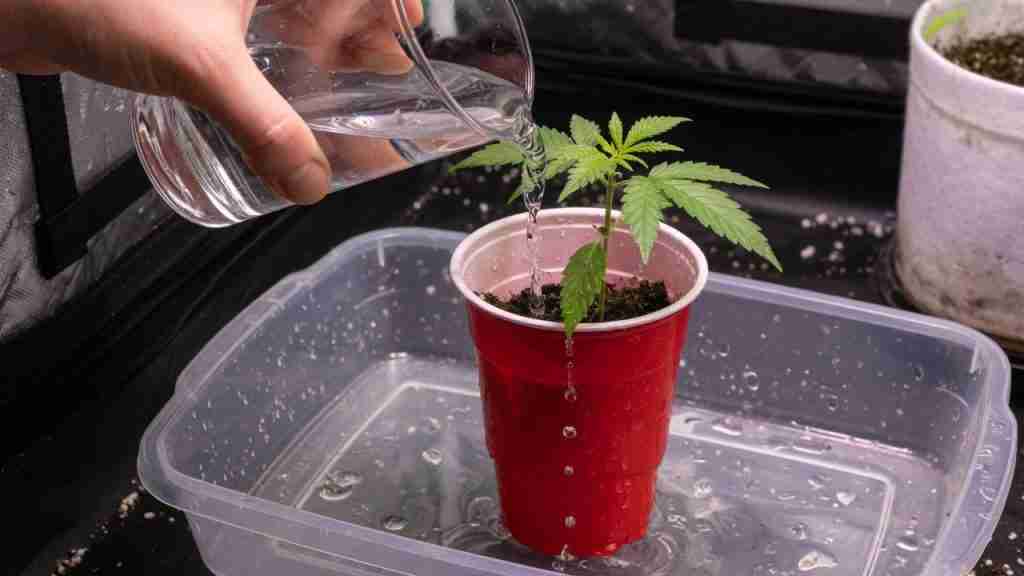
Early on, do not water every day just because the cup is small. Wet soil plus no roots equals damping off and a sour mix. Let the cup get light. Then water until you see a little runoff and dump the tray. Full watering walkthrough: how to water cannabis plants.
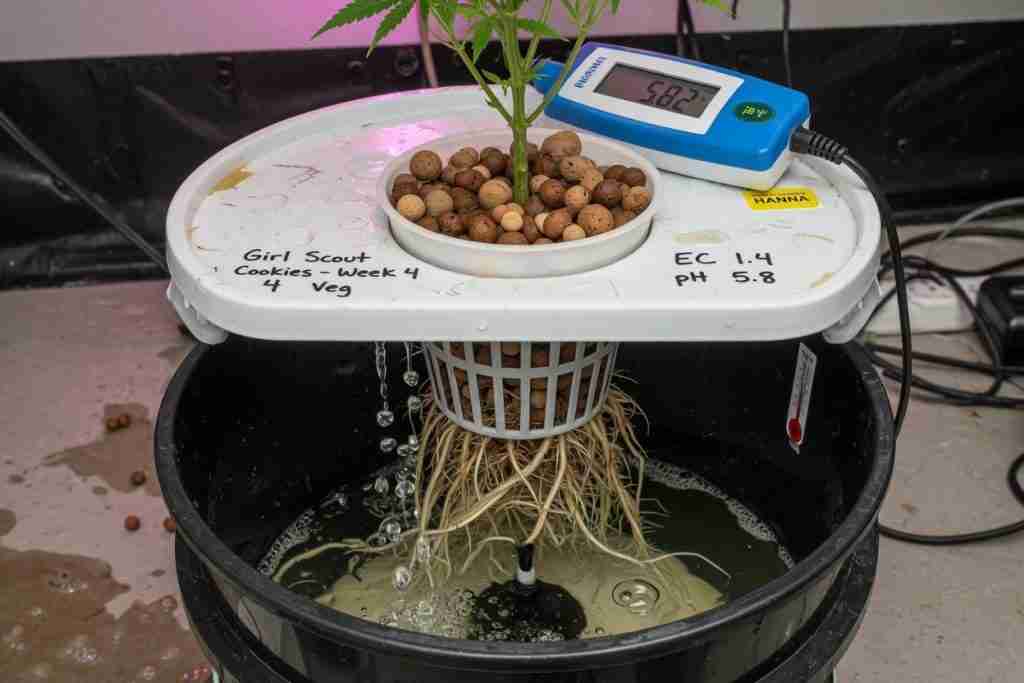
Once the plant is in flower, the cup can dry while you make coffee. Droopy bottom leaves are the tell. Some growers drip. Some bottom-water in a tray and top-water. Do not leave the cup sitting in runoff. Roots in a plastic cylinder plus standing water is rot. pH still matters. Soil likes roughly 6.2–6.8. Coco likes 5.8–6.2. A cup is too small to “average out” a bad bottle of water.
Original page wants kelp (seaweed) in the water the whole run, and an organic tea every third watering. That is a good cup program if the tea is mild. A compost tea that smells like a gym bag will smear anaerobic gunk on a 16-ounce root ball. Brew oxygenated, use it fresh, dilute. The same organic fertilizer page covers teas and top-dresses without a salt spike.
Top Dressing Before and During Flower
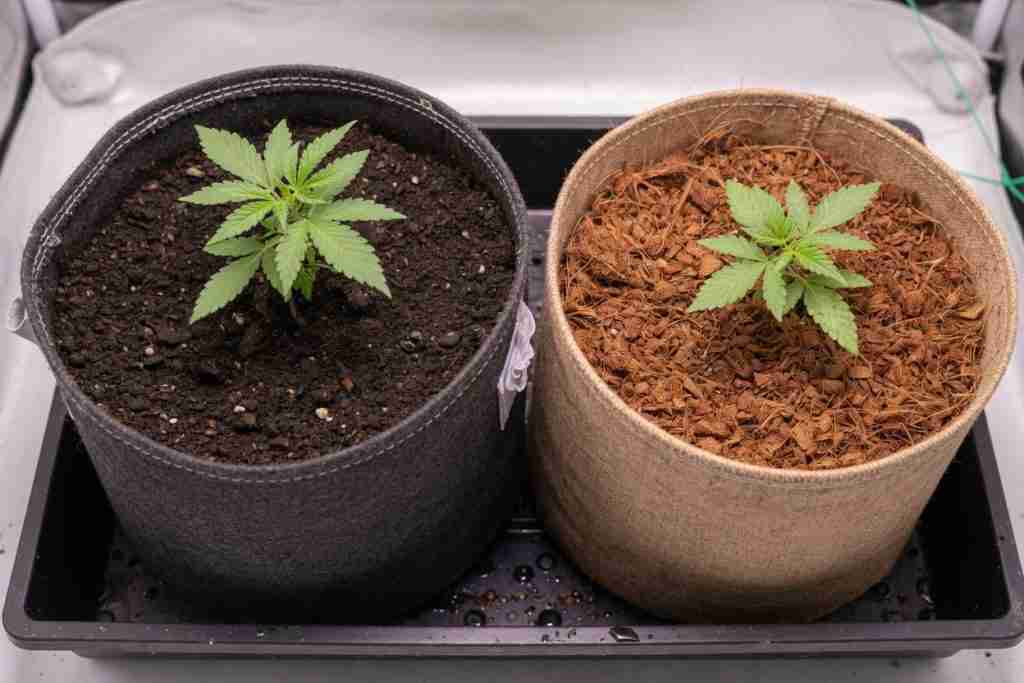
After the first month, before you flip a photoperiod, the original page starts top-dressing. Sprinkle on the soil surface, water it in. You are not mixing a new cup. You are feeding the existing biology.
Bat guano
High-phosphorus bat guano, about two tablespoons around the rim, every two weeks, was the original flower top-dress. In a cup, start with less than two tablespoons if the plant is still small. You can add. You cannot un-burn. Water it in slowly so it does not crust into a hydrophobic cap.
Fish meal
Fish meal brings phosphorus plus leftover nitrogen through flower. Original schedule: every other week opposite the guano. Same warning. A cup is not a raised bed. A light dusting, water in, watch the tips. If the leaf edges burn, skip a cycle and just use water and kelp.
Flowering in Solo Cups
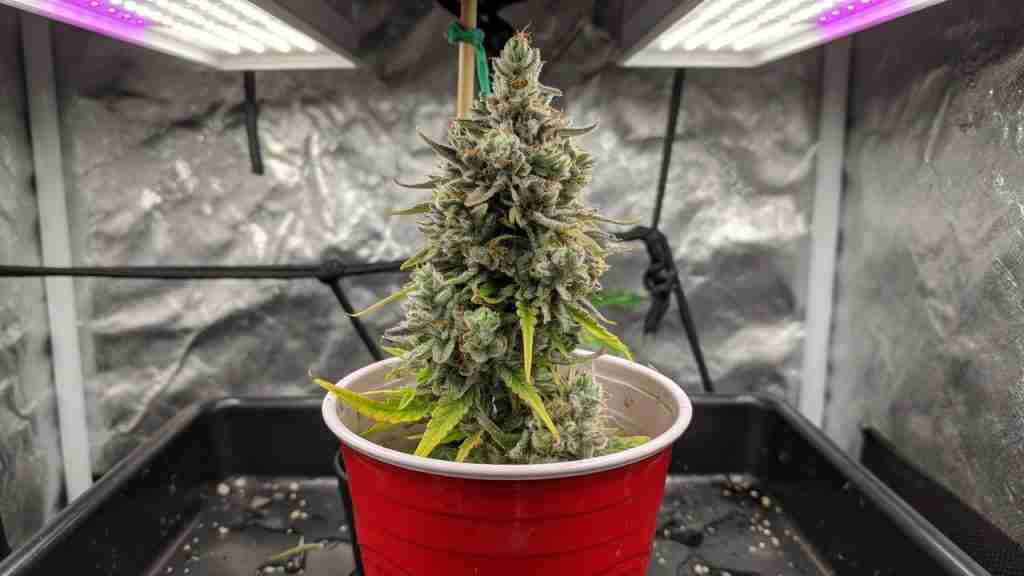
This is the part people photograph. The plant will drink more, every day or every other day, then twice a day. Keep it under the light, not against the diodes. You only have one top if you pruned. Protect it. Flower calendar: cannabis flowering stage.
Stake the cola. A cup plus a dense spear plus a clip fan is a spill. A skewer in the cup, a soft tie, or a ring of stones around the base. Dense buds in still air still rot. A cup in a closet with no fan is how you harvest white fuzz. Keep nights from swinging so hard the tiny root zone sweats, then dries, then sweats.
Harvest on trichomes, not on a “kush is done at week 8” app. Autos in cups often finish on the early side because they were rootbound and stressed. That can mean smaller yield, not a different strain. Dry the cola like any other plant, just less of it: harvesting cannabis.
What a Solo Cup Actually Yields
The original page said you can harvest a couple of ounces from one main cola. Treat that as a stretch goal, not the average. A true 16-ounce cup, done well, more often lands in the 7–21 gram dry range. Grow Weed Easy documented about 0.75 ounces of decent flower under household bulbs, and contest growers have posted around 14 grams as a win. Bigger jars usually mean a bigger cup, coco on a dripper, or an auto that was never truly limited. 38 grams in a 32-ounce fast-food cup is a different contest.
If you need weight, this is the wrong container. If you want a single dense cola and a story, it is the right one. Weigh dry, not wet. Wet “ounces” in a cup thread are how people lie to themselves.
A Worked 16-Week Cup Plan
Week 0: holes in the cup, mix soil/castings/perlite, mycorrhizae in the hole, seed. Keep moist. Week 1–2: true leaves, no bottles, lift the cup to water. Week 2–4: prune laterals for one cola, or LST if that is your plan. Photoperiods flip at the end of week 4, or run 12/12 from seed if you want them even smaller. Autos you never flip. Week 5+: top-dress lightly, kelp in the water, tea every third watering if it stays mild. Flower: water as it dries, stake, watch the tip. Dry 7–14 days. Weigh it. Write down what you would change.
That is a contest-shaped clock, not a law. A 7-week auto will be done sooner. A 12-week photoperiod needs the extra flower time. Count backward from the due date if you are in a thread with a chop deadline.
Mistakes That End a Cup Run
- Clear cups and a windowsill algae farm.
- No drainage holes, or holes so small the mix stays anaerobic.
- Filling the cup with hot blood meal and planting a seed in it the same day.
- Watering on a calendar instead of cup weight.
- A 600-watt LED at three inches on one cola.
- Vegging a photoperiod for eight weeks in 16 ounces.
- Calling a 32-ounce drink cup a Solo Cup Challenge.
- Letting the plant fall over in flower and snap the only top.
FAQs
What is the Solo Cup Challenge? Grow cannabis from start to finish in a 16-ounce opaque party cup. No up-pot. Contest or personal dare.
Autos or photoperiods? Autos are easier and stay small. Photoperiods work on 12/12 from seed or a short veg. Long veg is a waste of a cup.
How much does a cup yield? Plan on grams, not ounces. 7–21 g dry is a solid run. A 0.75 oz jar is a trophy. A couple of ounces usually means a bigger container.
Soil or coco? Soil plus castings is the original Green Avenger path and more forgiving. Coco plus frequent water is how many contest growers keep a large plant from wilting.
Should I prune or LST? One cola if you want a spear and simpler watering. LST if you want more sites and can keep up with the drink rate.
Can I use bottled nutrients? You can, at a fraction of the label. The original page prefers organics because a cup burns. If you bottle-feed, start at quarter strength and watch the tips.
The Solo Cup Challenge is a small root zone with nowhere to hide. Opaque cup, holes, castings, mycorrhizae, one cola or a tied canopy, water when it is light, feed milder than your ego wants. That is how you finish. That is how you learn. Hybrids in real pots still fill jars: feminized cannabis seeds when the challenge is over.