Ship Cannabis Seeds in Winter – Stop Thermal Shock in Transit

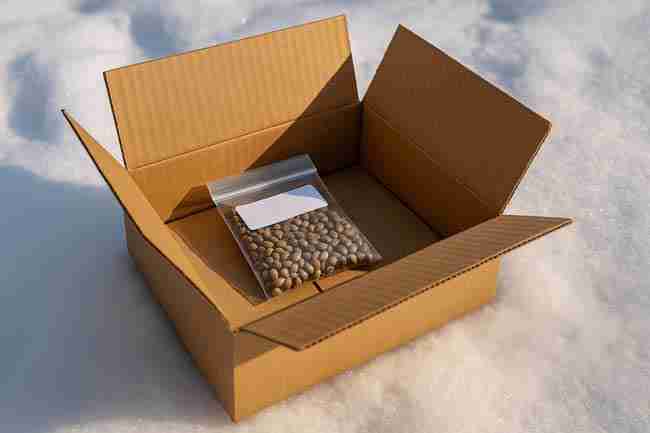
Ship cannabis seeds winter or summer the smart way and you’ll protect germ rates before they ever touch soil. Whether you’re in Canada’s foggy Atlantic or the U.S. Southwest heat, seeds hate sudden temperature and humidity swings. Below you’ll get simple, field-tested packaging, heat pack seeds guidance, and cold shock seed viability tips—plus climate notes for both countries.
Why thermal shock ruins good seeds
Seeds are living time capsules. Most cannabis seeds behave like orthodox seeds: when they’re dry, they tolerate cold storage and even freezing; what hurts them is heat + moisture and rapid swings. The classic seed rule of thumb says: lower temperature and humidity, and viability lasts longer; every ~5 °C drop doubles life, and temp (°C) + RH (%) should stay ≲ 60 (≈ “Rule of 60/100”).
But extreme hot spikes in trucks or on tarmacs accelerate aging fast; at ~45 °C under high humidity, seeds deteriorate in days to weeks. Keep them dry and buffered, and they cruise through.
Bottom line: dry + insulated = happy seeds. Wet + hot/cold swings = lost vigor.
Winter playbook: packaging that shrugs off deep cold
Cold itself isn’t the enemy—wet cold and temperature whiplash are. Orthodox seeds stored dry tolerate sub-freezing temps remarkably well; freezing risk rises if moisture sneaks in.
Your winter bundle (inside → out)
- Moisture-barrier inner: Mylar or foil-lined zip (≥3.5 mil) with 1–2 g silica gel.
- Cushion layer: bubble wrap or foam sleeve so seeds don’t sit against cold walls.
- Thermal layer: 1–2 cm (½–¾″) closed-cell foam or insulated mailer.
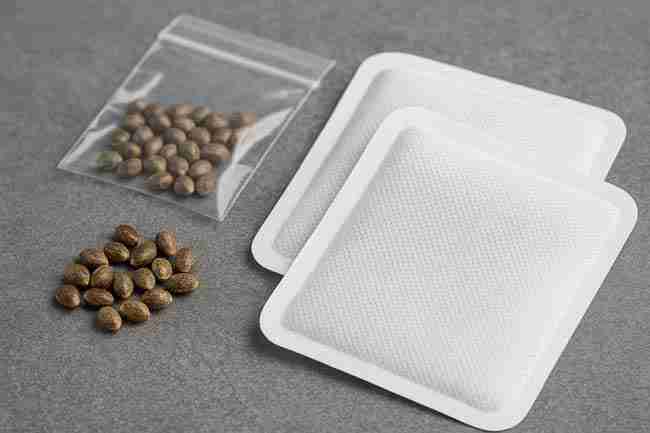
- Heat pack (optional, see below) in a vented sleeve (never touching seed bag).
- Rigid outer: small, snug box to limit air volume (less air = less swing).
- Fast service: 1–3-day if possible; the shorter the ride, the safer the temps.
Why it works
Dry seeds + desiccant prevent ice-crystal damage and imbibitional chilling risk if condensation occurs later.
Foam reduces rate of change so seeds don’t feel every stop-and-go door opening.
Summer playbook: beat vans, tarmacs, and heat domes

Heat is harsher than cold for seed longevity, especially with humidity. Keep the same inner moisture barrier, then add reflective insulation (metallized bubble, “radiant barrier”) and limit dwell in hot depots.
Do this in summer:
- Ship early week (Mon–Wed) so boxes don’t bake over a weekend.
- Use small boxes (less hot air), and keep packages indoors until pickup.
- Prefer air-conditioned pickup points for final delivery.
- Add a second desiccant if your route crosses humid regions (e.g., Gulf Coast, Great Lakes).
- If your route crosses deserts (U.S. Southwest), triple-check insulation; temps easily exceed 50 °C inside vehicles.
Moisture is the hidden killer: lock it out

Even a perfect temperature plan fails if moisture sneaks in. Follow the seed-storage basics: dry it, cool it, seal it. The “temperature + RH” guideline is your friend; keep that sum low from warehouse to mailbox.
Practical moves
- Use indicator cards (e.g., 10–60% RH dots) inside the mylar; purple/blue good, pink bad.
- Regenerate silica (oven 100–120 °C / 212–248 °F) before packing.
- Double-bag the inner pouch if you expect pressure changes (air cargo).
- Label “Do not refrigerate / temperature sensitive—room temp” when appropriate.
Heat packs for seeds: when, which, how long

Heat packs are useful tools—not magic blankets. Use them for truly cold routes to keep the micro-climate stable, not to “cook the box.”
When to use
- Origin/destination spending multiple nights below –5 °C (23 °F).
- Long rural legs with unheated trucks.
- High-latitude winter (Prairies, Upper Midwest).
Which pack
- 40–72-hour air-activated (the reptile/plant type) with venting.
- Never place directly on pouches. Sandwich it in cardboard with air holes so it doesn’t overheat the inner cavity.
How long
- For 1–3-day services, a 40–60-hour pack is ideal. For 3–5 days, consider 72-hour but add more foam distance and a few pinholes to avoid hotspots.
Tip: Treat a heat pack like a space heater: distance + airflow + insulation. And remember, dry seeds tolerate cold better than heat, so err on the side of gentle warmth, not sauna.
Step-by-step: your “no-surprises” shipping checklist

(This doubles as a How-To for schema.)
T-48 to T-24 hours (prep)
- Dry desiccant in oven; cool in a sealed jar.
- Pack seeds in mylar + silica; label strain and date.
- Test-fit foam and outer box; ensure nothing rattles.
- Check destination forecast (frost/heat).
T-0 (ship day)
- Add heat pack only if required; activate 20–30 min beforehand to stabilize output.
- Seal, then weigh; pick fastest, trackable service.
- Hand the parcel directly to a clerk/driver (don’t leave in outdoor bins).
Arrival (recipient)
- Do not open immediately if the box feels very cold/hot; let it acclimate 2–3 hours indoors.
- Open, verify RH card, reseal seeds until germination day.
- Store at cool, dry room conditions (or refrigerator in a sealed jar) until use.
Troubleshooting ladder: package arrived hot, cold, or damp

If the box is icy-cold but dry:
- Let it sit at room temp sealed for 2–3 hours.
- Open, check RH card. If RH ≤ 30% and no condensation, you’re fine.
- Test-germ 5–10 seeds to be sure.
If the box is warm/hot (summer route):
- Cool slowly indoors; don’t refrigerate.
- If RH card shows > 40%, move the inner pouch to a jar with fresh desiccant for 24–48 h.
- Test-germ a small sample; heat may reduce vigor first, then viability.
If there’s condensation inside the inner bag:
- Put sealed pouch in a jar with fresh silica until the RH dot recovers.
- Don’t pre-soak yet; sudden cold-water uptake can cause imbibitional chilling—especially if the seeds were chilled then suddenly wetted. Use room-temp water when you do germinate.
If seeds look crushed or scuffed:
- That’s a packing issue; add more foam/bubble next time.
- Test viability; physical damage affects uniformity more than total germ.
Buyer’s Guide: choosing options that protect viability

When you shop seed vendors, look for shipping choices, not just prices.
Good signs
- Moisture-barrier packaging (mylar, desiccant) detailed on the product page.
- Seasonal add-ons: winter heat pack, insulated mailer.
- Clear guidance on acclimation on arrival.
- Option to hold shipments during severe heat/cold waves.
What to choose
- Winter: pick insulated + heat pack if multi-night sub-freezing is expected; otherwise insulated mailer alone.
- Summer: insulated mailer + fast service; skip heat packs.
- Rural destinations: always pick tracked service.
Canada & USA Notes (climate, handling, and law)
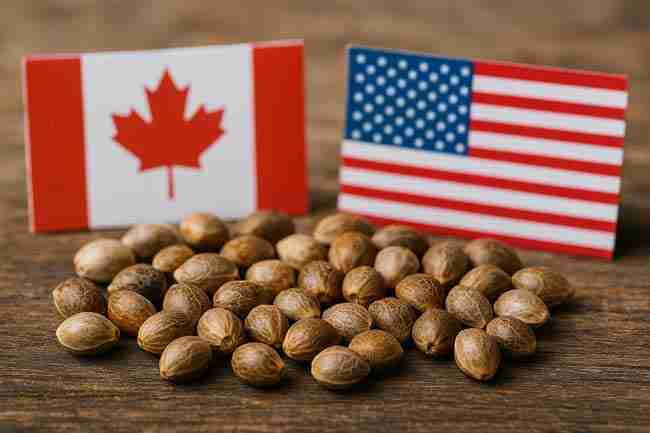
Canada examples
- Atlantic (Nova Scotia/Atlantic): fog + humidity; winter windchill with quick thaws. Insulation + desiccant are must-haves.
- Prairies: deep freezes and clear skies. Dry cold is fine if sealed; don’t skip foam.
- BC coast: cool, wet winters; protect from moisture and long depot holds in rain.
United States examples
- Upper Midwest: early fall freezes; ship early week and consider heat pack by October.
- Pacific Northwest: cool, wet spells raise humidity; double-bag inner mylar.
- Southwest: extreme summer heat/drought; reflective insulation + fastest service.
Simple handling notes
- Ask carriers for indoor pickup.
- Avoid Friday shipments in both countries during weather alerts.
- If you’re receiving, plan to bring the parcel inside immediately.
Legal note: Always follow local laws. This article is informational, not legal advice.
Common myths & big mistakes

Myth 1: “Cold always kills seeds.”
Dry, orthodox seeds tolerate freezing well; moisture and temperature swings are the real danger.
Myth 2: “Heat packs guarantee safety.”
They’re tools, not guarantees. Used wrong, they overheat micro-spaces and dry seeds beyond safe equilibrium.
Myth 3: “Refrigerators are perfect for shipping.”
Cold + condensation when moving to room temp is risky. Shipping is about stability, not just low temps.
Mistake 1: Direct heat pack contact with inner pouch.
Fix: Cardboard spacer + airflow.
Mistake 2: No desiccant.
Fix: At least 1–2 g silica per small order; include RH card.
Mistake 3: Weekend and holiday dispatches.
Fix: Mon–Wed only in extreme seasons.
Comparison Table: Winter vs Summer Tactics
| Season | Main Risk | Must-Do Packaging | Optional Add-Ons | Ship Timing | Notes |
|---|---|---|---|---|---|
| Winter | Rapid cold swings; condensation on warm-in/cold-out legs | Mylar + silica; foam wrap; snug box | 40–72 h heat pack (spaced), insulated mailer | Early week | Dry seeds tolerate cold; protect from moisture & swings. |
| Summer | Hot vans/tarmacs; humidity | Mylar + silica; reflective insulation; small box | Extra desiccant; pickup-point delivery | Early week, fastest tier | Heat accelerates aging; keep cool, short route. |
Pros & Cons: Heat Packs for Seed Shipments

Pros
- Buffers deep-freeze dips on long rural routes.
- Stabilizes micro-climate inside insulated mailers.
- Cheap insurance when used correctly.
Cons
- Can overheat enclosed spaces if oversized or touching pouches.
- Adds complexity (venting, spacing).
- Unnecessary for short, mild routes.
FAQ

How soon should I germinate after summer shipping?
If the package was hot, dry the seeds with desiccant for 24–48 h first, then germ a small test batch.
What’s the safest way to ship cannabis seeds winter across Canada or the U.S.?
Use mylar + silica, foam insulation, and a small rigid box. Add a 40–72 h heat pack only for multi-night sub-freezing routes. Let the box acclimate before opening.
Do I need a heat pack every time?
No. Dry seeds handle cold; use heat packs only for harsh routes. Overuse risks overheating the micro-space.
Can cold shock kill viability?
Yes—cold shock seed viability drops when moisture condenses and seeds then imbibe very cold water. Keep them dry and let packages warm up sealed before opening.
What about summer shipping during heat waves?
Insulate, minimize time in transit, choose fast services, and route to an indoor pickup point. Heat + humidity ages seeds rapidly.
Should I refrigerate seeds right after delivery?
Not immediately. Let them equilibrate sealed at room temp first to avoid condensation, then store cool/dry.
What if my RH indicator shows high humidity on arrival?
Move the inner pouch to a jar with fresh desiccant for 24–48 h, then test-germ a small sample.
Does freezing ruin cannabis seeds?
Not if they’re dry. Orthodox seeds tolerate sub-freezing storage; moisture is the problem.