


Security Measures for Outdoor Cannabis Grows: How They Keep Your Plants Safe

Outdoor Cannabis Security is the walk you take on the sidewalk before you trust the yard. A stranger does not need a plan. They need a cola over the boards, a gate that swings, or branches drying where a car can see them. You fix those three things on your own lot, in a place where the plants are legal to have. A fence you are not allowed to build, a camera aimed at someone else’s kitchen, and a trap in the grass are not on that list.
A marijuana plant that clears the fence is a label a passerby can read. Weed piled on a patio table after the cut is the same label, only closer to the nose. Shape, strain slogans, and a story about being discreet do not change that. If the street can name it, the street can find it.
The examples on this page are a small island lot and a coastal New England town, because both put houses close together and put fog on late flowers. Prince Edward Island is the tight-lot, ocean-weather example. Maine is the town-rule example. The outdoor growing page owns the planting calendar. The best places page owns where the pot sits. This page owns the gate, the view, and what you do on the night you cut.
Outdoor Cannabis Security starts at the street
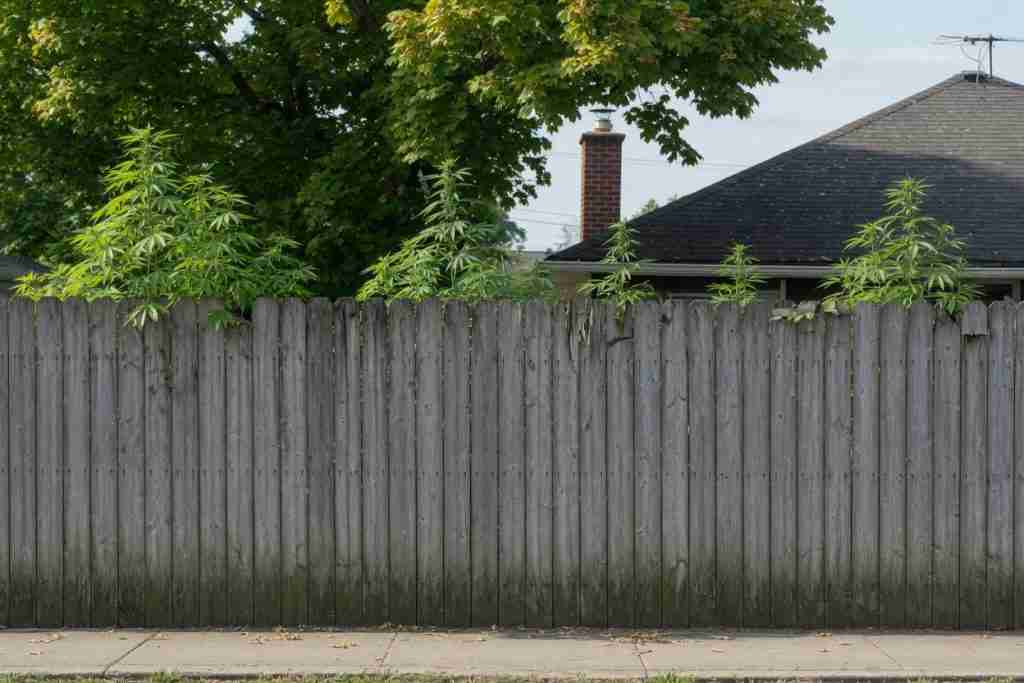
Stand where a stranger stands. The sidewalk in front of the house. The alley if you have one. The passenger seat of a car moving at neighborhood speed. An upstairs window across the road, if you can borrow that look from a neighbor you trust or see it in a photo you take from their curb with permission. You are not hunting a secret angle. You are asking one question: can a person who does not live here point at the plant?
Tops over a wood fence answer that question for you. The boards did their job up to the rail. The plant kept going. From the street those tops are not a garden. They are a sign. Evening makes it worse, because the leaves read as a black comb against the sky even when the color is hard to see at noon. Walk it once in daylight and once after supper. If either walk shows the plant, the fence is a skirt.
Fix the plant before you fantasize about a taller wall. Move the pot off the sightline. Top earlier so the cola stays under the rail you already own. A city often caps how high a residential fence may be, and this page will not invent that number for your town. If the bylaw says the boards must stop, the plant has to stop with them. Where the pot should have gone in the first place lives on the outdoor location page. Sun, puddles, and the hose are that job. The street view is this one.
Some provinces add a public-view rule on top of the plant count. British Columbia is the clear case, and the places page already carries it: non-medical plants must not be visible from a public place such as the street, the sidewalk, a park, or a school. A neighbor looking down from their own deck is a different problem than the sidewalk. If your cola clears the fence, you have not met the public-view job even if you feel private in the yard. Read that page for the rule. Do not treat a blog as your lawyer, and do not treat a fence on paper as a fence the street cannot see over.
A cloth pulled tight over the tops feels like a fix and often makes a wet tent. Flower that sits in still, damp air is how bud rot starts, and that failure lives on the bud rot page. A cover that sheds rain and still lets air leave is a different build, on the rain shelter page. Use cloth as a side screen on a frame you can open, not as a lid. If the only way to hide the plant is to choke it, the plant is in the wrong corner.
Tomatoes, sunflowers, and a row of corn are a garden, not a disguise. They can break up a silhouette if they already belong in the yard and they do not steal the sun. A legal plant does not need to vanish. It needs to look ordinary from the public edge of your lot. Parks, ditches, and a woodlot that is not yours are not a quieter plan. They are someone else’s land.
A gate you can lock
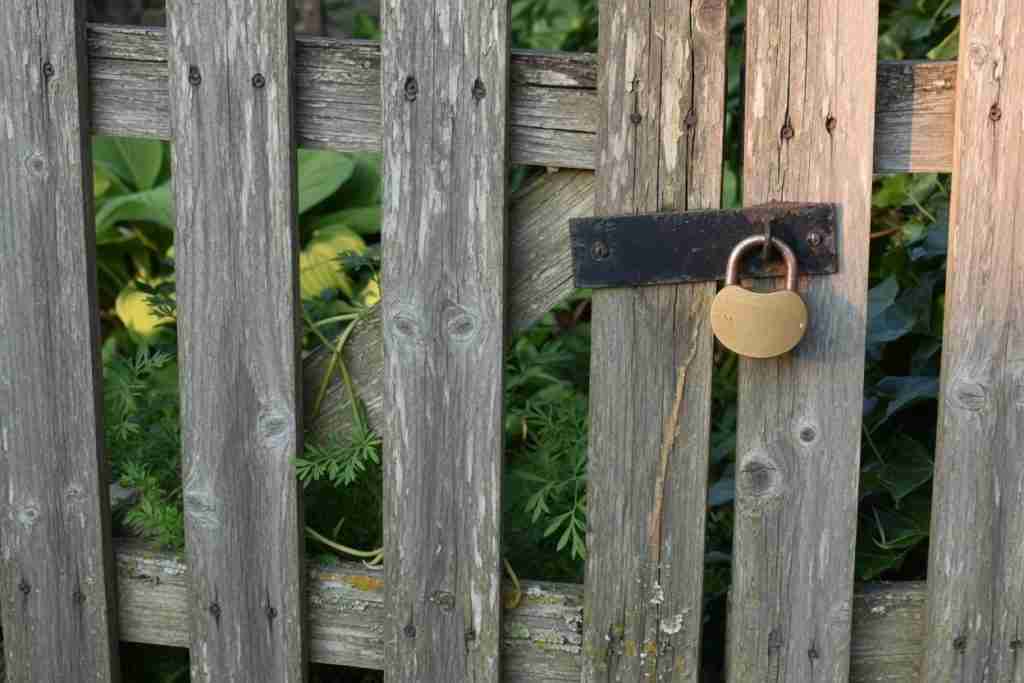
A latch that clicks is a courtesy for the dog. A lock is the line. Look at the hasp, not the height of the boards. If the gate opens when you lift it, or the screws for the hinge sit on the street side where a screwdriver ends the conversation, the fence is a suggestion. Put the hardware where you have to be inside to remove it. Close the gate every time you leave, including the trip back to the house for a jug. An open gate for ten minutes is how a careful fence fails on an ordinary Tuesday.
Keys stay with the people who already water the plants. That is you, and the one person who covers a weekend away. It is not a group chat, a spare under the mat on the outside of the gate, or a code written on the hasp. When that person changes, change the lock the same day. You are not designing a vault. You are refusing the casual open. A determined person with time and tools can beat a padlock. Your job is to make the casual walk-in fail, and to notice the attempt.
The shed gets the same rule, because that is where cut branches should hang. A garden lock and a shed left open is a tour. Hinge pins on the outside of a shed door are the same mistake as hinge screws on the street side of the gate. Wood swells after rain, and a hasp that lined up in June can sit proud in September. If closing up takes a shove, you will leave it open on a tired night. If you rent, do not rebuild a fence the landlord owns. Ask. A lease can forbid the plants even where the province allows them.
Smell and a drying rack tell on you
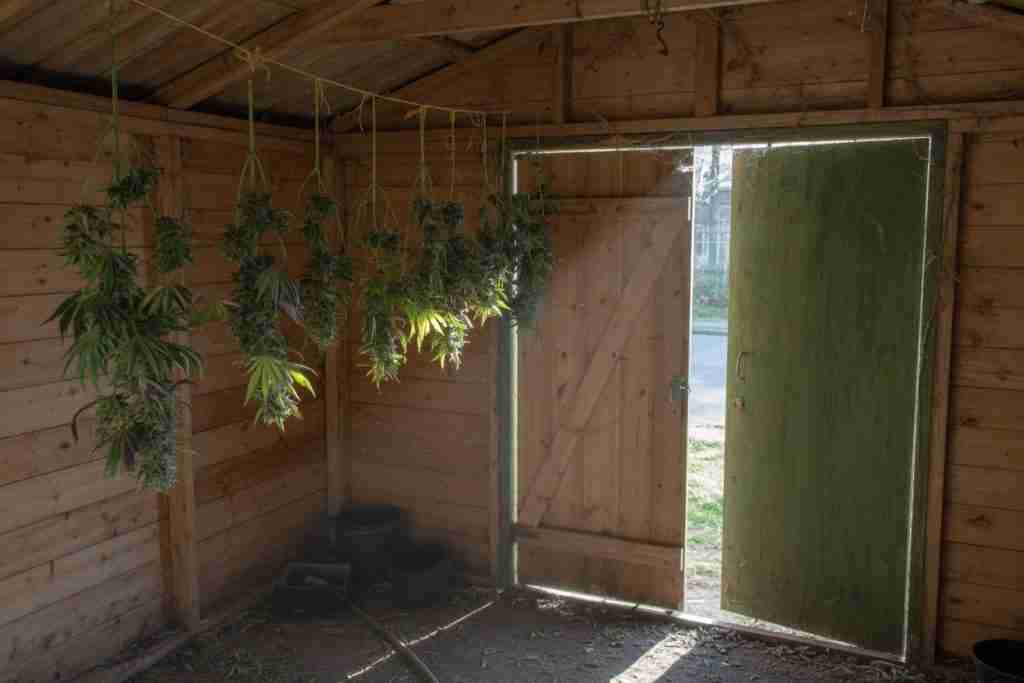
Late flower is the loud week. The plant can be fully behind the boards and still announce the block when the air is still. There is no box you hang in a maple tree that scrubs a backyard. Anyone selling that box is selling a comfort. What you can do is smaller. Pick the finish date so the loud week is short. Keep the cola under the fence so the smell and the view are not both advertising. Accept that a neighbor with a nose will know something is flowering. Security here is not a promise of invisibility. It is a promise that you did not also leave a door open.
Basil, mint, and a hedge muddle a breeze. They do not delete a ripe cola. Plant them if you like the yard. Do not count them as a filter. A cultivar described as loud on the pack is a bad fit for a lot where the next house is one fence away. A quieter plant is a choice you make at the order, not a spray you buy in September. The photoperiod versus autoflower page owns the clock. The best outdoor seeds page owns which finish dates survive your fall. Neither page can promise a plant with no smell. If the listing shouts about fuel and skunk and your lot is twenty steps wide, believe the listing.
Drying is often louder than the live plant, because you moved the flowers to nose height and put them in a box of air. An open shed door puts that rack on the street. Shut the door. A rack on the deck, a branch over a railing, or a tote left in the driveway is the cut version of tops over the fence. The room can be a shed, a garage with the door down, or a spare room with a window you can crack. It needs a door you actually close. The flowering page owns the ripeness call, the dark hours, and how you read the flower. This page owns where the branches sit after you make that call.
There is a real trade when the street can smell the yard and the flowers are close. You can leave them out for a few more days, or you can cut and move the branches inside. Do not invent a lab test for that choice. If the sidewalk already knows, more days on the lawn buy smell, not secrecy. If a storm is about to soak the colas, the ripeness call and the rot risk outrank the calendar on the pack. Cut into a tote. Carry the tote through the gate. Lock the gate. Then worry about the dry room. Leaving the tote on the lawn while you find the scissors is how a careful cut becomes a display.
Animals are a different fence
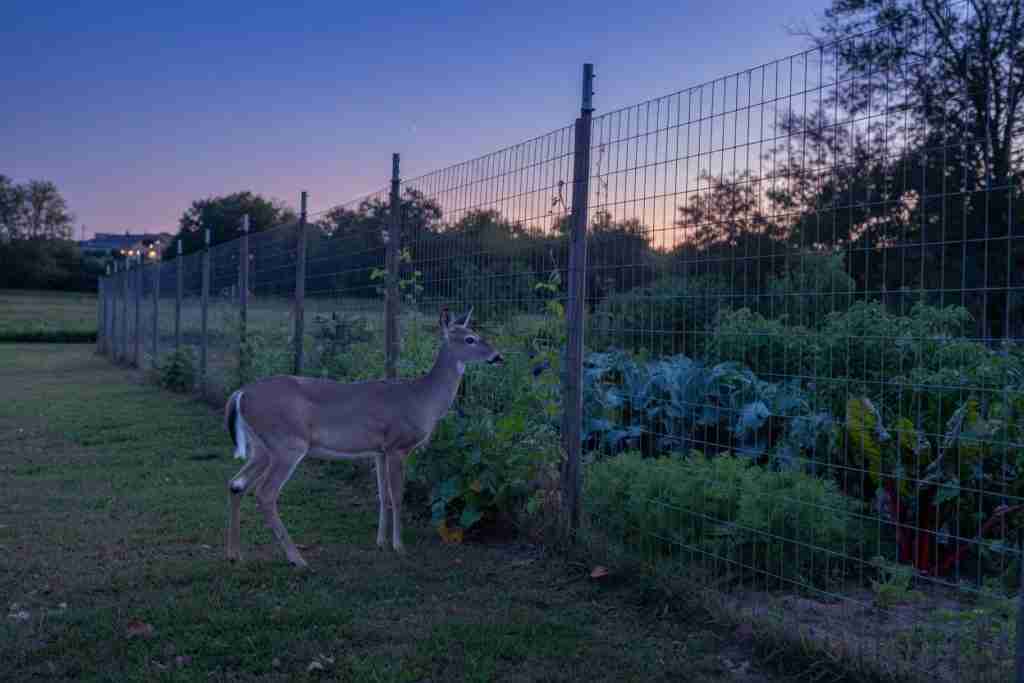
A deer at dusk is not a thief with a plan. It is a browser that can empty four plants before coffee. A camera will film that. It will not stop it. The mesh, the height, the sag that becomes a ramp, and the gap at the soil live on the deer page. Read that page before you buy wire. This page will not repeat the build, because a half-remembered fence is how people end up with a dog-run panel and a step the animal uses.
Rabbits shear low and clean. That job is the rabbit page, not a taller privacy board. A plant that leans and then vanishes into a hole is a burrow, and the gopher and mole page owns the basket and the tunnel. If you treat every missing leaf as a person, you will lock a gate and still lose the salad to something that never touched the latch.
A dog that lives in the yard will bark at the deer, the mailman, and you. That noise can turn a casual visitor around. It is not a fence, and it is not a weapon you train. Do not leave an animal as the only lock, and do not ask a dog to guard a gate you forgot to close. Birds and squirrels are a lighter problem. A net thrown over ripe flowers and left there holds water in the buds. If you net, you are back on the bud rot page the same week. Pin it so it does not lie on the cola, and take it off when the wet weather passes.
People and animals share one failure: a gap you stopped seeing. Walk the bottom of the fence after rain. Soft soil opens a slot, and a board rotted at the grade is a door. If the gap matches an animal track, use that animal’s page. If a person can step through, it is a lock problem and it belongs here.
A light and a camera stay on your side
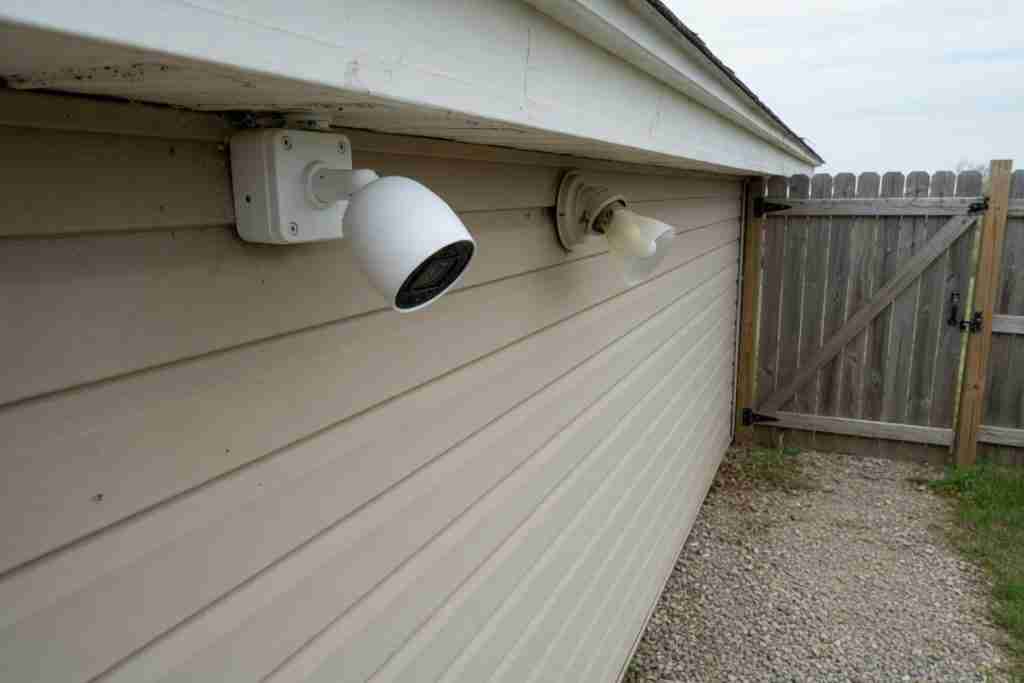
Put the camera under your eave and aim it at your gate and the path you walk. That frame tells you who opened the latch and when. It does not need to see the neighbor’s window, their yard, or the public sidewalk beyond your line. Pointing a lens into someone else’s kitchen is not security. It is their house. If the only mounting spot looks into their glass, move the camera, not the argument. A wide view of your own gate is enough for a home lot.
The light belongs on the path, not in the flowers. A flood parked on the canopy all night is a dark-period problem, and the flowering page owns those hours. A lamp that wakes up when something moves on the path, then goes dark, does the security job without sitting on the buds until dawn. Aim it down the gravel. Shield it so it does not blast a bedroom across the fence. A neighbor who cannot sleep will know your yard better than a thief ever did.
Keep the recorder in the house. A card anyone can unclip is a record you will lose on the night it mattered. Check that it still records after a storm. A dead camera is decor. If a new outlet means a new circuit, call an electrician. This page is not a wiring guide.
If a person is in the yard and they should not be, you stay inside and you call your local police. You do not walk out to debate them. Spikes, a trip line meant to injure, razor wire on a home fence, and a shock wire you do not understand turn a garden problem into a legal problem with your name on it. A lock, a light on your path, and a camera on your gate are the tools. Crop the view so it shows your gate, not a neighbor’s window or a child walking to school. Tell the person with the spare key that the gate is on camera.
Harvest week is when the gate gets tested
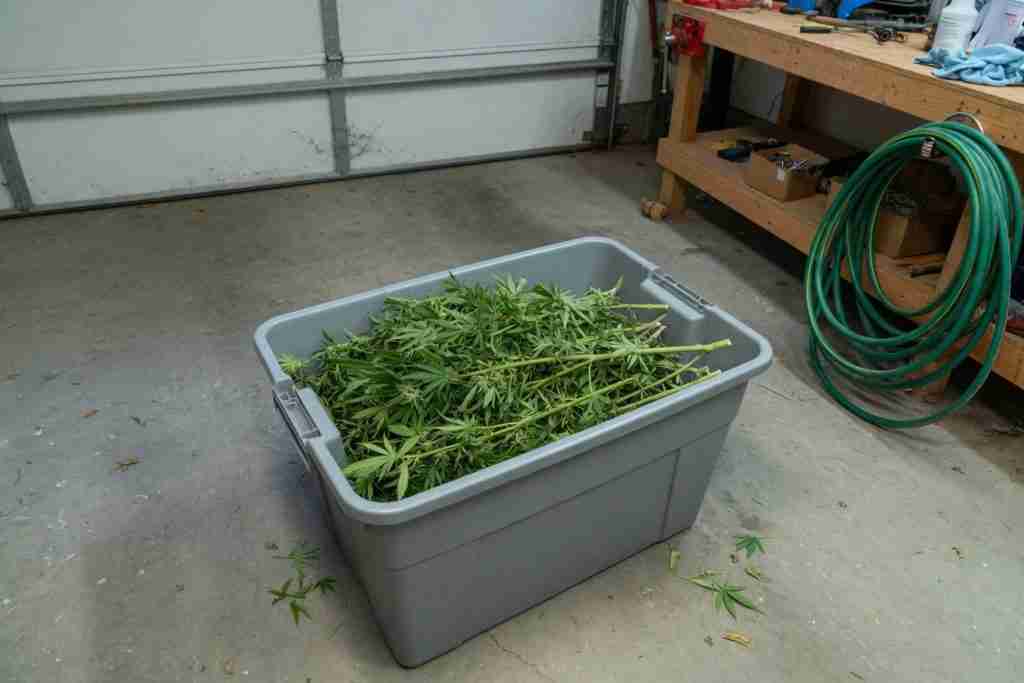
Harvest week is when the plants are biggest, the smell is strongest, and you are tired enough to leave a mess. The working picture is a tote in the garage with the door down, not a pile on the lawn and not a photo shoot by the curb. Cut one plant, carry it through the gate, lock the gate, then cut the next if you still have daylight. A yard full of felled branches is an invitation even if every live plant was hidden all summer.
Friends who help now know the gate. Tell them the rule before they arrive: last person closes it, and the tote does not sit outside. A favor is not a key under the mat. If that person should not come back, change the lock the same day.
Count what is still standing when you are done. A seedling counts as a plant. A mother counts. A backup tray you popped “in case” becomes extra plants the moment those cells have roots in a pot you intend to keep. Do not start that tray because harvest made you nervous about losing one cola. The legal ceiling does not rise because you are careful, scared, or generous. Extra seed stays seed, in a cupboard, until a legal hole is actually empty.
Weather still gets a vote. Frost dates and the outdoor calendar live on the outdoor growing page. Wind, a week of rain, and a cover that does not cook the flowers live on the extreme weather page and the rain shelter page. Your security job on that night is narrow. Move the cut out of sight. Lock up. Do not leave a tarp tent on the lawn that reads as a shrine from the sidewalk, and do not dry in the open because the garage felt crowded. Crowded and shut is better than roomy and on display.
Four plants still need a legal yard
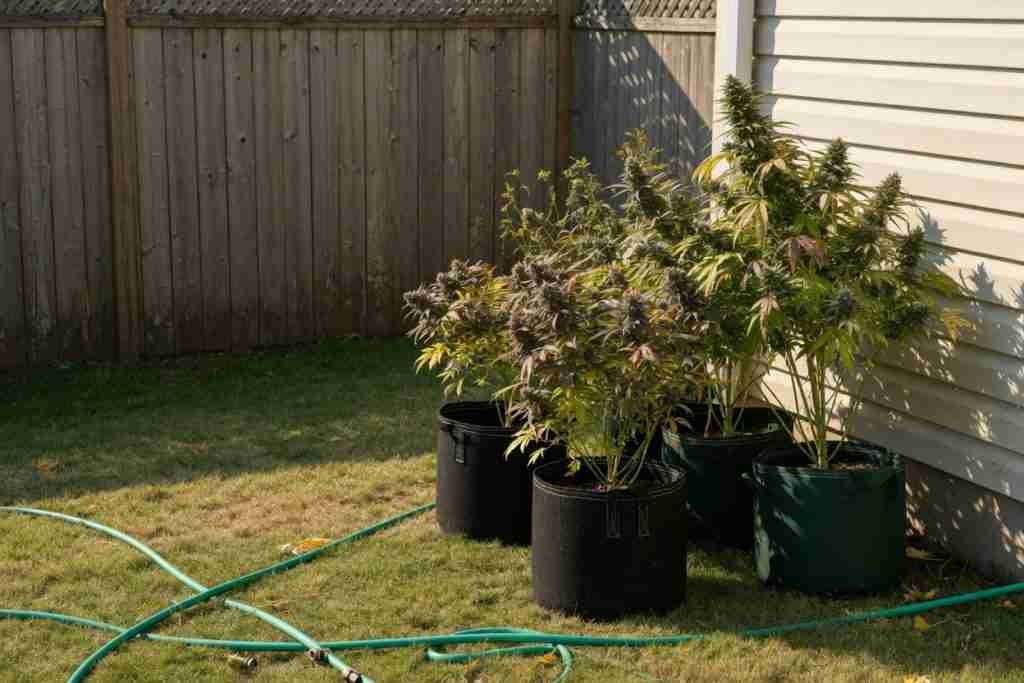
In Canada the federal cap for non-medical growing is four plants per household, not per adult. A seedling counts. Two adults in one home still share four. A bigger yard does not raise the number. Quebec still prohibits recreational home growing, including putting seed in soil. Manitoba has been indoor-only since 1 May 2025, for adults 19 and older, with the plants locked away from anyone under 19. A Winnipeg backyard is not a legal outdoor site because a federal sentence mentions plants. If you are in those provinces, this page is reading material, not a planting plan.
Everywhere else, the fence still has to be yours. A city, a landlord, or a condo board can be tighter than the province. Seeds in a pack are not a permit, and a photo of four pots against siding is not proof your address allows them. Read the lease before you set the hasp. If the lease says no, the security plan is not to hide the pots better. The plan is not to grow there. The indoor versus outdoor page is the fork when the yard cannot be both legal and dull from the street. A tent deletes the sidewalk. It also deletes the deer. It does not delete the plant count.
Four pots against the siding are a small patch and a real target for anyone you let through the gate. Leave a path so you are not dragging colas through a gap you cannot see. A jammed corner looks hidden from the house and reads as a green wall from the one broken board.
Do not add a fifth pot because one plant looks weak. Cull inside the four if two seedlings are fighting and you only have room for the stronger one. The weak plant still counts while it is alive in a pot. If the yard fails the street test no matter where you slide the pots, stop treating the yard as the site. Sun you cannot use without clearing the fence is sun for a tomato. The cannabis can live under a lamp, on the clock the photoperiod page describes, until you have a lot that can hold a locked gate and a dull view at the same time.
A small coastal lot is still a street
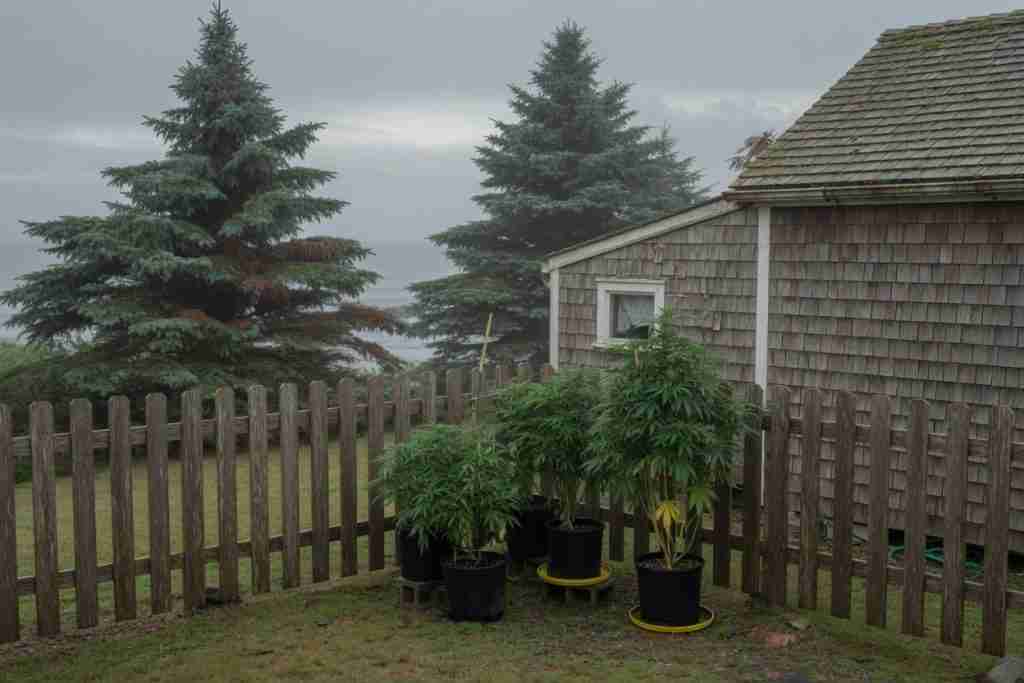
A small lot does not get a smaller version of the problem. It gets a shorter sidewalk. On Prince Edward Island the houses sit close, the wind is wet, and a picket that looked tall in June is a window by August. Plants beside a shingled wall in fog are still plants a neighbor can see if they clear the rails. The Prince Edward Island page owns the island shop notes and the ocean weather. This page does not reprint them. What belongs here is the gate on that short fence: it still latches, the drying rack is still indoors, and a plant that sticks over the pickets still moves or gets topped.
Maine puts the same coastal fog on a different rulebook. Towns can cap how many mature plants sit on a parcel. A town cannot be your lawyer from a seed page, and a landlord can still say no even when the state allows a home garden. The Maine page owns those notes. Read it before you order a pack sized for a field. Security does not beat a town cap, and it does not beat bud rot. If the only corner the street cannot see is a damp pocket with no air, that corner fails the plant. The location page owns that corner. You still lock the gate on the corner you keep.
Do the sidewalk lap on a gray evening, not only on the sunny day you built the fence. A plant that vanished at noon can silhouette when fog sits behind it. After a coastal blow, check the latch before you check the leaves. A gate the storm opened is an open gate.
Order for the yard you have, not the yard in a photo. A fast finish matters more on a wet coast than a famous name that flowers into the rain. That choice is the outdoor seed page and the clock page. The order itself is the store. When the pack arrives, the security work is already decided by the lot: dull from the street, locked when you leave, cut branches inside, animals handled on their own pages, and no trick that injures a person to protect a plant.
