Phosphorus Nutrition in Cannabis


Phosphorus nutrition in cannabis is the mineral the plant uses to move energy, and it is the middle number bloom bottles dare you to overbuy. Roots need it while they are dividing. Flowers need it while they are being built. Past the amount the plant can use, more of it does not stack denser buds, and it can tie up other minerals that the new growth still needs. Most “phosphorus problems” in a fed tent are a cold pot, a pH miss, or a second bottle poured on top of a feed that already had enough.
This page is that mineral. What the plant actually does with it, how a real shortage looks, why a purple stem is a weak clue, and how to feed one bottle without stacking a booster on a booster. The wider feed calendar, the bloom-bottle aisle, the leaf-reading page, and the pH table each stay on their own URL. The label on the jug you already own is the dose. Nothing here is a recipe in spoons.
What the plant uses it for
Every growing cell has to move energy from one reaction to the next. Phosphorus is part of that transfer. It sits in the membranes around cells, and it sits in the genetic material the plant copies when a root tip or a flower site divides. You do not need the chemistry past that. You need the job. A plant short of it grows slowly everywhere, because the energy handoff is slow everywhere. A plant that already has enough does not grow faster because you raised the handoff past its limit.
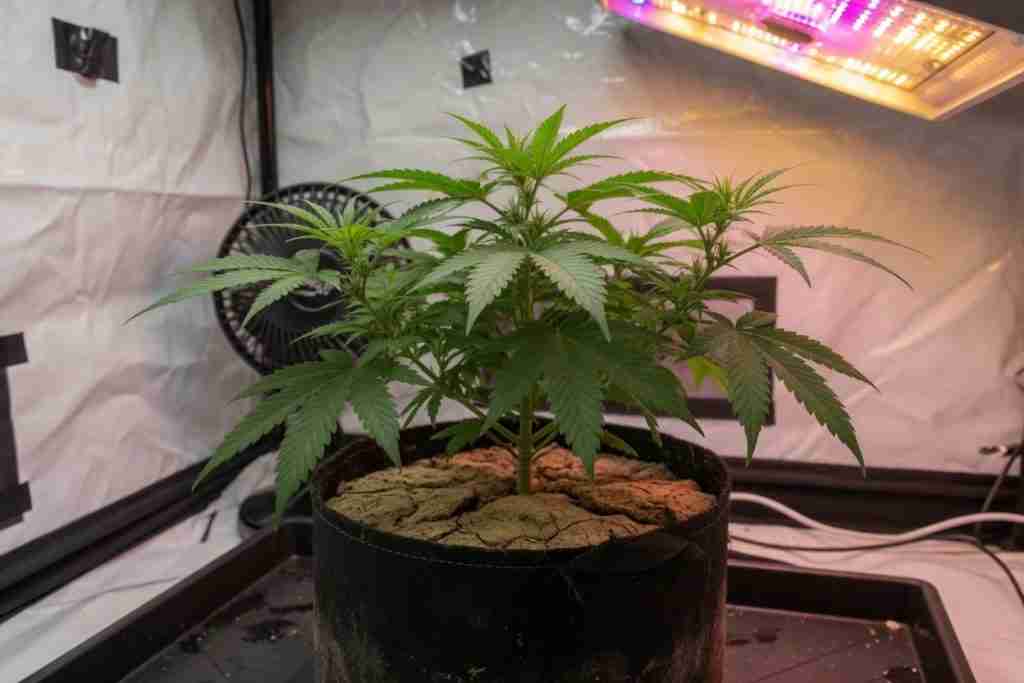
The plant can pull this mineral out of older leaves and send it to the tip that is still growing. Growers call that mobile. The practical part is where you look. A real shortage shows up first on the lower, older fans. Those leaves lose their gloss, go a dull dark green or a bluish green, and can develop bronze or purple-brown blotches that later die back in patches. The top can still look fed while the bottom is being raided. A problem that starts on the newest leaves is usually a different mineral, often iron, and it often means the pH moved.
A nitrogen fade is a different picture and it sends people to the wrong jug. Older leaves go pale yellow in a fairly even wash, and the whole plant looks light rather than dark. Phosphorus hunger keeps the leaf dark and dull, then marks it. If the bottom of the plant is simply lemon-colored, you are on the nitrogen side of a feed problem. Leave the bloom bottle on the shelf and fix the base feed the plant is actually missing.
Growth slows before the colors get dramatic. Internodes stay short. Side branches lag. In flower, sites that should be stacking stay small and loose. That last part is why the bloom aisle prints a bigger middle number. The plant does use more while it is building flowers than it used as a small vegetative plant. The jump is real. It is not a reason to triple the bottle.
Greenhouse work on hemp grown for flower found the ceiling in plain terms. Once the plants had enough phosphorus to grow, extra phosphorus did not grow them further. The tissue level still rose. The plant took up more than it could use. That is luxury uptake. It feels like feeding. It is storage. Yield did not follow the storage.
You can spot that overshoot without a lab. The plant is still moving at a normal pace. The lower leaves are glossy, not dull and blotched. The only change after the extra bottle is that the newest leaves start to pale, or the tips burn, a week or two later. That lag is why the booster feels like it worked. The flowers were going to build on the base feed anyway. The pale tip is the invoice arriving late.
Roots and the start of flower
Young roots are dividing fast, so a transplant and the first weeks of veg are a real phosphorus moment. That does not mean a bloom bottle on a seedling. A seedling is still living on the seed and on a light feed, or on plain water in a mix that already has some nutrition. Hitting it with a flower formula salts a tiny root system. Wait until the plant is actually growing, then use the base feed for veg. The stage nutrition page owns that calendar. This page only marks the handoff: veg feed while the plant is building leaves and roots, flower feed when flowers are the job.
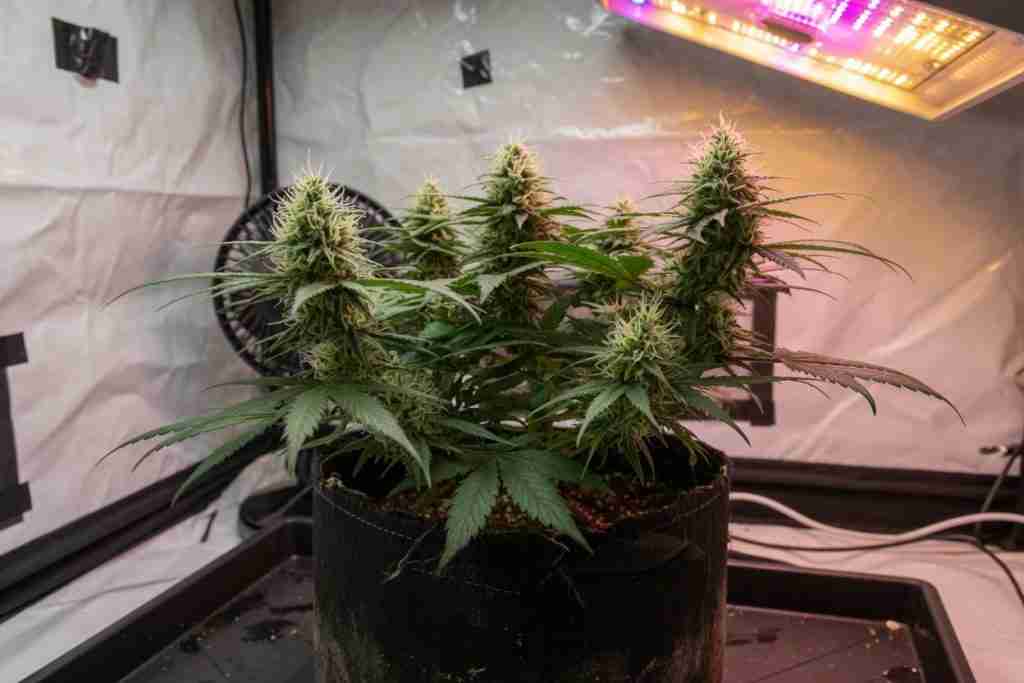
The flower handoff is the pistils, not a date you copied from a chart. When white hairs show and the plant is clearly making flowers, the base bottle can be the bloom bottle, with its higher middle number. Stretch still wants some nitrogen. Cutting nitrogen to zero on the day you flip, and replacing it with a pile of phosphorus and potassium, is how plants stall in the second week of flower and then get blamed on a phosphorus shortage they do not have. Keep the base. Change to the bloom base. Leave the extra PK jug on the shelf.
Autoflowers run the same curve on a shorter clock. They start flowering by age, so the bloom base begins when pistils show, even if the plant is still short. A photoperiod chart that says “week six of veg, then flip, then a booster” does not map onto that plant. The autoflower feeding page is the clock. The ceiling is the same. Enough, then stop adding bottles.
Phosphorus Nutrition in Cannabis
The ceiling is the part the label art leaves off. A complete bloom base already raised the middle number for flower. A second product whose whole identity is phosphorus and potassium, poured on top, pushes the pot past what the roots can use. The extra phosphorus does not become heavier flowers. It sits in the media and competes. Zinc and iron are the usual losers. Calcium can get tangled in the same pile. The new growth then looks hungry, and the hungry look sends people back to the bloom jug. That loop is how a tent full of pale tips gets diagnosed as a phosphorus shortage when the shortage is the other minerals the phosphorus crowded out.
Read the three numbers so you know what you are holding. The middle one is phosphorus. In a veg formula it is usually the small one. In a bloom formula it is usually the one that climbed. You do not need a forum ratio on top of that. You need one formula for the stage, mixed the way that label says, in water you already know how to pH. Stacking a PK booster on a complete base is the common way to blow past the ceiling. The bloom booster page is the product aisle. This page is the reason that aisle disappoints when the base feed was already doing the job.
If the label prints a range, a small plant and a soil pot take the low end. A coco pot you water to runoff can sit higher in that same range, because each watering leaves with some of the salts. Neither case needs a second jug to make up a difference. The range on one label is already the difference. Pouring by eye, heavier each week because the flowers look exciting, is how a careful base feed becomes an accidental double dose.
Extra phosphorus is also not a potency dial. Flowers need the mineral while they are being built. They do not get stronger, smell louder, or test higher because the middle number went up again after the plant was already supplied. Light, a root zone that can actually drink, and a cut made on the resin still decide the jar. A bottle cannot stand in for those.
Organic sources follow the same ceiling and a slower clock. Bone meal and rock phosphate release over months, not over a bad week. They belong in a mix you build before the plant is in trouble. They will not green a stalling flower room by Friday. A soluble bloom feed can, and only when the cause really is an empty pot. If the cause is pH or cold roots, the organic dust and the soluble bottle fail the same way. The mineral is present. The root cannot take it.
Purple stems are a weak clue
A purple petiole is the photo everyone forwards. It is a poor diagnosis by itself. A lot of cultivars color their stems and leaf stems as a genetic trait, especially when nights run cool. Anthocyanin is a pigment. It is not a lab result. A plant can be purple in the stems and fully fed. A plant can be short of phosphorus and stay green in the stems for a while if the leaves are the part being raided.
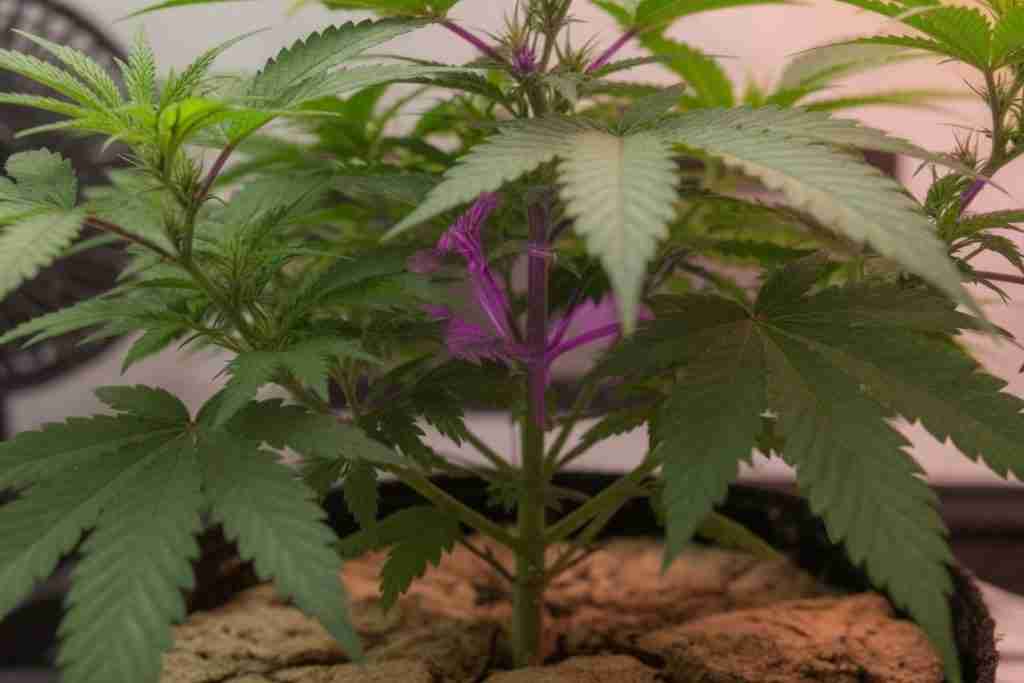
A marijuana cultivar that colors up in a cool tent is not short of this mineral. The weed you jar still finishes on light, water, and the cut, not on a second bottle of phosphorus.
Use the lower leaves and the speed of growth together. Dull, dark lower fans, blotches that turn bronze and then necrotic, and a plant that has slowed down are the pattern that fits a real shortage. Purple stems plus glossy green leaves plus a normal pace of growth are a cultivar doing what that cultivar does. If you are unsure, do not add a bottle the same afternoon. Check the root zone first. The deficiency page is where the other leaf patterns live, so a magnesium blotch or a nitrogen fade does not get treated as phosphorus.
Cold is the other fake shortage. Phosphate uptake stalls when the root zone drops to about 15 C, even if the feed in the pot is adequate. The air at canopy height can feel acceptable while the pot, sitting on a cold floor, is the cold object. Insulate the pot off the concrete. Keep the root zone in the same mild band as the room, around the mid 20s C, rather than letting the media lag behind. Warming the bottle you mix is a smaller help than getting the pot itself off a cold slab. Adding more phosphorus to a cold root does not unlock the phosphorus already sitting there.
When the pot has it and the plant starves
Availability is a pH story before it is a dose story. In soil, phosphorus is easiest for the roots to take while the root zone sits in the workable band of 6.0 to 7.0, and it is happiest toward the middle of that band, about 6.2 to 6.8. Too far acid and too far alkaline, the mineral binds to other elements and stays in the pot where the root cannot use it. You will see the lower-leaf pattern of a shortage in a media that is not short. The fix is the pH, then a normal feed. The soil pH page owns that band, including how to read a slurry against runoff. Do not chase it with a heavier bloom mix.
Coco and hydro sit lower than soil. Pouring a soil target into a coco pot, or a coco target into soil, is its own lockout. The numbers for those media live on the pH guide. What matters on this page is the consequence. Outside the band for the media you are in, phosphorus can be present on the label and still absent to the plant.
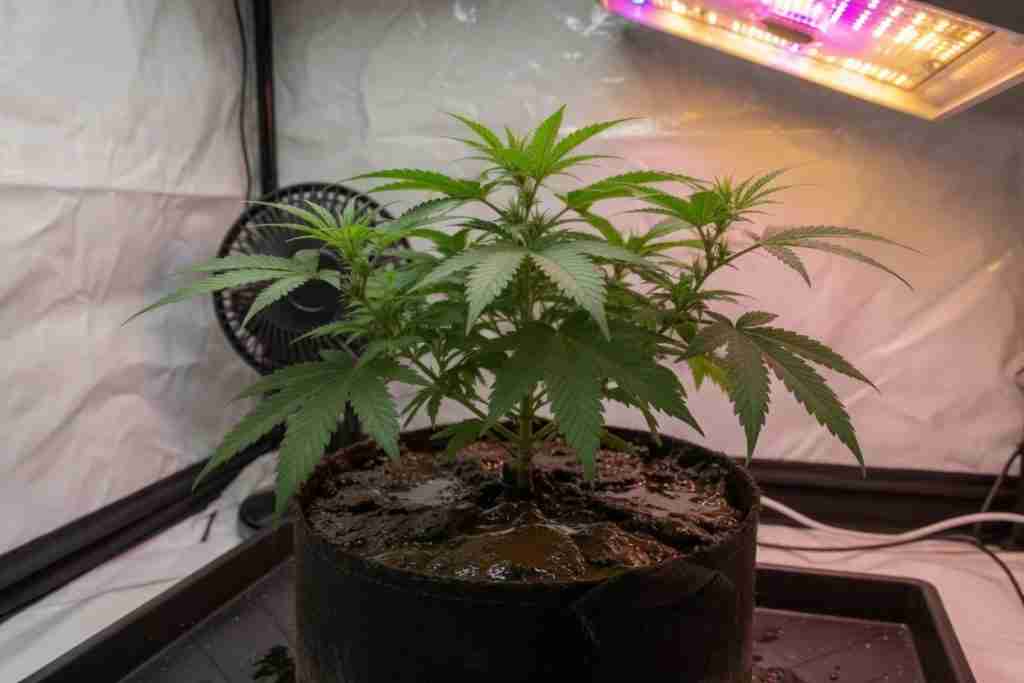
Roots that are drowning do not take up phosphate either. A pot that never dries, a saucer left full, and a mix with no air all produce a plant that looks underfed while you keep adding feed. The leaves may yellow, the growth slows, and the instinct is a stronger bottle. The stronger bottle lands in a swamp. Let the pot dry to the point where the watering page would tell you to water again. Then feed at the normal strength. A phosphorus amendment will not put oxygen back into the media.
Salt buildup mimics the same hunger. If every watering has been a full-strength feed and the runoff is clearly hotter than what you pour in, the root is sitting in a brine. More phosphorus makes that brine worse. The lockout page is where the choice between a real empty pot and a locked pot gets made, including whether a flush belongs. This page will not hand you a flush volume. It will tell you to stop adding the mineral you are already oversupplying until you know which problem you have.
Too much becomes a different problem
Excess does not usually look like a burnt lower leaf with the word phosphorus written on it. It looks like a new problem. The youngest leaves pale, often with the veins a little greener than the blade, while the older fans stay dark. That pattern belongs to iron, or sometimes zinc, made hard to take up because phosphorus is high. People call it a deficiency and they are half right. The leaf is short of iron. The pot is not short of phosphorus. Adding the bloom bottle again is how the pale tip gets worse.
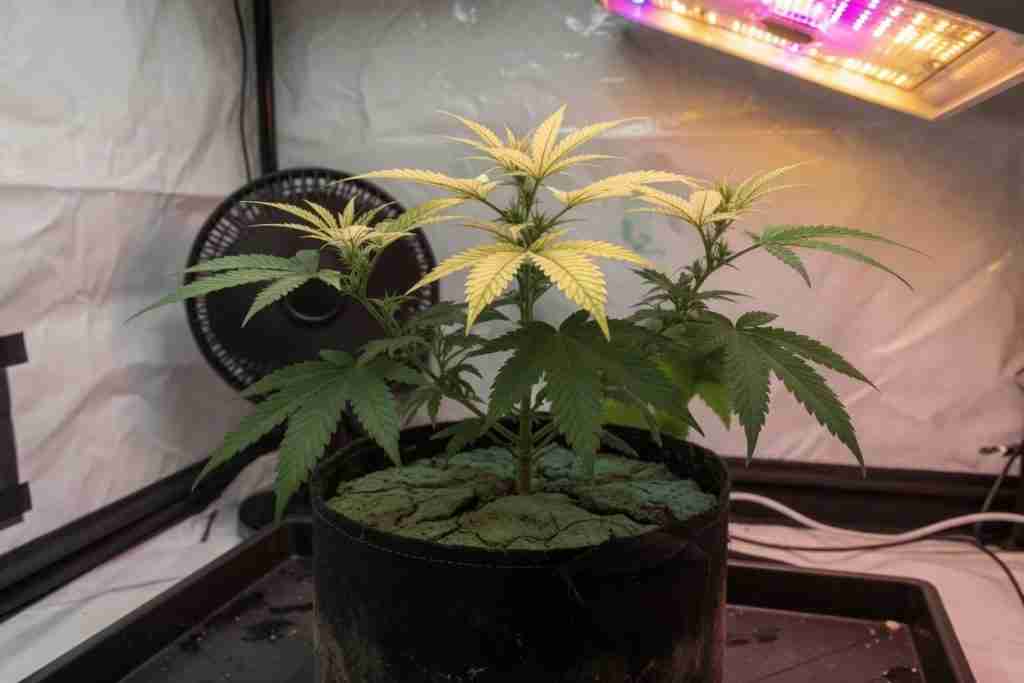
Tip burn and clawing can show up in the same week, because the total salt rose, not because one element is doing a cartoon version of toxicity. If the input feed is strong and the leaves are burning at the points, cut the strength of the one bottle you are using. Do not add a calcium-magnesium supplement, a booster, and a “phosphorus fix” on the same day. You will not know which change mattered, and the pot will be saltier.
A slow organic charge can overshoot too, just later. Rock phosphate and a heavy bone-meal top dress do not vanish when the plant has had enough. They keep releasing into a soil that may already be supplied by the compost and the feed. If new growth pales in a living soil that has been loaded with phosphorus-rich meals, stop adding meals. Water properly. Let the pot work. Another cup of meal is the same mistake as another cap of booster, on a slower fuse.
One bottle, then watch
Pick the base formula for the stage and mix it the way the label says. Veg base while the plant is building leaves. Bloom base once flowers are the growth you want. pH that mix for the media you are in. Water it through when the pot actually needs water. That is the whole phosphorus program for a home grower who is not running a trial.
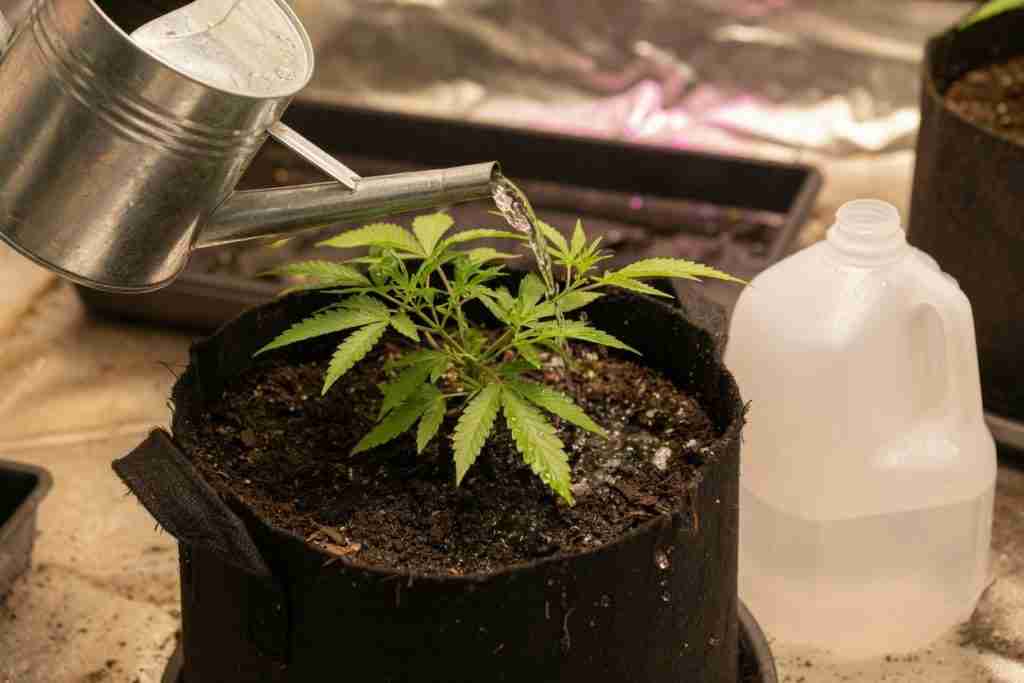
If you already poured a booster this week, do not pour it again to “catch up.” Skip it. Run the base alone at a sane strength for the next few waterings and watch the new growth. The leaves that already marked up will not return to glossy green. Phosphorus that left an old fan is gone from that fan. Judge the tip that emerges after the change, and judge whether the plant speeds up or keeps stalling.
A real empty pot is the uncommon case indoors, and it does happen. A peat mix with no charge, a long veg on plain water, or a bloom bottle you forgot for weeks can leave the plant actually short. Then the bloom base, at the label rate, is the correction. You do not need three products and a foliar spray of phosphorus on the flowers. Foliar phosphorus on open flowers is a residue you will smoke. Keep the feed in the root zone.
Outdoors, cold spring soil is the classic fake deficiency. The bed can have plenty of phosphorus from last season and still grow a purple, slow plant in a cold May. Wait for the soil to warm, or grow the start indoors and plant out when the root zone can work. A handful of bloom food on frozen ground does not speed that clock. Rain that leaches a pot is a different problem from a bed that is simply cold. A fabric pot on a balcony that gets soaked every storm may need the normal feed again after the media has been rinsed. A wet September is not a phosphorus emergency. Bud rot and a plant that is simply finished are not cured by the middle number.
What the next week should show
Give a correction several days before you add a new product. New leaves should come in with color closer to the healthy fans, and the pace of growth should pick up if the limit really was supply or pH. If the newest leaves keep paling after you removed the extra phosphorus and put the pH back in band, you are looking at a different mineral or at roots that are still unhappy. Go back to the deficiency page and the lockout page instead of raising the middle number again.
Change one thing, or you will not know what the new tip is answering. If the meter is outside the band, fix that first and hold the bottle steady. If the tips are burning and the meter is fine, lower the strength of the one bottle you are using. Raise phosphorus only when the lower leaves match a real shortage, the pot is warm, and the pH is already in band. A new leaf takes days. It does not grade your afternoon.

Flowers still have their own job after the feed is boring and correct. The flowering stage is the stretch, the dark period, and the decision to cut. Phosphorus does not replace a lamp that is too far away, a pot that stays soaked, or a harvest taken because a calendar said so. The ten-step grow page holds that wider sequence. A correct middle number does not add a legal plant, and it does not erase one.
In Canada the cap is four plants per household, not per adult. Quebec prohibits recreational home growing. Manitoba has allowed indoor growing only since 1 May 2025, and the age there is 19. A seedling counts. A second set of cups still counts.
If the lower leaves are dull and the plant has slowed, check the root temperature and the pH before you buy another jug. If the newest leaves are the pale ones, you are more likely over the ceiling than under it. One base bottle for the stage, mixed to the label, in a pot that can dry and a root zone that is warm enough to drink, is the phosphorus program that matches how the plant uses the mineral.