Lollipopping Cannabis Plants


Lollipopping Cannabis Plants is a pruning cut, not a candy and not a secret fertilizer. You take off the lower shoots and the little bud sites that will never see a useful amount of light, and you leave the top of the plant alone. The stem underneath looks bare. The canopy on top is what you are actually growing. People search this because they want bigger buds. What you can honestly get is fewer airy bottoms and more of the plant’s effort in the sites that already sit in the light.
That is a smaller promise than the old pages make. Stripping the bottom third does not add THC, and it does not turn a weak plant into a heavy one. Marijuana that finishes dense got light, a dry enough room, and enough days. Weed that finishes as popcorn was usually sitting in shade, or it was cut so late that the plant spent the bulking weeks healing. If the top was already starved, a haircut will not invent a cola.
The guides that rank for this search agree on the shape of the job and argue about the calendar. Clean the shaded bottom in late veg or during the first two weeks of flower, while the plant is stretching. Stop once the buds are stacking. Indoors, a crowded tent makes the bottom dark, so the cut earns its keep. Outdoors, side sun reaches lower branches, so you take less. Autos get a short cleanup or none. Do not do this on the same day you top, transplant, or strip the fan leaves out of the top.
Lollipopping Cannabis Plants Clears the Shade
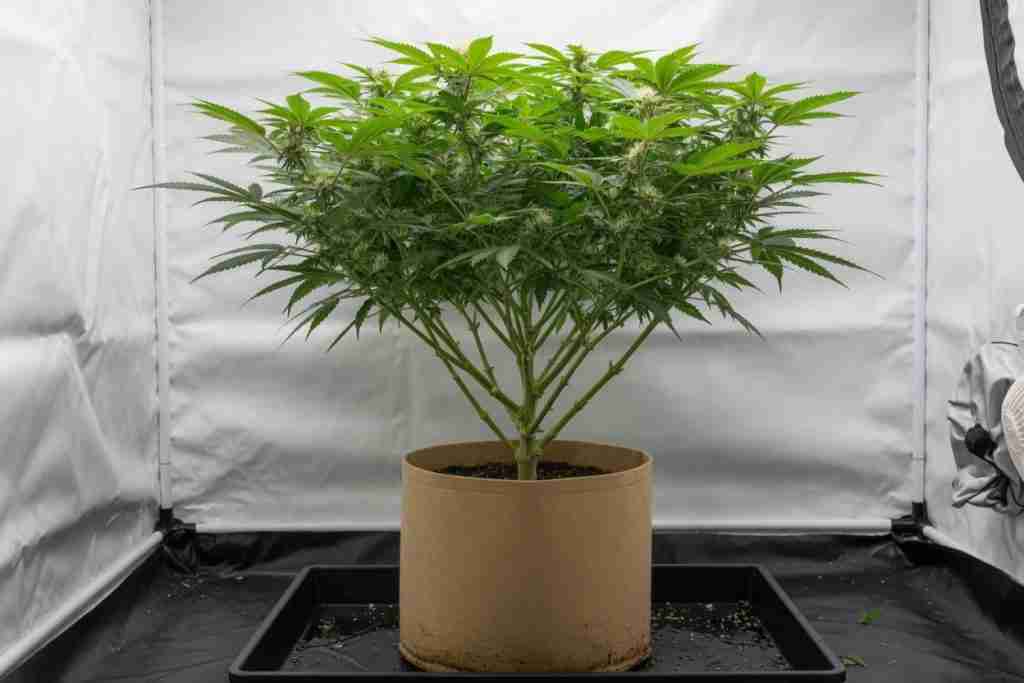
Look at a plant after a proper lollipop and the picture is simple. The lower stem is a stick. The growth that remains is up where the light is. You did not shave the plant for style. You removed shoots that were going to make small, stemmy flowers you would throw in the trim bin anyway.
Under a lamp, light falls off fast as you move down. A shoot tucked under a full canopy gets a fraction of what the top cola gets. It still drinks, still asks for food, and still holds wet air against the stem. Cutting it does not create energy. It stops you spending energy on a site that cannot pay it back. The top does not magically double. It just stops sharing with a dozen shaded twigs.
You can test the decision before you cut. Turn the grow light on, kill the work light, and look from the floor. A shoot you can read a leaf vein on is getting enough. A shoot that is a dark blur under the canopy is not. Do that check at the height the lamp will sit in flower. An open plant in early veg lies to you. Everything looks lit until the tops fill in and the bottom goes black.
This is not the same cut as defoliation. Defoliation takes fan leaves, mostly to open the canopy, and the defoliation guide owns that job. Lollipopping takes whole shoots and the bud sites on them. You can do a little of both in the same week. You should not scalp the top and bare the bottom on the same afternoon. The plant has one recovery, not two. General shaping, before you ever get to this cut, lives on the pruning page.
Shaded Sites Stay Small

A crowded plant shows you the problem before you pick up scissors. Tops reach. Everything under them sits in leaf shade, and those lower sites stay loose. Growers call that popcorn or larf. It smokes, and it takes as long to trim as a real cola while weighing less and holding more stem. The fluffy bud page is about flower that never tightened. A lot of that flower started as a site that never saw the lamp.
Before you cut, get your eyes at pot level. If you cannot see the bulb, the sun, or a bright patch of tent wall from that shoot, the shoot is a candidate. If it is thin, pale, and aimed at the floor, it is not going to race upward and become a cola in week six. Mark it. The sites you are unsure about can wait until the stretch makes the decision obvious.
Do not clear a plant because a chart said “bottom third” and your ruler agrees. The line is the light. A short plant under a strong, close lamp may only need the lowest one or two nodes gone. A tall untrained plant in a small tent may be dark halfway up. Train the height first if you can. Low stress training and a screen keep more sites in the light so you have less to delete. Those jobs are the LST guide and the ScrOG guide. Lollipopping is what you do for the sites that training could not save.
The Lit Cola Is the One You Keep

The flower you are protecting is the one already in the light. It has the leaf around it, the pistils, and a direct path to the lamp. That site does not need you to “feed it harder” by hacking the plant underneath into a stick taller than the canopy. If you remove so much leaf that the remaining tops have no solar panels, you slowed the exact flowers you meant to help.
A useful target indoors is the growth that sits in real shade, often the lower portion of the plant, not a fixed percent and not half the plant every time. Leave the upper canopy leafy enough to run. Sugar leaves tucked in the bud stay. They are part of the flower, not clutter. Fan leaves that shade a good top can come off one or two at a time later. That is defoliation again, and it is a lighter hand than this cut.
Bigger in this context means a cola you can actually keep, instead of a jar full of airy bits from the floor of the tent. It does not mean a heavier dry weight on every run, and it does not mean a stronger effect. Density and potency are not the same thing. Genetics, harvest timing, and how you dry still decide the smoke. The quality bud guide is the rest of that story. This page stops at the cut.
Time the Cut With the Stretch
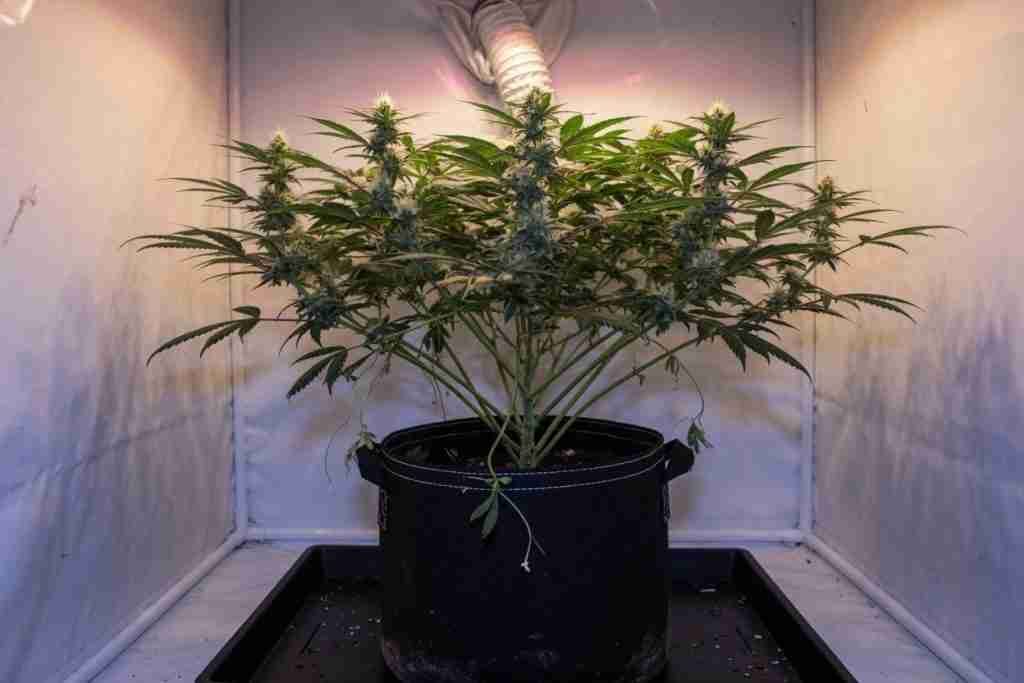
Photoperiod plants do this job in a short window. Late in veg, about a week before you flip to 12 hours of light, the plant can spare some lower growth and still have time to settle before flower. The other good moment is during the stretch, the first one to two weeks after the flip, when internodes run and you can see which shoots stayed in the dark. A small cleanup at the end of that stretch is enough. You are not starting over.
The stretch is why a cut made only in early veg is often wasted. The plant adds nodes, the canopy closes, and new shaded sites appear. If you bare the stem when she has four nodes and then let her veg for a month, you will be looking at a new set of lower branches. Wait until the shape is almost the shape she will flower in. The veg stage guide is for building that plant. Lollipopping is the last edit, not the way you grow her.
If the stretch is already running, clean the new shaded shoots during those first two weeks and then stop. Do not book a second full strip because a chart called a later week the only week. By the time flowers are stacking, a second pass that takes real branches is the late cut. A dangling shoot you missed on the first pass is the only thing still worth a snip.
White pistils at the tops mean flower has started. That is still inside the window if the buds are wisps, not stacks. If you already flipped and you have not cleaned the bottom, do it in that first fortnight while she is still growing hard. After that, every cut competes with the flowers. The flowering guide is what those weeks are for. Do not spend them reopening the stem.
A Built Cola Is Too Late

Once the flowers have stacked, you are late. A cola with density, color, and a full set of pistils is not a plant that wants a new set of wounds. Heavy pruning after the stretch pulls effort into healing while the buds are supposed to be swelling. You also open wet tissue in the weeks when mold is the thing you are trying not to invite. A few leaves lying on a bud and holding moisture can still come off. That is a pluck, not a lollipop.
If you missed the window, leave the structure. Harvest the popcorn with the rest and grade it as trim or as small flower. Next run, put the cut on the calendar the day you plan the flip. Trying to “make up for it” in week five is how people stall a plant that was doing fine.
Same rule if you already topped, supercropped, or defoliated this week. The high stress training guide and the supercropping guide are separate stresses. Stacking them on one day is how a healthy plant stalls for a week you do not have. Give her several quiet days between a hard bend or a top and this cleanup.
Autos Get a Short Cleanup
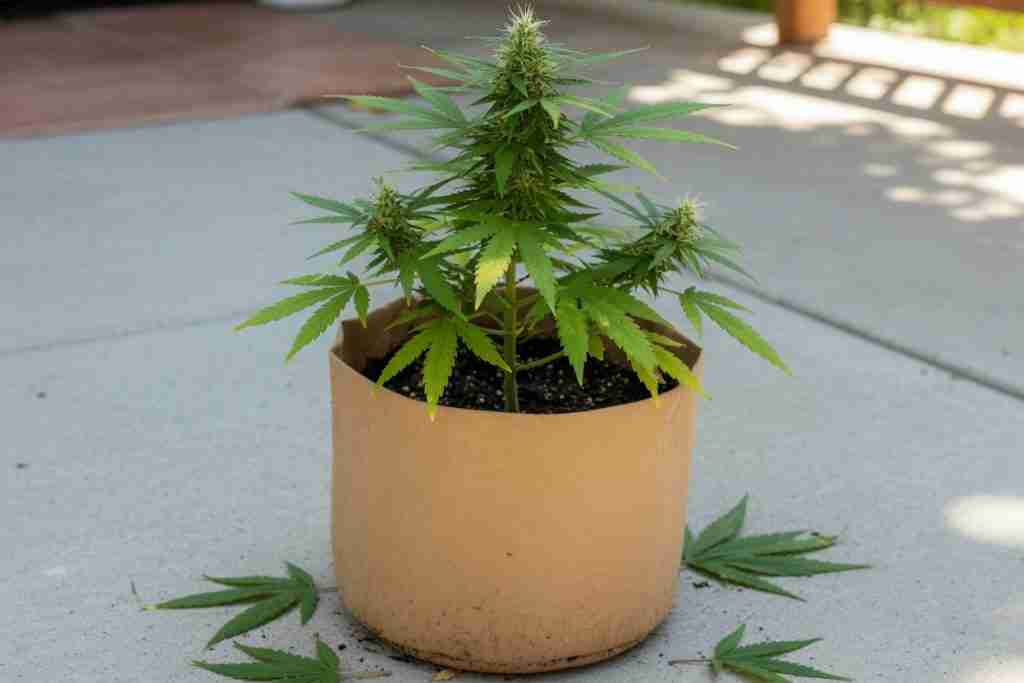
Autoflowers run on a clock you do not set. They do not get a long veg in which to recover, and a hard strip can cost you the only stretch they have. If the plant is small and the light already reaches the bottom, do nothing. If a couple of tiny shoots are buried against the pot and will only make stem, take those and stop. Do not bare an auto the way you bare a crowded photoperiod.
The moment, if you cut at all, is when the first pistils show and you can see what is pointless. After that, hands off the structure. Leaf tucking or a light tie is the better habit, and the autoflower guide is where that plant is actually run. A lollipop is not how you make an auto yield like a photo that vegged for two months.
Cut Only Where the Light Falls Off
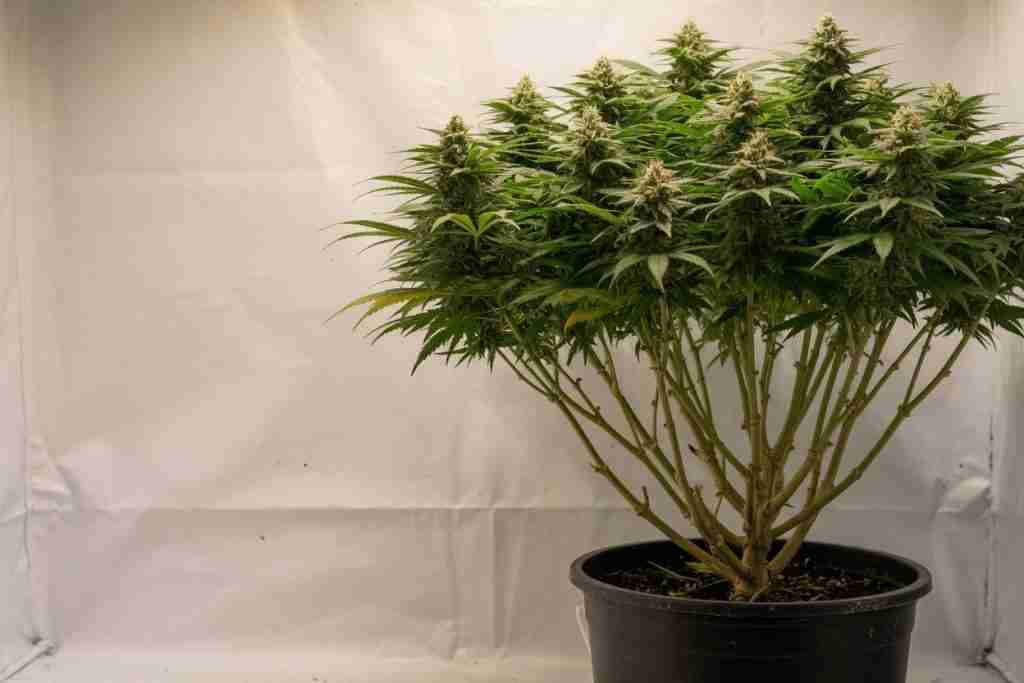
Work from the bottom up, and stop when you reach growth that gets light. On many indoor plants that line lands somewhere around the lower third. On some it is lower. On a stretched plant in a short tent it can be higher. The mistake is matching a photo of a perfectly bare trunk and then deleting sites that were going to finish. Those sites were your yield. You do not get them back.
Judge the line under the lamp she will actually flower under, with the tent zipped. A plant that looks open in a bright garage can be a cave once she is back under the fixture. Side light from an open door is not the light she lives in. If you cannot see the bulb or a bright patch of wall from that node, the node is in the cut zone.
Take thin inner shoots, shoots aimed down, and bud sites buried in the middle that will never clear the canopy. Leave the mains. If a side branch has a tip in the light and a shaded base, you can remove the shaded nodes and keep the tip. You do not have to delete the whole branch to feel thorough.
Count the tops you are keeping before you count the ones you are cutting. Four plants in a tent crowd each other. In Canada the household cap is four plants, not four per adult, and Quebec still prohibits recreational home growing. Manitoba allows up to four, indoors only, for adults 19 and older under the May 2025 rules. A legal tent that is too small is exactly where the bottoms go dark. Fix the crowding with training and this cut. Do not fix it by adding plants the law does not allow. Seed packs should match that count, not a commercial room.
Clean the Blade and Cut Flush
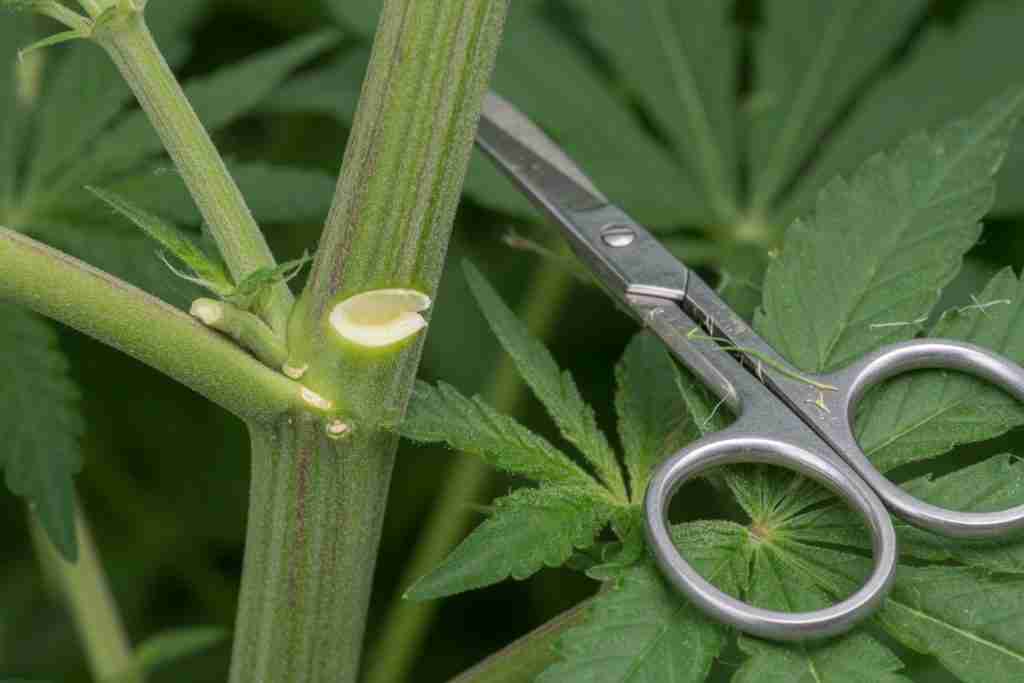
Use sharp scissors or snips you have wiped clean. A crush from dull blades makes a wound that dries slowly. Cut the side shoot off where it meets the stem. A tiny collar is fine. A long stub is a dead stick that can rot and snag. Do not slice into the main stem to “make it smooth.” The main cane stays whole. You are removing a branch, not notching the trunk.
Work dry. Morning, with the lights on, gives the cut the day to seal. Do not spray the fresh cuts. Do not foliar-feed a plant you just opened. If sap is running, you cut a shoot that was still fat and happy, which is normal. Blot if it drips on a bud. Then leave it. Alcohol on the blade between plants is enough. You do not need a paste, a powder, or a kitchen mix on the wound.
If you snap a shoot and a strip of skin hangs, finish the cut. A dangling ribbon dries against the stem and holds moisture. The same goes for a fan leaf you tore halfway. Either it stays, or it comes off clean. Half-torn tissue is the sloppy version of this job.
A healthy plant seals a flush cut in a day or two. The spot dries, the color dulls, and fresh sap stops. If the wound stays wet, smells off, or the stem above it wilts, you nicked the cane or the room is too damp for an open cut. Stop. Get the air moving. Do not paint the wound with anything from the kitchen.
Leave the Top Intact

Stop when you reach the canopy you mean to harvest. The top cola, and the side tops that cleared the shade, are not practice. Popcorn tucked under them is. If your scissors are up among the mains, you have gone too far. Put them down. A plant with three or four real tops will beat a plant you turned into a single lollipop for the look of it, unless you are mainlining on purpose and you started that structure weeks ago.
After the cut, do not “even it up” by taking more the next morning. Watch for a day. Leaves that were borderline may now be in light because a branch is gone. Water as usual. Do not push a heavy bloom feed the same day to “drive the energy up.” The plant is closing wounds. A normal drink is the whole recovery plan unless she was already due for food.
If a top was buried and you freed it, good. If every remaining top looks pale because you removed the leaves that fed it, you overdid it. Next time leave more. This run, do not compound it with another session of cutting. The indoor grow guide is the room around this plant: light distance, pot, and airflow. The haircut cannot replace a lamp that is too weak or too far away.
Open the Air Under the Canopy
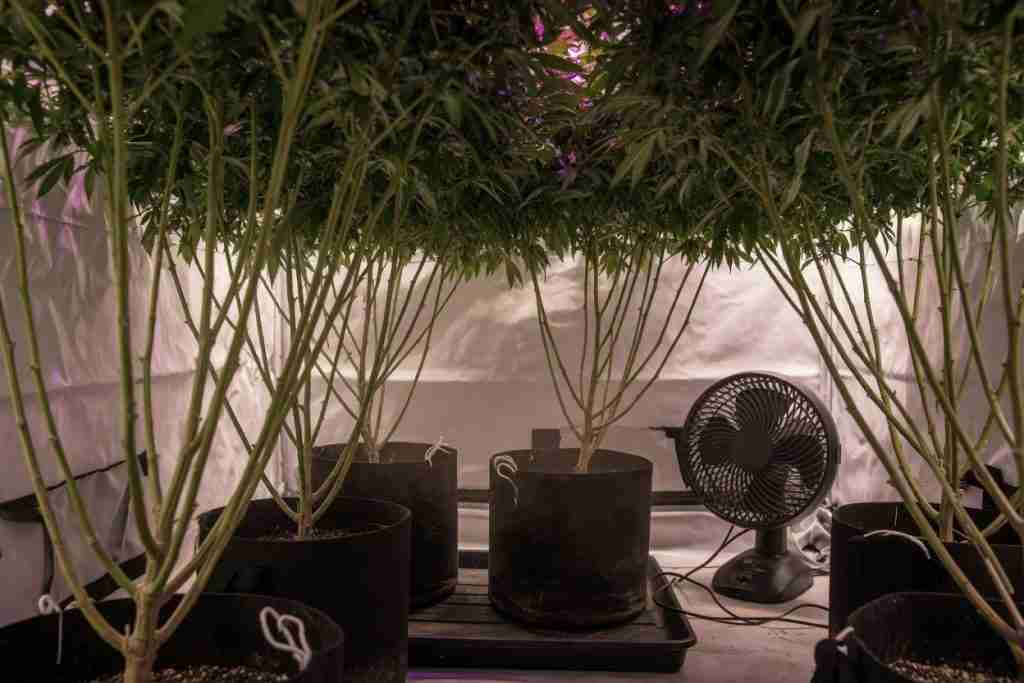
A bare lower stem is also an air path. Wet air likes the still pocket under a dense canopy, against the pots, where you never look. Opening that space lets a fan actually move. It also lets you see pests, water the soil without soaking a jungle, and spot a yellow leaf before the whole bottom is a mess. The ventilation guide is the fans and the exhaust. Lollipopping only gives those fans somewhere to work.
This does not make the room mold-proof. Dense flowers in a humid late flower still rot if the air is wet and still at the bud. You lowered one risk. You did not cancel September. Keep the fan pointed through the gap, not blasting one cola into windburn. Leaves should tremble. Buds should not flap.
Skip the cut entirely if the plant is already in trouble. A thirsty plant, a hot plant, a plant with pests, or a plant you just transplanted does not need wounds on top of the problem. Water her, cool the room, or deal with the bugs first. Cutting a wilting plant because the calendar says “flip week” is how a small stress becomes a stalled flower. Give her a few quiet days after she looks boring and healthy again. Boring is the requirement.
One pass is the whole technique. You are not lollipopping every week. A second look, a few days after the stretch starts to slow, is only for shoots you can now see are hopeless. If you are still finding a lot to cut in week four, the canopy was never managed and the fix is next run: top or tie earlier, or run fewer plants in that tent.
The practical win shows up at the end, not the next morning. Trim day has fewer pencil stems and fewer airy bits glued to sugar leaf. On watering day you can see the soil. A look at the bare stem finds early pests before they climb into the flowers. None of that is a promised weight. It is time you do not spend fighting a jungle you grew on purpose.
Outdoor Plants Keep More Growth

Sun from the side changes the math. An outdoor plant with space around her lights her own lower branches. Those branches can finish real flower. Stripping them because an indoor photo looked clean throws away sites that were going to work. Take the interior twigs that are buried against the main stem and will never clear the leaves. Leave the outside growth that gets afternoon sun.
Check those lower branches at noon and again late in the day. A branch lit at noon and shaded by four can still finish if the noon light is real. A branch dark at both times, tucked inside the bush, will not. That second look is how you avoid copying a tent photo onto a plant the sun already reaches.
A plant shoved against a fence or under a tree is the exception. If the bottom is in all-day shade, those shoots are the same popcorn you would cut in a tent. Clear those, and only those. Do it while she is still stretching in midsummer, not in September when the buds are the crop. Wet weather plus fresh cuts plus dense flower is a mold invitation you do not need.
Outdoors, the better tools are spacing, a stake, and taking the plant out of a hole that never dries. A bare trunk on a sunny plant mostly gives you less flower and a stem that sunburns. If you want the indoor look, grow indoors. If you want the outdoor plant, let the sun decide which branches stay.
Do the cut once, at the right week, on a healthy plant, and only where the light already failed. Then put the scissors away and let the tops finish. That is the whole secret. It was never hidden. It was just easy to overdo.