Quadline vs. Manifold vs. Mainline: Which Packs the Most per Square Foot?

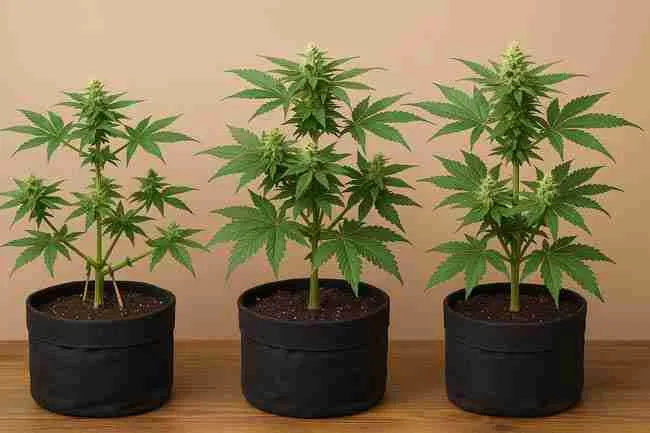
You’ve got a small grow space, big dreams, and zero desire to waste an inch. Sound familiar? Then this deep-dive is for you. You’ll learn what quadline cannabis training is, how it differs from manifold training and mainline training, and—most importantly—how to squeeze the most buds per square foot without turning your tent into a tangled jungle. We’ll walk step by step, keep the language simple, and give you real-world tips you can use today.
At-a-Glance Comparison (So You Can Choose Fast)
| Method | Core Idea | # of Main Colas (Typical) | Veg Time (Relative) | Ease | Best For | Canopy Fill Speed | Risk of Overtraining | Yield per Sq Ft (When Well-Done) |
|---|---|---|---|---|---|---|---|---|
| Quadline | Top once, split to 4 mains, low stress tie-downs | 4–8 | Short–Medium | Easy–Moderate | Small tents, quick veg | Fast | Low–Medium | High for time spent |
| Manifold | Symmetrical split into 2 mains, then top each | 8–16 | Medium | Moderate | Balanced control & vigor | Medium | Medium | High and consistent |
| Mainline | Strict symmetrical “hub” at one node | 8–16+ perfectly even | Longer | Moderate–Advanced | Perfect symmetry, max control | Slower | Medium | Very High per plant; slower to get there |
Plain talk: quadline cannabis = quickest canopy for the effort. Manifold = nice middle ground. Mainline = peak control and per-plant mass, but it takes more veg time.
What These Methods Actually Mean (No Jargon, Just the Goods)
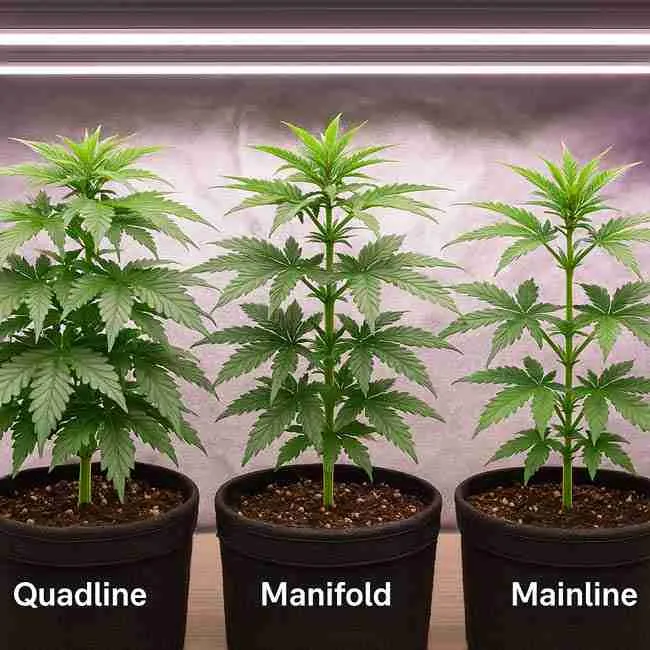
Quadline Cannabis: The “Four-Armed Sprinter”
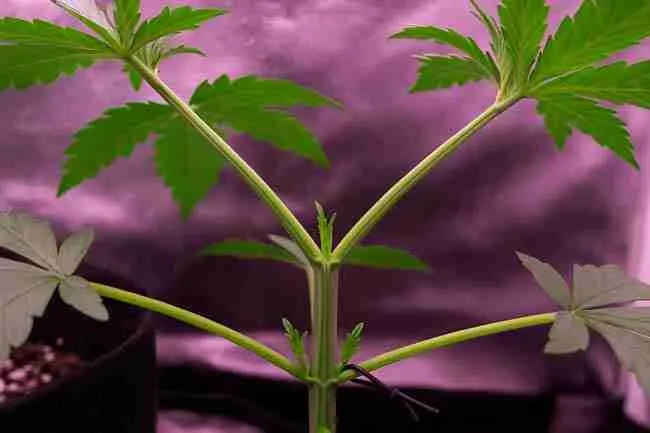
With quadline cannabis training, you top once (usually above the 3rd node), keep four branches, and spread them like a plus sign. Then you low-stress train (LST) those arms outward and up. Because you’re not doing lots of hard cuts after that first top, the plant bounces back fast, fills space quickly, and keeps energy focused in a tidy shape.
Why it works: fewer big branches = faster recovery, fast canopy spread, easy airflow. You get speed and simplicity without sacrificing yield.
Manifold Training: The Balanced Workhorse
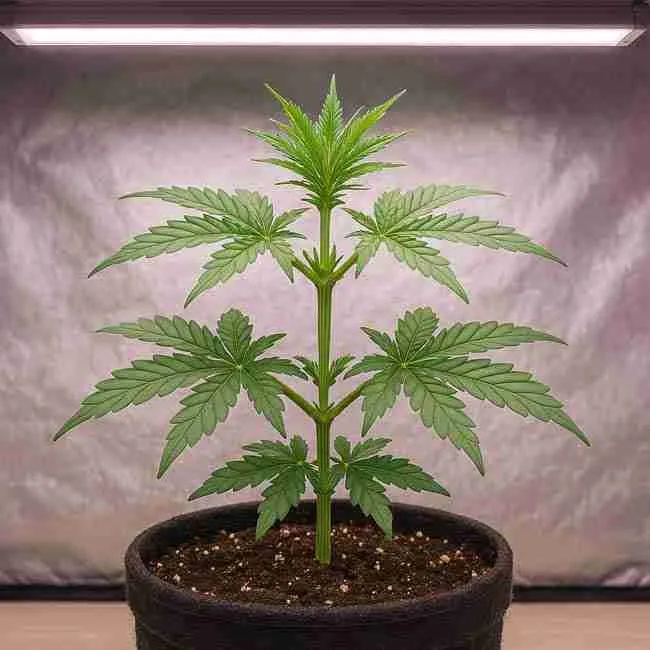
Manifold training starts by splitting the plant into two mains, then topping each to form a neat, symmetrical structure (think: a “Y” that becomes a “W”). You end up with 8–16 strong tops with even energy. It’s more shaping than quadline, but less strict than mainline. Veg time is longer than quadline, shorter than mainline—right in the Goldilocks zone.
Why it works: symmetrical branching makes nutrient and light more balanced across colas, often improving consistency and “finished” look.
Mainline Training: The Precision Artist
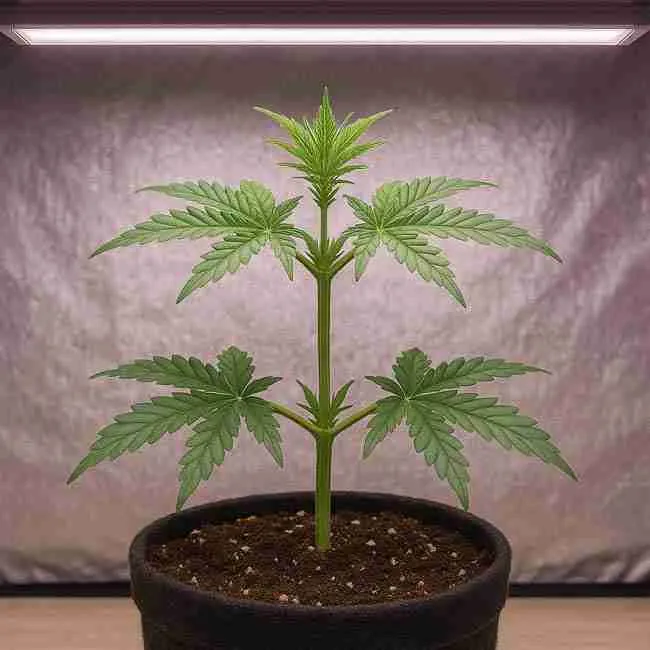
Mainline training (sometimes people use this interchangeably with manifold, but here we’re calling mainline the stricter, node-perfect approach) builds a central “hub” from a single node. Every branch you keep is the same age, same distance from the hub, same everything. It’s super clean and controlled, but, well—precision takes time. You’ll veg longer to create that picture-perfect, even crown.
Why it works: perfect symmetry = perfect energy distribution = outstanding mainline yield per plant. The trade-off is time.
Why “Per Square Foot” Matters (Hello, Plant Count Optimization)
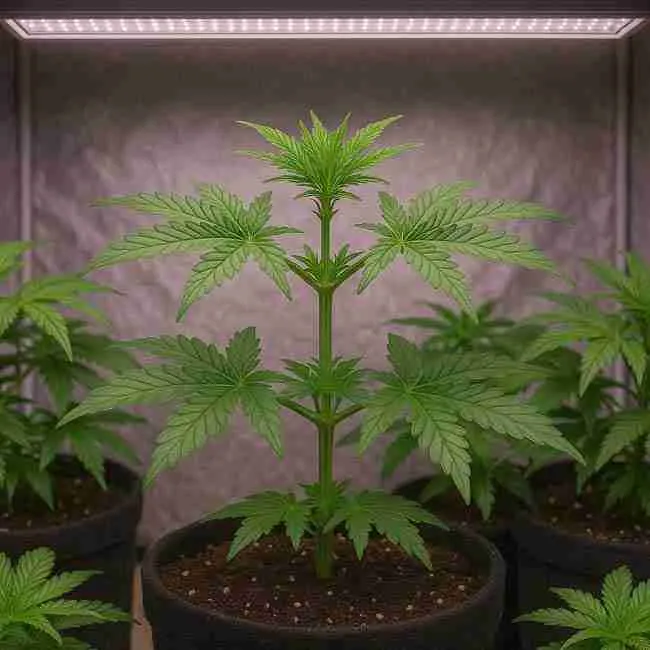
If your laws limit plant count—or your tent is tiny—you can’t just pack more plants. You must pack more canopy. That’s where plant count optimization shines. You’ll sculpt fewer plants to fill the same square footage with productive tops, better airflow, fewer popcorn buds, and easier harvests.
- Quadline cannabis: fills a 2×2 or 2×4 fast with 1–2 plants.
- Manifold training: fills a 3×3 or 2×4 with 1–2 plants and a bit more veg.
- Mainline training: ideal when you want big, even colas from 1–2 plants in a 3×3 or bigger, and you’ve got the patience.
Bottom line: more isn’t always more. The right structure in the right footprint beats extra plant count, hands down.
Step-by-Step: How to Train Each Method (Clear, Practical, and Gentle)
Quadline Cannabis: Fast Canopy, Minimal Fuss
Tools: clean pruners, soft plant ties, stakes or clips, patience (cheap but priceless)
When to start: when your plant has 4–5 nodes (photoperiods tolerate this best)
Steps:
- Top above node 3. Leave nodes 2 and 3; remove node 1 (lowest). You’ll keep 4 branches (two from node 2, two from node 3).
- Strip lower fluff. Remove any tiny growth under your chosen four to focus energy.
- Spread arms. Use gentle LST to pull each of the four mains outward like a plus sign. Keep them level.
- Guide the tips. As each arm grows, tie outwards and slightly up. Think “flat table, not a Christmas tree.”
- Even the height. If one arm races ahead, bend it a touch. Keep tips at the same plane.
- Defoliate smartly. Remove big fan leaves that shade the lower sites, but don’t go bald. Aim for light and airflow.
- Flip when full. When about 85–90% of your square footage is covered with tops, switch to flower.
Timeline (typical photoperiod):
- Veg to first top: ~2–3 weeks from seed
- Train & fill: ~1–2 additional weeks (strain-dependent)
- Flip: when canopy is even and nearly full
Good fit: quick harvest cycles, small tents, growers who want a clean, simple routine.
Manifold Training: The Symmetrical Middle Path
Tools: pruners, ties, stakes, patience, a light touch
When to start: 5–6 nodes on a healthy plant
Steps:
- Top to create two mains. Top above node 3 or 4, then clean the trunk so only symmetrical branches remain.
- Top each main again. Now you’ve got four even branches; later you can top again for 8, and once more for 16 (if space allows).
- Train horizontally. Tie each branch outward. Keep the “wheel” flat and open.
- Selective defoliation. Remove fan leaves that block lower sites; keep photosynthesis humming.
- Grow out the tips. Let each chosen cola grow to the same height. Correct with bends and ties.
- Flip when spread is right. Aim for that 85–90% coverage rule.
Timeline (typical photoperiod):
- Veg to first top: ~2–3 weeks
- Build manifold: ~2–3 more weeks (depends on how many tops you create)
- Flip: once structure is filled and even
Good fit: growers who want great mainline yield-like balance without the full strictness.
Mainline Training: Symmetry Maxed, Patience Required
Tools: pruners, ties, a calm mindset, time
When to start: 6 nodes on a vigorous plant
Steps:
- Top to a single “hub” node. Pick one node to keep as the structure’s center. Remove growth below it to create the hub.
- Build even pairs. From the hub, create pairs of branches. Top pairs evenly so every keeper branch is the same “age.”
- Keep it level. Train each branch outward and flat. Maintain one horizontal plane.
- Thin the middle. Keep the center open for airflow; no cluttered core.
- Defoliate in waves. Light defol after each topping phase; allow recovery.
- Flip after full symmetry. Once your canopy is a level sea of tops, you’re ready.
Timeline (typical photoperiod):
- Veg to hub: ~3 weeks
- Build perfect pairs: ~2–4 more weeks
- Flip: when symmetry and coverage are dialed
Good fit: top-tier evenness, show-quality colas, growers who value mainline yield per plant over speed.
Pros and Cons (Honest Talk)
Quadline Cannabis
Pros
- Fast canopy fill; great for tight schedules
- Simple steps; low chance of overdoing it
- Excellent light penetration with basic LST
- Strong yield per square foot for time invested
Cons
- Fewer mains than manifold/mainline (unless you branch them further)
- Slightly less “perfect” symmetry
- If one arm dominates, balance needs attention
Manifold Training
Pros
- Nicely even colas; reliable structure
- More mains without going slow like strict mainline
- Works well in many tent sizes
- Great balance of speed, control, and yield
Cons
- More topping than quadline; slightly longer veg
- Can be over-defoliated by eager hands
- Needs consistent tying to stay level
Mainline Training
Pros
- Maximum symmetry; easy to light evenly
- Outstanding mainline yield per plant
- Clean center = great airflow and fewer larfy buds
- Perfect for low plant count rules with bigger pots
Cons
- Longest veg; patience required
- More steps; more places to mess up timing
- Not ideal for autos or fast turnarounds
“Spec Sheets” You Can Trust (Keep It Simple, Keep It Real)
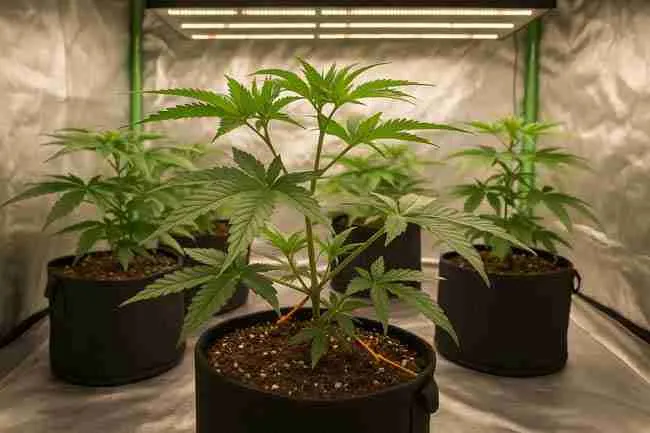
Quadline Cannabis — Specs
- Typical mains: 4–8
- Veg time: short–medium
- Ideal pots: 3–7 gal fabric (per plant)
- Best tent sizes: 2×2, 2×4 (1–2 plants)
- Training intensity: low–moderate
- Skill: beginner-friendly
- Flip when: 85–90% canopy coverage
Manifold Training — Specs
- Typical mains: 8–16
- Veg time: medium
- Ideal pots: 5–10 gal
- Best tent sizes: 2×4, 3×3 (1–2 plants)
- Training intensity: moderate
- Skill: beginner with patience → intermediate
- Flip when: even height across all tops
Mainline Training — Specs
- Typical mains: 8–16+ (perfectly even)
- Veg time: longer
- Ideal pots: 7–15 gal
- Best tent sizes: 3×3 and up (1–2 plants)
- Training intensity: moderate–high (precise)
- Skill: intermediate–advanced
- Flip when: fully symmetrical “tabletop”
Which Packs the Most per Square Foot?
Short answer (not a summary, just the verdict):
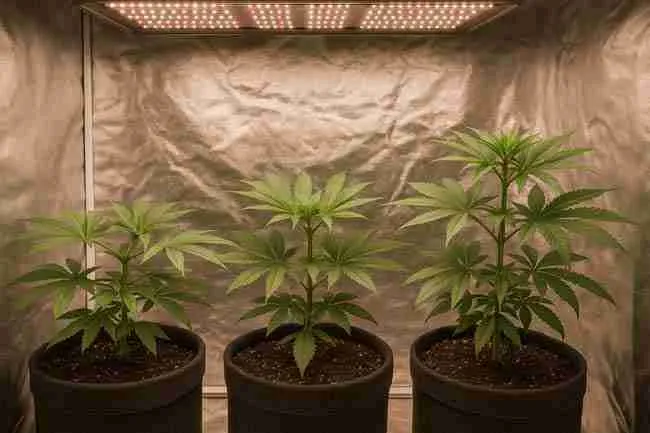
- Fastest path to a full square foot: quadline cannabis.
- Best consistency across many grows: manifold training.
- Highest per-plant potential when plant count is tight and time is plenty: mainline training.
So if you want speed and strong density, start with quadline cannabis. If you want a steady, repeatable method with solid weight, pick manifold. If you’re chasing that “grand finale” per plant—go mainline, and give it time.
Canopy Control That Actually Works (Airflow, Light, and Leaf Logic)
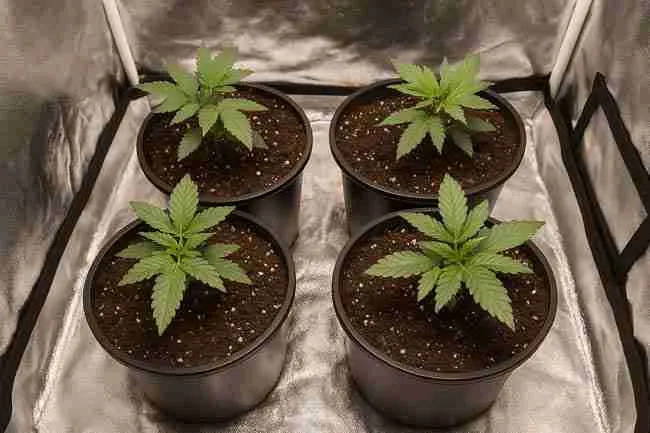
- Aim for one flat plane. Tops should be a level field so your light hits every cola equally.
- Tuck first, defoliate second. Try leaf tucking before leaf plucking; remove only what blocks light or airflow.
- Open the center. Especially for mainline and manifold; no crowded cores.
- Space the colas. Each top should have a little bubble of air around it; you’re preventing micro-climates and mold.
- Dial PPFD gradually. As your canopy densifies, increase light intensity in small steps to avoid stress.
Feeding and Recovery After Training (Gentle Hands, Strong Plants)
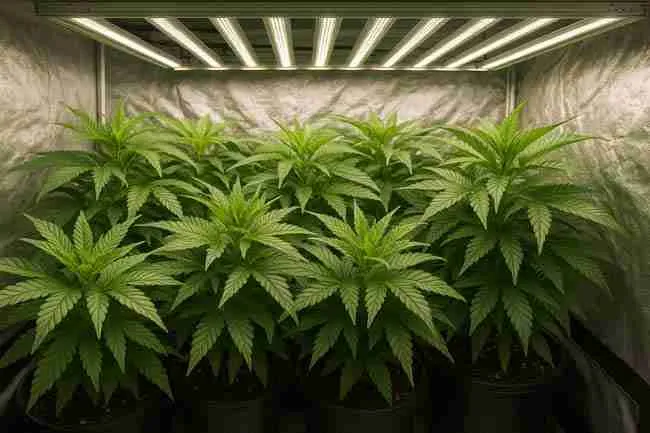
- Right after topping: keep nitrogen moderate, add a little silica for stronger branches, and ensure steady calcium/magnesium.
- Water rhythm: even moisture, not soggy—roots need oxygen to rebuild.
- Aloe or kelp: mild biostimulants can help recovery without forcing stretch.
- Watch the tips: clawing = too much N; pale new growth = needs a bit more overall nutrition.
- Patience beats force. Don’t top and defoliate on the same day if you can help it.
Autos vs. Photoperiods (Choose Wisely)
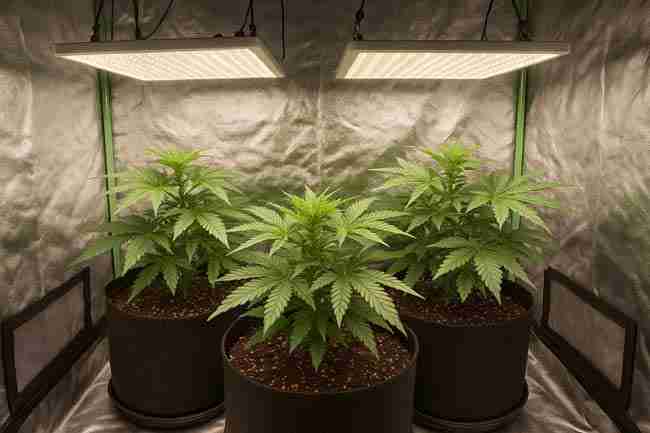
- Autos: best with gentle quadline-lite or minimal LST. If you top at all, do it early and only once. Skip heavy mainline.
- Photoperiods: thrive with quadline, manifold, or mainline because you control veg length. You can wait for the structure you want.
Pot Sizes, Tents, and Plant Count Optimization (Real-World Setups)
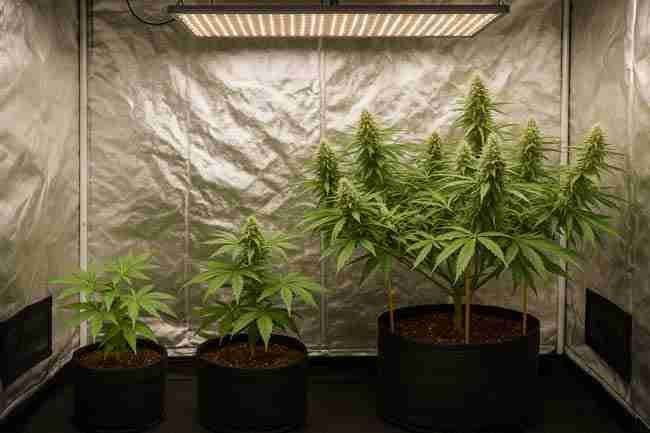
2×2 tent
- 1 plant in a 3–5 gal pot
- Quadline cannabis for the win; quick fill and simple care
2×4 tent
- 1–2 plants in 3–7 gal pots
- Quadline for speed or manifold for balance
3×3 tent
- 1–2 plants in 7–10 gal pots
- Manifold if you want steady cycles
- Mainline if you’ve got time and want bigger single-plant mass
Low plant count rules?
- Go bigger pots, heavier training. Mainline shines if time isn’t a constraint.
Common Mistakes and Easy Fixes
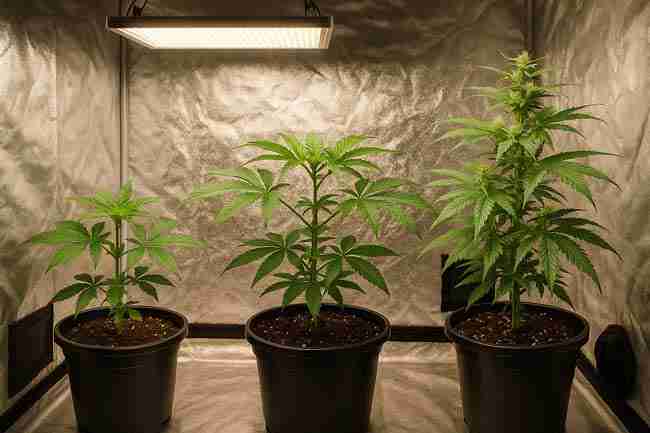
- Topping too late (autos): skip or top very early; focus on LST.
- Over-defoliating: if you can see through the plant, you probably took too much. Give it a week to recover.
- Uneven canopy: bend or tie down the tall tops; raise shorter ones with soft wire guides.
- Flipping too soon: if you flip at 60% coverage, expect airy edges. Wait for 85–90%.
- Forcing too many tops: 8 strong colas beat 20 weak ones. Quality > quantity.
Real-Life Example: One Plant, One Tent, Big Smile
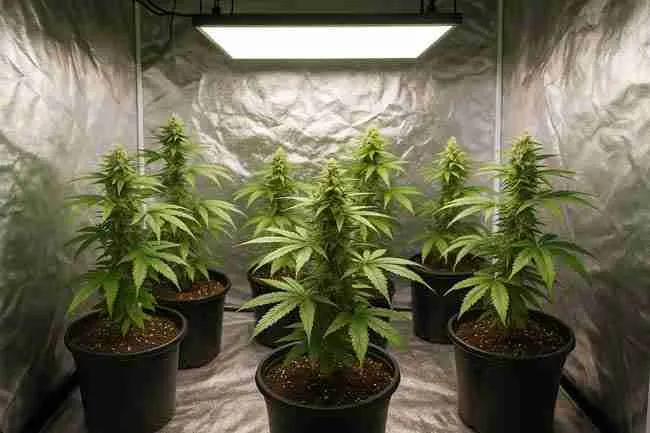
You pop a fast, chocolate-leaning photoperiod strain and veg for three weeks. You quadline at the third node, keep four mains, and tie them outward. Over the next 10–14 days, you gently spread the canopy until your 2×2 looks like a tidy green tabletop. You flip to flower at ~90% coverage. Buds stack evenly, airflow is easy, and trimming later? Way less messy. You didn’t need advanced tricks—just clean cuts, soft ties, and patience.
Advanced Tweaks to Push Yield per Square Foot

- Double-layer SCROG (gentle): one net for shaping in late veg, a second lightly above in stretch to hold colas upright.
- Defol in waves: small, planned removals at day 21 and day 42 of flower (strain-dependent) instead of big shocks.
- Staggered harvest: top colas first if they finish earlier; lower the light for the rest for a few days.
- Branch spacing math: aim for ~2–3 inches between cola centers in a dense 2×2 canopy.
- Drying discipline: full, even canopies dry more evenly at 60/60 (60°F–60% RH)—your terps and weight will thank you.
Practical Checklist (Keep This Next to the Tent)
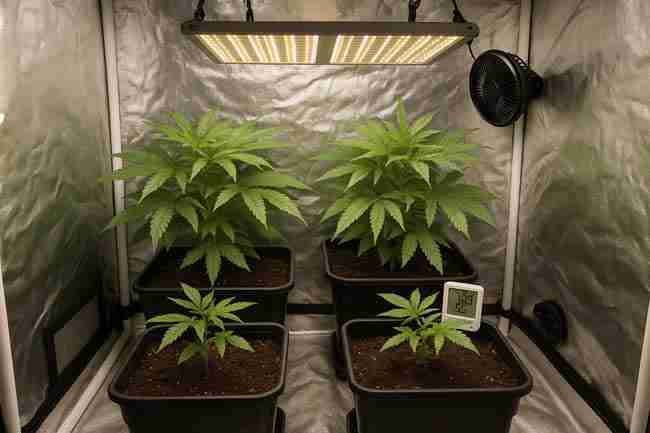
- Clean pruners and extra ties ready
- Plan the number of mains before cutting
- Keep the canopy one flat plane
- Flip at ~85–90% coverage
- Feed for recovery after each training step
- Tuck first, pluck later
- Track veg days so you don’t rush or drag
Mini Table: Pick Your Method by Goal
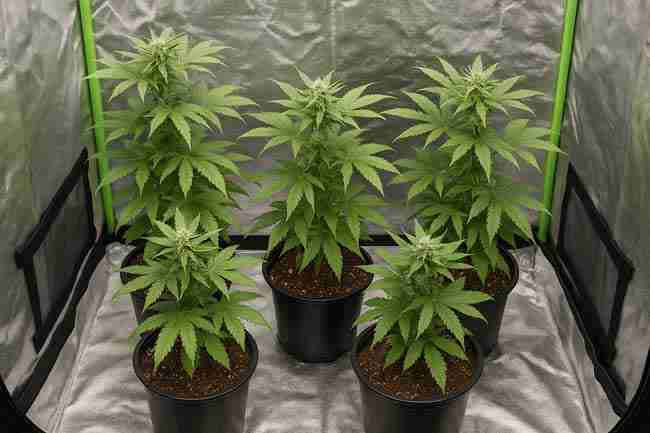
| Your Goal | Pick This | Why |
|---|---|---|
| Fast harvest cycles | Quadline cannabis | Quick recovery, quick fill |
| Best balance of time & control | Manifold training | Even colas without slow veg |
| Max per-plant potential | Mainline training | Symmetry and big colas, given time |
| Lowest risk for beginners | Quadline cannabis | Minimal topping, simple LST |
| Strict evenness for lights | Mainline training | Perfect plane, easy lighting |
FAQs (Targeted to Your Real Questions)
Q1: What’s the difference between manifold training and mainline training?
A: In this guide, manifold training is the broader, symmetrical method where you split into two mains and top evenly a couple of times. Mainline training is the stricter version that builds all branches from one single “hub” node. Mainline is more precise and usually takes longer; manifold is a bit faster and still very even.
Q2: How does quadline cannabis compare for speed and yield?
A: Quadline cannabis fills space fast with fewer cuts, so you’re flipping sooner. Yield per square foot is excellent when you nail an even plane and flip at ~90% coverage.
Q3: What’s the best method for mainline yield if I only have one plant?
A: Mainline training is built for this. Give it more veg to build perfect pairs and you’ll get powerful, even colas. If time’s tight, manifold is a strong compromise.
Q4: How do I approach plant count optimization in a small tent?
A: Use bigger pots, fewer plants, and stronger structure. A single quadline or manifold plant in a 2×2 can out-yield multiple untrained plants. Focus on canopy coverage, not plant number.
Q5: Can I mainline or manifold an autoflower?
A: It’s risky. Autos have a built-in clock. If you top, do it very early and only once. Most growers stick to gentle LST for autos.
Q6: When should I flip with quadline cannabis to maximize yield per square foot?
A: Flip when your canopy is even and covers roughly 85–90% of your footprint. That gives you a full canopy after the stretch without overcrowding.
Q7: Does manifold training always beat quadline on yield?
A: Not always. It depends on veg time, strain vigor, and your training consistency. Quadline often wins on yield-per-week-of-veg; manifold can match or beat it with a little more time.
Q8: What’s the simplest method for a first grow?
A: Quadline cannabis. One clean top, four arms, and gentle tie-downs. You’ll learn fast without overwhelming yourself.
Q9: How do I keep colas from flopping late in flower?
A: Add a second support net, use soft clips, or bamboo stakes. Strong silica feeding during veg also helps build sturdier branches.
Q10: What’s a good defol schedule for manifold training?
A: Light clean-ups after each topping, then a measured defol around week 3 of flower. Avoid heavy stripping right before a flip; let the plant rebound.
Final Word You Can Act On Today
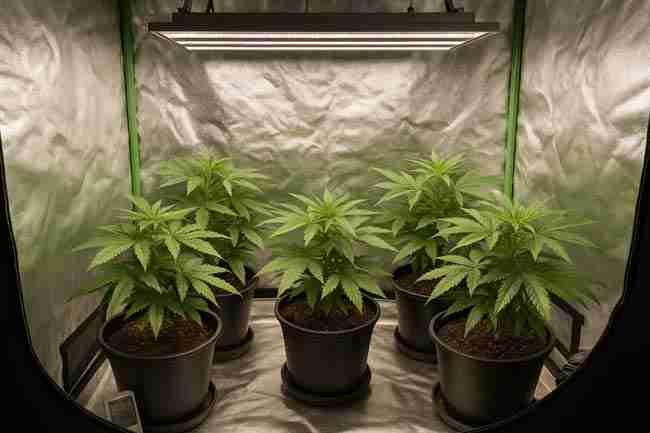
If you’re itching to fill your space quickly and harvest sooner, pick quadline cannabis and don’t look back. If you want a balanced method that’s repeatable and powerful, go manifold training. If you have time, love symmetry, and want massive per-plant performance, mainline training is your long game. No magic, no mystery—just clean cuts, level canopies, and smart timing.