How to Prune Cannabis Plants


Originally published 7 December 2022. Updated 1 October 2026.
How to prune cannabis plants is a veg job with a flower cleanup. You cut structure: a tip, a weak arm, the dark third that will never see the lamp. You do it on a healthy plant that already has five or six nodes. You leave the fan-leaf work to defoliate cannabis, and the stripped-stick look to lollipopping cannabis plants. Harvest scissors on a dried cola is a different day. That lives on harvest and cure.
Left alone, a marijuana plant grows a Christmas tree: one main cola, long lower arms, a pine-tree silhouette. Outdoors the sun can light that. Indoors the LED dies off fast as you drop through the canopy, so a seven-foot weed plant is wasted tent. Pruning keeps height in the light, opens air, and puts four to six tops under the bar instead of one. Named feminized packs in the cannabis seeds store run about four dollars CAD a seed. Mixed feminized is closer to a dollar. The cut does not raise THC. It decides which sites get to finish.

That photo is the motion. Sharp bypass shears, a clean cut, a plant that can take it. Dull blades crush. Dirty blades move mold. This page is when to start, where to cut, how much to take, and when to put the shears down.
What Pruning Cannabis Plants Actually Is

Pruning is the targeted removal of a shoot, a branch, or a growing tip. You are changing the skeleton. A seedling is still on cannabis seedling stage of growth. You do not top a two-inch plant. Veg is the window. Flower is a light cleanup after the stretch. Ranked pages in 2026 still mix topping, defoliation, lollipopping, and harvest trim into one pile. Growers who mix them in one afternoon stall the plant.
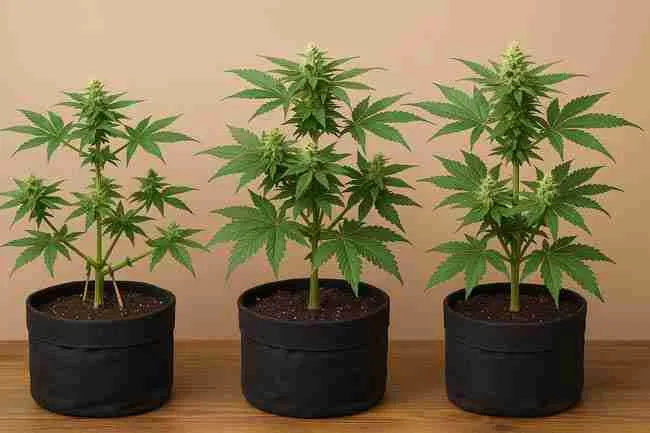
The plant in the photo is the shape you start from: one leader, several nodes, still making leaf. That leader holds apical dominance. Auxin at the tip tells the side shoots to wait. Cut the tip and those side shoots take over. Two new mains, then four if you top again after they recover. That is the even canopy indoor lights actually cover. A node is the knuckle where a pair of leaves and two side shoots meet the stem. Count from the soil. Cotyledons do not count. The first true pair is node one. By node five or six the stem is woody enough to take a clean cut and there are already laterals waiting. The veg write-up is cannabis vegetative stage. Stay there until the structure is set.
Pruning vs Defoliation vs Lollipop vs Harvest Trim

A cut branch is pruning. A pulled fan leaf is defoliation. Clearing the bottom third of the plant is lollipopping. Sugar leaves off a dried cola is harvest trim. You can do the first three on one plant. You should not do all three on a first run in one sitting.
Defoliation opens light and air through leaves you keep the sites on. The dedicated page is linked above. Lollipopping is the stick-and-candy shape: bare stem, bushy top. This article will teach the bottom-third cut because it is still a prune. The full lollipop walkthrough stays on its own URL. Harvest trim waits until the plant is down. Mixing wet-trim advice into veg is how people scalp a plant in week two of flower.
Why Prune Marijuana Plants

Those white cut faces are topping. One stem became several. Indoors that is the point. The lamp is a disc, not a sky. Tops in the disc get dense flowers. Arms in the shade make popcorn and raise humidity. Pruning is how you pick the sites that get to finish.
Airflow is the second reason. A jungle of lower arms holds still, wet air against the stem and the pot. Bugs hide there. Bud rot starts in a pocket you never look at. Clearing the bottom does not replace a fan. It lets the fan actually move air through the plant. Height is the third reason. A stretchy sativa in a 6.5-foot tent needs the tip cut in veg, or you are stuffing colas into the LED in week three of flower.
What pruning does not do: it does not make a weak plant strong. It does not fix a dim light. It does not turn larf into top-shelf because you snipped a leaf. Incorrect cuts that leave a blanket of fans over the sites you wanted still give you light and fluffy buds. The cut is a redirect. The lamp still has to hit what you kept.
When to Prune in Veg and Flower

Wait until the plant is in veg, about a foot tall, with five or six nodes, green, and drinking. That is usually week three or four from the sprout on a photoperiod, later if the seedling stalled. Topping earlier on a skinny seedling just sits there. The plant spends a week rebuilding a tip it was not ready to lose. Skip a prune the same week you transplanted. Roots are busy. A cut on top and a torn root ball on the same day is two stresses stacked. Give it a few days of normal watering in the new pot, then top.
Prune a plant that is growing. Skip a plant that is pale, clawed, wilted, mite-bitten, or already throwing weird nanners. Fix the room first. A cut on a hungry plant is a stall you paid for. Old copy on this URL said never prune once flowering starts. That is true for topping and FIM. It is too strict for a lower-third cleanup. Standard indoor timing in 2026:
Nodes 5 to 6 in veg: first top. Recover 5 to 7 days. Optional second top on the new mains if you want four to eight colas and you still have veg time. Late veg or the first days of 12/12: strip the dark bottom, take inward arms, take fans that sit on sites. Around day 18 to 21 of flower, after stretch: one more cleanup of shade and popcorn. After week three or four of flower, shears stay in the drawer except dead or diseased tissue. Flower itself is growing cannabis flowering stage of growth.
Tools and Hygiene

Bypass pruning shears or sharp scissors. Bypass blades pass each other like scissors. Anvil blades crush. Wipe, dip in 70 percent isopropyl, wipe again, then cut. Do that between plants. A tent with one sick plant and shared shears is how you inoculate the rest. Soak is better than a splash. Let the alcohol dry so you are not wiping solvent into the wound.
Cut just above a node, a few millimetres, on a slight angle so water does not sit on the stub. Leave a clean face, not a shredded rag. Do not tear with fingernails on a woody stem. Fingers are fine on a soft tip if you are FIMming. Bag the waste. Do not leave wet stems on the soil. That is a gnat buffet and a mold starter.
How to Top for Even Growth

Topping is the prune most indoor growers actually need. You cut the main growing tip just above the fifth or sixth node. The two shoots at that node become the new leaders. In a few days they stand up. That photo is the recovery: two tips where one used to be. Cut above the node, not through it. A few millimetres of stem is enough. Cut too high and you leave a long stub that dies back. Cut into the node and you can kill both new shoots. You can repeat on those new mains after they have a few nodes of their own. Stop at four to eight tops for a home tent. Mainlining into sixteen is a hobby, not a requirement, and there is no dedicated mainlining page on this site to send you to.
Water the pot the day before if it is light, so the plant is not thirsty and wounded at the same time. Cut, then leave it alone. Do not top and transplant and flip on the same afternoon. Give veg time after the last top so the new mains actually catch the light. Flip a fresh wound and you flower a plant that is still sulking. Low stress training pairs with topping: tie the new mains out so they sit in one plane under the lamp. Bending is not a cut. Use it if you still have height to spend.
FIM and Why Most Growers Skip It

FIM means “fuck I missed.” You pinch or snip about three-quarters of the newest tip and leave a stump of it. Done well, you get three, four, sometimes more shoots from one mess. Done poorly, you get a twisted cluster or a single tip that just keeps going. Topping is a clean cut above a node. FIM is a guess through soft tissue. If you have not topped yet, top. Save FIM for a plant you can afford to wait on.
High-stress work beyond a simple top, including supercrop bends, lives on high stress training and supercropping. A screen is SCROG. Top first if you are going into a net. The screen wants many mains, not one pine tree. The comparison of those methods is SCROG and supercropping.
Pruning the Bottom Third

That pot is the lesson. Lower arms that never see the lamp become popcorn. They also hide fungus gnats, thrips, and a first patch of rot on the stem. Once the plant is about a foot tall and the canopy is closing, take the growth under the line where light actually lands. Cut close to the main stem. Leave a small collar, not a long stub that dies and rots.
Work from the soil up. Dead and yellow first. Then inward branches that rub. Then anything that will sit in permanent shade after you flip. You are not stripping the plant bald. You are drawing a line. Above the line, keep sites you will actually harvest. Below it, the plant was paying rent for fluff. Indoor tents need this more than a full-sun backyard, because the sun still rakes the sides of an outdoor bush. A 2×4 tent does not.
Pests like the dark. First bugs on a plant often sit on the lowest fans next to the soil, where they can lay eggs and stay off the tops you actually look at. Clearing the skirt does not replace sticky cards or a real IPM pass. It removes the hotel. Air under the canopy also dries the mix faster, which is a gift if you overwater, and it keeps a first patch of stem mold from sitting in still air you never see until the plant droops. The lollipop page is the longer version of this cut. Use this section so you do not wait for that URL before you take the first lower arm.
How Much to Take in One Session

Leaves are solar panels. Every cut removes a panel. The plant slows while it rebuilds. A useful ceiling is about 20 to 30 percent of the foliage in one sitting, and less on a first run. That photo is a modest bottom clear with a full hat of fans still working. That is a prune. A coat rack with two leaves is a mistake.
Take a little from several areas. Step back. Look at the shape. Stop. You can always take more in three days. You cannot glue a fan back on. If the plant droops hard after a pass, you took too much, or the pot was already wet and cold. Next time, smaller. Ranked guides that say “remove half the plant in week two of veg” are talking about a vigorous photoperiod under a real light, not a first auto in a closet.
Never prune because a calendar app pinged you. Prune because a branch is weak, damaged, inward, or dark. A healthy fan that is feeding a top you want can stay. Buds do need leaves. The plant stores energy in them. Strip only what blocks a site or will never see light. Leave enough green that the plant still eats.
What You Can Still Cut in Flower

Do not top in flower. Do not FIM in flower. The plant has switched jobs. New mains will not catch up before the jar date, and you just deleted flowering tips. What you can still do is clean. Flip week and the first stretch: take the remaining dark third and fans that sit on sites. After stretch, around day 21, take new umbrellas that grew over the colas. Then stop.
The plant in that tent is the payoff of veg pruning: several tops in the light, a clear stem, air under the canopy. It looks later than week three because that is when the colas actually show the work. You built that shape in veg. Flower only tidies it. Late-flower leaf yanking stalls swell, can herm a sensitive cultivar, and is how people seed a jar. Male flowers on a female are cannabis pollen. If a leaf is yellow and done, pull it. If it is green and feeding a cola, leave it.
Autos, Outdoor, and a Small Tent

An autoflower uses the same seedling clock and then flowers on its own. Topping spends days the auto does not have. Most home autos skip the top. A very early LST bend, or a few lower fans that sit on the pot, is plenty. The plant in the photo is the untopped auto shape: one main, a couple of sides, still worth harvesting. The grow-out is grow autoflowering cannabis plants. If you top an auto, do it once, early, on a vigorous plant, and accept a smaller frame if it stalls.
Outdoor full sun can keep a Christmas tree. You still open the center so rain and dew dry, and you still take inward clutter. You do not need indoor lollipop intensity unless the bush is a swamp. A four-plant household is still four canopies. One well-opened plant beats four wet jungles in a 4×4. Indoor climate for the tent is the indoor cannabis growers guide.
After the Cut: Recovery

A clean top looks brutal for a day. Then the two shoots at the node swell and stand. That is recovery. Keep the light honest, the pot in its normal wet-dry, the room in the same temperature you already had. Do not “help” with a full-strength bottle the night of the cut. Do not mist the wound. Do not bury the stub.
Three to seven days is a normal pause. Some cultivars bounce in 48 hours. Stretchy ones sulk a week. Wait until the new tips are actually growing before you top them again or flip. If the stub turns black and soft, you crushed it or left a wet collar. Cut back to clean green once, then stop picking at it. A topped plant that still looks like one stick after ten days either was too young, too hungry, or the cut went through the node. Leave it. Start another seed if the tip is gone and nothing is pushing.
Problems a Bad Prune Causes

That is too much. Bare stems, a droop, wet soil, a plant that cannot feed itself. Overpruning stalls veg, stalls flower, and can kill a small plant. There is no tonic for missing leaves. Lower the light a notch so the remaining tissue does not cook, let the pot dry to a normal weight, and wait. New growth will tell you if it lived.
Topping a seedling is the other classic. Two cotyledons and a true pair, then a cut. The plant sits. Sometimes it never catches the others. Wait for five or six nodes. Topping in flower deletes the tips that were going to be your harvest. FIM in flower does the same, messier. Dirty shears move whatever lived on the last plant. Herms after a brutal late strip are not a mystery. You stressed a plant that was already packing flowers.
A prune does not replace a better lamp, a drier cup, or a cultivar that fits the tent. If the bottoms were popcorn because the light is a 100-watt blur over a 4×4, cutting them off just hides the lighting problem in the trash bag.
Questions Growers Still Ask

When should you start pruning cannabis plants? Veg, five or six nodes, plant healthy and drinking. About a foot tall is a decent visual. Not the seedling stage.
Does trimming stimulate growth? Topping redirects growth to the sides. The plant spends days recovering, then bushes. Overall it is not faster. It is flatter and more even under a lamp.
What happens if you trim too much? Stall, droop, sometimes death. Stay under about 20 to 30 percent a session. Leave a hat of fans.
Does pruning affect flowering? Topping and FIM in flower cut your harvest. A lower cleanup at flip and around day 21 is normal. Heavy cuts after week three of flower cost swell.
Do buds need leaves? Yes. Leaves feed the flowers. Remove what blocks a site or lives in the dark. Keep what is still working.
How do you trim bud like a pro? During the grow, you prune structure. After harvest, you trim sugar leaves on the harvest and cure page. Those are two jobs.
Should you prune autoflowers? Skip the top unless you know the cultivar and you do it early. Take dark lowers if they will never see light. Do not veg-think an auto into a four-gram plant.
Once the mains are even and the dark third is gone, you are done pruning. Veg finishes the frame. Flower fills it. The shears go back in the jar of iso until a leaf is actually in the way.