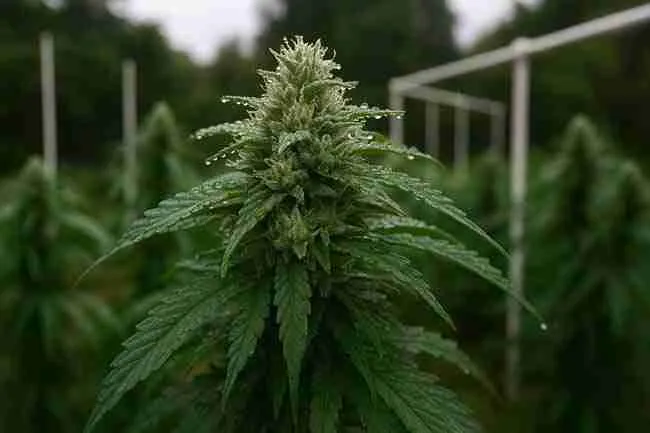
Planning Your First Cannabis Crop: Indoor vs Outdoor, Seeds, Timeline


Planning your first cannabis crop is not a shopping spree. It is five decisions, then a calendar. Indoor or outdoor. Photoperiod or auto. Which seeds. What pot and medium. Whether you will train. Ranking beginner guides in 2026 still start there: BudTrainer, Grow Weed Easy, Sensi, Almanac. Get those choices honest and the plant is mostly not drowning, not starving, and not living in a swamp closet.
This page keeps the original teaching: pick a strain that matches your space, pick a medium you can actually water, then give light, water, and nutrients on purpose. It also fills what first-crop searches ask now: tent size, 3–6 month timeline, feminized vs auto vs regular, a real shopping list, and the mistakes that kill run one. No “Final Thoughts.” You will leave with a plan you can run, not a mood.
What “Planning Your First Cannabis Crop” Actually Means
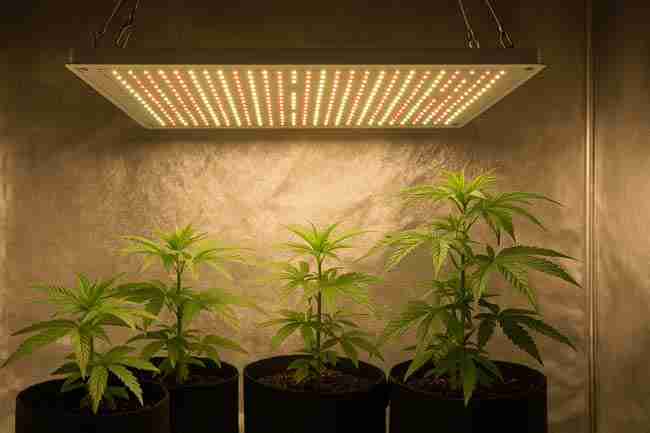
A first crop is one cycle you can finish. Not a warehouse. Not eight strains. One or two plants, a container that drains, a light or a sunny yard, and a harvest date you can live with. Original FAQ said 3–5 months seed to harvest. That still holds for a photoperiod. Autos can jar in about 8–12 weeks. Photoperiods with a real veg are closer to 4–6 months including dry and cure.
Start small on purpose. A 2×2 tent and one plant teaches watering. A backyard with six monsters teaches panic. The original page said start small. Keep that. You can scale after you have dried a cola you grew.
Check your local plant-count and location rules before you buy a tent. This is a grow plan, not legal advice. If you cannot grow where you live, this article will not make it legal. If you can, plan the space you actually have, not the space on a YouTube thumbnail.
Indoor vs Outdoor: Pick One for Run One
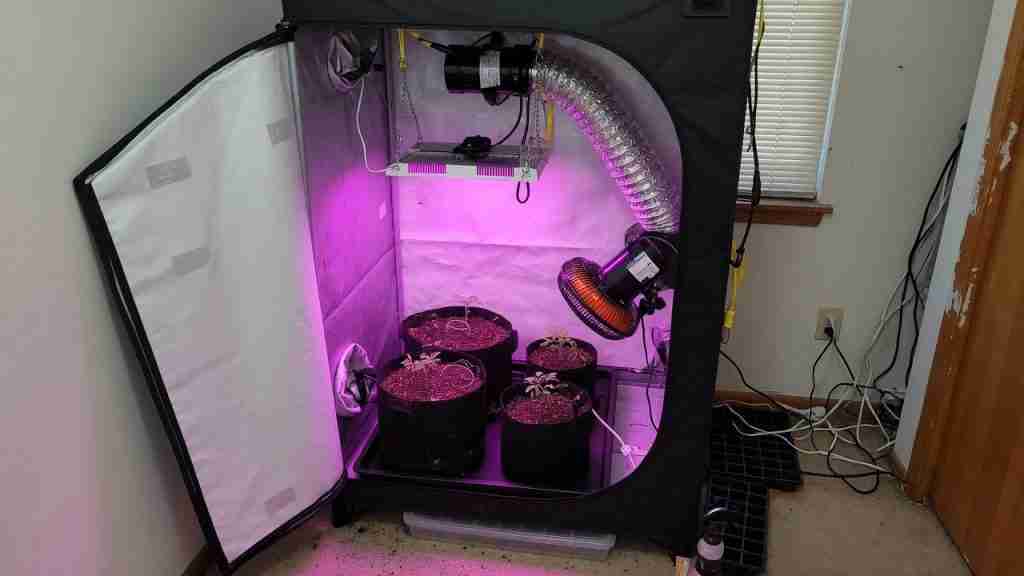
Indoor is control. You set light hours, you hide smell with a carbon filter, you grow in January. You also pay for the light, the tent, the power, and daily checks. A 2×2 or 2×4 tent in a closet, spare room, or basement corner is the usual first indoor. Original page: well-ventilated, electricity, temperature and humidity you can change, free of pests and dust. Tent basics: grow tent.
Outdoor is cheaper because the sun is free. One healthy plant in a 15–25 gallon pot can out-yield a whole 2×2. You also get weather, neighbors, September rain, and one main harvest a year in most of Canada. You need a private spot with real sun — six hours minimum, more is better — and nights that stay above about 10°C before you put a seedling out. Almanac and BudTrainer both plant by night temperature, not a calendar slogan. Outdoor how-to: growing cannabis outdoors and strains for hot and cold climates.
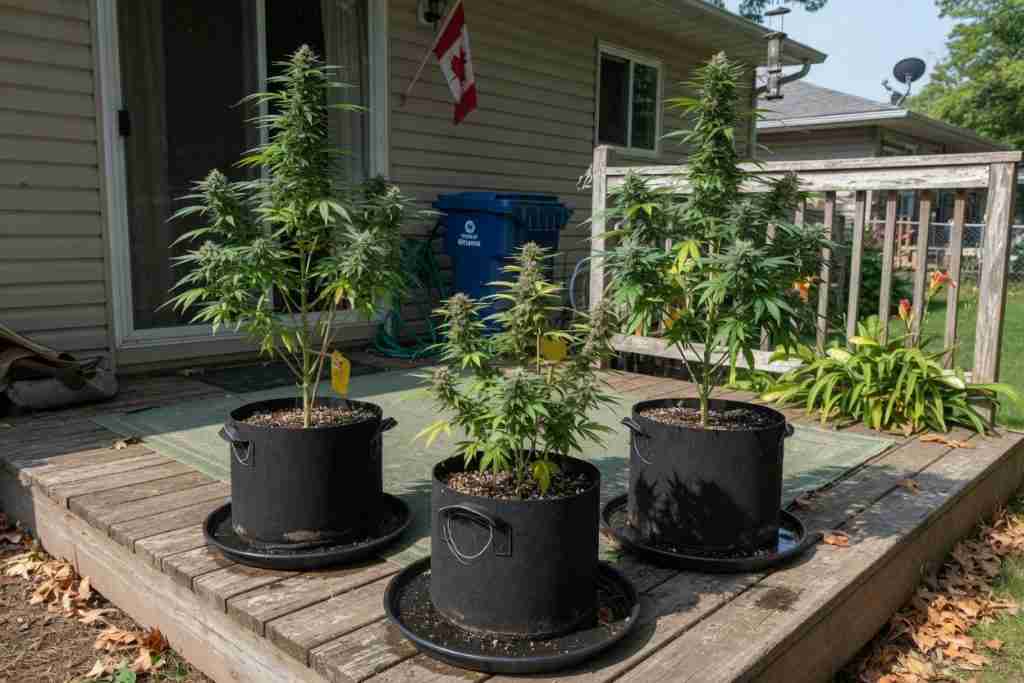
A hybrid plan works: start indoors 4–6 weeks before last frost, harden off, then move out. That is still an outdoor crop with an indoor nursery. Do not flip a photoperiod to 12/12 indoors then stick it outside in June. The sun will veg it again or confuse it. Autos handle that move better because they flower on age.
| Indoor first crop | Outdoor first crop | |
|---|---|---|
| Cost | Tent, LED, filter, power | Pots, soil, sun |
| Control | High | Weather decides |
| Time | Any month | One season |
| Smell | Filter can hide it | Hard to hide |
| Yield per plant | Smaller, repeatable | Bigger if the year is kind |
| Best first plant | One auto or one fem photo in a 3–5 gal | One early-finishing photo or auto in a big pot |
How to Choose the Right Strain for Your First Grow

Original page: thousands of strains, pick for environment, experience, effects, flavor. That still holds. What ranking pages add: do not pick the loudest THC number. Pick something that finishes in your space and forgives a missed watering. Northern Lights types, Widow types, blueberry-leaning indicas, and compact autos show up on beginner lists because they finish and they do not stretch into the ceiling.
Environment, experience, effects, smell
Indoor first crop: short-to-medium stretch, 8–9 week flower if it is a photoperiod, or an auto that lists 70–90 days seed to harvest. Outdoor first crop: finish date before your frost. A 14-week equatorial sativa at 45°N is a science fair. Indica-leaning and early hybrids are the outdoor beginner tools. Leaf shape talk: indica vs sativa.
Experience: if this is plant one, skip 14-week Hazes, skip regular seeds unless you want to sex plants, skip hydro until you have watered soil without drowning one. Desired effects and flavor matter, but a dead plant has neither. Filter names in the Find My Seeds guide. Buy from a shop that states type, flower time, and indoor/outdoor notes: cannabis seeds.
Feminized, auto, or regular
Feminized photoperiod: you control the flip to 12/12. Almost all plants are female. Best if you have a tent and you want to veg until the pot is full. Autoflower: flowers on age, 18/6 or 20/4 the whole time, smaller, faster, less room to fix mistakes because the clock does not pause. Regular: males and females. Fine for breeding. Extra work for a first jar. Photoperiod vs auto clock: photoperiod cannabis seeds explained. Feminized packs: feminized cannabis seeds.
How many seeds: pop more than you will keep if the pack is cheap, then cull the weak. One keeper is a crop. Six crowded seedlings in a 2×2 is a fight: how many cannabis seeds. What a good seed looks like: what good cannabis seeds look like.
A Real Timeline, Seed to Jar

Germination: 1–7 days. Seedling: about 2–3 weeks of tiny leaves and careful water. Veg: autos barely veg before they stretch into flower; photoperiods veg 3–8 weeks depending on pot and tent. Flower: most beginner photoperiods 8–10 weeks of 12/12. Dry: 7–14 days. Cure: at least 2 weeks in jars, better at 4. Original FAQ 3–5 months is the photoperiod-plus-dry picture. Autos can be 10–14 weeks including a short dry.
Count backward from when you want a jar. Outdoor: last frost, then flower finish before first fall frost. Indoor: you pick the start date. Do not start a photoperiod in a tent the week you leave for two weeks. Seedlings and early flower are clingy.
Budget and the Gear That Actually Matters
Original equipment list: lights, medium, nutrients, pH meter, fan or ventilation. Ranking beginner kits add tent, carbon filter, fabric pots, hygrometer. You can spend $200 on a closet hack or $1,200 on a 4×4 kit. First crop: spend on the light and on drainage, not on a nutrient line with twelve bottles.
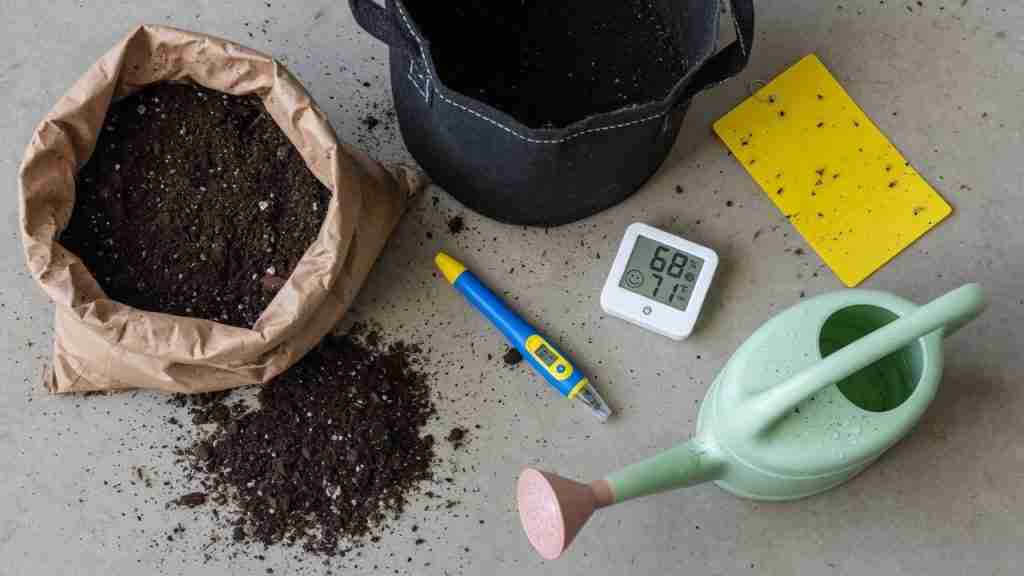
Indoor minimum that works: a tent that fits the light, an LED sized for that footprint, an exhaust fan that can swap the air, a carbon filter if smell matters, one oscillating fan inside, fabric pots, soil, a cheap pH pen, a $10 thermo-hygrometer. Outdoor minimum: sun, a pot with holes, soil, water, maybe a cage. Seeds are the cheap part. A dead $80 LED is more expensive than a $40 pack.
2×2 tent: one plant, maybe two autos. 2×4: two photoperiods or three autos if you train. 4×4: four plants if you are honest about veg time. Overcrowd a first tent and you grow mold school. Power: a 150–300 W LED in a 2×4 is a common first board. Hang it so leaves do not taco. Original page said a quality light if you are indoors. That is still the spend.
Planning the Grow Space
Original: indoor space needs ventilation, power, temperature and humidity control, and it should be clean. Tent, cabinet, or closet. Keep that. Add: the tent needs a way to dump heat. A sealed closet with a blurple lamp is how you cook seedlings. Exhaust out, intake in, filter on the exhaust if you care who smells week six.
Target ranges you can actually hit. Veg: roughly 22–28°C lights on, 40–60% RH. Seedlings like the higher humidity. Flower: 20–26°C, 40–50% RH, lower if buds are dense. Night a few degrees cooler is fine. Swings of 15 degrees are not. Original said monitor daily. A $12 hygrometer on the wall beats guessing.
Outdoors: south-facing in the northern hemisphere, wind break, drainage so a storm does not sit in the pot. Privacy is part of planning. A six-foot plant by the sidewalk is not a stealth crop. Extreme weather notes: climate-resilient growing.
How to Choose the Growing Medium

Original options: soil, coco, hydro. Soil is the beginner default because it buffers mistakes. Coco drains faster and wants more frequent water plus cal-mag. Hydro can yield more and will punish a skipped pH check. Budget, environment, experience, how often you can water — that was the original factor list. Keep it.
For run one, a quality potting mix that already has some food, extra perlite if it is dense, in a fabric pot, is the boring winning path. Do not dig backyard clay into a tent. Do not use a moisture-control bag that stays wet a week. Fabric 3-gallon for autos, 5-gallon for indoor photoperiods, bigger outdoors. Air-prune beats a slick plastic bucket that circles roots.
pH: soil about 6.2–6.8. Coco about 5.8–6.2. Hydro tighter. A first crop without a pH pen is how you chase yellow leaves for a month. Organic soil path: organic marijuana fertilizer.
Light, Water, and Nutrients
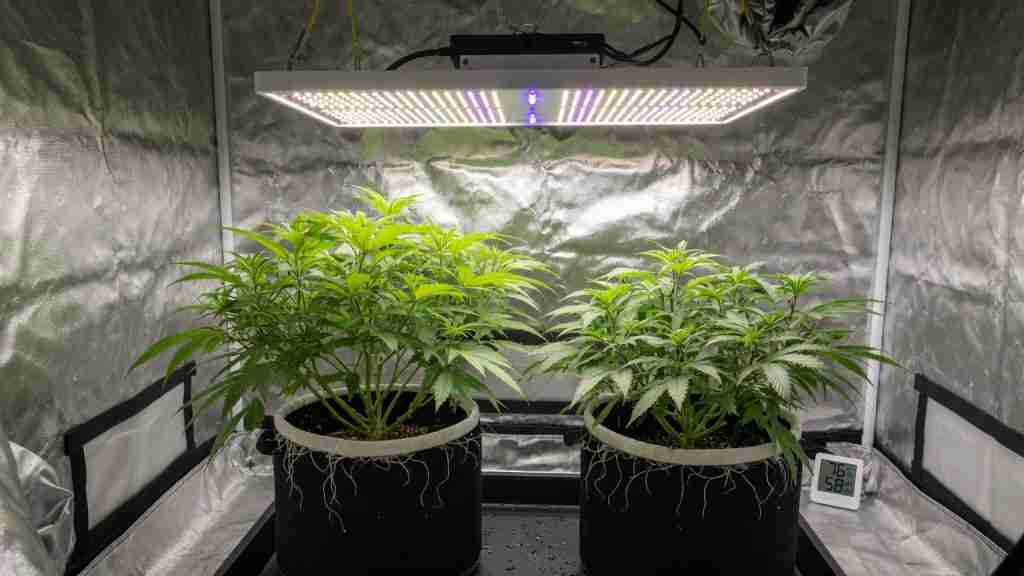
Light
Cannabis wants a lot of light. Indoors that is an LED sized for the tent, 18/6 in veg for photoperiods, 12/12 to flower them. Autos can run 18/6 or 20/4 the whole life. Outdoors that is the sun, not a north patio. Keep the board far enough that the top leaves do not bleach. Manufacturer hang height is a start; your leaves are the judge. If the top is praying hard and bleaching, raise or dim. If internodes are stretching like a rubber band, lower a little or add hours on an auto. One burned tip on a first plant is a week of stall. Original: invest in a decent light if you are indoors. Still true. A clip fan should move leaves a little, not thrash them. Point it across the canopy, not down the stem. Dead air in flower is mildew. A hurricane in veg is windburn.
Water
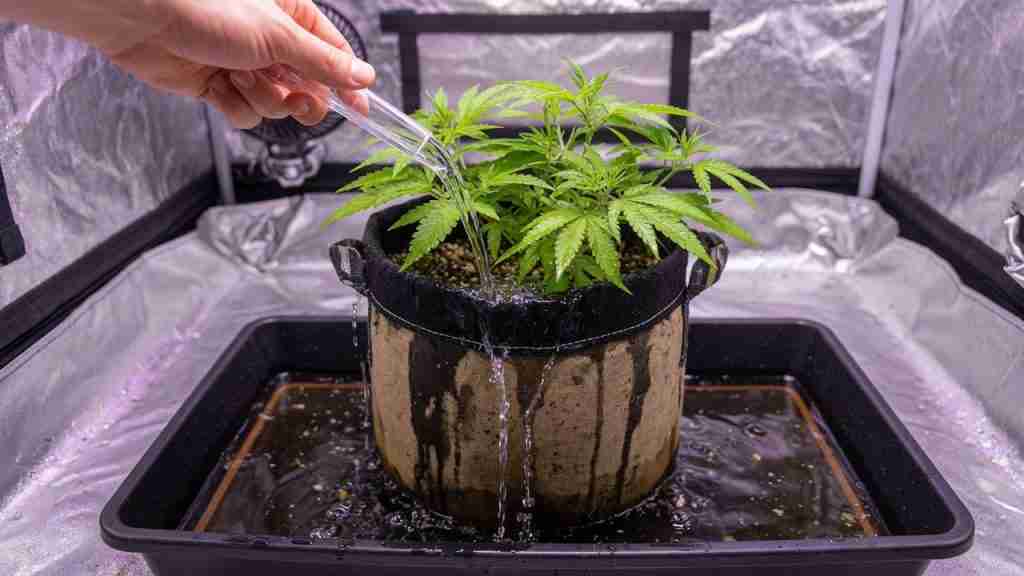
Original FAQ said water when the soil feels dry, often every 3–5 days. That is a starting guess, not a law. A seedling in a 5-gallon pot stays wet too long. A flowering plant in coco may drink daily. Lift the pot. Light means water. Heavy means wait. Water until a little runoff, then dump the tray. Sitting in runoff is root rot. Full walkthrough: how to water cannabis plants.
Too much water is the first-crop killer, not too little. Droopy leaves that feel stiff and the pot is heavy: you drowned it. Droopy leaves that feel soft and the pot is light: it is thirsty. Learn that in week two, not week eight.
Nutrients
Original: NPK plus Ca, Mg, S. Veg wants more nitrogen. Flower wants more phosphorus and potassium. Follow the label at half strength on a first run. Hot soil plus a full bottle chart is clawed leaves. If the mix already has food, you may only water for the first three weeks. Then start light. Organic top-dress or a simple one- or two-part liquid is enough. Twelve bottles is a hobby, not a requirement.
Yellow lower leaves in late flower can be fade. Yellow new growth in week three is not fade. It is pH, lockout, or you never fed. Do not “fix” every color with more bottles. Check pH and runoff first.
Germination and Seedlings
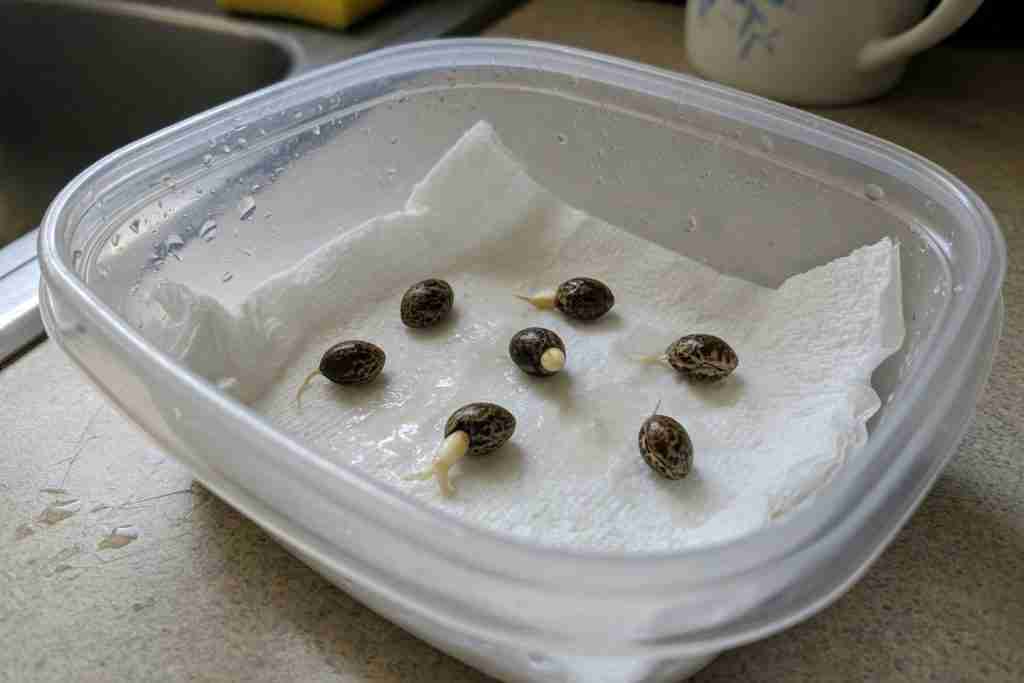
Paper towel, plug, or straight into a moist starter cube all work. Taproot down, shallow, warm. Do not soak a seed for two days in a shot glass and then bury it an inch deep in cold wet soil. Seedling stage: cannabis seedling stage and seedlings day by day.

The original photos on this page are that stage: a single seedling, then a tray of a few-day-old plants. That is the right first-crop picture. Gentle light, high humidity if the room is dry, almost no fertilizer. A dome for a day or two, then air so you do not grow fungus on the plug. When roots show, up-pot. Do not start an auto in a solo cup and leave it there unless you are doing a cup challenge: solo cup challenge.
Vegetative Growth and Training

Veg is when you build the plant you will flower. Photoperiods stay in veg on 18/6 until you flip. Autos do not wait. If you veg a photoperiod until it fills 70% of the tent, stretch will finish the job. Veg guide: cannabis vegetative stage.
Training on a first crop: low-stress training is enough. Bend the main stem, tie it, even the canopy. Do not mainline plant one. Autos: start LST early or skip it. Photoperiods can take a top plus LST if they are healthy. How to bend: low-stress training cannabis.
Flowering, Harvest, Dry

Flip photoperiods to 12/12 and keep the dark actually dark. A hall light at 2 a.m. is how you get nanners. Tape the tent zippers. No phone flashlight tours at night. If you must look, do it in the first minutes of lights on. Flower feed is lower N, higher P and K, still not a dump. Air through the buds. Original monitoring section: look daily for stress, pests, deficiencies. Flower stage: cannabis flowering stage.
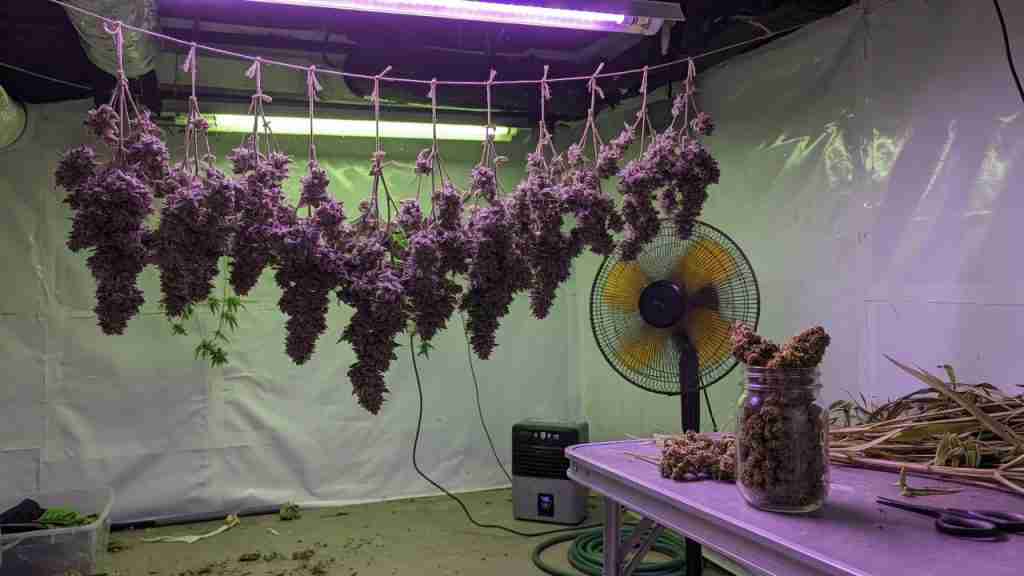
Harvest on trichomes, not on a blog week number. Cloudy with some amber is the usual first-crop target. Dry slow: dark, about 18–21°C, 50–60% RH, air moving in the room not on the colas. Jars when stems snap. Burp daily at first. Harvest notes: harvesting cannabis. Original “couple months then you are done” skips dry and cure. Plan those weeks or you will smoke hay.
Pests and Daily Monitoring
Original pests: spider mites, whiteflies, thrips. Diseases: powdery mildew, root rot. A first indoor crop still gets mites from a houseplant and thrips from a grocery bouquet. Look under leaves. Yellow sticky cards catch adults, not eggs. Keep the space clean. Do not bring outdoor plants into a flowering tent. Thrips walkthrough if you see rasping silver: thrips on cannabis.
Original advice to keep a journal is the part people skip and then cannot remember what they fed. Write strain, date popped, pot size, water dates, what you mixed, temps. When something goes yellow you have a record instead of a vibe. A useful first page: strain and type, seed date, first true leaves date, first LST date, flip date, first pistils, chop date, dry days, jar weight. One line a day is enough. Landrace-level hunting is overkill for plant one, but notes are not: cannabis landrace strains is the other end of the spectrum if you later want populations instead of a first jar. Early-week habits: 15 steps for the best start.
How to Read a Seed Listing Before You Pay
A useful listing states seed type (fem, auto, regular), indoor or outdoor notes, flower time in weeks, stretch, and height. If it only says “fire” and a THC percent, you are buying a mood. Flower time is for the 12/12 period on a photoperiod, not seed to jar. An “8-week” photo still needs veg plus dry. An auto “70 days” is closer to seed-to-chop if the breeder is honest. Breeders round. Add a week.
Height indoor 80–120 cm is a 2×2 plant if you train. “Up to 250 cm” is a greenhouse or a topping plan. Mold resistance matters outdoors in September. Ignore “yield 600 g/m²” on a first 2×2. That number is a best-case room, not your closet. Germination policies matter more than a lifestyle photo. A shop that replaces duds is worth a few extra dollars.
Pots, Transplants, and Why Autos Hate Being Moved Late
Photoperiods can start in a cup or a 4-inch pot and move up when roots show. Final indoor pot 5 gallons is enough for a first photo. Outdoors 15–25 gallons if you can water it. Jumping a seedling into a 20-gallon pot of wet soil is how you get a sour core and a stalled plant. Up-pot when you see roots at the holes or the plant dries the small pot in a day.
Autos prefer the final pot early — often by day 7–14 — because a transplant stall eats the only veg they have. If you must start small, be gentle and do it once. Fabric pots dry faster than plastic. That is a feature if you overwater. It is a chore if you go away for a weekend in week six of flower. Saucers catch runoff. Empty them.
Week-by-Week Indoor Photoperiod (First Crop)
Week 0: set the tent up empty. Run the light and fan for a day. Fix heat before a seed is in there. Mix soil, wet it, let it sit. Pop seeds. Week 1: seedlings, 18/6, light high, water around the stem not a flood. Week 2: first true leaves, still no bottles if the soil has food. Week 3: first LST bend if the stem will take it. Week 4–5: fill the pot, even the canopy, strip nothing crazy. Flip when the plant is 50–70% of the tent height you can live with after stretch.
Flower week 1–2 (often called stretch): it can double. Tie new growth. Flower week 3–4: pistils everywhere, smell starts, carbon filter on. Flower week 5–7: bulk. Watch RH. Flower week 8–9: fade is allowed on lowers; new growth should not be neon yellow. Chop on trichomes. Dry 7–14 days. That calendar is a map. A 10-week flower cultivar ignores your 8-week hope. Read the pack.
Autos compress this. Day 1–21 is seedling plus early LST. Day 21–35 many are already stacking pistils. You do not flip. You do not top late. You water, you keep the light on 18 hours, you harvest when the auto is done, often day 70–90. If you veg-think an auto, you will prune it into a 4-gram plant.
Hardening Off for Outdoor
Indoor leaves are soft. Outdoor sun and wind will bleach and snap them if you dump a tent plant on the deck at noon. Take 7–10 days. Hour one: shade, an hour. Add time and sun each day. Nights below 10°C stay inside. Wind: a crate on its side as a windbreak the first days. Water before a windy afternoon so the pot is not a kite. If leaves taco hard, you rushed it. More shade, try again tomorrow.
Plant out after last frost when nights hold. A single cold night can stall a week. Cages go in at transplant, not after a wind lays the plant over. Mulch the pot surface outdoors so July sun does not bake the root zone. Fabric pots on a deck dry faster than pots in the dirt. Check twice on hot days.
September rain is the outdoor exam. Dense indica buds rot. Airy plants wait it out better. A cheap canopy or a porch roof for a three-day soak is worth more than a new nutrient. Strip inner fluff so air moves. If the forecast is a week of wet and trichomes are already cloudy, chop. Waiting for “perfect amber” in a hurricane is how you harvest compost. Early-finishing genetics are the real outdoor plan, not hope.
Stretch After the Flip
Most photoperiods stretch 1.5–2× in the first two weeks of 12/12. Sativas more. If your tent is 160 cm inside and the plant is already 120 cm at flip, you have a problem. Flip earlier, or supercrop, or live with a light burn. First crop: flip early. You can veg longer on crop two when you know the stretch of that pack. Autos stretch once on their own clock. Same rule: leave headroom.
When Leaves Go Yellow (First-Crop Version)
Old leaves yellow at the bottom in late flower: often fade, especially if tops are still green and happy. New leaves yellow or lime at the top: check pH, then cal-mag in coco, then whether you ever fed. Tips burnt: too much feed or too close a light. Leaves taco like a taco shell: light or heat. Droop plus wet pot: roots drowning. Droop plus light pot: water. Do not add three products the same day. Change one thing, wait two days, write it down.
A first crop does not need a lab. It needs you to look at the newest growth, not the oldest fan leaf, and to stop chasing YouTube deficiency charts that all look the same on a phone. If runoff pH is 5.2 in soil, fix the water before you buy iron.
A simple feed sketch, not a religion
Soil with food already in it: water only until you see the plant actually hungry — usually after it has a few sets of leaves and the pot is drying on a normal schedule. Then 1/4 to 1/2 of the bottle chart in veg. Flower: switch to a bloom formula or a top-dress, still not full strength the first week of the flip. Coco: you feed more often because coco holds little nutrition. That is why coco is not the easiest first medium even though it grows fast. Flush talk: if you use bottled salts, a few days of plain pH’d water at the end is common. Living soil you just water. Do not strip a plant with a week of distilled water because a forum said so and then wonder why it faded to paper.
Smell, Neighbors, and the Filter
Week five of flower is when a closet without a filter announces itself. A carbon filter on the exhaust, tent zipped, negative pressure (the walls pull in a little) is the indoor plan. Replace cheap pre-filters. A filter sitting in the tent unused does nothing. Outdoors you cannot filter a backyard. Strain choice and distance from the fence are the only tools. If smell is a deal-breaker, indoor with a working filter is the first-crop path, not a balcony.
Seeds vs Clones on Crop One
Seeds teach the whole cycle and you know the plant was not carrying someone else’s mites if the pack is clean. Clones skip sexing and skip some veg, but they arrive with whatever the mother had, and they want humidity while they root. Original page mentioned seeds or clones. For a first crop, feminized seeds in your own tent are simpler than a mystery cut in a baggie. If you do take a clone, quarantine it. Do not drop it next to a flowering plant.
Heat, Power, and a Tent That Cooks
Lights make heat. A 300 W LED in a small tent in July can sit at 32°C with the door shut. Exhaust has to leave the room, not dump into the same closet. Lights-on during the house’s cool hours helps: 12/12 at night if the tent is in a hot room. If you cannot keep flower under about 28°C at the leaf, dim the light or add exhaust before you buy a “cooling” additive. Power cost is the LED plus the fan, every day for months. That is the indoor tax. Outdoor skips it.
The First 48 Hours After the Seeds Arrive
Do not pop them on the kitchen table while the tent is still in the box. Assemble the space. Confirm the light turns on and the fan moves air. Wet the medium. Then germinate. Label the cups. If two of three pop, you already have a crop. If zero pop, you have a shop to email and you have not wasted a month of electricity. Store leftover seed cool, dark, dry. A sock drawer in July is not cool.
A Worked Indoor First Crop
You have a 2×4, a 200–300 W LED, two 5-gallon fabric pots, soil with perlite, a filter, a clip fan. You buy a 3- or 5-pack of a forgiving feminized photoperiod, 8–9 week flower. Pop three, keep two. Seedling under the LED raised high, 18/6, water by pot weight. Week 3–5 veg, LST so both plants stay even. Flip when they fill the footprint without touching. 9 weeks of 12/12. Dry 10 days. You are in jars about four and a half months after the seed hit water. Expected first yield: often 1–3 ounces total if the light is real and you did not drown them. More is possible. Less is common if the tent ran hot. If one plant herms, pull it before it seeds the other. If both stay female and green, you did the job. Take photos every week. Crop two is easier because you have a picture of week three that did not live only in your head.
A Worked Outdoor First Crop
Last frost late May where you are. You start two autos or one early photoperiod indoors in April. Harden off. 15–20 gallon fabric pots, soil, full sun, cages. Water deep when the pot is light — outdoor 20-gallon fabric on a deck in July can take a lot of water in the afternoon and still be light by the next evening. Morning water beats a 4 p.m. soak that sits warm. Watch August humidity. Harvest before a week of rain if the trichomes are ready. One plant can fill more jars than the indoor example if the year is dry and the pot is big. A wet September can wipe it. That is outdoor. Plan a strain that finishes, not a 12-week flower that is still white in October.
Photoperiods outdoors flower when nights get long. You do not flip them unless you tarp them, which is extra work for crop one. Planting date sets size: earlier start, bigger plant, later finish risk. Autos ignore day length, which is why they save a short season. If your frost is early September, an auto started in June can still jar. A photoperiod started in June may just be stretching when the cold hits. Match the seed to the frost date, not to a strain you liked in a shop jar.
Mistakes That Waste the First Crop
- Six plants in a 2×2 because the pack had six seeds.
- A 14-week sativa outdoors at a short-season latitude.
- Watering on a calendar while the pot is still heavy.
- Full-strength nutrients in hot soil on week two.
- No exhaust, 32°C canopy, “it likes heat.”
- Regular seeds and no plan for males.
- Harvesting clear trichomes because you are impatient, then blaming the strain.
- Skipping dry and stuffing wet buds in a jar.
- Opening the tent ten times a day “just to check” and wrecking humidity.
- Buying eight nutrient bottles before you own a pH pen.
Most first-crop failures are water, heat, or a strain that does not fit the season. The original page was right to say start small and watch the plants. Ranking guides in 2026 say the same with better numbers: one feminized plant, a 5-gallon fabric pot, soil, a light that covers the footprint, 3–6 months. You do not need a new identity. You need a plan you will actually run on a Tuesday when you are tired.
FAQs
How long does the first crop take? Autos about 8–12 weeks seed to chop, plus dry. Photoperiods about 3–5 months including a short veg, as the original FAQ said, plus dry and cure.
What equipment do I need? Indoor: tent or closet, LED, exhaust, fan, pots, soil, pH pen, hygrometer, seeds. Outdoor: sun, pot, soil, water, maybe a cage. Original list still holds.
Can I grow outdoors? Yes if climate, sun, privacy, and local rules allow. Finish date matters more than a famous name.
How often should I water? When the pot is light and the top is dry, not every 3–5 days as a religion. Seedlings wait longer. Flower drinks more.
Soil, coco, or hydro? Soil for the first crop unless you already garden in coco. Hydro waits until you can keep pH in a notebook without crying.
How much will I harvest? Plan ounces, not pounds, from a first 2×2. Outdoor in a big pot can do more. Light and time decide more than a strain chart.
Autos or feminized photoperiods? Autos if you want a simpler clock. Photoperiods if you have a tent and you want to veg to size. Both beat regulars for a first jar.
Do I need a tent? No, but a tent makes light, smell, and humidity easier to control. A closet with a board and a fan can work. A spare room with no exhaust usually cooks.
Should I flush? If you bottled salts, a short plain-water finish is common. If you grew in living soil or light organics, just water as usual and chop on trichomes.
What if only one seed pops? That is still a crop. Run it. Order again. Do not over-love the single plant with extra bottles.
Can I use tap water? Often yes if you pH it. Hard tap in coco needs cal-mag attention. If leaves go weird and pH is right, try a known water for a week and see.
Planning your first cannabis crop is matching strain, space, and calendar, then watering like the pot is talking. Original photos on this page are still the job: a seedling, a soil mix, a veg canopy, a finished flower. Start with one honest plant. The second crop is where you get fancy.