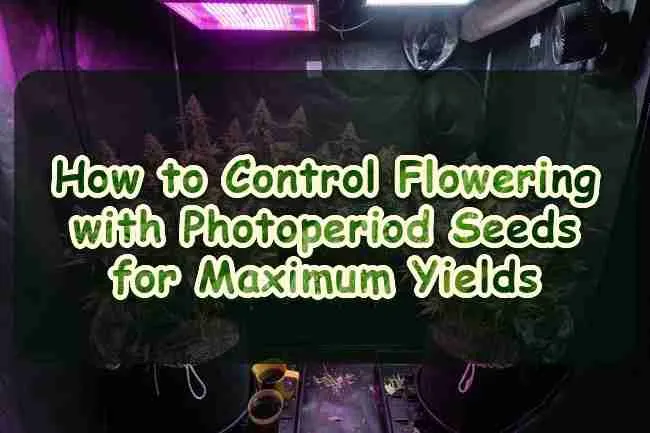
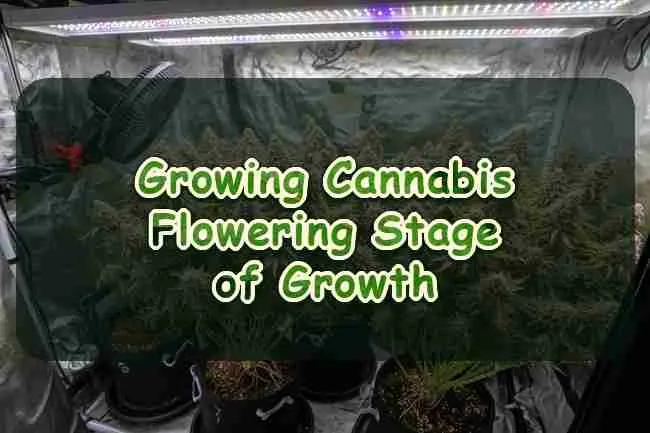
Photoperiod Cannabis Seeds Explained: How They Work and Why Growers Love Them


You do not flip a tomato plant into fruit by changing a timer. Cannabis is different. Photoperiod cannabis seeds grow into plants that wait for a night long enough to say, “Okay, time to make flowers.” Until that night shows up, they keep stacking stems and leaves like they have all summer.
A friend of mine learned that the hard way. He germinated a pretty pack, fed the plants well, and waited for buds. Week six came. Week seven came. Still nothing but fan leaves. He thought the seeds were duds. They were not. The lights were still on eighteen hours a day. Those plants were doing exactly what photoperiod plants do. They were waiting for you to change the clock.
This guide is photoperiod cannabis seeds explained in plain talk. You will see what are photoperiod seeds, how the dark period starts flower, how indoor 18/6 and 12/12 schedules work, what week 4 veg should look like, and why so many growers still pick these seeds over autos. You will also get specs, honest pros and cons, and the mistakes that quietly wreck a good run.
What Are Photoperiod Seeds, Really?
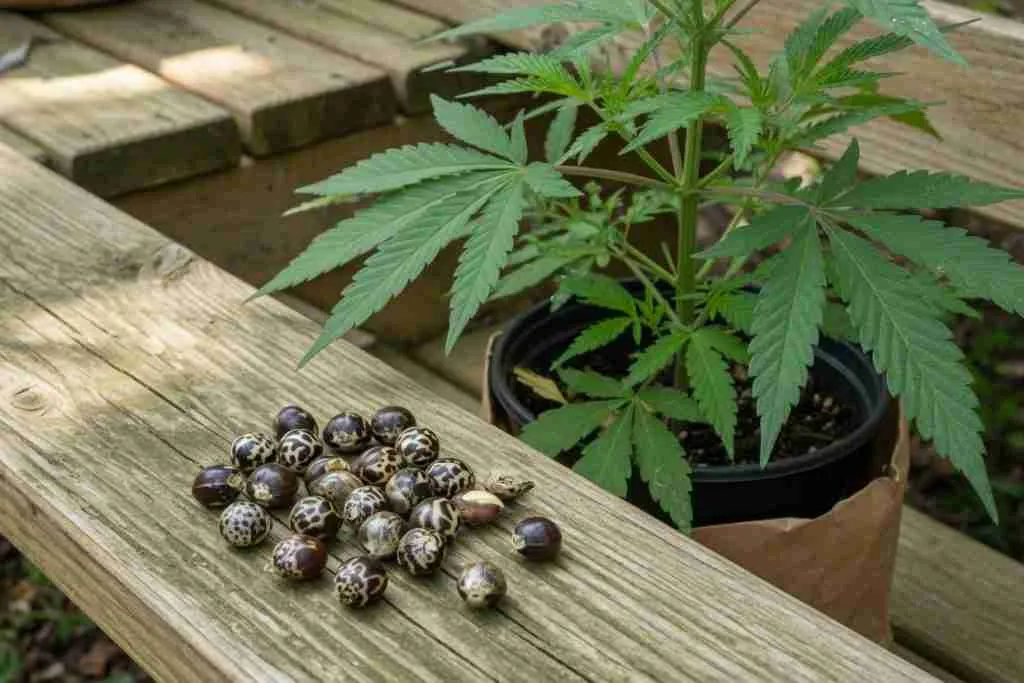
Photoperiod seeds are cannabis seeds whose plants flower when the daily mix of light and dark changes. Keep days long and they stay in veg. Give them a long, unbroken night and they shift into bloom. That is the whole trick. The seed itself looks like any other seed. Dark. Hard. Often striped. The difference lives in the genetics, not the shell.
In nature, long summer days tell the plant to grow a big frame. Shorter days near the end of summer tell it to make flowers and seed before frost. Indoor growers copy that story with a timer. Outdoor growers let the season do it.
So when someone asks what are photoperiod seeds, the useful answer is this. They are the classic kind. Most named strains started as photoperiod plants. Autos came later. Photos still give you the most control over size, timing, and training.
The short version you can remember
If the nights stay short, the plant grows. If the nights get long and stay dark, the plant flowers. Indoors, that usually means 18 hours of light and 6 hours of dark while you build the plant. Then you switch to 12 hours of light and 12 hours of dark when you want buds. That switch is called the flip.
You decide when the flip happens. That is why growers love these seeds. You can veg a tiny plant for three weeks in a closet. You can veg a monster for eight weeks in a 4×4. Same seed type. Different plan.
Photoperiod is not the same as feminized
People mix these words up all the time. Photoperiod tells you how flowering starts. Feminized tells you the plant should be female. You can buy regular photoperiod seeds that make males and females. You can buy feminized photoperiod seeds that almost always make bud plants. You can even buy photoperiod fast versions that finish sooner after the flip.
Autoflower is the other flowering style. The full auto grow is in how to grow autoflowering cannabis plants. Autos bloom by age, not by night length. A seed can be feminized and photoperiod. A seed can be feminized and auto. Those are two different labels on the same pack, not two names for the same thing.
If you only want flower and you have a small tent, feminized photoperiod seeds are usually the cleaner buy. Regulars still make sense if you want a male for breeding or you like hunting phenotypes.
How Photoperiod Affects Reproduction in Plants
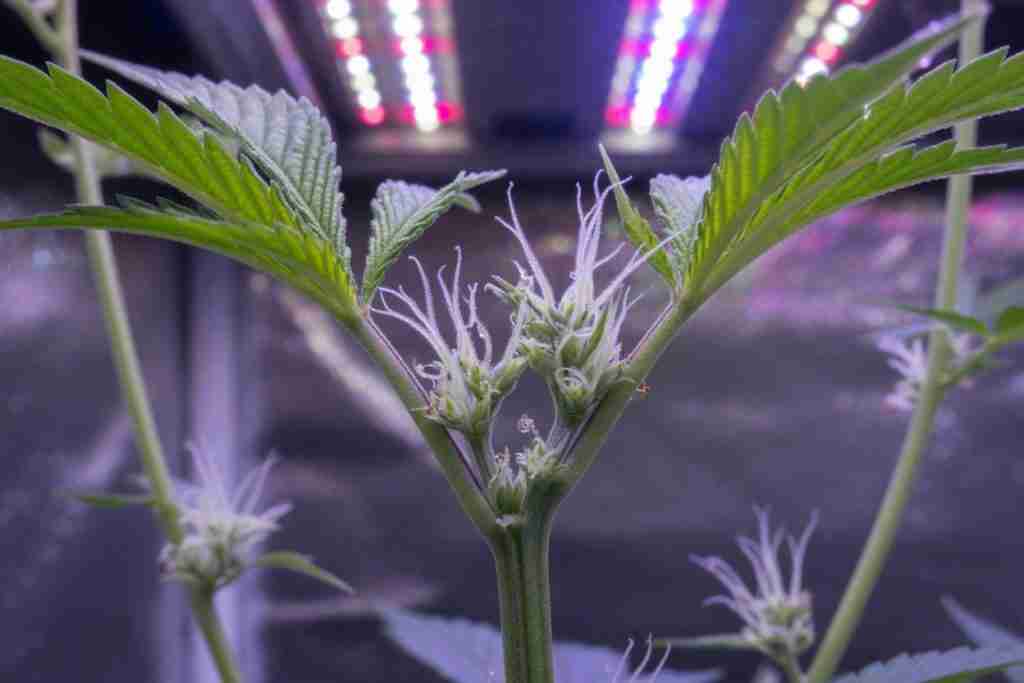
Photoperiod affects reproduction in plants by using night length as a calendar. Cannabis is a short-day plant. That sounds backwards until you think about it. The plant is not counting sunshine so much as it is counting how long the dark lasts. When nights get long enough, flowering hormones turn on. The plant stops pouring energy into new branches and starts building flowers.
That is plant responses to photoperiod in one picture. Leaves still need light to eat. Flowers need a trusted night to start. Mix those two jobs up and you get stretchy plants, late harvests, or weird nanners.
The plant’s night clock
Inside the leaves sits a pigment called phytochrome. It flips between two forms as red light and darkness trade places. During the day it sits in the “day” form. During a long night it slowly shifts into the “night” form. When enough of that night form builds up, the plant reads late summer and starts flower.
You do not need a lab coat for this. You just need to respect the dark. A phone flashlight in a flowering tent at 2 a.m. can reset that clock. So can a glowing router, a cracked zipper, or a bathroom light leaking under the door. The plant is not being dramatic. It is doing biology.
Why darkness matters more than the light hours
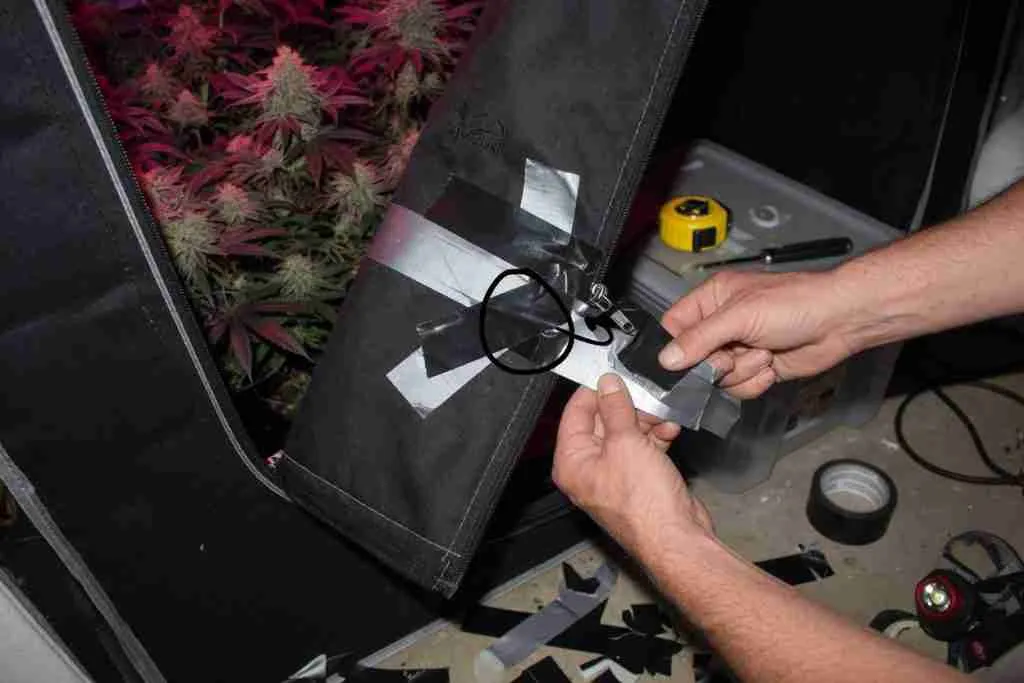
Growers talk about 12/12 like the twelve hours of light are the magic. The twelve hours of dark are the real trigger. If that dark window gets broken, the plant may stall, re-veg, or throw male flowers on a female plant. That last one is how you end up with seedy buds after months of work.
Tape the zipper. Cover the window. Put the tent in a room you can actually make dark. Check at night with the lights off and your eyes adjusted. If you can see the plants clearly, they can see the leak too.
Photoperiod Cannabis Seeds Explained for Beginners
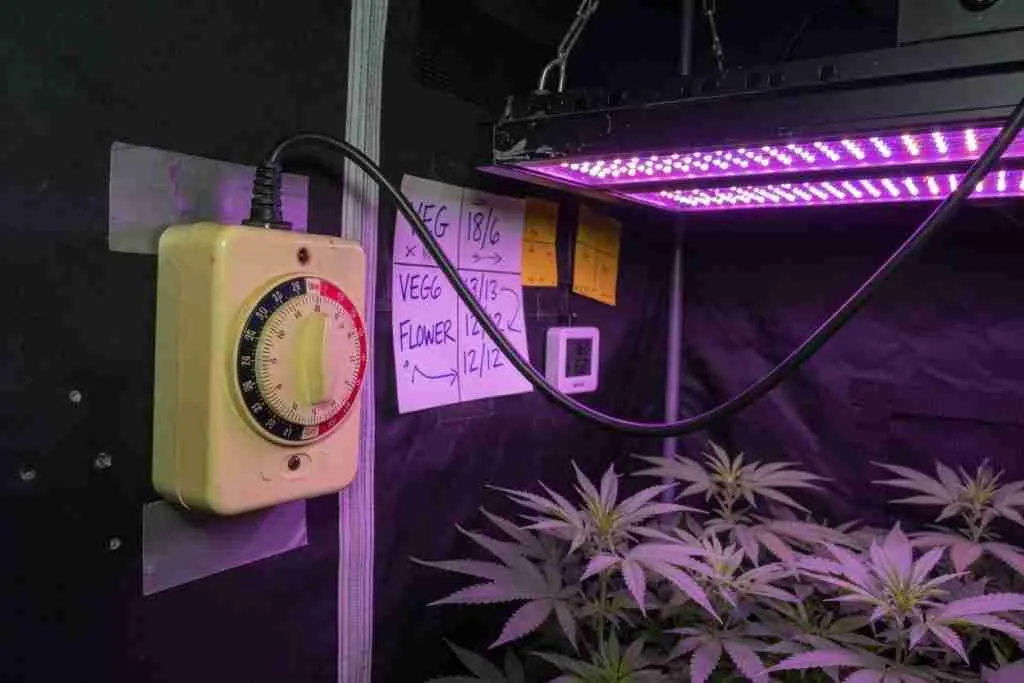
Photoperiod cannabis seeds explained for beginners starts with two schedules and one promise. Keep the schedule steady. Change it on purpose, not by accident. If you can run a cheap outlet timer, you can grow these seeds. A first-pack walk-through is how to buy cannabis seeds for beginners.
Do not overthink the first run. Pick a known hybrid. Use feminized seeds if you do not want to sex plants. Veg until the plant is about half as tall as your tent can handle. Then flip. Feed a little less than the bottle screams. Watch the leaves more than the calendar.
The two light schedules you will actually use
Seedlings and veg plants like long days. Most home growers run 18/6. Some run 20/4. A few run 24/0. Eighteen and six is the sweet spot for most tents. Plants get a rest. Your power bill does not cry. Roots still work at night.
Flower is almost always 12/12. Some outdoor and greenhouse growers play with 11/13 late in bloom to push finish. Indoors, 12/12 is the workhorse. Set it. Tape it. Leave it alone.
Mother plants stay on 18/6 forever. That is how you keep a favorite cut from blooming while you take clones.
What the flip looks like in real life
You change the timer from 18/6 to 12/12. That is it. No special prayer. No extra bottle required on day one. Within a week or two you should see pistils at the nodes. Many plants also stretch. Some almost double. That stretch is why you flip before the plant kisses the light.
Keep the first dark period clean. Do not peek with a headlamp. The first two weeks of a baby plant are in 15 steps to give cannabis plants the best start possible. Do not move the plant to a bright kitchen “just for a photo.” Give it one honest week of the new schedule before you panic that nothing happened. Flower is not a light switch on the buds. It is a hormone change.
A Simple Photoperiod Light Cycle Chart
Use this as a fridge-note version of photoperiod cannabis seeds explained chart style. It is not fancy. It is the map most home grows follow.
Stage — Light / Dark — What you want
Germination and seedling — 18/6 or 20/4 — Gentle light, high humidity, tiny drinks
Early veg (weeks 2 to 3) — 18/6 — Roots, first training, mild feed
Week 4 veg — 18/6 — Strong frame, topping or LST if you planned it
Late veg — 18/6 — Fill the screen or pot, clean lower junk growth
Flip / transition — 12/12 — Unbroken dark, expect stretch
Flower weeks 1 to 3 — 12/12 — Pistils, stretch control, bloom feed starts
Flower weeks 4 to finish — 12/12 — Dense buds, lower humidity, watch mold
Mother plant — 18/6 ongoing — Keep her in veg so clones stay possible
Outdoor plants do not read that chart. They read your latitude. In much of Canada and the northern USA, photoperiod plants start showing flower as August days shrink. Harvest often lands in late September or October, strain depending.
Indoor Growing With Photoperiod Seeds
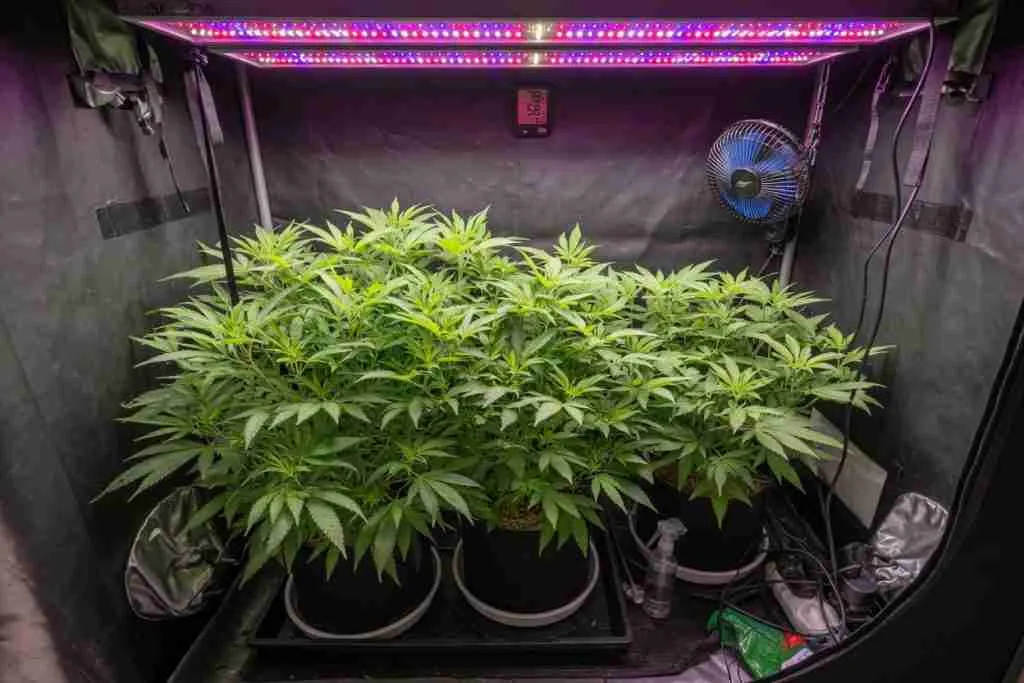
Indoors you own the calendar. That is the gift and the job. A sloppy timer wastes the gift. A steady room turns these seeds into the bigger plants people brag about. Indoor basics live in the indoor cannabis growers guide.
Give veg plants room to breathe. A crowded 2×2 with four photos and eight weeks of veg turns into a jungle. Two plants and four to six weeks of veg is saner. In a 4×4 you can run four trained plants and actually use the light.
Vegetative growth on an 18/6 schedule
18/6 means the light wakes up, runs eighteen hours, then the room goes dark for six. Keep that same clock every day. Plants like routine more than pep talks. Aim for veg temps around 22 to 28°C lights on, a bit cooler lights off. Humidity in veg can sit near 55 to 65 percent if airflow is decent.
Light intensity should climb as the plant toughens up. Seedlings like a softer lamp. By mid veg many LED rooms land around 400 to 600 µmol at the leaf tops. If the leaves taco or bleach, raise the bar or dim the driver. If the plant stretches toward the lamp like it is starving, drop the light a bit or add hours only after you fix intensity.
Week 4 veg cannabis photoperiod schedule
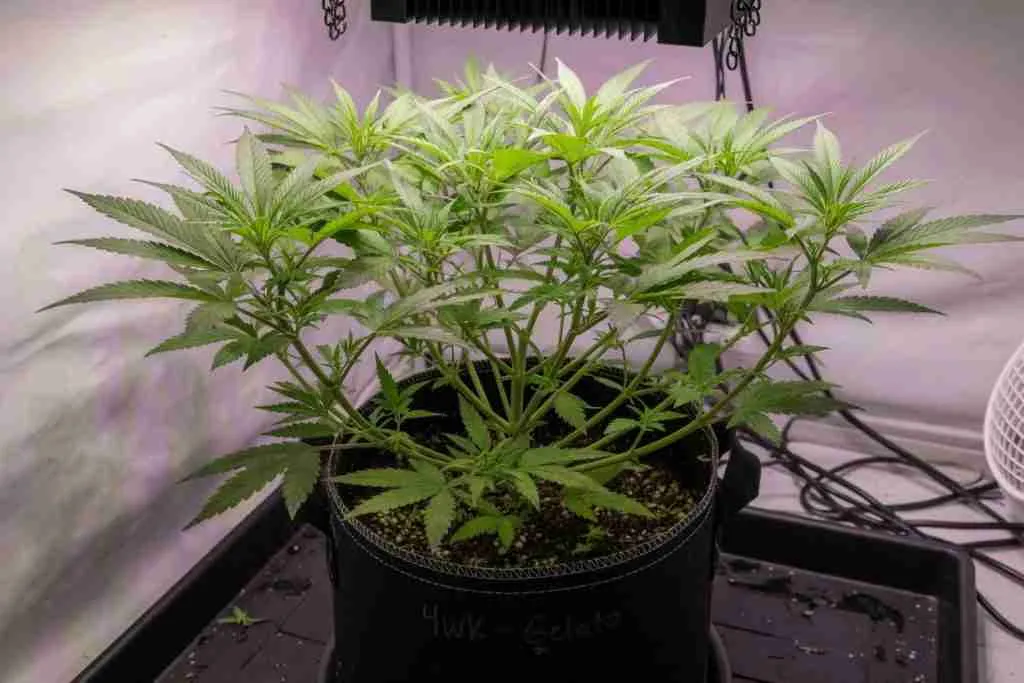
Week 4 veg is the week a lot of first-time photo growers either get brave or get messy. The plant is past baby status. It can take a topping. It can take a tie-down. It also drinks more, so old “ice cube” watering habits start to hurt.
A simple week 4 veg cannabis photoperiod light cycle stays at 18/6. Do not flip yet unless the plant is already half the height of your space. A week 4 veg cannabis photoperiod guide for a normal home tent looks like this.
– Light: 18 on, 6 off, same times each day
– Canopy: even tops, no one plant hogging the middle
– Training: top above the fourth or fifth node if you want a bush, or keep LST going
– Water: full pots that get light again before the next drink, not a swamp
– Notes: write height and node count so you know if she is stalling
That is your week 4 veg cannabis photoperiod schedule. Boring on purpose. Boring grows finish. Longer veg timing is in the cannabis vegetative stage.
Week 4 veg feeding, nutrients, and common problems
Week 4 veg cannabis photoperiod nutrients are still nitrogen-forward. You want leaves, stems, and roots, not bloom booster dumped early. In soil, a living mix may need little more than water and a light top dress. In coco or hydro, a veg formula around EC 1.2 to 1.6 is a common lane. pH in soil often sits near 6.2 to 6.8. Coco likes closer to 5.8 to 6.2. The meter walk-through is pH for growing cannabis.
Week 4 veg cannabis photoperiod feeding should match pot size. A plant in a one-gallon cup that you forgot to up-pot will yell. Yellow bottoms, tiny new growth, and a rootball circling the plastic are not a mystery strain trait. They are a cramped plant. Move her up before you dump more bottles on her. The pot-up is in transplanting cannabis seedlings.
Week 4 veg cannabis photoperiod problems usually look like one of these.
– Stretch from a light hung too high or a room that runs hot
– Clawed dark leaves from too much nitrogen
– Pale new growth from lockout or a pH swing
– Droopy leaves at lights on because the pot never dried
– Early pre-flowers that freak you out even though you are still on 18/6
Pre-flowers can show at the nodes in late veg. That is normal. It is the plant hinting at sex. It is not a reason to flip unless the height says so. Soft yellow on the oldest fan leaves can also be normal fade as the plant moves food upward. Ugly yellow across new growth is not normal. Fix the root zone first.
Week 4 veg cannabis photoperiod transition
The week 4 veg cannabis photoperiod transition is optional. Some growers flip at week 3 for a Sea of Green. Some wait until week 6 or 8 for a SCROG. Week 4 is simply a popular decision point because the plant has enough nodes to train and enough time left to recover before flower stretch.
If you do flip after week 4, change more than the timer. Swap toward a bloom feed over the next several days. Drop humidity toward the mid 50s, then lower later. Leave space above the tops. The first three weeks of 12/12 are when height gets away from you.
Outdoor Seasons, Canada Timing, and Light Dep
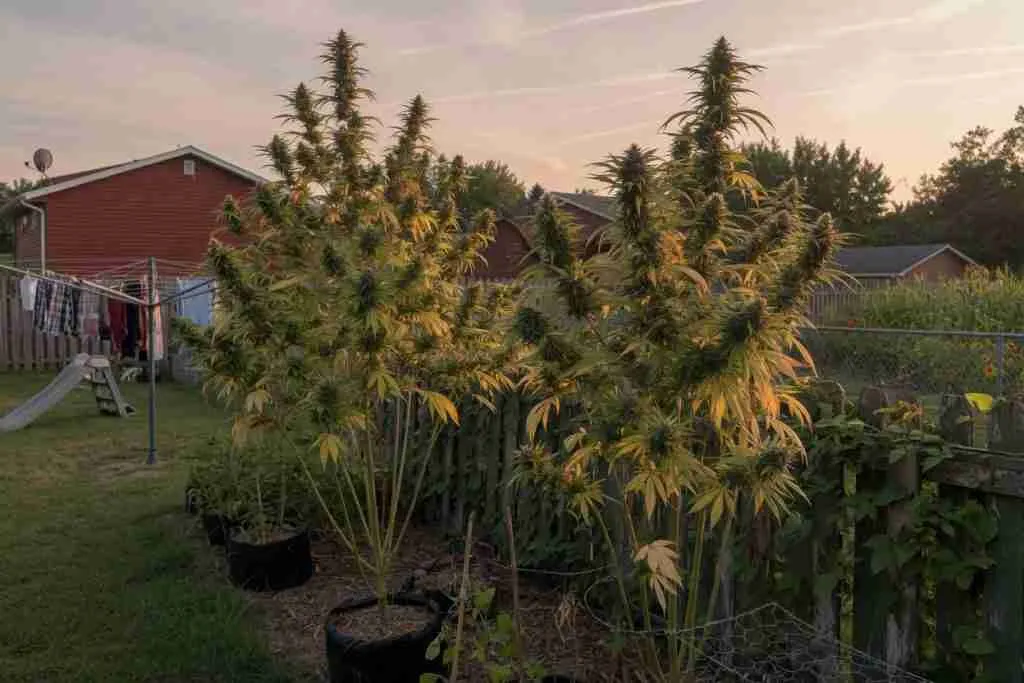
Outside, you do not flip a timer. The sun does. Photoperiod plants started in spring veg through the long days. They flower when nights stretch in late summer. In southern latitudes that can mean a long, fat finish. In Nova Scotia, northern Ontario, Maine, or Minnesota, October rain and early frost write the last chapter. Shopping by province starts at buy cannabis seeds in Canada.
Pick earlier finishers if your fall is wet. An eight-week flower after the natural flip beats an eleven-week sativa that is still watery when the mold shows up. Plant after the last hard frost. Give them sun, wind, and a pot or bed that can hold a real root mass. Stake them before September storms do it for you.
Light dep if you want an earlier harvest
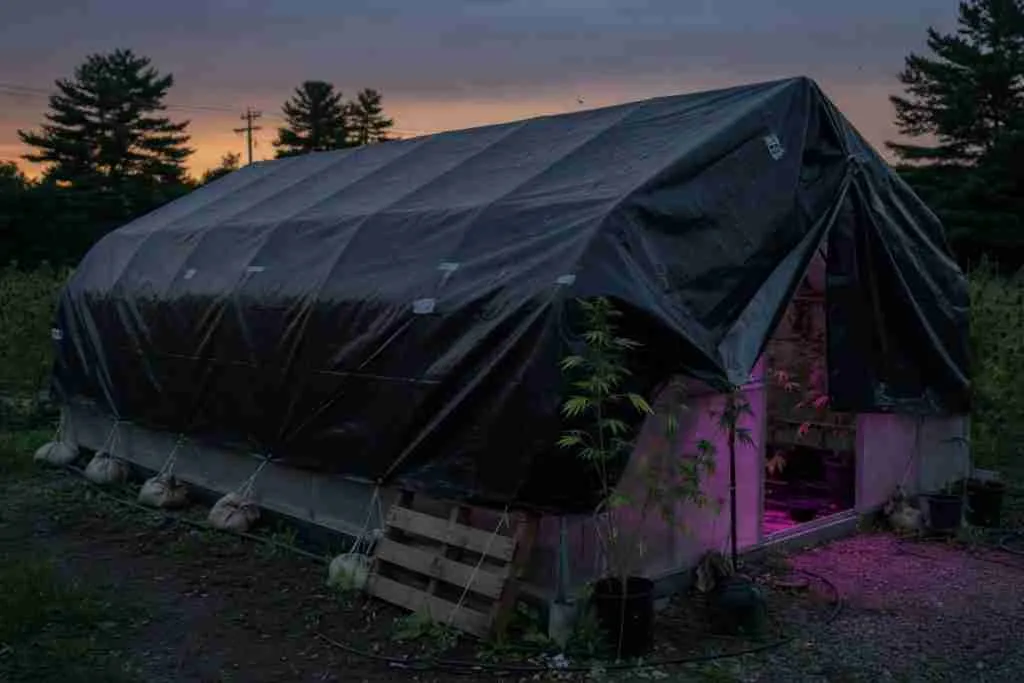
Light deprivation means you pull a blackout cover over a greenhouse or outdoor hoop so the plants get a 12-hour night before nature would give one. That is how some growers pull an August harvest in a short season. It works. It is also a chore. Miss one evening and you just gave the plants a light leak. Do it every day on time or do not bother.
Home growers with one or two plants often skip light dep and just choose faster photoperiod lines. That is the less sweaty path.
Photoperiod vs Autoflower in the Same Tent
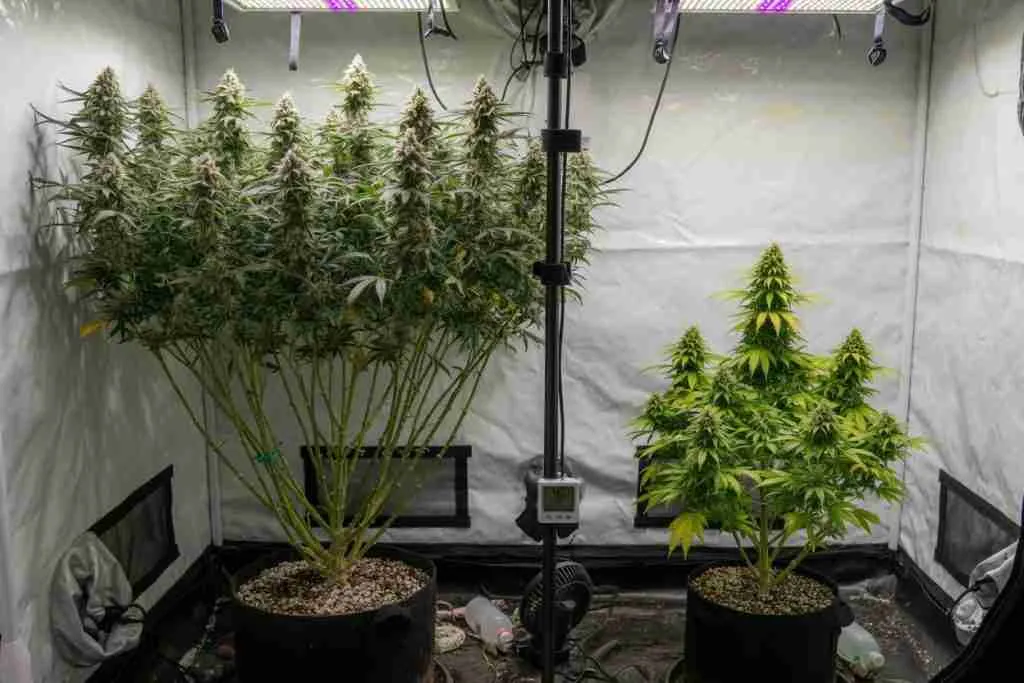
Put both types in one tent and you will feel the difference. The auto starts making flowers while the photo is still getting dressed. The photo keeps growing until you say stop. That single fact changes yield, training, and how many harvests you squeeze into a year.
Quick comparison you can use while shopping:
– Flower trigger: photos need the dark change, autos use age
– Indoor time: photos often 14 to 20 weeks seed to chop, autos often 8 to 12
– Plant size: photos scale with veg time, autos stay compact
– Yield per plant: photos usually win if you veg them
– Training: photos take topping, SCROG, and mainline, autos want a lighter hand
– Clones: photos make reliable mothers, autos are a headache to clone
– Outdoor crops per year: photos usually one, autos two or three if the season allows
– Beginner ease: autos forgive a missed flip because there is no flip
Reddit threads on photoperiod cannabis seeds explained reddit style always split the same way. People who want jars fast pick autos. People who want one big plant and a keeper cut pick photos. Both camps are right for their room. Side-by-side shopping is in feminized vs autoflower cannabis seeds.
You can run them together only if the light schedule works for both. An auto is fine under 18/6 the whole time. A photo under 18/6 will not flower. If you flip the whole tent to 12/12, the auto still flowers, but it gets less daily light than it likes. Separate spaces are cleaner.
Why Growers Still Love These Seeds
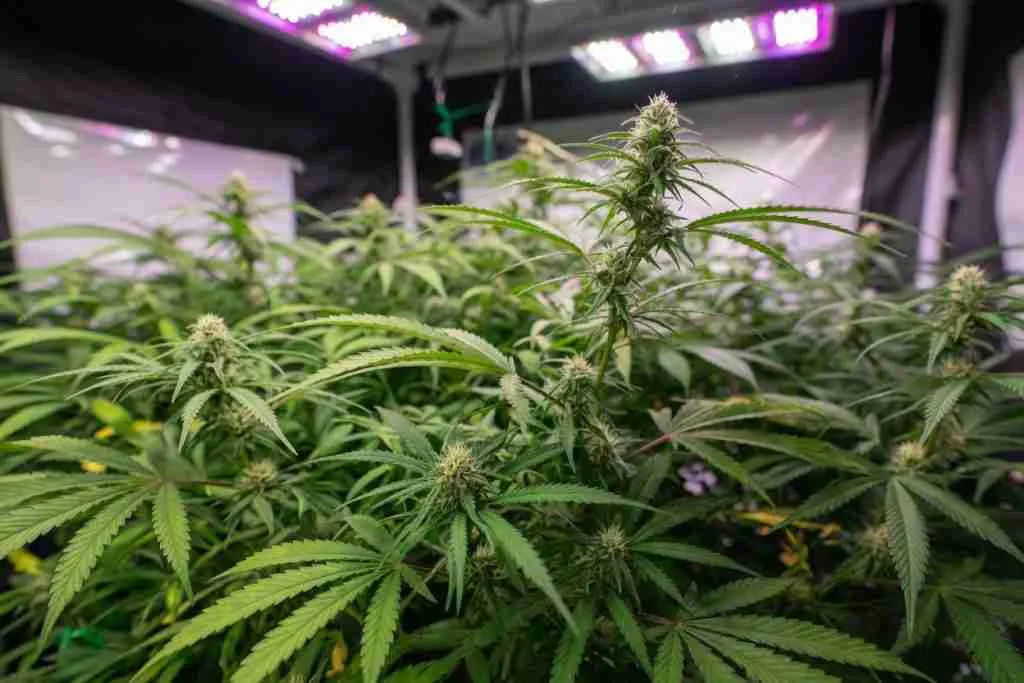
Control is the headline. You hold the start date for flower. You hold the plant size. You hold the chance to take a clone from a plant you already like. That last part is huge. Find a phenom that smells like gas and pine and you can keep her as a mother. Next run starts from a cutting, not a dice roll.
Catalog size matters too. The widest range of flavors, old landrace-leaning lines, and heavy indoor producers still sit in the photoperiod aisle. Autos caught up on potency more than people admit. They have not fully caught up on the sheer number of proven cuts.
Cloning, mothers, and training room
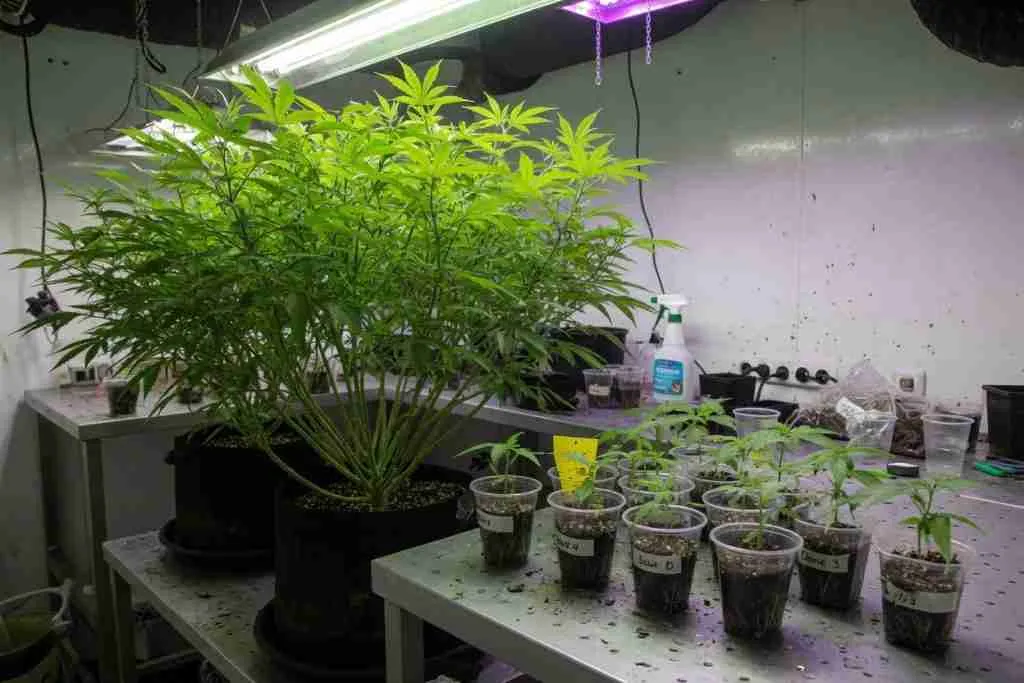
A photoperiod mother lives under 18/6 and never sees a 12-hour night. Seeds versus cuttings is covered in cannabis seeds vs cannabis clones. You take tops, root them, and flower the copies. That is how you stop buying the same pack every spring. It is also how commercial rooms stay even. Every plant is the same girl.
Training loves a photo. You can top, wait a week, top again, weave a screen, and still have time to fix a mistake. Autos do not give you that extra month. If you enjoy shaping a plant, these seeds feel like clay. Autos feel like a timer you cannot pause.
Pros, Cons, and Specs You Can Tape Up
Pros:
– You choose when flowering starts
– Longer veg can mean a much bigger harvest per plant
– Easy to clone and keep a mother
– Huge strain list, including classic workhorses
– Training methods have room to work
– Outdoor plants can get truly large in a long season
Cons:
– Total run takes longer than most autos
– You must protect the dark period in flower
– Light leaks can cause stress or herms. Prevention is in hermaphroditism risk in feminized seeds
– Outdoor finish dates depend on fall weather
– A first grow can feel slower and fussier
– Tall sativas will outgrow a small tent if you veg too long
Useful specs for a typical indoor photoperiod run:
– Veg light: 18/6, sometimes 20/4
– Flower light: 12/12, dark must stay dark
– Common indoor veg: 4 to 8 weeks from established seedling
– Common flower: 7 to 11 weeks after flip, strain depending
– Seed to harvest indoors: often 14 to 20 weeks
– Outdoor harvest in the north: often late September to mid October
– Flip height rule: about half your final allowed height
– Stretch: many hybrids add 50 to 100 percent after the flip
– Veg EC in coco: about 1.2 to 1.6
– Flower EC in coco: often 1.6 to 2.2 if the plant asks for it
– Veg RH: about 55 to 65 percent
– Late flower RH: about 40 to 50 percent
Those numbers are lanes, not laws. Your strain, pot, and lamp still get a vote.
Mistakes That Wreck a Photoperiod Run
The classic miss is a light leak. Second place is flipping too late, then watching the plant smash the LEDs during stretch. Third place is flipping a weak, underfed plant and hoping flower will fix veg problems. Flower does not fix a bad root zone. It just puts buds on a stressed frame.
Other face-plants show up over and over.
– Changing the lights-off time every few days “to match your sleep”
– Opening the tent at night with the room lights on
– Running 12/12 from seed and wondering why the plant stayed tiny
– Mixing autos and photos under one timer and getting mad at both
– Feeding bloom bottles in week two of veg because the label looked exciting
– Forgetting that outdoor street lights can stop a backyard plant from finishing clean
Street lights are a quiet outdoor killer. A porch lamp on all night is a light leak with a longer cord. If the plant sits under a security light, it may veg into November and still look confused.
Who Should Grow Them, and Who Should Wait
Grow photoperiod cannabis seeds if you want a bigger plant, a mother, or a strain that only exists as a photo. Grow them if you like training. Grow them if your outdoor season is long enough, or your indoor tent has a timer you trust.
Wait, or run an auto first, if you need jars in ten weeks. Wait if you cannot make a room dark. Wait if this is your first plant and the idea of two light schedules already makes your eye twitch. There is no trophy for suffering through a 20-week learning run when a simple auto would have taught you watering.
Plenty of growers do both. Autos for a quick personal stash. Photos for the keeper plant and the winter project. That mix keeps the jars from going empty while you let one girl get huge.
Common Questions People Ask After the First Pack
Do photoperiod seeds need darkness in veg?
They do not need a long night to stay in veg. They can live under 24 hours of light. Most still look happier with a short dark rest. 18/6 is the easy default.
Can I flower under 14 hours of light?
Some cultivars will start flower with nights shorter than 12 hours. Critical photoperiod varies by lineage. A 12/12 indoor schedule is still the safe, repeatable choice. Do not invent a custom cycle on your first run.
How long after the flip do buds show?
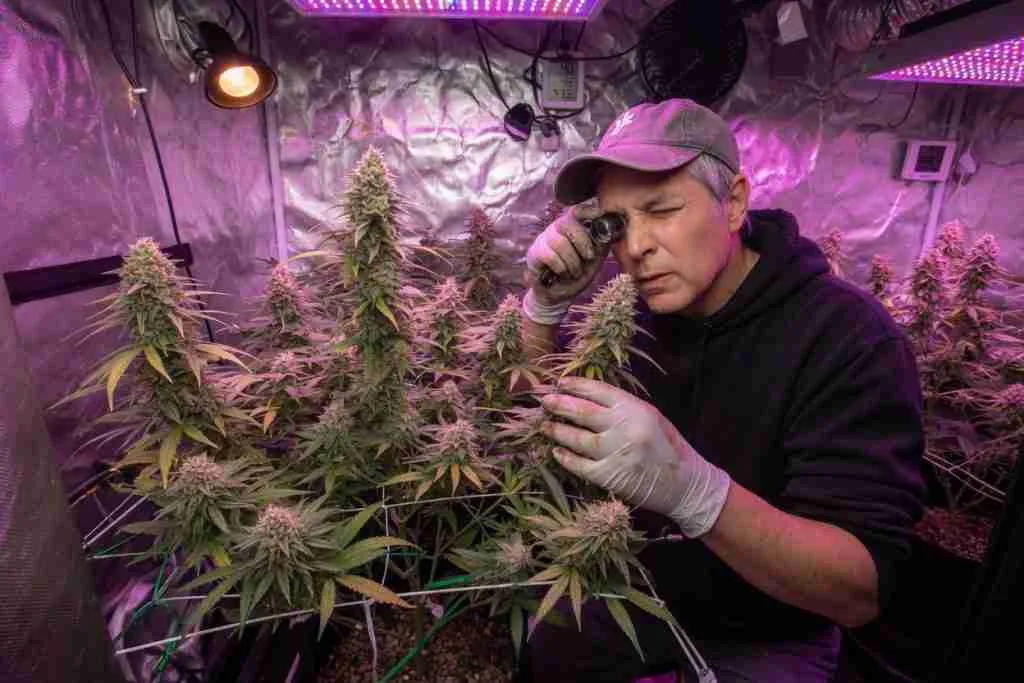
Often 7 to 14 days for clear pistils. Stretch can last two to three weeks. Real bud stacking comes after that. If nothing shows by day 21 of clean 12/12, check for light leaks and confirm you did not plant an odd auto by mistake.
Are photoperiod seeds harder than autos?
They ask for more planning. They also forgive slow veg because you can keep them in veg until the plant looks ready. Autos punish early mistakes because the clock is already running. Hard is the wrong word. Different chores.
Can I keep a photoperiod plant in veg forever?
Yes. That is a mother. Give her 18/6, a sane pot, and a haircut when she gets rowdy. She will not flower until the nights get long.
Here is the picture to take with you. You crack a photoperiod seed. You give it long days. It builds a frame like a young tree. One evening you change the timer. The room goes dark for twelve honest hours. A week later you see white hairs. Two months later you cut colas that would not have existed if you had left the light on. That is not mystery. That is you and the plant agreeing on the season.
Photoperiod cannabis seeds explained for dummies, for beginners, and in detail all land on the same point. You are the season. Treat the dark like it matters, flip when the plant has the size you want, and these seeds will do the old job they were bred for. Grow the frame. Call the flower. Then dry it slow and enjoy the reason growers still keep photos around.
When you are ready to pick a pack, the cannabis seeds store is the catalog door. High-output photos are rounded up in high yield cannabis seeds.