pH for Growing Cannabis: Soil 6.2–6.8, Coco 5.8–6.2, Hydro 5.5–6.0

pH is not a personality trait for your water. It is how acidic or alkaline the root zone is, on a 0–14 scale, 7 in the middle. Cannabis only drinks nutrients that are dissolved in that water. Get the number wrong and the bottle can be full and the plant still starves. That is lockout. It looks like a deficiency. Adding more feed makes it worse. This page is the ranges that actually work, how to measure them, and how to move them without wrecking the pot.
What pH Is and Why the Plant Cares
Potential of hydrogen. Activity of hydrogen ions in a solution. You do not need the chemistry exam. You need this: below 7 is acidic, above 7 is alkaline, 7 is neutral. Bleach sits high. Vinegar sits low. Roots sit in whatever you pour. Each nutrient is easiest to take up in a band on that scale. Iron, manganese, copper, zinc like the lower (more acidic) end. Calcium, potassium, sulfur like the higher end. If you pin the pot at one number forever, you starve one side of the menu. If you leave it at 8, you starve most of it.
A buddy of mine yellowed a whole tent in week three of flower. He doubled the bottle. The runoff was 7.4. Iron was sitting in the coco doing nothing. He flushed, mixed feed, pHed to 5.9, and the new growth came back green. The old leaves stayed ugly. That is lockout. The plant was never “hungry.” It could not swallow.

Best lights and best soil do not save a root zone at 4.5 or 8.0. Medium choice: best medium to grow cannabis. Watering: how to water cannabis plants. Yield still follows a plant that can eat: increase cannabis yields.
Is There a Best pH for Cannabis?
There is a best range for the medium you are in. There is not one magic 6.5 for every pot on earth. Soil buffers. Coco and hydro do not. Soil runs higher. Hydro and coco run more acidic. Let the number drift inside the band so the plant sees the low end and the high end over a few waterings. Do not chase 6.20 every day like a religion.
Stage tweaks are smaller than medium tweaks. Seedlings like the lower end of whatever band you are in — roots are new and you are not pouring a heavy bottle yet. Veg can sit in the middle. Flower can walk a hair higher in soil (toward 6.5–6.8) when phosphorus and potassium demand rises. None of that replaces the medium table. A coco seedling at 6.8 is still wrong.
| Medium | Workable range | Sweet spot we use |
|---|---|---|
| Soil | 6.0–7.0 | 6.2–6.8 |
| Coco | 5.5–6.5 | 5.8–6.2 |
| Hydro (DWC, rockwool, clay) | 5.5–6.5 | 5.5–6.0 |
Soil: 6.0–7.0, spend most of your time 6.2–6.8
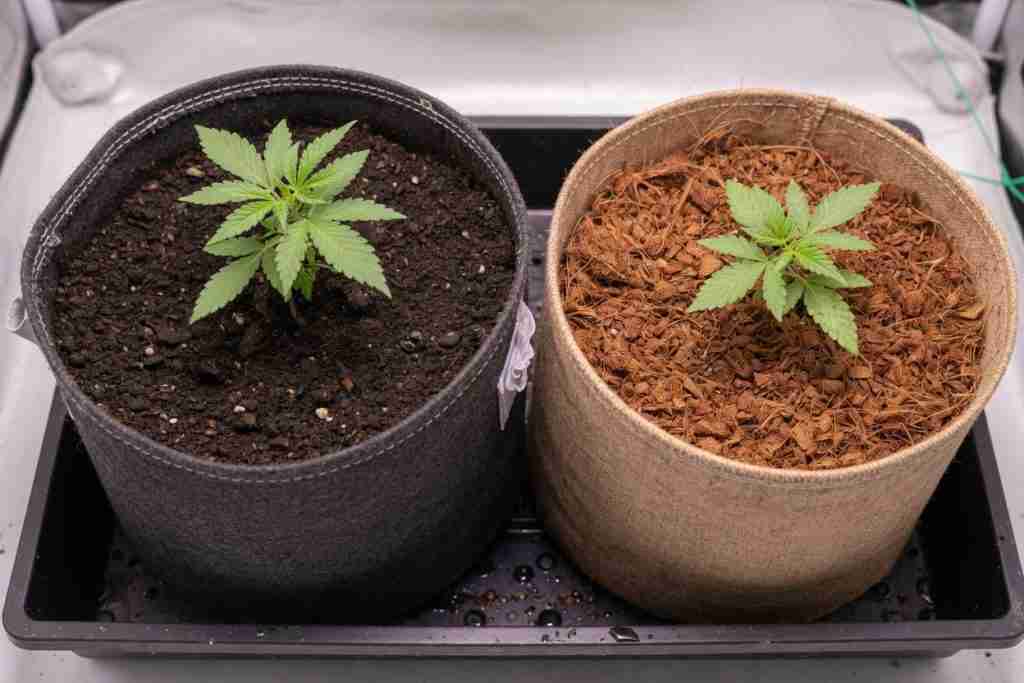
Soil has organic matter and microbes. They buffer. A little drift is fine. Start a feed around 6.2 and let it rise toward 6.8 over a few days if you are using bottles in soil. That walk across the range is how iron and calcium both get a turn. Stay under 7.0. Above that, iron and manganese lock out and new leaves yellow between the veins. Below 6.0 for long, calcium and magnesium get scarce. Outdoor in-ground dirt can sit at 6.5 and be happy if it drains. Pots of peat mix with bottled nutes need you to pH the water. Living soil is a different job — more on that below. Outdoor: growing cannabis outdoors. Soil vs hydro: soil vs hydroponic cannabis.
Coco: 5.5–6.5, live in 5.8–6.2
Coco is not soil. It is almost inert. It holds almost no buffer. pH in the feed is pH at the root, fast. Target 5.8–6.2. Do not park at 6.5. Coco already fights you for calcium and magnesium. High pH on top of that is yellow new growth and crispy edges that you will swear is a cal-mag deficiency while you pour more cal-mag. Veg can sit 5.8–6.0. Flower can walk 6.0–6.2. Measure runoff. If runoff is half a point off input, the bag has drifted. Correct the next feed. Pre-buffered coco still wants you to pH the bottle. “Coco is hydro” is the useful lie: you feed every time, you pH every time. Magnesium: magnesium for growing cannabis. Cheap mediums: cheapest grow medium for cannabis.
Hydro: 5.5–6.5, most days 5.5–6.0

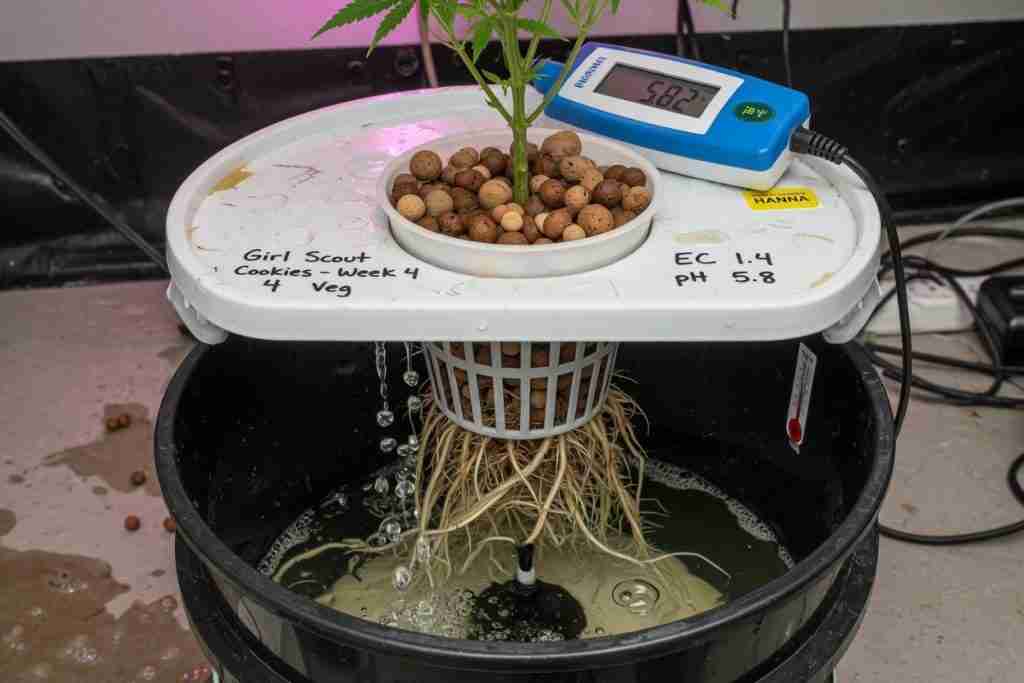
Rockwool, clay pellets, lava rock, DWC — the medium does not set pH. The solution does. Mix the nutrients first. Then pH. Always that order. Nutes pull the number. If you pH plain water then dump in the bottle, you are not at the number you think. Keep the reservoir in 5.5–6.5. We live 5.5–6.0 and let it drift up a bit as the plant drinks. Check daily. Hydro can jump overnight. One day 6.1, next day 4.9 after a heavy feed. That is the job. Full hydro: hydroponic cannabis growers guide.
Soilless peat mixes without much compost behave closer to hydro than to garden dirt. Treat them 5.5–6.3 unless the bag is a buffered living mix. Pots, media, water: environment, media, watering, pot sizes.
Organic Soil: Less Chasing, Not Zero Checking
We like growing in organics. Bat guano, eggshell, blood meal, compost — they do not spike salt the way a bottle of 3–part does. A living mix buffers. Microbes chew food into a form the root can use at soil pH. That is the honest version of “never check pH.” You still should know what your tap water is. If the well is 8.2, you are not “organic immune.” You are watering alkaline into a buffer until the buffer gives up.
If you top-dress and water plain, check the mix once when you build the hole, then leave it alone unless the plant says otherwise. If you run liquid organics or teas every feed, pH the water into the soil band. How we mix without burning: organic marijuana fertilizer. Soil: organic cannabis soil. Compost: composting for cannabis nutrients. Scratch mixes: cannabis fertilizers from scratch.
Nutrient Lockout Is Not a Deficiency
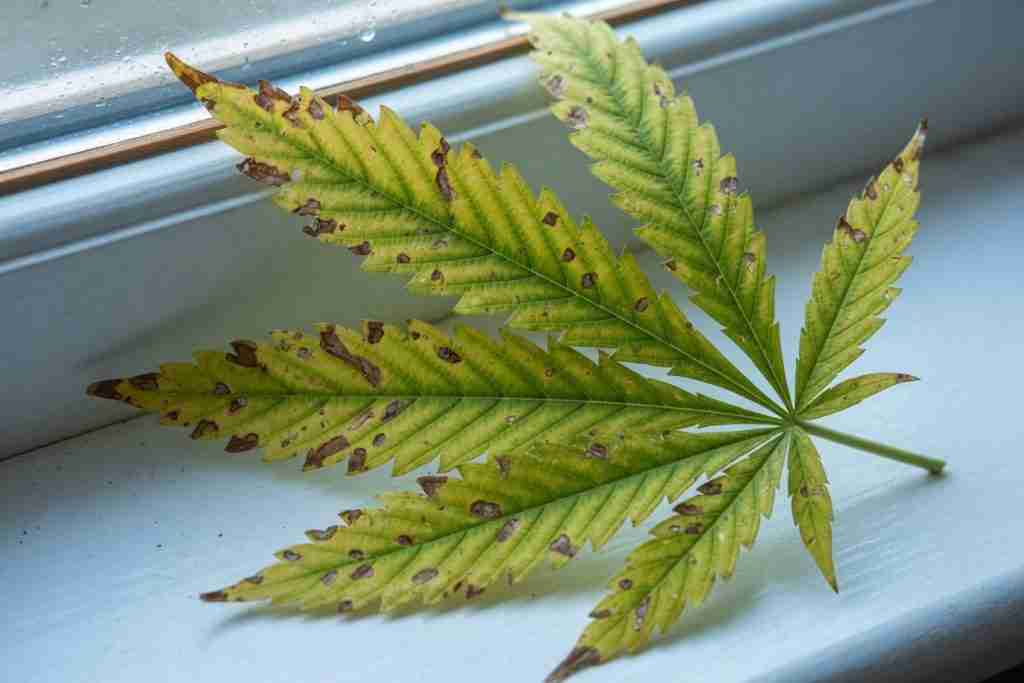
Lockout is the plant standing in a pantry with a locked door. Salt from bottled feed builds in the medium. pH walks out of range. Roots cannot take up what is sitting there. The leaf yellows. You add more salt. The door stays locked. Synthetic programs: synthetic cannabis fertilizers. Advanced feeding: advanced nutrient management.

High pH (soil above ~7, coco/hydro above ~6.5): iron, manganese, zinc fade. New leaves yellow between veins while veins stay green. Low pH (soil under ~6, hydro under ~5.5): calcium, magnesium, potassium suffer. Tips burn, rust spots, weak stems. Either way, test before you dump another bottle. If runoff pH is off, fix pH. If runoff EC is through the roof, you have salt. Flush with pHed water, then feed lighter. Seedling, veg, flower all use the same rule. Stages: seedling, veg, flower.
How to Measure It
Measure the water you mix after the nutes are in. Then measure runoff from the pot, or the reservoir itself in hydro. Input tells you what you poured. Runoff tells you what the root zone became. A 0.5 gap is a warning. A 1.0 gap is a problem. Indoor rooms: indoor cannabis growers guide. Tent: grow tent.
Soil slurry when you cannot get runoff: take a cup of mix from the root zone, add an equal volume of distilled or RO water, stir, wait 15–30 minutes, read the water. It is not lab-grade. It beats guessing from the leaf. Do not slurry bone-dry peat and call it gospel — wet it first like a plant would drink.

Strips
Cheap, one-use papers. Dip runoff or a slurry, match the color. Fine for a backyard soil plant once a month. Bad for daily hydro. Colors are muddy. You will argue with yourself about 6.0 versus 6.5. Hydro growers go through a pad a week and still guess.
Digital meter (what we use)

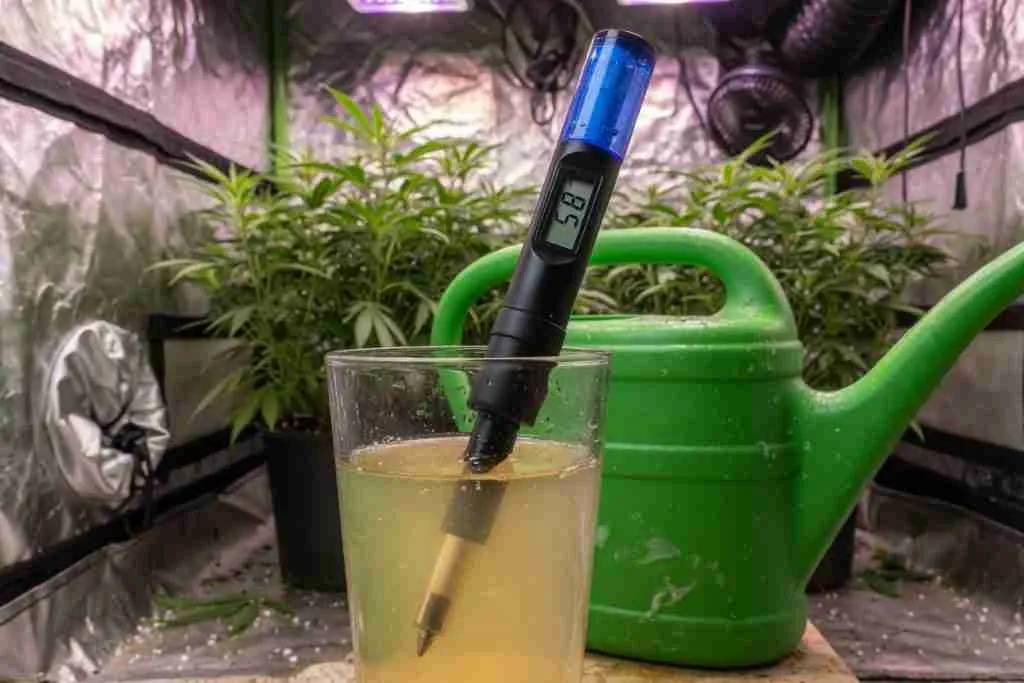
A handheld pen. Ten to thirty seconds. Buy the one meant for liquid if you are testing water and runoff. Soil probes exist; they lie if you jab dry dirt. For soil, we still prefer a slurry or runoff over stabbing a bone-dry pot. Store the probe wet in storage solution, not on a dashboard. Cheap pens drift. That is why you calibrate. Rinse the probe in distilled between samples so yesterday’s 4.0 down does not fake today’s runoff. Wipe salt crust off the bulb. If the reading hunts for a minute, the probe is dying or the cup is still mixing. Wait until it sits.
Calibrate it or it is a toy
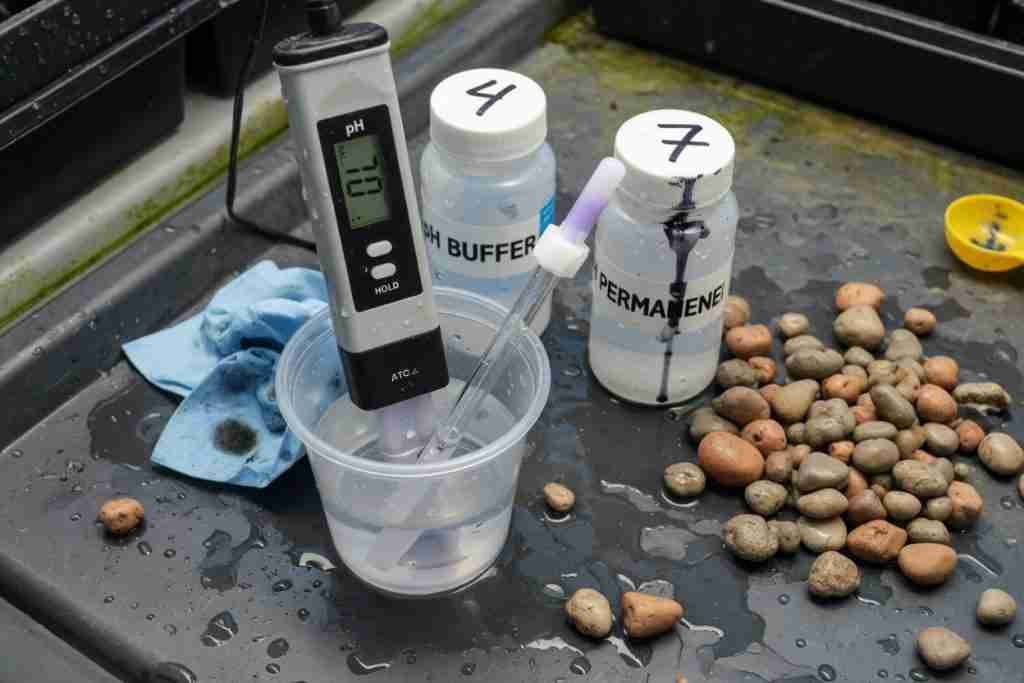
Out of the box it is not honest. Use 4.01 and 7.01 buffer (some kits use 7.00). Rinse, dip 7, set, rinse, dip 4, set. Weekly if you use it daily. After you drop it. After it sat dry. If 7.01 reads 6.4, every “perfect” 5.8 you mixed this month was fiction. Temperature matters; let the cup and the probe sit, do not pH ice water and expect the same number at 72 F. Rinse with distilled between buffers so you do not contaminate the 4.01 bottle with 7. Throw buffer that sat open for a year. Old buffer is how people “calibrate” to a lie.
How to Adjust pH
Small moves. Wait. Measure again. A big dump of pH down turns 6.8 into 4.2 and you have a new problem. Never mix pH up and pH down in the same cup before they hit water. You get heat and a mess, not a shortcut.
Soil: lime up, acid down, slow
It is easier to raise acidic soil than to drag alkaline soil down. Pots change faster than a garden bed. Do not lime a plant that is already in drought, heat, or a pest attack.
Dolomitic lime (raise pH)
Calcium carbonate plus magnesium carbonate. Cannabis likes both. Powder mixes into potting soil better than coarse ag lime. A little, mix well, water, wait days not hours, test. Too much and the pot goes alkaline and stays there. Magnesium note: magnesium for growing cannabis.
Apple cider vinegar (lower pH)
Three tablespoons per gallon of water is the old backyard rate. It is a slow acidifier for soil, not a hydro tool. Use it when the bed is sitting high and you are watering anyway. Recheck. Vinegar is not a nutrient program.
Wood ash (raise pH)
Fireplace ash is alkaline and carries potassium. Dust, do not dump a coffee can into a 5-gallon pot. Same rule as lime: a little, mix, wait, test. Fresh ash is hotter than you think.
You can use more than one amendment in a mix. You cannot use a lot of all of them at once. Build the hole, test a slurry, then plant. Outdoor holes: growing cannabis outdoors.
Hydro and coco: pH up and pH down
Mix the full nutrient solution. Stir. Wait a minute. Then pH. Add down or up a few drops, stir, wait, read. Repeat until you are in the band. Phosphoric acid is the usual pH down. Potassium hydroxide or carbonate is the usual up. Citric is weaker and does not hold as long. Check again after an hour; some mixes drift as they dissolve. Hydro pH can move overnight as the plant drinks. Daily check in veg and flower. Indoor climate still matters: best growing environment for cannabis.
RO water starts empty and often acidic after nutes. Tap water is often 7.5–8.2 and full of bicarbonate, which fights your pH down. Know which you have. If tap is hard, you will use more down and still see the number creep back up. That is the bicarbonate, not a haunted reservoir. Hard tap also dumps calcium and magnesium you did not ask for. Soft or RO needs you to add them. Test source water once. Write it on the wall.
EC and pH are a pair. High salt plus wrong pH is the usual tent crash. If pH is fine and the plant still burns, the feed is too hot. If the feed is mild and the plant still yellows between veins, pH is the first suspect. Flush means pHed water, enough to get a good runoff, then resume a lighter feed. Plain 8.0 tap “flush” is how people make lockout look like a spa day.
What pH Problems Look Like on the Plant

Brown and tan spots. Patches that spread. Leaves that crisp and drop. New growth yellow while you are “feeding plenty.” Roots sit too long in a bad number and you get slime. Test before you diagnose a deficiency from a chart. A pH problem and a true shortage look the same on a phone photo. The meter is the tie-breaker. Pests can yellow a plant too — do not skip that: integrated pest management.
Fix the number, then wait for new growth. Burnt leaves do not un-burn. If you swing pH 2 points in one watering, you shock roots. Walk it back over a couple of feeds. Foliar sprays are not a pH program for the root zone. You can pH a foliar mix so it does not burn the leaf. That does not fix a pot sitting at 7.6. More grow notes: cannabis cultivation blog. Seeds when you start over: cannabis seeds.
Recirculating hydro needs more eyes than drain-to-waste coco. The same gallons get drunk, peed, and heated all week. pH and EC both walk. Drain-to-waste, each feed is a new chance. You still read runoff so the bag does not silently go to 6.8. In a DWC bucket, if the number is racing down, the plant is hungry or the res is small. Top off with pHed water, do not keep dumping acid into a tank you never change.
A Checklist That Fits on the Fridge
| When | Do this |
|---|---|
| Every new meter | Calibrate 7 and 4. Store the probe wet |
| Every feed (coco/hydro) | Mix nutes, then pH, then water. Check runoff or the res |
| Soil with bottles | pH water into 6.2–6.8. Check runoff weekly |
| Living organic | Know tap pH. Slurry-test the mix when you build it |
| Yellow new leaves | Meter first. Do not double the bottle |
| Runoff 1.0 off input | Correct next feed. Flush if EC is also high |
| Hydro daily | Read the reservoir. Drift inside 5.5–6.5 is fine |
FAQs
What pH should cannabis be? Soil 6.0–7.0 (we live 6.2–6.8). Coco 5.5–6.5 (we live 5.8–6.2). Hydro 5.5–6.5 (we live 5.5–6.0). Drift inside the band.
Do I pH before or after nutrients? After. Mix the feed, then pH. Nutes change the number.
Should I pH runoff? Yes if you use bottles in pots. Input is what you poured. Runoff is the root zone.
Can I skip pH in organic soil? You can stop chasing every watering if the mix is living and your water is not 8.2. You should still know the numbers when you build the hole.
Strips or a meter? Meter. Calibrate it. Strips are a backup for soil, not a hydro plan.
Why is my plant yellow if I am feeding? Often lockout. Test pH and strength of the runoff before you add more salt.
Coco at 6.5? That is the ceiling, not a target. Iron and phosphorus quit on you. Sit 5.8–6.2.
How often do I calibrate? Weekly if you pH every feed. After the pen dries out or takes a fall. If 7.01 buffer does not read ~7, stop using it on plants until it does.
Can I use pH down in soil every watering? If you are on bottled nutes in peat or a light mix, yes, you pH the water. If you are in living soil, stop acidifying every drink unless a slurry says the bed went alkaline. Lime and vinegar are slow tools, not a hydro bottle.
pH for growing cannabis is a range, not a trophy number. Soil higher, coco and hydro lower, let it walk the band, mix nutes first, read runoff, calibrate the pen. When the leaf yellows, ask the meter before you open another bottle. The plant can only eat what the water will let go of.