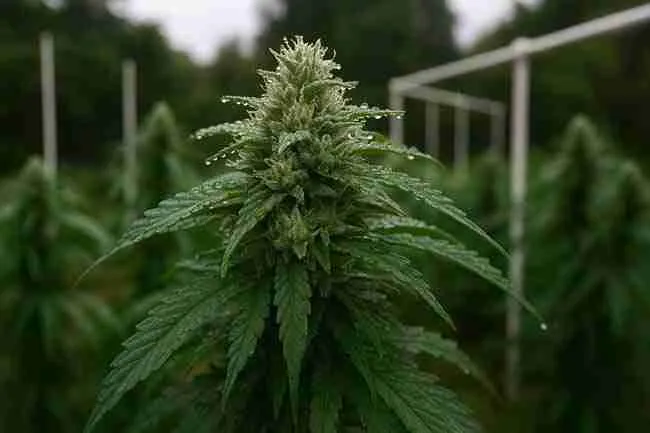
Mulching Cannabis Plants


Mulch is the layer you put on top of the soil after the plant is already in. It shades the ground, slows the wind that pulls water off the surface, and keeps light off weed seeds. Mulching cannabis plants is that decision: which material, how thick, and how far from the stalk. It is not a bag of fertilizer, and it is not a mound you pack against the stem.
A marijuana bed outdoors is where the blanket earns its keep. Summer sun bakes bare soil, rain splashes grit onto lower leaves, and weeds take the same water you hauled out there. Weed in a fabric pot, indoors, is a different job. The soil surface is your moisture gauge. Cover it with a thick cap and you stop being able to see whether the pot is still heavy. The blanket and the pot are not the same tool.
What sits under the layer is its own subject. The soil guide is the mix. No-till is the choice not to dig that mix back up. This page is only the cover you lay on top, and the mistakes that turn a cover into a wet collar, a weed seed bank, or a lid on a pot.

A thin, grassy layer with green already punching through it has not done the weed job. Light is still reaching the soil, or the material itself arrived full of seed. Look at a bed the week after you spread it. If seedlings are up in the mulch, you either laid it too thin, or you laid hay. The fix is a thicker clean layer, or a different bale, not another story about how mulch is automatic.
Mulching Cannabis Plants
Start with the problem you actually have. Hot bare soil that dries by noon wants shade. A bed that greens over every week wants light blocked. A slope that washes in a storm wants the surface held in place. A pot in a tent wants none of those, because you can reach the soil with your hand and you need to. Name the problem, then pick the material. A product that only looks tidy is not a reason.
What the blanket is for
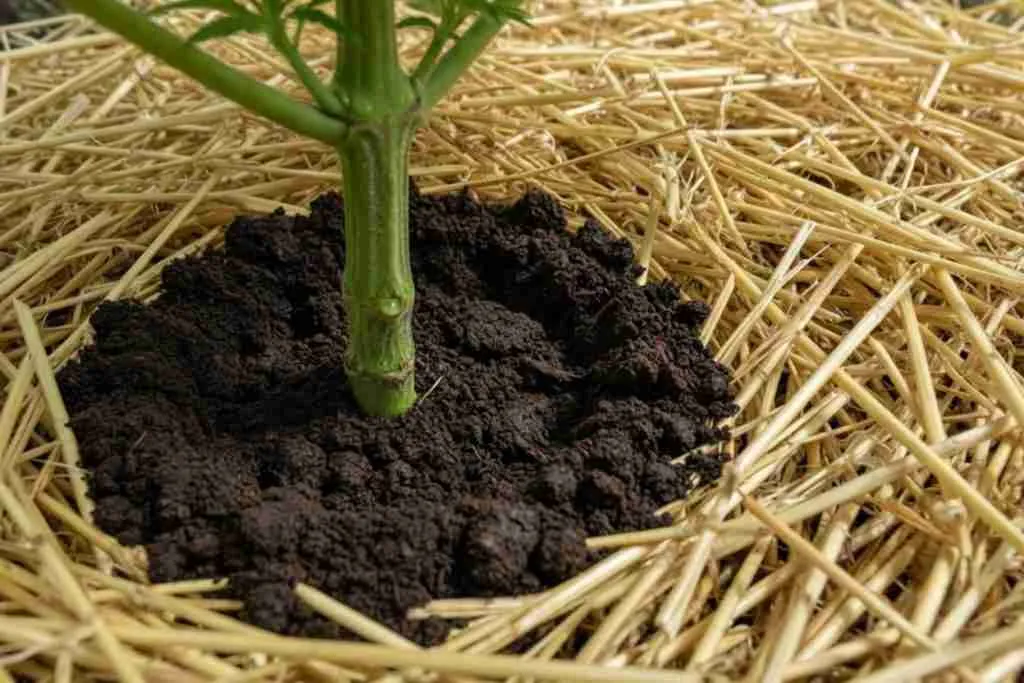
Shade is the first job. Sun on bare soil drives water out of the top inch and heats the roots that live there. A loose cover of straw or shredded leaves takes that hit instead. You will still water. You will water less often, and the soil under the cover stays closer to the same dampness from morning to evening. Do not treat that as a number you can print on a jug. Pull the cover back and feel. Dry dust under the straw means you waited too long. Soggy soil means you are watering a bed that no longer loses water the old way.
Light is the second job. Weed seeds in the top of the soil need light to get going. A cover that stays dark at the soil line stops a lot of them. It does not stop a dandelion that is already rooted, and it does not stop seeds that rode in with the mulch. Weed the bed first, including the roots, then cover moist soil. The outdoor grow is the season around that bed. The yard is where you put it. Mulch does not fix a bed in a swamp or a bed in full shade.
The third job is the stem, and it is a negative. Keep a bare ring you can fit two fingers into, all the way around the stalk, down to soil. Mulch piled on the stem stays wet after every rain and every watering. That wet collar is where stem trouble starts, and it is a welcome mat for slugs and for mice if the pile is deep and close to a wall. The fungi sort is what a wet stem means once you see it. The rule here is simpler. The blanket ends before the stalk.
Splash is the fourth job, and it shows up in flower. Rain on bare soil throws grit onto the lowest fans and onto any bud that has sagged into the dirt. A cover keeps that grit on the ground. It does not belong on the flowers themselves. In flower, pull the layer off any cola that has fallen into it, and keep the ring at the stem clear before a week of rain. Lower buds that sit in wet straw are a rot risk, not a tidy bed.
Compost is not the weed mat
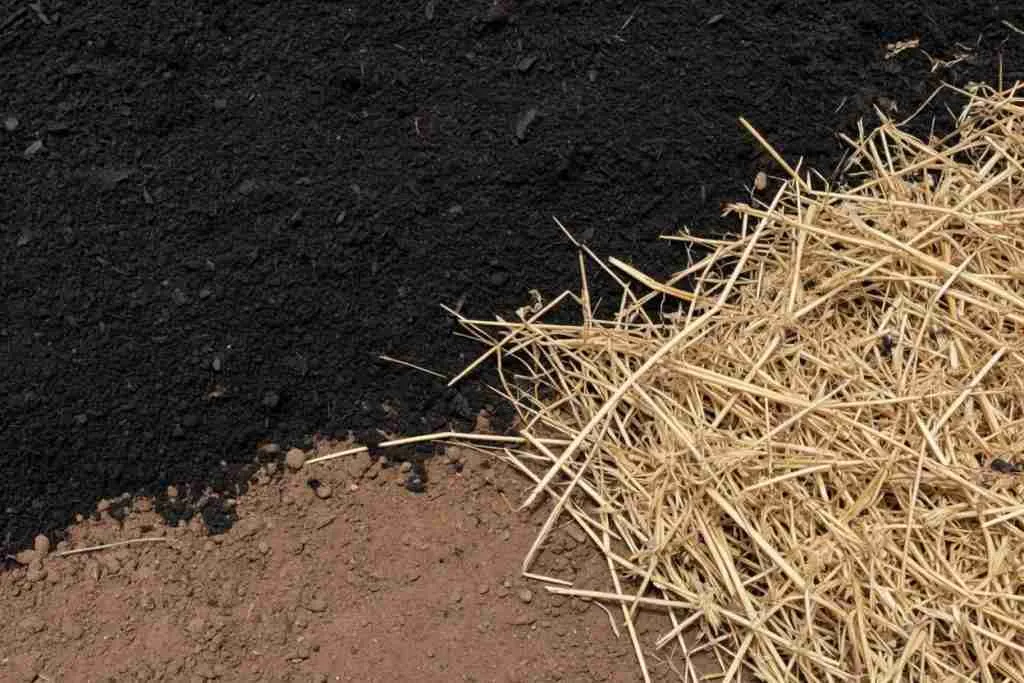
Finished compost is food and structure. Spread thin on a bed, it feeds the top and disappears into the soil. It does not block light the way straw or chips do, so a deep blanket of compost is a rich seedbed with a weed problem, not a mulch. Lay a thin top-dress of compost if the bed needs it, then put the real cover over that if you also need shade and weed control. How you know a pile is finished, and how much belongs mixed into a small pot, lives on the compost page. Do not dig that top-dress in just to make the bed look mixed. Surface is the point.
Worm castings are a dusting, not a three-inch cap. A light scatter under the straw, or on a pot you can still see, is the use. A pot filled with castings and then capped so you cannot see soil is a wet, rich lid. Alfalfa meal is a feed too. It is not a bale you shake out around the plant and call mulch. Meals go on in a thin layer you meant as food. The cover, if you add one, goes over them.
Materials that belong on the bed
Use what you can get clean, local, and coarse enough to let water through. Fine, slick material mats. Seed-filled material becomes the next weed crop. Anything that will not rot does not belong in a bed you may turn or that drains toward the rest of the yard. The short list that actually fits a cannabis bed is straw, shredded dry leaves, a careful scatter of dry clippings, aged chips at the edge, and a living cover you are willing to cut.
Straw, leaves, and dry clippings

Straw is the dry stalk left after a grain harvest. Hay is the whole cut, seed heads included. Straw is the one you want on a bed. Hay looks similar in the bale and then sprouts a lawn. If you can see seed heads, leave that bale for an animal, not for the cannabis row. Buy or beg straw that was cut after the seed was taken, and look at a handful before you spread the rest. A few grains are normal. A handful of seed is a future weeding job.
Lay straw loose, deeper than it will be in a month, because it packs. When it has settled you should still not see much soil. If you can, add another loose layer. Fluff it when it mats into a sheet, especially after weeks of rain. A packed sheet sheds water to the side and hides slugs. Mice like a deep straw nest against a foundation or a fence. Keep the layer on the bed, not as a wall of straw at the house, and keep that bare ring at every stem.

Dry leaves are the free version, and they fail when they stay whole. Whole leaves tile into a slick mat that water runs off. Shred them, or crush them, so the layer stays fluffy. A pot can wear a light cap of dried leaves the way these photos show. Pull that cap back when you water, and do not leave it glued to the stem. Leaves from a healthy plant, including cannabis fans that were clean, can go on the bed. Leaves with powdery mildew, and any flower that went grey inside, stay out. Those go in the trash, not back onto the soil you will use next run. The mildew page and the bud rot page are the calls. The mulch pile is not a disposal.
Grass clippings work only after they have dried and only as a thin scatter. Fresh clippings in a thick layer heat up, slime, and seal the soil. A lawn that was sprayed does not get clipped onto a bed you are growing for flower. Mix a few dry clippings into straw if you have them. Do not make the whole cover out of last Sunday’s lawn if it is still wet and green.
Chips and a living cover
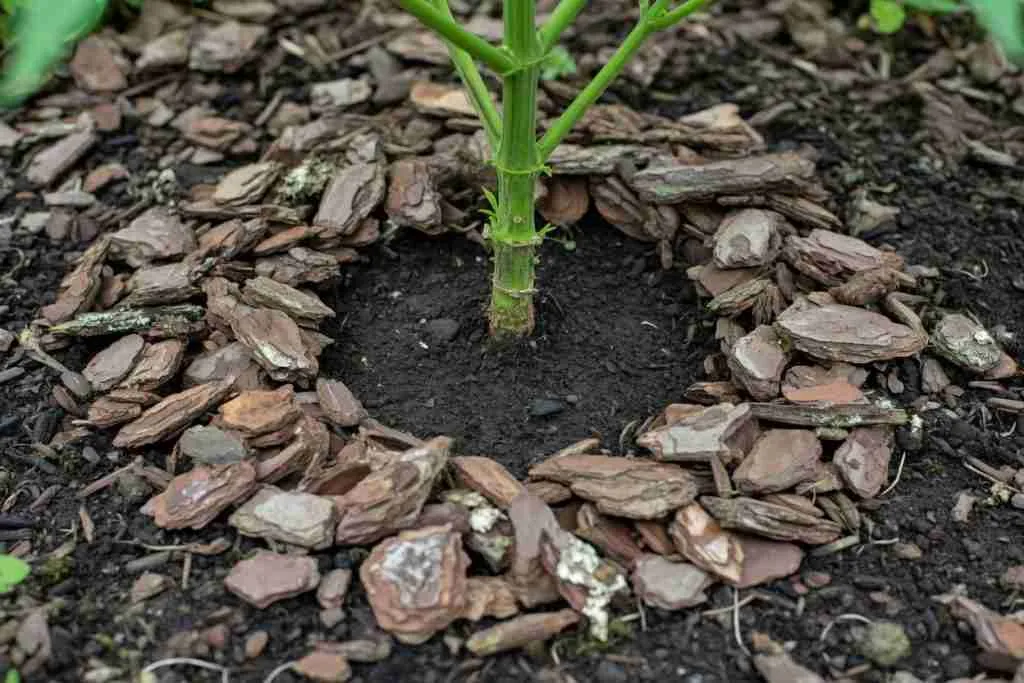
Wood chips and bark last longer than straw. They suit a path, the edge of a permanent bed, and a spot you do not plan to dig. Fresh chips mixed down into the root zone can borrow nitrogen while they break down, right where the young roots are trying to eat. Laid on top and left on top, that borrow stays near the surface. Do not till a fresh load into a new bed and then wonder why the plant looks hungry. Let fresh chips weather, use older chips, and keep them off the stem the same way you keep straw off the stem. Chips are a poor choice inside a small pot. They hide the soil and they are awkward to get out.
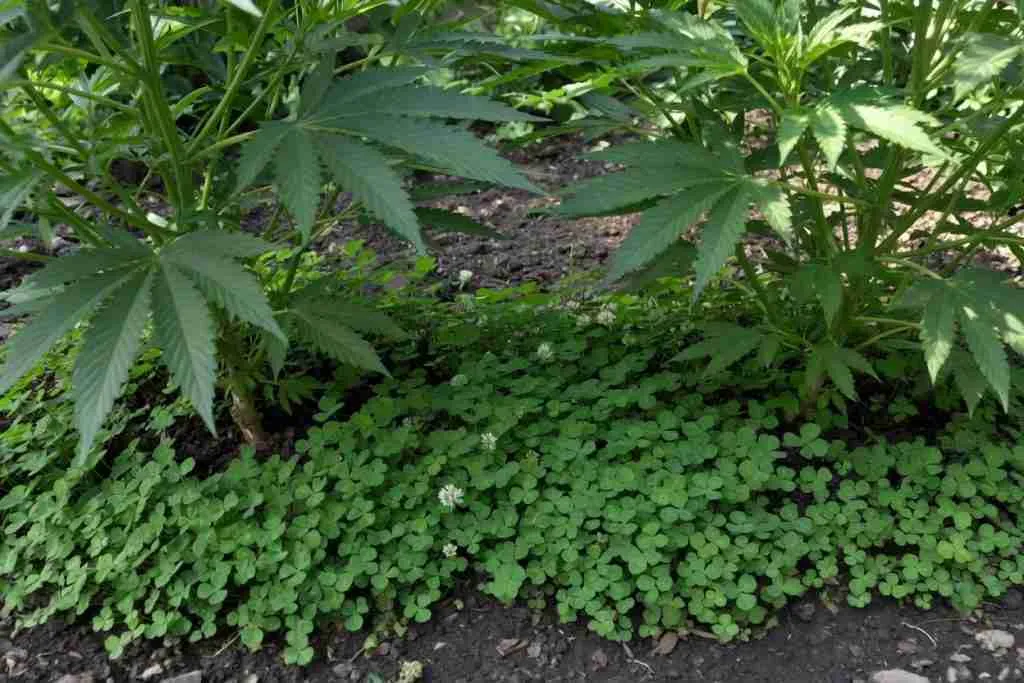
A living cover is a low plant you meant to grow in the paths, not a surprise. White clover between outdoor rows can hold soil and shade the ground if you cut it before it climbs the cannabis. It also drinks and eats. Seed it in the paths, or at the edge, not in the hole with a transplant that is still small. If the clover reaches the fans, cut it and leave the cut tops on the soil. That is the cover doing a second job as mulch. If you let it win the first month, you grew a clover bed with a cannabis guest. Do not put a living cover in an indoor pot. You cannot mow a tent, and the extra roots compete in a few gallons of mix.
Plain brown cardboard belongs under straw on a weedy new patch, not on top as the finished look. Pull the tape and the labels. Skip glossy print. Overlap the sheets, soak them so they stay put, then cover them so they do not blow into the next yard. Cardboard is a smother layer that rots. If it turns into a slick sheet that water will not enter, pull it. Newspaper used the same way, thin and unprinted where you can, is a lesser version of the same trick. Colored ads and plastic tape stay out.
Black plastic and landscape fabric are a different tool. A sheet can warm a cold bed in spring if you are going to pull it once the soil is warm and the plants are in. Left on through a hot spell, a dark sheet cooks the top of the soil and dumps rain into the path instead of into the bed. It also blocks the rotting cover that a living bed is supposed to eat. Rubber mulch does not become soil at all. Leave tire chips out of a cannabis bed. They belong in a playground, if anywhere, not around a plant you will harvest.
When the blanket goes down

That bare collar is the picture to keep in your head while you spread. Soil shows in a ring. The stem is not buried. Anything you add later stops at that ring. A seedling does not get this treatment in week one. A tiny stem buried in straw stays wet at the soil line. The seedling stage stays in a cup you can see. Mulch waits until the plant is in the outdoor bed or the big pot and the stem is sturdy enough that a loose cover will not swallow it.
Timing follows the soil, not the calendar on a bag. In a cold spring, a thick cover holds the cold in the bed. Leave the soil bare, or pull an old layer back, until the ground has warmed and you want to keep that warmth. Then weed, water, and cover. Sandy ground warms faster than heavy clay, so the same week is not the same decision in every yard. In a heat wave the blanket is the point. In a long wet autumn, pull it back from the stems so the base can dry between rains. You can leave the paths covered.
Order of work, every time. Pull weeds, roots and all, while you can still see them. Water so the soil you are about to hide is already moist. Spread compost or a casting dusting if that bed is due for a feed. Then the cover. Then walk the stems and rake the ring clear with your fingers. Water again only if the soil under the new cover is dry. After that, check by hand. The top of the straw will feel dry on days when the soil is still wet. That lie is the whole reason people overwater a mulched bed.
Through the season, top up when soil shows through. Straw disappears faster than chips. Leaves disappear faster than straw if they were shredded small. A permanent bed can wear chips at the edge for more than one year and straw on the planting row that you refresh each summer. Between runs, a thin compost top-dress on the surface is the no-till note. You still do not dig the old cover into a smoothie. If the old straw is full of seed or full of moldy flowers, rake that part off before you add the next layer.
Pots outdoors can take a light cap once the plant is in its final container. The pot size still decides how fast the root zone dries. A small pot with a heavy straw lid dries slowly and then, if the straw crests the rim, sheds the next watering down the outside of the fabric. Keep the cap inside the rim, thin enough that you can push it aside, and the same bare ring at the stem. Containers that you move under cover for rain should not wear a sponge of straw that stays wet for a week on a saucer.
Indoor pots stay readable

This is the indoor miss. Straw on a pot, soil underneath staying dark and damp, moss and fine growth in the wet spots, and a young plant whose stem is one slip away from sitting in that damp. Outdoors, sun and wind punish a bare surface. In a tent, the surface already dries more slowly than people think, and the fan is doing the job the weather did outside. A decorative cap hides the only signal you have. Learn to water by lifting the pot. If you cannot lift it because of the size, push a finger into bare soil. Mulch makes both of those reads worse.
A wet top under a cover is also where fungus gnats lay. The gnat page owns the fly. Your part on this page is not to build them a hotel. Yellow cards count adults. They do not dry a capped pot. If you already have a layer and the pot stays heavy, pull the layer off, let the top inch dry, and point a fan across the soil. White cotton on that wet bark is a soggy surface, not a sign the mulch is “alive” in a useful way. The fungi page already split that confusion. Do not add more cover to a pot that smells sour.
If you still want a little cover indoors, make it a sparse pinch of dry shredded leaf you can see soil through, and keep it off the stem. Skip chips, skip straw bales, skip pebbles that look neat and tell you nothing. Pebbles do not feed the pot. They only hide it. Veg in a tent is when people get decorative. Flower is when a wet hidden surface meets dense plants and a lower humidity target. Bare soil is the simpler read from seed to harvest indoors.
Roots do not get healthier because the Instagram pot had a pretty top. A living root ball is pale and branched, and it needs air as much as water. The roots page is that picture. Mulch can keep an outdoor root zone from cooking and from swinging between dust and flood. It cannot repair roots that have been sitting in a swamp, and it cannot replace a mix that never had air in it. Fix the pot and the watering first. Add a cover only when the surface is the thing baking.
In Canada a mulched plant still counts toward the cap. The cap is four plants per household. Quebec prohibits recreational home growing. Manitoba has been indoor-only since 1 May 2025, and the age there is 19 and older. Outside Canada, the plant count and whether you can grow outdoors at all are local. A bed of straw does not change that. Pull a plant that failed instead of leaving it under the cover to occupy a spot.
Walk the bed once a week in summer and write what you see. The notes are short because the work is short.
- Weeds out, soil moist, then the cover.
- A bare ring at every stem, wide enough for two fingers.
- Straw or shredded leaves on the planting row. Chips on the path and the edge you will not dig.
- Hay with seed heads stays off the bed. Fresh wet clippings stay thin and dry first.
- Compost and castings stay a thin feed. The blanket goes over them if you need shade.
- Feel under the cover before you water. Dry straw can sit on wet soil.
- Indoor pots stay bare enough to lift and to see.
- Mildew leaves and rotten flowers do not go back into the layer.
If the ring has filled in, rake it open. If soil is showing, add cover. If the pot is heavy and the straw is still wet, take the straw off. If clover is in the fans, cut it. The bed tells you which line on the card matters this week. You do not need a new product to answer it.
The plant you start still has to match the bed you can actually cover and water. A pack for a short outdoor season is a different choice from a pack for a tent you will never mulch. Pick the one you can finish, then give the outdoor row a cover that stops before the stem. The shop is the pack. The ring of bare soil is the mulch decision.