Most Important things Growing Cannabis


You can buy a lamp, a bottle, and a loud pack in one afternoon. However, Important things Growing Cannabis are a rank, not that pile. A marijuana seed does not fail because you skipped a forum trick. It fails because light, water, air, or the clock on the pack was wrong, and the rest of the month is spent chasing a leaf.
A buddy of mine did this last winter. He ordered a weed pack with a banner that promised the moon, parked it in a cup on a heating vent, and watered it every morning so it would not get thirsty. Yikes. Sitting on that vent, the cup never dried. The seedling leaned, yellowed, and quit. The banner on the envelope was still pretty.
This page is the rank. The 10-steps guide is the order of jobs. The growers checklist is the gear. Planning your first crop is the calendar. Photoperiod vs autoflower is which clock you buy. You are here because you want the handful of things that actually decide the harvest, written so you can use them tonight.
The important things growing cannabis are a rank, not a pile

Rank means this: if light, water, and air are wrong, a famous name on a vial will not save you. If those three are close, a modest named pack still fills a jar. That is the whole ballgame, and it is boring on purpose. Forums love bottles because bottles are easy to photograph. Plants love a dry-back, a dark night, and a breeze that actually leaves the room.
Write the rank on a card and stick it on the tent:
1. The clock on the pack, so you are not mixing two timers in one tent.
2. Light hours and brightness that match that clock.
3. Water by weight, not by a day of the week.
4. Air that moves and air that exits.
5. A pot and a mix that can dry.
6. Feed that matches the stage, at a pH the roots can use.
7. A cut on the resin, then a slow dry.
Everything else is downstream. Training is downstream. Fancy tea is downstream. A new bottle of bloom booster is downstream. If a leaf goes pale, you check the rank before you shop. The environment, media, watering, and pot-size guide is the long version of jobs 3 through 5. This page tells you which job to touch first.
A THC banner is not a grow plan
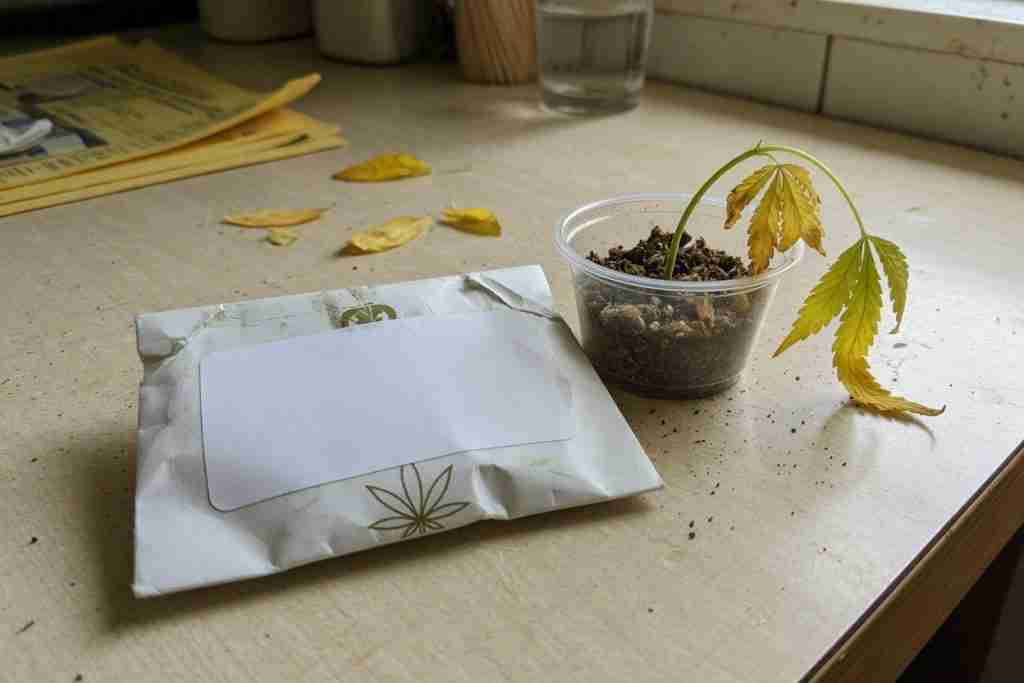
Look, a banner number is a sales hat. It is not a lamp schedule. It is not a pot size. It does not tell you whether that plant wants a 12/12 flip or an age clock. This shop does not print invented strain THC scores on named packs, and you should not treat a competitor banner as a recipe either. Genetics set a ceiling. The room writes the year.
Buy the name, the type, and the flower window. Cherry Bomb on this bench lists 7 to 8 weeks of flower, not a magic potency badge. Chocolate Wedding Cake lists 7 to 9. Those windows are for a photoperiod after the flip. They are not seed-to-jar for an auto, and they are not a promise that a swampy cup will still hit the ceiling. If a listing will not say feminized, photoperiod, or auto, skip it. A pretty photo is not a plan.
Four plants write the year
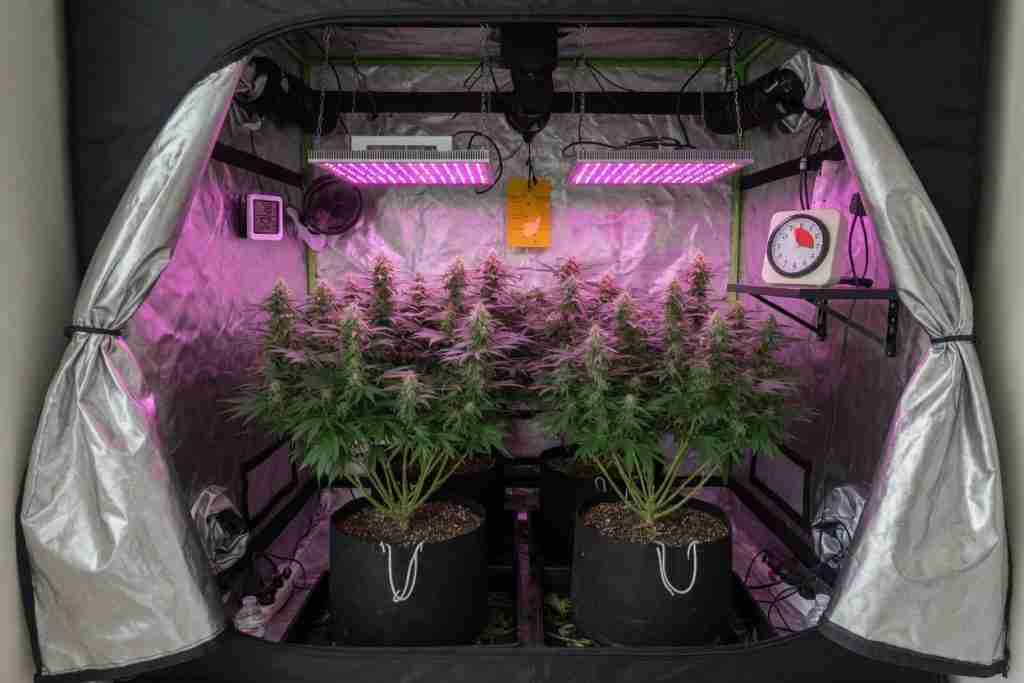
In Canada, recreational home grow is four plants per household, not four per adult. That number is the room. It is not an invitation to cram eight cups under one lamp. Quebec still prohibits recreational cultivation. Manitoba has allowed up to four plants indoors only since 1 May 2025. US plant counts are a state job. Read your own rules before you pop anything. The shop sells seeds. It does not issue a registration.
Four holes in a 4×4 tent is a year you can finish. Eight holes is a humidity trap with a pretty canopy on week three and rot on week eight. If you want the Canada packing clock and the four-plant math in one place, start at ordering seeds in Canada. This page does not reprint that hub. It just refuses to pretend extra cups are extra harvest.
Light does more work than any bottle

Light is food. A bottle is seasoning. You can grow a plant in decent soil with almost no extra feed if the lamp is honest and the pot can dry. You cannot grow a jar under a desk bulb with a $60 bloom additive. Indoor, the lamp is the sun. Outdoor, the sun is the lamp, and shade from a fence at 2 p.m. is a dimmer you forgot to mention.
Match the fixture to the footprint, not to a headline wattage on a box. A small 2×2 tent wants a lamp built for that floor. A 4×4 wants a lamp that actually covers the corners. Hang it so the top leaves are happy, not fried. If the newest growth tacoes and bleaches, raise the bar or dim it. If internodes stretch like wet spaghetti, the plant is hunting for light. The seed-light page is the handoff from a closed shell to a lamp a sprout can stand. This page is the adult version: brightness is a yield lever, and hours are a clock.
Hours on the clock versus brightness

Photoperiod plants veg on long days, usually 18 hours on and 6 off. They flower when nights are long and dark, 12 and 12. That flip is a decision you make. Autos run on age. They do not need the flip, and they are happier if you leave them on long days the whole run. Mixing those two clocks on one timer is how you get a photo that re-vegs and an auto that already finished. Photoperiod seeds explained is how the night works. How autoflower seeds work is the age clock. Flowering control for photoperiods is the flip, stretch, and dark-night job.
Put the timer where you cannot bump it. Write 18/6 or 12/12 on tape. Check it once a week, because a timer that stuck on is a plant that never sleeps, and a timer that stuck off is a photo that flipped in the closet while you were at work. Brightness and hours are two knobs. Turning one does not fix the other.
A hallway light after the flip

After a photoperiod flip, the night has to be actually dark. A zipper left open to a hallway lamp is not a vibe. It is a second sun. The plant reads that leak as day, then you get nanners, odd stretch, or a re-veg that looks like a fox tail. Autos are less fussy about a leak. Photos after the flip are not. Close the tent. Cover the window. Put a towel at the bottom of the door if the hall is bright. That one habit saves more flower than a new bottle.
Water is the beginner killer

Overwatering kills more first plants than underfeeding. A wet cup has no air. Roots need both. The plant looks thirsty because it cannot drink, so you water again, and the cup turns into a swamp. Yellow lower leaves, a sour smell, fungus gnats, and a stem that feels like a wet straw are the postcard from that swamp. The how to water cannabis plants guide is the long pour. Here is the rank version: wait until the pot is light, then water until you get a little runoff, then dump the saucer.
Hard tap can push pH around and load calcium you did not ask for. If your kettle crusts up, read water hardness and cannabis before you blame the bottle. Seedlings want a mist or a small sip. A 20 litre pot wants a real drink and then a wait. One calendar for both is how you drown the baby and starve the bush.
Lift the pot, skip the calendar

Pick the pot up. Heavy means wait. Light means water. After a week you will know that pot the way you know a kettle. A warm, bright tent dries faster than a cool basement. Fabric dries faster than plastic. A plant in flower drinks more than a seedling. The calendar cannot see any of that. Lift, then pour. If you need a backup, stick a finger in the top two knuckles. Wet soil at the knuckle still means wait.
Dump standing water. A saucer that stays full is a swamp with better branding. Gnats love it. Roots do not. The seedling stage guide is the first two weeks of this habit, when a cup is easy to drown.
pH lockout looks like hunger

If the runoff sits outside the range, the plant can sit in a buffet and still starve. Yellowing, brown spots, and crispy tips look like a nutrient problem. Half the time the bottle is fine and the pH is not. Soil is happy around 6.0 to 6.8. Coco and hydro like 5.5 to 6.5. You do not need a lab. You need a cheap pen you calibrate, and a cup of runoff you actually measure.
Feed the stage you are in. Veg wants more nitrogen for leaf and stem. Flower wants less nitrogen and more phosphorus and potassium. Start weaker than the bottle, especially in a small pot. A seedling in decent soil often needs water only. The organic marijuana fertilizer guide is the soil-first version. Flushing is a late-flower conversation, not a panic button on week two. If the pen says the pH is off, fix that before you add more food.
Air, heat, and wet buds

Stale air is how buds rot and how a spare room starts to smell like a shop. You want two kinds of air: a breeze across the leaves, and a path out of the tent. Temperature sits in a summer-day range, about 20 to 28 C with the lights on, a few degrees cooler at night. Humidity starts high for a seedling and drops as flowers fatten. If you want the humidity math without a headache, VPD for home growers is the sibling. This page only needs you to own a cheap meter and to watch it.
Late flower likes it drier. Dense colas in a still, wet tent are a mold bet. Pull a few inner fans if the middle never sees air. Keep leaves off the wet tent wall. A clean room is cheaper than a lost top. The grow room clean guide is the weekly wipe-down, not a scent spray.
A fan is not the same as exhaust

A clip fan moves the same air in a circle. Exhaust pulls that air out and brings fresh air in. You need both. The clip fan should make leaves flutter, not thrash. The inline fan and filter are the nose and the heat dump. A window cracked in a spare room is not a plan for a 4×4 in flower. The grow tent buying guide is how to size the box so the lamp, the filter, and four pots actually fit.
Heat stacks at the top of the tent. If the meter on the floor looks fine and the tops are tacoing, move the meter to canopy height. Honestly, that one move explains a lot of mystery burn.
The pot and the mix decide the roots

Roots want air, moisture, and a wall they can reach without circling for a month. A fabric pot in the 11 to 20 litre range is a kind first home for an indoor plant. A solo cup is a nursery, not a finish line. Leave a plant in a wet cup and the roots drown, then circle, then quit. Autos hate a late transplant because they do not have a spare veg week to recover. Photos can wait in a small pot a little longer, then step up. Either way, pick a finish size early.
Drainage holes are not optional. If the pot cannot dump extra water, you do not have a pot. You have a bucket. The environment guide above covers pot size versus media. This page only needs the rank: a cup that stays wet stays sick.
Soil forgives. Coco asks for a schedule

Soil with perlite is the beginner mix because it buffers a missed day. Coco holds air and water in a nice ratio, however it has almost no food, so you are on a feed schedule from early on. Hydro is a reservoir you have to watch. Pick one and stay with it for the run. Three systems in one tent means three rulebooks and no clean answer when a leaf goes pale.
Do not start in a hot compost pile. A light, airy potting mix with perlite is enough. You can amend later. You cannot un-burn a seedling. If you want the indoor versus outdoor fork before you pick a mix, the indoor vs outdoor debate is the climate talk, and the indoor growers guide is the tent version.
The pack you buy is a clock

Checkout is a clock, not a quality grade. A photoperiod feminized pack flowers from the flip. An autoflower pack flowers from seed age. Regular packs are a breeding door because they can throw males. Feminized versus auto is a false fork. Most autos you will see are already feminized. The real carts are photo fem and auto fem. This bench prints named feminized photoperiods unless a card says auto. Named packs sit around $4 CAD a seed. Mix sits around $1. A 5-pack is the default home order because four plants write the year and one seed is the spare.
Germination on named packs is a 70 percent paper-towel floor, with photos of the towel, mix excepted. That is the cover. It is not a vigor medal after a tail, and it is not lost mail. Lost mail is the optional $15 CAD reship, a different product. How to use the cover lives on what a germination guarantee actually covers. How to pop the seed lives on boosting cannabis seed germination. How long a jar of seeds stays useful lives on how long cannabis seeds last.
Photo fem versus auto fem

Buy an auto when the season is short or you cannot own a 12/12 night. Buy a photoperiod when you want size, a flip you control, or a cut you can keep. Autos skip the flip, and they also skip recovery veg, so a hard topping or a late transplant costs you the year. Photos can take a mistake in veg and still catch up. One timer cannot serve two clocks. If you want both types, you need two tents or two rooms. The decision page is photoperiod vs autoflower. The grow-out for autos is how to grow autoflowering plants.
A 60 to 70 day listing is a band, not a type. Some of those windows are flower after the flip. Some are seed-to-harvest on an auto card. Read the card. The 60 to 70 day strains page is that decoder. Do not invent an unpublished auto SKU on this bench. If the store card does not say auto, treat it as a feminized photoperiod.
Mix has no type

A mixed feminized pack is a price. It is not a clock. You do not know which trigger you got until the plant tells you. That is fine for a scavenger hunt. It is a bad first tent if you only own one timer. Named packs print the trigger. Mix does not. The germ floor above excepts mix for a reason. Buy mix when you want volume and you can read a plant. Buy a named 5-pack when you want the year to be boring in a good way.
Cut on the resin, then wait

Pistils turning orange is a hint. Trichomes are the call. Clear heads are early. Cloudy heads are the peak for most home jars. Some amber leans heavier. Buy a loupe. Look at the buds, not just the sugar leaf. The flowering stage guide is the weeks after the flip. The veg guide is how big the plant is allowed to get before that flip. Cut too early and the jar tastes thin. Cut too late and you trade brightness for sleep. Neither is a moral failure. It is a preference you can only have if you look.
Do not harvest on a calendar you copied from a stranger. Cherry Bomb 7 to 8 weeks of flower is a window, not an alarm clock. Weather, lamp intensity, and how hard you pushed the plant all move the day. Look, then cut.
Dry slow or the jar tastes like hay

The grow is not over when the scissors come out. Hang whole branches or big colas in the dark, cool, with a little air, until small stems snap instead of bend. Then jar, burp, and wait. A fast dry in a hot closet tastes like hay and stays harsh for months. A wet jar grows mold. The dry, cure, and store guide is the last job on the rank. Skip it and you spent four months seasoning a snack you will not enjoy.
Specs, pros, and cons for a first home run

Specs you can actually use, not a catalog fantasy:
Light hours: photoperiod veg 18/6, flower 12/12 with a dark night. Autos stay on long days. Brightness: match the lamp to the tent floor, then raise or dim from the leaf.
Temperature: about 20 to 28 C lights on, a few degrees cooler at night.
Humidity: seedling 65 to 70 percent, veg 55 to 65, flower 45 to 55, late flower on the dry side of that.
pH: soil 6.0 to 6.8, coco and hydro 5.5 to 6.5.
Pot: fabric, 11 to 20 litres indoor to finish, nursery cup only at the start.
Plants: four holes for a Canadian recreational household. Do not invent extra.
Pack: named feminized photoperiods on this bench unless the card says auto. Named about $4 CAD a seed, mix about $1, 5-pack default.
Germ: 70 percent paper-towel floor on named packs, photos required, mix excepted.
Mail: weekday pack, then the shipping windows. Same week is common in Canada. Overnight is a story.
Pros of treating the rank as the job: you drown fewer plants, you stop buying bottles for a pH problem, you stop mixing clocks, and the jar actually tastes like the plant. Cons: it is less exciting than a new additive, you have to lift a pot, and you cannot hide a hallway leak behind a THC banner. Specs without the rank are just numbers on a fridge. The rank without specs is a pep talk. You want both.
Questions growers ask

What are the most important things growing cannabis, in one line?
The clock on the pack, honest light, water by weight, air that leaves the room, a pot that can dry, pH the roots can use, and a slow dry after you cut on the resin.
How long does a run take?
Autos often sit in the 9 to 12 week seed-to-cut range, then you still dry. Photoperiods are veg as long as you choose, plus the flower window on the card, plus dry. Indoor photos commonly land around 14 to 19 weeks seed to jar if veg is short. Outdoor photos follow the sun. Do not treat a 7 to 8 week flower listing as seed-to-smoke.
Do I need a tent?
You need a space you can darken, vent, and keep the hallway out of. A tent is the easy version of that. A spare closet can work if the night is dark after a photo flip and heat has a way out. Outdoor skips the tent and takes the season instead.
How often should I water?
When the pot is light. For a seedling that might be days. For a thirsty plant in flower in fabric, it might be every other day. The calendar is a guess. The lift is the answer.
What nutrients matter most?
Nitrogen in veg, then phosphorus and potassium in flower, plus calcium, magnesium, and the rest of the small list. In soil, a decent mix often carries a seedling. In coco, you feed earlier. pH is the gate. Food sitting outside the gate does not count.
Can I run autos and photos in one tent?
Not on one timer. The photo wants a dark 12-hour night to flower. The auto wants long days. One tent, one clock. Two clocks need two boxes.
Are autos always the beginner pack?
Autos skip the flip, which is one less way to mess up the clock. They also skip recovery veg, which is less forgiveness after a drown or a late transplant. Beginner ease is an error budget, not a medal. A named photo fem in soil, lifted when light, is a kind first run if you can own the night.
Will a hallway light ruin a photo?
After the flip, yes it can. A leak reads as day. Close the zipper. Cover the window. Autos care less. Photos in flower care a lot.
Is mix cheaper, so should I start there?
Mix is cheaper per seed and has no type on the label. That is a scavenger hunt. A named 5-pack costs more and prints the trigger. For run one, named is the calmer year.
You do not need a new personality to grow weed. You need a rank you will actually follow when a leaf goes pale. Light, water, air, the clock on the pack, then the cut and the dry. The rest of the internet can wait.