Marijuana Seed Hull Stuck on Cotyledons: Safe Removal Without Damage


Your quick answer
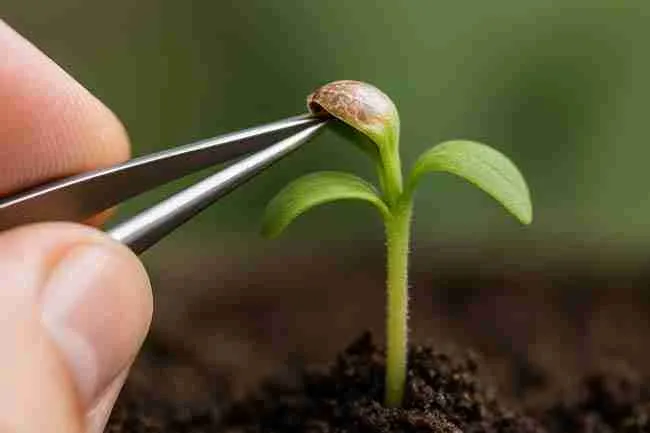
If you see a Marijuana Seed Hull Stuck on your baby leaves (cotyledons), add moisture before you touch anything. Gently soften the hull with warm (not hot) water using a cotton swab or fine mist. Wait 20–60 minutes for the husk to loosen. If it doesn’t fall off, use sterilized, fine-tip tweezers to peel the hull away slowly at the seam, supporting the stem with your other hand. If a thin inner membrane is still glued to the leaves, moisten it again and “roll” it off with a damp cotton swab. Keep light gentle, air still, and humidity 65–80% while the seedling recovers.
What “Marijuana Seed Hull Stuck” really means
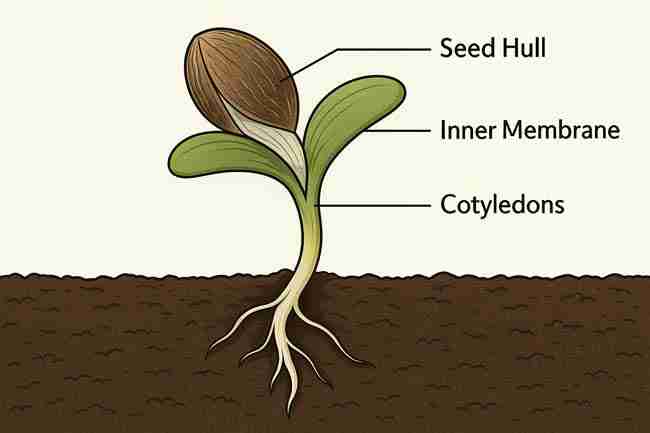
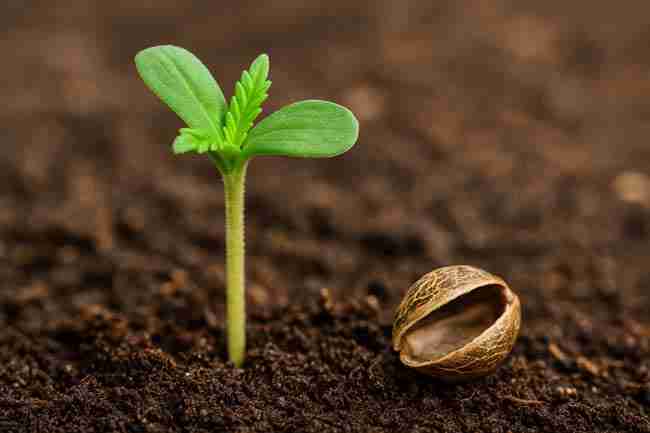
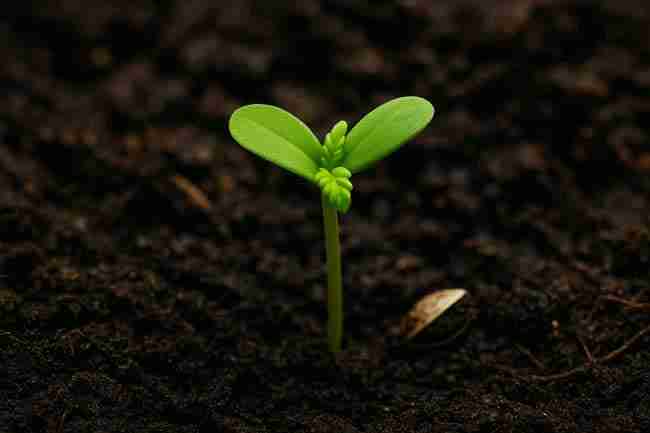
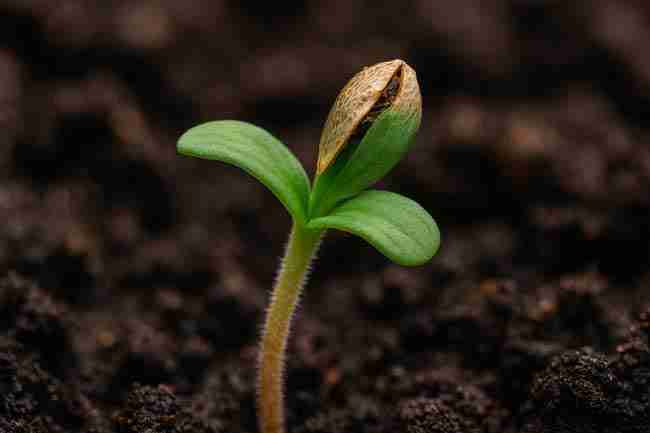
When a cannabis seed germinates, it pushes up a stem with two first leaves called cotyledons. The seed hull (also called the shell or testa) is supposed to pop off as the cotyledons spread. Sometimes the hull doesn’t let go, or a thin inner skin sticks to the leaves like cling wrap. That’s the Marijuana Seed Hull Stuck problem you’re dealing with. It looks scary, but it’s common and fixable when you go slow and keep things moist.
Why it matters to you
- Cotyledons are the seedling’s first solar panels. If they can’t open, growth stalls.
- Forcing a dry hull off can tear leaves, bend the stem, or cause damping-off later.
- A careful, moisture-first approach saves the day almost every time.
Why the hull gets stuck in the first place
You didn’t necessarily do anything “wrong.” A few common things gang up on new seedlings:
- Dry air during sprout: Low humidity hardens the hull and glues the inner membrane to the leaves.
- Shallow planting: If the seed is too close to the surface, it doesn’t rub the hull off as it pushes up.
- Old or over-dried seeds: The hull can be extra tough and the inner membrane extra sticky.
- Under-hydration before planting: Seeds that weren’t fully wetted can start stiff.
- Heat + fans too early: Warm, blowing air dries the hull right when it needs to be flexible.
- Compact, crusty surface: The seedling can’t use soil friction to shed the shell.
Preventing Marijuana Seed Hull Stuck (do this next time)
You can prevent most cases with a few easy tweaks.
Hydrate seeds the smart way
- Optional pre-soak: 8–12 hours in room-temp water (18–22°C / 64–72°F). Don’t exceed 24 hours.
- Switch to moist media: After soaking or the taproot just peeks, plant in a light, fluffy seed-starting mix.
Give the seed the right depth and environment
- Depth: 0.5–1 cm (¼–⅜”). Pointy end down or sideways.
- Humidity: 65–80% until cotyledons open. Use a clear humidity dome or plastic cover with small vents.
- Temperature: 24–26°C (75–79°F).
- Light: Gentle—PPFD ~100–150 µmol/m²/s (think weak LED or higher light hung far).
- Airflow: Barely any at first. No fans blasting seedlings.
Keep the surface just moist
- Mist the top lightly if it crusts.
- If you use paper towels to germinate, move to media as soon as a tiny taproot shows, so the seedling can use substrate friction to ditch the hull.
How to fix Marijuana Seed Hull Stuck: step-by-step methods
Here are four safe methods—start with the gentlest and only move to the next if needed.
Method 1: Moisture-dome softening (gentlest)
When to use: Hull resting on cotyledons but not clamped like a vice.
- Raise humidity: Cover the seedling with a clear cup or put the tray under a humidity dome.
- Mist lightly: Use warm water (not hot). One or two mists—don’t soak the stem.
- Wait 20–60 minutes: You’re giving the hull time to soften on its own.
- Check again: Often the hull loosens and falls with the next micro-stretch.
Safety rules
- Don’t poke or squeeze. Moisture is doing the work here.
- Keep temps steady (24–26°C).
- If nothing changes after 60–90 minutes, move to Method 2.
Method 2: Warm compress (targeted softening)
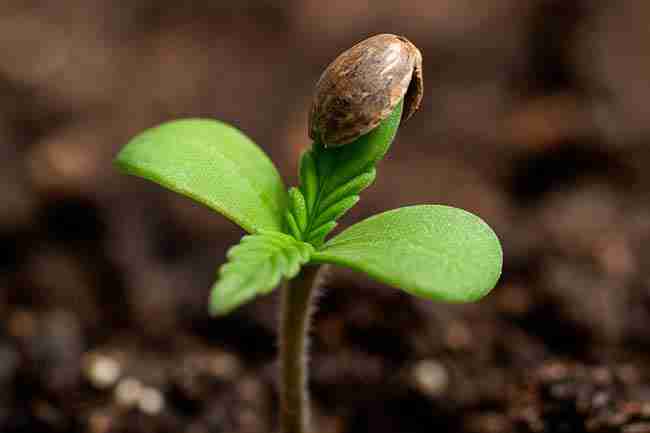
When to use: Hull looks leather-hard or there’s a clingy inner membrane.
- Sterilize tweezers (you might need them next): Wipe with 70% isopropyl and let dry.
- Make a compress: Wet the tip of a cotton swab with warm water.
- Hold on the hull for 20–30 seconds: Don’t press hard—just bathe the hull.
- Roll the swab away: This can slip the membrane’s grip.
What to watch
- If the stem is wobbly, support it with a finger or toothpick on the soil (don’t pinch).
- Repeat once or twice. Still stuck after ~5 minutes? Go to Method 3.
Method 3: Tweezers peel (precise and careful)
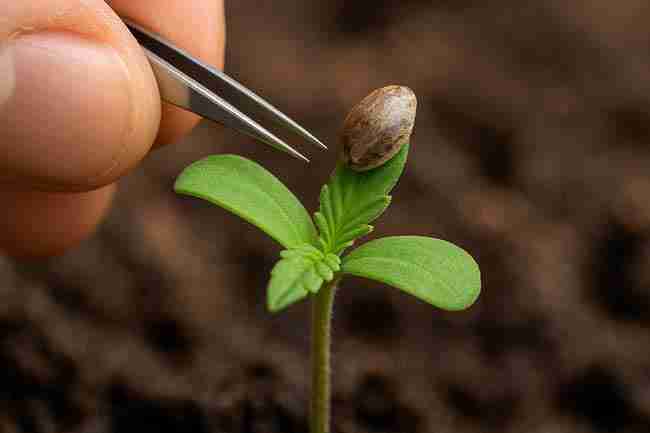
When to use: Hull is clamped on or only one cotyledon has escaped and the other is trapped.
- Sanitize tools & hands: 70% isopropyl on tweezers; wash your hands.
- Moisten again: Quick warm mist or compress to keep everything supple.
- Grip the hull at the seam: Use fine-tip, smooth tweezers. Avoid grabbing leaf tissue.
- Micro-movements: Wiggle the hull open at the seam, not sideways.
- Lift off slowly: If it doesn’t lift, stop, re-moisten, and try again.
Pro tip for inner membrane (“cling wrap”)
- After the shell pops off, you may see a shiny film still gluing the leaves. Re-wet it for 20–30 seconds, then roll it off with a damp swab from the leaf base to tip. Never scrape dry.
Method 4: The tape trick (last resort)
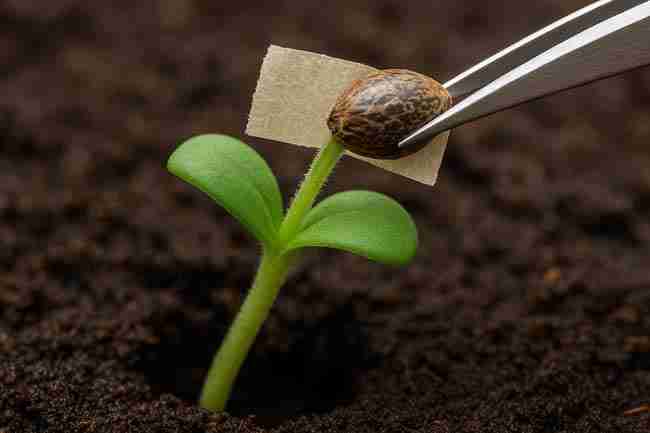
When to use: Hull is dry, smooth, and won’t grip with tweezers without slipping.
- Dab the hull with low-tack tape (e.g., painter’s tape).
- Pull back super slowly in line with the seam.
- Stop if the stem flexes—re-moisten and retry.
This is risky. Use only if the other methods fail and you have a steady hand.
Specifications & setup checklist (copy this before you start)
- Water: Clean, chlorine-free, room temp to slightly warm (20–30°C / 68–86°F).
- Humidity target during rescue: 65–80%.
- Temperature target: 24–26°C (75–79°F).
- Light: PPFD 100–150 µmol/m²/s (dim or high light hung high), 18/6 schedule.
- Tweezers: Fine-tip, smooth jaws, 1–2 mm tips.
- Cotton swabs: Soft, lint-free.
- Disinfectant: 70% isopropyl alcohol for tools.
- Magnification (optional): Head-loupe or phone macro clip.
- Support tool: Toothpick or sterile plant tag to brace the stem (don’t squeeze).
Quick troubleshooting table
| Symptom | Likely Cause | What You Should Do |
|---|---|---|
| Hull perched on top, not squeezing | Low humidity or shallow planting | Method 1 (humidity dome) → wait 20–60 min |
| Hull clamped tightly | Dry, tough shell | Method 2 (warm compress) → Method 3 (tweezers at seam) |
| Shiny film on leaves after shell off | Inner membrane stuck | Re-moisten; roll off with damp swab |
| Stem bending while you pull | Pulling too fast or wrong angle | Stop, support stem, re-moisten, peel at seam |
| No change after 24–36 hours | Hull very stubborn, membrane glued | Repeat softening cycles; consider tape trick as last resort |
| Leaves torn or nicked | Too much force | Leave it; raise humidity; let plant heal; reduce light intensity for 24h |
Aftercare: help your seedling bounce back
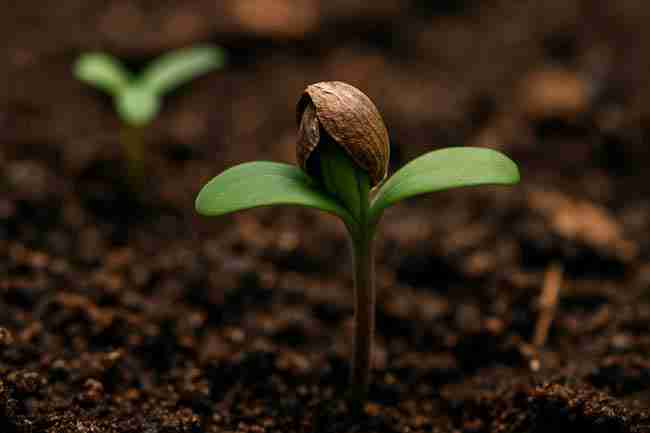
Once the hull or membrane is off, your job isn’t done.
- Ease into light: Keep light gentle (PPFD ~150) for a day, then ramp slowly.
- Keep humidity ~70% for 24 hours, then drift to 60–65%.
- Don’t feed yet: Seedlings don’t need nutrients in the first 10–14 days in a light mix.
- Water carefully: Tiny ring around the stem; don’t soak the whole pot.
- Stop wind stress: No direct fan for the first day after rescue.
- Fix stretch: If the stem is long, add a pinch of media around it for support.
Common mistakes to avoid
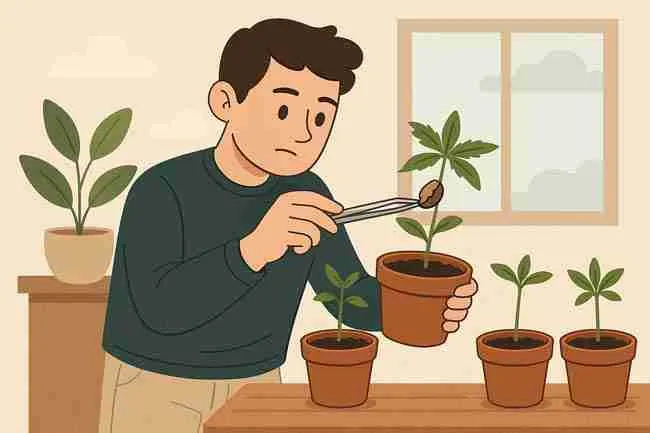
- Yanking a dry hull. Dry = stuck = tears. Always moisten first.
- Pinching cotyledons with tweezers. Only touch the hull or membrane, never the leaf.
- Soaking the stem. Waterlogged stems invite damping-off.
- Strong light during rescue. Bright light makes leaves tug against the hull.
- Big fans too early. Air dries the hull and wobbles the stem while you work.
- Using oils or glue removers. They suffocate tissue. Stick to clean, warm water.
When to intervene—and when to wait
You don’t have to jump in the second you notice a Marijuana Seed Hull Stuck.
- Wait and watch if the hull is loose and humidity is good. Many pop off naturally.
- Intervene if the hull is clamped, the seedling is bowing, or nothing changes after a few hours of humidity.
- Stop if you feel resistance that bends the stem—re-moisten and try later.
Decision mini-map (use this like a flowchart)
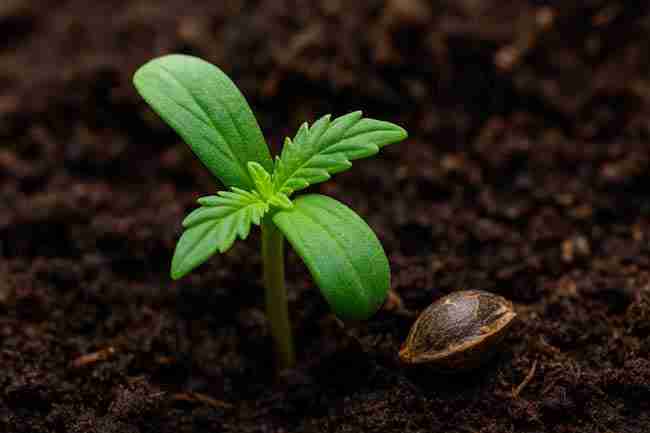
- Hull stuck? → Raise humidity and mist warm water.
- After 30–60 min, still stuck? → Warm compress.
- Still stuck? → Tweezers at seam, micro-wiggles only.
- Membrane remains? → Re-moisten and roll off with a damp swab.
- Stem bends or you panic? → Stop, re-wet, and retry later.
Real-life rescue examples (so you can picture it)
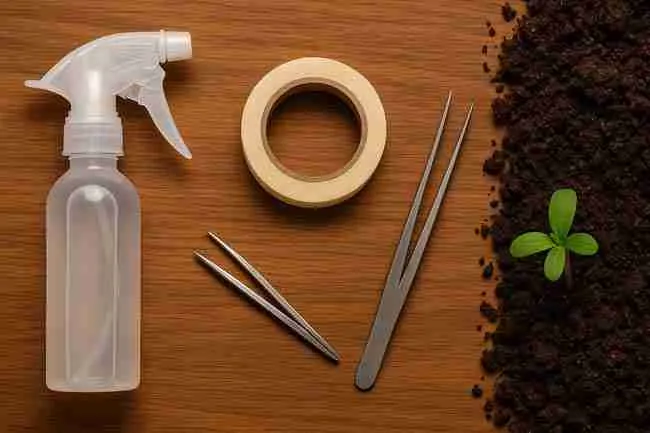
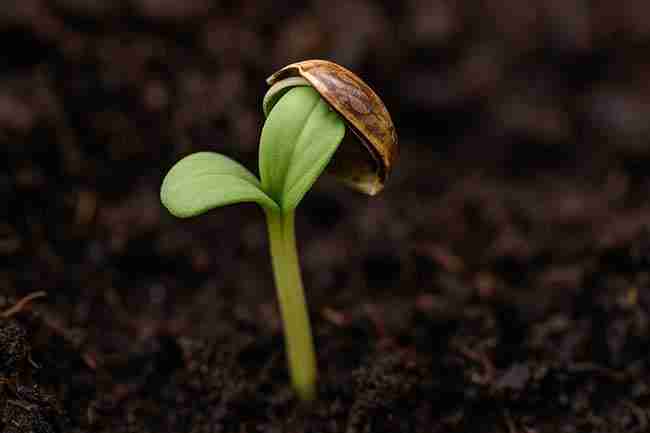
- The “helmet head” hat: Hull sitting like a tiny helmet. A 30-minute cup-dome + two mists and it slid off when the seedling stretched. Zero tools needed.
- The “one-sleeve” trap: One cotyledon was free; the other trapped. Warm compress for 30 seconds, then a two-second seam peel with tweezers—done.
- The cling-film special: Shell came off but a shiny film sealed the leaves. Two compresses and a gentle swab roll—leaves opened in minutes.
Pros and cons of helping your seedling
Pros
- Saves energy for the seedling by letting cotyledons open and photosynthesize.
- Prevents deformation when the hull pinches one leaf.
- Faster, more uniform starts across your tray.
Cons
- You can tear tissue if you rush.
- Sterility matters—dirty tools invite disease.
- Easy to over-mist and cause damping-off if you drench the stem.
Tool & environment specs table (keep this handy)
| Item | Recommended Spec | Why It Matters |
|---|---|---|
| Tweezers | Fine-tip, smooth jaws, 1–2 mm | Precision without crushing leaf tissue |
| Water | Clean, dechlorinated, 20–30°C | Warmer water softens hull safely |
| Humidity | 65–80% during rescue | Keeps hull supple; prevents re-drying |
| Temperature | 24–26°C | Enzymes and tissue stay flexible |
| Light | PPFD 100–150 µmol/m²/s | Reduces tug while you work |
| Disinfectant | 70% isopropyl alcohol | Keeps pathogens away from wounds |
| Cotton swabs | Soft, lint-free | Rolls membrane without scratching |
Risk management: what if something goes wrong?
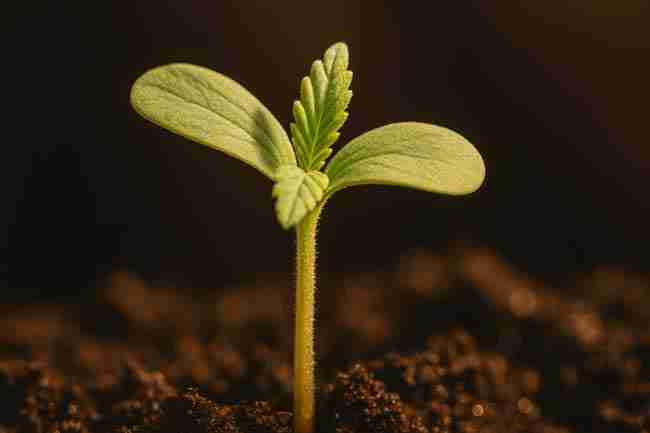
- Tiny tear on a cotyledon? Not the end of the world. Keep things clean and humid; the second cotyledon will carry the load.
- Stem nicked? Add gentle support (toothpick or plant clip), lower light for a day, and avoid drenching the area.
- Leaves still won’t open after 48 hours? Re-soften and try the swab roll again. If the inner membrane re-sticks, your air is too dry—raise humidity.
Related tasks that help (and prevent repeats)
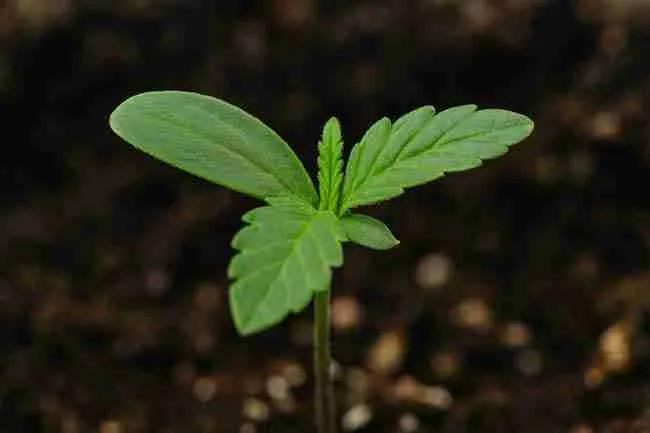
- Plant a hair deeper next time (0.5–1 cm) and keep the surface crumbly, not crusty.
- Pre-soak stubborn, older seeds (but never more than 24 hours).
- Use a humidity dome for the first 48 hours after emergence, then crack vents gradually.
- Label your batches (date, method) so you learn which steps reduce Marijuana Seed Hull Stuck events in your setup.
Frequently Asked Questions (FAQ)
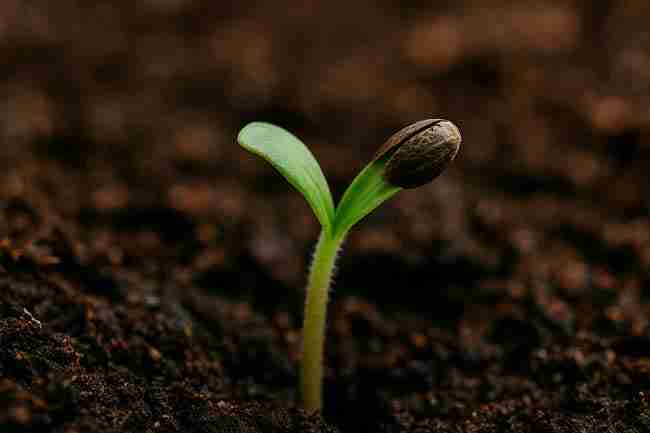
Why does the inner “skin” stick even after the hull is off?
That shiny skin is the inner seed membrane. Dry air glues it to the cotyledons. Re-moisten with warm water and roll it off with a damp swab. Avoid scraping dry.
How long should I wait before helping?
Give moisture 20–60 minutes first. If nothing changes, it’s safe to assist. If the hull is loose and conditions are humid, you can wait a few more hours.
Can I just pull the hull off with my fingers?
You can, but it’s risky. Fingers are bulky and often squeeze the leaves. Use fine-tip tweezers and always moisten first.
My seedling bent like a fishhook while I pulled. Is it doomed?
Probably not. Support the stem, lower light for 24 hours, keep humidity 65–70%, and let it recover. Most straighten as true leaves appear.
I tried everything. The hull is rock-hard. Now what?
Repeat warm compress cycles. As a last resort use the tape trick with low-tack painter’s tape. If it still won’t budge and the stem is at risk, it may be kinder to stop and let nature take a turn.
Does strain or seed age change the odds of a hull getting stuck?
Yes. Older seeds and some thick-shelled lines stick more often. Pre-soaking and a humid emergence phase help a lot.
Will nutrients help a stuck seedling?
No. New seedlings feed off internal reserves. Focus on humidity, temperature, and gentle light, not fertilizer.
Is “Marijuana Seed Hull Stuck” a sign my seeds are bad?
Not necessarily. It’s usually about environment and moisture timing, not genetics.
Copy-ready “Rescue Kit” checklist (print this)
- Fine-tip, smooth tweezers
- Cotton swabs
- Clean spray bottle (warm water)
- 70% isopropyl wipes
- Clear cup or humidity dome
- Toothpick/plant tag for stem support
- Gentle light and patience (your secret weapons)