


Light Uniformity and Real PPFD Measurement for Maximum Cannabis Yields

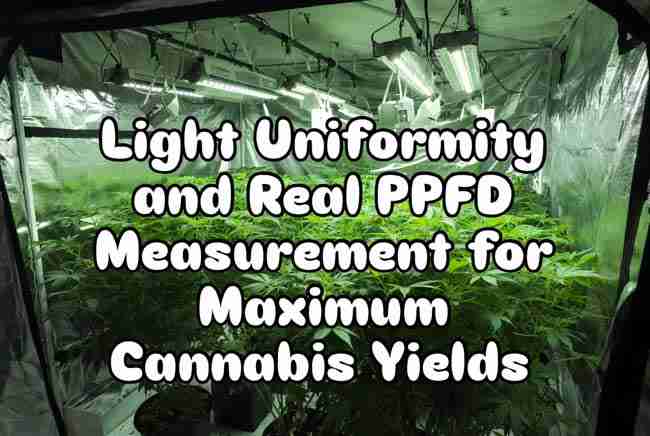
Hey there, grower. You dropped serious cash on those LEDs because the box promised big numbers. The specs looked impressive on the website, and you pictured fat, frosty buds wall-to-wall. Fast forward a few weeks and one corner of the tent is stretching like crazy while the middle looks like it got a sunburn. Sound familiar?
That gap between what the manufacturer prints and what actually reaches every leaf is exactly why light uniformity cannabis matters so much. Getting honest ppfd measurement cannabis data from your own space turns good lights into great harvests. This guide walks you through the real-world stuff that actually moves the needle in a home tent or small room.
The Gap Between Shiny Specs and Real-World PPFD Delivery

Manufacturer sheets love to show one big peak number right under the center of the fixture at a perfect hanging height in an empty room. That number feels good, but it rarely tells the full story once you hang the light in your actual tent.
Real ppfd measurement cannabis work reveals the truth fast. Walls, corners, plant tops, and even the way multiple lights overlap all change the picture. A fixture that claims 1000 μmol/m²/s in the middle might only deliver 300-400 in the corners of a 3×3 or 4×4 tent. The average across the whole canopy ends up lower than you expected, and some plants get way more light than others.
Here’s what usually happens in home setups:
- The center hotspot pushes plants into stress while edge plants stay hungry for photons.
- As plants grow taller, the distance changes and uniformity gets worse.
- Reflective material that’s dusty or poorly installed eats up a surprising amount of light.
- Dimmable drivers and different tent heights mean the “ideal” number on the spec sheet almost never matches your reality.
Many premium lights still show excellent average PPFD but poor uniformity scores (think U80 or U90 metrics that commercial growers obsess over). You can have two tents with the exact same average PPFD and get completely different results because one has even light and the other has hot and cold spots.
That’s why relying only on the box is like judging a car by its top speed on a straight empty road. Your grow has turns, hills, and traffic. Real ppfd measurement cannabis mapping shows you the actual road conditions.
Getting Hands-On: Affordable Cannabis Grow Light Mapping That Actually Works
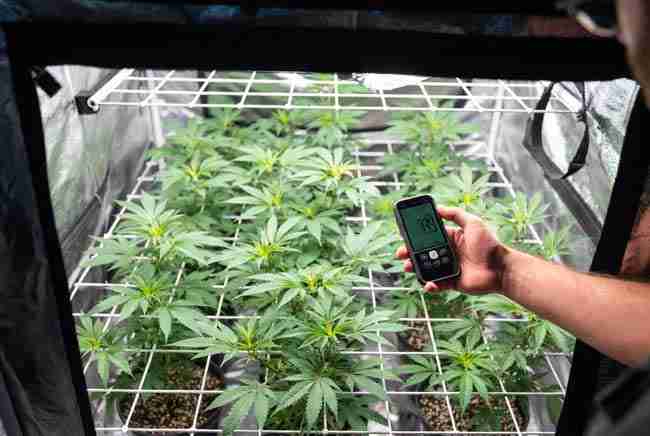
You don’t need a $500 lab meter to start improving things. A few simple, budget-friendly methods give you everything you need to see the real picture in your tent.
The quick 9-point method works great for most home growers:
- Turn lights on and let them warm up for 15–30 minutes.
- Set the height and dimmer percentage you plan to use for the current stage.
- At the top of the canopy (or where the tops will be), mentally divide the space into a tic-tac-toe board.
- Measure dead center, the four mid-edge spots, and the four corners.
- Write every number down.
- Average them all. Also note the highest and lowest readings.
- Aim for the lowest reading to stay within about 15-20% of the highest. Bigger gaps mean you have work to do.
Smartphone apps that turn your camera into a light meter (with a cheap diffuser or white ping-pong ball) give surprisingly good relative maps for free or low cost. They’re perfect for seeing hot and cold zones quickly. Dedicated quantum PAR meters cost more but give repeatable absolute numbers you can trust when you’re tweaking heights or adding reflectors.
Plot the numbers on a simple grid in a notebook or spreadsheet. Color-code it like a heat map if you want the visual pop. Do this once in late veg and again a couple weeks into flower. Plants fill in and change the readings fast.
Many growers discover their “great” light was only great in one spot. Once they see the actual map, small changes like raising the fixture two inches or adding cheap mylar on one wall suddenly make the whole canopy happy.
When Light Plays Favorites: How Uneven Lighting Hurts Your Harvest

Uneven light intensity cannabis home setups create invisible weak links that drag down the whole garden.
Plants in the bright center race ahead, use more water and nutrients, and sometimes show stress signs like taco leaves or bleached spots. Plants on the edges stretch hard toward the light, grow airy buds, and finish later. You end up with a mixed bag at harvest: some colas are dense and potent, others are fluffy and underwhelming.
That inconsistency costs you in several ways. Total grams per watt drop because part of your canopy never reaches its potential. Trimming takes longer when buds ripen at different times. Quality sorting becomes a chore. And if you started with excellent cannabis seeds, you’re leaving genetic potential on the table.
Weak, shaded spots also tend to stay more humid and can become entry points for mold or pests while the strong plants are busy fighting light stress. It’s a lose-lose situation that proper cannabis grow light mapping and fixes solve surprisingly fast.
Leveling the Playing Field: Actionable Fixes for Better Light Uniformity

Once you have your map, the fixes are usually straightforward and cheap.
Start with positioning. Center the light properly and try raising it a couple inches if the middle is blasting way hotter than the edges. Dimming 10-15% often evens things out without losing much total light. For bigger tents, two smaller fixtures with slight overlap on the edges frequently beats one giant light in the middle.
Reflectivity is free real estate. Clean your mylar or add fresh reflective material on walls and even under the plants. White panda film or flat white paint on non-tent walls bounces light back where it belongs. Every extra 10-15% of reflected light helps fill in the weak spots.
Plant training makes the biggest difference for even canopy lighting cannabis. Low stress training spreads branches early so tops stay at similar heights. A SCROG net turns a chaotic canopy into a flat table of bud sites that all sit at the same distance from the light. Selective defoliation opens up lower sites without over-stripping. When every bud site receives similar intensity, the whole plant finishes more evenly and you harvest more usable flower.
These tweaks cost almost nothing compared to buying new lights, yet many growers see 15-30% better yields and much more consistent quality after dialing them in.
Hitting the Right Numbers: Smart PPFD and DLI Targets for Each Growth Stage
Forget chasing the highest possible number. Focus on the right average across your whole mapped canopy and watch how the plants respond.
Here’s a practical target table based on what actually works in home tents:
| Growth Stage | Average PPFD (μmol/m²/s) | Target DLI (mol/m²/day) | Photoperiod | Quick Notes |
|---|---|---|---|---|
| Seedling / Clone | 150–300 | 10–20 | 18–24 | Keep gentle. Watch for stretch or burn. |
| Vegetative | 400–700 | 25–40 | 18 | Strong branching and leaf growth. |
| Early Flower | 600–900 | 30–45 | 12 | Bud sites forming. Avoid sudden jumps. |
| Peak Flower | 700–1100 | 35–50+ | 12 | With excellent environment and CO2 you can push higher. |
Remember the simple DLI math: PPFD × hours of light × 0.0036. A steady 600 PPFD for 18 hours gives roughly 39 DLI. The same 600 PPFD for only 12 hours drops to about 26 DLI.
These are canopy averages from your map, not the center reading. Always adjust gradually over a few days and let the plants tell you if they’re happy. Light stress shows up as bleaching or upward curling. Too little light shows as stretching and pale color. When your map stays even and the plants look vigorous, you’re in the sweet spot.
Real Home Grower Wins: Before-and-After Light Mapping Results

Real growers see these changes all the time once they stop guessing and start measuring.
One guy in a 3×3 tent had a popular LED that looked killer on paper. His map showed 950 in the center and only 280 in the corners. He raised the light four inches, added reflective material on the lower walls, and did some light LST. Two weeks later the new map sat between 520-680 across the whole canopy. His yield jumped noticeably and every bud finished at the same time with similar density.
Another grower skipped training because the plants “looked fine.” After flipping, lowers stayed shaded and produced larfy buds. He added a SCROG net mid-veg the next run, defoliated strategically, and mapped again. The even canopy let light reach everywhere. He harvested more total weight and the quality was night and day better from top to bottom.
When you start with strong genetics from quality cannabis seeds, these lighting improvements let every plant express its full potential instead of just the lucky ones sitting in the hotspot.
From Even Light to Epic Buds: Pairing Great Lighting with Quality Cannabis Seeds

Optimized light uniformity cannabis doesn’t just add grams. It improves everything downstream. Plants under consistent intensity develop stronger stems, better root systems, and more even nutrient uptake. That means fewer deficiencies popping up in random spots and smoother transitions when you flip to flower.
Terpene and resin production also love steady, adequate light without stress spikes. You end up with buds that smell louder and hit harder because every trichome had the energy it needed to develop fully.
Starting with top-tier cannabis seeds from Green Avenger Seeds already gives you an advantage. When you remove the variable of uneven lighting, those genetics get to show what they can really do. The combination of great seeds plus dialed-in even canopy lighting is where home growers start seeing results that rival much bigger setups.
Light uniformity isn’t some complicated lab experiment. It’s simply making sure every part of your garden gets a fair share of the photons you’re already paying for. Map once, tweak a little, train the canopy, and recheck. The plants will reward you with bigger, more consistent harvests and a whole lot less frustration.
Keep measuring, keep adjusting, and enjoy watching your garden level up.
