In-House Speed Breeding Cannabis: Light Schedules to Compress Generations


Speed breeding cannabis lets you push your genetics harder and faster than a normal grow ever could. You’re not just growing buds; you’re running a little in-house breeding lab that churns out new generations in record time with smart light schedules and tight planning.
Below, you’ll walk through exactly how to do it, what light cycles to use, what to watch out for, and how to turn your grow room into a rapid generation cycling machine for your own perpetual seed projects.
What Is In-House Speed Breeding Cannabis?
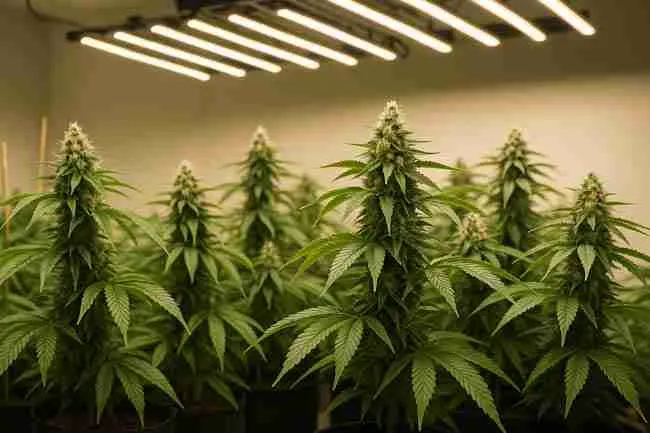
When you use speed breeding cannabis techniques, you’re trying to squeeze as many generations as possible into a single year by:
- Shortening veg
- Triggering flower earlier
- Finishing seed runs faster
- Keeping seed parents ready so you don’t restart from scratch
Instead of doing 1–2 generations per year, you aim for 3–5+ generations, depending on your setup and the strains you choose.
You’re not trying to grow perfect, huge cola jars every run. You’re trying to test genetics quickly, make selections, collect seeds, and move on to the next generation while information is still fresh in your mind.
Speed breeding is about learning fast:
- Which plants handle stress
- Which ones finish early
- Which ones throw herms when pushed
- Which ones show the flavors, structure, and effects you want
You’re basically running a mini breeding program at home.
Why You’d Want to Use Speed Breeding Cannabis

When you use rapid generation cycling, you give yourself a massive edge as a home breeder or serious hobby grower.
Major reasons you’d want to do this
- You want earlier-finishing outdoor lines for your short season.
- You want more stable feminized seeds in less time.
- You want to fix a trait (like purple color or strong gas) quickly.
- You want to find rare keepers before another seed order distracts you.
- You want a perpetual seed project that always has something at seedling, vegging, flowering, and finishing seed.
Instead of waiting for nature’s slow calendar, you bend the grow room clock with light and scheduling.
Core Idea: Rapid Generation Cycling for Cannabis
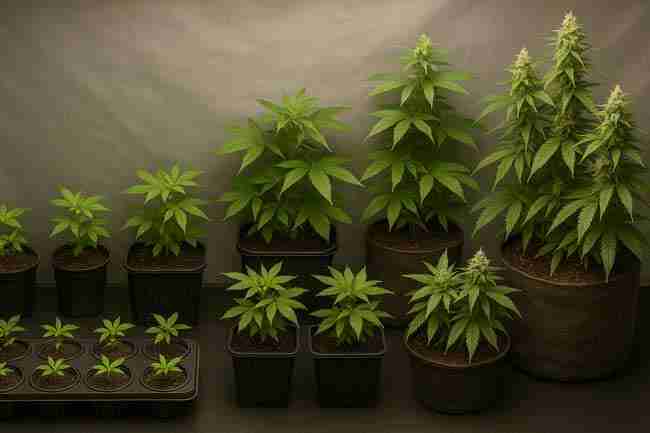
Rapid generation cycling just means you push plants from seed → flower → seed again as quickly as possible without wrecking seed quality.
You do it by controlling:
- Light schedules
- Day length
- Stress levels
- Nutrition
- Pot size and root environment
You’re not rushing blindly. You’re shaving off wasted time:
- No long veg where plants sit and stretch forever.
- No “extra” weeks after seeds are mature.
- No long gaps between runs.
You harvest, clean, reset, and plant the next generation right away.
Big Picture: How Many Cannabis Generations Per Year?

This is what speed breeding cannabis can realistically do for you under lights.
Example comparison table
| Style | Veg Time (Approx) | Flower Time (Approx) | From Seed to Seeds Ready | Generations/Year (Rough) |
|---|---|---|---|---|
| Normal Photoperiod Hobby Grow | 4–8 weeks | 8–10 weeks | 14–18 weeks | 2–3 |
| Mild Speed Breeding (Photo) | 2–3 weeks | 7–9 weeks | 11–13 weeks | 3–4 |
| Aggressive Speed Breeding | 0–2 weeks | 7–8 weeks | 9–11 weeks | 4–5 |
| Fast Auto Runs (Seed to Seed) | 0–1 week | 8–10 weeks (total) | 8–10 weeks | 4–6 |
You don’t have to hit the max. Even jumping from 2 generations to 4 in a year doubles your breeding progress.
The Heart of It: Light Schedules for Speed Breeding Cannabis

Light is your steering wheel. You use light hours to tell the plant:
- “Grow more leaves and branches” (veg)
- “Start flower and make buds/seeds now” (bloom)
You’ll use different schedules depending on whether you’re working with photoperiods or autoflowers.
Speed Breeding With Photoperiod Cannabis (Most Control)

Photoperiod plants give you the most control, because they only flower when day length drops.
Key Light Schedules for Photoperiod Speed Breeding
You can tune light like a slider.
Germination and Early Seedling (Days 1–10)
- Light schedule: 18/6 or 20/4
- Goal: Fast, strong seedlings with no stretch.
You want:
- High light intensity (without burning)
- Gentle airflow
- Warm, stable temps
You’re building the foundation for all the generations that’ll come next.
Speed Veg Phase (Days 10–21)
You don’t baby veg for weeks. You keep it short and focused.
- Light schedule: 20/4 (fast growth) or 18/6 (more normal)
- Veg length: 7–14 days after seedling stage
- Target size before flip:
- 4–8 nodes
- Strong central stem
- Clear branch sites for future flowers
You’re not trying to grow trees. You’re trying to grow solid little seed factories.
Quick Switch to Flower
Once plants are stable and have enough nodes:
- Flip to 12/12 (sometimes even 11/13 if you want faster flowering on certain lines)
- Don’t go back to veg light once flipped unless you’re deliberately re-vegging.
Plants will take 1–3 weeks to fully show flower. After that, the clock is ticking toward seed maturity.
Experimental Flower Schedules for Faster Finish
You can play with slightly shorter days to try to push faster finish times.
11/13 Flower for Early Finishing Lines
- Schedule: 11 hours light / 13 hours dark
- Effect:
- Sometimes speeds up ripening
- May reduce yield a bit
- Often brings out color and resin on some genetics
If you’re breeding for early outdoor finish, running 11/13 indoors can help you select plants that don’t complain about shorter days.
12/12 From Seed for Ultimate Speed
You can also go 12/12 from day one.
Pros:
- No separate veg room needed
- Plants stay small
- Seed to seed can be very fast
Cons:
- Less branching
- Smaller plants and fewer seeds per plant
- Harder to select plant structure traits
You might use 12/12 from seed when you mainly test chemotype, smell, and basic stress tolerance, not when you’re trying to build large seed stock.
Speed Breeding With Autoflowers
Autoflowers don’t care about light hours to start flowering. They just go by age. You can still use light to speed their growth.
Light Schedules for Autoflower Rapid Generation Cycling
Classic Auto Lights
Most auto breeders use:
- 18/6, 20/4, or even 24/0 from seed to harvest.
More light hours = more daily growth, as long as:
- Temps stay in range
- Humidity doesn’t get crazy
- Plants get enough food and CO₂
For speed breeding, you want:
- 18/6 or 20/4: keeps plants happy and gives a “rest” period, but still pushes growth.
Seed to Seed in 8–10 Weeks
Fast auto lines can:
- Flower around week 3–4
- Finish flowering by week 7–9
- Have seeds mature roughly the same time as buds
If you’re breeding autos, you:
- Harvest some buds for testing
- Dry and cure small samples
- Collect seeds from selected mothers
- Immediately start the next generation
Autos can be great for perpetual seed projects because they don’t tie up a dark cycle in the same way photoperiods do.
Building an In-House Perpetual Seed Project
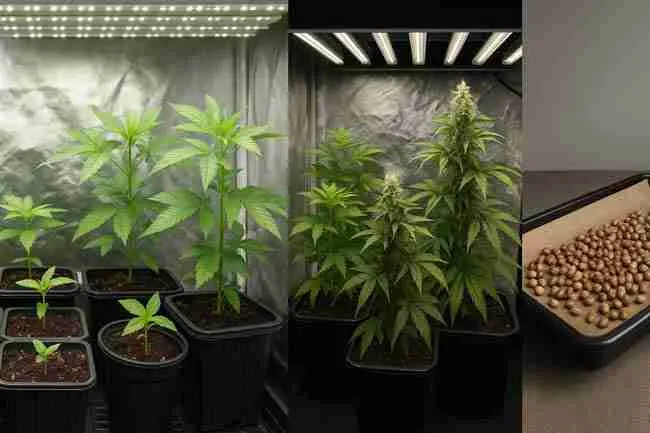
Speed breeding cannabis works far better when you stop thinking in single runs and start thinking in overlapping generations.
How a Perpetual Seed Project Flows
You set up your grow so there’s always something happening:
- Seeds soaking or sprouting
- Seedlings under high light
- Young veg plants getting ready to flip
- Flowering seed moms
- Seed harvest, drying, and sorting
Simple Perpetual Flow Example
- Week 1–2: Start G1 seeds (Generation 1).
- Week 3–4: Veg G1, select strongest, flip to flower.
- Week 4–5: Start G2 seeds in a small tray while G1 is entering early flower.
- Week 7–10: G1 seeds mature, harvest and dry; G2 moves into veg and then flower.
- Week 10–12: Start G3 from G1 seeds or G2, depending on your plan.
You constantly move forward. You don’t sit around waiting “for the perfect time.”
Practical Setup: Rooms, Tents, and Gear for Speed Breeding
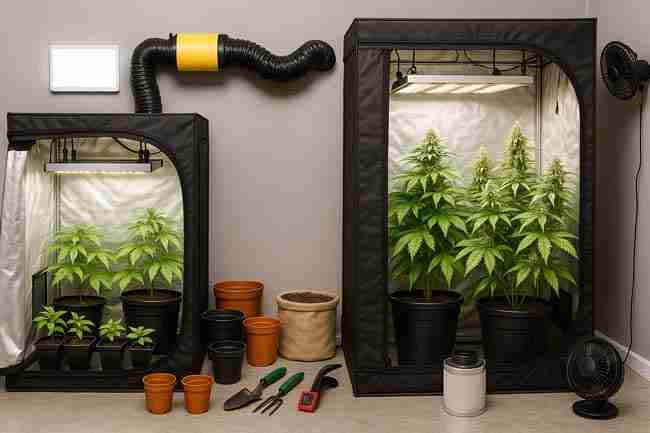
You don’t need a giant commercial facility. You just need a tight, organized plan.
Minimum Setup
At the bare minimum, you want:
- One tent or room that can handle:
- Seedlings and veg under 18/6 or 20/4
- Flower under 12/12 or 11/13
You’ll do your veg and seedling work early in the run, then flip the whole space to flower.
Ideal Setup for Seamless Rapid Generation Cycling
For smoother, overlapping generations, this works better:
- Veg / Seedling space
- T5s, LED bars, or a smaller LED panel
- 18/6 or 20/4
- Flower / Seed tent
- Stronger LED or HID
- 12/12 or 11/13
- Drying / Seed curing area
- Dark, cool, with airflow
- Separate from main rooms so you can work while things dry.
Now you can:
- Start new seeds while an older generation finishes.
- Keep mothers or backup plants in veg.
- Avoid big gaps between seed runs.
Environmental Specs: Dialing Conditions for Speed
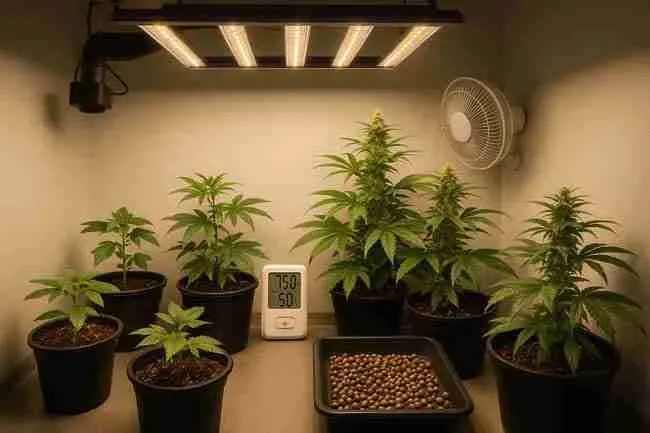
You can’t just hammer plants with light and expect them to comply. They still need a healthy environment.
Target Specs for Fast, Healthy Growth
- Temperature (veg): 24–28°C (75–82°F)
- Temperature (flower): 22–26°C (72–79°F)
- Humidity (seedling): 65–75%
- Humidity (veg): 55–65%
- Humidity (flower): 40–55%
- Airflow: Gentle but constant
- CO₂: Normal room levels are fine, but slight enrichment speeds growth if you know what you’re doing.
If temps swing wildly, or humidity tanks too low, plants slow down. That kills the whole point of speed breeding.
Managing Plant Size and Root Space

Speed breeding cannabis works best when your plants don’t outgrow your room every time.
Pot Size Strategy for Speed Breeding
Smaller pots = faster root fill, quicker maturity, and less veg.
Example Pot Sizes
- Seedlings: 0.25–0.5 L starter cells or cups
- Early veg: 1–2 L pots
- Final flower / seed pots: 3–7 L
You don’t need 20-gallon monsters to make seeds. A well-grown plant in a 3–5 L pot can give you hundreds of seeds if pollination is solid.
Pollination Timing and Seed Maturity in Speed Runs
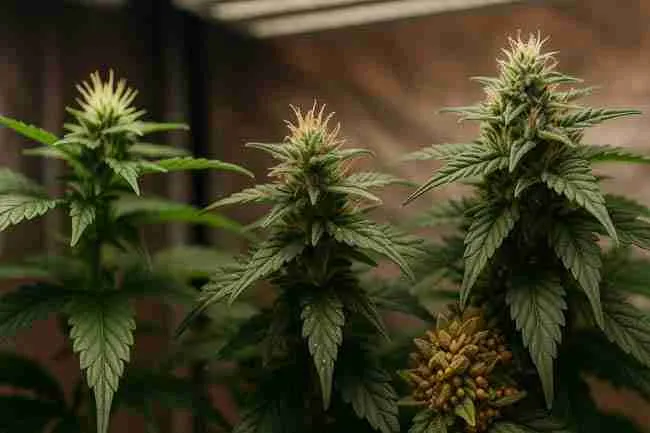
You can’t cheat seed maturity. If you harvest seeds too early, you waste the whole run.
When to Pollinate
For photoperiods:
- Wait until early flower when you see white pistils forming and tiny bud sites.
- Usually around day 14–21 of 12/12.
Pollinate then, and seeds will have 4–6+ weeks to fully mature.
Signs Seeds Are Ready
Watch for:
- Calyxes swollen and fat
- Seed coats turning from green/white to tan, brown, or striped
- Seeds hard, not soft or squishy
- Some dried calyxes cracking open, showing seed tips
When most seeds show those signs, you can harvest. Don’t yank them super early just to “go fast.” One extra week can mean the difference between weak junk and strong, long-lasting seed stock.
Pros and Cons of Speed Breeding Cannabis
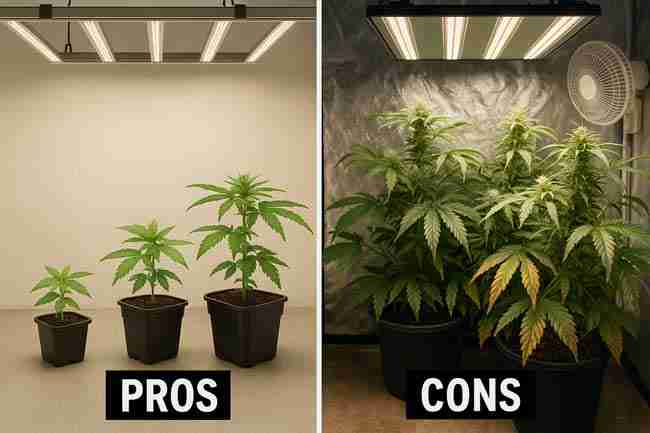
Like everything in growing, you trade one thing for another.
Pros
- More generations per year = faster breeding progress
- More chances to find keepers in less time
- Better data on how your genetics react to stress and light schedules
- In-house seed lines tailored to your climate and style
- Smaller plants that are easier to handle in limited space
Cons
- Less yield per plant (you focus on seeds and selection, not huge harvests)
- More planning required (light schedules, timing, pollination)
- Higher risk of mistakes if you rush pollination or harvest too soon
- Strain-dependent results (some lines hate being rushed and will herm, stunt, or throw weird traits)
Speed breeding isn’t lazy growing. It’s organized, aggressive growing.
Tips to Avoid Common Speed Breeding Mistakes
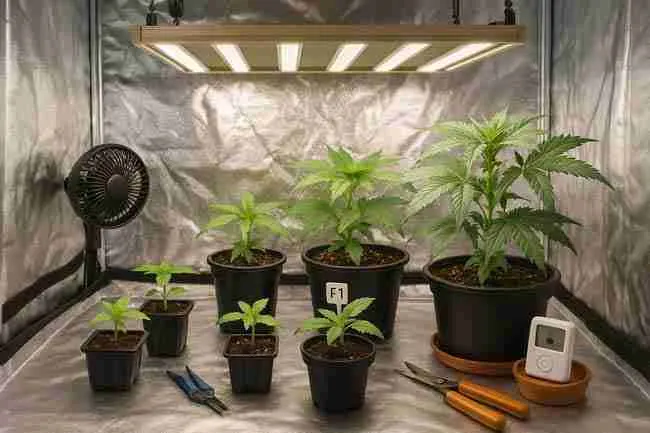
You’re trying to be fast, not careless.
Don’t Skip Record Keeping
Write things down:
- Dates you flipped to flower
- Dates you pollinated
- Dates seeds looked mature
- Which plants you crossed
- Smell, structure, yield notes
When you run rapid generation cycling, runs blur together. Your notebook or spreadsheet is your memory.
Don’t Overcrowd
It’s tempting to cram in too many plants. When you:
- Overcrowd your tent
- Block airflow
- Let plants fight for space
You slow everything down. Fewer, well-managed plants will often give you more useful seeds.
Don’t Starve Or Burn Plants
Fast doesn’t mean reckless:
- Keep feed moderate and consistent.
- Use a balanced veg feed early, then a bloom or seed-friendly feed later.
- Watch tips and leaves. Burned plants don’t work harder just because they’re stressed.
Example Light Schedule Plans for Speed Breeding Cannabis
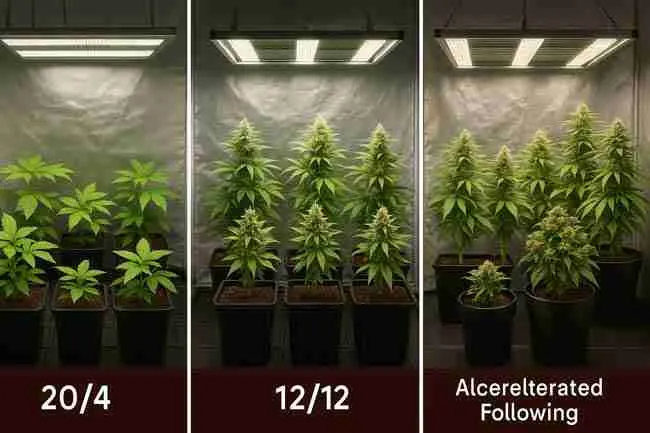
Here’s a simple list of sample schedules you can try, depending on your setup and goals.
Photoperiod Speed Seed Run (Indoor)
- Seedling (Days 1–10): 20/4
- Short Veg (Days 11–21): 20/4, train lightly if needed
- Flip to Flower (Day 22): 12/12 or 11/13
- Pollinate: Around day 14–21 of flower
- Seed Ripening: Continue 4–6 weeks
- Harvest seeds, dry, sort, and restart next generation
Total time: roughly 10–12 weeks from seed to seeds.
Auto Speed Seed Run
- Seed to Finish (0–70+ days): 20/4 entire run
- Pollinate: Around day 21–28 (when first pistils show)
- Seed Ripening: Until day 60–75, depending on line
- Harvest, dry, restart next generation
Total time: 8–10 weeks for many autos.
Simple Comparison Table: Normal vs Speed Breeding Cannabis
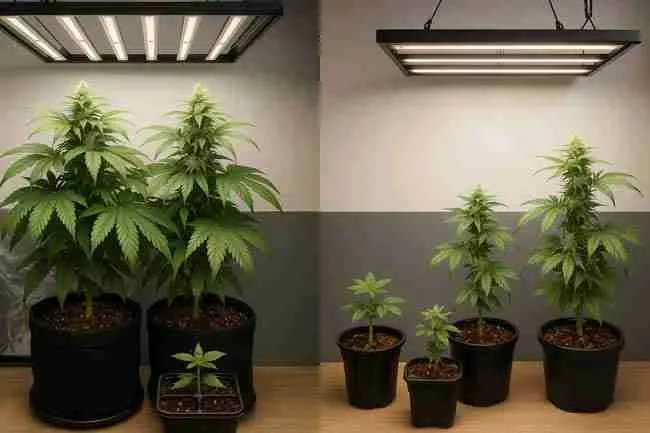
Here’s another way to picture the difference when you run perpetual seed projects.
| Aspect | Normal Growing Focus | Speed Breeding Focus |
|---|---|---|
| Main Goal | Big buds to smoke | Fast generations and better genetics |
| Light Strategy | Comfort and yield | Time compression and trait testing |
| Plant Size | Large, full canopy plants | Smaller, efficient seed producers |
| Record Keeping | Optional for many hobby growers | Essential for tracking generations |
| Time Between Runs | Often long gaps | Short reset, almost no downtime |
| Output | Dried flower | Seeds, data, and some sample flower |
Both styles have their place. You just pick the right tool for your goal.
FAQs About Speed Breeding Cannabis
Is speed breeding cannabis bad for plant health?
No, not if you do it properly.
You’re not abusing the plant; you’re just removing wasted time. As long as:
- Light, temp, humidity, and feed stay in range
- You let seeds fully mature
- You don’t over-stress plants on purpose
Your plants will stay healthy enough to give you strong, viable seeds.
How many generations can I realistically do in a year?
With a good indoor setup and strong planning:
- Photoperiods: 3–5 generations per year
- Autos: 4–6 generations per year
The exact number depends on your strains, pot sizes, and how tightly you run your cycles.
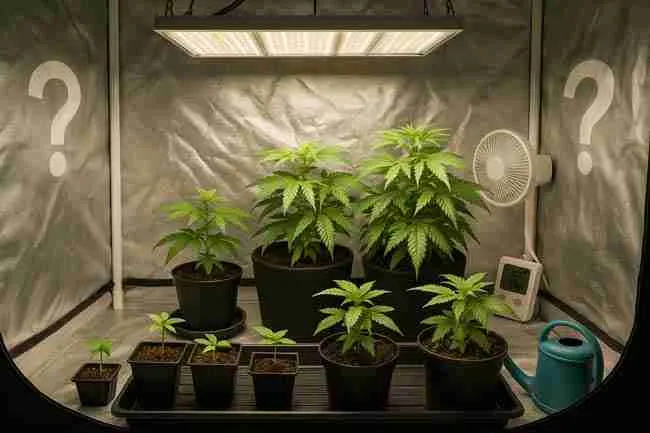
Can I use speed breeding cannabis methods in a tiny tent?
Yes. You can run:
- Smaller pots
- Fewer plants
- Short veg times
- 12/12 early or even from seed
A small tent can still become an effective rapid generation cycling lab, especially if you keep everything tidy and well-planned.
Does speed breeding work outdoors?
Not in the same way.
Outdoors, you can’t control day length as precisely, so you:
- Use early strains
- Do staggered plantings
- Use light-deprivation (tarps/greenhouse covers) to force earlier flower
You still can select for early finishers over several years, but it’s slower than tight indoor cycles.
Are autoflowers better than photoperiods for rapid generation cycling?
They’re just different tools.
Autos:
- Great for straight seed-to-seed speed
- Simple light schedule (18/6 or 20/4)
- Slightly less control over when they flower
Photoperiods:
- Let you choose exactly when to flip
- More control over plant size and structure
- Better for complex breeding plans where timing matters
Many breeders use both, depending on the project.
Can I smoke the buds from speed breeding runs?
Yes, you usually can, but remember:
- On heavily seeded plants, most of the plant’s energy goes into seeds
- Buds will be smaller and seedier
- You can still dry and cure them
- You can still test effect, flavor, and smoothness
You’re mainly after seeds and data, but sample smoke is still useful.
Final Thoughts: Turning Your Grow Into a Breeding Engine
When you start using speed breeding cannabis methods, your room stops being “just a grow” and becomes a genetic workshop.
You’re no longer stuck with slow, once-in-a-while seed projects. Instead, you:
- Use light schedules as tools
- Compress timelines without destroying quality
- Run rapid generation cycling to sharpen each line
- Keep a steady flow of perpetual seed projects moving forward
Each run teaches you something. Each generation gets you closer to plants that fit your climate, your taste, and your style of growing.
You’re not just growing cannabis anymore. You’re breeding it — and you’re doing it on your own clock.