Hydroponic Cannabis Growers Guide

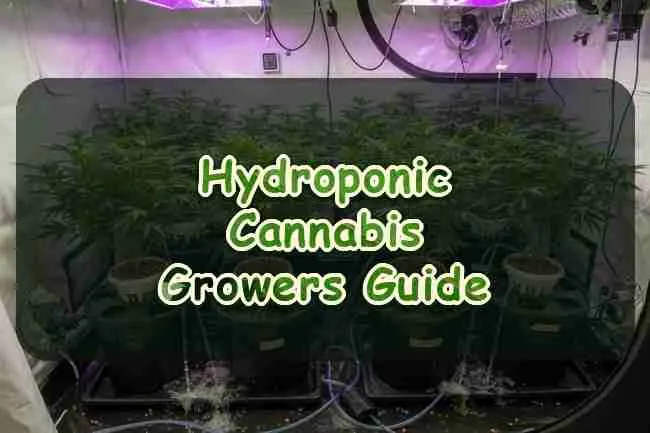
Hydroponic cannabis is growing the plant in water and salt nutrients instead of a soil mix. The medium, if you even use one, is inert. It holds the plant up. It does not feed it. You mix the dinner. Walking into a tent of buckets, you smell the airstones first. That fizz is the whole game: roots in solution, oxygen in the water, pH in a tight band.
Look, hydroponic marijuana is not magic THC water. Hydroponic cannabis and hydroponic marijuana are the same plant in a bucket. Genetics still set the ceiling. The room still has to hold VPD. However, when a DWC bucket is dialed, the plant does not hunt for food. It drinks. It grows faster than the same cut in soil, then it punishes you twice as hard if the pump dies at 2 a.m. Canada is usually four plants. A lot of U.S. states cap you too. Size the system for plants you can finish, not the warehouse in your head. Start with fresh cannabis seeds and a count you can keep: how many cannabis seeds.

What Is Hydroponic Cannabis Growing?
What is hydroponic cannabis? You deliver water plus a complete mineral solution to the roots on a schedule, or you leave the roots sitting in that solution with air pumped through it. No compost. No worm castings doing the buffering. Everything the plant eats is in the jug. You cannot grow hydroponics without nutrients. Plain water is a flush, not a diet.
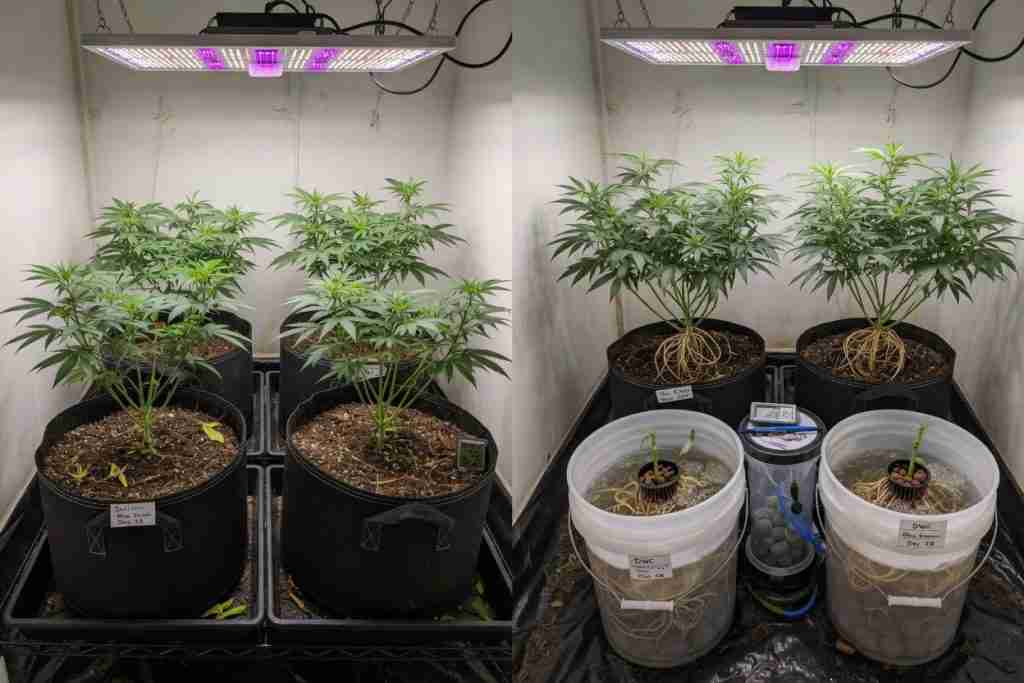
Soil is a buffet with a pantry. Hydro is a IV drip. Pros: speed, steering, less fungus-gnat mud. Cons: no buffer, pumps, and a reservoir that cooks itself under an LED. Side-by-side honesty lives here: soil vs hydroponic cannabis. Indoor climate still rules the canopy: indoor cannabis growers guide.
Getting Started With Hydroponic Cannabis Growing
If you have never grown a plant, start in soil or coco in a pot. Hydro adds meters, air stones, and a daily pH job on top of watering. If you have grown tomatoes in a bucket, or you already keep a tent honest, you can start hydro this run. Keep the first system stupid: one bucket, one air pump, one plant. First-run checklist: new cannabis growers checklist. Money you should not light on fire: beginner mistakes that waste money.
Choosing the Right Type of Hydroponic Cannabis Growing System
Every system does the same job. Nutrient solution hits roots. Roots get oxygen. Waste or leftover solution goes somewhere. Pick by how much you want to babysit pumps, how tall the plants get, and whether a power cut kills the crop overnight. Which hydroponic system is the best is a loaded question. The best one is the one you will actually check at lights-on.
Hydroponic Wicking System
Cheapest. No pump. A reservoir sits under a pot of perlite, vermiculite, or coco. A wick drinks solution up. Great for one small plant or a windowsill experiment. Bad for a 6-foot photoperiod that drinks a gallon a day. The wick cannot keep up, the pot salts, and you think hydro “doesn’t work.” Kratky is the cousin: roots dangle into a sealed jar and the waterline drops as they grow. Fine for lettuce. Tight for a flowering cannabis plant unless the jar is huge and you top up like a grown-up.
Specs: no electricity, high-WHC medium, one plant. Pros: silent, cheap, hard to drown. Cons: weak on big drinkers, salts build, you still mix nutes. Seedlings like a small cup first: 15 steps to give cannabis plants the best start.
Hydroponic Drip Systems
A pump sends solution to a ring or stake at the crown. Recirculating drip dumps back into the same reservoir. Drain-to-waste (DTW) dumps to a waste jug. Recirculating saves nutes and punishes you when pH drifts. DTW wastes solution and forgives you because every watering is fresh. Coco plus drip is the home-grow default that still counts as hydro for a lot of people. Clay pebbles plus drip is the classic WaterFarm loop.
Clogged emitters at week six of flower is a personality test. Use a filter. Run a short pulse often rather than a flood that sits. Watering basics still apply even when a pump does the lifting: how to water cannabis plants.

Hydroponic Water Culture (Deep Water Culture, DWC)
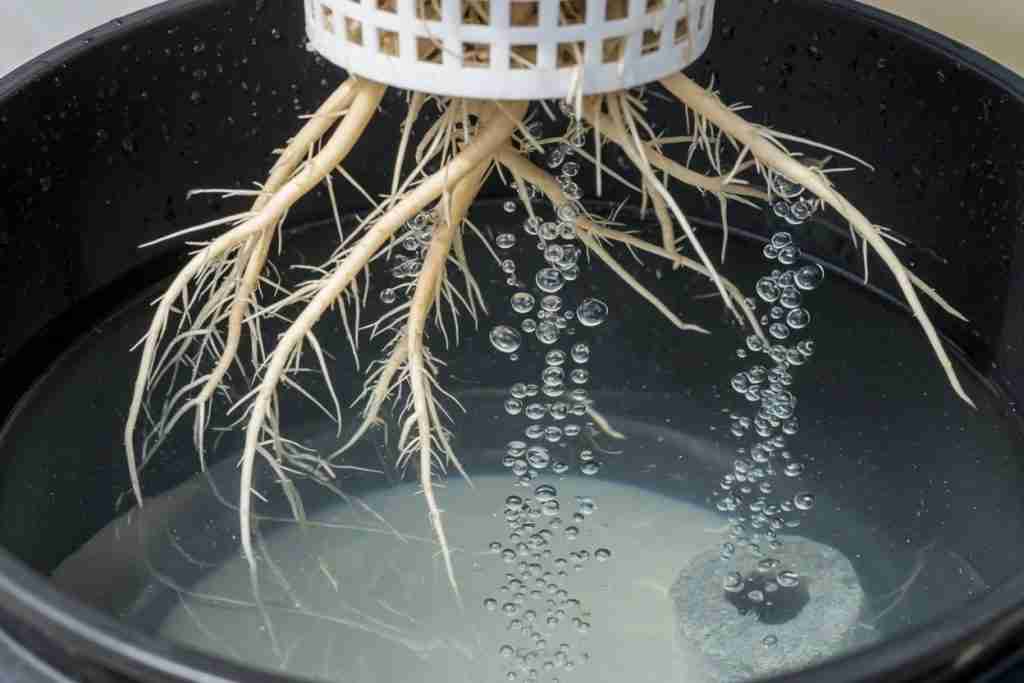
Roots hang in the solution. An air stone blasts oxygen so they do not drown. Mesh net pot, clay pebbles or rockwool in the cup, lid on a black bucket so light does not grow algae. Standalone buckets are independent. If one goes slimy, the others live. Recirculating DWC (RDWC) ties buckets to a control reservoir so you mix once. Faster to manage. Faster to lose the whole row if the loop goes anaerobic.

Healthy hydroponic cannabis roots are white, thick, and smell like nothing much. Brown, slimy, and swampy is root rot. The stone is not optional. Neither is water temperature. Roots need air: cannabis root oxygenation. When they go brown: treat root rot in cannabis.
Recirculating Deep Water Culture (RDWC)
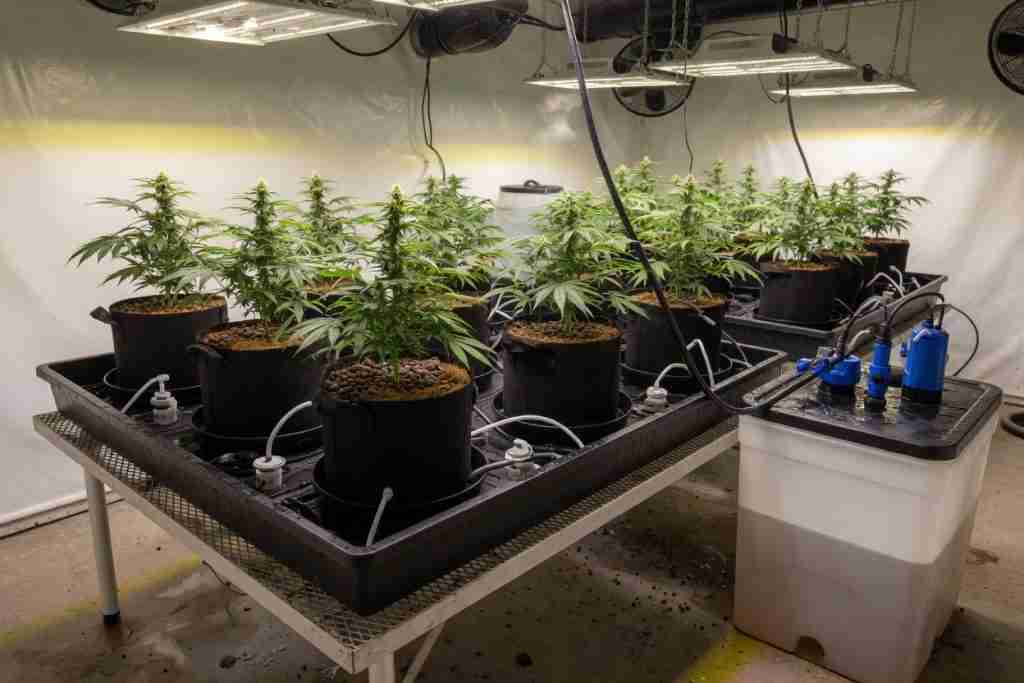
Buckets share one soup through a manifold under the lids or through the bases. A return pump keeps the loop moving. pH and EC are the same at every site, which is the point. Current Culture’s Under Current style pushes solution through the bottoms. Alien’s V-SYSTEM uses a venturi instead of air stones. Home versions still want a chiller once the tent is over about 75°F. One pump failure is now four plants, not one. Backup air and a float valve are not luxury items.
Hydroponic Flood and Drain, Ebb and Flow
A tray of pots or blocks sits over a reservoir. A timer floods the tray until the medium is wet, then gravity drains it back. Roots get a wet-dry pulse. Clay pebbles love this. Coco can too if you do not flood it into soup. Cycle times depend on pot size and light: often 15 minutes on, 45–90 minutes off in flower, less often in veg. If the pump sticks on, you drown everything. If it sticks off, you dry the blocks into bricks.
Aeroponic Cannabis Systems
Roots hang in air. Misters spray solution on a short cycle. Huge oxygen. Huge risk. A clogged nozzle at lights-off can cook a root mass in an hour. Cloners use a gentle version of this and it works. Full-plant high-pressure aero is a commercial toy. Keep a backup hand-water plan. Cloning walkthrough: how to clone cannabis. Seeds vs cuts: cannabis seeds vs cannabis clones.
Hydroponic N.F.T. (Nutrient Film Technique)
A thin film of solution runs down a sloped channel. Net pots sit in holes. Roots lie in the film and the rest of the mass sits in humid air. Great for short plants packed in a row. Awkward for a 4-foot cola that wants a 5-gallon root zone. The pump runs 24/7. A power cut dries the film. Keep the slope honest, maybe 1:30 to 1:40, and do not let roots dam the channel into a swamp.
Gravity Trays and AutoPot-Style Systems
No power at the pot. A valve fills a tray about an inch, the plant drinks, the tray goes dry, the valve opens again. Coco, soil, or a coco-perlite mix in a 15–25 L pot. You still mix a reservoir. You still pH it. You do not run an air stone in every bucket. Wet-dry beats a swamp. Do not turn the valve on until the plant has roots through the pot, usually 7–10 days after transplant, or you drown a baby. This is the hydro a lot of four-plant Canadian tents actually finish.
What Is the Most Efficient Hydroponic System?
Efficient for what. Watts? Labor? Yield per plant? A single DWC bucket is efficient for one tree. NFT is efficient for a sea of small plants. AutoPot is efficient for sleep. RDWC is efficient once you already know pH. Wick is efficient for a ten-dollar lesson. Match the system to the tent and the plant count, not a forum crown. Light still decides grams more than the bucket brand: grow lighting for cannabis. Fluffy later is usually PPFD, not “the wrong hydro”: cannabis buds light and fluffy.
What Is the Best Hydroponic System for Beginners?
A 5-gallon DWC bucket or a two-pot gravity tray. One cultivar. Feminized photoperiod or a stout auto, not a lanky haze you have never met. Skip six-part nutrients on week one. Skip a $1,800 doser until you can hold pH by hand for a month. If you have zero grow hours, grow the first plant in a pot: how to buy cannabis seeds for beginners. Autos in hydro still have a clock: grow autoflowering cannabis plants.
Does Hydroponic Cannabis Grow Faster?
Yes, when the system is dialed. No, when it is not. Roots sitting in a complete solution at 68°F with 6–8 ppm dissolved oxygen do not wait on soil biology. Veg can look a week ahead of a soil twin. Flower can finish a few days to maybe a week earlier on some cultivars. That is not a law. A hot reservoir, a pH crash, or a dead air pump grows slower than dirt. Hydroponic cannabis vs soil is a management contest, not a religion. Environment still has to be honest: best growing environment for cannabis. If the plant is stalled, read this before you blame the seeds: 10 reasons why cannabis plants grow slow.
How to Start Hydroponic Cannabis Seeds
Do not drop a dry seed into a 5-gallon bucket and hope. Soak a rockwool cube in pH 5.5 water for a few hours, squeeze it so it is damp not dripping, pop the seed 0.5–1 cm deep, 75–80°F, high humidity. Rapid Rooters and plugs work the same way. Once the taproot is out and the seedling has a couple of true leaves, set the cube in the net pot and surround it with rinsed clay. Hand-water the cube from the reservoir for the first week until roots hit the solution. Germ walkthrough: cannabis seed germination. Pale babies: cannabis seedling yellowing.
Hydroponic cannabis seeds are just cannabis seeds. There is no special “hydro bean.” Feminized photoperiods are the easy hydro start because you control the flip. Regulars mean males: feminized and regular cannabis seeds.
What Size Air Pump Do I Need for Hydroponics?
Bigger than the Amazon kit that came with one stone and a toy pump. A rough home rule is about 1 litre per minute of air per gallon of solution, then add headroom because cheap pumps lie and stones clog. A 5-gallon bucket often wants 4–8 LPM through a 4-inch stone. Linear pumps last longer than vibrating aquarium bricks. Check valves so a power cut does not siphon water into the pump. The pump runs 24/7 in DWC. Keep a spare.

Can you over-oxygenate hydroponics? With a home air stone, almost never. You can splash, raise pH, and heat the water with a giant pump in a tiny bucket. The real “too much oxygen” mistake is dumping hydrogen peroxide every day. Occasional 3% H2O2 at about 1–3 ml per gallon can knock slime back. Daily bleach-strength peroxide burns roots. You are not trying to sterilize the plant.
Types of Hydroponic Cannabis Growing Mediums
The medium should be clean, mostly inert, and matched to the system. Three letters matter.
What Does WHC Stand For?
Water holding capacity. How much solution the medium can hold without drowning the air pores. Coco and rockwool hold a lot. Clay pebbles hold almost none. Wick and drip like some WHC. DWC uses the pebbles as a collar, not a sponge.
What Does AFP Stand For?
Air filled porosity. The air left after the medium is wet. Low AFP is root rot waiting. Clay pebbles score high. Fine peat scores low. A medium that stays shiny-wet two days after a feed has the wrong AFP for that schedule.
What Does CEC Stand For?
Cation exchange capacity. How hard the medium hangs onto calcium, magnesium, potassium. Coco has a real CEC, which is why it steals cal-mag at the start. Rockwool and clay are low CEC, so what you mix is what the roots see. That is why hydro meters work. Medium recipes: peat vs coco vs plugs. Broader medium notes: best medium to grow cannabis.
Main Types of Hydroponic Cannabis Mediums
Rockwool Medium
Spun basalt. Also called stonewool. Excellent WHC, low CEC, drains on purpose if you soak it right. It ships alkaline. Soak cubes and Hugo blocks in pH 5.5 water for several hours, better overnight, then drain. Do not use the soak water as feed. Wear gloves and a mask when you tear dry wool. Pre-drilled holes fit starter plugs. Drip and flood tables love it. DWC uses a small cube in the net pot, not a whole slab in the bucket.

Pros: sterile, steer-able, even. Cons: pH soak, itchy dry fibers, not a compost-pile medium. A 6-inch Hugo-class block can carry one plant to harvest if drip is honest.
Coco Coir (Coconut Fiber)
Shredded husk. High WHC, decent AFP if you cut it with 30%+ perlite or clay, real CEC so it wants calcium and magnesium. Use a coco-labeled nutrient or add cal-mag from day one. Buffered bags save you a rinse. Cheap brick coco can be salty. Rinse until runoff EC is boring. Coco in AutoPot trays and in drip is how a lot of “hydro” tents actually run. Hand-water coco is hydro-adjacent: you still feed every irrigation.

Pros: forgives a missed drip better than clay, air-prunes in fabric. Cons: cal-mag, salty cheap bricks, fungus gnats if you keep it swampy. Soil nutes in coco go weird because the coir sheds potassium and grabs calcium.
Expanded Clay Aggregate
Baked clay balls. Hydroton, LECA, clay pebbles, same idea. Very low WHC, huge AFP. Rinse the dust. Some bags need a pH soak. In DWC they hold the stem in the net pot while roots swim. In drip they are the whole medium and you water often. Heavy bags. Reusable if you bleach and rinse between runs.
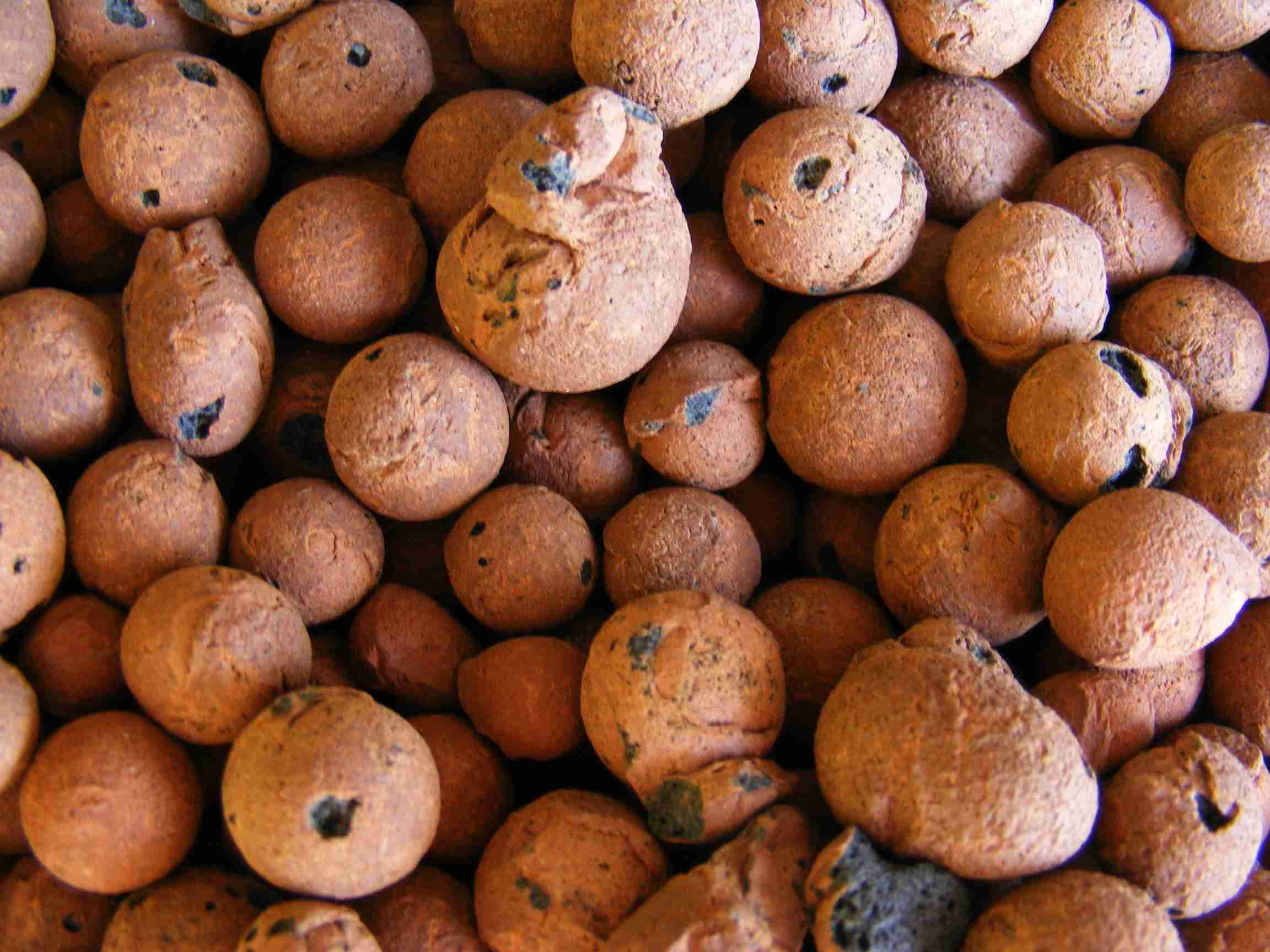
They do not feed. They drain. Mix a layer in the bottom of an AutoPot if the brand asks for it. Do not fill a fabric pot with 100% clay and then forget to water on a work day.
Setting Up a DWC Hydroponic System
A four-bucket DWC is a clean first “real” hydro. Same tent, same light, new plumbing. Black buckets. Light leaks grow algae, algae steals oxygen, roots go brown. You already know the light side: best tech for cannabis growers in 2026.
What You Need to Set Up This System
- Four black 5-gallon buckets with lids (add more later if the tent allows)
- Four 5-inch net pots, rims wider than the holes you cut
- 5-inch hole saw, plus a 1/2-inch bit for the airline
- Air pump with four outlets, or four small pumps, plus check valves
- Airline tubing and four air stones that actually fizz
- Clean water, hydro nutrients, pH up/down, a pH pen and an EC/TDS pen
- Rinsed clay pebbles or presoaked rockwool
- Optional: water chiller or frozen bottles, an extra air pump as a spare
How to Put This DWC System Together
Cut the net-pot hole dead center, smaller than the rim so a heavy plant cannot punch through into the soup. Drill a 1/2-inch airline hole beside it. Paint the lids if they are translucent. Light in the bucket is algae. Algae is a fight you will lose on a work night.

Putting the DWC All Together
Feed airline through the small hole to the bottom. Stone on. Pump above the waterline, check valve in the line. Fill each bucket 1/2 to 3/4 with mixed solution. Drop the net pot. Surround the cube or stem with clay. Start the air. For the first week the roots are not in the water yet, so ladle solution over the clay a few times a day. Clay dries fast. That week is hand work. Then the roots hit the fizz and you stop pouring.

What Is Hydroponic pH in Your System?
pH is how acid or alkaline the soup is. In hydro you live around 5.5–6.5. The sweet band for most hydroponic cannabis is 5.8–6.2. Drift to 5.2 and you lock out calcium. Drift to 6.8 and iron and manganese vanish while the leaves yellow between veins. Check daily. Plants eating will pull pH around. Upward creep often means they drank more than they ate, or your water is full of bicarbonates: water hardness and bicarbonates.
pH up and pH down are tools, not a personality. Add, mix, wait, measure. Do not chase 0.05 all night. Lockout looks like a deficiency and feeding more makes it worse: cannabis nutrient lockout. Full pH walkthrough: pH for growing cannabis.
What Are PPMs in Your Hydroponic System?
PPM is parts per million of dissolved salts. EC is electrical conductivity in mS/cm. Same idea, different scale. A 500-scale TDS pen multiplies EC by 500. A 700-scale pen multiplies by 700. If you do not know which scale you own, you will overfeed. Write it on the pen with a marker.
Worked ranges for hydroponic cannabis in DWC or recirculating drip, as EC:
- Seedling / early clone: 0.4–0.8 mS/cm
- Veg: 1.0–1.6
- Early flower: 1.4–1.8
- Mid flower: 1.6–2.2 depending on the cultivar
- Late flower / fade: taper, do not spike
Follow the bottle chart, then believe the plant. Burnt tips mean you went high. Pale new growth with a falling EC means they ate. How to drop TDS: add pH’d water. How a TDS rise happens: they drank water and left salts. Top up with water, not more nutes. Stage charts: dialing EC by phase. Nitrogen notes: nitrogen for cannabis. Deficiency overview: cannabis nutrient deficiency.
Buying Good Meters for pH and PPMs
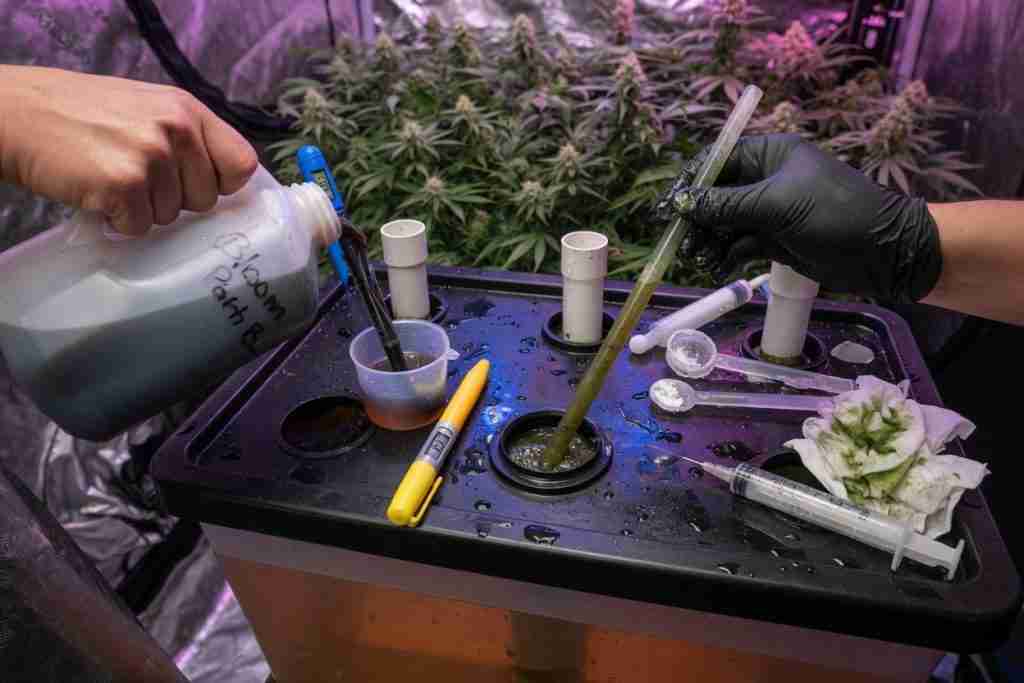
A $12 combo pen that never calibrates is a decoration. Buy a pH pen you can calibrate in 4.0 and 7.0, and an EC pen with a known scale. Store the pH probe wet. Calibrate weekly in hydro. A hanging monitor that nags you when the reservoir drifts is how you keep a job and a DWC at the same time. Phone lux apps are not PAR meters. They are not EC meters either.

Looking After Your DWC Hydroponic Cannabis System
Daily: water level, pH, EC, a sniff of the bucket, a look at the stone fizz. Top up with pH’d water if EC climbed. Add mixed nutes if EC dropped and the plant is hungry. Change the reservoir every 7–10 days, more often if pH swings like a mood. Wipe algae. Keep lids tight. When to add nutrients: when you mix a new reservoir, and when a top-up with water leaves EC below the stage target. Not “every time you walk in the room.”
Reservoir Temperature, Dissolved Oxygen, and Peroxide
Reservoir heat is the killer. Warm water holds less oxygen. Pathogens love 75°F+ soup. Aim 65–72°F (18–22°C), sweet spot near 68°F. Frozen bottles in a clean bag work for one bucket. A chiller is the adult answer for RDWC. Insulate the buckets. Lift them off a hot tent floor. Target dissolved oxygen around 6–8 ppm. You do not need a DO meter on day one if the stone is roaring and the water is cool. You do need one if you keep losing roots and swearing at the nutes.
How often to add hydrogen peroxide: maybe once after a reservoir change if you saw slime, not as a daily religion. 3% drugstore peroxide, 1–3 ml per gallon, then watch the roots. Food-grade 35% will blind you. Hydroponic cannabis leaf problems that start at the bottom in a hot bucket are often roots, not a cal-mag shortage: dying from the bottom up.
How Fast Do Plants Grow in Hydroponics, and How Long Should the System Run?
Dialed DWC can stack a node every few days in veg under real PPFD. Autos still finish on their clock, they just get bigger if you do not stall week two. Photoperiods veg until you flip. The system runtime depends on the type. DWC air pumps: 24/7. NFT and RDWC water pumps: 24/7. Ebb and flow: pulses. AutoPot valves: always ready, no electricity at the tray. Drip: pulses or 24/7 recirculating. If the power dies, DWC and NFT are the ones that panic first. A battery air pump is cheaper than a funeral.
How Long to Flush Hydroponic Cannabis, and When to Harvest
Flush means you stop feeding salts and run pH’d water so the plant can fade. In DWC that is often 5–7 days, sometimes 3 if the cultivar already yellows, sometimes 10 if you were heavy-handed. Recirculating drip is similar. Drain-to-waste coco is often a few days of water-only. You are not trying to make the plant drink distilled nothing for three weeks. Harvest when trichomes are cloudy with the amber you actually want, same as soil. Hydro does not invent a new harvest language. Loupe, not a calendar: how to harvest and cure cannabis.
Hydroponic Cannabis Leaf Problems
Yellow bottoms with a rising EC: they drank water, salts stayed, lockout. Yellow tops with a crashing EC: they ate, feed. Burnt tips: EC too high or light too close. Interveinal yellow on new leaves: pH out, often iron. Crispy edges: heat, or potassium, or a fan blasting one cola. Clawed dark leaves: too much nitrogen. Canoe leaves: VPD or light, not a mysterious hydro curse: when marijuana leaves canoe. Smell and potency still come from genetics plus a decent dry, not from “hydro water.” A swampy bucket can smell like a pond. That is rot, not terpenes.
Pros and Cons of Running a Hydroponic Cannabis System Over Soil
Cons of Running a Hydroponic Cannabis System
- No buffer. A pH crash overnight is a real crop event.
- Meters, pumps, stones, and often a chiller. The tool bill is higher than a bag of soil.
- Power cuts kill DWC and NFT faster than a fabric pot.
- Reservoir heat under LEDs is a weekly fight in a small tent.
- You mix nutes. You cannot skip that and “let the soil work.”
Pros of Running a Hydroponic Cannabis System
- Faster veg when dialed, often denser flowers under the same light.
- You steer EC daily instead of guessing what the pot still holds.
- Fewer fungus gnats than wet soil. Outdoor pest pressure is a different job: fungi and pests in outdoor cannabis cultivation.
- No hauling spent soil down the stairs.
- Once the loop is boring, it is actually easier than drowning pots.
New Hydroponic Products From Late 2025 Into 2026
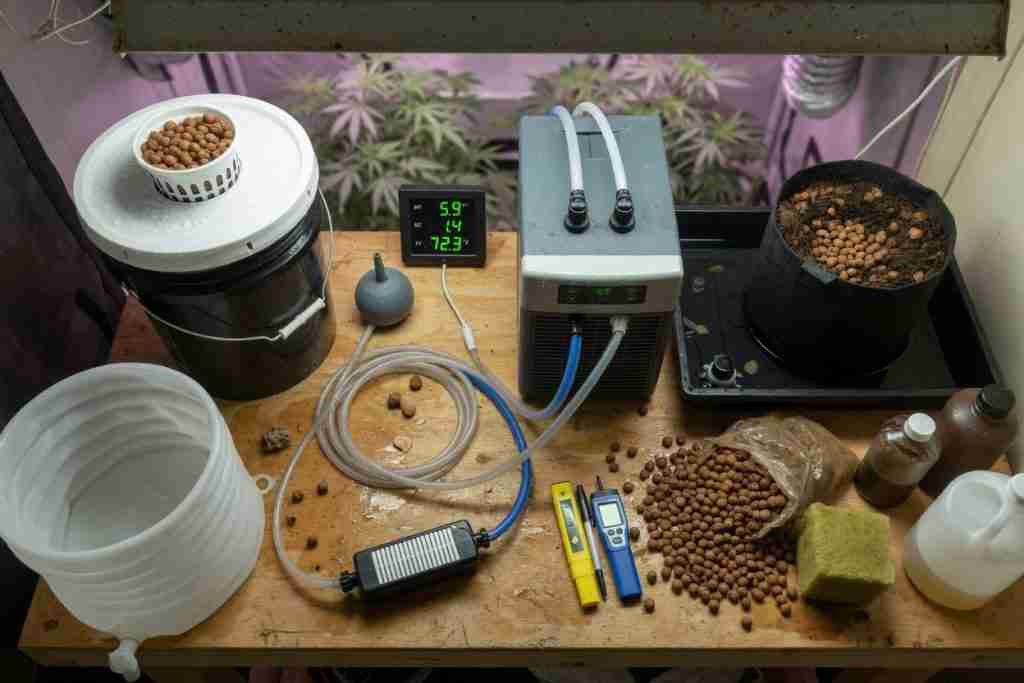
The last year did not invent DWC. It made the boring jobs less stupid: a valve that waters while you work, a monitor that texts you when pH walks off, a chiller that keeps 68°F without a freezer full of bottles, and stonewool that actually re-wets. Walking a 2026 hydro shop, the new pile is gravity trays, venturi RDWC, Wi-Fi guardians, and peristaltic dosers. However, a $1,500 doser will not save a tent with no spare air pump. Buy the spec. Link goes to the manufacturer, not a random Amazon tab.
Gravity trays: AutoPot and AC Infinity self-watering
AutoPot 1Pot XL is the 25 L / 6.6 gal module a lot of home tents actually finish. A 47 L tank, AQUAvalve5, 9 mm pipe, and a tray that floods about 20 mm then goes dry. The smaller 1Pot uses a 15 L pot if four XL trays will not fit a 4×4. XL FlexiPot swaps the hard pot for a 20 L fabric bag so roots air-prune. Raise the tank at least 150 mm above the highest valve. Do not run the system dry. Do not turn valves on for 7–10 days after potting. North American kits often ship through AC Infinity’s self-watering line (FlexiTank reservoirs, bases, 2-pot kits). Same gravity idea. Still mix nutes. Still pH the tank.
Specs that matter: 15–25 L pots, AQUAvalve or clone, filter in the line, coco or soil, no air stone required. Pros: silent, power-cut friendly, four Canadian plants on one tank. Cons: salt crust if you never wet-dry, algae if trays see light, you still carry jugs.
RDWC kits: Current Culture and Alien V-SYSTEM
Current Culture H2O Under Current is the recirculating DWC a lot of licensed rooms already run. Sub-current manifolds, 8 or 13 gallon modules, linear air pumps, a control epicenter. Home-sized UC Solo DWC puts that same 13-gallon module in a single-plant package. Change the soup about weekly. Chill it. Alien Hydroponics V-SYSTEM is the 2020s flex: 15-gallon / 58 L pots, 5-inch fittings so roots do not clog, and a venturi instead of air stones. Kits start at a 1-pot V-SYSTEM and scale. Silver pots reject radiant heat. The water pump still runs 24/7. You still want a chiller unless the room lives at 65–68°F, which most flower tents do not.
Pros: even EC at every site, tree-sized root zones, less daily mixing. Cons: one pathogen is now every plant, noise, power, money. Four-plant homes: buy cannabis seeds in Canada. U.S. plant counts: USA 2026 seed guide.
Dosing and irrigation brains: Bluelab and TrolMaster
Bluelab Guardian Monitor Wi-Fi hangs on the wall and reads pH, EC, and temperature 24/7, then nags the Edenic app when the reservoir walks off while you are at work. Handheld Bluelab pens are still the calibration truth. Step up to the Bluelab Pro Controller Wi-Fi plus a PeriPod M4 when you are tired of syringes. Four peristaltic pumps, about 120 ml/min each, 0.1 pH / 0.1 EC steps, lockouts so a stuck probe cannot dump a jug of pH down. That stack is $2,000+ before nutes. A four-plant tent does not need it. A room you leave for a weekend might.
TrolMaster Aqua-X NFS-1 is the irrigation brain: up to 30 zones of 24 V valves or 110 V pumps, pH/EC/temp monitoring, leak detector, app alerts. Pair it with drip or a flood table. Tent climate can sit on Tent-X TCS-1 or an AC Infinity Controller AI+ so VPD and irrigation are not two apps yelling. More on that stack: best tech for cannabis growers in 2026.
Chillers, air, and meters that actually hold 68°F
A 4-bucket DWC in a 78°F tent will sit at 75°F in the soup unless you chill it. Active Aqua 1/10 HP (AACH10HP) is the home size: about 1,020 BTU, 10–40 gal, titanium evaporator, 190 W, pair with a 160–400 GPH pump. 1/4 HP if you built a real RDWC. Linear air pumps beat aquarium bricks. Pulse One logs tent VPD so you stop arguing with a $9 hygrometer. The reservoir still wants a dedicated probe, not a canopy sensor dunked in the bucket “for a second.”
Nutrients and media that showed up in the new pile
General Hydroponics FloraSeries is still the 3-part most people can mix without a spreadsheet. Micro first, never dump concentrates into each other. Charts: GH feed charts hub. Coco and drip folks often land on a coco-labeled line or Athena blended/pro salts. Drip emitters and 6-inch pots from FloraFlex are the DTW kit that replaced a lot of homemade rings. Stonewool: Grodan Hugo 6x6x6 blocks if you want one transplant to harvest. Soak pH 5.5. Do not skip that. Hugo notes from the maker: best Grodan blocks for cannabis.
2025–2026 hydro gear cheat sheet
| New-ish kit | Job | Home spec | Skip it if |
|---|---|---|---|
| AutoPot 1Pot XL | gravity wet-dry | 25 L pot, raised tank, coco | you already like hand-watering coco |
| Under Current / V-SYSTEM | RDWC trees | chiller, 24/7 pump, spare air | you have one plant and a job |
| Guardian Wi-Fi | nag pH/EC/temp | probes in the res, calibrated | you check pens twice a day anyway |
| Pro Controller + PeriPod | auto dose | 0.1 pH/EC, lockouts | a 4-plant tent you live with |
| Aqua-X NFS-1 | drip / flood zones | valves, leak sensor | one drip ring on a timer |
| Active Aqua 1/10 HP | keep 68°F | 10–40 gal, 190 W | the basement is already cold |
| Grodan Hugo | one-touch block | pH 5.5 soak, drip | you are happy in coco |
What is actually worth buying first. A real pH/EC pair. A pump that does not quit. Cool water. Then a gravity tray if you drown plants, or a chiller if your DWC smells like a pond in July. Dosers are dessert. Genetics still sit under the plumbing. Shop packs that fit the box: the cannabis seeds store.
Specs, Pros, and Cons at a Glance
| Piece | Home spec | Pros | Cons |
|---|---|---|---|
| DWC bucket | 5 gal black, 5-inch net pot, 24/7 air | speed, cheap start | heat, pump death |
| RDWC | shared loop, chiller, weekly change | one mix, even EC | shared pathogens |
| AutoPot / gravity | 15–25 L, raised tank, coco | no power at the pot | salts if always wet |
| Drip DTW | short pulses, filter, runoff 10–20% | fresh feed | waste, clogged stakes |
| pH | 5.5–6.5, sweet 5.8–6.2 | nutrients available | daily drift |
| EC | 0.4 seedling to ~2.2 mid flower | steerable | wrong ppm scale |
| Water temp | 65–72°F, DO 6–8 ppm | white roots | chiller power |
| Air pump | ~1 LPM/gal plus headroom, check valve | roots live | noise, clogs |
FAQ: Hydroponic Cannabis and Hydroponic Marijuana
Can you grow hydroponics without nutrients?
No. The medium is inert. Water is not food. You will grow a pale stick, then a dead stick. Even “plain water” in a new Grodan cube is a pH’d soak, not a diet.
Does hydroponic weed look different?
On the plant, maybe greener and faster if you nailed it, or clawed and burnt if you did not. Dried flower from a dialed hydro run looks like dried flower. Potency is the cultivar plus the dry and cure, not the bucket.
What pH for hydroponic cannabis?
5.5–6.5 in the reservoir. Spend most of your time 5.8–6.2. Check daily. Calibrate the pen.
When should I harvest hydroponic plants?
When trichomes are cloudy with the amber you want, after a short flush. Not “day 56 because the forum said.” Hydro can finish a few days early. It can also finish late if you stalled it in veg.
Where should I run hydroponic cannabis?
Indoors, in a tent or a sealed room you can keep cool. A garage in July will cook a reservoir. Outdoor hydro is a thing, then you add wind, rain, and pests. Plant counts still apply. Canada four. Check your state before you plumb eight buckets: USA 2026 seed guide. VPD still matters in the canopy: cannabis VPD explained.
Pick a system you will actually check. Mix the nutes. Keep the water cool and the stone fizzing. Hydroponic cannabis rewards that boring loop and wrecks you when you skip it. Grab a pack that fits the tent, pop them clean, and do not love them to death with a 2.4 EC on day four. The cannabis seeds store is the start. The bucket is just plumbing.