Watering Cannabis While Away

Watering cannabis while away is a storage problem with a clock on it. The plant keeps drinking on the lamp timer you already set. Roots still want a wet cycle and then a drier one. A gadget that holds the pot soggy until you walk back in is the failure mode, even when the leaves are still green on day two. The useful question is how many days this pot already goes between lifts, and whether you can replace that same drink while you are gone.
This page is the absence. How a weekend differs from a week, where the jug has to sit so it cannot empty itself, how to catch what a pump actually delivers, and what to check in the first hour home. The everyday lift, the runoff, and the dry-back live on the watering page. If you do not already know when this pot feels light, no timer setting on the internet will guess it for you.
How long the trip actually is
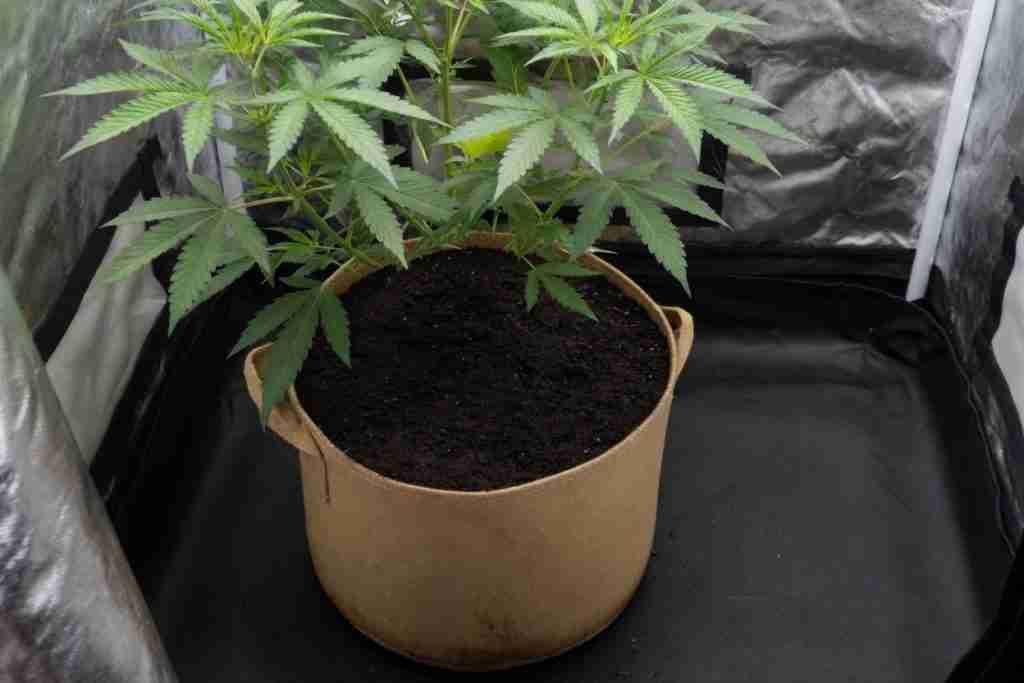
Count nights, not the word vacation. A plant in a large soil pot that you watered this morning, to the same point you always stop, can often bridge one or two nights if you already know that pot stays heavy that long. You water it, you empty the saucer, you leave the exhaust running, and you leave. That is a short trip. It is not a system. It is the drink you were going to give anyway, timed to the door.
The same morning water fails as soon as the pot is small, the room is warm, or the plant is in flower. A fabric pot loses water through the wall as well as through the leaves. A plastic pot holds the wet longer and then crashes. Coco in a small container can go from damp to light inside a day under a bright lamp. If your normal gap is “I check every evening,” you do not have a weekend of reserve. You have a plant that expects you.
Write down the last three waterings before you pack. What you poured, which pot, and how many days sat between lifts. That note is the whole plan. A plant that took about a litre and then waited three days does not need a litre every morning while you are gone. It needs about that litre spread across the same gap, with a little extra in the jug because a warmer day lies. Daily top-ups from a helpful timer are how a pot that used to dry back spends the week airless.
A weekend against a full week
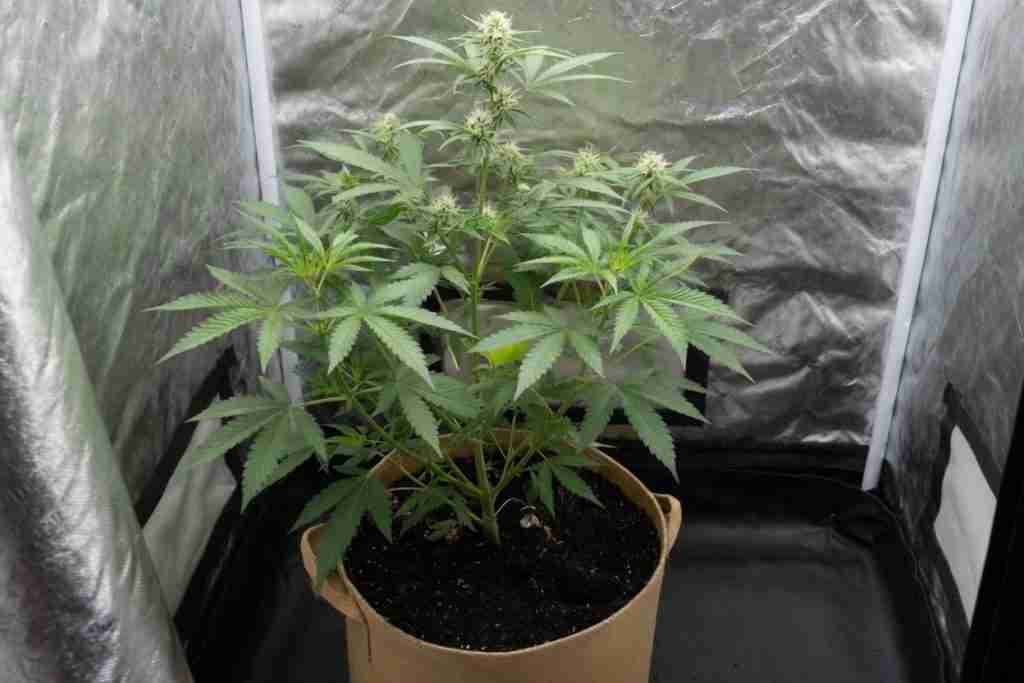
A weekend is the large, known pot and a normal water on the way out. A week is stored water or a person. Past a week, stored water only counts if you have watched the jug drop for a couple of days at home and the volume still covers the plants you counted. A soda bottle stabbed into a flowering pot is a few days of drip on a modest plant. It is not a week of a finish pot under a lamp. People stretch that trick in stories. The mix does not.
A marijuana plant in a small cup is a one-day drink. The weed in a finish pot during flower can empty a small jug before the week is over. Flower is when the leaves are moving the most water, and the flowering stage is also when you leave the dark period alone. Switching the lamp off to “save a drink” can shove a photoperiod into the wrong day length, or stall an autoflower that was already on its own clock. Autos do not pause because you left. They drink on the same curve with less calendar left, and they were supposed to start in the finish pot so you are not transplanting the week of a trip.
Seedlings are the worst week to disappear. A cup dries fast and also drowns if a bottle or a wick sits in that tiny volume. The seedling stage is a lift you do with two fingers. If the trip is longer than the cup can survive on its own, do not germinate the day before you leave. Wait.
Outdoor plants in the ground usually have more reserve than a fabric pot on a tray. A container on a balcony does not. Wind and a hot afternoon empty it faster than the same pot indoors, so it gets the same test before you call a weekend free.
Watering Cannabis While Away
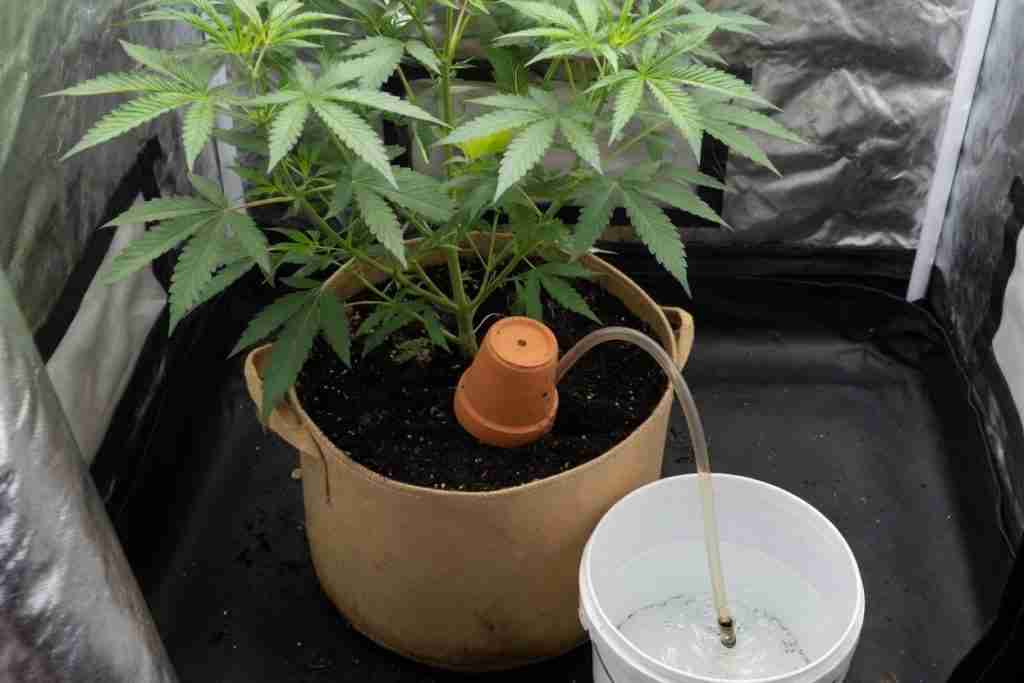
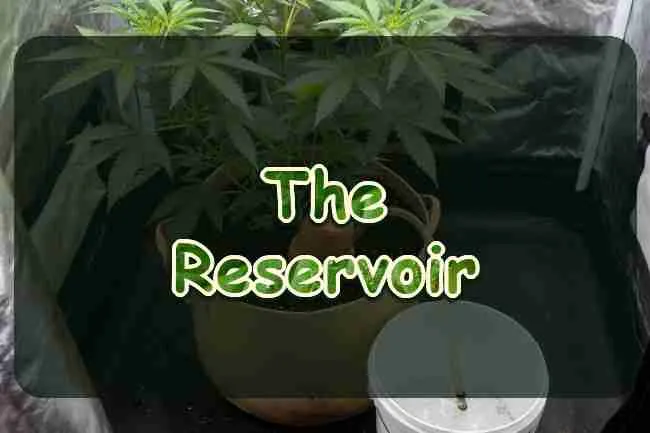
The reservoir is the whole trick. Something holds water. Something lets the mix take it as the pot dries, or a timer releases a measured drink on the gap you already use. Everything else is plumbing. Clay cones, cotton cord, a bottle with a few holes, a pump and a dripper, a self-watering base you already run: they are different valves on the same idea. The valve has to match the pot. A valve that never shuts off is a leak.
A clay cone is the passive version people trust for a few days to a week on a moderate plant. You soak the cone so it starts wet, you press it into the mix a short distance from the stem, and a tube runs to a jug. As the mix around the cone dries, it pulls water. As the mix stays wet, the pull slows. That only works if the cone is actually in the root zone and the tube end stays under the water. A cone sitting on top of the soil is a decoration. A tube that sucks air when the jug drops stops the pull, and you come home to a full-looking line and a light pot.
One cone wets a spot, not a whole wide pot. A root-bound brick channels water down one crack and out the bottom, so the cone can be wet while the rest of the root is dry. The root-bound page is that brick. If the pot already sheds water down the fabric wall, fix the placement before you trust a trip to it. Two cones on a wide pot spread the wet spot. They also double the pull, so you watch the jug. More hardware is not automatically safer.
A wick is the same idea with cord. Cotton or a nylon rope that actually holds water, one end buried in the mix, the other touching the bottom of the jug so it still drinks when the level falls. One cord is often enough for a modest pot. A second cord is how people come home to a pot that never got light. The cord should disappear into the mix, not lie on the surface where it dries out and quits. If the mix stays muddy from the hour you set it, you have too much wick for that pot. Pull one cord while you are still home and watch again.
An inverted bottle is the short version. A few small holes in the cap, the neck in the mix away from the stem, not so deep that you are stabbing the main root. Fill it, invert it, and watch. The first test is into a jar on the floor, not into the pot, so you can see whether it drips across a day or dumps in an hour. More holes come after that watch, not before. A single bottle on a small vegetative plant can cover a few days. A flowering plant in a large pot will drink past it. Adding a second bottle is still a test, not a promise, and both necks stay off the stem.
A jug that cannot siphon
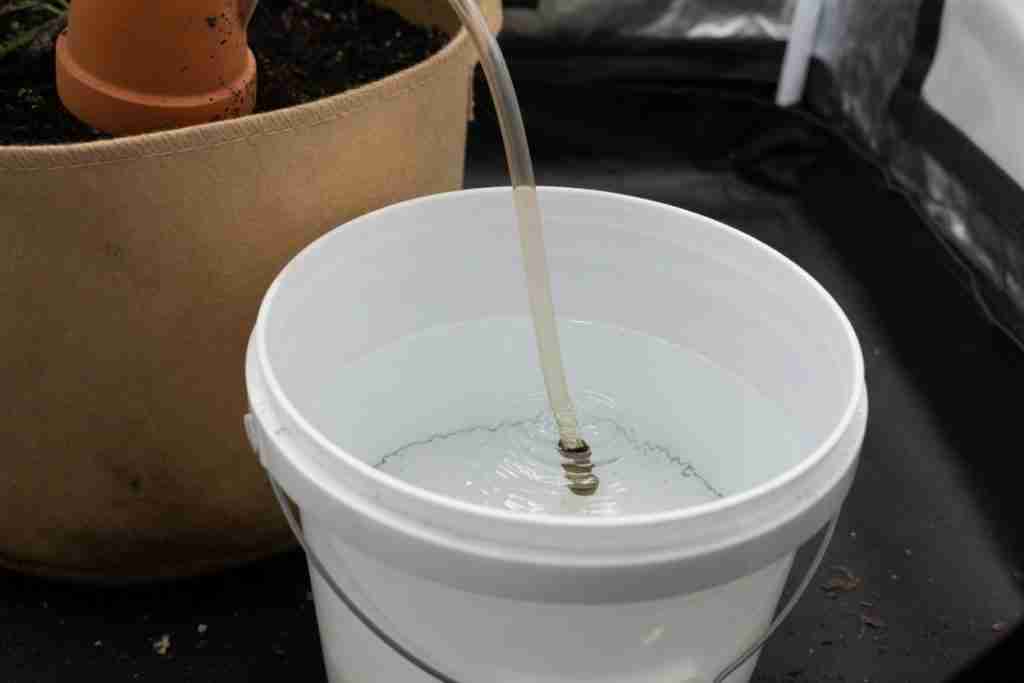
Put the jug on the floor, level with the pot base or lower, so water cannot run downhill into the mix by itself. A reservoir on a shelf, a chair, or a stack of books above the emitters is a siphon waiting for a full tube. Once the line is primed, water keeps moving after the pump is off, or it dumps through a cone that was only supposed to pull. Growers discover this the night before a flight, when the bucket is lower than they left it and the saucer is a pond. Glad they were still home. Set the height before the test days, not in the hallway with the suitcase.
The tube end stays under the surface. If it climbs out as the level drops, the line takes air and the passive pull stops, or a pump gulps and the drippers spit. A jug that is wide and short changes level slower than a tall narrow one, which makes the “is the end still under water” check easier. Mark the outside of the jug with a piece of tape at the level you expect after one day.
A pump and a timer are the measured version, and they still obey the same height rule. Tubing, one emitter per pot, a reservoir, a timer you can hear click. Catch what comes out of each emitter into a jar for the same run you plan to use, and compare that volume with what you normally pour on that pot. Lines that split do not deliver equal amounts. The pot at the end of the run is often the thirsty one, or the one that gets the slug of water when the pump first starts. Check every pot, not the first pot.
Do not copy a run time from a stranger’s tent. Their pump, their tubing, their pot, and their plant are a different machine. Sixty seconds on their timer might be a sip on yours or a flood. The number you keep is the one you measured in the jar, matched to the gap you already use between hand waterings. If the pot normally goes two or three days, a timer that wets it every morning cancels the dry-back. A smart plug can start the pump from the road. It still needed the right volume before you left.
A self-watering base you already run is a reservoir under the pot. Fill it, and use the number of days it actually lasted last time at this stage. Flower empties a small base faster than veg did. Do not sit a clay cone on top of a base you just filled. That is two supplies at once, and the mix never gets air. Roots can mat a wick until the capillary quits, so rinse the base before a long trip and make sure the cord still moves water. A tray of standing water under a fabric pot is the crude version of that base, and it is the one that goes wrong. A shallow drink for a day can be a bridge. A pot standing in a full tray for a week wicks that water up the whole wall. Come home to sour mix and a heavy pot. Empty the tray. The bathtub version of this idea is the same swamp with more litres, and it does not belong under a cannabis pot.
If the tent is already recirculating water, the vacation problem is that reservoir, the pump, and how warm the water gets, and it belongs on the hydroponic guide. This page is mix in pots. Do not convert a soil tent into a tub for the week you are gone. A wick stuffed into a soil pot for a trip is also not a wick system you live on. It comes out when you are back, unless you meant to change the way you grow and you tested that for weeks, not for a flight.
Run it while you are still home
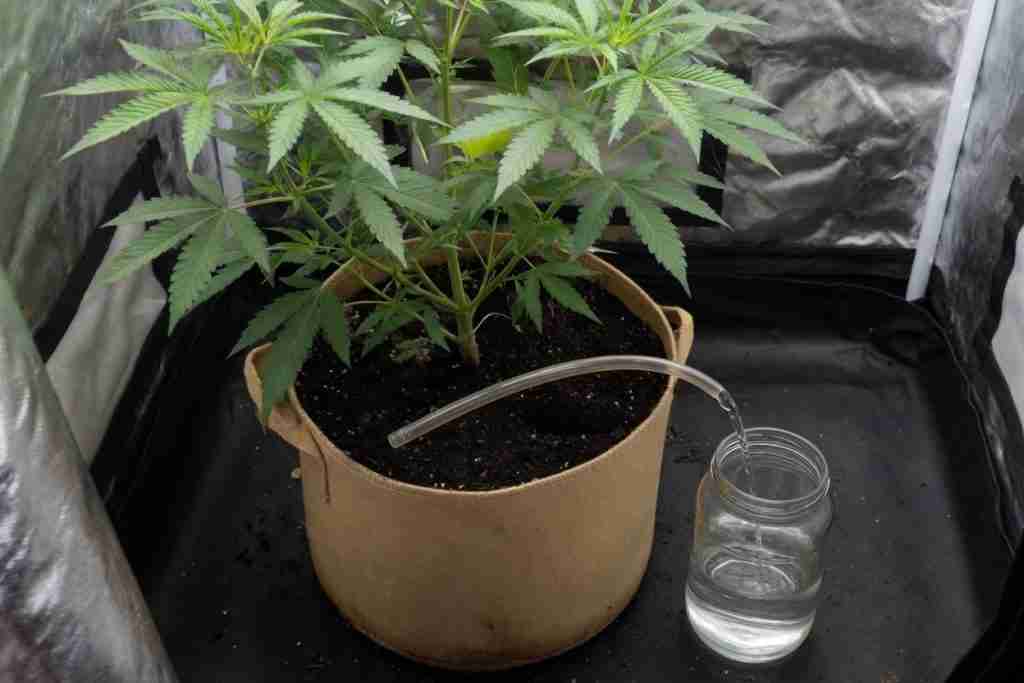
Two nights at home on the finished rig is the minimum. Sleep there. Look in the morning. The saucer should be empty or barely damp, the way it is after a normal hand water once you have tipped it out. The jug should have dropped by about the amount you expected from your notes, not be empty, and not be untouched. Untouched means the cone never pulled, the wick dried, the pump did not click, or the tube is above the water. Empty means the siphon, a hole that is too open, or a timer that ran long. Both of those are repairs you make on a Wednesday, not from an airport.
Look at the floor of the tent, not only the pot. A fitting that weeps a slow drip is a short plant and a wet floor by the time you land. Fabric pots hide a channel: water runs down the inside wall and out the bottom while the middle stays dry. If the emitter or the cone wets a ring you can see, and the pot gains the weight you expect, the placement is honest. If the pot stays light and the saucer is wet, the water missed the roots. Move the cone or the dripper and run the test again.
Leave the lamp, the exhaust, and the circulation on the cycles they already use. A hotter tent empties the jug faster than the week you measured. Do not seal the tent to hold moisture. Leaves still need moving air, and a closed tent on a warm afternoon is how a reservoir math problem becomes a cooked plant. If the room is about to be hotter than the test week, store more water than the note says or ask the person with the key to lift once in the middle. Do not unplug the lamp to free a socket for the pump. Find another socket. The dark period stays what it already is.
The water in the jug is the water you already use, already in the band for that media. The pH guide holds the numbers for soil, coco, and hydro. Do not invent a new target for a trip. Do not mix a heavy feed into a jug that will drip for days. If you fed on your normal day before you left, plain water in the jug is the calmer choice for a short absence. A week of full-strength solution through a drip can leave the pot salty. The leaves then look hungry while the mix is actually crowded, and the lockout page is where that pattern gets sorted. This page will not hand you a stronger bottle to pour the hour you walk in.
What you tell the person with the key
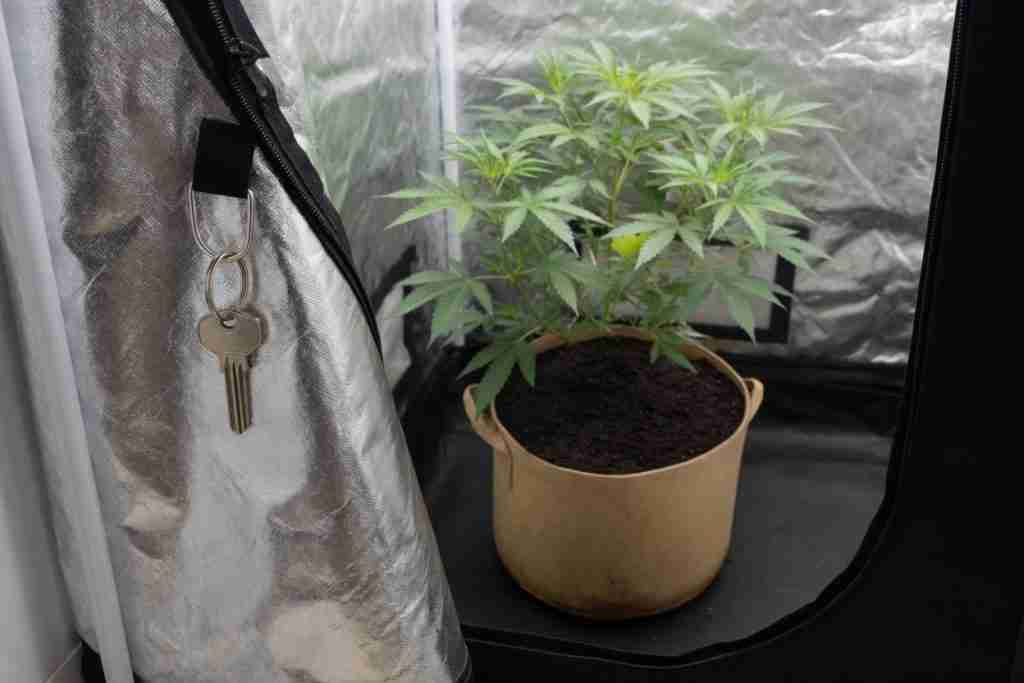
A person is a good backup when the jug is a guess. They are a bad plan when the instruction is “water every morning.” Show them the lift while you are standing there. This pot, today, is the heavy one. The day it feels closer to the empty pot you lifted last week, they water the way you water: enough to reach the roots, a little out the bottom, saucer emptied. Then they stop. Nutrients stay in the cupboard. Mixing a feed from a text message is how a helpful neighbor salts a tent.
Leaves lie if that is the only cue you give them. A droop with a light pot is thirst. A droop with a heavy pot is too much water, and another pour makes it worse. Say that sentence out loud and have them lift both feelings if you can. A camera lets you see the canopy from the road. It does not let them skip the lift. If you can see a pond in the saucer on the camera, tell them to empty it and leave the pot alone. If you can see a wilt and they report a light pot, they give the normal drink once.
Count the plants against the jug before you hand over the key. Four thirsty plants in flower can empty a single bucket midweek even when one plant would have been fine. If the math does not cover the nights, the person is the plan, not the bucket. Tell them which pot is the thirsty one. They are not the same. The small cup and the finish pot should never be on one shared instruction.
The first hour back
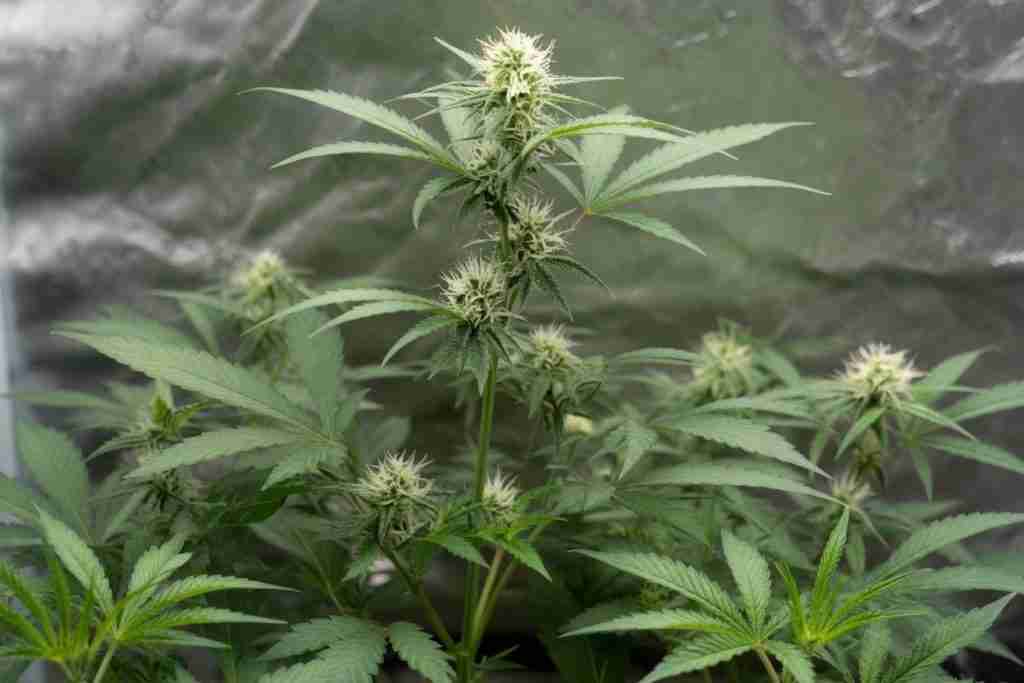
Lift before you pour. The pot tells you more than the leaves in that first minute. A light pot and a wilt that perks after a normal water was thirst. Give the drink you already know from the watering page, not a double “to catch up.” A heavy pot gets nothing yet, even if a few leaves hang. Hanging leaves on a wet pot are roots sitting without air. More water, and any feed, pushes that further. Smell the mix. Sour and heavy means you are waiting on dry-back, not shopping for a supplement.
Then look at the gear, because the plant is the score and the gear is the reason. Jug still full and pot light: the tube sucked air, the cone dried and quit, the wick never reached the bottom, or the timer never clicked. Soak the cone, reseat it, and do not trust that rig on the next trip until it has another test night. Jug empty and saucer full: the line siphoned or the run was too long. Lower the reservoir, shorten the run, and let this pot get lighter before the next feed. A fitting that dripped onto the tent floor gets replaced or tightened before you refill anything.
Damaged leaves stay damaged. A yellow fan that collapsed while you were gone will not green back because you are home. Judge the new growth over the next several days. If the new tips are ordinary and the pot is back on its old rhythm, the trip was a scare. If the new growth is pale and the pot was fed the whole time you were gone, suspect salt before you suspect a missing mineral, and let the lockout page decide whether a flush belongs. Flowers still finish on the plant and the lamp.
A light pot and a heavy pot
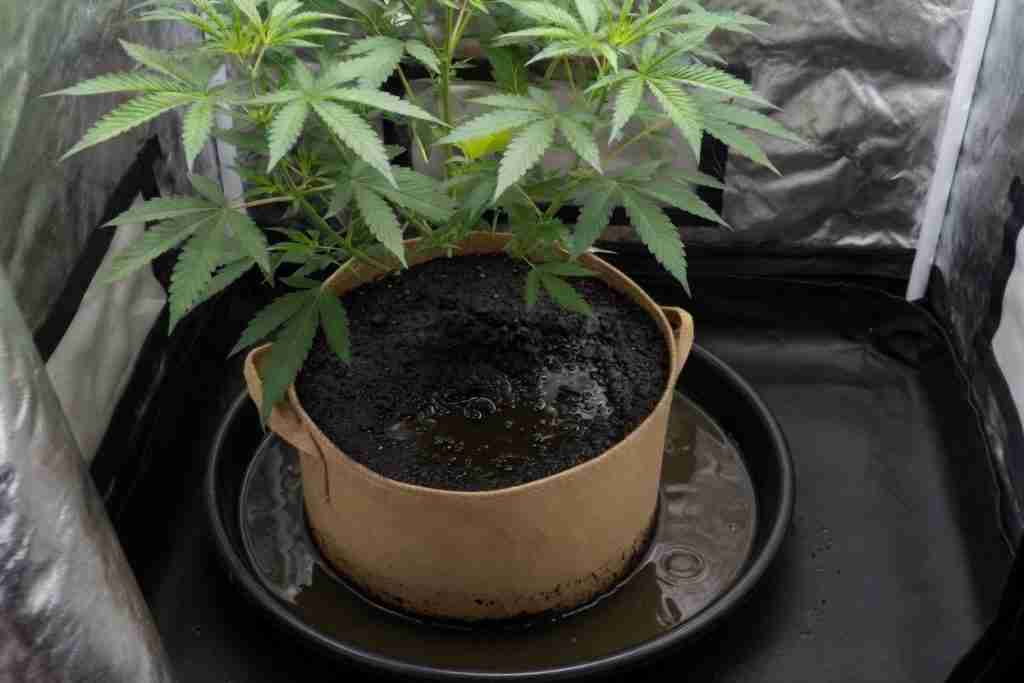
Keep the two feelings separate in your head so the next trip is easier. Light means the mix gave up the water the roots could use, and the reservoir did not keep up. Heavy means water arrived faster than the plant and the air in the pot could take it. A reservoir that holds the pot heavy every morning is oversized for that plant, or it never shuts off. Shrink the wick, shorten the timer, or raise the jug only in the sense of using less pull. Do not raise it above the pot. The height rule stays.
The next absence starts from the note you already trust, updated with what the jug actually did. If the test week and the real week disagreed, believe the real week. Heat, a stretch of flower, and a pot that finally filled with roots all drink faster than the note from veg. A cone that worked in a three-gallon pot can be a toy in a finish pot. Scale the stored water to the plant in front of you, leave a margin, and still have the person or the camera if the margin is thin.
None of this adds a legal plant, and none of it erases one. In Canada the cap is four plants per household, not per adult. Quebec prohibits recreational home growing. Manitoba has allowed indoor growing only since 1 May 2025, and the age there is 19. A seedling counts. A second set of cups still counts. The wider order from seed to jar, including the part where you are actually in the room, sits on the ten-step grow page. A correct jug does not replace that sequence. It only keeps the pot in the rhythm you already earned, for the nights you are not there to lift it.