How to Transition from Soil to Hydroponic Cannabis Cultivation


Soil to Hydroponic starts when the next seed goes into the new system, not when a dirty root ball gets dunked into a bucket. A soil plant learned to hunt through a damp mix. A bucket offers water, air, and dissolved feed, and nothing else to hold a mistake. Most of the pages that rank for this move tell you to wash the roots and expect a bigger harvest. Wash a plant that is already in flower and you usually buy a stall, brown roots, and a reservoir full of silt. Sow the next run in the system you actually want to run.
A marijuana plant that has been living on a soil bottle is not a candidate for the same strength in a bare reservoir. The mix was buffering that bottle. The bucket will not. Leave a flowering weed plant in the pot it started in and finish the run. The hydroponic plant is the next seed, started where it will stay.
What changes is the habit, not a secret bottle. Soil lets you wait until the pot feels light. A recirculating bucket has to stay full of cool, moving water. Skip a day of air in that bucket and the roots are already in trouble. The hardware has its own pages. This one is when to switch, what to leave alone, and how not to carry the soil pot into the reservoir.
Soil to Hydroponic starts on the next seed
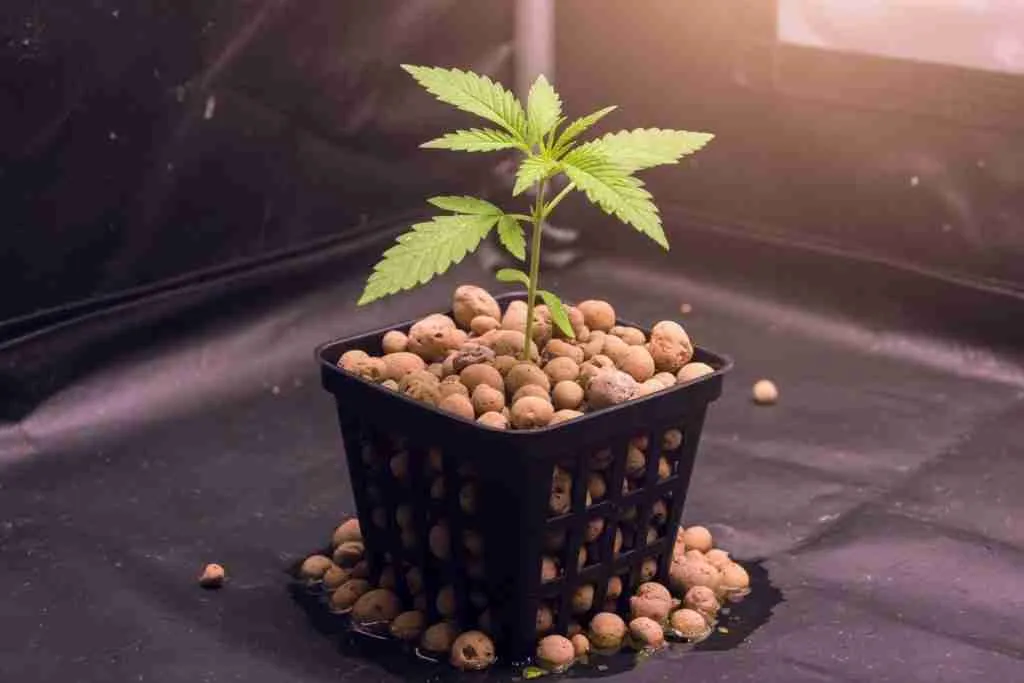
The useful way to change systems is to change them on a seed, not on a plant that already has a job. Germinate into a starter plug, or into the net pot, and water that pocket by hand until roots show at the bottom. Those roots never meet garden soil, so they never have to be washed. They grow into the clay pebbles, the coco, or the open water you chose. You learn the reservoir on a small plant. You do not learn it on the plant you were counting on for flower.
A soil transplant moves a root ball into a bigger pot of the same kind of mix. A hydroponic bucket is not that. The comparison between the two ways of growing lives on the soil versus hydroponic page. Read it before you buy a stack of buckets. This page assumes you already chose a hydroponic next run and you want to arrive there without wrecking the plant you have.
Guides that rank right now tend to sell the wash. They walk you through bare-rooting a soil plant, setting it in a net pot, and feeding it as if the plant had always lived in water. Some of them attach a harvest claim to that wash. Treat the claim as advertising. A plant that stalls while it grows a new set of water roots is not ahead of the sister you started from seed in the bucket. The sister never stopped. If your goal is a hydroponic harvest, start the hydroponic plant. If your goal is to finish the soil plant, finish it in soil.
The hydroponic growers guide is where the system types are laid out: a recirculating bucket, a simple wick, a passive jar that does not use a pump. Pick one on the page that owns it, and run one plant before you run four. One small reservoir teaches you the smell of clean water and the day the air stone quits. A row of washed mothers teaches you how fast a mistake spreads.
A flowering plant should stay in its pot
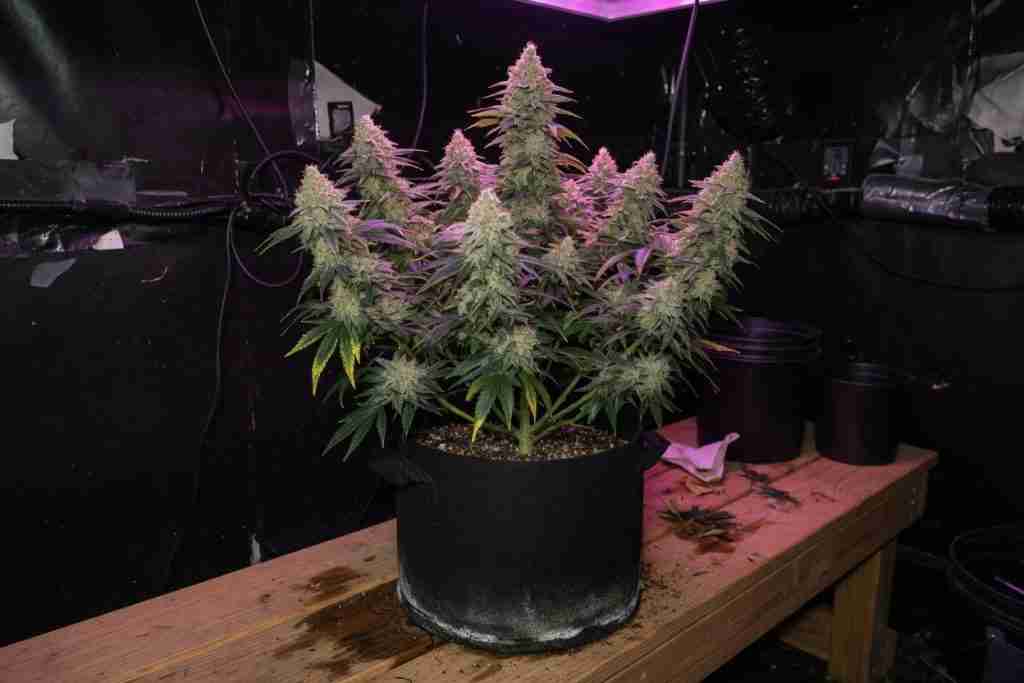
Flower is the wrong week to invent a new root system. The plant is spending what it stored on buds. Pull it, rinse it, and sit it in a new solution, and that spending pauses. Leaves pale. Buds stop swelling for a stretch you cannot get back. The plant may live. It will not hand you the harvest the soil pot was already building. Leave it on the bench. Water it the way you have been watering it. Harvest it when it is ready. The bucket can wait for the next pack of seeds.
That rule is stricter for an autoflower that has already started to stack. An auto does not get a long vegetative pause to rebuild roots. The clock is already running. How that clock behaves once a plant is started inside a hydroponic bucket is the autoflower hydroponic page. Finish the soil auto where it stands.
A plant that is still a small vegetative, with a few sets of leaves and no flowers, is the only soil plant worth considering for a move. Even then, leave it and sow beside it unless the soil pot is failing and the plant is still small. That case is further down. It is not the default.
The habits that break in a bucket
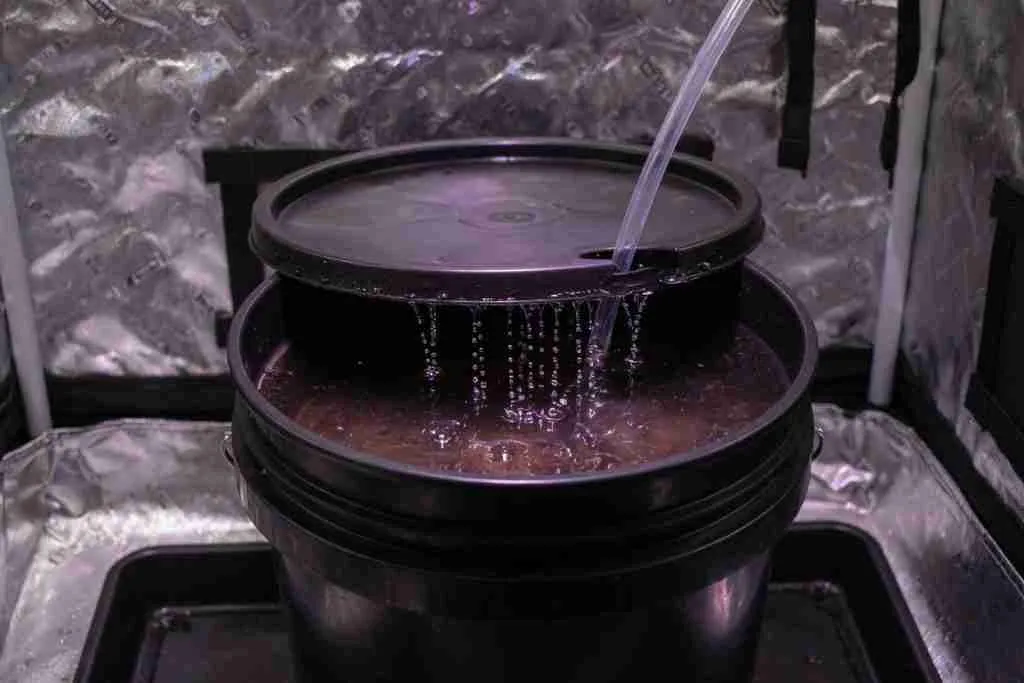
Soil trains you to wait. You lift the pot, and if it is light you water it. That lift test is the right test for a soil pot, and the watering page teaches it. It is the wrong test for a bucket of solution. The reservoir stays full enough that the air stone is covered and the roots are not hanging in dry air. Waiting until the bucket feels light means the roots were already stranded.
The second habit is the bottle. A soil feed is mixed for a pot that holds some of the salt and lets you flush the rest out the bottom. Pour that same strength into a fresh reservoir and the roots bathe in it with nothing to soften the blow. For the first reservoir, mix weaker than the soil bottle told you. The hydroponic growers guide owns the feeding chart. Follow that chart instead of a strength table copied off a page that is selling the wash.
The third habit is warmth. A soil pot can run warm and the roots still have air between the particles. A bucket of still, warm solution does not. You want the reservoir cool to the touch, not bath-warm, with bubbles while the lamp is on and while it is off. The wick method page is the simplest hydroponic setup here, and it is where that water temperature is spelled out. A deep-water bucket is the DWC page: the air pump, the stone, and the afternoon you lose if either one quits.
The fourth habit is the missed day. Soil forgives a forgotten watering if the pot was not already bone dry. A bucket does not forgive a forgotten pump, a kinked airline, or a stone so clogged that the surface is flat. Look every day. Bubbles or no bubbles is a yes or no. A reservoir that smells like a clean pond is fine. A sweet, rotten, or vase smell means change the water. More feed will not eat that smell.
Light is the fifth habit, and soil growers never had to think about it. A reservoir with the lid cracked, or a bucket wall that passes light, grows a green film. That film is not a nutrient. It clogs the stone and it competes with the roots for the air you just pumped in. Seat the lid. Keep the net pot filled so light does not pour down onto the water. If you can see green on the inside of the bucket, you have a light leak, not a feeding problem. Wipe it when you change the water. Do not fertilize it.
pH is the habit soil was doing for you. A decent mix drifts slowly. A reservoir drifts every day, because nothing in the bucket buffers the solution the way clay and organic matter did. Mix it, let it sit a few minutes, then check. Check again the next morning before you correct last night a second time. The band you are aiming for is on the pH page. A daily check and a small correction beats chasing a pen that wobbles. If the pen and the plant disagree, clean the pen first.
One more sign does not need a chart. The plant drinks water. Salt stays behind. Top the reservoir up with only the full mix and the solution left in the bucket gets stronger while the level looks the same. Crisped tips on a plant that seems to have plenty of water are often that leftover salt. Between changes, top up with plain water. On the change day, dump the reservoir, wipe the bucket, and mix fresh. The feeding rhythm lives on the hydroponic guide. The sign lives here: the level dropped, you added only the strong mix, and the tips crisped.
Coco is the step that still looks like a pot
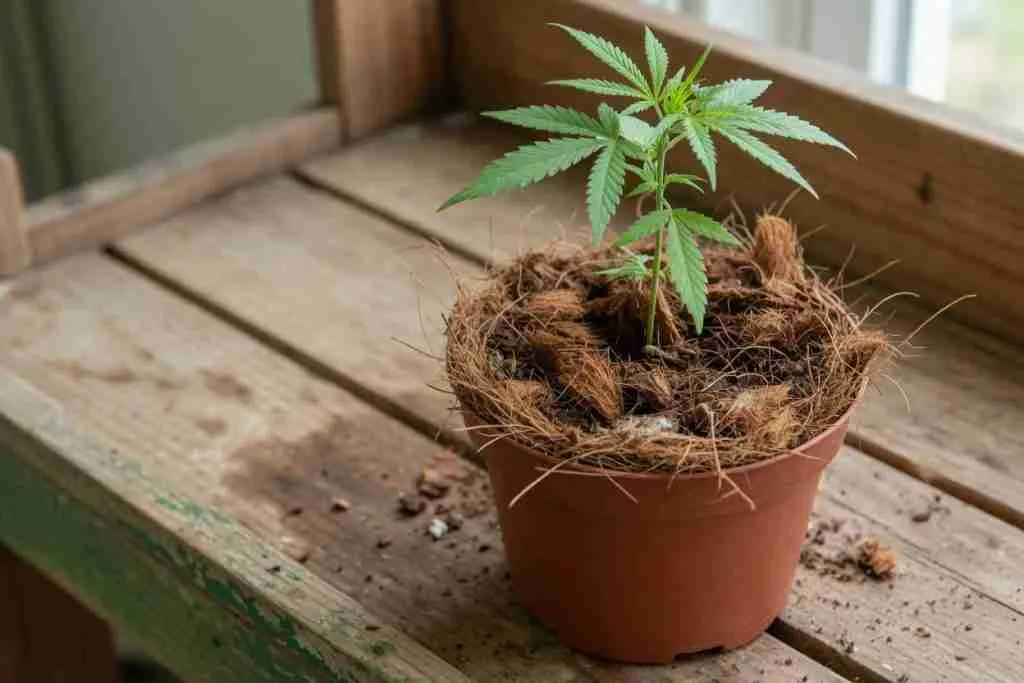
If a bare bucket feels like too much change for the next run, coco is the step that still looks like a pot. You can lift it. You are not trusting an air stone with the whole plant. Coco holds almost no feed of its own, so you feed on every watering, and you do not let it go bone dry. Bone-dry coco is miserable to rewet, and the roots in that dry pocket stall. Keep it evenly moist. Let it lighten a little. Do not wait until it is a brick.
Which bag to buy, and how coco sits next to peat and a living mix, is the growing medium page. Use coco if you want the feeding habit while you still have a pot you can carry to the sink. Use a bucket if you want the roots in open water. One new habit on the first switch is enough.
Coco and a sterile bucket also do not share the living film a soil root was trading with. The fungi and bacteria that unlock minerals need that soil sleeve and the sugar the root leaks into it. Pouring that pouch into a recirculating bucket does not recreate the sleeve. The water dilutes it, the pump beats it, and there is no mix for it to hold on to. How that trade actually works is the soil microbes page. Leave the pouch for a soil or coco pot where the root can touch it. The bucket runs on dissolved feed, air, and a reservoir you are willing to dump.
Move a small plant only if you must
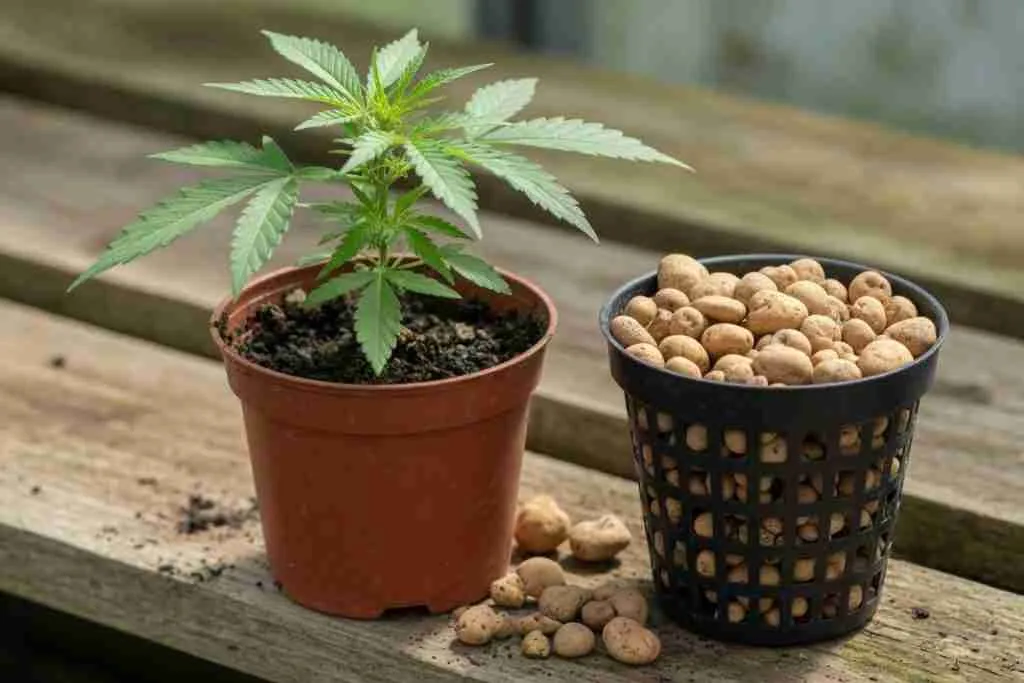
Sometimes the soil plant is the only plant you have, it is still small, and the pot is a problem you cannot leave. The mix went sour, or the tent is already down to buckets. A small vegetative plant can move. A mother in a large pot should not. A plant with flowers should not. If you can sow a new seed tonight and keep the soil plant on a bright shelf until it finishes, do that instead.
Do the move at the end of the light cycle, so the plant sits in the dark while the roots sulk. Have the reservoir already mixed, already weaker than the soil bottle, and already bubbling before the plant comes out of the pot. The pump is on. The stone is bubbling. The net pot is full of rinsed clay pebbles. Then you start. If any of that is not true, leave the plant in soil for one more night.
Expect a stall. New white roots have to grow out into the water. For several days the plant may not push a new leaf, and the color may wash out a little. Do not answer that by raising the feed. The roots that just lost their soil sleeve cannot use a stronger bottle. Hold the weak mix. Keep the air on. White roots and a new leaf mean you are through the worst of it. Brown roots and a soft crown mean the move failed. Stop feeding a dead root system.
Do not bury the stem to make the plant look stable in the net pot. The crown stays at the height it grew. A buried stem in a wet net pot rots at the point the plant cannot spare. Pack pebbles so it stands. If it leans, tie it. Do not sink it.
Rinse until the water runs clear
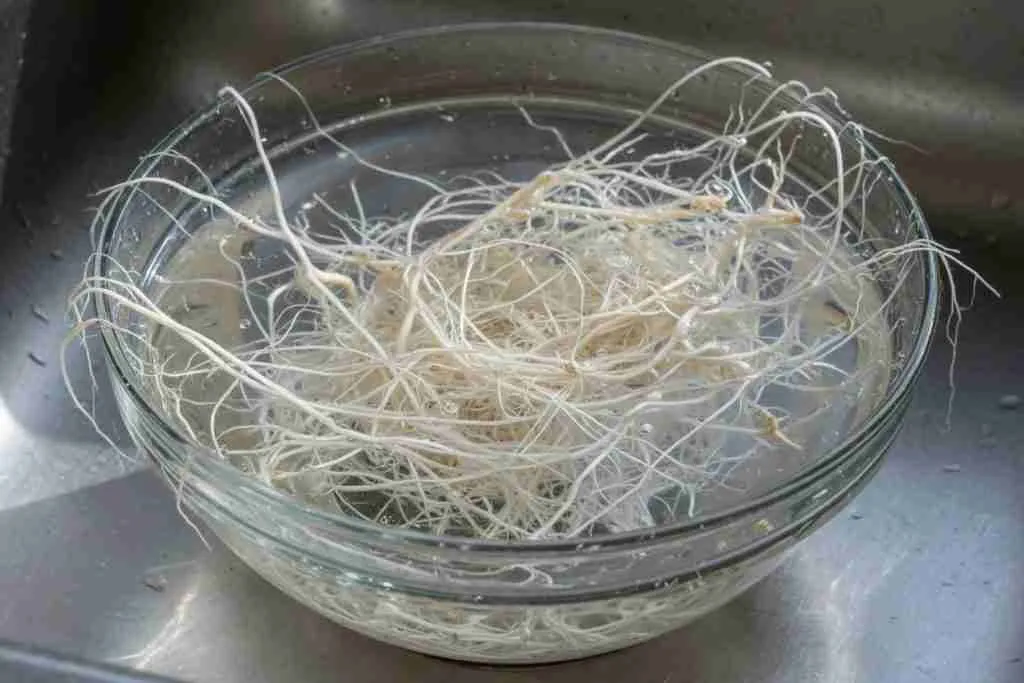
If you are moving that small plant, the rinse is the whole wash. Take the root ball out of the pot. Crumble away the loose mix if it falls on its own. Then hold the roots under a gentle stream, or swish them in a bowl, until the water leaving the roots is clear. You are removing silt that would sit in the reservoir and feed a slimy film. You are not scrubbing every hair off. A few specks in the crevices are better than a bald, snapped root system. Stop when the runoff is clear.
Do not soak the roots in a sanitizer or a peroxide dip. A chemical dip is not a tent recipe, and a root just pulled from soil does not need a burn on the way into the bucket. Clear water is the wash. The reservoir you already mixed is the feed. Sour soil or fungus gnats do not change that. Rinse until the runoff is clear, keep the old mix out of the bucket, and watch the new roots for a week.
A root ball that looked clean can still shed a brown cloud the first time the air stone boils the water. That cloud is old soil. It coats the stone and gives rot something to eat. If the first hour turns the water brown, lift the plant, rinse again, dump the bucket, and mix fresh. Do not top that brown water up and call it a living system. Clear water in the bowl is the standard. Brown water in the bucket means you are not done.
Set the crown at the height it had in the soil. Fill around the roots with pebbles you already rinsed, so bag dust is not the first thing in the reservoir. The pebbles hold the plant. They are not food, and they are not a substitute for the air stone. Turn the air back on before you walk away. A rinsed root in still water is worse off than it was in the soil pot.
The reservoir has no second chance
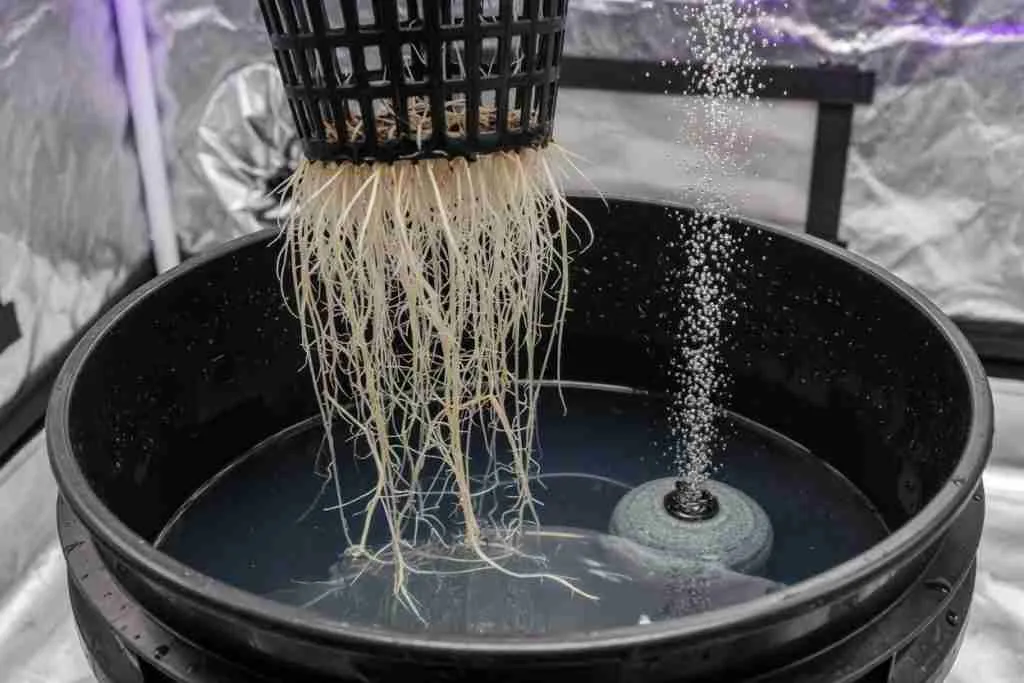
Once roots are in the water, the daily look is the crop. Four checks, and none of them is a new bottle: bubbles, level, root color, and smell. A soil pot is still a pot if you skip a morning. A bucket may not be.
The surface should be moving. A flat surface means the pump, the line, or the stone has quit. Fix that before you touch the feed. A passive jar with no pump is a different system, and the Kratky page owns the air gap that system uses instead of a stone. If you chose a stone, the stone has to work. A humming pump with a flat surface is a clog, not a reservoir.
Roots should meet the water, or sit just at it, in the way the system you built expects. A root mass hanging in air because the level dropped is a dry-out. Top up the same day. Between changes, use plain water, not another round of the strong mix.
White to cream is a root that still has air. Tan slime, brown tips that wipe off, or a drain smell is a root already losing. Pull the net pot. In a bucket you can see the roots, which is the advantage over soil, and only if you look. Change the water. Confirm the stone is bubbling. Do not answer brown roots with a heavier feed.
A clean bucket smells like almost nothing. A slick coat, green where light hits, or a sweet rot smell means empty it, wipe it, and mix fresh. Build details for a long air failure stay on the DWC page. The morning list is the one in front of you: bubbles, level, color, smell.
A warm tent makes every one of those checks harder. Solution that feels like bath water needs a cooler room, or a reservoir that is not sitting in the lamp exhaust. Do not dump ice onto the roots. The wick page spells the temperature out as a number if you want one. The habit is cooler than that: cool to the touch, bubbles on, lid seated, light kept out of the water.
Four plants means four buckets
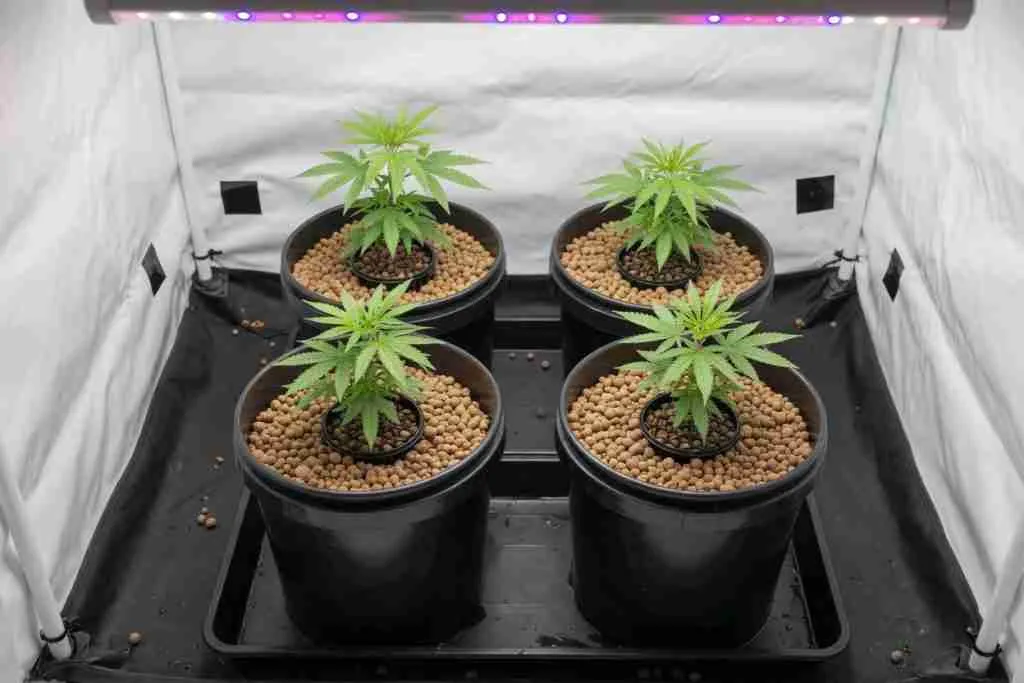
In Canada the home-cultivation limit for adults is four plants per household, and seedlings count toward that four. Quebec does not allow recreational plants at home. Manitoba allows the plants indoors only, and that indoor-only rule has been in place since 1 May 2025. Four plants in buckets means four reservoirs, not four plants in one tub and not four microbe products on a shelf. Each bucket has its own air stone and its own change day. If you are still learning what a clean reservoir smells like, run one.
A shared tub feels efficient until one root system slimes and the pump shares it with every plant. Separate buckets keep a mistake in one place. Size the next system from the hydroponic guide after one plant has finished and you know you will check the stone every morning. The seed in that first net pot should match the system you are running now. The cannabis seed store is where that pack comes from.
Write down the day you mixed, whether the last top-up was plain water or feed, and whether the stone was bubbling when you left. A notebook that only says the pot felt light does not translate. After one finished run you will know whether a bucket suits the way you actually check on plants. If you travel, or you already forget a day, coco or a wick will forgive you more than a deep-water bucket will. Pick the system you will look at. Start it from seed, and leave the flowering pot where it is until the chop.