How to Tell When Your Cannabis Buds Are Overripe


Cannabis buds are overripe when the resin heads on the flower have gone mostly amber, dull, or collapsed, and cloudy heads are the ones left behind. A marijuana plant does not stack more potency by sitting past that point. The weed you grew for was the cloudy window, with amber just starting to show. A few amber heads are still that window. A bud that is mostly amber, with heads that look tired and brush off on your fingers, is past it. Waiting another week does not rewind a head that has already changed.
Cannabis Buds Are Overripe

A phone picture of a cola will not make this call. Orange hairs, a fat calyx, and a smell that fills the tent are all real, and none of them tell you the resin is past its peak. Some plants darken their pistils while the heads are still clear. Others keep throwing white hairs after the heads have already clouded. Swollen flowers and a smell that has stopped getting louder are context. They are the reason you pick up a lens. They are not the grade.
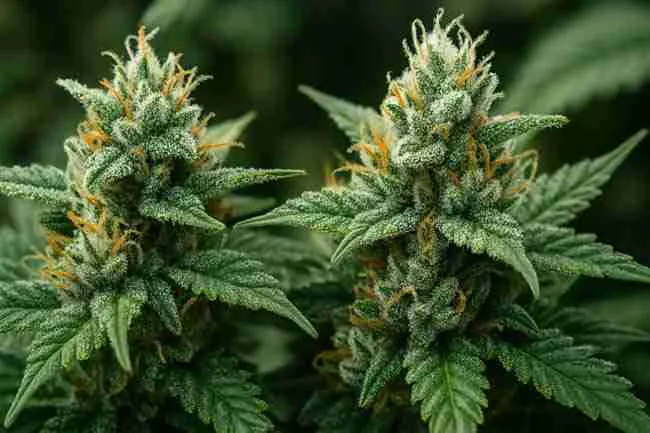
The thing you are grading is a stalked resin head on the calyx itself. Under a lens it looks like a tiny mushroom: a stalk and a round ball. Early in flower those balls are clear, like glass. The plant is still filling them. In the window they go cloudy, milky, and less see-through. That cloudy ball is the peak the plant was going to give you. After that, heads turn gold, then amber, then a dull brown. A scattering of gold among a cloudy majority is still the window. A majority that has gone amber, with balls that look flat or empty stalks where the ball used to sit, is the late side.
People argue about a perfect mix because the charts online are full of percents. You will not count a hundred heads honestly while you are standing in a tent. The useful split is coarser than a chart. Mostly clear means wait. Mostly cloudy means you are in the window. Cloudy with some amber is still that window, and it is where a lot of jars get cut on purpose. Mostly amber, dull, or falling off means you are past it.
The breeder week count is a rumor from someone else’s room. The flowering-stage page is the stretch of weeks after the flip, and those weeks move when your light, your heat, and your plant do not match the description on the packet. A plant that “should” be done in eight weeks can still be clear at the start of week nine. A hot, bright room can push the same pack past cloudy before the packet says to look. Start checking when the stated window is close, then trust the heads you see on your flowers.
The bud, not the leaf
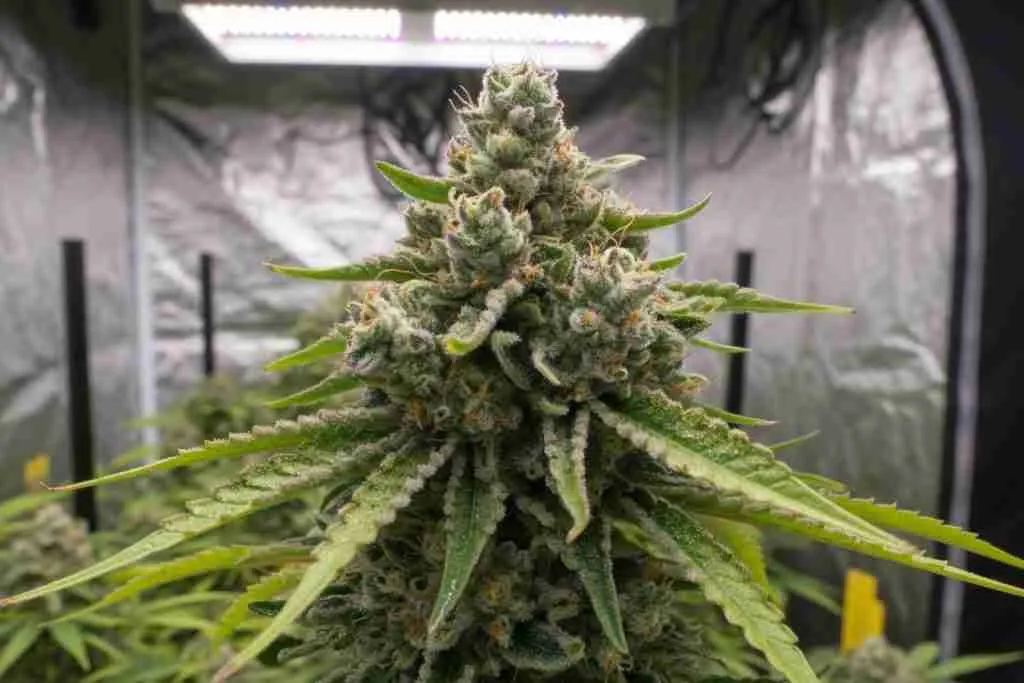
Sugar leaves lie, and they lie early. The small leaves sticking out of a bud carry resin too, and those heads often amber while the calyx underneath is still cloudy or even clear. If you grade the leaf, you cut a flower that had not finished, and you call the cut late because the leaf looked gold. Fan leaves yellowing at the end of flower are the plant pulling back from growth. That fade is normal on a lot of packs. It is not a ripeness grade, and it is not a rescue-feed signal by itself.
Leaf color is a worse clock than the fade. Purple, near-black, and deep green are genetics and night temperature. A dark bud in your hand can be early, on time, or late. The color of the sugar leaf does not tell you which. Frost on a leaf is also not the grade. A glittery leaf can sit on a flower whose calyx heads are still glass. Put the lens on the bud, on the swollen bract, and ignore the leaf that is easier to reach.
A jeweler loupe around 30x to 60x is enough. A cheap USB microscope is easier on your eyes if you want a photo to compare in three days. A phone macro works only when you can actually see a ball on a stalk, not a white sparkle. Look in daylight or under a plain white lamp. A blurple board, a pink LED, or the orange cast of an old high-pressure sodium lamp will invent amber that is not there, and it will hide amber that is. If the only light in the tent is colored, open the door and use a white flashlight, or take one cut calyx to the kitchen and look there. Do not harvest the plant to get the sample. Snip a tiny bract from a site you are already watching.
Look at several heads on that bud, not the one gold ball you found because you wanted the tent empty. Then look at a second bud. Write down what you saw in plain words: mostly clear, mostly cloudy, some amber, mostly amber. The note is the record. Memory in a warm tent is not. Pistils can join the note as a hint. Curled orange hairs mean “start looking,” the way a darkening lawn means the season moved. They do not mean the heads have finished, and a fresh white hair does not mean the older calyx underneath is young again.
Mostly amber is past it
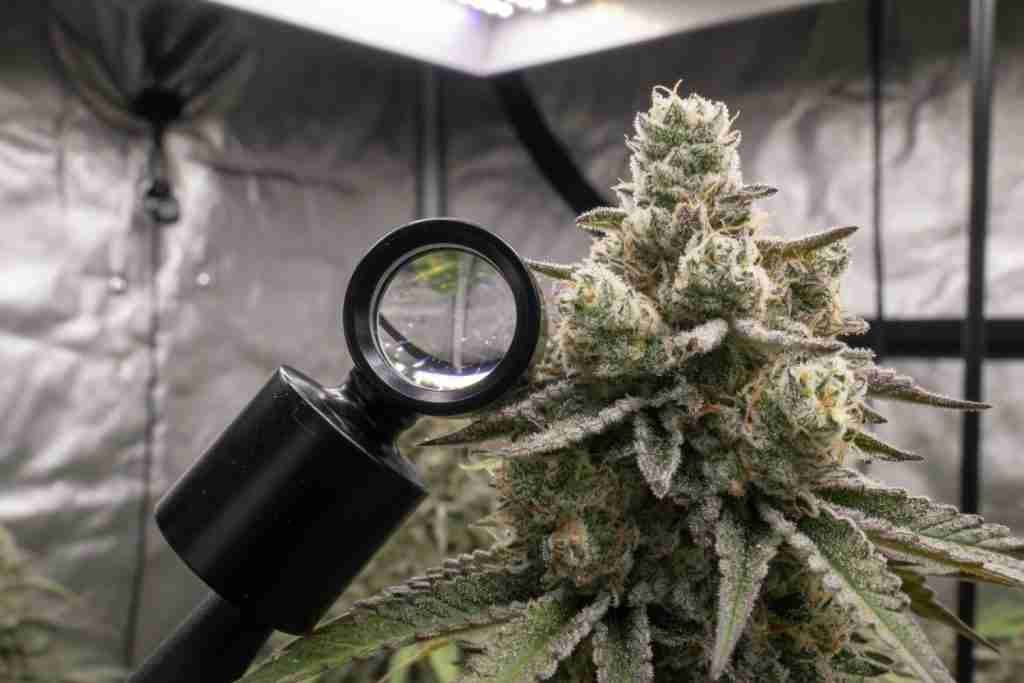
Clear heads are the early mistake, and it is worth naming so you do not “fix” it by waiting too long next time. A clear ball is still filling. Cut there and the jar is thin: less smell, a faster fade, a flower that never became the one the plant was building. If the sample is mostly clear, put the lens down and come back in a few days. Do not negotiate with a calendar that says you are late. The calendar did not look at the head.
Cloudy is the peak. The ball is opaque, milky, plump. That is the resin the plant finished making. A jar cut on mostly cloudy heads is the bright, loud version of that plant. Some amber mixed through a cloudy majority does not throw the cut into the late pile. Amber on a minority of heads is the plant starting to spend what it made. A lot of growers cut on purpose in that mix because they want the jar a little heavier and less sharp. That is a choice inside the window. It is not a sign you have failed and must now race.
Past the window looks different when you have watched the same bud for a week. Most of the balls are amber to brown. They catch less light. Some look wrinkled instead of round. Brush the cola with a clean finger and heads come off that would have stayed put a week ago. Empty stalks stick up where a ball was. A few heads going gold is a clock. A cola that sheds resin when you barely touch it is a cola that has been sitting. You are not “one more notch of ripe.” You are losing the cloudy resin you already had, and another week will not put it back.
Amber means some of the THC in that head has moved on. Growers use that fact to explain why a late jar feels heavier and less bright than a cloudy one from the same plant. The name people attach to the later compound is not a project. You do not keep the plant up so you can make more of it on purpose, and you do not run a process after the cut to push the flower further. The late jar is just the late jar. If you wanted the cloudy one, the time to cut was when cloudy was still the majority.
Speed depends on the room more than on a forum average. Once a bud is mostly cloudy, the slide toward amber is often a handful of days to about two weeks. A hot, bright top can move in a few days. A cool room can sit cloudy longer than you expect. Check the same sites every two or three days once you first see cloudy heads. Skip a week and you can go from “a few amber” to “mostly amber” without a day that felt like a decision. The check is the decision. The plant will not tap you.
Heat can brown the heads
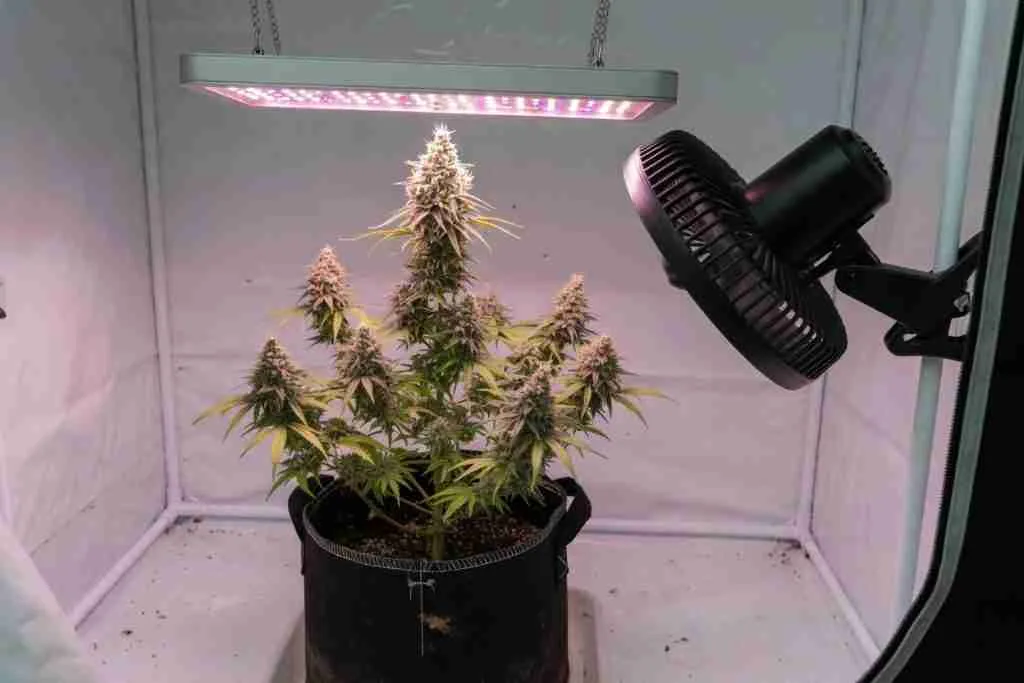
Age is not the only thing that browns a resin head. Light, heat, and a beating from the fan do it too. A lamp sitting on the tops, a tent you cannot stand in, an outdoor pot left dry through the hottest hour: those can dull the upper cola while the flowers a foot lower are still cloudy. If only the top inch looks amber and tired, and the middle buds are milky, you may have cooked the top. That is not the same sentence as “the plant is overripe.” Raise the lamp or dim it. Get the heat out of the tent before you decide the whole plant is late.
Do not grade color under the colored lamp that may have caused the problem. Pink and purple boards shift what amber looks like. Step out of that light, as above, and look again. Ventilation is the exhaust and the air moving across the flowers, not a fan blasted into the cola like a hair dryer. A fan that sandblasts the top bud will knock heads off. Knocked-off heads look like the late stage even when the balls that remain are still cloudy. If the bud is bald on the windward side and milky on the lee side, move the fan. Do not call the bald side ripe.
A cola that stretches into a spear toward the lamp is a different problem, and the foxtail page is that shape. New white pistils on a fox tail are new tissue. They do not reset the older calyx under them. Read the older bud. If that older bud is mostly cloudy, the spear is not a reason to wait a month. If the older bud is mostly amber, the spear is not a second chance. The THC page is the room while flowers are forming: light the plant can use, and heat the tent can dump. This page starts when you are holding the lens and deciding whether the flower in front of you has already gone past the window.
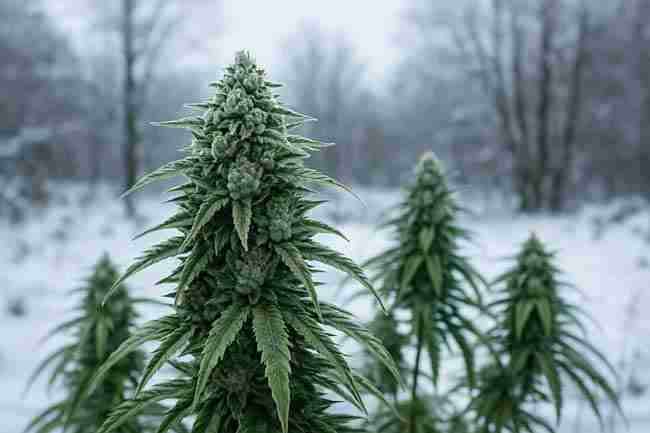
Outdoor sun is the same lesson with weather attached. A plant that ambered across the top in a hot week, leaves flagged, pot light as a feather, was short of water in hard light. Shade the worst of the afternoon if the leaves fold, and water before the pot is dust. Do not read that bronzed top as a scheduled finish. Frost is the other outdoor clock. A freeze does not care that the lower buds are still cloudy. If a hard frost is about to take the plant, cut what you have and grade the resin you actually saved. Perfect heads after a freeze are a story, not a plan.
Not rot and not a new flush

Overripe resin and a spoiled cola are different objects, and mixing them up costs you a harvest. A late bud is still firm. The glitter went gold and dull. The smell may be quieter, or heavier, or a little flat. Bud rot is brown and soft inside the flower. A sugar leaf in the rotten spot pulls out with no fight. The smell is wet and sour. Open the biggest cola. If the inside is mush, that cola is finished in the bad way, and the ripeness question does not apply to it. Cut the rotten part out of the garden the same day. Do not leave it “to see if the rest ripens around it.”
Powdery mildew is a film on a leaf that wipes off and comes back when the air stays wet and still. It is not an amber head. Amber is a color change in a resin ball. Mildew is a growth sitting on the surface. A bud can be both late and moldy, and the mold is the problem you deal with first. Do not tell yourself the gray dust is “extra trichomes” because you wanted another week. Real heads are distinct balls on stalks. Mold is a mat, a web, or a powder that does not resolve into those balls under the lens.
A late flush of white pistils is the other false restart. Plants throw new hairs when the light is too close, when a photoperiod night is not actually dark, or when the flower has been left so long it starts to stack odd new growth. Those hairs are not a calendar reset. Look under them. If the calyx that grew two weeks ago is mostly amber, the new hair is noise. If the calyx is still clear, you are early, and the white hair agrees with the head for once. Either way the head wins. Adding two weeks because you saw fresh pistils is how a cloudy plant becomes a dull one while you feel busy.
Smell is a supporter, not a judge. A flower at its loudest is often near the cloudy window, and a flower that has gone quiet can be past it. The same quiet can be a dry room, a nose that has lived in the tent for a month, or a cultivar that was never loud. Harshness is an even worse witness before the dry. You cannot smoke a test cut and learn the harvest from one wet sample. Wet flower always tastes green. Use the lens. Let the smell tell you it is time to look, then believe what the heads say.
Tops finish before the lowers
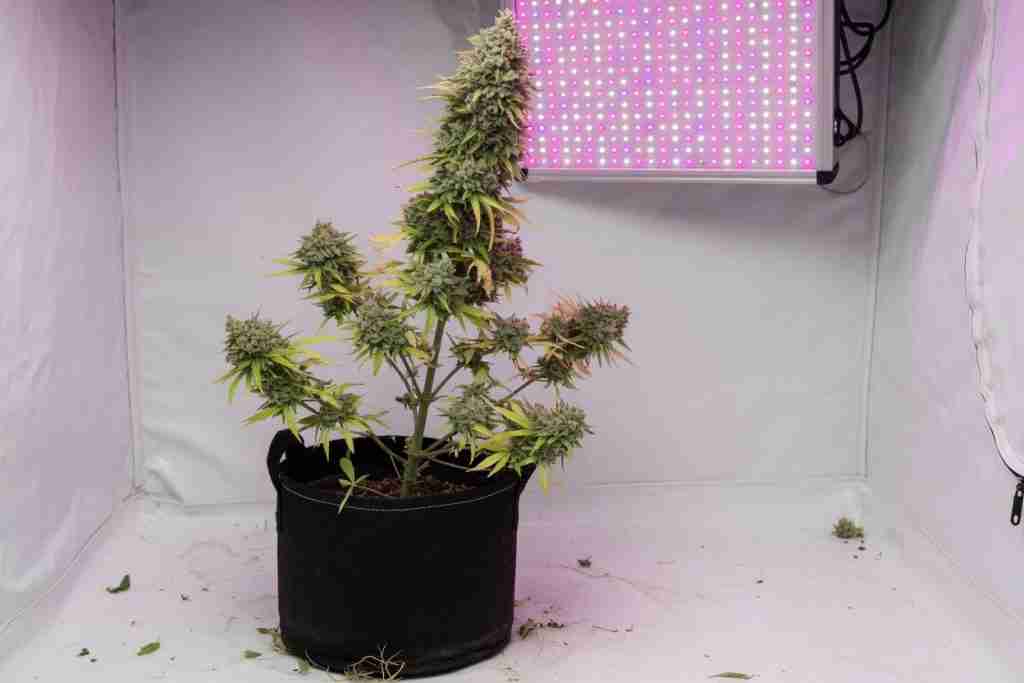
A plant is not one date. The top cola sits in the most light and finishes first. A shaded bud near the pot can still be mostly clear on the day the top is mostly cloudy, and it can still be cloudy on the day the top has gone mostly amber. If you sample only the top, you can call the plant late while half the flowers are still in the window. If you sample only a lower bud, you can wait until the top has spent itself. Look at three sites: a top, a middle branch, and one lower flower. Write three notes. The cut is a choice among those notes, not a single ball you liked.
When the spread is wide and the plant is healthy, you can take the ripe tops and leave the rest a few days. Cut the branches whose heads are where you want them. Leave the cloudy lowers if the room is dry enough that rot is not the risk, and if you are not staring at a frost. Do not leave a mostly amber top “so the bottom can catch up.” The top will not hold its cloudy resin as a favor to the lower buds. It will keep moving. A staggered cut is ordinary. A whole-plant cut on the middle bud is also ordinary if you would rather empty the tent once.
In Canada the home plant count is four plants per household, not four per adult. Quebec prohibits recreational home growing. Manitoba allows indoor growing only, and that rule has been in place since 1 May 2025, for adults 19 and older. A seedling counts. Four plants is the garden you have. Do not pop a replacement seed because this plant went long, and do not keep a spare seedling “in case the cola goes late.” You read the plants you are allowed to keep. A late call on one of them is a harvest decision, not a reason to start another.
Cut the bud you actually checked

If the buds you checked are mostly amber, dull, or shedding heads, cut them. Another week will not restore a cloudy ball. If they are mostly cloudy with some amber, you are in the window, and you cut on the day that matches the jar you want, not on the day a guest arrives and not on the day you get nervous. If they are still mostly clear, wait, and look again at those same sites. The harvest page is the chop, the hang, and the jars. This page stops at the decision. Do not turn the decision into a new shopping list.
An autoflower does not get a flip, and it does not get a pass on the lens. It finishes on its own age, on a long day, and the heads still go clear, then cloudy, then amber. Cutting it early because a chart said day seventy is the same early mistake as cutting a photoperiod on week seven with glass heads. Leaving it until the heads are dull because you had no flip to count from is the same late mistake. The autoflower page is that clock. The resin on the bud is still the grade.
A photoperiod that never got a real night can ripen in a mess: fox tails, new hairs, tops and lowers far apart. If the heads are still mostly clear or just turning cloudy, fix the dark period and keep watching. A zipper leak, a power-strip glow, a door left cracked: any of those holds the plant between veg and flower. If the heads are already mostly amber, the dark-period lesson is for the next run. You cannot un-amber a cola by giving it a perfect night now. The ten-step page is the order of a run, including the cut. The order does not include a bottle that puts cloudy resin back on a dull bud.
A late dry does not rewind it

The dry keeps what you cut, or it spends it a second time. A late flower hung in a hot closet, or under a bright bulb, goes flatter and harsher than the same flower hung cool and in the dark. The hang does not turn amber heads cloudy. It cannot. What it can do is drive off what smell was left. Keep the room dark. Keep air moving without pointing a heater at the line. The harvest page is the detail of that hang and the jars after. The only point here is that a bad dry is not proof the plant was late, and a careful dry is not proof the plant was on time.
Hay smell after a fast, hot dry is a dry problem. People taste that jar and decide the plant must have sat too long. Maybe it did. You only know if you looked at the heads on cut day. If you never looked, do not invent the story from the jar. Write the note next time, while the bud is still on the plant. A jar that is heavy and sleepy, from a cut you recorded as mostly amber, is the late cut doing what a late cut does. A jar that is bright, from a cut you recorded as mostly cloudy with a little amber, is the window. The dry explains harshness and lost smell. The note explains the resin.
Nothing you buy in the last week puts a cloudy head back on the bud. A bloom bottle, a molasses pour, a dark tent for two days, a flush you saw on a forum: none of those reverse a ball that has already gone dull. If the heads are mostly amber, cut. If they are still cloudy, you do not need a product to “push them over.” They are already where the plant was going to take them. Spend the last week looking, not shopping.
Next run, start the checks when the packet window is near. Same three sites, every two or three days, white light, on the bud. The plant will not send a cleaner signal than the head on the calyx.