How to Keep Your Cannabis Grow Space Warm


You keep your cannabis grow space warm by stopping the cold before you plug anything in. A basement that feels fine at noon can sit in the mid-teens Celsius at dawn, and that night low is the number that stalls a plant. Hang a sensor at the canopy, leave it overnight, and read the minimum before you buy a heater, a bottle, or a new lamp. If the morning number is already in the low twenties Celsius, you do not have a heating problem. If it crashed, fix the leak, then add heat with a thermostat.
Most winter trouble in a first marijuana tent is not a mystery strain. The tent sits on concrete. The intake duct drinks from a cold window. The exhaust runs flat out all night and trades the warm air for basement air. The pots are icy even when the leaves feel okay under the lamp. People then feed a plant that is not hungry. It is cold. This page is the order for that problem. The first-grow checklist is the wider order. Vent sizing, feed charts, and mold diagnosis stay on their own pages.
How to Keep Your Cannabis Grow Space Warm
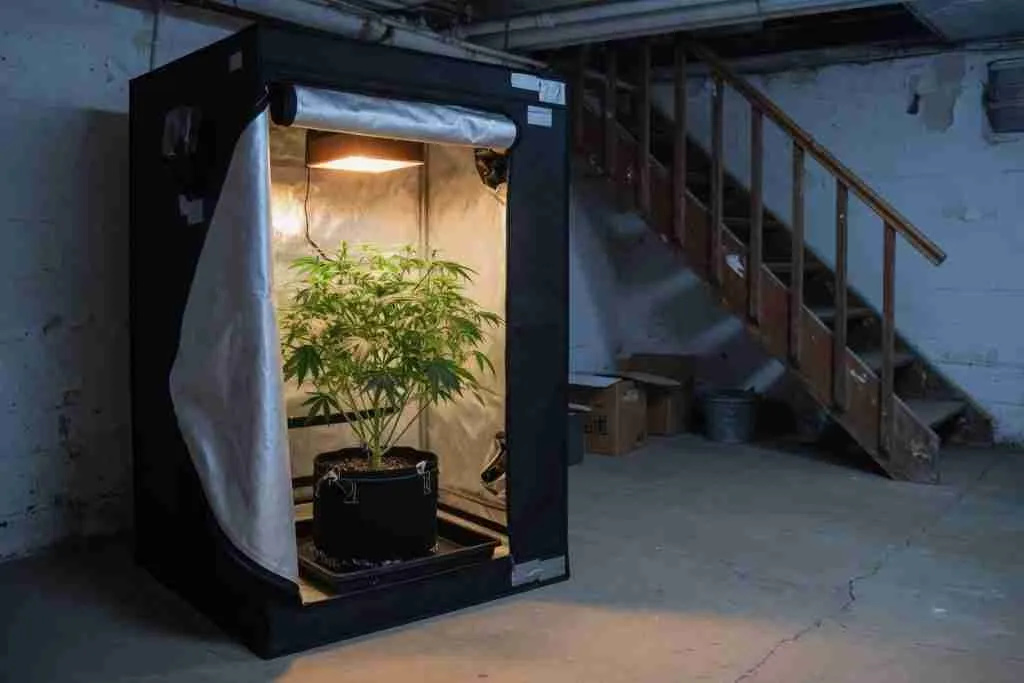
Start with the room you actually have. A tent in a heated bedroom is a different job from a tent in a garage that is barely above freezing. The tent does not make heat. It only slows how fast heat leaves. A lamp adds some warmth while it is on. An LED adds less than an old high-pressure sodium lamp, which is a good thing in July and a surprise in January. Do not buy a hotter lamp to use as a heater. Buy light for light. Heat the room the tent lives in.
The useful order is short. Measure the canopy with the lights on and again at the coldest hour. Stop cold from coming in through the floor, the wall, and the intake. Slow the exhaust at night instead of running it wide open. Put the lamp on during the cold stretch if the schedule allows a truly dark period the rest of the time. Then, and only then, add a heater with a thermostat in the room outside the tent. Warm the pots if the soil is still cold after the air is fixed. Write the morning minimum in the same notebook you use for watering.
- Read the night low at canopy height before you change anything.
- Get the tent off cold concrete and off an outside wall.
- Pull intake air from the heated house, not from a winter window.
- Turn the exhaust down at night. Do not turn it off.
- Let the lamp cover the coldest hours, and keep the dark hours dark.
- Heat the room with a thermostat. Keep fuel-burning heaters out.
- Lift the pots, and use a seedling mat only while the roots are actually cold.
- Check humidity after the tent warms up, so a fix for cold does not become mold.
Where the cold gets in
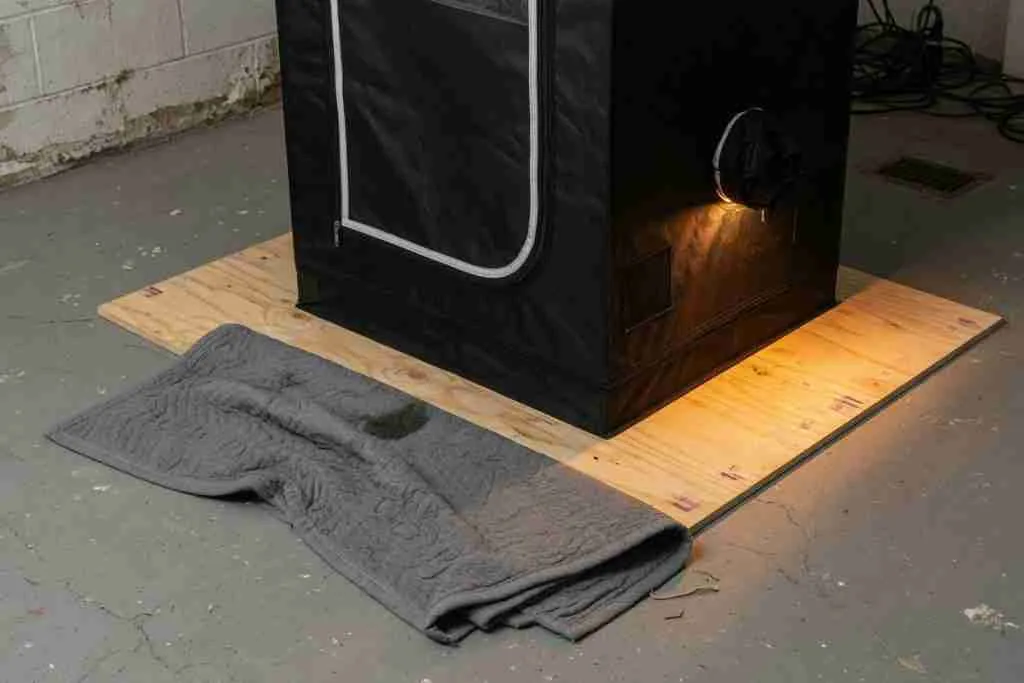
Concrete is a heat sink. A tent standing directly on a basement slab loses warmth through the floor all night, and the pots lose it faster than the air. Set the tent on plywood, a rack, or a foam board that is thick enough to break that contact. A rug alone is a thin layer. The board in the photo is the idea: air and wood between the tent and the slab. Leave the intake and the door able to close. Wrapping a tent until the vents are buried just traps humidity.
The wall matters next. An outside wall in January is cold on the tent skin even when the middle of the house is fine. Park the tent on an interior wall if you can. Close the zipper. Cover unused duct ports with the flaps the tent came with. A gap at the door is a chimney. The grow tent guide and the indoor growers guide go further on layout. For heat, the question is simple: where is cold air allowed to enter, and where is warm air being thrown away?
Intake is the usual answer. A duct run to a cracked window pulls outdoor air straight onto the plants. In winter that air is the outside temperature, and no tent heater keeps up with a wide-open exchange. Draw intake from the heated room or the hallway. Exhaust can still leave the lung room so the smell and the moisture have somewhere to go. The ventilation guide owns fan size and duct layout. This page only needs the winter setting: the fan still runs, and it does not spend all night replacing your warm air with a January draft.
In Canada the federal baseline is four cannabis plants per household, not four per adult. Quebec still prohibits recreational home growing. Manitoba, since 1 May 2025, allows adults 19 and older up to four plants, and those plants have to stay indoors. A cold garage is not a workaround, and it is a hard room to heat. If you live somewhere else, the plant count is the rule where you live. Heat the legal space you already have. Do not add plants to “use the heater.”
What the canopy should read
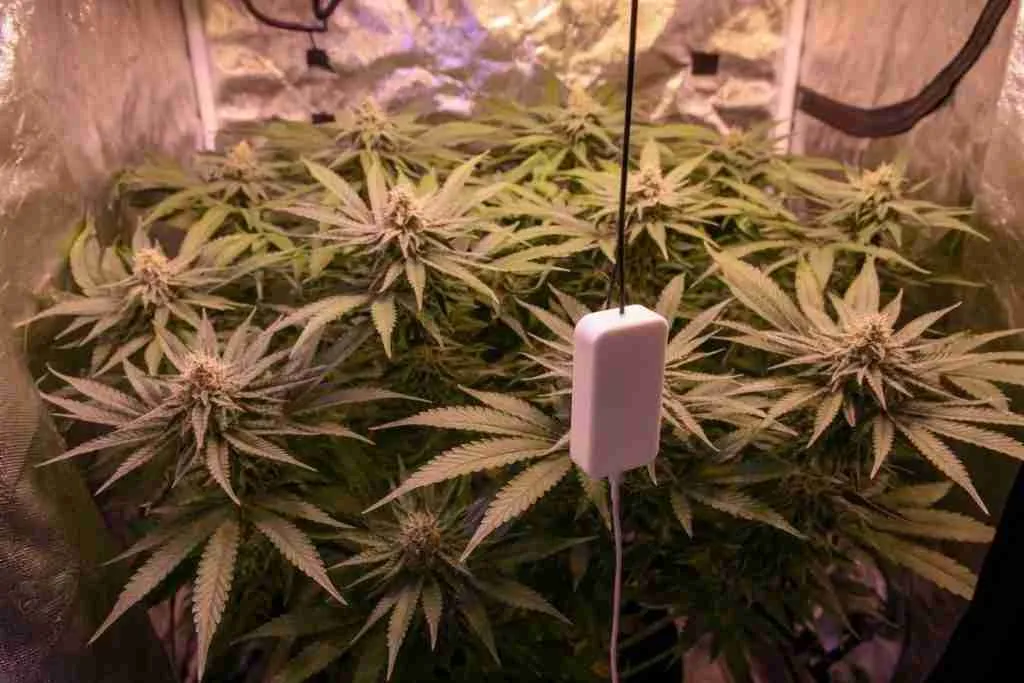
Hang the sensor in the canopy, about where the leaves sit, not on the heater and not on the floor. A floor reading tells you the slab is cold. It does not tell you what the tops feel under the lamp. Use a meter that stores the minimum and the maximum. Look at it in the morning before you open the tent and sigh with relief because the light is on and the air feels fine. The minimum is the grow. The afternoon number is the easy part.
With the lights on, a working canopy sits about 22 to 26 C. That is the low-to-mid seventies in Fahrenheit. Seedlings like the same band and hate a cold pot more than a mature plant does. In flower, stay in that band rather than chasing extra heat. A few degrees cooler with the lights off is normal and even useful. Hours spent near 16 C, or down in the mid-teens, are not a rest period. Growth slows, water uptake slows, and the plant can purple up in a way that looks like a food problem.
Do not chase a tenth of a degree. Chase the crash. If lights-on is 24 C and the night minimum is 23 C, leave it alone. If lights-on is 24 C and the minimum is 14 C, the average you remember from the afternoon is a lie. Warm air also holds more water than cold air, so the humidity number moves when the temperature moves. That relationship is vapor-pressure deficit, and the chart lives on that page. You do not need the chart to know that a cold tent which suddenly gets warm can turn a dry-looking night into a wet morning.
A heater that belongs in the room
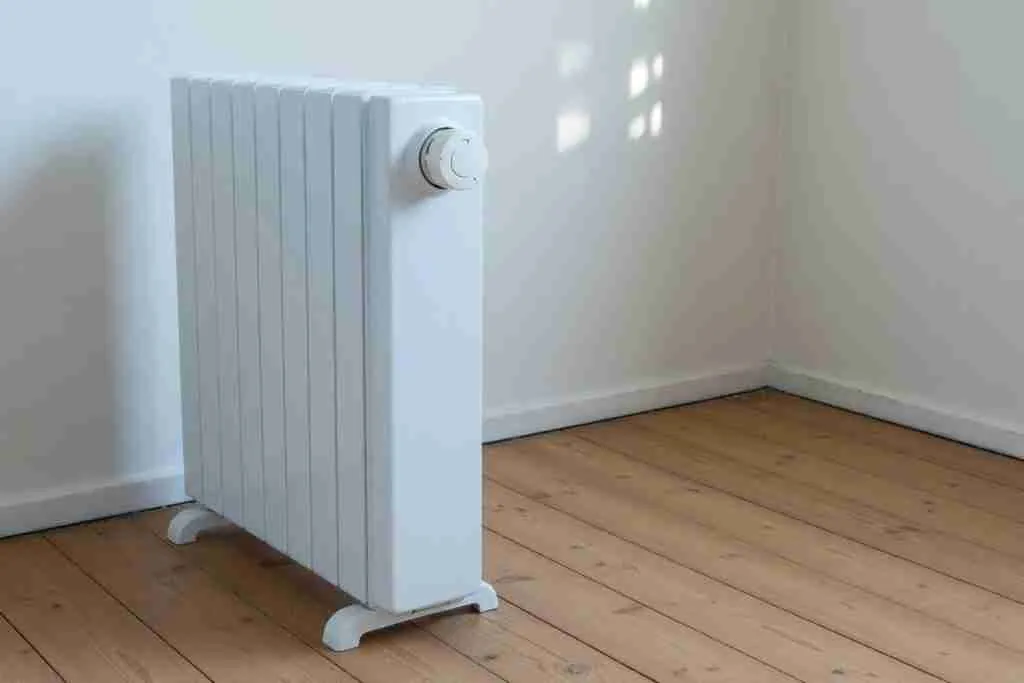
An oil-filled radiator is the heater that fits a small winter grow. The metal holds heat and lets it go slowly. There is no glowing coil in the face of the unit, and it does not blast one corner of the tent dry. Put it in the room that holds the tent, with open floor around it, not jammed against the tent fabric and not under a pot that can drip. A thermostat is the whole point. The heater should click off when the canopy is already in range. A heater with no thermostat runs until the room is too hot, then your exhaust strips that heat and the cycle starts again.
A ceramic heater with a fan is the other common tool. It warms a cold room faster. It also blows, and a blow aimed into the tent dries the leaves nearest the door. Use it in the lung room, on a hard floor, where a tip-over switch can actually matter. Do not park it inside the tent beside a fabric wall, a dry leaf, or a puddle from a saucer. If a heater and the lamp together trip the breaker, that circuit is too small. Move the setup. Do not solve it by unplugging the exhaust.
Leave fuel-burning heaters out of the grow. Propane, kerosene, and unvented gas add water vapor and combustion gases to a room you are trying to keep breathable and not too wet. A home tent is the wrong place for that. They are also a fire. An electric radiator with a thermostat, on a clear patch of floor, is the boring choice, and boring is what you want at 3 a.m. Do not run any heater for days with nobody home and no thermostat in the loop. The sensor that decides on and off has to live at plant height, or you will heat the ceiling and freeze the pots.
The lamp is not the heater plan. Older sodium rooms ran hot because the bulb was hot. People got used to that accident. An LED tent in a basement does not repeat it, and you should not go back to a hot lamp just to skip buying a radiator. The lighting guide is about coverage and hang height. Use it for light. If the tent is still cold with the lamp on and the leaks fixed, the radiator earns its place. If the tent is already at 24 C by day and only crashes at night, a smaller heat source on a thermostat beats a bigger one that you then have to cool.
Roots and seedlings on a cold floor
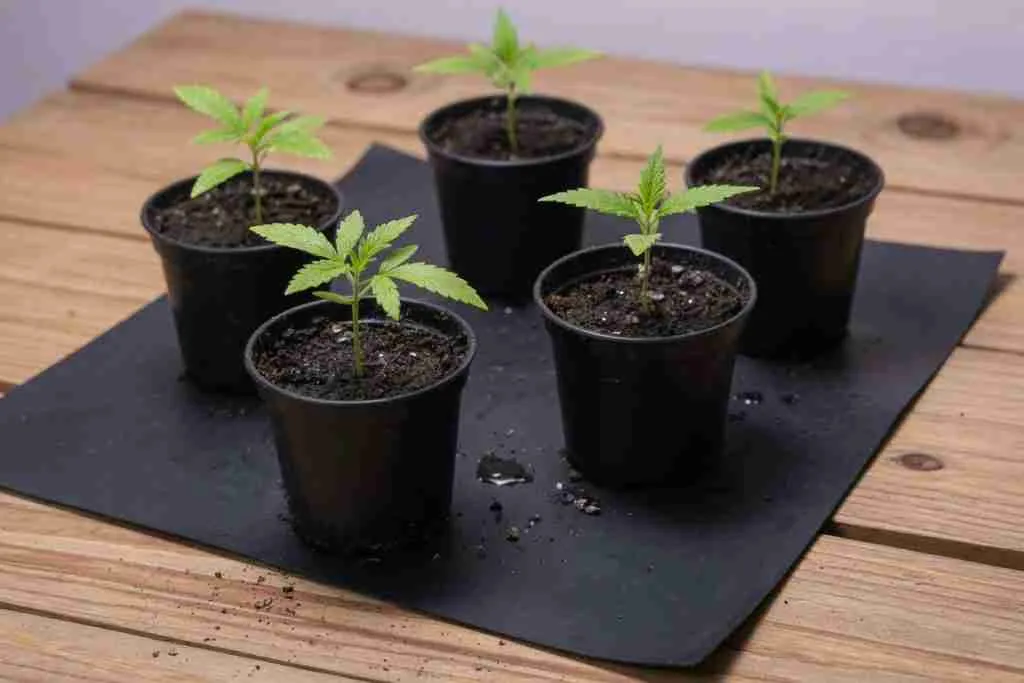
Roots feel the floor before the tops feel the room. A canopy at 24 C over pots sitting on a slab can still be a cold grow. Lift every pot. A rack, a board, or even a tray with an air gap changes the root zone more than another degree at the ceiling. Feel the soil with the back of your hand in the morning. If it is clammy and cold while the air is pleasant, the plant is not drinking the way you think it is. Cold roots move water and minerals slowly. The leaves then look hungry, and a full-strength feed makes it worse.
Seedlings are the fussy ones. A thin heat mat under the tray, with its own thermostat, can hold the root zone in the low twenties Celsius while you sort the room out. Set it so the soil is warm, not hot. A mat with no thermostat cooks the bottom of a small cup and dries it from below, which looks like underwatering from above. Unplug the mat once the room holds its night temperature. A mat is a bridge, not a permanent appliance under a flowering pot. The seedling stage page owns the rest of those first weeks: light, a cup that is not a swamp, and hands off the bottle.
Hydro is the same idea in water. A reservoir that sits on a cold floor runs cold, and cold water holds less oxygen while the roots stall. Warm the room and get the reservoir off the slab before you start adding gadgets to the bucket. The hydro guide owns reservoir care. Do not drop a random aquarium heater into a nutrient bucket because a forum said a wattage. If you use a water heater made for that job, follow that unit and keep it off homemade wiring.
When the leaves go dark or the stems show purple after a cold night, do not open a phosphorus bottle on reflex. Cold mimics a shortage because the roots slowed down. Check the morning minimum and the pot temperature first. The red stems page and the deficiency page are how you tell a real shortage from a cold one. Feed after the night low is fixed, not instead of fixing it.
Lights and exhaust on a winter timer
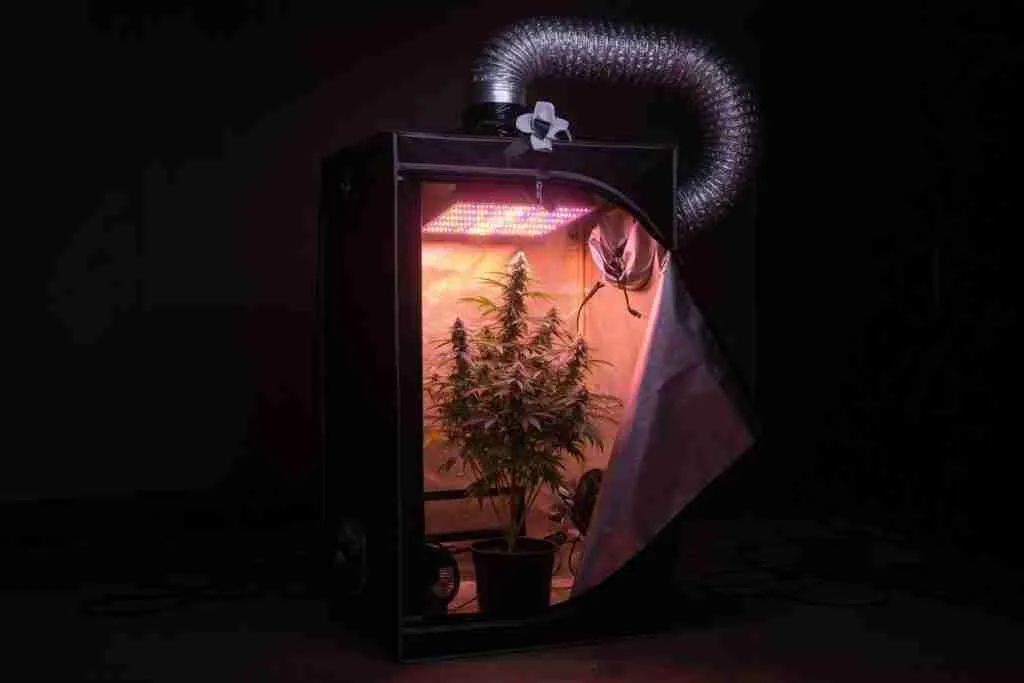
The lamp is free heat during the hours it runs. If the house is coldest from late night through dawn, put the lights-on period over that stretch. The tent is warmest when it most needs to be. In vegetative growth, eighteen hours on is the usual indoor day for a photoperiod. Those eighteen hours can cover the cold night, and the shorter off period can sit in the warmer afternoon. You are not adding heat. You are moving the heat you already pay for.
Flower is stricter. A photoperiod needs twelve hours on and twelve off, and the dark has to be dark. If you run the lamp overnight, daytime is the dark period. Sun through a window, a door opened at noon, a bright hallway: any of that leaks into the “night” and can stall the flowers or throw a few male blooms. Close the tent. Look for glow in the afternoon the way you would look for glow at midnight in a normal schedule. The flowering-control page is that dark period. The flowering stage page is the plant. An autoflower does not need the flip, so you can park its lights over the cold hours without protecting a dark period. You still cannot veg it longer while you fix a frozen room. Get the room right before you pop the auto.

Early flowers, like the ones in that photo, are the part of the crop a cold crash hurts. The plant is done stretching and is trying to stack. A week of nights in the mid-teens does not pause neatly and resume. It slows the stack and can invite the wet-air problems in the next section. The vegetative stage page is where you still have time to correct the room before you flip. Use that time. Do not flip a tent you have not watched through one cold night.
Exhaust is the other half of the timer. At lights-off there is no lamp heat to remove, so a fan on high only swaps warm tent air for colder room air. Turn it down. Do not turn it off. The hours right after the lamp goes out are the wettest, because the air cools and the water the plants gave off is still in the tent. A dead fan plus a heater that just shut off is how condensation shows up on the walls and inside the colas. The ventilation page is where you size the fan. Here, the winter move is a lower night speed, still moving, with intake coming from the house.
Humidity when the tent warms up
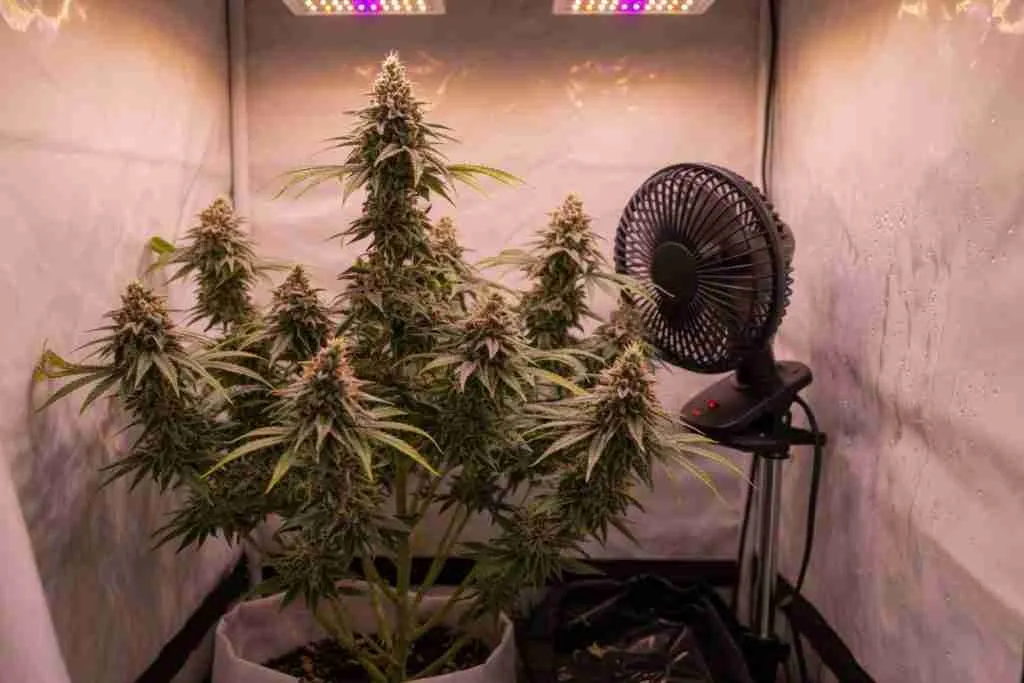
A wall beaded with water means the skin of the tent is colder than the air inside, and the air is carrying enough moisture to dump it there. That is a cold-surface problem and a wet-air problem at the same time. Insulate the contact with the slab and the outside wall so the skin is not an ice tray. Keep a fan moving air across the canopy so a still pocket cannot sit wet against a cola. Then look at the humidity number after the heater has been cycling, not before. Warming the air without moving it raises the amount of water that air can hold, and plants keep transpiring into it.
In veg, about 50 to 65 percent relative humidity is a comfortable band while there are no dense flowers. In flower, bring it down toward 40 to 50 percent once the buds are tight. Those are working bands, not a reason to stare at a cheap meter all day. The failure is a night that warms up, the exhaust is off, and the tent sits wet until morning. Bud rot starts inside thick flowers in that kind of air. Powdery mildew likes a swing as well. The bud rot page and the powdery mildew page are the diagnosis. Do not spray oil on open flowers because the room got muggy. Dry the air and keep it moving.
A dehumidifier is not a heater, even though the machine gives off some warmth. Use it when the tent is already in the temperature band and is still too wet, especially in flower. If the tent is cold, a dehumidifier is the wrong first tool: you will dry a cold plant and still miss the night low. Heat first, until the morning minimum is out of the mid-teens. Then decide if you still need to remove water. Empty the tank. A full unit that has shut itself off is just furniture, and the tent goes wet again while you sleep.
Drying the harvest is a different room with a cooler target on purpose. Do not aim a grow heater at jars or at hanging branches because this page said warm. Slow, cool, and dark is the dry. The dry, cure, and store page owns that. Mixing the two jobs is how people crisp the outside of a bud and trap wet stems, or how they keep a tent so warm and wet that the dry never starts.
How a cold cannabis plant looks

Color on a cola is not a thermometer. The purple in that photo can be the cultivar, a run of cool nights, or both. Some plants paint their leaves when the lights go off and the room eases down a few degrees. Some paint them because that is the family. The test is the morning minimum and the speed of the plant. If the night never left the low twenties Celsius and the plant is still stacking, the color is the plant. If the night sat in the mid-teens and new growth has stalled, the color is a clue to fix the night. Feeding will not warm a pot.
Watch the ordinary signs, in this order. New growth that barely moves for several days. Leaves that sit dark and heavy, sometimes curled down, on a plant you did not overfeed. Soil that stays wet far longer than it did last month, because the roots are not drinking. Stems that flush purple while the pot feels like the concrete. A canopy that is fine at 6 p.m. and unhappy at 7 a.m. None of those is a call for a new product until you have read the minimum and lifted a pot. The weed you are trying to finish can look “deficient” for a week and then green up on its own once the nights hold.
Use the same morning check after you change something. You raised the tent, moved the intake, dropped the night fan speed, and set the radiator to hold the canopy. The next minimum tells you if it worked. One warm afternoon does not. If the minimum is still in the mid-teens, the heater is undersized for the leak you left open, or the sensor is sitting in a warm pocket while the plants are not. Move the sensor into the canopy and walk the tent for a draft with the back of your hand: door gap, unused port, window duct, floor edge.
A plant that stays cold also stays wet longer between waterings. That wet cold surface is where fungus gnats and a sour pot start, and where a seedling collapses. Let the top of the soil dry. Do not add water because the leaves droop if the pot is still heavy. Droop plus a heavy cold pot is not thirst. The watering page is the lift-the-pot habit. Winter just makes the “wait” longer.
Keep your cannabis grow space warm at the canopy, including the hour before dawn. Tape the short version where you will see it before you buy another bottle.
- Morning minimum at leaf height, not a guess from the afternoon.
- Tent off the concrete, intake from the heated house.
- Exhaust slower at night, never off.
- Lamp on during the cold hours, dark hours actually dark.
- Oil radiator or ceramic heater in the room, thermostat on, fuel heaters out.
- Pots off the floor. Seedling mat only while the cups are cold, then unplug it.
- After the air is warm, check humidity so flower does not sit wet.
- Purple color plus a stalled plant means fix the night. Purple color plus a normal night means it is the plant.