How to Identify, Fight, and Treat Root Rot in Cannabis (Without Losing Your Mind)


You walk into the grow room feeling proud… and your leaves are drooping like tired umbrellas. The top looks fine-ish, but growth has stalled, leaves are clawing, and the pot smells like a swamp. Yep—this could be root rot in Cannabis. Don’t panic. You can fix it, and you can stop it from happening again. I’ll walk you through how to identify, fight, and treat root rot in Cannabis in plain, no-nonsense English. You’ll get step-by-step triage, treatment methods for soil/coco/hydro, and prevention that actually works.
Quick Answer Box
- What it is: A root infection (often from water-loving pathogens like Pythium, Fusarium, Phytophthora) that thrives in warm, low-oxygen, wet conditions.
- Fast signs: Droopy leaves that don’t perk up after lights-off, brown mushy roots, sour/swampy smell, stunted growth.
- Immediate fix: Improve oxygen (air stones, drainage), drop root zone temps to ~18–22 °C (65–72 °F), refresh solution/flush media, trim dead roots, apply either sterile (H₂O₂/hypochlorous) or biological (beneficial microbes) treatment—then correct watering habits.
- Prevention: Right pot size, breathable containers, cool root temps, steady pH/EC, clean tools, smart watering, and consistent reservoir maintenance.
What Is Root Rot in Cannabis?

The simple version
Roots are the plant’s mouth. When they drown or get infected, the whole plant goes hungry and sick. Root rot in Cannabis happens when fungi-like organisms or bacteria attack stressed roots—usually in soggy, warm, low-oxygen conditions.
The slightly nerdy version (but still friendly)
- Culprits: Often Pythium spp. (water molds), sometimes Fusarium or Phytophthora.
- Why it starts: Warm nutrient solutions, poor drainage, overwatering, clogged pots, dirty tools, stale reservoirs, weak oxygen levels, or a pH/EC mess that stresses roots.
- The spiral: Pathogens chew on root tips → roots turn brown/slimy → nutrient/water uptake crashes → leaves droop, yellow, and claw → growth stalls.
Different systems, different risks
- Soil: Risk spikes with heavy soils, cold rooms + warm pots, and overwatering.
- Coco: Faster drainage than soil, but overwatering and salt buildup still fuel rot.
- Hydro (DWC/RDWC): High risk if water’s too warm or oxygen is low. Sterility or strong biology is critical here.
How to Identify Root Rot in Cannabis (Before It Snowballs, out of control)
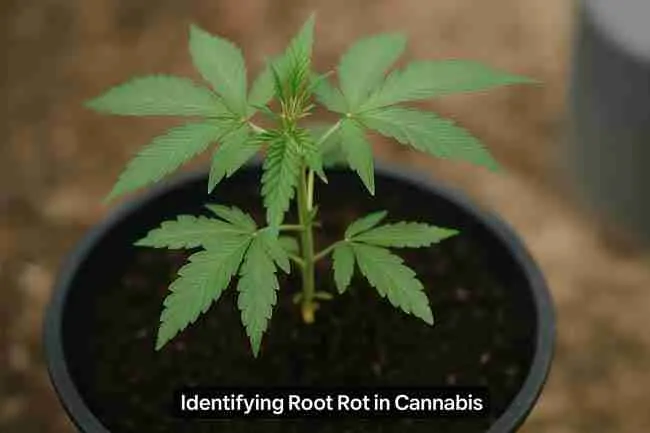
Above-ground red flags
- Leaves droop even when the medium isn’t dry.
- Growth slows to a crawl; new leaves are small or twisted.
- Midday wilt that doesn’t bounce back after dark.
- Random yellowing or “clawing” despite OK feeding.
- Buds later can get airy and underdeveloped.
Below-ground truth (the “pull and peek” test)
When safe to check:
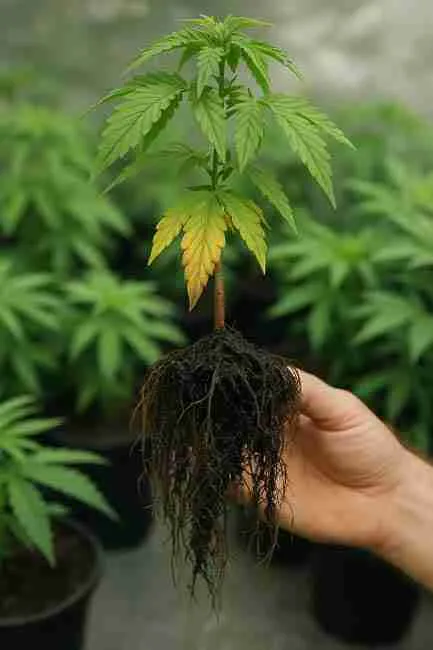
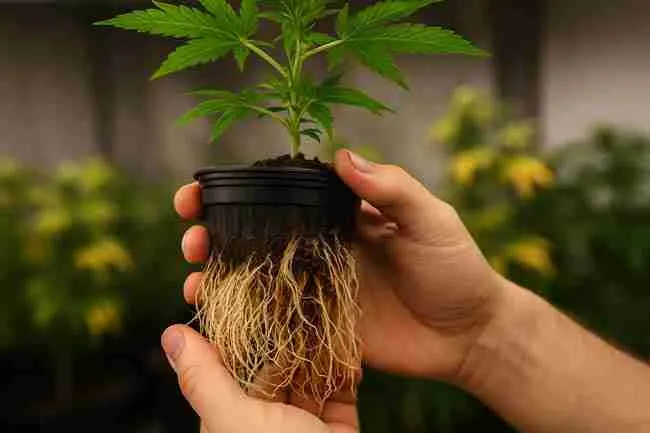
- Color: Healthy roots = white to cream. Sick = tan to brown to black.
- Texture: Healthy = firm, fuzzy feeder tips. Sick = slimy, mushy, stringy.
- Smell: Healthy = earthy/neutral. Sick = sour, swampy, “fishy.”
The smell test (no tools needed)
If your pot or reservoir smells like a pond in July, that’s a flashing neon sign.
Timeline example (so you can catch it early)
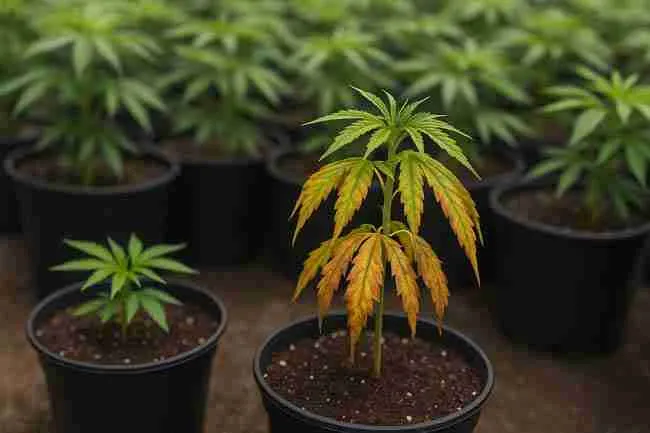
- Day 1–2: Leaves droop oddly; you think “maybe thirsty” but medium is wet.
- Day 3–4: Growth stalls; stems may turn reddish; faint sour smell.
- Day 5–7: Roots darken and mush; leaves claw or yellow; uptake crashes.
Don’t mix up root rot with other issues
- Overwatering (no infection yet): Roots still pale; no sour odor.
- Heat stress: Leaves taco and edges crisp; roots may be fine.
- Nutrient lockout: pH/EC off, but roots can remain pale; smell is neutral.
- Transplant shock: Short-term droop after repotting; smell stays clean.
Fast Diagnostic Table
| Symptom you see/smell | Most likely cause | How to confirm | First move |
|---|---|---|---|
| Sour/swampy odor from pot/reservoir | Root rot in Cannabis pathogens + low O₂ | Inspect roots: brown/slimy | Boost O₂, cool roots, flush/refresh, start treatment |
| Leaves droop though medium is wet | Overwatering ± early rot | Check roots, smell test | Improve drainage/airflow; consider microbe drench |
| Brown, mushy roots that slough off | Active rot | Gentle rinse: tissue falls apart | Trim dead tissue; treat; replant in clean medium |
| Stalled growth + clawing despite normal feed | Root damage, possible rot | Root color + odor check | Triage + treatment; stabilize pH/EC |
| Hydro water >22 °C (72 °F) | Low DO → pathogen party | Measure temp/DO if possible | Add chiller/ice bottles; more air stones |
Why Root Rot Happens: Risk Factors You Control
Environment (the big one)
- Root-zone temperature sweet spot: 18–22 °C (65–72 °F). Warmter water = lower dissolved oxygen (DO) = rot risk.
- Airflow: Stagnant air keeps media soggy; moving air helps dry the top and cool pots.
- Humidity/VPD: High humidity with cool leaves slows transpiration; roots sit wet.
Watering habits
- Watering too often, watering too little but too deeply, or using pots without enough holes—these are classic setup mistakes.
- Learn your medium’s “feel.” Water when the pot gets meaningfully lighter, not by the calendar.
Media and container choices
- Dense soil mixes = slow dry-down. Blend in perlite/pumice for air.
- Fabric pots breathe. Plastic pots need extra drainage holes.
- Coco prefers little and often watering—while still allowing air exchange.
Sanitation
- Dirty scissors, slimy tubing, dead leaf sludge in trays… all of it seeds infections.
- Treat your grow like a tiny food-prep kitchen: clean, dry, and labeled.
pH/EC management (especially hydro/coco)
- Stressed roots from pH/EC swings are easy targets. Keep it steady: pH 5.8–6.2 (hydro/coco), 6.2–6.8 (soil).
Immediate Action Plan: What You Should Do Today
Triage checklist (step by step)
- Kill the stink: For hydro, dump and refill with fresh, correctly pH’d solution. For soil/coco, flush gently with clean, pH-balanced water.
- Cool the roots: Aim for 18–22 °C (65–72 °F). Shade the pot if needed; don’t bake the root zone.
- Pump in oxygen: Add/upgrade air stones in hydro. In pots, increase airflow; gently lift fabric pots off cold floors.
- Inspect and trim: Rinse roots carefully; cut away mushy tissue with sterilized scissors.
- Choose a path:
- Sterile route: H₂O₂ or hypochlorous to knock pathogens back.
- Biological route: Trichoderma/Bacillus/mycorrhizae to outcompete the bad guys.
(Pick one at a time—peroxide can kill your beneficials.)
- Stabilize pH/EC and feed lightly. Sick roots eat less.
- Quarantine the patient: Keep infected plants away from healthy ones; sanitize runoff trays.
Emergency root rescue ideas
- Hydrogen peroxide (3% household): Typical shock doses range from 2–3 mL per liter of water (about 8–12 mL/gal). Apply to reservoir or as a drench. Always follow product labels and monitor plant response.
- Hypochlorous acid (HOCl): Grow-safe formulations can maintain a low residual sanitizer in hydro; follow the label.
- Beneficial microbes: Trichoderma harzianum, Bacillus subtilis, Bacillus amyloliquefaciens—applied as drenches or added to reservoirs after sterile agents are out of the system.
- Silica + kelp foliar: Won’t fix roots, but helps leaves cope during recovery.
Treating Root Rot in Cannabis: What Actually Works
Mechanical/physical fixes
- Trim rot: Remove brown mush until you see firm, pale tissue. Sterilize tools between cuts.
- Add oxygen: Oversize your air pump (target at least 0.5–1.0 LPM per gallon of nutrient solution) and keep stones clean.
- Improve drainage: Elevate pots, drill extra side holes (for plastic), or switch to fabric.
Chemical/sterile approaches
- Hydrogen peroxide (H₂O₂): Quickly oxidizes pathogens and slime; short-lived, so re-dosing is often needed. Don’t mix with beneficial microbe products.
- Hypochlorous acid (HOCl)/chlorine dioxide/peracetic acid: Used in some sterile hydro programs in tiny, label-approved amounts to keep bio-load low.
- Pros: Clear, predictable, and simple.
- Cons: No long-term biological shield; overdosing can burn roots.
Biological approaches
- Trichoderma: Fast colonizer that antagonizes pathogens and stimulates root growth.
- Bacillus blends: Competitive exclusion + biofilm that protects root surfaces.
- Mycorrhizae: Great for soil/coco establishment; less useful in constantly flooded hydro.
- Pros: Builds a living shield; resilient once established.
- Cons: Slower start; can be disrupted by sterilizers/hot water.
Environmental corrections (the “silent cure”)
- Temperature: Keep nutrient solution/pots at 18–22 °C (65–72 °F). Consider a reservoir chiller in hydro or insulated trays for pots.
- Dissolved oxygen (DO): Higher DO = lower pathogen success. More air stones, better circulation, and cooler water all raise DO.
- Light leaks: Black out reservoirs and lines to stop algae feeding the slime.
Hydro-specific protocol (DWC/RDWC)
- Dump, rinse, disinfect buckets and lines.
- Refill with cool, pH-balanced nutrient at a slightly lighter EC.
- Blast oxygen (bigger pump + fresh stones).
- Choose sterile (maintain tiny residual sanitizer) or biological (reseed beneficials) and commit for several days—don’t ping-pong.
- Daily checks: Water temp, smell, root color, foam/slime presence.
Soil/Coco protocol
- Flush with pH-balanced water to remove stale salts.
- Prune rotten roots if accessible (transplant gently if roots are severely gone).
- Drench with beneficial microbes (per label) or use a cautious peroxide flush—but don’t mix both.
- Adjust watering to the plant’s speed, not your schedule.
- Top-dress for air: Add perlite/pumice or a light layer of coco/perlite blend to improve gas exchange.
Organic growers: special notes
- Compost teas & ferments: Fantastic when brewed/handled cleanly, but risky mid-infection. If you use them, do so after you’ve stabilized the rot and temps; keep brews oxygenated and fresh.
- Lactic acid bacteria (LAB): Some growers use LAB as a drench to rebalance rhizosphere microbes. Introduce cautiously and watch results.
Prevention: Your Long-Term Fix
Watering that makes sense
- Soil: Water deeply then let ~50–70% of that moisture be used before you water again.
- Coco: Smaller, more frequent irrigations—but still allow air exchange; avoid constant sog.
- Hydro: Don’t let roots sit in warm, still water—ever.
Containers & media
- Pick fabric pots for better breathability. If plastic, add side holes.
- Blend in perlite/pumice for air porosity.
- Avoid over-potting tiny plants in giant buckets; they won’t drink fast enough.
Chillers, pumps, and stones
- In hydro, a chiller often costs less than one lost harvest.
- Oversize your air pump and replace stones every cycle or when performance drops.
Sanitation SOP (so you always remember)
- Before each cycle: Clean reservoirs, lines, trays, and tools.
- Weekly: Wipe spills, remove dead leaves, check drain holes for sludge.
- After handling sick plants: Sterilize scissors, gloves, and benches.
Internal linking ideas for your blog:
Case Study: Week-3 Veg in DWC (A Real-Life Play-By-Play)
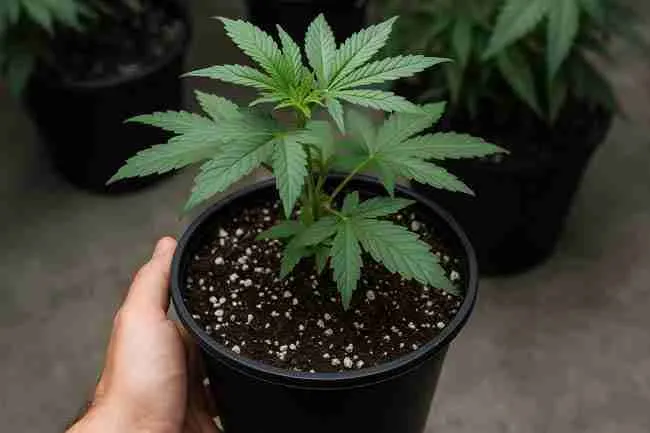
You’ve got a bubbly 5-gal DWC bucket. Plants looked great, then a heat wave hit. Water temperature creeps to 24 °C (75 °F). By day three, leaves droop, and the bucket smells “pondy.”
What you do:
- Dump & scrub the bucket and lines; replace the air stone.
- Mix fresh nutrient at ~10–15% lighter EC; pH to 5.8–6.0.
- Add massive air: Bigger pump, multiple stones per bucket.
- Cool it: Ice bottles temporarily; order a chiller for the long haul.
- Trim brown roots; re-hang the net pot, leave the crown dry.
- Pick a lane: You choose biological—add Trichoderma/Bacillus (per label) 24 hours after any peroxide rinse so they’re not nuked.
- Monitor daily: Root tips turn from tan to pearly white over a week; smell goes neutral; leaves start praying again.
Pros and Cons of Treatment Paths
Sterile Path (H₂O₂/HOCl, etc.)
- Pros: Quick knockdown; predictable; simple routine.
- Cons: No living shield; frequent maintenance doses; can burn roots if overdone.
Biological Path (Trichoderma/Bacillus/myco)
- Pros: Builds long-term resilience; helps roots recover stronger.
- Cons: Slower start; incompatible with oxidizers; needs stable temps and oxygen.
Hybrid Path (Start sterile, then switch to bio)
- Pros: Fast cleanup, then long-term protection.
- Cons: Timing matters: you must let oxidizers dissipate before inoculating microbes.
Specifications & Numbers You Can Tape to the Wall
| Parameter | Soil | Coco | Hydro (DWC/RDWC) |
|---|---|---|---|
| pH | 6.2–6.8 | 5.8–6.2 | 5.6–6.1 |
| Root-zone temp | 18–22 °C (65–72 °F) | 18–22 °C | 18–20 °C (best) |
| Dissolved Oxygen | — | — | Aim ≥ 7–8 mg/L |
| Air pump capacity | — | — | ≥ 0.5–1.0 LPM per gallon |
| Reservoir change | — | — | 7–10 days (more often in heat) |
| Watering pattern | Deep, then dry-down | Small, frequent | Continuous, well-oxygenated |
| Drainage | Essential | Essential | N/A (but great aeration needed) |
Troubleshooting: “Is This Root Rot?” (Quick Reference)
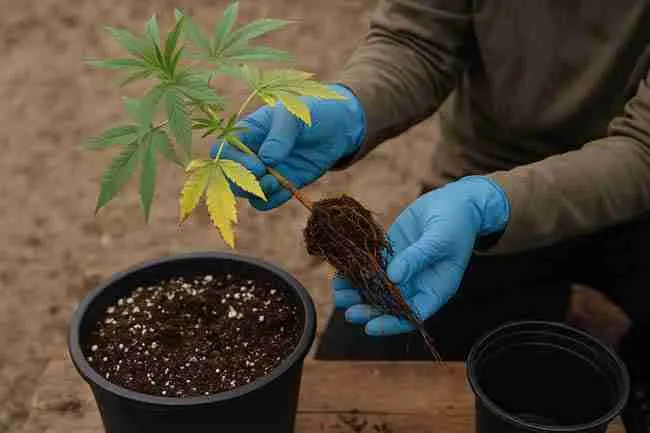
- It smells bad, roots are brown/slimy: Treat it as root rot in Cannabis now.
- No smell, roots pale, but droop: Likely overwatering or cold media—adjust watering and temp first.
- pH swings like a rollercoaster: Stabilize pH; stressed roots invite pathogens.
- Algae in reservoir: Light leaks—black out and sanitize.
- Only one plant sick in a shared system: Isolate if possible; check for dead matter caught in that pot’s lines.
Your Action Checklist (Print This)
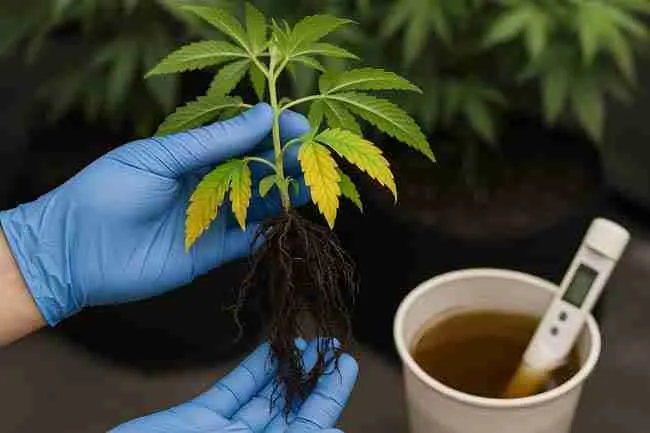
- Keep root temps 18–22 °C (65–72 °F).
- Size up air pumps and stones; refresh them often.
- Water by plant need, not the calendar.
- Use breathable pots or add drainage.
- Sanitize between every major step.
- Commit to one path at a time: sterile or biological.
- Trim rot, be gentle, and reduce feed until uptake returns.
- Don’t forget pH/EC—steady beats perfect.
- Quarantine sick plants; never share runoff.
- Log what worked. Next run gets easier.
FAQs: Root Rot in Cannabis
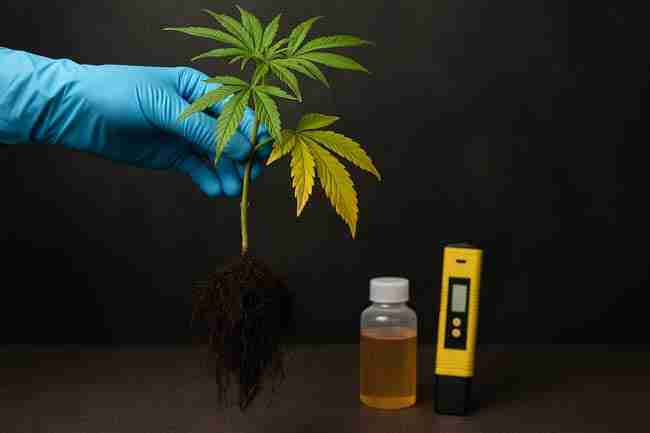
Q: What does root rot in Cannabis smell like?
A: Like a hot swamp or sour pond water. If your pot or reservoir smells funky, check those roots.
Q: Can a plant recover from root rot in Cannabis?
A: Yes—if you act fast. Trim the mush, boost oxygen, cool the root zone, and treat (sterile or biological). New white root tips are your green light.
Q: How long until I see recovery?
A: Often 3–10 days for perkier leaves and new white root tips. Full vigor can take 2–3 weeks, depending on damage.
Q: Should I use hydrogen peroxide or microbes for root rot in Cannabis?
A: Either can work—just don’t mix them at the same time. Peroxide is quick but temporary; microbes establish a living shield over time.
Q: What’s the best temperature to prevent root rot in Cannabis?
A: Keep roots at 18–22 °C (65–72 °F). Cooler solutions hold more oxygen, which pathogens hate.
Q: Do fabric pots help with root rot in Cannabis?
A: Absolutely. Fabric pots breathe, which keeps the medium more oxygenated and less inviting to pathogens.
Q: Is cinnamon, vinegar, or household hacks a safe cure?
A: Skip kitchen experiments on valuable plants. Use proven products (per label) and focus on oxygen, temperature, and cleanliness.
Q: Can I flower a plant that had root rot in Cannabis?
A: Yes—after it’s stable. Make sure roots are regrowing (white tips), smells are gone, and uptake is steady before flipping to 12/12.
Final Word (Marching Orders, Not a Summary)
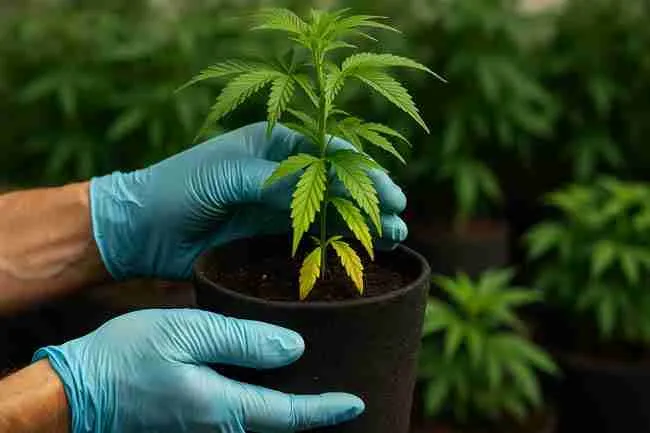
Root health is the whole game. Keep roots cool, oxygen high, media airy, and gear clean. If root rot in Cannabis shows up, move fast, pick a treatment path, and be consistent. Once you master roots, you master yields.
Pros & Cons Snapshot (for Quick Decisions)
- Sterile method: Fast reset; needs routine dosing; can’t use with beneficials.
- Biological method: Builds resilience; slower start; hates oxidizers.
- Environmental fixes: Always good; sometimes all you need when caught early.
Suggested Internal Links (drop your own URLs)
- Homemade Fungicides for Cannabis Plants (sanitation mindset)
- Biochar and Cannabis: Supercharging Your Soil Structure (air + structure)
- Cannabis and Foliar Probiotics (support leaves while roots recover)