How to Grow Large Autoflowers


Large Autoflowers stay large when you stop stealing days from a clock that will not pause. These plants flower by age. A week spent recovering from a move, a soak, or a hard cut is a week that still counts toward flower, and the plant finishes smaller than the pack suggested. The runs that fill a pot are boring on purpose. The seed goes into the pot you will harvest. The lamp stays on a long day for the whole life. You bend a soft stem early, or you leave the plant alone. You feed what the leaves can use. You cut when the resin says so.
A bigger auto comes from that same short list, not a new bottle. Finish in a fabric pot the roots can actually fill. Skip the transplant. Keep a long light day instead of flipping the timer. Train with bends while the stem is still soft, and skip the cuts that need a week of healing. Pick a line that was bred to get tall, not a closet plant that was bred to stay under a shelf. The rest of this page is how those choices hand off. The clock itself, and why age replaces the dark period, is how autoflower seeds work. Whether you wanted this clock at all is photoperiod or autoflower.
Sow into the finish pot
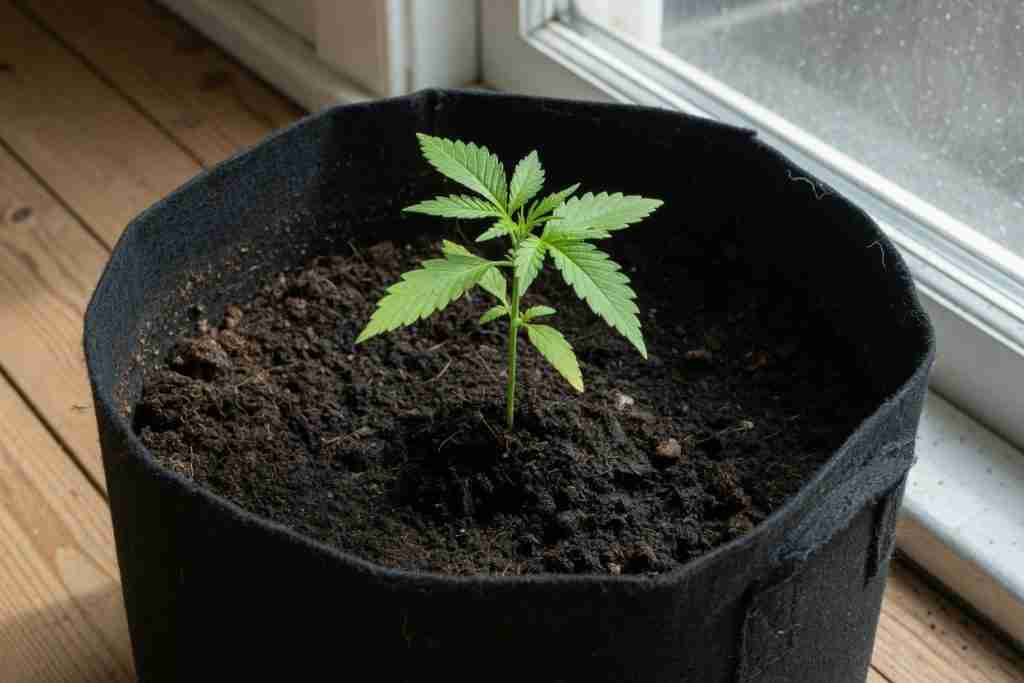
Put the seed in the container you mean to cut from. A photoperiod can sit in a cup, get moved, sulk for a few days, and then you simply leave the lights on longer until it catches up. An auto does not offer that refund. It will flower on schedule whether the roots just got torn or the plant is thriving. Every guide that is actually getting read on this topic starts with that rule, because it is the one people still break. The steps of a move, when a move is the right tool, live on the transplanting seedlings page. For this plant the tool stays in the drawer.
Indoors, a fabric pot around eleven to nineteen litres is the range that keeps showing up for a plant you want big, not a sea of tiny ones. That is enough root for a plant that only has a few weeks of real vegetative push, and it is still a pot you can lift. A nursery cup looks tidy on a shelf and then the plant is rootbound the week the flowers start. A tub you cannot pick up stays wet at the bottom for the whole run, and the roots never occupy the swamp. Fabric lets the side roots meet air and stop circling. A sealed bucket does not. If you are running many small plants on purpose, use smaller pots and accept a smaller plant. Do not put one ambitious plant in a thimble and call the genetics weak.
Read the height note on the pack before you blame the pot. Some autos were bred to stay short so they fit a closet or a balcony rail. A bigger container will not turn that plant into a tree. It will turn it into a short plant with a wetter root zone. If the pack says the plant stays low, believe it and give it a modest pot you can keep evenly moist. If the pack describes a plant that can reach your chest outdoors, then the larger end of that litre range is the one that can hold the roots. The general run, from sprout to jar, is growing autoflowering cannabis plants. Stay here for the size decision, not for every week of the diary.
Outdoors the sun can support a slightly bigger pot, if the season is actually warm and the plant gets real light for most of the day. A cold start still shrinks the plant, because the clock does not wait for June. When to put it outside is the outdoor zone guide. A second sowing after the first cut is a different calendar, and it lives on more than one harvest in a northern climate. Do not start that second set while the first plants are still alive unless the household cap allows it. The cap is at the end of this page. The point here is the pot, not a second garden.
A wet bottom is not more root
A big pot only helps if you can moisten the roots that exist today. A seedling in nineteen litres of soaked mix is a plant standing in a lake. Water a small circle around the stem at first, wide enough to wet the young roots and no wider. As the leaves spread, widen the pour. The full method, including why a soil pot and a coco pot disagree, is how to water. Your check is the lift. Heavy means wait. Light, with a dry top, means drink. The surface can look polite while the bottom is still a sponge, so do not trust a glance.
Air in that mix matters as much as the litres. A fluffy blend that drains will let you use the bigger pot. A mud that holds water for a week will punish you for the same pot. If you are already fighting fungus gnats and a sour smell, the container is too wet for the root mass you have, and adding more volume will not fix the habit. Dry the cycle back. One change. The plant cannot pause while you experiment with three mixes.
Sprout the seed with warmth, moisture, and air, then get it into that finish pot before the root is a long thread you have to thread into a hole. The short method is cannabis seed germination. Once the stem is up, the fragile weeks are the seedling stage. Gentle light. A light hand with water. Almost no bottle. You are protecting the only vegetative stretch this plant gets. You are not building a mother you can veg for two months.
Large Autoflowers
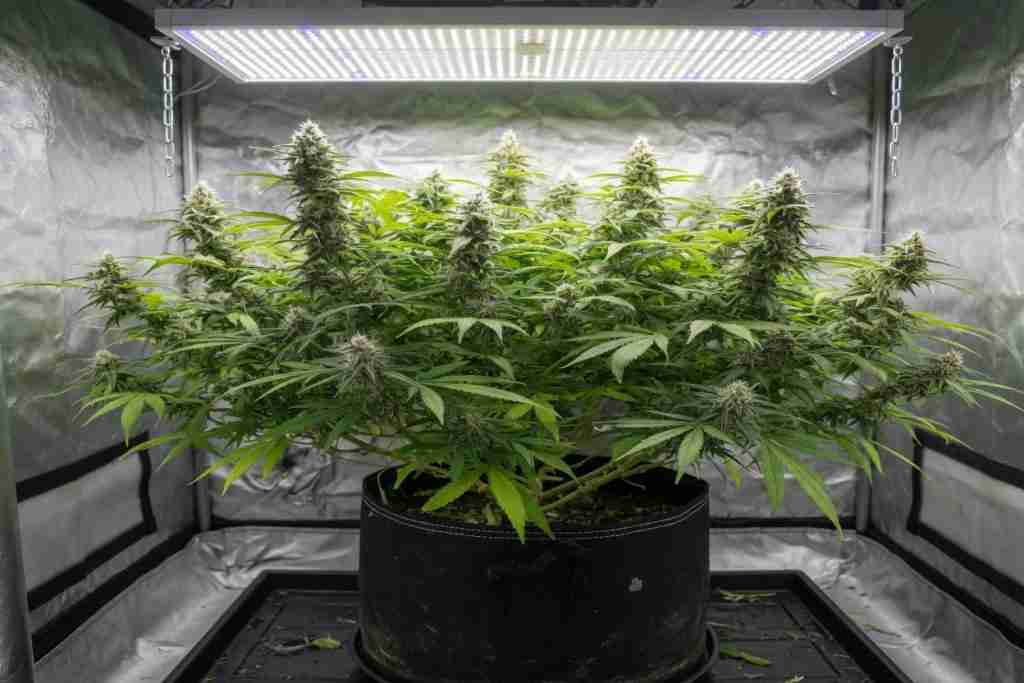
Leave the lamp on a long day from the hour the sprout stands up until the week you cut. About eighteen hours on and six off is the working default for the whole run. You do not flip the timer to a short day to make flowers. The plant will flower anyway. A twelve-hour day is how you tell a photoperiod to bloom, and on an auto it is mostly how you hand the plant less light during the only weeks it had to get wide. People do it because the flowering page said so. That page is for the other clock. The stretch, the feed shift, and a real dark period belong on the flowering stage when you are running photoperiods. Here the flower arrives by age, and the lamp should still be a long day.
Leaving the fixture on around the clock is the other habit that shows up in every comment section. Some plants tolerate it. Many tents just get hotter, and the electric bill climbs, and the buds do not get heavier in proportion. A dark rest of a few hours gives you a cooler room and a plant that still had a long day. If the leaves are canoeing and the tent is stuffy, more hours are not the missing ingredient. Heat is. Drop the intensity or raise the board before you add a seventh hour you do not have.
Hours are not brightness. Eighteen hours under a weak board still makes a small, stretchy plant with airy side buds. Match the fixture to the floor of the tent, then keep the tops at one height so the light is not all piled on the center cola. Which board or hood to keep is lighting technologies. A dimmable diode board is the usual home choice because you can turn it down for the seedling and up once the plant can use it. Do not park a flowering-strength lamp on a sprout and then wonder why it stalled in week two. That stall is permanent on this clock.
Leave the lamp on a long day
Early on, the light should be strong enough that the stem stays short, and gentle enough that the new leaves stay green instead of pale and tight. If the seedling is reaching, the lamp is far or dim. If the leaves bleach, it is close or strong. Move one thing, a little, and wait a day. The tent hardware around that lamp is the indoor growers guide and the grow tent page. Give the plant room to finish wider than it starts. An auto that looks modest in week three can still fill the pot if you have not already pinched it.
Vegetative growth on this plant is a short chapter, not a season you extend. The long version of a photoperiod veg, with nitrogen and a timer you control, is the vegetative stage. Borrow the idea of even tops and moving air. Do not borrow the plan to veg for eight weeks and then decide. By the time a photoperiod grower is thinking about the flip, many autos are already showing pistils. If you wait to train until the plant looks like the photos of a month-old photo, you have missed the soft-stem week.
Air still decides whether the flowers you do get can finish dense. Leaves should move a little. Wet walls in late flower are how a fat cola rots from the stem out. Drop the moisture in the room as the flowers thicken, and keep a fan that does not blast one bud white. The lamp can stay on its long day while the air gets drier. Those are different dials. People turn the light down because the tent feels muggy, and the plant gets both less light and the same wet air.
Bend while the stem is soft
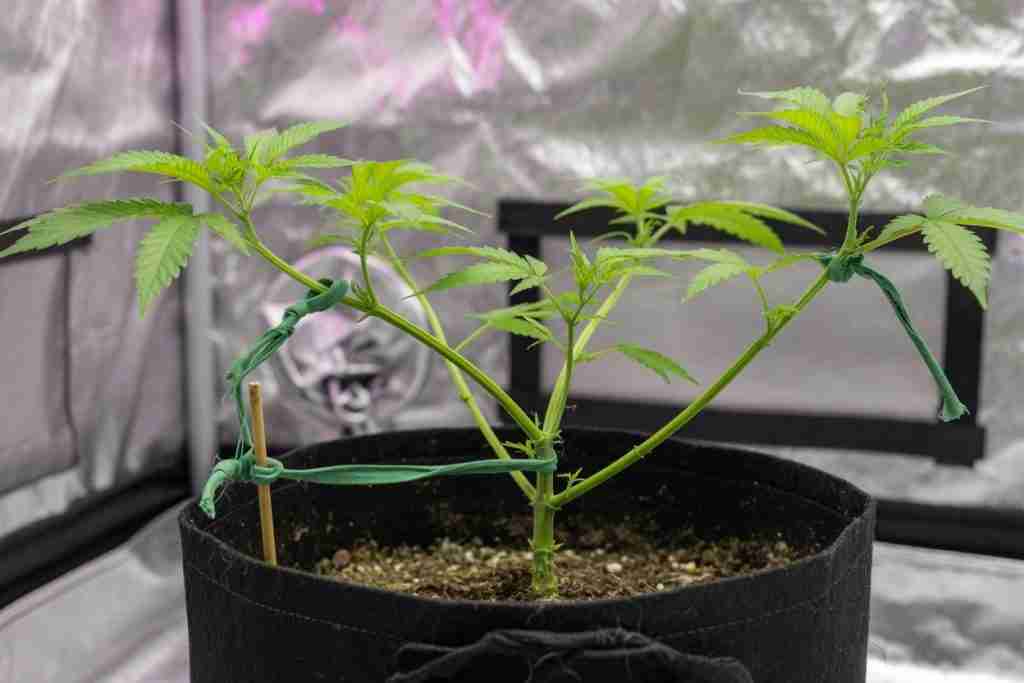
A single cola under a lamp is a small harvest even when the plant is healthy. The light falls off fast once you leave the top. Bending the soft side branches out, a little at a time, puts more tops in that bright band. Do it while the stem still flexes, usually once the plant has several real nodes and long before the flowers are stacking. Small moves. A day or two between them. Stop when the tops share a height or when the stems have gone woody and the pistils are obvious. The knots and the timing are low stress training. You are not learning a new religion. You are moving branches into light they were going to miss.
If the plant is already even, and the lamp covers the footprint, you can skip the ties. An untrained auto that stays short and wide on its own is a fine plant. Training is a tool for a Christmas-tree shape, not a tax you owe every seed. Forcing bends onto a plant that is already flowering, because a video did it on day thirty, snaps stems and stalls the bulk. Tie early or do not tie.
A screen is a plan that wants a plant you can keep in growth until the net is full of tops. That is a photoperiod habit. The weave itself is a screen of green. On an auto the net often goes on after the plant has already decided to flower, and then you are tucking a stretch you did not veg for. If the plant is naturally wide and you already bent it, a light support net can hold colas later. Do not build the whole run around filling a screen you do not have time to fill.
A cut spends the only window
Cutting the tip makes two leads, and then the plant spends days repairing before it grows again. A photoperiod can afford that bill because you choose when flower starts. An auto sends you the bill and flowers anyway. If the plant is vigorous, already past the seedling, and still clearly in growth with soft tips and no pistils, a single careful cut can work for some growers. If the plant is small, slow, or already showing sex, the cut makes a smaller plant with a scar. The family of those cuts is high stress training. Read it before you borrow a photoperiod schedule. Do not invent the cut from a caption on a finished cola.
Leaves come off later, and only for a reason you can point at. A fan sitting on a bud site. A wet pocket in the middle of a dense plant. One or two leaves, then you wait. Stripping the plant because it looks like a lollipop in a photo removes the solar panels that are still feeding those flowers. The judgment for this clock is pruning autoflowering plants. The harsher photoperiod version is defoliation. If you cannot name the leaf, leave it on. The plant built it during a window you cannot extend.
Stacking is how a promising plant becomes a bud on a stick. Bend it, top it, strip it, move the lamp, and double the feed on one afternoon. Each act can be reasonable on its own day. Together they are a new environment, and the clock does not pause for the result. Change one thing. Wait for the next set of tips. If those tips are the same green and the plant is still reaching, you guessed right. If they stall, you stop and you do not add a second correction on top of the first.
Read the leaves then the glands
These plants are hungry on a different calendar than a photoperiod you veg for a month. They start building flower while they are still young, so a long leafy feed followed by a sudden bloom bottle is the wrong picture. Start milder than the label. Raise it only when the new growth is pale and the pot is actually drying between waterings. Burnt tips and a dark claw mean you already passed the amount. The bottle schedule written for this clock is fertilizing autoflowering plants. Do not also follow a photoperiod chart beside it. One plan.
If the new tip is pale and the tips are not burnt, check whether the roots can use what you already gave them before you pour a stronger mix. The meter and the band for each medium are on pH for growing cannabis. Soil and a soilless mix do not share a target. Changing feed strength and pH on the same day means you will not know which one the plant answered. Pick one. Write it down. The organic side of a bottle choice, if you are not on the auto chart, is organic fertilizer, and it is still a stage decision, not a scoop for luck.
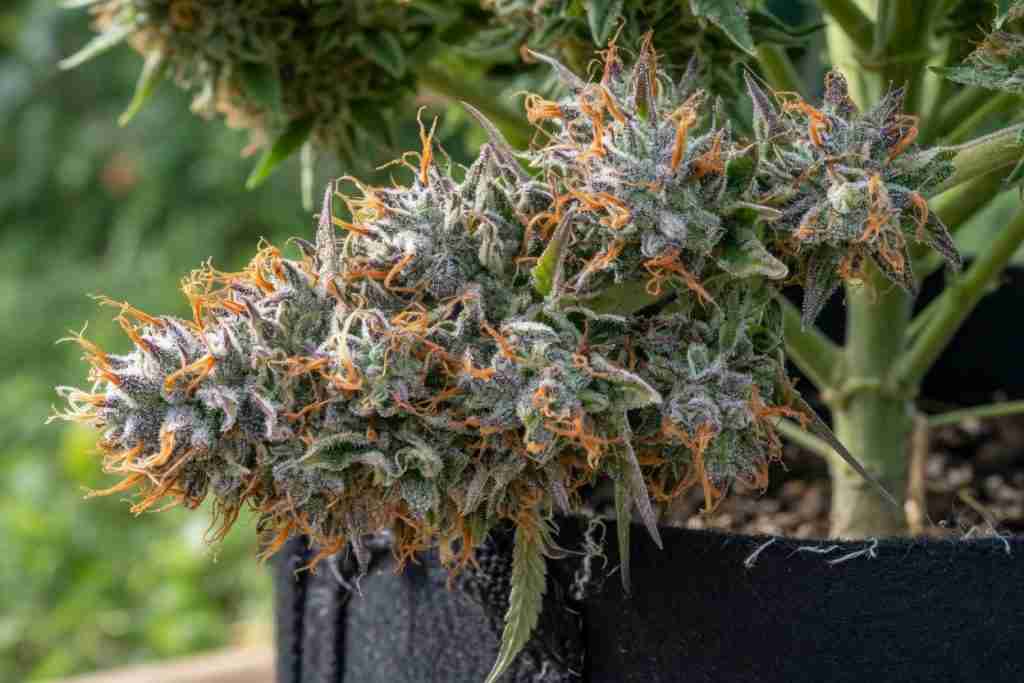
The pack week count is a breeder average in their room. Yours may finish sooner or take longer, and a stressed plant often looks done early because it stalled, not because the glands are ready. Read the glands on the calyx, not the sugar leaves, and not the date you circled. Clear is early. Cloudy is the window most people wanted. Amber creeping in means that window is passing. The loupe method is when to harvest. Cutting because the pack said eight weeks, while the glands are still glass, is how a plant that grew well becomes a light jar.
The dry is part of the weight you keep. A hot fast dry crisps the outside and leaves the inside wet, and the jar then smells like grass. Cool air, a slow dry, stems that tell you when the outside is ready, then jars you open until the moisture evens out. That back half is dry, cure, and store. A heavy wet plant on the scale is not the harvest. The dry flower is.
Big, on this clock, means the plant filled the pot you gave it and the lamp fed more than one cola. It does not mean the plant matched a photoperiod that vegged for two months in a bed. If you wanted that plant, you wanted the other clock. Judge this run against the height on the pack and against your last auto in the same tent. A plant that dried heavier than the last one, under the same lamp, is the improvement. A plant that looks huge while it is wet and then vanishes in the jar was water and a fast dry.
Note the week that stalled
When a plant finishes small, the note from the run usually names the week. Transplanted in week two. Soaked for ten days. Lamp too far, so it stretched, then too close, so it stalled. Topped after pistils showed. Fed a photoperiod veg dose into early flower and burned the tips. Any one of those can be the whole story. Fix that one on the next seed. Do not add three new products to a plant that was only overwatered.
Label the pot with the pack name and the sow date. Sisters can split on height even from one packet, and an unlabeled tent teaches you nothing you can buy again. Write the day you first saw pistils, the day you stopped bending, and the day the glands went cloudy. Next time you will know whether this line needed the bigger pot or whether you simply started too cold. A short plant from a tall pack, grown in a fair room with a long day and a pot that dried, is the pack. A short plant that sat in a cup and then a puddle is the week you stole.
Count the living plants before you sow a backup tray because the first sprout looks slow. A sprout is a plant. A second set started while the first is still in the tent is a second set of plants, not a spare. Finish what you started. Leave the rest of the packet dry until a pot is actually empty.
In Canada the cap is four plants per household, not per adult. Quebec prohibits recreational home growing. Manitoba has allowed indoor growing only since 1 May 2025, and the age there is 19. A seedling counts. A second set of cups still counts. The jar you keep is marijuana you finished on a clock you did not interrupt, and the weed that looks huge in a photo is usually a plant that never had to recover.